Fever and weakness reduce appetite, energy, and hydration. The most effective approach is simple: take fluids, soft foods, and light protein that are easy to digest and can be consumed in small, frequent portions. This helps maintain energy without stressing digestion and supports faster recovery.
At Shirdi Sai Hospital, we see many patients rely only on medicines while under-eating or staying dehydrated, which delays recovery. This guide explains what to eat during fever and weakness, what to avoid, and when symptoms need medical evaluation.
What Happens to the Body During Fever
During fever, the body uses more energy to fight infection. Appetite drops, fluid loss increases, and digestion slows. This is why heavy meals feel uncomfortable and why hydration and light nutrition matter more than quantity.
Recovery improves when food is simple, frequent, and supported by adequate fluids.
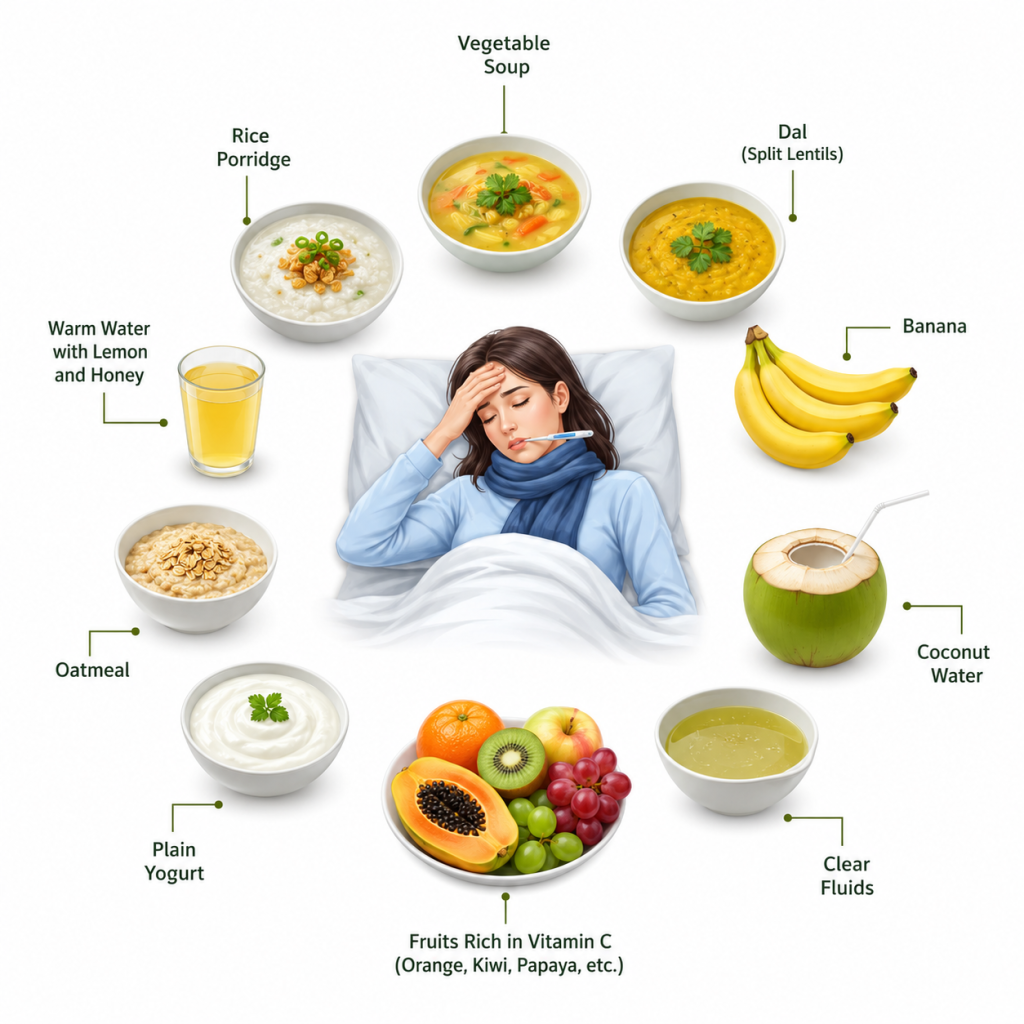
What to Eat During Fever and Weakness
Focus on hydration first, then soft carbohydrates, followed by light protein.
Fluids (priority)
- Water, coconut water, ORS
- Clear vegetable or chicken soups
Soft, easy-to-digest foods
- Rice, khichdi, idli, porridge
- Light dal
Fruits
- Banana, papaya, apple (stewed if needed), orange (if tolerated)
Light protein
- Dal, curd (if no throat irritation), eggs
Warm options
- Soups, light broths, mildly spiced preparations
These choices maintain energy, reduce dehydration, and are easier on the stomach.
What to Eat vs What to Avoid During Fever
| Recommended During Fever | Avoid During Fever |
|---|---|
| Rice, khichdi, idli | Fried foods, pakoras |
| Light dal, soups | Spicy curries, heavy masala |
| Banana, papaya, apple | Excess citrus if irritating |
| Coconut water, ORS | Cold drinks, soda |
| Eggs, light protein | Processed snacks, junk food |
| Small frequent meals | Overeating or long gaps |
This comparison helps make quick daily choices without confusion.
How to Eat When You Have No Appetite
Loss of appetite is common. Do not force large meals. Instead:
- Eat small portions every 2–3 hours
- Prioritize fluids and fruits first
- Add one light protein source daily
- Avoid long gaps without intake
This approach maintains energy without discomfort.
Foods to Avoid During Fever
Avoid anything that slows digestion or increases discomfort:
- Fried and oily foods
- Spicy, heavy curries
- Packaged snacks and instant foods
- Carbonated drinks
- Excess tea or coffee
- Very cold foods or drinks
These can worsen nausea, acidity, and bloating.
What to Eat After Fever for Strength Recovery
As fever settles, gradually increase nutrition:
- Rice with dal or vegetables
- Eggs or paneer for protein
- Fruits twice daily
- Curd (if tolerated)
- Nuts in small quantities
Do not jump back to heavy meals immediately. Recovery improves with a gradual return to normal eating.
Common Mistakes That Delay Recovery
- Skipping meals completely
- Drinking very little water
- Depending only on medicines
- Eating heavy meals as soon as appetite returns
- Consuming packaged juices instead of real fluids
These habits prolong weakness and slow healing.
Diet Tips for Children and Elderly
Children
- Small, frequent feeds
- Soft foods and fruits
- Regular fluids
Elderly
- Easy-to-chew meals
- Consistent hydration
- Short gaps between meals
In both groups, appetite and hydration must be monitored closely.
Why Patients Choose Shirdi Sai Hospital for Fever Care
Shirdi Sai Hospital focuses on identifying the cause of fever, not just reducing temperature.
Patients prefer this approach because:
- Evaluation is based on symptoms, duration, and overall condition
- Care includes hydration, nutrition, and recovery guidance
- Suitable for children, adults, and elderly patients
- Practical advice for home care along with treatment
Location access (approximate distances):
- Devasandra (New BEL Road): within ~0.5–1 km
- RMV 2nd Stage: ~2–3 km
- Mathikere: ~3–4 km
- Sanjaynagar: ~2–3 km
- Hebbal: ~4–5 km
This makes timely consultation easier for nearby residents.
When to Consult Your Doctor
Seek medical advice if you have:
- Fever lasting more than 2–3 days
- Very high temperature
- Severe weakness or dizziness
- Vomiting or inability to eat
- Signs of dehydration
- Persistent cough or infection
If you are in Bangalore, especially around New BEL Road and nearby areas, early evaluation helps identify the cause and speeds up recovery.
FAQs
What is the best food during fever and weakness?
The best foods during fever are light, easy-to-digest options such as rice, khichdi, soups, fruits, and adequate fluids. These help maintain energy levels and support recovery without putting stress on digestion.
Can I eat fruits during fever?
Yes, fruits like banana, papaya, and apple are generally safe during fever. They provide natural energy, hydration, and essential nutrients. Citrus fruits can be taken if they do not cause throat irritation.
What should I drink during fever?
It is important to stay well hydrated. Water, coconut water, oral rehydration solutions (ORS), and clear soups are commonly recommended to prevent dehydration and support recovery.
Is milk good during fever?
Milk can be consumed if it is well tolerated and does not cause discomfort. In some individuals, it may feel heavy, so lighter foods are usually preferred during active fever.
Can I eat normal food during fever?
Heavy, oily, and spicy foods are best avoided during fever. Light meals should be taken initially, and normal food can be gradually reintroduced as appetite improves.
What helps reduce weakness after fever?
Weakness after fever can improve with adequate nutrition, including protein-rich foods such as dal, eggs, or paneer, along with fruits, vegetables, and sufficient fluid intake.
When should I consult a doctor for fever?
Medical consultation is advised if fever lasts more than 2–3 days, is very high, or is associated with symptoms such as severe weakness, dehydration, vomiting, or persistent discomfort.
Urology Care at Shirdi Sai Hospital
Orthopedic Care at Shirdi Sai Hospital
Emergency Care at Shirdi Sai Hospital

Leave a Reply