Acidity is most commonly triggered by certain foods and eating habits that increase stomach acid or allow it to flow back into the food pipe. Spicy, oily, processed foods, caffeine, and late-night eating are among the most frequent causes. At Shirdi Sai Hospital, we often see that acidity is not caused by one single food, but by a daily pattern of eating and lifestyle choices. When these triggers continue regularly, symptoms like burning sensation, gas, bloating, and discomfort become more frequent.
For people living around New BEL Road, Devasandra, RMV 2nd Stage, Mathikere, Sanjaynagar, Hebbal, and nearby areas, acidity has become a very common issue due to fast-paced routines, irregular meals, and changing food habits. This guide explains which foods cause acidity, why it happens so often in India, what habits make it worse, and when you should seek medical advice.
What Is Acidity and Why Does Food Trigger It
Acidity occurs when the stomach produces excess acid or when acid flows back into the esophagus, causing irritation. This is often referred to as acid reflux.
Normally, the body has a protective mechanism that keeps stomach acid where it belongs. However, certain foods can weaken this mechanism or increase acid production.
Common triggers include:
- foods that are heavy, oily, or spicy
- drinks that stimulate acid production
- eating patterns that disturb digestion
Not all acidity is caused by food alone. In many cases, a combination of diet, lifestyle, and stress contributes to the problem.
Why Acidity and Gas Are So Common in India
Acidity and gas problems are extremely common in India, not just because of spicy food, but because of how people eat, when they eat, and how their daily routine is structured.
Irregular Eating Habits
Many people skip meals or eat after long gaps. This leads to excess acid buildup in the stomach, which later causes burning and discomfort.
High Spice and Oil Consumption
Indian cooking often includes strong spices and oil. While these are not harmful in moderation, frequent consumption of heavy, oily, and spicy meals can trigger acidity in sensitive individuals.
Excess Tea and Coffee Intake
Drinking multiple cups of tea or coffee, especially on an empty stomach, is one of the most common reasons for acidity and gas.
Junk and Packaged Food Culture
Chips, biscuits, instant noodles, and processed snacks have become part of daily diets. These foods are low in nutrition and can disturb digestion over time.
Eating Fast and Overeating
Eating quickly without proper chewing and consuming large portions puts pressure on digestion and increases the chances of acid reflux.
Stress and Sedentary Lifestyle
Long working hours, lack of movement, and high stress levels directly affect digestion and increase acidity symptoms.
Late Night Eating Habits
Eating dinner very late and lying down soon after eating allows acid to move upward, leading to reflux and discomfort.
Self-Medication Without Diagnosis
Many people repeatedly take antacids without identifying the root cause, which only gives temporary relief while the underlying issue continues.
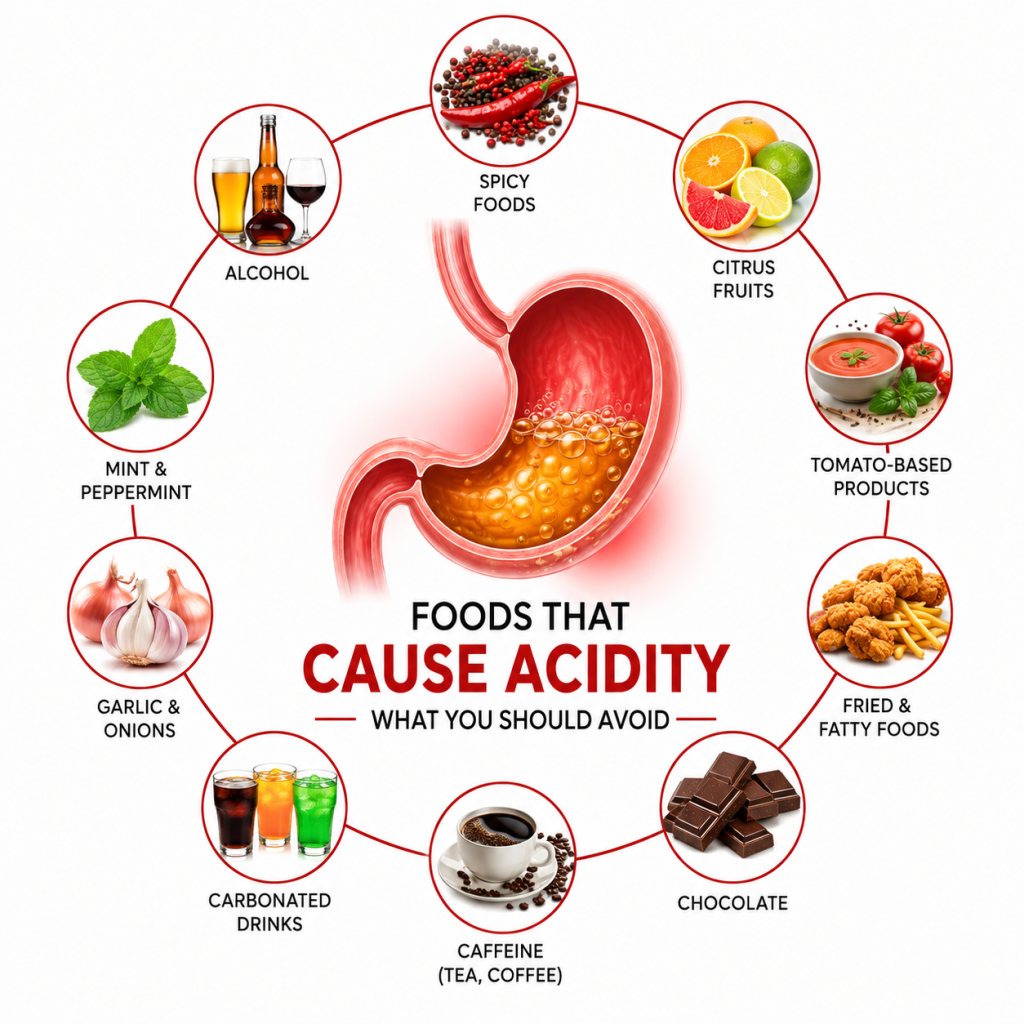
Top Foods That Cause Acidity You Should Avoid
Understanding which foods trigger acidity can help reduce symptoms significantly.
Spicy and Oily Foods
- Fried snacks: Increase acid production and slow digestion
- Spicy curries: Can irritate the stomach lining
- Street food: Often high in oil and spices
Processed and Packaged Foods
- Chips and biscuits: Low nutritional value, high in additives
- Instant noodles: Harder to digest regularly
- Processed snacks: Can disrupt gut balance
Citrus Fruits and Tomatoes
- Oranges and lemons: Naturally acidic
- Tomato-based dishes: Can worsen acid reflux in some people
Caffeine-Based Drinks
- Tea: Especially strong tea on an empty stomach
- Coffee: Can increase acid production
- Energy drinks: Highly stimulating for the stomach
Carbonated and Sugary Drinks
- Soft drinks: Cause bloating and pressure
- Soda: Increases gas and reflux
Chocolate and High-Fat Dairy
- Chocolate: Can relax the lower esophageal valve
- Cream-based foods: Slow digestion and increase discomfort
Alcohol and Smoking
- Alcohol: Increases acid production
- Smoking: Weakens digestive control mechanisms
Quick List of Foods That Cause Acidity
- fried and oily foods
- spicy curries
- citrus fruits
- tomato-based dishes
- coffee and strong tea
- carbonated drinks
- chocolate
- processed snacks
This list is useful for quick reference and helps identify common daily triggers.
Eating Habits That Make Acidity Worse
Acidity is not only about what you eat, but also how you eat.
- eating late at night
- lying down immediately after meals
- skipping meals
- overeating
- eating too fast
- drinking excessive tea or coffee
Even healthy food can cause discomfort if eating habits are not balanced.
Common Symptoms Caused by Acidic Foods
When acidity is triggered frequently, symptoms may include:
- burning sensation in the chest (heartburn)
- bloating and gas
- sour taste in the mouth
- nausea
- discomfort after meals
- heaviness in the stomach
If these symptoms occur repeatedly, it may indicate a deeper digestive issue.
What Foods Help Reduce Acidity
While avoiding trigger foods is important, including the right foods also helps.
- bananas
- oatmeal
- coconut water
- plain rice
- boiled vegetables
- curd (if tolerated)
These foods are generally easier to digest and help maintain balance in the stomach.
Why Choose Shirdi Sai Hospital for Acidity Treatment
At Shirdi Sai Hospital, our approach to acidity and digestive issues focuses on identifying the root cause rather than just controlling symptoms.
Patients choose our hospital because of:
- experienced medical team with practical treatment approach
- focus on accurate diagnosis before treatment
- patient-friendly consultation and clear guidance
- structured care for both acute and chronic acidity cases
- accessible location for residents around New BEL Road and surrounding areas
We emphasize long-term relief by combining medical treatment with dietary and lifestyle guidance.
When Should You See a Doctor for Acidity
Occasional acidity is common, but repeated symptoms should not be ignored.
Consult a doctor if you experience:
- acidity lasting more than a few days
- frequent heartburn
- difficulty swallowing
- severe chest discomfort
- recurring bloating and gas
- symptoms not improving with diet changes
If you are consulting a hospital in Bangalore, especially around New BEL Road, Devasandra, RMV 2nd Stage, Mathikere, Sanjaynagar, or Hebbal, early evaluation can help prevent complications and provide long-term relief.
Frequently Asked Questions
Which foods cause acidity the most
Spicy foods, fried foods, coffee, carbonated drinks, citrus fruits, and processed snacks are among the most common triggers.
Does coffee increase acidity
Yes, coffee can stimulate acid production, especially when consumed on an empty stomach or in large amounts.
Can spicy food cause acid reflux
Yes, in many individuals, spicy food can irritate the stomach lining and increase reflux symptoms.
What should I avoid during acidity
Avoid oily food, junk food, strong tea or coffee, late-night meals, and large portion sizes.
Which fruits are bad for acidity
Citrus fruits like orange and lemon may trigger acidity in some people, especially if consumed in excess.
Is acidity dangerous if untreated
Occasional acidity is not serious, but frequent untreated acidity can lead to complications like chronic reflux or digestive issues.
Conclusion
Acidity is a common but manageable condition when the right steps are taken early. The key is to identify trigger foods, improve eating habits, and maintain a balanced lifestyle. Avoiding spicy, oily, processed foods and managing meal timing can significantly reduce symptoms.
At Shirdi Sai Hospital, we encourage patients to look beyond temporary relief and focus on long-term digestive health. For people living around New BEL Road and nearby areas such as Devasandra, RMV 2nd Stage, Mathikere, Sanjaynagar, and Hebbal, early consultation can help identify the root cause and provide effective treatment before the condition worsens.

Leave a Reply