Feeling tired all the time is not always caused by poor sleep. Persistent tiredness can happen due to lifestyle factors, nutritional deficiencies, stress, infections, anemia, thyroid disorders, diabetes, sleep problems, or other medical conditions. If fatigue continues even after rest, affects daily work, or comes with symptoms like dizziness, weight change, poor appetite, breathlessness, or body weakness, it needs proper medical evaluation.
At Shirdi Sai Hospital, New BEL Road, we evaluate fatigue as a clinical symptom, not just as “normal tiredness.” Many patients from Devasandra, RMV 2nd Stage, Mathikere, Sanjaynagar, Hebbal, and nearby areas visit with constant tiredness, weakness, low stamina, or reduced daily energy. This guide explains the common reasons for feeling tired all the time, what symptoms to watch for, and when to consult a doctor.
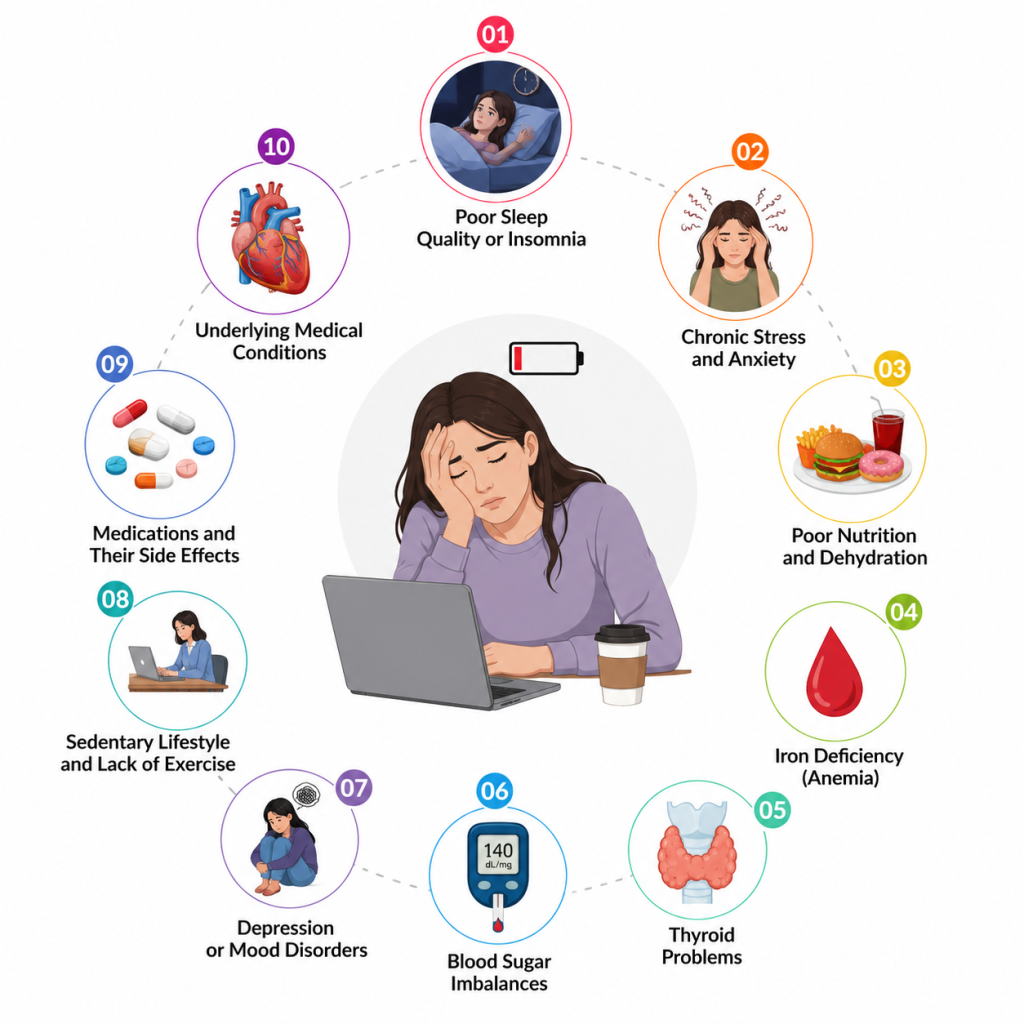
What Does It Mean to Feel Tired All the Time?
Feeling tired all the time means your body or mind is not recovering properly even after rest. It can feel like low energy, sleepiness, weakness, lack of focus, or reduced stamina throughout the day.
This type of fatigue is different from normal tiredness after work, travel, exercise, or a busy day. Normal tiredness improves with rest. Persistent fatigue continues, returns frequently, or interferes with daily life.
Common signs include:
- feeling exhausted after waking up
- low energy through the day
- difficulty concentrating
- heaviness in the body
- reduced interest in routine activities
- weakness after small tasks
- frequent need to rest
- poor work or study performance
Persistent fatigue should not be ignored when it affects daily routine or comes with other symptoms.
Why Am I Always Tired Even After Sleeping?
Feeling tired even after sleeping usually means sleep quantity and sleep quality are not the same. A person may sleep for enough hours but still wake up tired if the sleep is disturbed, irregular, or not deep enough.
Common reasons include:
- late-night screen use
- irregular sleep timing
- frequent waking at night
- snoring or breathing difficulty during sleep
- stress-related sleep disturbance
- caffeine intake late in the day
- sleep apnea or other sleep disorders
If tiredness continues after regular sleep, the cause may not be sleep alone. Anemia, thyroid disorders, diabetes, vitamin deficiencies, depression, chronic stress, and infections can also cause fatigue even after rest.
Why Do I Feel Tired All Day for No Clear Reason?
Feeling tired all day without an obvious reason can happen when the body is dealing with an internal imbalance. This may include low hemoglobin, low vitamin levels, thyroid imbalance, blood sugar changes, ongoing infection, dehydration, poor diet, or mental stress.
Many people ignore fatigue because they assume it is due to work pressure. However, when tiredness becomes constant, it is important to check whether the body is getting enough oxygen, nutrients, sleep, hydration, and hormonal balance.
The cause should be evaluated if tiredness is:
- present daily
- not improving with rest
- affecting work or home activities
- linked with dizziness or weakness
- associated with appetite or weight changes
Common Lifestyle Reasons for Feeling Tired All the Time
Lifestyle factors are one of the most common reasons for tiredness. However, they should not be assumed as the only reason if fatigue continues.
Poor Sleep Routine
Irregular sleep timing affects recovery. Late-night phone use, shift work, and sleeping at different times every day can disturb the body’s natural sleep rhythm.
High Stress
Stress uses mental energy continuously. People with high work pressure, financial stress, family stress, or emotional strain often feel tired even without heavy physical activity.
Long Sitting Hours
A sedentary routine can reduce energy levels. Sitting for long hours without movement can make the body feel heavy, stiff, and inactive.
Low Physical Activity
Lack of movement affects stamina. Light daily activity supports circulation, muscle function, mood, and energy.
Poor Diet Quality
Skipping meals, eating very little protein, relying on tea and snacks, or eating mostly refined carbohydrates can lead to unstable energy levels.
Dehydration
Low fluid intake can cause tiredness, headache, dizziness, and reduced concentration.
Excess Screen Time
Long screen exposure, especially at night, can affect sleep and increase mental fatigue.
Why Fatigue Is Common in Urban Indian Routines
In many Indian urban routines, fatigue is linked to a combination of work pressure, irregular meals, travel stress, screen exposure, and poor sleep habits. Many people start the day with tea or coffee, skip breakfast, eat late meals, and sit for long hours.
Common patterns include:
- long office hours
- long commuting time
- frequent tea or coffee intake
- late dinners
- reduced outdoor activity
- low sunlight exposure
- high screen exposure
- irregular meal timing
- weekend sleep imbalance
These habits can contribute to tiredness. However, if fatigue is frequent or severe, medical causes must also be checked.
Medical Reasons for Constant Fatigue
Persistent fatigue can be a symptom of an underlying medical condition. This is the most important reason not to ignore tiredness when it continues.
Anemia
Anemia means the body does not have enough healthy red blood cells or hemoglobin to carry oxygen properly. This can cause tiredness, dizziness, breathlessness, pale skin, headache, and low stamina.
Common causes include iron deficiency, vitamin B12 deficiency, chronic blood loss, or other medical conditions.
Thyroid Disorders
An underactive thyroid can slow body functions and cause tiredness, weight gain, dry skin, constipation, cold intolerance, and low mood. Thyroid imbalance needs blood testing and medical treatment.
Diabetes
High or unstable blood sugar levels can cause tiredness, increased thirst, frequent urination, blurred vision, and weight changes. Fatigue after meals or constant tiredness can be linked to blood sugar imbalance.
Vitamin B12 Deficiency
Vitamin B12 deficiency can cause fatigue, weakness, numbness or tingling, memory issues, and poor concentration. It is more common in people with low dietary intake, absorption issues, or certain long-term medication use.
Vitamin D Deficiency
Vitamin D deficiency can contribute to body pain, muscle weakness, low energy, and tiredness. It is commonly seen in people with limited sun exposure.
Infections
Viral infections, urinary infections, respiratory infections, and other ongoing infections can cause fatigue. Fever may not always be high, but the body can still feel weak while fighting infection.
Sleep Disorders
Sleep apnea and other sleep disorders can cause daytime tiredness even after a full night’s sleep. Loud snoring, choking during sleep, morning headache, and daytime sleepiness are important signs.
Mental Health Conditions
Anxiety, depression, chronic stress, and burnout can cause constant tiredness, low motivation, poor sleep, body heaviness, and reduced concentration. These symptoms need proper evaluation, not judgment.
Chronic Medical Conditions
Heart, kidney, liver, autoimmune, and long-term inflammatory conditions can also cause fatigue. This is why persistent tiredness needs a structured medical history and basic evaluation.
Lifestyle Fatigue vs Medical Fatigue
| Symptom Pattern | More Likely Linked To | What To Do |
|---|---|---|
| Tired after heavy work or travel | Normal physical tiredness | Rest, hydration, regular meals |
| Tired even after sleep | Poor sleep quality or medical issue | Review sleep and consider evaluation |
| Fatigue with dizziness | Anemia, dehydration, blood pressure issue | Medical assessment and blood tests |
| Fatigue with weight gain | Thyroid disorder, lifestyle factors | Thyroid evaluation if persistent |
| Fatigue with frequent urination | Blood sugar imbalance | Blood sugar testing |
| Fatigue with poor appetite | Infection, nutritional issue, other illness | Doctor consultation |
| Fatigue with breathlessness | Anemia, heart/lung issue, other causes | Prompt medical evaluation |
| Fatigue with numbness or tingling | Vitamin B12 deficiency or nerve-related issue | Medical evaluation |
This comparison helps separate ordinary tiredness from fatigue that needs attention.
What Causes Sudden Fatigue and Weakness?
Sudden fatigue and weakness can occur due to dehydration, low food intake, fever, infection, low blood sugar, low blood pressure, heavy exertion, poor sleep, or acute illness.
Possible causes include:
- not eating for long hours
- vomiting or loose stools
- fever or infection
- dehydration
- blood sugar changes
- sudden stress or anxiety
- overexertion
- poor sleep the previous night
Sudden fatigue should be checked urgently if it comes with chest pain, breathing difficulty, fainting, confusion, severe dizziness, weakness on one side of the body, or very high fever.
Symptoms That Should Not Be Ignored With Fatigue
Fatigue becomes more concerning when it appears with other symptoms.
Consult a doctor if tiredness is associated with:
- dizziness
- breathlessness
- chest discomfort
- unexplained weight loss
- unexplained weight gain
- frequent fever
- poor appetite
- repeated infections
- swelling in legs
- excessive thirst
- frequent urination
- numbness or tingling
- severe body pain
- poor concentration
- low mood for many days
These symptoms can help doctors identify whether fatigue is related to anemia, thyroid imbalance, diabetes, infection, nutritional deficiency, sleep disorder, or another medical condition.
What Tests Are Commonly Done for Constant Fatigue?
The required tests depend on symptoms, age, medical history, examination findings, and risk factors. Doctors do not recommend the same tests for everyone.
Commonly considered tests may include:
- complete blood count to check hemoglobin and infection markers
- thyroid function test
- blood sugar test
- vitamin B12 level
- vitamin D level
- liver and kidney function tests
- urine test if urinary symptoms are present
- infection-related tests if fever or body pain is present
Testing should be decided after medical consultation. Self-selecting random tests without clinical guidance can miss the actual cause.
How Doctors Evaluate Constant Fatigue
At a hospital, fatigue evaluation starts with understanding the pattern, duration, associated symptoms, lifestyle, sleep, diet, and medical history.
Doctors usually assess:
- how long fatigue has been present
- whether it improves with rest
- sleep quality
- eating pattern
- weight changes
- fever or infection symptoms
- menstrual history in women
- medication history
- diabetes or thyroid history
- stress and mood symptoms
- hydration and activity level
This structured approach helps identify whether the tiredness is lifestyle-related, nutritional, hormonal, metabolic, infection-related, or linked to another condition.
How to Improve Energy Levels Naturally
Lifestyle correction can support better energy, especially when fatigue is linked to routine, diet, hydration, or sleep. However, persistent fatigue still needs evaluation if it does not improve.
Maintain a Regular Sleep Schedule
Sleep and wake up at consistent times. Reduce screen use before bed and avoid heavy meals late at night.
Eat Balanced Meals
Include protein, vegetables, fruits, whole grains, and healthy fats in appropriate portions. Avoid long gaps between meals.
Add Protein to Daily Food
Dal, eggs, paneer, curd, pulses, fish, chicken, nuts, and seeds can support strength and recovery when included properly.
Stay Hydrated
Drink water through the day. Increase fluids during fever, sweating, loose stools, or hot weather.
Move Daily
Walking, stretching, or light activity improves circulation and reduces sluggishness.
Reduce Excess Tea and Coffee
Tea and coffee can temporarily improve alertness but should not replace sleep, food, or hydration.
Manage Stress
Stress management through routine, rest, breathing practices, counselling, or medical support can help when mental fatigue is present.
Why Patients Choose Shirdi Sai Hospital for Fatigue Evaluation
At Shirdi Sai Hospital, New BEL Road, fatigue is evaluated with a focus on identifying the cause instead of giving only temporary symptom relief. Constant tiredness can come from many systems in the body, so proper assessment matters.
Patients choose Shirdi Sai Hospital for fatigue-related evaluation because:
- doctors assess fatigue through symptoms, history, and clinical examination
- evaluation can include common causes such as anemia, thyroid issues, diabetes, infections, and nutritional deficiencies
- care is suitable for adults, elderly patients, and people with ongoing weakness
- advice includes medical treatment, diet correction, hydration, sleep, and lifestyle guidance
- the hospital is accessible for patients from Devasandra, RMV 2nd Stage, Mathikere, Sanjaynagar, Hebbal, and nearby New BEL Road areas
This approach helps patients understand whether fatigue is due to lifestyle patterns or an underlying condition that needs treatment.
When to Consult a Doctor for Constant Fatigue
You should consult a doctor if fatigue:
- lasts for more than one to two weeks
- does not improve with sleep and rest
- affects daily work, study, or home responsibilities
- comes with dizziness or breathlessness
- comes with unexplained weight loss or weight gain
- occurs with fever, night sweats, or repeated infections
- occurs with excessive thirst or frequent urination
- occurs with poor appetite or ongoing weakness
- affects elderly people, pregnant women, or people with known chronic illness
If you are consulting a hospital in Bangalore, especially around New BEL Road and nearby areas, early evaluation helps identify the root cause and prevents delay in treatment.
Frequently Asked Questions
Why do I feel tired all the time even after sleep?
Feeling tired even after sleep can happen due to poor sleep quality, stress, anemia, thyroid imbalance, diabetes, vitamin deficiency, or sleep disorders. If it continues, medical evaluation is recommended.
What deficiency causes constant fatigue?
Iron deficiency, vitamin B12 deficiency, and vitamin D deficiency are commonly linked with fatigue. A doctor may suggest blood tests based on symptoms and medical history.
Can dehydration cause fatigue?
Yes. Dehydration can cause tiredness, dizziness, headache, poor concentration, and weakness. Fluid intake becomes especially important during fever, loose stools, vomiting, or hot weather.
Is constant fatigue serious?
Occasional tiredness is common. Constant fatigue becomes important when it does not improve with rest, affects daily routine, or comes with symptoms like dizziness, weight change, breathlessness, fever, or poor appetite.
Why do I feel tired without doing anything?
Tiredness without activity can happen due to poor sleep, stress, low hemoglobin, thyroid issues, blood sugar imbalance, vitamin deficiency, infection, or low physical activity.
What tests are needed for fatigue?
Doctors may advise tests such as complete blood count, thyroid function test, blood sugar test, vitamin B12, vitamin D, liver function, kidney function, or urine tests depending on symptoms.
When should I worry about fatigue?
You should seek medical advice if fatigue continues for more than one to two weeks, worsens, affects daily activity, or appears with dizziness, breathlessness, fever, weight change, poor appetite, or repeated infections.
Conclusion
Feeling tired all the time is not something to dismiss as laziness or routine stress. While poor sleep, dehydration, low physical activity, and irregular eating habits can cause fatigue, persistent tiredness can also point to anemia, thyroid disorders, diabetes, vitamin deficiencies, infections, sleep disorders, or other health concerns.
At Shirdi Sai Hospital, New BEL Road, fatigue is evaluated through a structured medical approach so the underlying reason can be identified. If tiredness is frequent, worsening, or affecting daily life, timely consultation can help guide the next step safely.

Leave a Reply