Loose motions can quickly drain water, salts, and energy from the body. The best foods after loose motions are simple, soft, and easy to digest, such as rice, curd rice if tolerated, banana, idli, khichdi, plain dal, soups, and oral rehydration solution. The first goal is not heavy eating. The first goal is hydration, electrolyte balance, and gradual return to normal food.
At Shirdi Sai Hospital, New BEL Road, we often see patients who either stop eating completely or eat heavy food too soon after loose motions. Both can delay recovery. This guide explains what to eat after loose motions, what to drink, which foods to avoid, and when medical evaluation becomes necessary.
What Happens to the Body During Loose Motions?
Loose motions, also called diarrhea, cause frequent watery stools. During this time, the body loses water and important salts. If this loss is not replaced, dehydration can develop.
Common effects include:
- weakness
- thirst
- dry mouth
- reduced urination
- stomach cramps
- tiredness
- dizziness
- loss of appetite
Loose motions may happen due to food infection, viral infection, contaminated food or water, food intolerance, indigestion, stress, or certain medicines.
The most important step after loose motions is replacing lost fluids and salts. Food should be restarted gradually with simple, easy-to-digest meals.
What Should You Drink After Loose Motions?
Fluids are the first priority. Even if appetite is low, small sips of fluids should continue frequently.
Helpful options include:
- oral rehydration solution
- clean drinking water
- rice water
- clear soups
- coconut water if tolerated
- lightly salted homemade fluids
ORS is especially useful because it helps replace both water and salts lost through watery stools. Use a standard ORS sachet from a pharmacy and mix it exactly as instructed on the packet. Do not make it too concentrated or too diluted.
Avoid replacing ORS with sugary energy drinks or soft drinks. These do not provide the same medical rehydration balance and may worsen loose stools in some people.
Best Foods to Eat After Loose Motions
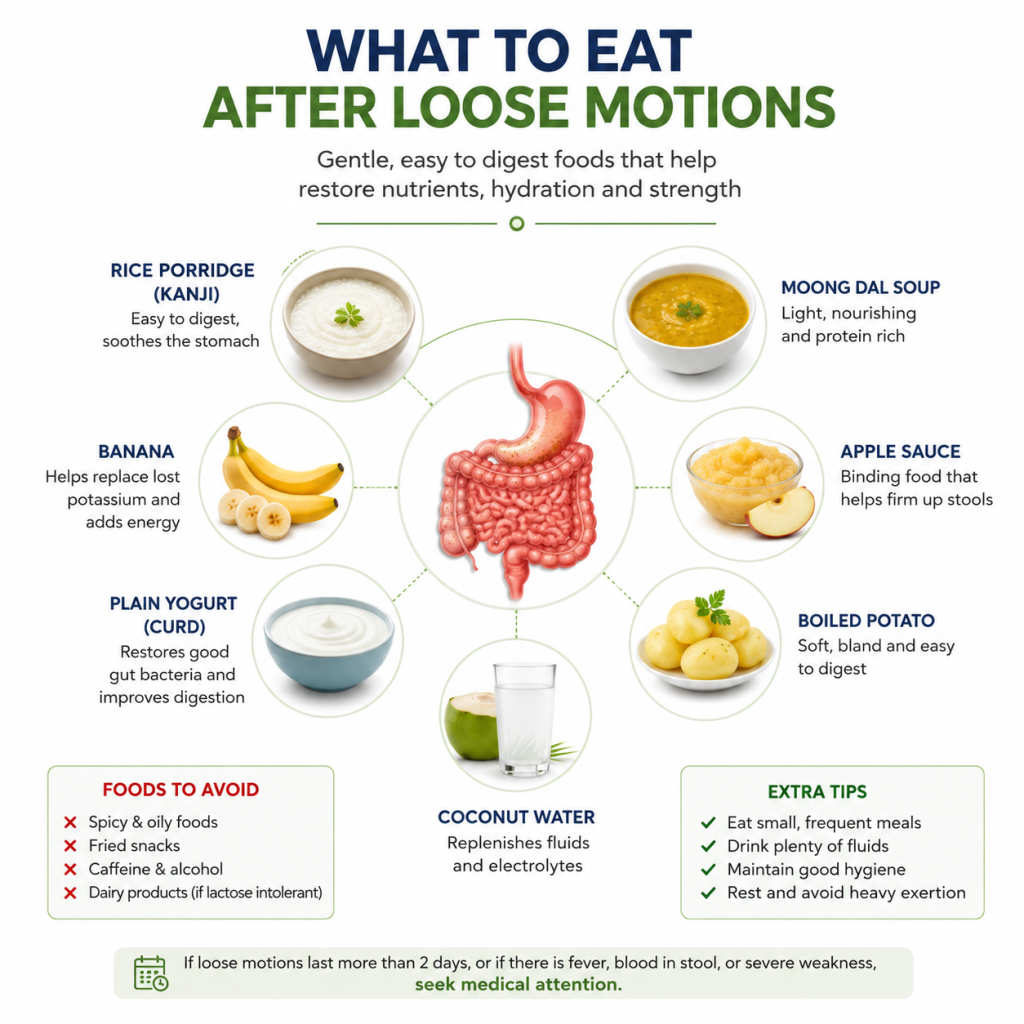
The best foods after loose motions should be soft, low in excess oil, and easy on the stomach.
Rice
Plain rice is easy to digest and helps provide energy. It can be eaten with a little dal water or curd if tolerated.
Khichdi
Soft khichdi made with rice and moong dal is a practical recovery food. Keep it mild and avoid heavy spices.
Banana
Banana is easy to eat and provides energy. It is often tolerated well after loose motions.
Idli
Idli is soft, steamed, and easy to digest. It is a good option when appetite starts returning.
Plain Dal or Dal Water
Light dal or dal water can provide gentle nutrition. Avoid heavy tadka or too much spice during recovery.
Curd Rice if Tolerated
Curd rice can be useful for some people because curd supports gut balance. However, if curd causes bloating, discomfort, or worsens stools, avoid it temporarily.
Toast or Plain Bread
Plain toast can be used when the stomach is settling. Avoid butter-heavy or spicy toppings.
Soup
Clear vegetable soup or light homemade broth helps with fluids and comfort. Keep it simple and low in oil.
What to Eat First After Loose Motions Stop
Do not immediately return to a heavy meal after loose motions reduce. Restart food in stages.
First Stage: Fluids
Begin with:
- ORS
- water
- rice water
- clear soup
This helps correct fluid loss and reduces weakness.
Second Stage: Soft Foods
Once vomiting is absent and appetite improves, add:
- rice
- banana
- idli
- khichdi
- plain dal
- toast
Third Stage: Normal Meals
After stools become more formed and weakness reduces, slowly return to:
- regular rice or roti
- dal
- cooked vegetables
- curd if tolerated
- light protein foods
Avoid jumping from fluids directly to fried food, spicy curries, or heavy meals.
What to Eat After Loose Motions and Weakness
Weakness after loose motions happens because the body loses fluids, salts, and energy. Recovery food should rebuild strength gradually.
Include:
- ORS or fluids through the day
- soft rice or khichdi
- banana
- light dal
- curd if tolerated
- boiled or soft-cooked vegetables
- small frequent meals
Do not force large meals. Eat small portions every few hours. This is easier on digestion and helps the body regain energy.
Foods to Avoid After Loose Motions
Some foods can irritate the stomach or worsen loose stools.
Avoid:
- fried foods
- spicy food
- oily curries
- packaged snacks
- soft drinks
- alcohol
- too much tea or coffee
- sweets and high-sugar drinks
- heavy dairy if it worsens symptoms
- raw salads during active loose motions
- street food until recovery
These foods can increase gut irritation, bloating, gas, or stool frequency.
What to Eat vs What to Avoid After Loose Motions
| Better Choices | Avoid Temporarily |
|---|---|
| ORS and clean water | Soft drinks and sugary beverages |
| Rice and khichdi | Fried rice, biryani, oily meals |
| Banana | Very sugary desserts |
| Idli | Spicy street food |
| Light dal | Heavy dal with excess oil and masala |
| Clear soup | Creamy, heavy soups |
| Curd rice if tolerated | Milk or dairy if it worsens symptoms |
| Small frequent meals | Large heavy meals |
This comparison helps patients restart food safely without confusing recovery food with regular food.
Is Curd Good After Loose Motions?
Curd may help some people after loose motions because it is a fermented food and can support gut balance. Many Indian households use curd rice as a recovery food.
However, curd does not suit everyone during active loose motions. Avoid it temporarily if it causes:
- bloating
- stomach discomfort
- increased stool frequency
- gas
If tolerated, take it in small quantity with rice. Avoid adding chilli, pickle, or heavy seasoning.
Is Milk Good After Loose Motions?
Milk can feel heavy during loose motions and may worsen bloating or diarrhea in some people. If milk increases discomfort, avoid it temporarily.
This does not mean all dairy is permanently harmful. It means the gut may need time to recover. Curd may be tolerated better than milk in some people, but it should still be taken based on individual comfort.
Can You Eat Fruits After Loose Motions?
Yes, but choose gentle fruits and avoid excess quantity.
Better options:
- banana
- apple without skin or stewed apple
- papaya in small quantity if tolerated
Avoid large portions of fruit juice. Packaged juices and very sweet drinks can worsen loose stools because of high sugar content.
Whole fruit in small portions is usually better than juice.
What to Eat After Loose Motions in Children
Children can become dehydrated faster than adults. Fluids must be given frequently in small amounts.
For children, food should be age-appropriate and simple.
Useful options may include:
- ORS as advised
- breast milk or formula for infants
- rice
- soft khichdi
- banana
- curd rice if tolerated
- dal water
- soft home-cooked food
Do not stop feeding completely. Small frequent feeds are usually better than long gaps without food.
Medical care is important if the child is very weak, not drinking, vomiting repeatedly, passing blood in stool, has high fever, or shows signs of dehydration.
What to Eat After Loose Motions in Adults
Adults should focus on hydration first, then simple meals.
A practical recovery plan:
Morning
ORS or water in small sips
Banana or plain toast if hungry
Lunch
Soft rice, khichdi, or idli
Light dal or curd rice if tolerated
Evening
Rice water, soup, or coconut water if tolerated
Dinner
Khichdi, plain rice with dal, or soft home-cooked food
Avoid alcohol, fried snacks, and spicy meals until the stomach settles.
Common Mistakes After Loose Motions
Many people delay recovery by making simple mistakes.
Common mistakes include:
- drinking only plain water but not replacing salts
- stopping food completely for too long
- taking soft drinks instead of ORS
- eating spicy food too soon
- using repeated medicines without medical advice
- ignoring dehydration signs
- giving packaged juices to children
- eating outside food immediately after symptoms reduce
Recovery is faster when food and fluids are restarted carefully.
When Loose Motions Need Medical Attention
Loose motions should not be ignored if symptoms are severe, persistent, or linked with dehydration.
Consult a doctor if you have:
- loose motions lasting more than two days
- repeated vomiting
- high fever
- blood in stool
- severe abdominal pain
- signs of dehydration
- dizziness or fainting
- very low urine output
- dry mouth and extreme thirst
- loose motions in infants, elderly people, pregnant women, or people with chronic illness
If you are consulting a hospital in Bangalore, especially around New BEL Road and nearby areas, early evaluation can help identify dehydration, infection, food poisoning, or other causes that need treatment.
Why Patients Choose Shirdi Sai Hospital for Loose Motions and Dehydration Care
At Shirdi Sai Hospital, New BEL Road, loose motions are evaluated based on severity, duration, hydration status, food history, fever, vomiting, abdominal pain, and overall condition.
Patients choose Shirdi Sai Hospital because:
- doctors assess dehydration risk and associated symptoms
- evaluation focuses on identifying the cause, not just stopping stools
- care guidance includes fluids, diet, medicines when needed, and recovery monitoring
- support is suitable for adults, children, and elderly patients
- the hospital is accessible for patients from Devasandra, RMV 2nd Stage, Mathikere, Sanjaynagar, Hebbal, and nearby New BEL Road areas
General Surgery
Best Hospital in New BEL road
Frequently Asked Questions
What is the best food after loose motions?
The best foods after loose motions are rice, khichdi, banana, idli, plain dal, toast, soups, and curd rice if tolerated. Fluids and ORS are the first priority.
Can I eat curd rice after loose motions?
Curd rice can be taken if it suits your stomach. Avoid it temporarily if it causes bloating, gas, discomfort, or worsens loose stools.
What should I drink after loose motions?
ORS, clean water, rice water, clear soups, and fluids in small frequent sips can help replace lost fluids. ORS should be prepared exactly as instructed on the sachet.
Is banana good after loose motions?
Yes, banana is usually easy to digest and provides energy. It is commonly used as a simple recovery food after loose motions.
What foods should I avoid after loose motions?
Avoid spicy food, fried food, soft drinks, alcohol, excess tea or coffee, packaged snacks, heavy dairy if it worsens symptoms, and street food until recovery.
Can I eat normal food after loose motions stop?
You can return to normal food gradually once stools improve and appetite returns. Start with soft meals and avoid heavy, oily, or spicy food for a short period.
When should I see a doctor for loose motions?
Consult a doctor if loose motions last more than two days, there is blood in stool, high fever, repeated vomiting, severe pain, dizziness, low urine output, or signs of dehydration.
Conclusion
After loose motions, the body needs fluids, salts, rest, and simple food. ORS, clean water, rice, khichdi, banana, idli, light dal, soups, and curd rice if tolerated can support recovery. Heavy, spicy, oily, and sugary foods should be avoided until digestion settles.
At Shirdi Sai Hospital, New BEL Road, patients with loose motions are assessed for dehydration, infection signs, and recovery needs. Timely medical care is important when symptoms persist, worsen, or affect children, elderly people, pregnant women, or people with chronic illness.

Leave a Reply