By Shirdi Sai Hospital
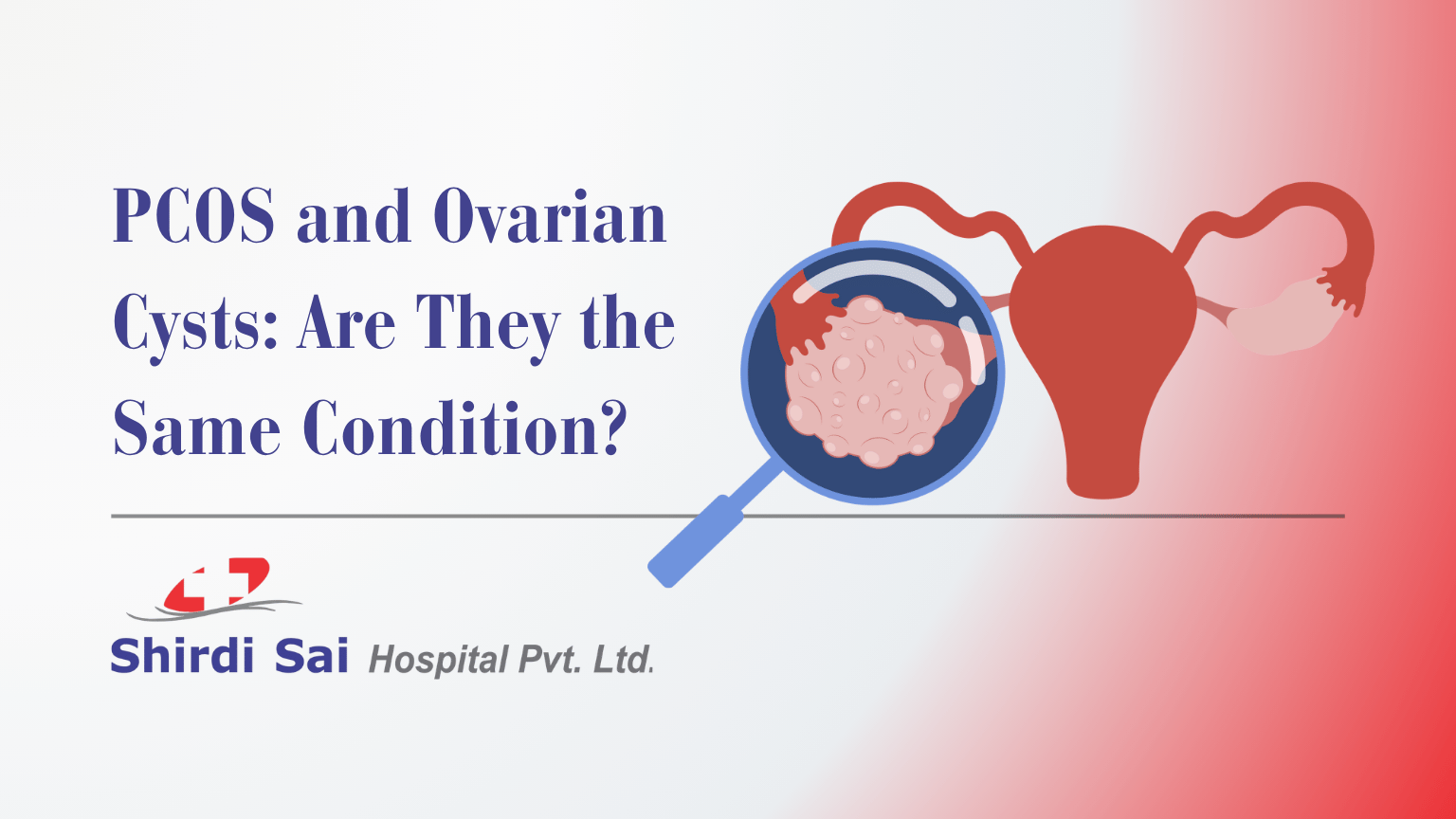
No. A separate ovarian cyst is not the same as the hormonal condition commonly known as PCOS. A cyst is a structural finding in or on an ovary. The syndrome involves a wider pattern of hormonal, reproductive and metabolic features.
In 2026, PCOS was renamed polyendocrine metabolic ovarian syndrome, or PMOS. Patients may still see PCOS on reports and search for it online. We use both terms here to make the distinction clear: the syndrome is not simply a collection of ovarian cysts that needs removal.
If your scan mentions cysts or polycystic ovaries, request a gynaecology review so the clinician can explain the finding.
Why are the names so confusing?
The older name, polycystic ovary syndrome, made many people assume that cysts were essential to the diagnosis.
However, the small structures described in a polycystic ovarian appearance are follicles. A follicle is part of normal ovarian biology and contains a developing egg.
That appearance is different from a separate cyst or mass needing its own assessment. It also does not, by itself, establish the syndrome.
The newer PMOS name reflects the condition’s broader hormonal and metabolic nature. It is a name change for the condition, not a new diagnosis that every patient must start investigating from the beginning.
What is an ovarian cyst?
An ovarian cyst is a fluid-filled sac in or on an ovary. Some develop in relation to the menstrual cycle and may resolve without an operation.
However, other types may persist or need a different assessment. For example, ultrasound can help describe the size, structure and features that guide follow-up.
Therefore, a single cyst does not prove PMOS or PCOS. It also does not automatically mean cancer.
The clinician needs to interpret the finding in the context of symptoms, age, menopausal status and the rest of the scan.
Therefore, the word “cyst” alone is not enough to choose a treatment.
What does the syndrome involve?
The syndrome may involve irregular ovulation, menstrual changes and signs or laboratory findings of increased androgen activity. Metabolic health can also be relevant.
Symptoms can include irregular or infrequent periods, acne, increased facial or body hair or scalp hair changes. However, not every patient has every feature.
These symptoms also have other possible explanations. Assessment should consider relevant alternatives rather than diagnosing the syndrome from one symptom.
The condition is not defined by pain from one isolated cyst. Removing a cyst is therefore not the same as treating the wider syndrome.
Does ultrasound alone diagnose PCOS or PMOS?
No. A scan is one possible part of the assessment. Therefore, the clinician reviews your history and relevant blood tests and checks for other causes.
Some adults can meet the diagnostic criteria without needing an ultrasound finding of polycystic ovaries. Assessment in adolescents uses additional cautions, so clinicians must not apply adult scan rules casually to teenagers.
A report saying “polycystic ovarian morphology” describes appearance. It does not automatically tell the clinician whether the full syndrome is present.
Avoid using an online ultrasound image or a follicle count to diagnose yourself. The criteria need clinical interpretation.
Can you have the syndrome without ovarian cysts?
Yes. Clinicians can diagnose the syndrome without finding separate ovarian cysts.
This is one reason the older name caused confusion. A person may have the syndrome even when the scan shows no separate cyst.
However, the reverse is also true: someone with a cyst may not have the syndrome.
If a previous diagnosis and a recent scan seem inconsistent, ask the clinician to explain which diagnostic findings supported the original assessment. Do not assume that a new scan has automatically confirmed or cancelled the diagnosis.
Can both occur in the same person?
Yes. A person with PMOS, previously called PCOS, can also develop an ovarian cyst.
The cyst then needs assessment according to its own features. It should not be dismissed solely because a hormonal condition is already known.
Equally, symptoms from a hormonal syndrome should not all be attributed to a cyst discovered incidentally.
For example, irregular periods and a new episode of sudden severe one-sided pain may require different clinical questions. A known diagnosis does not remove the need to investigate an important change.
Does either finding automatically mean infertility?
No. Neither a report word nor a single ultrasound finding determines an individual’s fertility.
The syndrome can affect ovulation, while a cyst’s relevance depends on its type and the wider reproductive situation. Many other factors influence the chance of pregnancy.
If pregnancy is a goal, tell the gynaecologist. The assessment and treatment discussion should reflect that goal without promising a particular outcome.
Do not assume that removing a cyst will correct all menstrual or ovulation problems. It is equally unhelpful to assume that a syndrome diagnosis makes pregnancy impossible.
Why are the treatment plans different?
Management of the syndrome addresses the features that matter to the patient, such as menstrual patterns, androgen-related symptoms, metabolic health or fertility goals.
Management of an ovarian cyst may involve monitoring, additional investigation or surgery in selected circumstances.
Therefore, these findings need different care plans. A medicine prescribed for a hormonal symptom is not a universal treatment for every ovarian mass.
This article is intended to clarify the distinction, not to choose a drug or operation. The correct next step follows the clinical assessment.
Do not start or stop hormonal treatment because a scan uses a different term from an older report.
What should you bring to a consultation?
Bring the actual ultrasound report, previous scans, menstrual history and relevant blood-test results. Include the names and dates of hormonal medicines or supplements you use.
It can help to record:
- How often periods occur and whether the pattern has changed.
- Any acne, hair or other hormonal symptoms.
- The location and timing of pelvic pain.
- Whether the cyst is new or appeared on earlier scans.
- Pregnancy plans or the possibility of pregnancy.
- Previous ovarian surgery or important family history.
Ask the clinician to separate three questions: what the scan shows, whether the syndrome is present and what requires treatment now.
When should symptoms be checked?
Arrange a gynaecology review for persistent menstrual changes, symptoms affecting daily life or uncertainty about a cyst report.
Sudden severe pelvic pain, particularly with vomiting, needs urgent assessment. Fainting, severe weakness, fever, heavy bleeding or rapid deterioration also needs urgent care.
If pregnancy is possible, mention it promptly. Do not assume that every pelvic symptom is explained by a previous PCOS or cyst diagnosis.
Our pelvic-pain guide explains why symptom assessment can involve several possible causes.
Getting the terminology clear
A separate ovarian cyst, a polycystic ovarian appearance and the syndrome now called PMOS are related terms in ovarian health, but they are not interchangeable diagnoses.
For a planned report review, contact Shirdi Sai Hospital on New BEL Road. Bring the scan and earlier results so the consultation can address the actual finding and your concerns.
If irregular periods are your main concern, our guide to common causes of irregular periods explains why the clinician considers more than one possibility.
Frequently asked questions
Does one ovarian cyst mean I have PCOS?
No. A cyst alone does not establish the syndrome.
What is PMOS?
Polyendocrine metabolic ovarian syndrome is the new name introduced in 2026 for the condition previously called PCOS.
Are polycystic follicles the same as a large ovarian cyst?
No. They are different findings and need different interpretation.
Can PCOS or PMOS be diagnosed without cysts?
Yes. Clinicians do not need to find separate ovarian cysts to diagnose it.
Can a scan alone confirm the syndrome?
No. Diagnosis uses the relevant clinical criteria and assessment, including exclusion of other causes where appropriate.
Does cyst removal cure the syndrome?
No. Removing a separate cyst does not automatically treat the broader hormonal and metabolic condition.
Does either diagnosis prove I cannot become pregnant?
No. Fertility needs an individual assessment rather than a conclusion from one label.

Leave a Reply