Reviewed by Shirdi Sai Hospital Team
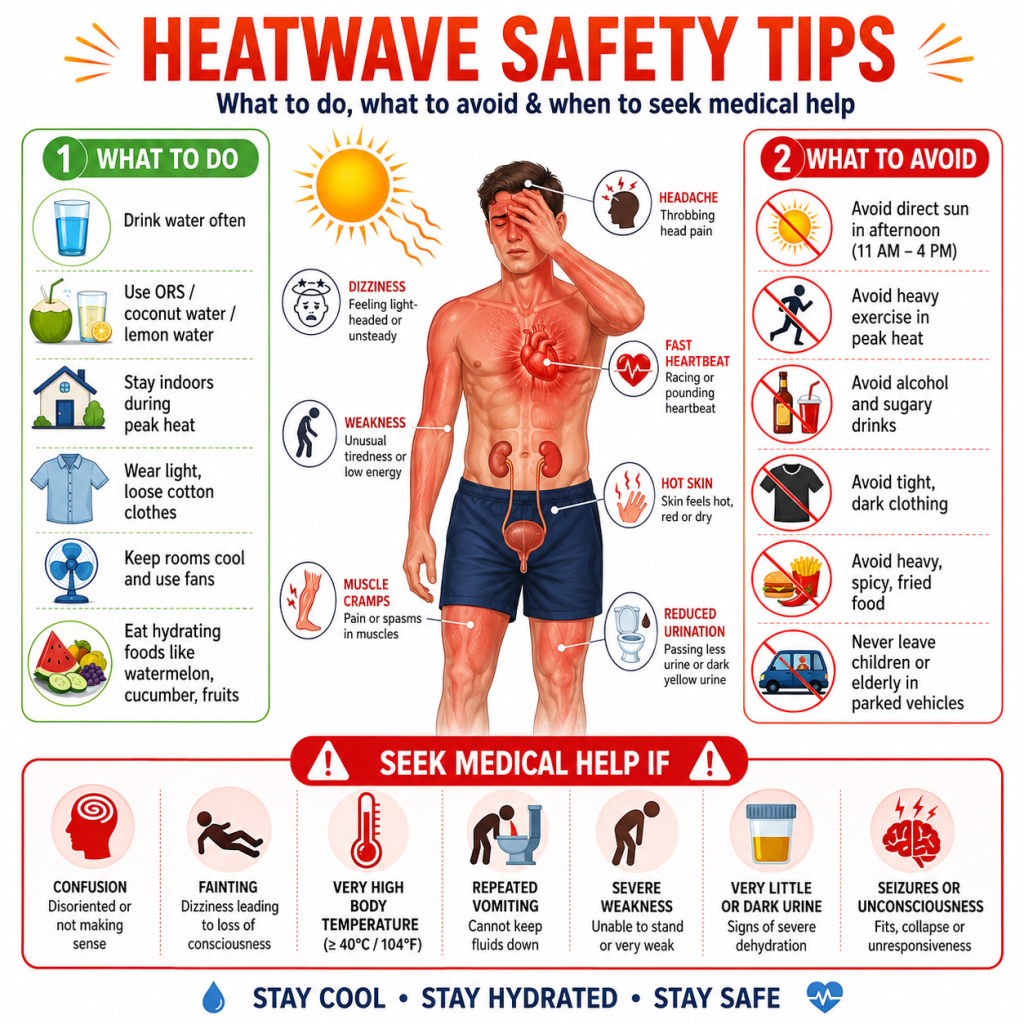
Quick Answer: The best heatwave safety tips include drinking water regularly, avoiding direct sun exposure during peak afternoon hours, wearing light cotton clothing, eating hydrating foods, staying in cool environments, and seeking medical help immediately if symptoms such as confusion, fainting, severe weakness, reduced urination, vomiting, or very high body temperature occur.
Heatwaves can cause dehydration, heat exhaustion, heat cramps, fainting, and heat stroke when the body cannot cool itself effectively. At Shirdi Sai Hospital, New BEL Road, we commonly see patients with dehydration, dizziness, headache, weakness, body pain, fever-like symptoms, and heat-related illnesses during extreme summer temperatures.
This comprehensive guide explains how to stay safe during a heatwave in India, what to do, what to avoid, how to protect children and elderly family members, and when to seek medical attention.
Why Heatwaves Are a Serious Health Risk
A heatwave is more than just hot weather. During extreme temperatures, the body works harder to maintain a normal internal temperature. Increased sweating leads to fluid and electrolyte loss, raising the risk of dehydration and heat-related illnesses.
How Heat Affects the Body
| Body Function | Impact of Extreme Heat |
|---|---|
| Fluid Balance | Increased fluid loss through sweating |
| Temperature Control | Reduced ability to cool the body |
| Blood Pressure | Can fluctuate due to dehydration |
| Heart Function | Increased workload on the heart |
| Kidney Function | Higher risk of dehydration-related stress |
| Energy Levels | Fatigue and weakness |
| Mental Alertness | Reduced concentration and confusion |
Many people ignore early warning signs such as headache, thirst, tiredness, and dizziness. Without proper hydration and cooling, these symptoms can worsen rapidly.
Heat-related illness can become serious quickly, especially in children, elderly people, pregnant women, outdoor workers, and individuals with chronic medical conditions.
Common Heatwave Health Problems in India
Dehydration
Dehydration occurs when the body loses more fluids than it receives.
Symptoms of Dehydration
- Dry mouth
- Dark yellow urine
- Reduced urination
- Headache
- Dizziness
- Fatigue
- Muscle cramps
- Extreme thirst
Heat Cramps
Heat cramps are painful muscle spasms caused by excessive sweating and electrolyte loss.
Commonly Affected Areas
- Legs
- Arms
- Abdomen
- Back muscles
Heat Exhaustion
Heat exhaustion develops when the body overheats but can still regulate temperature.
Symptoms of Heat Exhaustion
- Heavy sweating
- Weakness
- Dizziness
- Headache
- Nausea
- Fast heartbeat
- Fatigue
- Feeling faint
Heat Stroke
Heat stroke is a life-threatening medical emergency.
Symptoms of Heat Stroke
- Very high body temperature
- Confusion
- Fainting
- Seizures
- Hot skin
- Severe weakness
- Rapid pulse
- Unconsciousness
If heat stroke symptoms occur, seek emergency medical care immediately.
Heat Exhaustion vs Heat Stroke
| Feature | Heat Exhaustion | Heat Stroke |
|---|---|---|
| Severity | Serious but often reversible | Medical emergency |
| Sweating | Heavy sweating common | Skin may be hot and dry or sweating may reduce |
| Mental State | Weakness, dizziness, fatigue | Confusion, seizures, unconsciousness |
| Body Temperature | Elevated | Dangerously high |
| Immediate Action | Rest, hydration, cooling | Emergency medical treatment |
| Risk if Ignored | Can progress to heat stroke | Can be life-threatening |
Understanding the difference between heat exhaustion and heat stroke can help save lives.
Heatwave Safety Tips: What to Do
1. Drink Water Frequently
Do not wait until you feel thirsty.
Best Drinks During a Heatwave
| Recommended Drinks | Benefits |
|---|---|
| Water | Primary hydration source |
| ORS | Replaces fluids and electrolytes |
| Lemon Water | Refreshing hydration |
| Buttermilk | Cooling and hydrating |
| Coconut Water | Natural electrolytes |
| Rice Water | Supports hydration |
| Clear Soups | Fluid and nutrient support |
People with kidney disease, heart disease, or fluid restrictions should follow medical advice regarding fluid intake.
2. Stay Indoors During Peak Heat Hours
The hottest period is usually between late morning and late afternoon.
If You Must Go Outside
- Carry water
- Use an umbrella or cap
- Wear breathable clothing
- Take breaks in shaded areas
- Avoid prolonged standing outdoors
- Stay away from crowded, poorly ventilated spaces
3. Wear Light and Loose Clothing
Choose:
- Loose cotton clothes
- Light-coloured fabrics
- Breathable materials
- Hats or caps
- Comfortable footwear
Avoid:
- Tight clothing
- Dark colours
- Synthetic fabrics
4. Keep Your Home Cool
Ways to Reduce Indoor Heat
- Close curtains during peak sunlight
- Improve ventilation
- Use fans
- Take cool showers
- Use damp cloths for cooling
- Avoid excessive indoor heat from cooking
Children and elderly individuals should remain in the coolest available room.
5. Eat Light and Hydrating Meals
Best Foods During a Heatwave
| Recommended Foods | Benefits |
|---|---|
| Curd Rice | Cooling and easy to digest |
| Dal Rice | Balanced nutrition |
| Khichdi | Light meal |
| Watermelon | High water content |
| Cucumber | Hydrating |
| Fruits | Natural hydration |
| Vegetable Soups | Fluids and nutrients |
| Buttermilk | Cooling effect |
6. Monitor High-Risk Family Members
People at higher risk include:
- Infants
- Children
- Elderly individuals
- Pregnant women
- Outdoor workers
- People with diabetes
- People with hypertension
- Heart disease patients
- Kidney disease patients
- Individuals living alone
Check regularly for hydration, alertness, and urine output.
What Not to Do During a Heatwave
Heatwave Don’ts Checklist
| Avoid | Why |
|---|---|
| Ignoring thirst | Can worsen dehydration |
| Exercising in peak heat | Increases heat illness risk |
| Drinking alcohol | Causes dehydration |
| Excess sugary drinks | Poor hydration support |
| Staying in parked vehicles | Dangerous temperature rise |
| Ignoring confusion or fainting | Possible heat stroke |
Do Not Ignore Reduced Urination
Dark urine and reduced urination are important warning signs of dehydration.
Do Not Exercise During Peak Heat
Avoid:
- Running
- Outdoor sports
- Heavy lifting
- Cycling in direct sun
Do Not Leave Children or Elderly People in Vehicles
Vehicle temperatures can rise rapidly and become life-threatening.
What to Drink During a Heatwave
Best Hydration Choices
| Drink | Recommended |
|---|---|
| Water | Yes |
| ORS | Yes, when dehydrated |
| Buttermilk | Yes |
| Coconut Water | Yes |
| Lemon Water | Yes |
| Clear Soups | Yes |
| Alcohol | No |
| Energy Drinks | Avoid |
| Sugary Soft Drinks | Limit |
People with diabetes, kidney disease, or heart disease should consult their doctor regarding hydration choices.
What to Eat During a Heatwave
Recommended Foods
- Curd
- Buttermilk
- Watermelon
- Papaya
- Banana
- Rice
- Dal
- Khichdi
- Vegetable soups
- Fresh fruits
- Light home-cooked meals
Foods to Avoid
| Foods to Limit | Reason |
|---|---|
| Fried foods | Difficult digestion |
| Very spicy foods | May worsen discomfort |
| Heavy greasy meals | Increase fatigue |
| Stale food | Risk of food poisoning |
| Excess sweets | Poor hydration support |
| Packaged snacks | Low nutritional value |
Heatwave Symptoms That Need Attention
Watch for:
- Headache
- Dizziness
- Weakness
- Muscle cramps
- Heavy sweating
- Nausea
- Dry mouth
- Dark urine
- Reduced urination
- Fast heartbeat
- Confusion
- Fever-like sensation
- Fainting
If symptoms occur after heat exposure, move to a cool area and begin hydration immediately.
What to Do If Someone Feels Sick During a Heatwave
First Aid for Heat-Related Illness
- Move the person to a cool or shaded area.
- Help them rest.
- Loosen tight clothing.
- Give water or ORS if conscious.
- Apply cool wet cloths.
- Improve airflow around the person.
- Seek medical care if symptoms persist.
Do Not Give Fluids If
- The person is unconscious
- They are confused
- They are vomiting repeatedly
- They cannot swallow safely
Heatwave Safety for Children
Children lose fluids quickly and may not recognize dehydration.
Child Heatwave Safety Tips
- Offer fluids frequently
- Avoid outdoor play during peak heat
- Dress children in cotton clothing
- Monitor urine output
- Watch for irritability or unusual sleepiness
- Provide light meals and fruits
Seek medical care if a child develops fever, vomiting, reduced urination, or excessive drowsiness.
Heatwave Safety for Elderly People
Older adults are more vulnerable because thirst sensation often decreases with age.
Elderly Heatwave Care Tips
- Encourage regular hydration
- Keep rooms cool
- Avoid afternoon travel
- Monitor urine output
- Watch for confusion or dizziness
- Review medications if symptoms recur
Heatwave Safety for Outdoor Workers
Outdoor workers face a higher risk of heat exhaustion and heat stroke.
Essential Safety Measures
- Start work early
- Avoid peak afternoon heat
- Take shade breaks
- Carry water
- Use ORS when sweating heavily
- Wear protective head coverings
- Never ignore dizziness or cramps
Heatwave and Dehydration: When It Becomes Dangerous
Warning Signs of Severe Dehydration
| Symptom | Concern Level |
|---|---|
| Very little urine | High |
| Dark urine | High |
| Extreme weakness | High |
| Fast heartbeat | Moderate to High |
| Confusion | Emergency |
| Sunken eyes in children | High |
| Repeated vomiting | High |
Medical evaluation is important if dehydration does not improve quickly.
Heatwave Health Problems: What Symptoms Could Mean
| Symptom During Heatwave | Possible Cause | Recommended Action |
|---|---|---|
| Headache and fatigue | Heat stress | Rest and hydrate |
| Muscle cramps | Electrolyte loss | ORS and rest |
| Dizziness | Dehydration | Cooling and fluids |
| Reduced urination | Dehydration | Increase fluids |
| Confusion | Heat stroke | Emergency care |
| Vomiting | Significant dehydration | Medical evaluation |
| High temperature | Heat illness | Immediate cooling and treatment |
Why Patients Choose Shirdi Sai Hospital During Heat-Related Illness
At Shirdi Sai Hospital, New BEL Road, patients with dehydration, heat exhaustion, dizziness, weakness, vomiting, fever-like symptoms, and heat-related illnesses receive timely evaluation and treatment.
Reasons Patients Visit Shirdi Sai Hospital
- Assessment of dehydration and heat-related symptoms
- Evaluation of children, adults, and elderly patients
- Guidance on hydration and recovery
- Monitoring for warning signs of severe illness
- Convenient access from New BEL Road, Hebbal, RMV 2nd Stage, Sanjaynagar, Mathikere, and nearby areas
When to Visit a Hospital During a Heatwave
Seek immediate medical attention if you experience:
- Confusion
- Fainting
- Seizures
- Very high body temperature
- Severe weakness
- Repeated vomiting
- Inability to drink fluids
- Reduced urination
- Persistent dizziness
- Chest pain
- Breathing difficulty
- Severe headache
Early treatment can prevent serious complications from heat-related illnesses.
Frequently Asked Questions
What are the best heatwave safety tips?
Drink water regularly, avoid direct sunlight during peak hours, wear light cotton clothing, stay in cool environments, and monitor for dehydration symptoms.
What should I drink during a heatwave?
Water, ORS, buttermilk, coconut water, lemon water, and clear soups are among the best hydration options.
What are the symptoms of heat stroke?
Heat stroke symptoms include confusion, fainting, seizures, very high body temperature, hot skin, rapid pulse, and unconsciousness.
How do I know if I am dehydrated during a heatwave?
Common signs include dark urine, reduced urination, dizziness, dry mouth, headache, fatigue, and excessive thirst.
Who is most at risk during a heatwave?
Children, elderly people, pregnant women, outdoor workers, and individuals with diabetes, heart disease, kidney disease, or hypertension.
What should I avoid during a heatwave?
Avoid alcohol, excessive sugary drinks, outdoor exercise during peak heat, direct sun exposure, and staying in parked vehicles.
When should I go to the hospital during a heatwave?
Visit a hospital immediately if you experience confusion, fainting, severe weakness, repeated vomiting, breathing difficulty, chest pain, or signs of heat stroke.
Conclusion
Heatwaves can quickly lead to dehydration, heat exhaustion, and heat stroke if preventive measures are ignored. Staying hydrated, avoiding peak heat exposure, wearing light clothing, eating hydrating foods, and recognizing early warning signs are the most effective ways to stay safe.
At Shirdi Sai Hospital, New BEL Road, patients experiencing dehydration, dizziness, weakness, vomiting, heat exhaustion symptoms, or other heat-related concerns can receive timely medical evaluation and care.

Leave a Reply