Alcohol affects multiple organs in the body, including the liver, brain, heart, and digestive system. While occasional drinking may not show immediate symptoms, regular or excessive alcohol intake can lead to long-term health problems such as liver disease, high blood pressure, digestive issues, sleep disturbances, and mental health changes. Many people do not notice these effects early because they develop gradually.
At Shirdi Sai Hospital, New BEL Road, we frequently evaluate patients who report fatigue, digestive discomfort, sleep problems, or general health decline where alcohol use is a contributing factor. This guide explains how alcohol affects the body, short-term and long-term risks, common misconceptions, and when medical evaluation becomes necessary.
How Alcohol Affects the Body
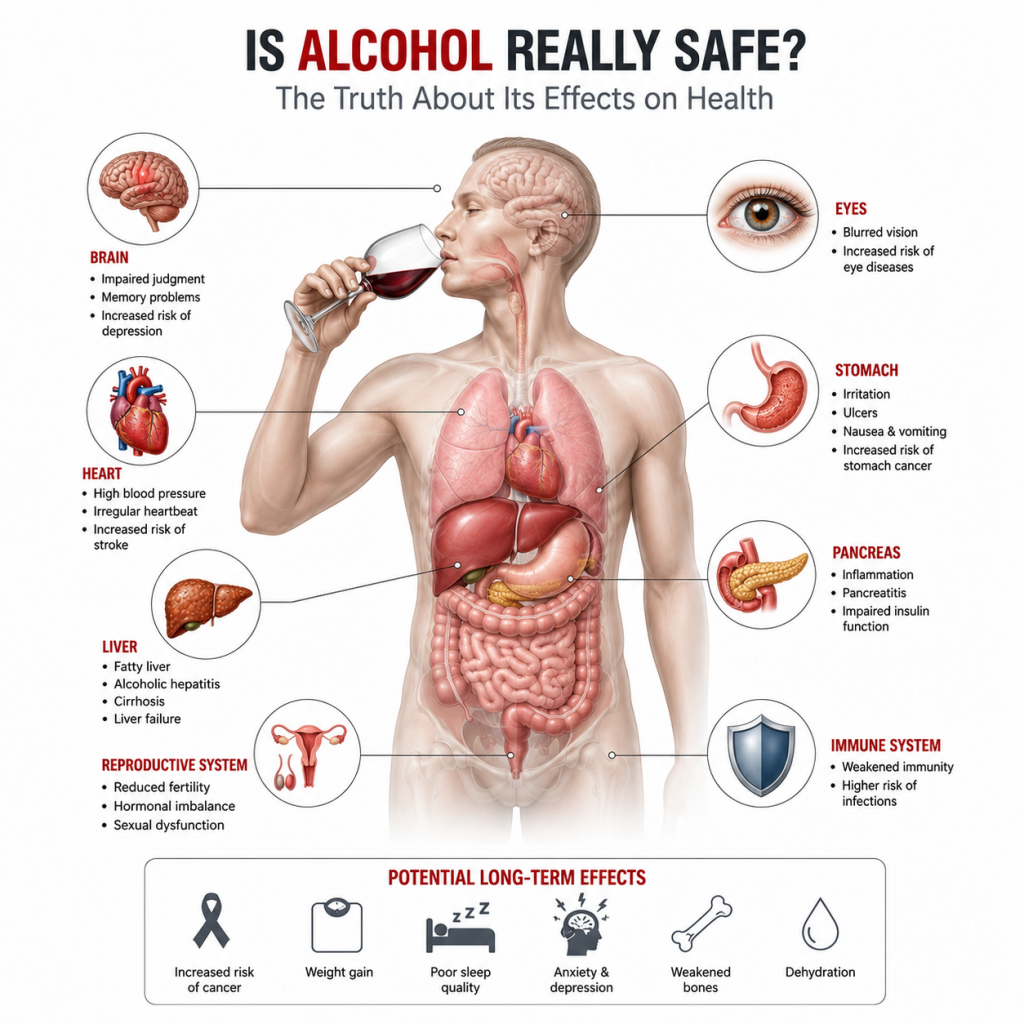
Alcohol is absorbed into the bloodstream and processed mainly by the liver. Once consumed, it affects several body systems simultaneously.
- Brain: Alters judgment, coordination, and reaction time
- Liver: Breaks down alcohol and is vulnerable to long-term damage
- Heart: Affects blood pressure and heart rhythm
- Digestive system: Irritates the stomach lining
- Nervous system: Impacts mood and cognitive function
Even small amounts can affect coordination and concentration, while larger or repeated intake increases health risks over time.
Short-Term Effects of Alcohol
Short-term effects appear soon after drinking and vary based on quantity, body weight, tolerance, and overall health.
Common short-term effects include:
- reduced coordination and balance
- slower reaction time
- impaired judgment
- nausea or vomiting
- headache
- dehydration
- disturbed sleep
These effects may seem temporary but can increase the risk of accidents, injuries, and poor decision-making.
Long-Term Effects of Alcohol on Health
Long-term alcohol use can lead to progressive damage in multiple organs.
Liver Damage
The liver processes alcohol, making it the most affected organ.
- fatty liver (early stage)
- alcoholic hepatitis
- liver cirrhosis (permanent damage)
Heart and Blood Pressure
Alcohol can increase blood pressure and affect heart rhythm.
- hypertension
- irregular heartbeat
- increased risk of heart disease
Digestive Problems
Alcohol irritates the digestive tract.
- gastritis
- acid reflux
- ulcers
- poor nutrient absorption
Brain and Mental Health
Long-term alcohol use can affect brain function.
- memory problems
- poor concentration
- mood changes
- anxiety and depression
Immune System Impact
Alcohol can weaken immunity, making the body more vulnerable to infections.
10 Negative Effects of Alcohol on the Body
This section targets high search demand and summarises major risks:
- liver damage
- high blood pressure
- heart rhythm disturbances
- digestive issues
- sleep disturbance
- dehydration
- reduced immunity
- weight gain
- mental health changes
- dependency and addiction risk
These effects may not appear immediately but can develop gradually.
Is Alcohol Safe for Health?
Alcohol is often misunderstood as safe in small amounts. The effect depends on:
- quantity consumed
- frequency
- individual health condition
- existing medical issues
For some individuals, even small amounts may cause problems, especially if they have:
- liver disease
- diabetes
- high blood pressure
- digestive issues
- mental health conditions
There is no universally safe level that applies to everyone.
Daily Drinking: What Happens Over Time
Regular daily drinking can lead to cumulative health effects even if each intake seems small.
Possible outcomes include:
- gradual liver damage
- increased tolerance (needing more alcohol for same effect)
- poor sleep quality
- dependency risk
- metabolic changes
Daily intake often shifts from occasional use to habitual consumption, increasing long-term risk.
Alcohol: Myths vs Reality
| Myth | Reality |
|---|---|
| Alcohol helps you sleep | It disrupts sleep quality |
| Small amounts are always safe | Depends on individual health |
| Only heavy drinkers get liver disease | Regular moderate intake can also affect the liver |
| Alcohol improves digestion | It can irritate the stomach lining |
| Beer is safer than hard liquor | All alcohol affects the body |
This section improves clarity and addresses common misconceptions.
Why Do People Continue Drinking Despite Health Risks
Understanding behavior helps improve awareness.
Common reasons include:
- social habits
- stress relief
- peer influence
- routine lifestyle pattern
- lack of awareness of long-term effects
However, repeated use often masks underlying stress or health issues rather than solving them.
What Happens When You Stop Drinking Alcohol
Reducing or stopping alcohol intake can lead to noticeable improvements.
Short-term changes:
- better hydration
- improved sleep quality
- improved concentration
Long-term changes:
- improved liver function
- better blood pressure control
- reduced digestive issues
- improved energy levels
Stopping alcohol early can prevent long-term complications.
Why Patients Choose Shirdi Sai Hospital for Alcohol-Related Health Evaluation
At Shirdi Sai Hospital, New BEL Road, alcohol-related symptoms are evaluated as part of a broader medical assessment rather than treated in isolation.
Patients prefer this approach because:
- doctors assess symptoms along with lifestyle and medical history
- evaluation includes liver function, metabolic health, and overall condition
- structured approach to identify early signs of damage
- guidance on lifestyle changes along with treatment
- suitable for patients experiencing fatigue, digestive issues, or sleep problems
The hospital is accessible for patients from Devasandra, RMV 2nd Stage, Sanjaynagar, Mathikere, Hebbal, and nearby areas.
Explore services:
General Surgery: https://www.shirdisaihospitalpvtltd.com/general-surgery-transplant-surgery/
Urology: https://www.shirdisaihospitalpvtltd.com/urology/
Main Website: https://www.shirdisaihospitalpvtltd.com/
When Should You Consult a Doctor
Seek medical advice if you experience:
- persistent fatigue
- digestive discomfort
- sleep disturbance
- frequent headaches
- unexplained weight changes
- high blood pressure
- difficulty reducing alcohol intake
Early evaluation helps identify underlying issues before they progress
Frequently Asked Questions
What are the main effects of alcohol on health
Alcohol affects the liver, brain, heart, and digestive system, and long-term use can lead to serious health conditions.
Is drinking alcohol daily harmful
Regular daily drinking can increase the risk of liver damage, high blood pressure, and dependency over time.
Does alcohol affect sleep
Yes, alcohol disrupts sleep patterns and reduces sleep quality.
Can alcohol cause stomach problems
Yes, it can irritate the stomach lining and lead to acidity, gastritis, and ulcers.
Is there any safe amount of alcohol
The effect varies by individual. Some people may experience health issues even with small amounts.
What happens if I stop drinking alcohol
Stopping alcohol can improve sleep, digestion, liver function, and overall energy levels.
Conclusion
Alcohol affects the body in multiple ways, often gradually and without immediate symptoms. While occasional intake may not show noticeable effects, repeated or regular consumption can lead to long-term health problems involving the liver, heart, digestion, and mental well-being.
At Shirdi Sai Hospital, New BEL Road, we encourage early awareness and timely evaluation of symptoms related to alcohol use. If you notice persistent health changes, fatigue, or digestive discomfort, it is important to seek medical guidance and understand the underlying cause.

Leave a Reply