Shirdi Sai Hospital

Category: Health

  • Heatwave Safety Tips: What to Do, What to Avoid and When to Seek Medical Help

    Heatwave Safety Tips: What to Do, What to Avoid and When to Seek Medical Help

    Reviewed by Shirdi Sai Hospital Team

    Quick Answer: The best heatwave safety tips include drinking water regularly, avoiding direct sun exposure during peak afternoon hours, wearing light cotton clothing, eating hydrating foods, staying in cool environments, and seeking medical help immediately if symptoms such as confusion, fainting, severe weakness, reduced urination, vomiting, or very high body temperature occur.

    Heatwaves can cause dehydration, heat exhaustion, heat cramps, fainting, and heat stroke when the body cannot cool itself effectively. At Shirdi Sai Hospital, New BEL Road, we commonly see patients with dehydration, dizziness, headache, weakness, body pain, fever-like symptoms, and heat-related illnesses during extreme summer temperatures.

    This comprehensive guide explains how to stay safe during a heatwave in India, what to do, what to avoid, how to protect children and elderly family members, and when to seek medical attention.
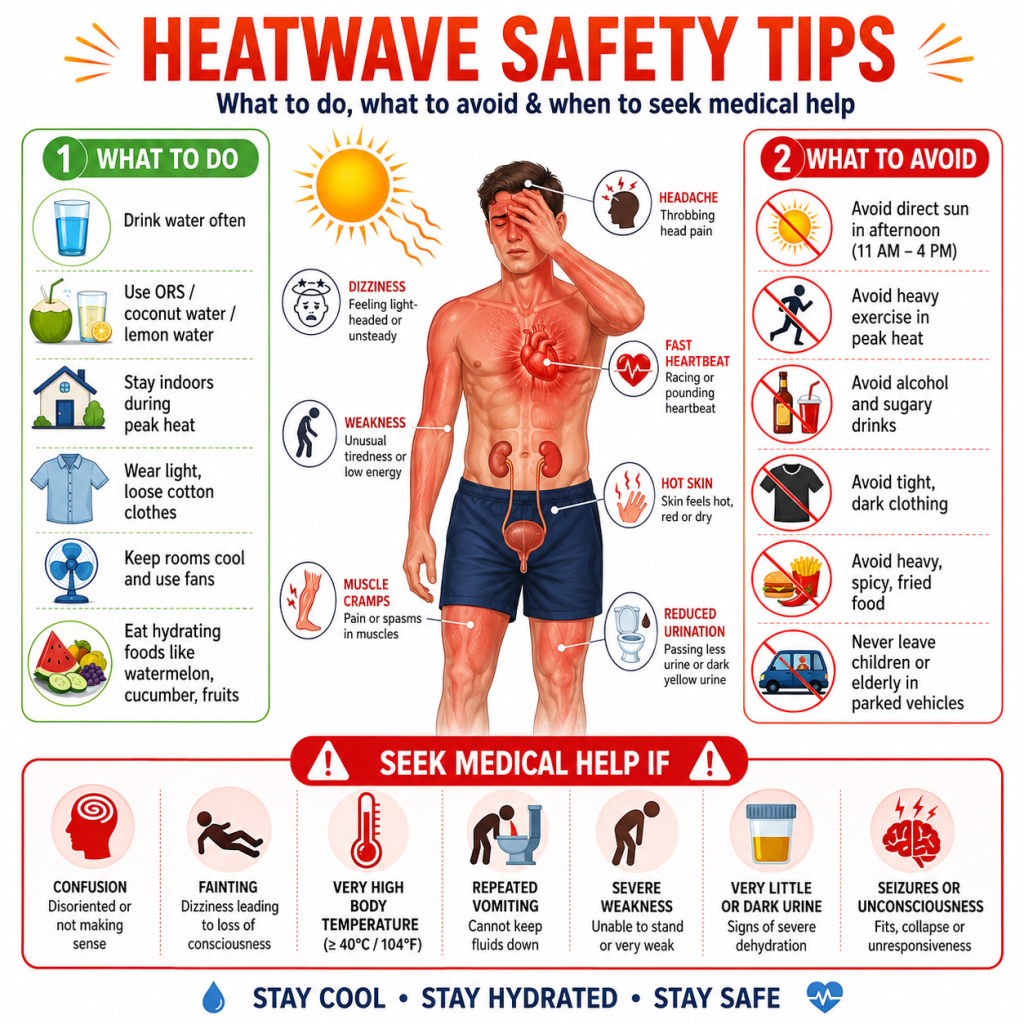
    Heatwave safety infographic showing what to do, what to avoid, common heat illness symptoms, and warning signs that need urgent medical help.

    Why Heatwaves Are a Serious Health Risk

    A heatwave is more than just hot weather. During extreme temperatures, the body works harder to maintain a normal internal temperature. Increased sweating leads to fluid and electrolyte loss, raising the risk of dehydration and heat-related illnesses.

    How Heat Affects the Body

    Body FunctionImpact of Extreme Heat
    Fluid BalanceIncreased fluid loss through sweating
    Temperature ControlReduced ability to cool the body
    Blood PressureCan fluctuate due to dehydration
    Heart FunctionIncreased workload on the heart
    Kidney FunctionHigher risk of dehydration-related stress
    Energy LevelsFatigue and weakness
    Mental AlertnessReduced concentration and confusion

    Many people ignore early warning signs such as headache, thirst, tiredness, and dizziness. Without proper hydration and cooling, these symptoms can worsen rapidly.

    Heat-related illness can become serious quickly, especially in children, elderly people, pregnant women, outdoor workers, and individuals with chronic medical conditions.

    Common Heatwave Health Problems in India

    Dehydration

    Dehydration occurs when the body loses more fluids than it receives.

    Symptoms of Dehydration

    • Dry mouth
    • Dark yellow urine
    • Reduced urination
    • Headache
    • Dizziness
    • Fatigue
    • Muscle cramps
    • Extreme thirst

    Heat Cramps

    Heat cramps are painful muscle spasms caused by excessive sweating and electrolyte loss.

    Commonly Affected Areas

    • Legs
    • Arms
    • Abdomen
    • Back muscles

    Heat Exhaustion

    Heat exhaustion develops when the body overheats but can still regulate temperature.

    Symptoms of Heat Exhaustion

    • Heavy sweating
    • Weakness
    • Dizziness
    • Headache
    • Nausea
    • Fast heartbeat
    • Fatigue
    • Feeling faint

    Heat Stroke

    Heat stroke is a life-threatening medical emergency.

    Symptoms of Heat Stroke

    • Very high body temperature
    • Confusion
    • Fainting
    • Seizures
    • Hot skin
    • Severe weakness
    • Rapid pulse
    • Unconsciousness

    If heat stroke symptoms occur, seek emergency medical care immediately.

    Heat Exhaustion vs Heat Stroke

    FeatureHeat ExhaustionHeat Stroke
    SeveritySerious but often reversibleMedical emergency
    SweatingHeavy sweating commonSkin may be hot and dry or sweating may reduce
    Mental StateWeakness, dizziness, fatigueConfusion, seizures, unconsciousness
    Body TemperatureElevatedDangerously high
    Immediate ActionRest, hydration, coolingEmergency medical treatment
    Risk if IgnoredCan progress to heat strokeCan be life-threatening

    Understanding the difference between heat exhaustion and heat stroke can help save lives.

    Heatwave Safety Tips: What to Do

    1. Drink Water Frequently

    Do not wait until you feel thirsty.

    Best Drinks During a Heatwave

    Recommended DrinksBenefits
    WaterPrimary hydration source
    ORSReplaces fluids and electrolytes
    Lemon WaterRefreshing hydration
    ButtermilkCooling and hydrating
    Coconut WaterNatural electrolytes
    Rice WaterSupports hydration
    Clear SoupsFluid and nutrient support

    People with kidney disease, heart disease, or fluid restrictions should follow medical advice regarding fluid intake.

    2. Stay Indoors During Peak Heat Hours

    The hottest period is usually between late morning and late afternoon.

    If You Must Go Outside

    • Carry water
    • Use an umbrella or cap
    • Wear breathable clothing
    • Take breaks in shaded areas
    • Avoid prolonged standing outdoors
    • Stay away from crowded, poorly ventilated spaces

    3. Wear Light and Loose Clothing

    Choose:

    • Loose cotton clothes
    • Light-coloured fabrics
    • Breathable materials
    • Hats or caps
    • Comfortable footwear

    Avoid:

    • Tight clothing
    • Dark colours
    • Synthetic fabrics

    4. Keep Your Home Cool

    Ways to Reduce Indoor Heat

    • Close curtains during peak sunlight
    • Improve ventilation
    • Use fans
    • Take cool showers
    • Use damp cloths for cooling
    • Avoid excessive indoor heat from cooking

    Children and elderly individuals should remain in the coolest available room.

    5. Eat Light and Hydrating Meals

    Best Foods During a Heatwave

    Recommended FoodsBenefits
    Curd RiceCooling and easy to digest
    Dal RiceBalanced nutrition
    KhichdiLight meal
    WatermelonHigh water content
    CucumberHydrating
    FruitsNatural hydration
    Vegetable SoupsFluids and nutrients
    ButtermilkCooling effect

    6. Monitor High-Risk Family Members

    People at higher risk include:

    • Infants
    • Children
    • Elderly individuals
    • Pregnant women
    • Outdoor workers
    • People with diabetes
    • People with hypertension
    • Heart disease patients
    • Kidney disease patients
    • Individuals living alone

    Check regularly for hydration, alertness, and urine output.

    What Not to Do During a Heatwave

    Heatwave Don’ts Checklist

    AvoidWhy
    Ignoring thirstCan worsen dehydration
    Exercising in peak heatIncreases heat illness risk
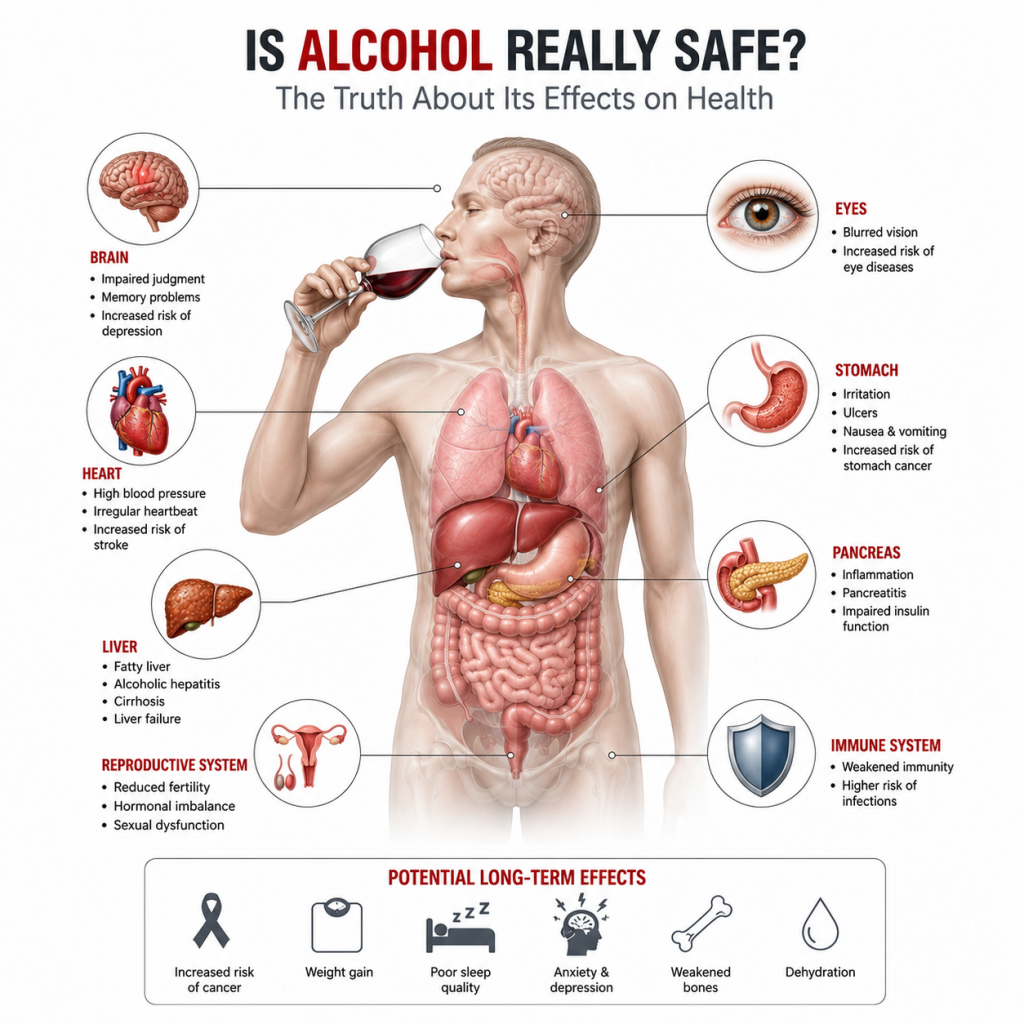
    Drinking alcoholCauses dehydration
    Excess sugary drinksPoor hydration support
    Staying in parked vehiclesDangerous temperature rise
    Ignoring confusion or faintingPossible heat stroke

    Do Not Ignore Reduced Urination

    Dark urine and reduced urination are important warning signs of dehydration.

    Do Not Exercise During Peak Heat

    Avoid:

    • Running
    • Outdoor sports
    • Heavy lifting
    • Cycling in direct sun

    Do Not Leave Children or Elderly People in Vehicles

    Vehicle temperatures can rise rapidly and become life-threatening.

    What to Drink During a Heatwave

    Best Hydration Choices

    DrinkRecommended
    WaterYes
    ORSYes, when dehydrated
    ButtermilkYes
    Coconut WaterYes
    Lemon WaterYes
    Clear SoupsYes
    AlcoholNo
    Energy DrinksAvoid
    Sugary Soft DrinksLimit

    People with diabetes, kidney disease, or heart disease should consult their doctor regarding hydration choices.

    What to Eat During a Heatwave

    Recommended Foods

    • Curd
    • Buttermilk
    • Watermelon
    • Papaya
    • Banana
    • Rice
    • Dal
    • Khichdi
    • Vegetable soups
    • Fresh fruits
    • Light home-cooked meals

    Foods to Avoid

    Foods to LimitReason
    Fried foodsDifficult digestion
    Very spicy foodsMay worsen discomfort
    Heavy greasy mealsIncrease fatigue
    Stale foodRisk of food poisoning
    Excess sweetsPoor hydration support
    Packaged snacksLow nutritional value

    Heatwave Symptoms That Need Attention

    Watch for:

    • Headache
    • Dizziness
    • Weakness
    • Muscle cramps
    • Heavy sweating
    • Nausea
    • Dry mouth
    • Dark urine
    • Reduced urination
    • Fast heartbeat
    • Confusion
    • Fever-like sensation
    • Fainting

    If symptoms occur after heat exposure, move to a cool area and begin hydration immediately.

    What to Do If Someone Feels Sick During a Heatwave

    First Aid for Heat-Related Illness

    1. Move the person to a cool or shaded area.
    2. Help them rest.
    3. Loosen tight clothing.
    4. Give water or ORS if conscious.
    5. Apply cool wet cloths.
    6. Improve airflow around the person.
    7. Seek medical care if symptoms persist.

    Do Not Give Fluids If

    • The person is unconscious
    • They are confused
    • They are vomiting repeatedly
    • They cannot swallow safely

    Heatwave Safety for Children

    Children lose fluids quickly and may not recognize dehydration.

    Child Heatwave Safety Tips

    • Offer fluids frequently
    • Avoid outdoor play during peak heat
    • Dress children in cotton clothing
    • Monitor urine output
    • Watch for irritability or unusual sleepiness
    • Provide light meals and fruits

    Seek medical care if a child develops fever, vomiting, reduced urination, or excessive drowsiness.

    Heatwave Safety for Elderly People

    Older adults are more vulnerable because thirst sensation often decreases with age.

    Elderly Heatwave Care Tips

    • Encourage regular hydration
    • Keep rooms cool
    • Avoid afternoon travel
    • Monitor urine output
    • Watch for confusion or dizziness
    • Review medications if symptoms recur

    Heatwave Safety for Outdoor Workers

    Outdoor workers face a higher risk of heat exhaustion and heat stroke.

    Essential Safety Measures

    • Start work early
    • Avoid peak afternoon heat
    • Take shade breaks
    • Carry water
    • Use ORS when sweating heavily
    • Wear protective head coverings
    • Never ignore dizziness or cramps

    Heatwave and Dehydration: When It Becomes Dangerous

    Warning Signs of Severe Dehydration

    SymptomConcern Level
    Very little urineHigh
    Dark urineHigh
    Extreme weaknessHigh
    Fast heartbeatModerate to High
    ConfusionEmergency
    Sunken eyes in childrenHigh
    Repeated vomitingHigh

    Medical evaluation is important if dehydration does not improve quickly.

    Heatwave Health Problems: What Symptoms Could Mean

    Symptom During HeatwavePossible CauseRecommended Action
    Headache and fatigueHeat stressRest and hydrate
    Muscle crampsElectrolyte lossORS and rest
    DizzinessDehydrationCooling and fluids
    Reduced urinationDehydrationIncrease fluids
    ConfusionHeat strokeEmergency care
    VomitingSignificant dehydrationMedical evaluation
    High temperatureHeat illnessImmediate cooling and treatment

    Why Patients Choose Shirdi Sai Hospital During Heat-Related Illness

    At Shirdi Sai Hospital, New BEL Road, patients with dehydration, heat exhaustion, dizziness, weakness, vomiting, fever-like symptoms, and heat-related illnesses receive timely evaluation and treatment.

    Reasons Patients Visit Shirdi Sai Hospital

    • Assessment of dehydration and heat-related symptoms
    • Evaluation of children, adults, and elderly patients
    • Guidance on hydration and recovery
    • Monitoring for warning signs of severe illness
    • Convenient access from New BEL Road, Hebbal, RMV 2nd Stage, Sanjaynagar, Mathikere, and nearby areas

    When to Visit a Hospital During a Heatwave

    Seek immediate medical attention if you experience:

    • Confusion
    • Fainting
    • Seizures
    • Very high body temperature
    • Severe weakness
    • Repeated vomiting
    • Inability to drink fluids
    • Reduced urination
    • Persistent dizziness
    • Chest pain
    • Breathing difficulty
    • Severe headache

    Early treatment can prevent serious complications from heat-related illnesses.

    Frequently Asked Questions

    What are the best heatwave safety tips?

    Drink water regularly, avoid direct sunlight during peak hours, wear light cotton clothing, stay in cool environments, and monitor for dehydration symptoms.

    What should I drink during a heatwave?

    Water, ORS, buttermilk, coconut water, lemon water, and clear soups are among the best hydration options.

    What are the symptoms of heat stroke?

    Heat stroke symptoms include confusion, fainting, seizures, very high body temperature, hot skin, rapid pulse, and unconsciousness.

    How do I know if I am dehydrated during a heatwave?

    Common signs include dark urine, reduced urination, dizziness, dry mouth, headache, fatigue, and excessive thirst.

    Who is most at risk during a heatwave?

    Children, elderly people, pregnant women, outdoor workers, and individuals with diabetes, heart disease, kidney disease, or hypertension.

    What should I avoid during a heatwave?

    Avoid alcohol, excessive sugary drinks, outdoor exercise during peak heat, direct sun exposure, and staying in parked vehicles.

    When should I go to the hospital during a heatwave?

    Visit a hospital immediately if you experience confusion, fainting, severe weakness, repeated vomiting, breathing difficulty, chest pain, or signs of heat stroke.

    Conclusion

    Heatwaves can quickly lead to dehydration, heat exhaustion, and heat stroke if preventive measures are ignored. Staying hydrated, avoiding peak heat exposure, wearing light clothing, eating hydrating foods, and recognizing early warning signs are the most effective ways to stay safe.

    At Shirdi Sai Hospital, New BEL Road, patients experiencing dehydration, dizziness, weakness, vomiting, heat exhaustion symptoms, or other heat-related concerns can receive timely medical evaluation and care.
  • How to Recover Fast from Viral Fever: Safe Home Care and Warning Signs

    How to Recover Fast from Viral Fever: Safe Home Care and Warning Signs

    Viral fever recovery depends on proper rest, hydration, light food, temperature control, and timely medical evaluation when symptoms worsen. Most viral fevers improve with supportive care, but recovery slows down when patients ignore dehydration, skip food completely, overuse medicines, or delay consultation despite warning signs. Antibiotics do not treat viral infections unless a doctor identifies a bacterial infection along with it.

    At Shirdi Sai Hospital, New BEL Road, we often see patients with fever, body pain, weakness, headache, cough, throat discomfort, or poor appetite. This guide explains how to recover safely from viral fever, what to eat, what to avoid, and when fever needs medical attention.

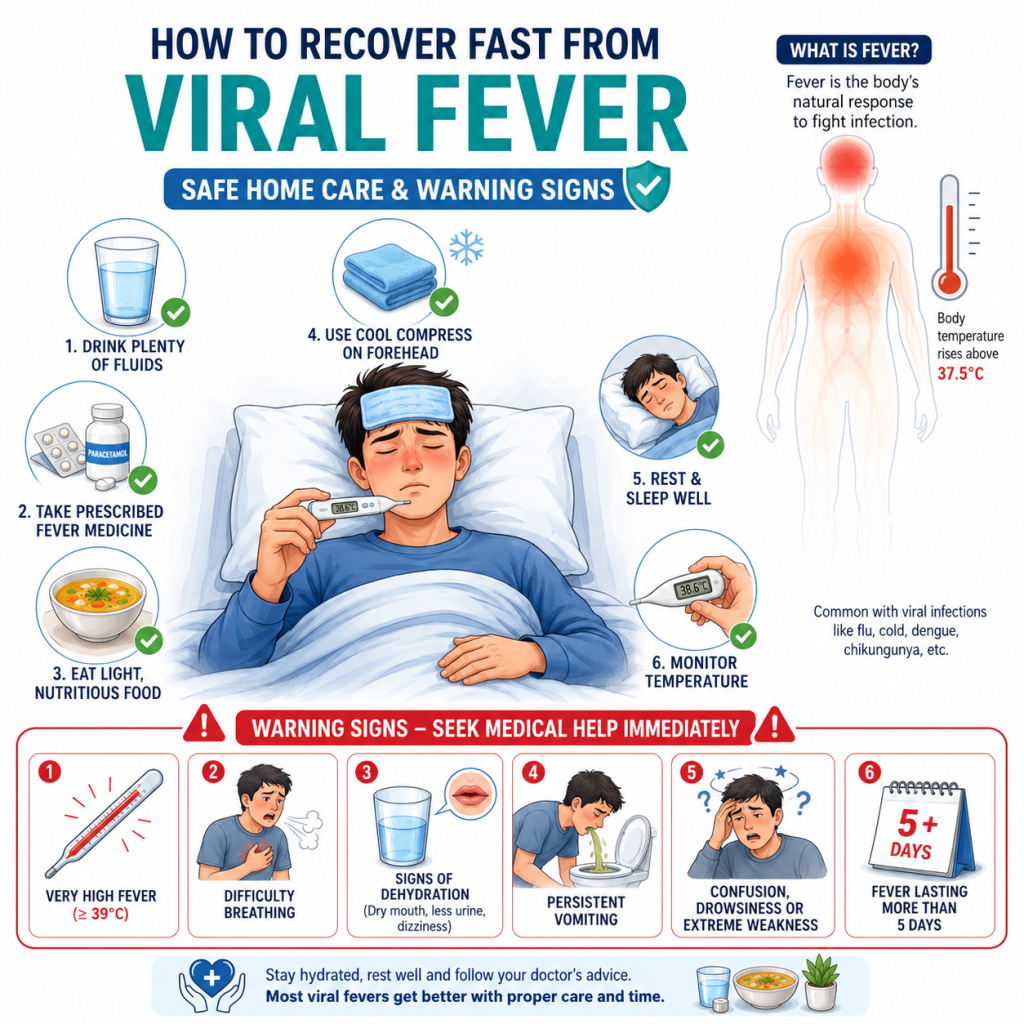
    Medical infographic showing a patient with viral fever resting in bed, surrounded by home care tips such as drinking fluids, taking prescribed fever medicine, using a cool compress, eating light food, resting, and monitoring temperature, with warning signs for seeking medical help.

    What Is Viral Fever?

    Viral fever is a fever caused by a viral infection. It can happen with respiratory infections, seasonal flu-like illness, dengue, chikungunya, COVID-like infections, or other viral illnesses depending on symptoms, season, and exposure.

    A viral fever may cause:

    • high temperature
    • body pain
    • headache
    • tiredness
    • chills
    • sore throat
    • cough or cold
    • poor appetite
    • nausea
    • weakness
    • joint pain in some viral illnesses

    Not every fever is viral. Fever can also happen due to bacterial infections, malaria, dengue, urinary infections, typhoid, pneumonia, or other medical conditions. That is why persistent or worsening fever should be evaluated instead of being treated casually at home.

    Fever is a symptom, not a diagnosis. The cause matters, especially when fever continues or comes with severe weakness, dehydration, rash, breathing difficulty, or confusion.

    How Long Does Viral Fever Take to Recover?

    Many viral fevers improve within a few days with rest and supportive care. However, recovery time depends on the type of viral infection, age, immunity, hydration, sleep, nutrition, and whether complications are present.

    Some people feel weak even after the fever reduces. This post-fever weakness can happen because the body uses energy to fight infection, appetite drops, sleep gets disturbed, and fluid intake reduces during illness.

    Recovery may take longer in:

    • children
    • elderly people
    • pregnant women
    • people with diabetes
    • people with asthma or lung disease
    • people with heart disease
    • people with kidney or liver disease
    • people with low immunity

    If fever does not reduce, keeps returning, or is associated with red flag symptoms, medical evaluation is important.

    How to Recover Fast from Viral Fever at Home

    The goal is not to “force” fast recovery. The goal is to help the body recover safely while avoiding dehydration, weakness, and complications.

    Rest Properly

    Rest is one of the most important parts of viral fever recovery. During fever, the body uses more energy to fight infection. Continuing work, travel, exercise, or late-night screen time can worsen fatigue and delay recovery.

    Helpful rest habits:

    • sleep adequately
    • avoid heavy physical activity
    • reduce screen time
    • avoid unnecessary travel
    • stay home while fever is active
    • avoid contact with others if cough, cold, or flu-like symptoms are present

    Rest does not mean lying in bed all day without fluids or food. It means reducing stress on the body while supporting recovery with hydration and light nutrition.

    Drink Enough Fluids

    Hydration is the most important recovery step during fever. Fever, sweating, low appetite, vomiting, or loose stools can reduce body fluids.

    Good fluid options include:

    • water
    • oral rehydration solution when needed
    • coconut water if suitable
    • clear soups
    • rice kanji
    • lemon water if tolerated
    • warm fluids for throat comfort

    Signs that fluid intake may be low include:

    • dark yellow urine
    • very less urination
    • dry mouth
    • dizziness
    • tiredness
    • headache
    • extreme weakness

    Children, elderly people, and patients with vomiting or loose stools need closer hydration monitoring. People with kidney, heart, or fluid-restriction conditions should follow doctor advice on fluid intake.

    Eat Light, Easy-to-Digest Food

    During viral fever, appetite usually drops. This is common. Do not force heavy meals. Instead, eat small portions of simple food that gives energy without stressing digestion.

    Useful food options:

    • rice
    • khichdi
    • idli
    • dosa without heavy oil
    • upma
    • dal rice
    • curd rice if tolerated
    • vegetable soup
    • clear chicken soup if preferred
    • banana
    • papaya
    • apple
    • toast
    • soft cooked vegetables

    Food should be simple, warm, and easy to digest. Small frequent meals are usually better than one heavy meal.

    Use Fever Medicines Safely

    Medicines for fever should be used carefully and only as advised by a doctor or based on appropriate medical guidance. Paracetamol is commonly used for fever, but dosage depends on age, weight, liver health, and other factors.

    Avoid these mistakes:

    • taking multiple fever medicines together without advice
    • repeating doses too frequently
    • using antibiotics without prescription
    • using adult medicines for children
    • using old prescriptions for a new fever
    • taking painkillers repeatedly without diagnosis

    Children should not be given aspirin for fever unless specifically prescribed by a doctor. If fever is high, persistent, or not responding as expected, consultation is safer than repeated self-medication.

    Monitor Temperature and Symptoms

    Tracking fever helps doctors understand the illness pattern.

    Monitor:

    • temperature reading
    • timing of fever spikes
    • response to medicine
    • associated cough, cold, throat pain, vomiting, loose stools, rash, pain, or burning urination
    • urine frequency
    • appetite
    • level of alertness
    • breathing comfort

    This is especially useful in dengue-like, flu-like, or recurring fever patterns.

    Viral Fever Recovery: What Helps vs What Delays Recovery

    Helpful During Viral FeverCan Delay Recovery
    Rest and sleepContinuing work despite fever
    Drinking enough fluidsDrinking very little water
    Light home-cooked foodHeavy, oily, spicy meals
    Doctor-advised fever medicineRepeated self-medication
    Monitoring symptomsIgnoring worsening signs
    Staying home with flu-like symptomsSpreading infection to others
    Timely consultationWaiting too long with high fever

    This table is important because many patients focus only on reducing fever, while ignoring hydration, food, rest, and warning signs.

    What to Eat During Viral Fever for Faster Recovery

    Food during viral fever should support hydration, energy, and digestion.

    Best Foods During Fever

    • Khichdi: Soft, light, and easy to digest.
    • Rice and dal: Gives energy and mild protein.
    • Soups: Help with fluid intake and comfort.
    • Idli: Light and easy for many patients.
    • Banana: Easy to eat and useful when appetite is low.
    • Papaya: Soft fruit option for many patients.
    • Curd: Can be used if tolerated and if there is no throat irritation or digestive intolerance.
    • Eggs or paneer: Can be added gradually when appetite improves.
    • Coconut water: Useful for hydration if suitable.

    During fever, the aim is not a perfect diet. The aim is steady intake.

    What Foods Should You Avoid During Viral Fever?

    Avoid foods that are hard to digest, worsen nausea, or increase discomfort.

    Avoid or reduce:

    • fried snacks
    • spicy meals
    • heavy curries
    • packaged snacks
    • cold drinks
    • alcohol
    • excessive tea or coffee
    • very sugary drinks
    • overeating after appetite returns

    Alcohol should be avoided during fever because it can worsen dehydration, disturb sleep, and interact with medicines.

    How to Recover from Weakness After Viral Fever

    Weakness after viral fever is common. It usually improves gradually with food, fluids, sleep, and reduced physical strain.

    To rebuild strength:

    • continue light meals for a few days
    • include protein such as dal, eggs, paneer, curd, fish, or chicken based on diet preference
    • eat fruits daily
    • drink enough fluids
    • avoid returning to heavy exercise immediately
    • sleep properly
    • take short walks once fever has settled and energy improves

    If weakness is severe, prolonged, or associated with dizziness, breathlessness, poor appetite, chest discomfort, or repeated fever, it should be medically evaluated.

    What Not to Do During Viral Fever

    Many recovery delays happen because of avoidable mistakes.

    Do not:

    • take antibiotics without prescription
    • take multiple painkillers repeatedly
    • ignore high fever
    • ignore dehydration signs
    • skip fluids
    • force heavy meals
    • return to work too early
    • exercise during active fever
    • ignore rash, bleeding, breathing difficulty, or confusion
    • assume every fever is “just viral”

    Self-treatment has limits. Fever that does not follow a simple recovery pattern needs proper assessment.

    Viral Fever vs Dengue vs Flu: How to Understand the Difference

    Different illnesses can start with fever and body pain. Symptoms may overlap, so diagnosis should not be guessed at home.

    ConditionCommon PatternWhy Evaluation Matters
    Viral feverFever, body pain, weakness, cold or throat symptomsUsually supportive care, but cause must be watched
    Flu-like illnessFever, cough, sore throat, severe tiredness, body painHigh-risk patients may need early medical care
    Dengue-like illnessHigh fever, severe body pain, headache, rash, low platelet riskNeeds monitoring and timely tests
    Malaria-like illnessFever with chills, sweating, weaknessNeeds specific testing and treatment
    Urinary infectionFever with burning urination, lower abdominal pain, frequent urinationNeeds medical evaluation and treatment

    A patient should not self-diagnose based only on symptoms. Doctors may advise tests based on fever duration, season, travel history, exposure, physical examination, and associated symptoms.

    When Are Tests Needed for Viral Fever?

    Not every fever needs many tests on day one. However, testing becomes important when symptoms are severe, persistent, unusual, or suggest dengue, malaria, flu, COVID, urinary infection, typhoid, or another cause.

    Doctors may consider tests such as:

    • complete blood count
    • platelet count
    • dengue tests
    • malaria test
    • COVID or flu test when relevant
    • urine test
    • liver and kidney function tests
    • CRP or infection markers when required

    Tests should be based on clinical need. Random testing without examination can miss the real cause or create confusion.

    Home Care Plan for the First 3 Days

    Day 1

    Focus on rest, fluids, temperature monitoring, and light food. Avoid heavy work and track symptoms closely.

    Day 2

    Continue hydration and small meals. Watch whether fever is reducing, staying the same, or getting worse. Look for warning signs such as severe weakness, vomiting, rash, breathing difficulty, or reduced urination.

    Day 3

    If fever is continuing, worsening, or returning despite care, consult a doctor. Do not keep repeating medicines without identifying the cause.

    This plan is for mild, uncomplicated fever only. High-risk patients, children, elderly people, pregnant women, and patients with chronic diseases should seek medical advice earlier.

    Why Patients Choose Shirdi Sai Hospital for Fever Care

    At Shirdi Sai Hospital, New BEL Road, fever is assessed based on the patient’s symptoms, duration, severity, hydration status, examination findings, and medical history. The focus is to identify whether the fever is likely viral or whether another cause needs testing or treatment.

    Patients choose Shirdi Sai Hospital because:

    • fever is evaluated through a structured clinical approach
    • care includes hydration, nutrition, symptom control, and follow-up guidance
    • doctors assess warning signs instead of treating fever casually
    • patients with weakness, body pain, cough, cold, digestive symptoms, or urinary symptoms can be evaluated appropriately
    • the hospital is accessible for patients from Devasandra, RMV 2nd Stage, Sanjaynagar, Mathikere, Hebbal, and nearby New BEL Road areas

    When to Consult a Doctor for Viral Fever

    Consult a doctor if you have:

    • fever lasting more than 2 to 3 days
    • high fever that is not reducing
    • severe weakness
    • repeated vomiting
    • loose stools with dehydration
    • reduced urination
    • breathing difficulty
    • chest pain
    • confusion or drowsiness
    • severe headache or neck stiffness
    • rash or bleeding
    • severe abdominal pain
    • fever in infants, elderly people, pregnant women, or people with chronic disease

    If you are consulting a hospital in Bangalore, especially around New BEL Road and nearby areas, early evaluation helps identify the cause and prevents treatment delay.

    Frequently Asked Questions

    How can I recover fast from viral fever?

    Rest properly, drink enough fluids, eat light food, monitor fever, and use fever medicines only as advised. Recovery is faster when dehydration, poor sleep, and under-eating are avoided.

    What should I eat during viral fever?

    Soft and light foods such as khichdi, rice, dal, idli, soup, banana, papaya, and curd if tolerated can help maintain energy without stressing digestion.

    What should I drink during viral fever?

    Water, ORS when needed, coconut water if suitable, soups, and warm fluids can support hydration. Fluid intake is especially important when there is sweating, vomiting, or loose stools.

    Can antibiotics cure viral fever?

    No. Antibiotics do not treat viral infections. They are used only when a doctor suspects or confirms a bacterial infection.

    How long does viral fever usually last?

    Many viral fevers improve within a few days, but the duration depends on the infection and the patient’s health. Persistent, worsening, or recurring fever needs medical evaluation.

    Is weakness normal after viral fever?

    Yes, weakness can continue for a few days after fever reduces. It should gradually improve with food, fluids, sleep, and rest. Severe or prolonged weakness should be checked.

    When should viral fever be checked by a doctor?

    Fever should be checked if it lasts more than 2 to 3 days, is very high, worsens, or comes with breathing difficulty, severe weakness, dehydration, rash, vomiting, confusion, or bleeding.

    Conclusion

    Recovering fast from viral fever is not about taking more medicines. It is about supporting the body correctly with rest, fluids, light food, safe fever control, and proper monitoring. Most uncomplicated viral fevers improve with supportive care, but persistent or worsening symptoms should not be ignored.

    At Shirdi Sai Hospital, New BEL Road, fever evaluation focuses on finding the cause and guiding safe recovery. Timely consultation is especially important for children, elderly patients, pregnant women, and people with chronic conditions.

  • What to Eat After Loose Motions

    What to Eat After Loose Motions

    Loose motions can quickly drain water, salts, and energy from the body. The best foods after loose motions are simple, soft, and easy to digest, such as rice, curd rice if tolerated, banana, idli, khichdi, plain dal, soups, and oral rehydration solution. The first goal is not heavy eating. The first goal is hydration, electrolyte balance, and gradual return to normal food.

    At Shirdi Sai Hospital, New BEL Road, we often see patients who either stop eating completely or eat heavy food too soon after loose motions. Both can delay recovery. This guide explains what to eat after loose motions, what to drink, which foods to avoid, and when medical evaluation becomes necessary.

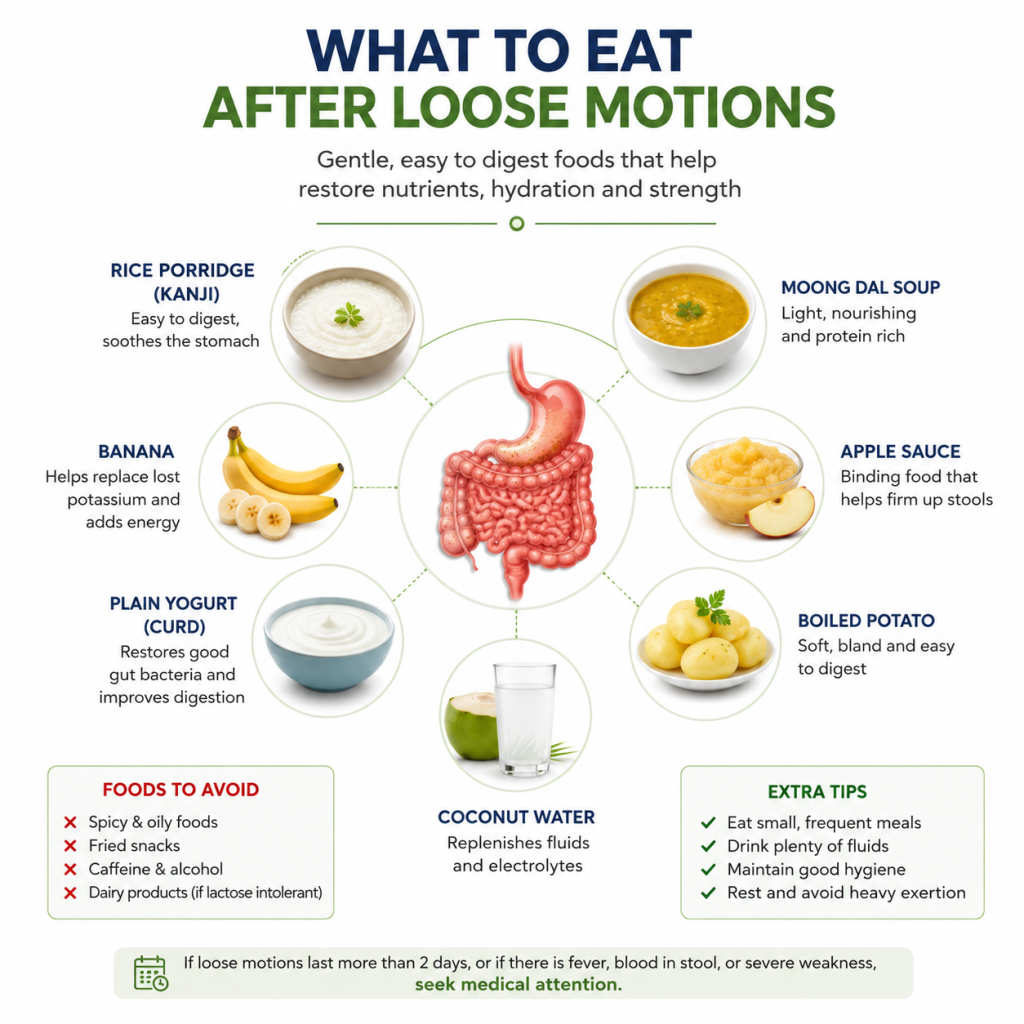
    An infographic showing gentle foods to eat after loose motions, including rice porridge, banana, plain curd, moong dal soup, applesauce, boiled potato, and coconut water, with tips on hydration and foods to avoid.

    What Happens to the Body During Loose Motions?

    Loose motions, also called diarrhea, cause frequent watery stools. During this time, the body loses water and important salts. If this loss is not replaced, dehydration can develop.

    Common effects include:

    • weakness
    • thirst
    • dry mouth
    • reduced urination
    • stomach cramps
    • tiredness
    • dizziness
    • loss of appetite

    Loose motions may happen due to food infection, viral infection, contaminated food or water, food intolerance, indigestion, stress, or certain medicines.

    The most important step after loose motions is replacing lost fluids and salts. Food should be restarted gradually with simple, easy-to-digest meals.

    What Should You Drink After Loose Motions?

    Fluids are the first priority. Even if appetite is low, small sips of fluids should continue frequently.

    Helpful options include:

    • oral rehydration solution
    • clean drinking water
    • rice water
    • clear soups
    • coconut water if tolerated
    • lightly salted homemade fluids

    ORS is especially useful because it helps replace both water and salts lost through watery stools. Use a standard ORS sachet from a pharmacy and mix it exactly as instructed on the packet. Do not make it too concentrated or too diluted.

    Avoid replacing ORS with sugary energy drinks or soft drinks. These do not provide the same medical rehydration balance and may worsen loose stools in some people.

    Best Foods to Eat After Loose Motions

    The best foods after loose motions should be soft, low in excess oil, and easy on the stomach.

    Rice

    Plain rice is easy to digest and helps provide energy. It can be eaten with a little dal water or curd if tolerated.

    Khichdi

    Soft khichdi made with rice and moong dal is a practical recovery food. Keep it mild and avoid heavy spices.

    Banana

    Banana is easy to eat and provides energy. It is often tolerated well after loose motions.

    Idli

    Idli is soft, steamed, and easy to digest. It is a good option when appetite starts returning.

    Plain Dal or Dal Water

    Light dal or dal water can provide gentle nutrition. Avoid heavy tadka or too much spice during recovery.

    Curd Rice if Tolerated

    Curd rice can be useful for some people because curd supports gut balance. However, if curd causes bloating, discomfort, or worsens stools, avoid it temporarily.

    Toast or Plain Bread

    Plain toast can be used when the stomach is settling. Avoid butter-heavy or spicy toppings.

    Soup

    Clear vegetable soup or light homemade broth helps with fluids and comfort. Keep it simple and low in oil.

    What to Eat First After Loose Motions Stop

    Do not immediately return to a heavy meal after loose motions reduce. Restart food in stages.

    First Stage: Fluids

    Begin with:

    • ORS
    • water
    • rice water
    • clear soup

    This helps correct fluid loss and reduces weakness.

    Second Stage: Soft Foods

    Once vomiting is absent and appetite improves, add:

    • rice
    • banana
    • idli
    • khichdi
    • plain dal
    • toast

    Third Stage: Normal Meals

    After stools become more formed and weakness reduces, slowly return to:

    • regular rice or roti
    • dal
    • cooked vegetables
    • curd if tolerated
    • light protein foods

    Avoid jumping from fluids directly to fried food, spicy curries, or heavy meals.

    What to Eat After Loose Motions and Weakness

    Weakness after loose motions happens because the body loses fluids, salts, and energy. Recovery food should rebuild strength gradually.

    Include:

    • ORS or fluids through the day
    • soft rice or khichdi
    • banana
    • light dal
    • curd if tolerated
    • boiled or soft-cooked vegetables
    • small frequent meals

    Do not force large meals. Eat small portions every few hours. This is easier on digestion and helps the body regain energy.

    Foods to Avoid After Loose Motions

    Some foods can irritate the stomach or worsen loose stools.

    Avoid:

    • fried foods
    • spicy food
    • oily curries
    • packaged snacks
    • soft drinks
    • alcohol
    • too much tea or coffee
    • sweets and high-sugar drinks
    • heavy dairy if it worsens symptoms
    • raw salads during active loose motions
    • street food until recovery

    These foods can increase gut irritation, bloating, gas, or stool frequency.

    What to Eat vs What to Avoid After Loose Motions

    Better ChoicesAvoid Temporarily
    ORS and clean waterSoft drinks and sugary beverages
    Rice and khichdiFried rice, biryani, oily meals
    BananaVery sugary desserts
    IdliSpicy street food
    Light dalHeavy dal with excess oil and masala
    Clear soupCreamy, heavy soups
    Curd rice if toleratedMilk or dairy if it worsens symptoms
    Small frequent mealsLarge heavy meals

    This comparison helps patients restart food safely without confusing recovery food with regular food.

    Is Curd Good After Loose Motions?

    Curd may help some people after loose motions because it is a fermented food and can support gut balance. Many Indian households use curd rice as a recovery food.

    However, curd does not suit everyone during active loose motions. Avoid it temporarily if it causes:

    • bloating
    • stomach discomfort
    • increased stool frequency
    • gas

    If tolerated, take it in small quantity with rice. Avoid adding chilli, pickle, or heavy seasoning.

    Is Milk Good After Loose Motions?

    Milk can feel heavy during loose motions and may worsen bloating or diarrhea in some people. If milk increases discomfort, avoid it temporarily.

    This does not mean all dairy is permanently harmful. It means the gut may need time to recover. Curd may be tolerated better than milk in some people, but it should still be taken based on individual comfort.

    Can You Eat Fruits After Loose Motions?

    Yes, but choose gentle fruits and avoid excess quantity.

    Better options:

    • banana
    • apple without skin or stewed apple
    • papaya in small quantity if tolerated

    Avoid large portions of fruit juice. Packaged juices and very sweet drinks can worsen loose stools because of high sugar content.

    Whole fruit in small portions is usually better than juice.

    What to Eat After Loose Motions in Children

    Children can become dehydrated faster than adults. Fluids must be given frequently in small amounts.

    For children, food should be age-appropriate and simple.

    Useful options may include:

    • ORS as advised
    • breast milk or formula for infants
    • rice
    • soft khichdi
    • banana
    • curd rice if tolerated
    • dal water
    • soft home-cooked food

    Do not stop feeding completely. Small frequent feeds are usually better than long gaps without food.

    Medical care is important if the child is very weak, not drinking, vomiting repeatedly, passing blood in stool, has high fever, or shows signs of dehydration.

    What to Eat After Loose Motions in Adults

    Adults should focus on hydration first, then simple meals.

    A practical recovery plan:

    Morning

    ORS or water in small sips
    Banana or plain toast if hungry

    Lunch

    Soft rice, khichdi, or idli
    Light dal or curd rice if tolerated

    Evening

    Rice water, soup, or coconut water if tolerated

    Dinner

    Khichdi, plain rice with dal, or soft home-cooked food

    Avoid alcohol, fried snacks, and spicy meals until the stomach settles.

    Common Mistakes After Loose Motions

    Many people delay recovery by making simple mistakes.

    Common mistakes include:

    • drinking only plain water but not replacing salts
    • stopping food completely for too long
    • taking soft drinks instead of ORS
    • eating spicy food too soon
    • using repeated medicines without medical advice
    • ignoring dehydration signs
    • giving packaged juices to children
    • eating outside food immediately after symptoms reduce

    Recovery is faster when food and fluids are restarted carefully.

    When Loose Motions Need Medical Attention

    Loose motions should not be ignored if symptoms are severe, persistent, or linked with dehydration.

    Consult a doctor if you have:

    • loose motions lasting more than two days
    • repeated vomiting
    • high fever
    • blood in stool
    • severe abdominal pain
    • signs of dehydration
    • dizziness or fainting
    • very low urine output
    • dry mouth and extreme thirst
    • loose motions in infants, elderly people, pregnant women, or people with chronic illness

    If you are consulting a hospital in Bangalore, especially around New BEL Road and nearby areas, early evaluation can help identify dehydration, infection, food poisoning, or other causes that need treatment.

    Why Patients Choose Shirdi Sai Hospital for Loose Motions and Dehydration Care

    At Shirdi Sai Hospital, New BEL Road, loose motions are evaluated based on severity, duration, hydration status, food history, fever, vomiting, abdominal pain, and overall condition.

    Patients choose Shirdi Sai Hospital because:

    • doctors assess dehydration risk and associated symptoms
    • evaluation focuses on identifying the cause, not just stopping stools
    • care guidance includes fluids, diet, medicines when needed, and recovery monitoring
    • support is suitable for adults, children, and elderly patients
    • the hospital is accessible for patients from Devasandra, RMV 2nd Stage, Mathikere, Sanjaynagar, Hebbal, and nearby New BEL Road areas

    General Surgery
    Best Hospital in New BEL road

    Frequently Asked Questions

    What is the best food after loose motions?

    The best foods after loose motions are rice, khichdi, banana, idli, plain dal, toast, soups, and curd rice if tolerated. Fluids and ORS are the first priority.

    Can I eat curd rice after loose motions?

    Curd rice can be taken if it suits your stomach. Avoid it temporarily if it causes bloating, gas, discomfort, or worsens loose stools.

    What should I drink after loose motions?

    ORS, clean water, rice water, clear soups, and fluids in small frequent sips can help replace lost fluids. ORS should be prepared exactly as instructed on the sachet.

    Is banana good after loose motions?

    Yes, banana is usually easy to digest and provides energy. It is commonly used as a simple recovery food after loose motions.

    What foods should I avoid after loose motions?

    Avoid spicy food, fried food, soft drinks, alcohol, excess tea or coffee, packaged snacks, heavy dairy if it worsens symptoms, and street food until recovery.

    Can I eat normal food after loose motions stop?

    You can return to normal food gradually once stools improve and appetite returns. Start with soft meals and avoid heavy, oily, or spicy food for a short period.

    When should I see a doctor for loose motions?

    Consult a doctor if loose motions last more than two days, there is blood in stool, high fever, repeated vomiting, severe pain, dizziness, low urine output, or signs of dehydration.

    Conclusion

    After loose motions, the body needs fluids, salts, rest, and simple food. ORS, clean water, rice, khichdi, banana, idli, light dal, soups, and curd rice if tolerated can support recovery. Heavy, spicy, oily, and sugary foods should be avoided until digestion settles.

    At Shirdi Sai Hospital, New BEL Road, patients with loose motions are assessed for dehydration, infection signs, and recovery needs. Timely medical care is important when symptoms persist, worsen, or affect children, elderly people, pregnant women, or people with chronic illness.

  • How to Improve Digestion Naturally

    How to Improve Digestion Naturally

    Improving digestion naturally starts with simple daily habits: eating slowly, choosing fibre-rich foods, drinking enough water, staying physically active, sleeping well, and avoiding overeating or very late meals. Poor digestion is not always caused by one food. It often happens because of irregular eating, low fibre intake, dehydration, stress, long sitting hours, and disturbed sleep. Persistent indigestion, bloating, constipation, acidity, or abdominal discomfort should not be ignored if it keeps coming back.

    At Shirdi Sai Hospital, New BEL Road, we often see patients with repeated digestive discomfort who try home remedies for weeks without identifying the actual cause. This guide explains practical ways to improve digestion naturally, what mistakes to avoid, and when medical evaluation becomes necessary.

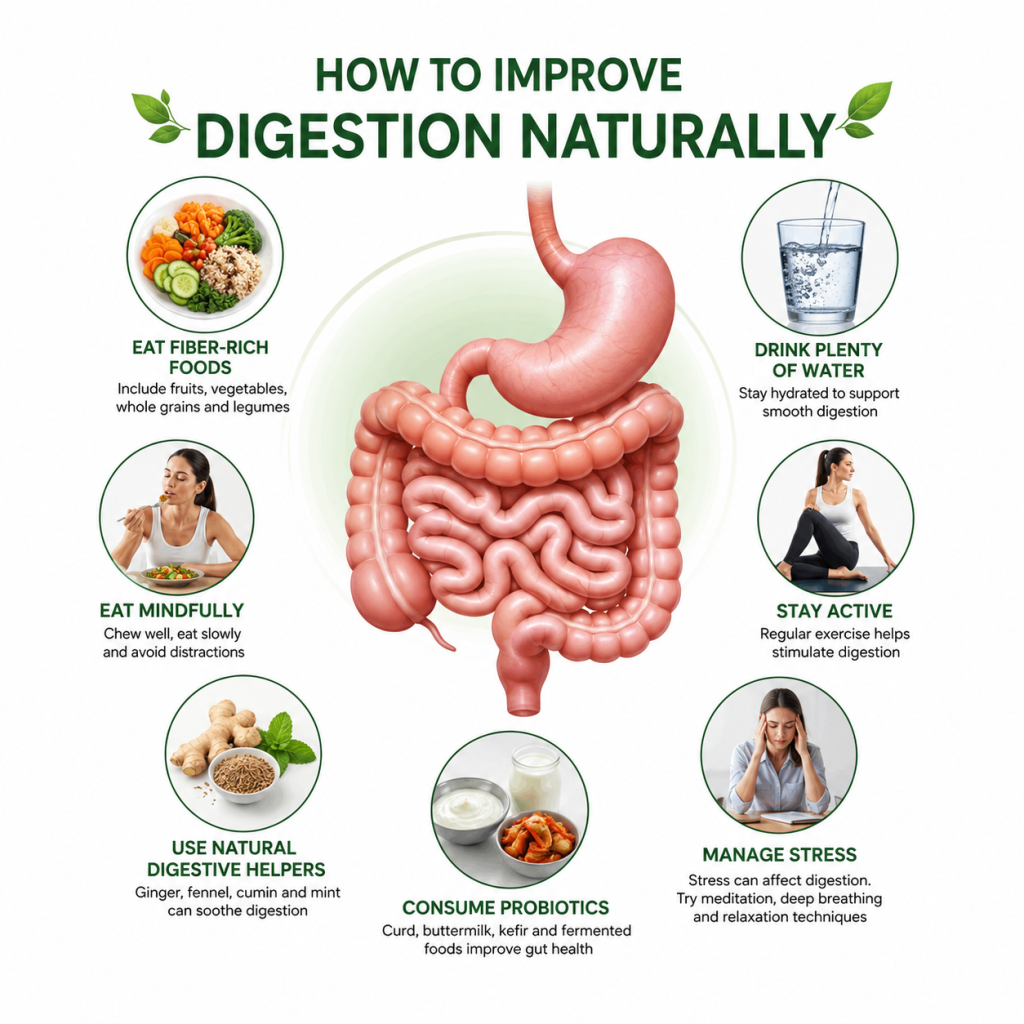
    An anatomical infographic showing the digestive system with natural digestion tips, including eating fiber-rich foods, drinking water, mindful eating, staying active, managing stress, using digestive herbs, and consuming probiotics.

    What Does Good Digestion Actually Mean?

    Good digestion means your body is able to break down food, absorb nutrients, and pass waste comfortably. It does not mean you should never feel gas, fullness, or bloating. Mild digestive changes can happen after heavy meals, poor sleep, stress, or eating too fast.

    Healthy digestion usually includes:

    • comfortable appetite
    • regular bowel movement
    • less bloating after meals
    • no repeated acidity or burning
    • no frequent stomach pain
    • stable energy after eating

    When digestive discomfort becomes frequent, it should be evaluated instead of being dismissed as “gas problem.”

    Why Digestion Problems Are Common Today

    Digestive issues are common because many people eat quickly, sit for long hours, drink less water, skip meals, eat late at night, and depend heavily on tea, coffee, packaged foods, or spicy meals.

    Common daily triggers include:

    • irregular meal timing
    • low fibre intake
    • less water intake
    • eating too fast
    • overeating
    • stress
    • low physical activity
    • late dinners
    • lying down soon after food
    • frequent fried or processed foods

    Diet changes can help many people with indigestion symptoms, especially when certain foods worsen symptoms. Lifestyle habits also matter because constipation is commonly linked with low fibre intake, low fluid intake, and lack of exercise.

    Eat Slowly and Chew Food Properly

    Eating too fast is one of the most common reasons for bloating, heaviness, and discomfort after meals. Digestion begins in the mouth. When food is chewed properly, it mixes with saliva and reaches the stomach in a form that is easier to process.

    Simple habits that help:

    • sit down while eating
    • avoid rushing meals
    • chew each bite properly
    • avoid talking continuously while eating
    • avoid eating while scrolling or watching videos

    Fast eating often leads to overeating because the body does not get enough time to recognise fullness.

    Increase Fibre Gradually

    Fibre supports bowel movement and helps prevent constipation. It is found in fruits, vegetables, whole grains, pulses, legumes, nuts, and seeds.

    Good fibre sources include:

    • vegetables
    • fruits with skin where suitable
    • oats
    • millets
    • brown rice
    • dal
    • chana
    • rajma
    • sprouts
    • flaxseeds
    • nuts in moderation

    Do not suddenly increase fibre in large amounts. A sudden jump can worsen gas and bloating in some people. Increase fibre gradually and drink enough water along with it.

    Drink Enough Water Through the Day

    Water supports digestion and helps prevent hard stools. Low fluid intake can make constipation worse and can also contribute to fatigue and poor bowel comfort.

    Better hydration habits:

    • drink water regularly through the day
    • increase fluids during hot weather
    • drink more when sweating or exercising
    • avoid replacing water with too much tea or coffee
    • include soups or coconut water when suitable

    Hydration is especially important when increasing fibre intake, because fibre works better when the body has enough fluids.

    Add Daily Physical Activity

    Movement helps the digestive system function better. A sedentary routine can slow bowel movement and increase bloating or constipation.

    Helpful activity options:

    • walking after meals
    • light stretching
    • regular morning or evening walk
    • avoiding long sitting without breaks
    • taking short movement breaks during work

    Exercise does not need to be intense. Even light daily movement can support bowel regularity and reduce sluggishness.

    Avoid Very Late and Heavy Meals

    Late dinners and heavy meals can worsen acidity, bloating, and reflux. Lying down soon after eating can allow stomach acid to move upward and cause burning or sour taste.

    Better habits:

    • eat dinner earlier when possible
    • keep dinner lighter than lunch
    • avoid lying down immediately after meals
    • reduce heavy fried food at night
    • avoid overeating before sleep

    People with acidity or reflux symptoms often feel better when they avoid late-night heavy meals and stay upright after eating.

    Improve Gut Health Naturally

    Gut health depends on diet quality, fibre intake, hydration, sleep, stress levels, and physical activity. A balanced diet supports the gut better than one “digestion drink” or one home remedy.

    Gut-friendly habits include:

    • eating regular meals
    • including vegetables daily
    • adding fruits in moderate portions
    • including curd if tolerated
    • avoiding excessive processed foods
    • reducing frequent fried food
    • drinking enough water
    • sleeping properly

    Curd can be useful for some people because it is a fermented food. However, it may not suit everyone, especially during throat irritation, lactose intolerance, or active digestive upset.

    Foods That May Help Improve Digestion

    Some foods are easier to digest and can support better digestive comfort when included appropriately.

    Food GroupExamplesHow It Helps
    Fibre-rich foodsvegetables, fruits, oats, dalsupport bowel movement
    Fermented foodscurd, buttermilk if toleratedsupport gut balance
    Fluidswater, soups, coconut watersupport stool softness and hydration
    Light mealskhichdi, rice, idli, daleasier during digestive discomfort
    Protein foodsdal, eggs, paneer, fish, chickensupport overall body repair

    Food should be chosen based on tolerance. A food that helps one person may cause bloating in another.

    Foods and Habits That Can Worsen Digestion

    Certain foods and habits can trigger indigestion, acidity, bloating, or constipation.

    Common triggers include:

    • very spicy food
    • deep-fried snacks
    • excess tea or coffee
    • carbonated drinks
    • packaged foods
    • eating too fast
    • overeating
    • skipping meals
    • eating late at night
    • lying down soon after food
    • very low water intake

    If a specific food repeatedly causes symptoms, track it and discuss it with a doctor instead of removing too many foods unnecessarily.

    Digestion Improvement: Helpful Habits vs Common Mistakes

    Helpful HabitCommon Mistake
    Eat slowlyEating in a hurry
    Drink water regularlyDrinking very little water
    Increase fibre graduallySuddenly eating too much fibre
    Walk dailySitting for long hours
    Eat lighter dinnersHeavy late-night meals
    Track trigger foodsGuessing and over-restricting food
    Consult if symptoms persistTaking repeated antacids without evaluation

    This comparison helps separate practical digestion support from habits that quietly worsen symptoms.

    Can Stress Affect Digestion?

    Yes. Stress can affect digestion through the gut-brain connection. It can worsen acidity, bloating, abdominal discomfort, constipation, loose stools, and appetite changes in some people.

    Stress-related digestion symptoms may include:

    • stomach tightness
    • frequent bloating
    • acidity during stressful days
    • irregular bowel movement
    • low appetite or overeating
    • nausea before important events

    Stress does not mean symptoms are “imaginary.” It means the nervous system and digestive system are connected. If stress-linked symptoms are frequent, both lifestyle and medical evaluation may be needed.

    How to Improve Digestion in Indian Food Habits

    Indian food can support digestion when meals are balanced and portions are controlled. The problem is usually not Indian food itself. The problem is excess oil, frequent fried snacks, late meals, low vegetables, and irregular eating.

    Practical Indian meal habits:

    • include dal or protein with meals
    • add one vegetable serving daily
    • include curd or buttermilk if tolerated
    • keep dinner lighter
    • avoid daily fried snacks
    • reduce excess chilli if it triggers acidity
    • avoid tea or coffee on an empty stomach if it causes discomfort
    • choose home-cooked meals more often

    Simple foods like khichdi, idli, dal rice, curd rice if tolerated, vegetable soups, and lightly cooked meals can be useful during digestive discomfort.

    When Home Remedies Are Not Enough

    Home remedies may reduce mild symptoms, but they should not replace diagnosis when digestive problems keep returning.

    Do not depend only on home remedies if you have:

    • repeated acidity
    • frequent bloating
    • constipation for many days
    • abdominal pain
    • vomiting
    • poor appetite
    • unexplained weight loss
    • blood in stool
    • black stools
    • fever with stomach symptoms
    • difficulty swallowing
    • persistent loose stools

    These symptoms need medical evaluation to identify the cause.

    Why Patients Choose Shirdi Sai Hospital for Digestive Concerns

    At Shirdi Sai Hospital, New BEL Road, digestive symptoms are evaluated based on duration, severity, food habits, bowel pattern, medical history, and associated symptoms. The goal is to identify whether symptoms are due to diet, lifestyle, acidity, constipation, infection, medication effects, or another health issue.

    Patients choose Shirdi Sai Hospital because:

    • symptoms are assessed through clinical history and examination
    • care focuses on identifying the cause, not only temporary relief
    • guidance includes diet, hydration, lifestyle, and treatment when required
    • evaluation is suitable for adults, elderly patients, and people with repeated digestive discomfort
    • the hospital is accessible for patients from Devasandra, RMV 2nd Stage, Sanjaynagar, Mathikere, Hebbal, and nearby New BEL Road areas

    When to Consult a Doctor for Digestion Problems at Shirdi Sai Hospital

    You should consult a doctor if digestive symptoms are frequent, worsening, or affecting daily life.

    Seek medical advice if you have:

    • indigestion that keeps returning
    • constipation that does not improve
    • repeated acidity or reflux
    • stomach pain after meals
    • bloating with pain
    • vomiting
    • unexplained weight loss
    • blood in stool
    • black stools
    • fever with abdominal symptoms
    • difficulty swallowing
    • poor appetite for several days

    If you are consulting a best hospital in Bangalore, especially around New BEL Road and nearby areas, early evaluation helps identify the cause and prevents delay in treatment.

    Frequently Asked Questions

    What is the best way to improve digestion naturally?

    The best approach is to eat slowly, drink enough water, increase fibre gradually, stay active, sleep well, and avoid overeating or very late meals. If symptoms keep coming back, medical evaluation is important.

    Which foods help digestion?

    Vegetables, fruits, oats, dal, whole grains, curd if tolerated, soups, and light home-cooked meals can support digestion. Food choices should be based on individual tolerance.

    Can drinking water improve digestion?

    Yes. Adequate water intake supports digestion and helps prevent hard stools. It is especially important when eating more fibre.

    Does walking help digestion?

    Yes. Light walking and regular movement can support bowel movement and reduce sluggishness. Avoid intense activity immediately after a heavy meal.

    Why do I get bloating after eating?

    Bloating can happen due to fast eating, overeating, gas-producing foods, constipation, food intolerance, stress, or digestive disorders. Frequent bloating should be checked.

    Are home remedies enough for digestion problems?

    Home remedies may help mild symptoms, but they are not enough when symptoms are frequent, severe, or associated with pain, vomiting, weight loss, blood in stool, or appetite loss.

    When should I see a doctor for poor digestion?

    You should consult a doctor if indigestion, bloating, constipation, acidity, or abdominal pain keeps returning, worsens, or affects daily routine.

    Conclusion

    Improving digestion naturally is not about one special food or a quick remedy. It depends on consistent habits: eating slowly, drinking enough water, increasing fibre gradually, staying active, avoiding very late heavy meals, sleeping well, and managing stress.

    At Shirdi Sai Hospital, New BEL Road, repeated digestive symptoms are evaluated with a structured approach to identify the real cause. If poor digestion continues despite lifestyle changes, timely consultation can help prevent complications and guide proper treatment.

    OPD Consultation: ₹500

  • Why Do We Feel Dizzy Suddenly? Causes You Should Not Ignore

    Why Do We Feel Dizzy Suddenly? Causes You Should Not Ignore

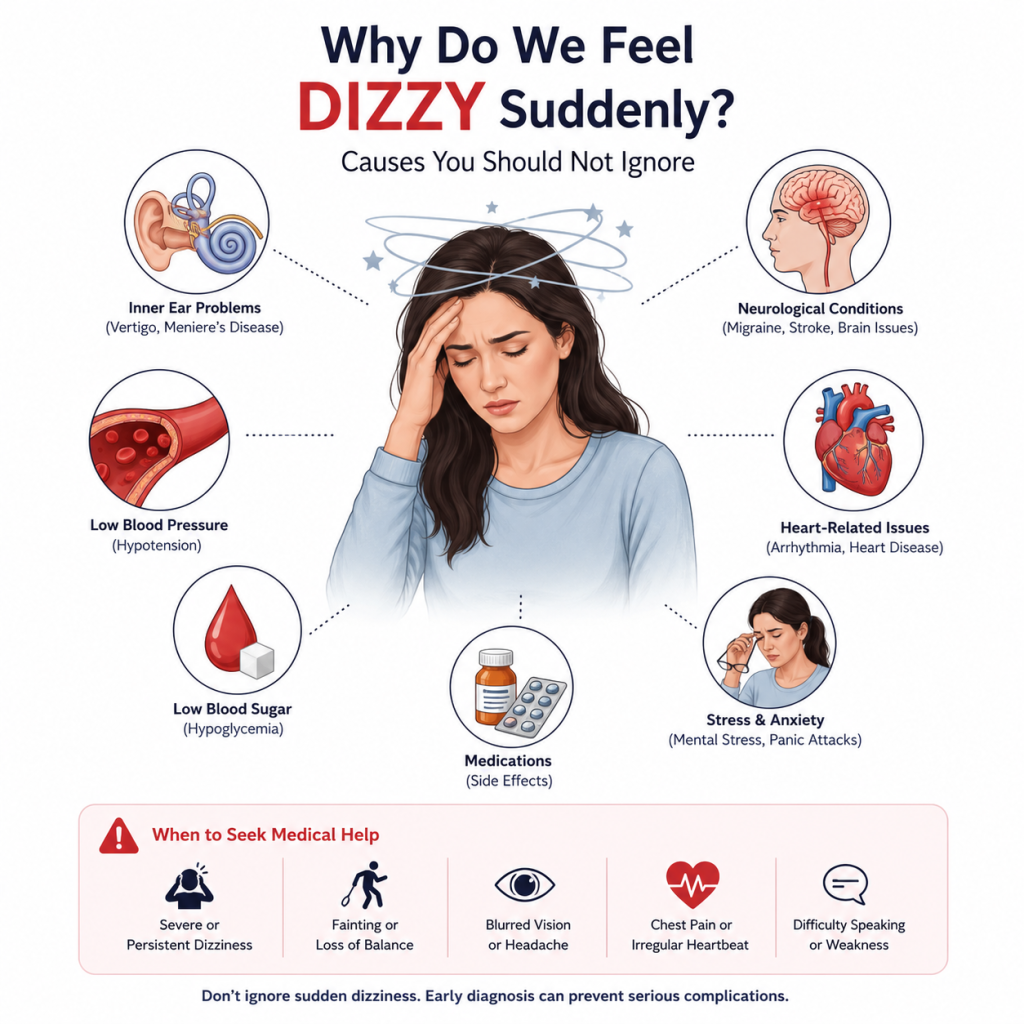
    Sudden dizziness can occur due to a temporary drop in blood pressure, dehydration, inner ear disturbances, low blood sugar, or underlying medical conditions. While brief dizziness may resolve on its own, repeated or severe episodes can indicate problems related to the brain, heart, or balance system. When dizziness occurs without a clear reason or is associated with symptoms like fainting, weakness, or blurred vision, it should not be ignored.

    At Shirdi Sai Hospital, New BEL Road, patients often report sudden dizziness along with fatigue, imbalance, or lightheadedness. In many cases, this symptom helps detect early signs of underlying conditions. This guide explains the causes, symptoms, risk factors, and when medical evaluation becomes necessary.

    Medical infographic showing a woman feeling sudden dizziness, with illustrated causes such as inner ear problems, low blood pressure, low blood sugar, medication side effects, neurological conditions, heart-related issues, stress, and anxiety, plus warning signs for when to seek medical help

    What Does Sudden Dizziness Mean?

    Dizziness is a broad term used to describe sensations such as:

    • lightheadedness
    • feeling faint
    • imbalance
    • spinning sensation (vertigo)

    It can be short-lasting or persistent and may occur suddenly without warning.

    Common Causes of Sudden Dizziness

    1. Low Blood Pressure (Postural Hypotension)

    A sudden drop in blood pressure when standing up can reduce blood flow to the brain.

    Symptoms:

    • lightheadedness
    • brief blackout feeling
    • weakness

    2. Dehydration

    Low fluid levels reduce blood circulation efficiency.

    Symptoms:

    • fatigue
    • dry mouth
    • dizziness on standing

    3. Inner Ear Problems (Vertigo)

    The inner ear controls balance.

    Conditions include:

    • benign positional vertigo
    • vestibular imbalance

    Symptoms:

    • spinning sensation
    • loss of balance
    • nausea

    4. Low Blood Sugar

    Common in people who skip meals or have diabetes.

    Symptoms:

    • sweating
    • weakness
    • confusion
    • dizziness

    5. Stress and Anxiety

    Mental stress can trigger physical symptoms.

    Symptoms:

    • dizziness
    • palpitations
    • breathing discomfort

    6. Anemia

    Low hemoglobin reduces oxygen supply.

    Symptoms:

    • fatigue
    • weakness
    • dizziness

    7. Heart-Related Causes

    Irregular heartbeat or reduced blood flow can lead to dizziness.

    Symptoms:

    • chest discomfort
    • palpitations
    • fainting

    Sudden Dizziness vs Vertigo (Comparison)

    FeatureDizzinessVertigo
    SensationLightheadednessSpinning
    CauseBlood pressure, dehydrationInner ear
    DurationShort or variableEpisodic
    Balance effectMildSevere

    Why Do We Feel Dizzy When Standing Up?

    This occurs due to a temporary drop in blood pressure.

    When standing:

    • blood pools in lower body
    • brain receives less blood briefly
    • dizziness occurs

    Usually resolves within seconds, but frequent episodes need evaluation.

    What Causes Sudden Dizziness Without Warning?

    Unexplained dizziness may be due to:

    • sudden blood pressure changes
    • inner ear disturbances
    • low blood sugar
    • stress response
    • dehydration

    If frequent, it should not be ignored.

    Symptoms That Need Immediate Attention

    Sudden dizziness becomes serious when associated with:

    • fainting
    • chest pain
    • severe headache
    • blurred vision
    • weakness on one side
    • difficulty speaking
    • loss of balance

    These may indicate a medical emergency.

    How to Prevent Sudden Dizziness

    Stay Hydrated

    Drink adequate fluids throughout the day.

    Avoid Skipping Meals

    Maintain stable blood sugar levels.

    Stand Up Slowly

    Prevent sudden blood pressure drops.

    Manage Stress

    Reduce anxiety-related symptoms.

    Maintain Healthy Lifestyle

    Balanced diet and regular activity support circulation.

    When Should You See a Doctor?

    Consult a doctor if:

    • dizziness occurs repeatedly
    • symptoms worsen
    • episodes last longer
    • associated symptoms appear
    • daily activities are affected

    How Doctors Evaluate Dizziness

    At Shirdi Sai Hospital, evaluation includes:

    • detailed symptom history
    • blood pressure measurement
    • neurological assessment
    • ear and balance evaluation

    Tests may include:

    • blood tests
    • ECG
    • imaging if required

    Why Patients Choose Shirdi Sai Hospital

    At Shirdi Sai Hospital, New BEL Road, dizziness is evaluated with a structured clinical approach to identify underlying causes.

    Patients prefer this approach because:

    • focus on accurate diagnosis
    • evaluation of multiple systems (heart, brain, ear)
    • patient-centered care
    • early detection of serious conditions

    The hospital is accessible for patients from Devasandra, RMV 2nd Stage, Sanjaynagar, Mathikere, Hebbal, and nearby areas.

    Frequently Asked Questions

    What is the main cause of sudden dizziness?

    Common causes include low blood pressure, dehydration, inner ear issues, and low blood sugar.

    Is sudden dizziness dangerous?

    It can be harmless or serious depending on the cause. Persistent or severe dizziness requires medical attention.

    Why do I feel dizzy when I stand up?

    This is usually due to a temporary drop in blood pressure.

    Can stress cause dizziness?

    Yes, stress and anxiety can trigger dizziness.

    When should I worry about dizziness?

    If it is frequent, severe, or associated with other symptoms.

    Conclusion

    Sudden dizziness is a common symptom that can result from simple causes like dehydration or more serious conditions involving the heart, brain, or inner ear. While occasional dizziness may not be serious, repeated or unexplained episodes should not be ignored.

    At Shirdi Sai Hospital, New BEL Road, early evaluation helps identify the cause and ensures proper treatment. Understanding the reason behind dizziness is essential for preventing complications and maintaining overall health.

  • Home Remedies for Cold and Cough: What Actually Helps and What to Avoid

    Home Remedies for Cold and Cough: What Actually Helps and What to Avoid

    Cold and cough are among the most common health problems affecting people of all age groups. They are usually caused by viral infections and often improve within a few days. Many people prefer home remedies for relief, especially in early stages. While certain remedies can help ease symptoms like throat irritation, congestion, and cough, they do not cure the infection itself. Understanding what works, what does not, and when to seek medical care is important.

    At Shirdi Sai Hospital, New BEL Road, patients often try multiple home remedies before consulting a doctor. In many cases, symptoms persist longer due to improper care or delayed treatment. This guide explains effective home remedies for cold and cough, their benefits, limitations, and when medical attention is required.

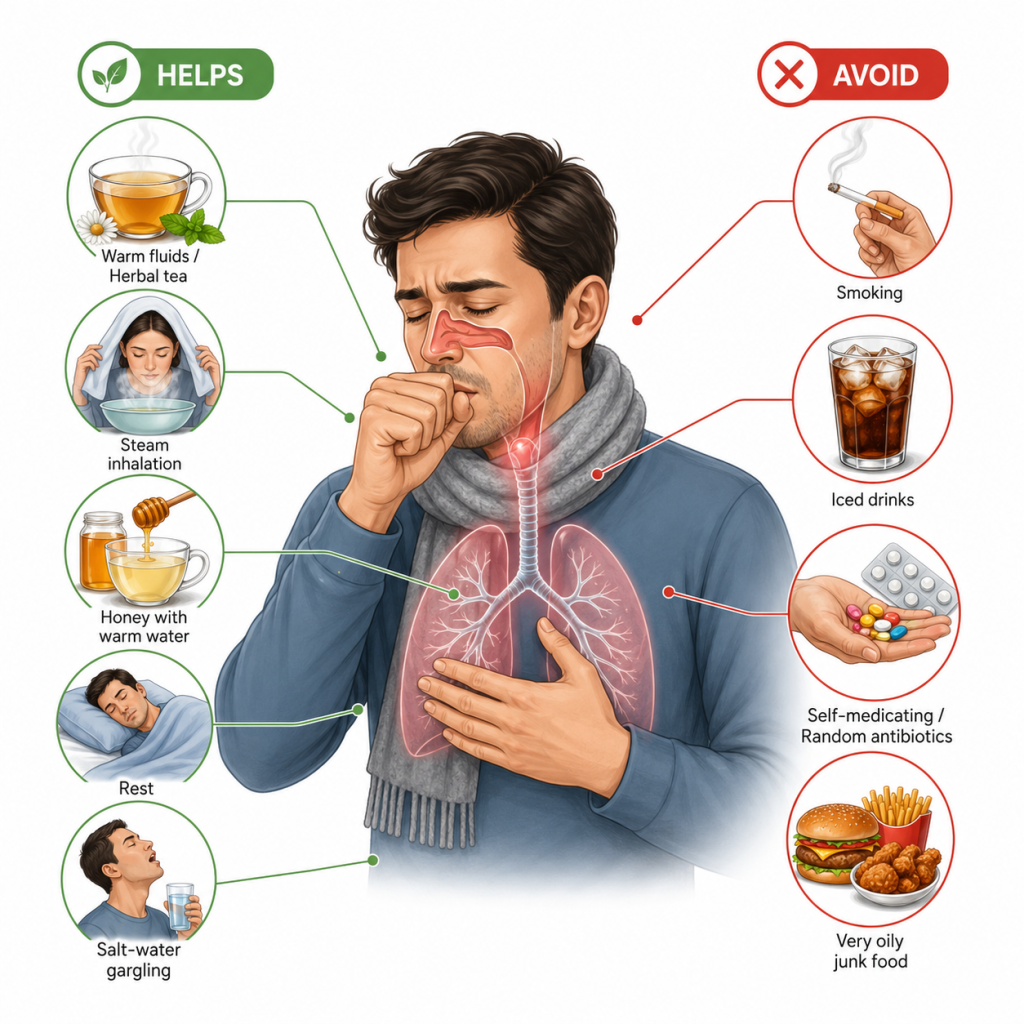
    Medical infographic showing a man coughing with highlighted nasal passages, throat, and lungs, alongside helpful cold and cough remedies such as warm fluids, steam inhalation, honey, rest, and salt-water gargling, plus items to avoid including smoking, iced drinks, random antibiotics, and oily junk food.

    What Causes Cold and Cough?

    Cold and cough are commonly caused by viral infections affecting the respiratory tract.

    Common causes include:

    • viral infections (common cold)
    • seasonal changes
    • exposure to cold weather
    • low immunity
    • allergies

    Symptoms may include:

    • runny or blocked nose
    • sore throat
    • dry or productive cough
    • mild fever
    • fatigue

    Do Home Remedies Really Work?

    Home remedies can help reduce symptoms but do not eliminate the virus.

    They work by:

    • soothing the throat
    • reducing irritation
    • loosening mucus
    • supporting hydration

    They should be used as supportive care, not as a replacement for medical treatment when symptoms persist.

    Effective Home Remedies for Cold and Cough

    1. Warm Fluids

    • warm water
    • herbal drinks
    • soups

    Benefit: Keeps the throat moist and helps loosen mucus.

    2. Steam Inhalation

    Inhaling steam can help reduce nasal congestion.

    Benefit: Opens nasal passages and improves breathing.

    3. Honey

    Honey is commonly used for cough relief.

    Benefit: Helps soothe throat irritation and reduce coughing frequency.

    Note: Not recommended for children under 1 year.

    4. Ginger-Based Preparations

    Ginger is widely used in traditional remedies.

    Benefit: May help reduce throat irritation and improve comfort.

    5. Salt Water Gargling

    Warm salt water gargling helps reduce throat discomfort.

    Benefit: Provides temporary relief from sore throat.

    6. Adequate Rest

    Rest allows the body to recover.

    Benefit: Supports immune function.

    7. Hydration

    Drinking enough fluids is essential.

    Benefit: Prevents dehydration and supports recovery.

    Best Home Remedies for Dry Cough

    Dry cough is usually due to throat irritation.

    Helpful remedies:

    • warm fluids
    • honey
    • steam inhalation

    Best Home Remedies for Wet Cough

    Wet cough involves mucus production.

    Helpful remedies:

    • steam inhalation
    • warm fluids
    • light diet

    What to Avoid During Cold and Cough

    Avoid practices that worsen symptoms:

    Common Mistakes While Using Home Remedies

    • relying only on home remedies for many days
    • using multiple remedies without consistency
    • ignoring worsening symptoms
    • delaying medical consultation

    When Home Remedies Are Not Enough

    Cold and cough may require medical evaluation if:

    • symptoms last more than 3–5 days
    • high fever develops
    • cough becomes severe
    • breathing difficulty occurs
    • chest pain is present
    • symptoms worsen instead of improving

    Cold vs Allergy vs Infection

    ConditionCauseKey Symptom
    ColdViral infectionRunny nose, mild fever
    AllergyEnvironmental triggerSneezing, itching
    InfectionBacterial or viralPersistent cough, fever

    Can Cold and Cough Lead to Complications?

    In some cases, untreated symptoms can lead to:

    • sinus infection
    • bronchitis
    • worsening respiratory issues

    Early care helps prevent complications.

    Why Patients Choose Shirdi Sai Hospital

    At Shirdi Sai Hospital, New BEL Road, cold and cough symptoms are evaluated based on severity, duration, and underlying cause.

    Patients prefer this approach because:

    • focus on identifying cause rather than temporary relief
    • guidance on proper treatment and recovery
    • evaluation of persistent symptoms
    • patient-centered care

    The hospital is accessible for patients from Devasandra, RMV 2nd Stage, Sanjaynagar, Mathikere, Hebbal, and nearby areas.

    When to Consult a Doctor

    Seek medical advice if:

    • cough persists for more than a few days
    • symptoms worsen
    • fever increases
    • breathing difficulty occurs
    • fatigue becomes severe

    Frequently Asked Questions

    What is the best home remedy for cold and cough?

    Warm fluids, steam inhalation, and rest are commonly recommended to relieve symptoms.

    Does honey help in cough?

    Yes, honey can help soothe throat irritation and reduce coughing.

    Can cold go away without medicine?

    Yes, mild viral cold can resolve on its own with proper care.

    Is steam inhalation safe?

    Steam inhalation is generally safe when done carefully.

    When should I worry about cough?

    If cough persists, worsens, or is associated with fever or breathing issues.

    Conclusion

    Home remedies for cold and cough can provide symptom relief and improve comfort during early stages. However, they should not replace medical evaluation when symptoms persist or worsen. Proper care, hydration, and timely consultation are essential for recovery.

    At Shirdi Sai Hospital, New BEL Road, early evaluation ensures that cold and cough are managed effectively and complications are avoided.

  • What Causes Sudden Body Pain? Warning Signs You Should Not Ignore

    What Causes Sudden Body Pain? Warning Signs You Should Not Ignore

    Sudden body pain can occur due to infections, muscle strain, inflammation, nerve irritation, or underlying medical conditions. While mild pain may result from physical activity or fatigue, unexplained or severe body pain can indicate issues such as viral infections, vitamin deficiencies, autoimmune conditions, or early signs of systemic illness. When pain appears suddenly without a clear reason or is associated with fever, weakness, or swelling, it should not be ignored.

    At Shirdi Sai Hospital, New BEL Road, patients commonly report sudden body pain along with fatigue, fever, or joint discomfort. In many cases, this symptom helps identify the early stage of an underlying condition. This guide explains the causes, symptoms, and when sudden body pain requires medical evaluation.

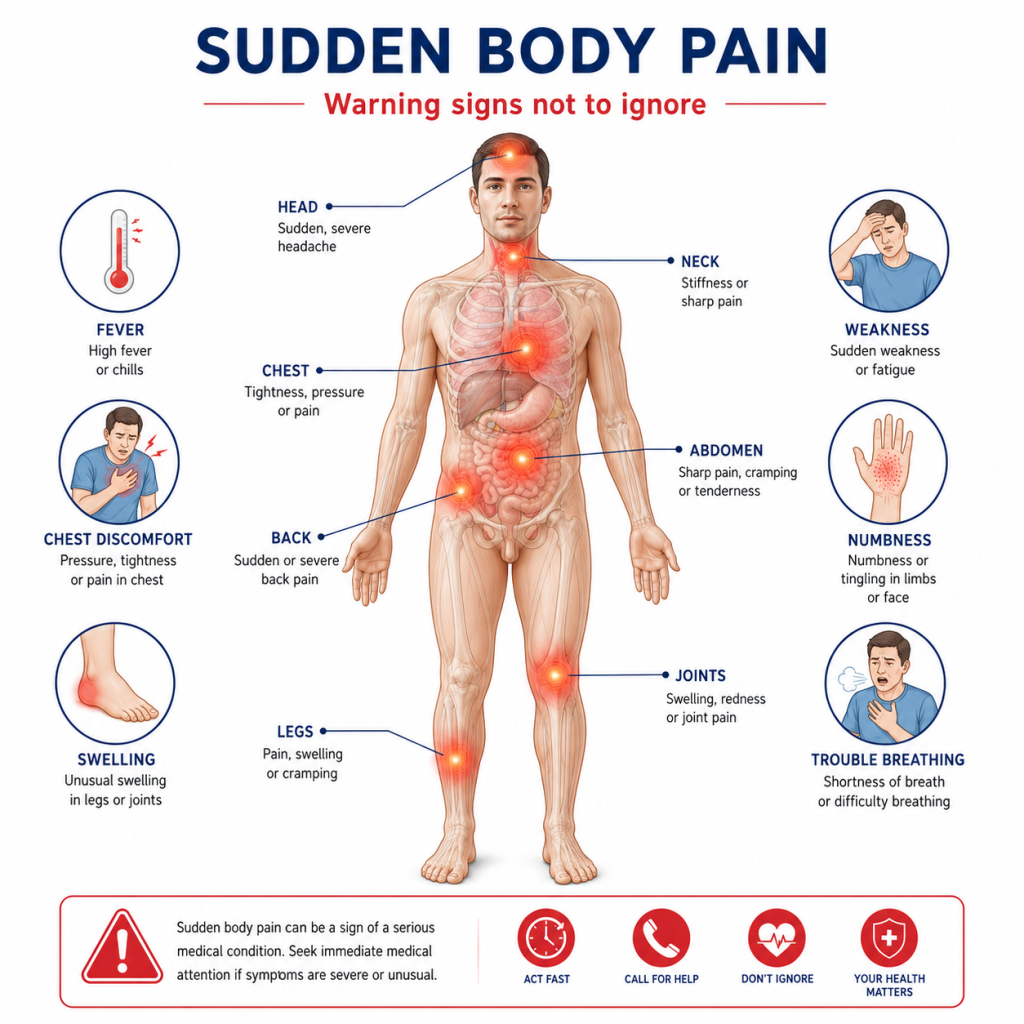
    Anatomical illustration showing common causes of sudden body pain, including muscle strain, joint problems, spinal disorders, infections, heart conditions, internal organ issues, poor circulation, and stress, with pain areas highlighted on the human body.

    What Is Sudden Body Pain?

    Sudden body pain refers to discomfort that develops quickly and may affect:

    • muscles
    • joints
    • bones
    • nerves

    It can be localized (specific area) or generalized (whole body).

    Unlike chronic pain, sudden body pain often has a trigger or underlying cause that needs to be identified.

    Common Causes of Sudden Body Pain

    1. Viral Infections

    One of the most common causes.

    • flu
    • viral fever
    • dengue (in endemic regions)
    • COVID-19 (in some cases)

    Symptoms:

    • body ache
    • fever
    • fatigue
    • headache

    2. Muscle Strain or Overuse

    Occurs due to:

    • heavy lifting
    • sudden physical activity
    • incorrect posture

    Pain is usually:

    • localized
    • worse with movement

    3. Inflammation in Joints or Muscles

    Inflammation can cause:

    • stiffness
    • swelling
    • pain during movement

    Seen in early joint conditions.

    4. Vitamin Deficiencies

    Deficiencies can lead to generalized body pain.

    • Vitamin D → bone and muscle pain
    • Vitamin B12 → nerve-related pain
    • Calcium → bone weakness

    5. Dehydration

    Low fluid levels can cause:

    • muscle cramps
    • fatigue
    • generalized discomfort

    6. Autoimmune Conditions

    Conditions where the immune system attacks the body.

    • rheumatoid arthritis
    • lupus

    Symptoms:

    • joint pain
    • swelling
    • stiffness

    7. Nerve-Related Causes

    Nerve irritation can cause:

    • sharp or shooting pain
    • tingling or numbness
    • radiating pain

    Sudden Body Pain vs Normal Muscle Pain

    FeatureSudden Body PainNormal Muscle Pain
    OnsetRapidGradual
    CauseMedical / systemicPhysical activity
    AreaGeneralized or specificUsually localized
    Associated symptomsFever, fatigue, weaknessNone
    RecoveryDepends on causeImproves with rest

    Symptoms That Should Not Be Ignored

    Sudden body pain becomes concerning when associated with:

    • high fever
    • severe weakness
    • joint swelling
    • persistent fatigue
    • unexplained weight loss
    • numbness or tingling
    • stiffness lasting several days

    These may indicate an underlying condition requiring medical attention.

    What Causes Sudden Body Pain Without Fever?

    Body pain without fever can occur due to:

    • muscle strain
    • vitamin deficiencies
    • poor posture
    • dehydration
    • stress-related muscle tension
    • early joint issues

    If pain persists, evaluation is recommended.

    Why Does the Whole Body Hurt Suddenly?

    Generalized pain may occur due to:

    • viral infections
    • immune response
    • fatigue or overexertion
    • metabolic imbalance

    The body reacts to stress or illness by causing widespread discomfort.

    Can Stress Cause Sudden Body Pain?

    Yes. Stress can lead to:

    • muscle tightness
    • neck and back pain
    • fatigue
    • tension headaches

    Chronic stress can amplify pain perception.

    How to Relieve Sudden Body Pain

    Relief depends on the cause.

    Rest

    Allow muscles and joints to recover.

    Hydration

    Adequate fluid intake supports muscle function.

    Balanced Diet

    Supports recovery and energy levels.

    Gentle Movement

    Light stretching helps reduce stiffness.

    Avoid Overexertion

    Prevent worsening of symptoms.

    Persistent or unexplained pain should not be managed only at home.

    When Should You See a Doctor?

    Consult a doctor if:

    • pain lasts more than 2–3 days
    • symptoms worsen
    • pain affects daily activities
    • swelling or stiffness increases
    • fever develops
    • weakness or fatigue is severe

    Early diagnosis helps identify the exact cause.

    How Doctors Evaluate Sudden Body Pain

    At Shirdi Sai Hospital, evaluation includes:

    • detailed symptom history
    • physical examination
    • assessment of joints and muscles
    • identification of infection signs
    • evaluation of lifestyle factors

    Tests may be advised based on findings, such as:

    • blood tests
    • vitamin levels
    • inflammatory markers

    Why Patients Choose Shirdi Sai Hospital

    At Shirdi Sai Hospital, New BEL Road, sudden body pain is assessed with a structured clinical approach to identify underlying causes rather than treating symptoms alone.

    Patients prefer this approach because:

    • focus on accurate diagnosis
    • evaluation of multiple possible causes
    • guidance on treatment and recovery
    • patient-centered care

    The hospital is accessible for patients from Devasandra, RMV 2nd Stage, Sanjaynagar, Mathikere, Hebbal, and surrounding areas.

    Explore services:
    https://www.shirdisaihospitalpvtltd.com/
    https://www.shirdisaihospitalpvtltd.com/general-surgery-transplant-surgery/

    Frequently Asked Questions

    What causes sudden body pain?

    Common causes include infections, muscle strain, inflammation, vitamin deficiencies, and stress.

    Is sudden body pain serious?

    It depends on the cause. Mild cases may resolve, but persistent or severe pain requires evaluation.

    Can viral infection cause body pain?

    Yes, viral infections commonly cause generalized body ache along with fatigue and fever.

    Why do I feel body pain without fever?

    Possible causes include muscle strain, vitamin deficiency, dehydration, or stress.

    When should I worry about body pain?

    If pain lasts several days, worsens, or is associated with other symptoms like fever or weakness.

    Conclusion

    Sudden body pain is a common symptom that can result from simple causes like muscle strain or more complex conditions such as infections or inflammation. While mild discomfort may resolve with rest and hydration, persistent or unexplained pain should not be ignored.

    At Shirdi Sai Hospital, New BEL Road, early evaluation helps identify the cause and ensures appropriate treatment. Understanding the reason behind sudden body pain is the first step toward effective recovery.

  • Knee Pain on Stairs? Warning Signs to Watch

    Knee Pain on Stairs? Warning Signs to Watch

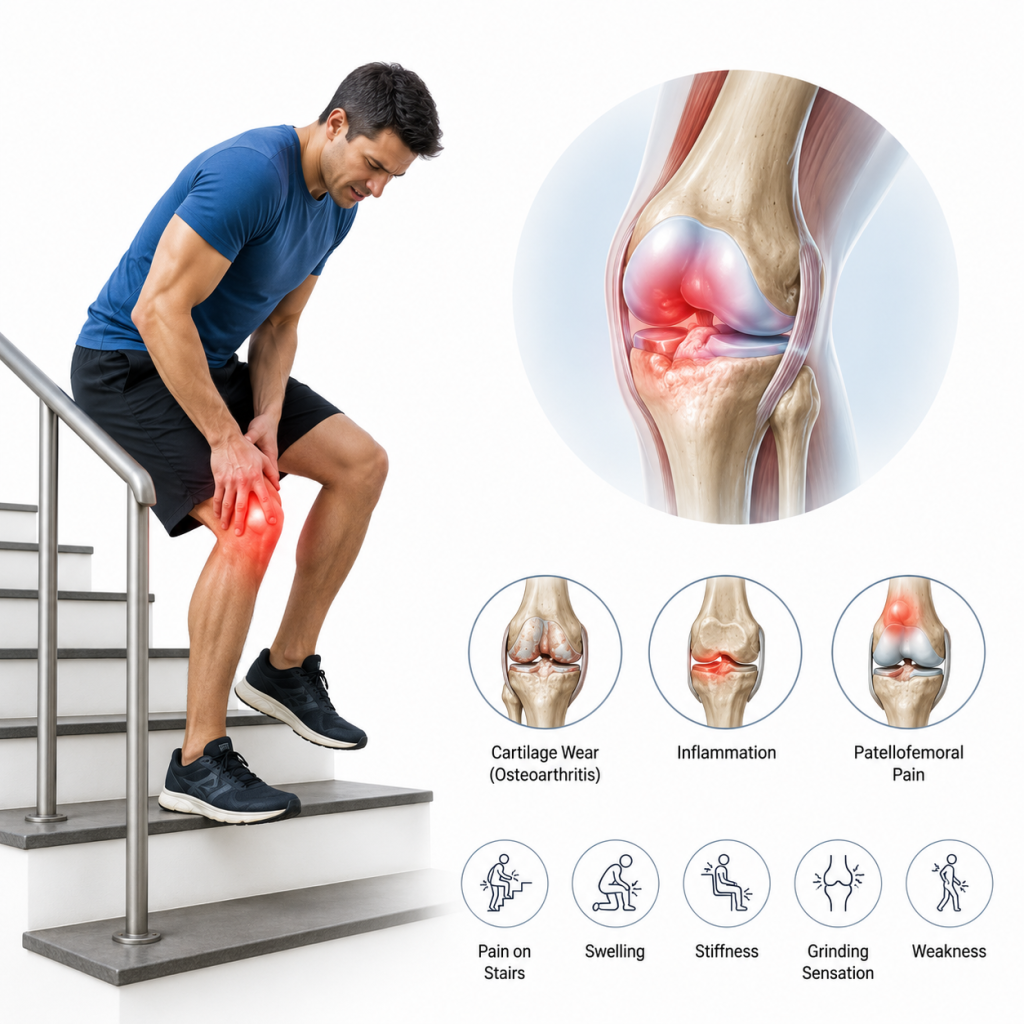
    Knee pain while climbing or descending stairs is one of the earliest signs of joint stress and possible cartilage damage. Many people ignore this symptom because it does not affect normal walking initially. However, pain specifically on stairs often indicates increased pressure inside the knee joint, which can be linked to early joint degeneration, muscle imbalance, or underlying conditions like patellofemoral pain syndrome or early arthritis.

    At Shirdi Sai Hospital, New BEL Road, we frequently evaluate patients who report knee pain only while using stairs but not during walking. In many cases, this is an early warning sign rather than a temporary issue. This guide explains the causes, symptoms, risk factors, and when knee pain on stairs requires medical attention.

    Illustration of a person experiencing knee pain while climbing stairs alongside an anatomical knee joint diagram highlighting cartilage wear, inflammation, patellofemoral pain, and common warning signs such as swelling, stiffness, grinding sensation, and weakness.

    Why Does Knee Pain Occur on Stairs but Not While Walking?

    Stair climbing puts significantly more pressure on the knee joint compared to walking.

    • Walking → ~1.5x body weight pressure
    • Climbing stairs → ~3–4x body weight pressure

    This increased load stresses:

    • knee cartilage
    • patella (kneecap)
    • surrounding muscles and ligaments

    If there is even minor weakness or joint wear, pain appears during stair use before it affects regular walking.

    What Causes Knee Pain on Stairs?

    Knee pain on stairs is not a single condition. It is a symptom linked to different underlying causes.

    1. Patellofemoral Pain Syndrome (Most Common)

    Pain occurs around or behind the kneecap.

    • worsens while climbing stairs
    • feels like pressure or discomfort
    • common in young adults and active individuals

    2. Early Joint Degeneration (Cartilage Wear)

    The cartilage inside the knee starts thinning.

    • pain during pressure activities
    • stiffness after rest
    • early stage of osteoarthritis

    3. Muscle Weakness or Imbalance

    Weak quadriceps or hamstrings fail to support the knee.

    • instability while climbing stairs
    • increased joint load
    • fatigue-related discomfort

    4. Meniscus Irritation or Minor Tear

    The cartilage cushioning inside the knee gets affected.

    • pain during bending
    • clicking sensation
    • discomfort on stairs

    5. Ligament Strain

    Overuse or improper movement can strain ligaments.

    • pain during movement
    • mild swelling
    • reduced confidence while climbing

    Early Warning Signs of Joint Degeneration

    Knee pain on stairs should not be ignored when combined with these symptoms:

    • stiffness after sitting for long periods
    • mild swelling around the knee
    • cracking or grinding sound
    • reduced flexibility
    • discomfort after physical activity
    • weakness while climbing or descending

    These are often early indicators of joint wear.

    Knee Pain on Stairs vs Normal Knee Pain

    FeatureKnee Pain on StairsGeneral Knee Pain
    TriggerHigh pressure movementCan occur anytime
    Early signYesNot always
    Common causeCartilage stressInjury / inflammation
    Risk indicatorJoint degenerationVaries
    ProgressionGradualCan be sudden

    What Is the “Figure 4 Test” for Knee Pain?

    The Figure 4 test is a simple physical positioning test used to assess knee and hip joint discomfort.

    • one leg is placed over the opposite knee
    • the position forms a “4” shape
    • discomfort may indicate joint or soft tissue issues

    It is not a definitive diagnosis but helps identify areas of discomfort that require further evaluation.

    Why Does Knee Pain Increase While Climbing Stairs?

    Climbing stairs requires:

    • deeper knee bending
    • stronger muscle activation
    • higher joint pressure

    This combination exposes:

    • cartilage wear
    • muscle weakness
    • joint misalignment

    Descending stairs can sometimes cause even more discomfort due to controlled muscle contraction.

    How to Reduce Knee Pain When Going Up Stairs

    Improvement depends on the cause, but general measures include:

    Strengthening Exercises

    • quadriceps strengthening
    • hamstring activation
    • glute muscle strengthening

    Movement Correction

    • avoid sudden knee bending
    • use support (handrails)
    • maintain proper posture

    Activity Modification

    • reduce repeated stair use
    • avoid overexertion
    • take breaks during activity

    Weight Management

    Reducing body weight decreases stress on knee joints.

    Exercises for Knee Pain on Stairs

    Safe exercises focus on strengthening without increasing joint stress.

    • straight leg raises
    • seated knee extensions
    • mini squats (controlled)
    • step-ups (gradual progression)

    Exercises should be performed with proper technique to avoid worsening symptoms.

    What Is the 1 Mistake That Makes Knee Pain Worse?

    Ignoring early symptoms and continuing high-stress activities.

    Many people:

    • continue climbing stairs frequently
    • avoid strengthening exercises
    • delay medical evaluation

    This leads to worsening joint damage over time.

    At What Age Do Knee Problems Start?

    Knee issues can begin at any age depending on lifestyle and activity level.

    • 20s–30s → sports injuries, muscle imbalance
    • 30s–40s → early cartilage wear
    • 40+ → increased risk of arthritis

    Age is a factor, but lifestyle plays a bigger role.

    Do Stair Climbers Hurt Your Knees?

    Stair climbing machines can increase stress on knees if:

    • used excessively
    • done with poor posture
    • done without proper strength

    They are not harmful when used correctly but can aggravate existing issues.

    Red Flag Symptoms That Need Medical Attention

    Consult a doctor if you experience:

    • persistent pain for weeks
    • swelling that does not reduce
    • difficulty bending or straightening knee
    • instability or knee giving way
    • pain even at rest
    • severe pain during movement

    What Diseases Start with Knee Pain on Stairs?

    Knee pain during stair use can be an early sign of:

    • osteoarthritis
    • patellofemoral syndrome
    • meniscus damage
    • ligament issues
    • cartilage degeneration

    Early diagnosis helps prevent progression.

    Can Vitamin Deficiency Cause Knee Pain?

    Certain deficiencies can contribute to joint discomfort:

    • Vitamin D → bone weakness
    • Vitamin B12 → nerve-related symptoms
    • Calcium → bone health

    These are contributing factors, not the primary cause in most cases.

    Why Patients Choose Shirdi Sai Hospital for Knee Evaluation

    At Shirdi Sai Hospital, New BEL Road, knee pain is evaluated through a structured clinical approach to identify the exact cause rather than treating symptoms alone.

    Patients choose the hospital because:

    • detailed assessment of joint function and movement
    • evaluation of cartilage, ligaments, and muscle balance
    • identification of early degeneration signs
    • guidance on treatment and lifestyle correction
    • patient-focused care approach

    The hospital is accessible for patients from Devasandra, RMV 2nd Stage, Sanjaynagar, Mathikere, Hebbal, and nearby areas.

    Explore services:
    https://www.shirdisaihospitalpvtltd.com/general-surgery-transplant-surgery/
    https://www.shirdisaihospitalpvtltd.com/

    When Should You See a Doctor?

    Seek medical advice if:

    • pain continues for more than 2–3 weeks
    • symptoms worsen over time
    • knee function is affected
    • swelling or stiffness increases
    • daily activities become difficult

    Early consultation helps prevent long-term joint damage.

    Frequently Asked Questions

    Why does my knee hurt when climbing stairs but not walking?

    Because stair climbing puts more pressure on the knee joint, revealing early joint stress or weakness.

    How do I stop knee pain on stairs?

    Strengthening exercises, proper movement, and reducing excessive load can help, but underlying causes should be evaluated.

    Is knee pain on stairs a sign of arthritis?

    It can be an early sign, especially when associated with stiffness and swelling.

    Can knee pain go away on its own?

    Mild cases may improve, but persistent pain should be assessed to prevent progression.

    What is the best exercise for knee pain?

    Strengthening exercises targeting quadriceps and supporting muscles are most effective.

    Conclusion

    Knee pain on stairs is often an early signal of joint stress and should not be ignored. While it may seem minor initially, it can indicate underlying issues such as cartilage wear, muscle imbalance, or early joint degeneration.

    At Shirdi Sai Hospital, New BEL Road, early evaluation helps identify the cause and prevent further damage. Addressing symptoms at the right time can significantly improve joint health and avoid long-term complications.

  • Is Alcohol Really Safe? The Truth About Its Effects on Health

    Is Alcohol Really Safe? The Truth About Its Effects on Health

    Alcohol affects multiple organs in the body, including the liver, brain, heart, and digestive system. While occasional drinking may not show immediate symptoms, regular or excessive alcohol intake can lead to long-term health problems such as liver disease, high blood pressure, digestive issues, sleep disturbances, and mental health changes. Many people do not notice these effects early because they develop gradually.

    At Shirdi Sai Hospital, New BEL Road, we frequently evaluate patients who report fatigue, digestive discomfort, sleep problems, or general health decline where alcohol use is a contributing factor. This guide explains how alcohol affects the body, short-term and long-term risks, common misconceptions, and when medical evaluation becomes necessary.

    Medical infographic showing how alcohol affects the human body, highlighting its impact on the brain, heart, liver, stomach, pancreas, reproductive system, immune system, and long-term health risks including cancer, poor sleep, weakened bones, and dehydration.

    How Alcohol Affects the Body

    Alcohol is absorbed into the bloodstream and processed mainly by the liver. Once consumed, it affects several body systems simultaneously.

    • Brain: Alters judgment, coordination, and reaction time
    • Liver: Breaks down alcohol and is vulnerable to long-term damage
    • Heart: Affects blood pressure and heart rhythm
    • Digestive system: Irritates the stomach lining
    • Nervous system: Impacts mood and cognitive function

    Even small amounts can affect coordination and concentration, while larger or repeated intake increases health risks over time.

    Short-Term Effects of Alcohol

    Short-term effects appear soon after drinking and vary based on quantity, body weight, tolerance, and overall health.

    Common short-term effects include:

    • reduced coordination and balance
    • slower reaction time
    • impaired judgment
    • nausea or vomiting
    • headache
    • dehydration
    • disturbed sleep

    These effects may seem temporary but can increase the risk of accidents, injuries, and poor decision-making.

    Long-Term Effects of Alcohol on Health

    Long-term alcohol use can lead to progressive damage in multiple organs.

    Liver Damage

    The liver processes alcohol, making it the most affected organ.

    • fatty liver (early stage)
    • alcoholic hepatitis
    • liver cirrhosis (permanent damage)

    Heart and Blood Pressure

    Alcohol can increase blood pressure and affect heart rhythm.

    • hypertension
    • irregular heartbeat
    • increased risk of heart disease

    Digestive Problems

    Alcohol irritates the digestive tract.

    • gastritis
    • acid reflux
    • ulcers
    • poor nutrient absorption

    Brain and Mental Health

    Long-term alcohol use can affect brain function.

    • memory problems
    • poor concentration
    • mood changes
    • anxiety and depression

    Immune System Impact

    Alcohol can weaken immunity, making the body more vulnerable to infections.

    10 Negative Effects of Alcohol on the Body

    This section targets high search demand and summarises major risks:

    1. liver damage
    2. high blood pressure
    3. heart rhythm disturbances
    4. digestive issues
    5. sleep disturbance
    6. dehydration
    7. reduced immunity
    8. weight gain
    9. mental health changes
    10. dependency and addiction risk

    These effects may not appear immediately but can develop gradually.

    Is Alcohol Safe for Health?

    Alcohol is often misunderstood as safe in small amounts. The effect depends on:

    • quantity consumed
    • frequency
    • individual health condition
    • existing medical issues

    For some individuals, even small amounts may cause problems, especially if they have:

    • liver disease
    • diabetes
    • high blood pressure
    • digestive issues
    • mental health conditions

    There is no universally safe level that applies to everyone.

    Daily Drinking: What Happens Over Time

    Regular daily drinking can lead to cumulative health effects even if each intake seems small.

    Possible outcomes include:

    • gradual liver damage
    • increased tolerance (needing more alcohol for same effect)
    • poor sleep quality
    • dependency risk
    • metabolic changes

    Daily intake often shifts from occasional use to habitual consumption, increasing long-term risk.

    Alcohol: Myths vs Reality

    MythReality
    Alcohol helps you sleepIt disrupts sleep quality
    Small amounts are always safeDepends on individual health
    Only heavy drinkers get liver diseaseRegular moderate intake can also affect the liver
    Alcohol improves digestionIt can irritate the stomach lining
    Beer is safer than hard liquorAll alcohol affects the body

    This section improves clarity and addresses common misconceptions.

    Why Do People Continue Drinking Despite Health Risks

    Understanding behavior helps improve awareness.

    Common reasons include:

    • social habits
    • stress relief
    • peer influence
    • routine lifestyle pattern
    • lack of awareness of long-term effects

    However, repeated use often masks underlying stress or health issues rather than solving them.

    What Happens When You Stop Drinking Alcohol

    Reducing or stopping alcohol intake can lead to noticeable improvements.

    Short-term changes:

    • better hydration
    • improved sleep quality
    • improved concentration

    Long-term changes:

    • improved liver function
    • better blood pressure control
    • reduced digestive issues
    • improved energy levels

    Stopping alcohol early can prevent long-term complications.

    Why Patients Choose Shirdi Sai Hospital for Alcohol-Related Health Evaluation

    At Shirdi Sai Hospital, New BEL Road, alcohol-related symptoms are evaluated as part of a broader medical assessment rather than treated in isolation.

    Patients prefer this approach because:

    • doctors assess symptoms along with lifestyle and medical history
    • evaluation includes liver function, metabolic health, and overall condition
    • structured approach to identify early signs of damage
    • guidance on lifestyle changes along with treatment
    • suitable for patients experiencing fatigue, digestive issues, or sleep problems

    The hospital is accessible for patients from Devasandra, RMV 2nd Stage, Sanjaynagar, Mathikere, Hebbal, and nearby areas.

    Explore services:
    General Surgery: https://www.shirdisaihospitalpvtltd.com/general-surgery-transplant-surgery/
    Urology: https://www.shirdisaihospitalpvtltd.com/urology/
    Main Website: https://www.shirdisaihospitalpvtltd.com/

    When Should You Consult a Doctor

    Seek medical advice if you experience:

    • persistent fatigue
    • digestive discomfort
    • sleep disturbance
    • frequent headaches
    • unexplained weight changes
    • high blood pressure
    • difficulty reducing alcohol intake

    Early evaluation helps identify underlying issues before they progress

    Frequently Asked Questions

    What are the main effects of alcohol on health

    Alcohol affects the liver, brain, heart, and digestive system, and long-term use can lead to serious health conditions.

    Is drinking alcohol daily harmful

    Regular daily drinking can increase the risk of liver damage, high blood pressure, and dependency over time.

    Does alcohol affect sleep

    Yes, alcohol disrupts sleep patterns and reduces sleep quality.

    Can alcohol cause stomach problems

    Yes, it can irritate the stomach lining and lead to acidity, gastritis, and ulcers.

    Is there any safe amount of alcohol

    The effect varies by individual. Some people may experience health issues even with small amounts.

    What happens if I stop drinking alcohol

    Stopping alcohol can improve sleep, digestion, liver function, and overall energy levels.

    Conclusion

    Alcohol affects the body in multiple ways, often gradually and without immediate symptoms. While occasional intake may not show noticeable effects, repeated or regular consumption can lead to long-term health problems involving the liver, heart, digestion, and mental well-being.

    At Shirdi Sai Hospital, New BEL Road, we encourage early awareness and timely evaluation of symptoms related to alcohol use. If you notice persistent health changes, fatigue, or digestive discomfort, it is important to seek medical guidance and understand the underlying cause.

  • 10 Reasons for Feeling Tired All the Time

    10 Reasons for Feeling Tired All the Time

    Feeling tired all the time is not always caused by poor sleep. Persistent tiredness can happen due to lifestyle factors, nutritional deficiencies, stress, infections, anemia, thyroid disorders, diabetes, sleep problems, or other medical conditions. If fatigue continues even after rest, affects daily work, or comes with symptoms like dizziness, weight change, poor appetite, breathlessness, or body weakness, it needs proper medical evaluation.

    At Shirdi Sai Hospital, New BEL Road, we evaluate fatigue as a clinical symptom, not just as “normal tiredness.” Many patients from Devasandra, RMV 2nd Stage, Mathikere, Sanjaynagar, Hebbal, and nearby areas visit with constant tiredness, weakness, low stamina, or reduced daily energy. This guide explains the common reasons for feeling tired all the time, what symptoms to watch for, and when to consult a doctor.

    Medical infographic illustrating 10 common reasons for feeling tired all the time, including poor sleep, stress, poor nutrition, iron deficiency, thyroid problems, blood sugar imbalance, lack of exercise, depression, medication side effects, and underlying health conditions.

    What Does It Mean to Feel Tired All the Time?

    Feeling tired all the time means your body or mind is not recovering properly even after rest. It can feel like low energy, sleepiness, weakness, lack of focus, or reduced stamina throughout the day.

    This type of fatigue is different from normal tiredness after work, travel, exercise, or a busy day. Normal tiredness improves with rest. Persistent fatigue continues, returns frequently, or interferes with daily life.

    Common signs include:

    • feeling exhausted after waking up
    • low energy through the day
    • difficulty concentrating
    • heaviness in the body
    • reduced interest in routine activities
    • weakness after small tasks
    • frequent need to rest
    • poor work or study performance

    Persistent fatigue should not be ignored when it affects daily routine or comes with other symptoms.

    Why Am I Always Tired Even After Sleeping?

    Feeling tired even after sleeping usually means sleep quantity and sleep quality are not the same. A person may sleep for enough hours but still wake up tired if the sleep is disturbed, irregular, or not deep enough.

    Common reasons include:

    • late-night screen use
    • irregular sleep timing
    • frequent waking at night
    • snoring or breathing difficulty during sleep
    • stress-related sleep disturbance
    • caffeine intake late in the day
    • sleep apnea or other sleep disorders

    If tiredness continues after regular sleep, the cause may not be sleep alone. Anemia, thyroid disorders, diabetes, vitamin deficiencies, depression, chronic stress, and infections can also cause fatigue even after rest.

    Why Do I Feel Tired All Day for No Clear Reason?

    Feeling tired all day without an obvious reason can happen when the body is dealing with an internal imbalance. This may include low hemoglobin, low vitamin levels, thyroid imbalance, blood sugar changes, ongoing infection, dehydration, poor diet, or mental stress.

    Many people ignore fatigue because they assume it is due to work pressure. However, when tiredness becomes constant, it is important to check whether the body is getting enough oxygen, nutrients, sleep, hydration, and hormonal balance.

    The cause should be evaluated if tiredness is:

    • present daily
    • not improving with rest
    • affecting work or home activities
    • linked with dizziness or weakness
    • associated with appetite or weight changes

    Common Lifestyle Reasons for Feeling Tired All the Time

    Lifestyle factors are one of the most common reasons for tiredness. However, they should not be assumed as the only reason if fatigue continues.

    Poor Sleep Routine

    Irregular sleep timing affects recovery. Late-night phone use, shift work, and sleeping at different times every day can disturb the body’s natural sleep rhythm.

    High Stress

    Stress uses mental energy continuously. People with high work pressure, financial stress, family stress, or emotional strain often feel tired even without heavy physical activity.

    Long Sitting Hours

    A sedentary routine can reduce energy levels. Sitting for long hours without movement can make the body feel heavy, stiff, and inactive.

    Low Physical Activity

    Lack of movement affects stamina. Light daily activity supports circulation, muscle function, mood, and energy.

    Poor Diet Quality

    Skipping meals, eating very little protein, relying on tea and snacks, or eating mostly refined carbohydrates can lead to unstable energy levels.

    Dehydration

    Low fluid intake can cause tiredness, headache, dizziness, and reduced concentration.

    Excess Screen Time

    Long screen exposure, especially at night, can affect sleep and increase mental fatigue.

    Why Fatigue Is Common in Urban Indian Routines

    In many Indian urban routines, fatigue is linked to a combination of work pressure, irregular meals, travel stress, screen exposure, and poor sleep habits. Many people start the day with tea or coffee, skip breakfast, eat late meals, and sit for long hours.

    Common patterns include:

    • long office hours
    • long commuting time
    • frequent tea or coffee intake
    • late dinners
    • reduced outdoor activity
    • low sunlight exposure
    • high screen exposure
    • irregular meal timing
    • weekend sleep imbalance

    These habits can contribute to tiredness. However, if fatigue is frequent or severe, medical causes must also be checked.

    Medical Reasons for Constant Fatigue

    Persistent fatigue can be a symptom of an underlying medical condition. This is the most important reason not to ignore tiredness when it continues.

    Anemia

    Anemia means the body does not have enough healthy red blood cells or hemoglobin to carry oxygen properly. This can cause tiredness, dizziness, breathlessness, pale skin, headache, and low stamina.

    Common causes include iron deficiency, vitamin B12 deficiency, chronic blood loss, or other medical conditions.

    Thyroid Disorders

    An underactive thyroid can slow body functions and cause tiredness, weight gain, dry skin, constipation, cold intolerance, and low mood. Thyroid imbalance needs blood testing and medical treatment.

    Diabetes

    High or unstable blood sugar levels can cause tiredness, increased thirst, frequent urination, blurred vision, and weight changes. Fatigue after meals or constant tiredness can be linked to blood sugar imbalance.

    Vitamin B12 Deficiency

    Vitamin B12 deficiency can cause fatigue, weakness, numbness or tingling, memory issues, and poor concentration. It is more common in people with low dietary intake, absorption issues, or certain long-term medication use.

    Vitamin D Deficiency

    Vitamin D deficiency can contribute to body pain, muscle weakness, low energy, and tiredness. It is commonly seen in people with limited sun exposure.

    Infections

    Viral infections, urinary infections, respiratory infections, and other ongoing infections can cause fatigue. Fever may not always be high, but the body can still feel weak while fighting infection.

    Sleep Disorders

    Sleep apnea and other sleep disorders can cause daytime tiredness even after a full night’s sleep. Loud snoring, choking during sleep, morning headache, and daytime sleepiness are important signs.

    Mental Health Conditions

    Anxiety, depression, chronic stress, and burnout can cause constant tiredness, low motivation, poor sleep, body heaviness, and reduced concentration. These symptoms need proper evaluation, not judgment.

    Chronic Medical Conditions

    Heart, kidney, liver, autoimmune, and long-term inflammatory conditions can also cause fatigue. This is why persistent tiredness needs a structured medical history and basic evaluation.

    Lifestyle Fatigue vs Medical Fatigue

    Symptom PatternMore Likely Linked ToWhat To Do
    Tired after heavy work or travelNormal physical tirednessRest, hydration, regular meals
    Tired even after sleepPoor sleep quality or medical issueReview sleep and consider evaluation
    Fatigue with dizzinessAnemia, dehydration, blood pressure issueMedical assessment and blood tests
    Fatigue with weight gainThyroid disorder, lifestyle factorsThyroid evaluation if persistent
    Fatigue with frequent urinationBlood sugar imbalanceBlood sugar testing
    Fatigue with poor appetiteInfection, nutritional issue, other illnessDoctor consultation
    Fatigue with breathlessnessAnemia, heart/lung issue, other causesPrompt medical evaluation
    Fatigue with numbness or tinglingVitamin B12 deficiency or nerve-related issueMedical evaluation

    This comparison helps separate ordinary tiredness from fatigue that needs attention.

    What Causes Sudden Fatigue and Weakness?

    Sudden fatigue and weakness can occur due to dehydration, low food intake, fever, infection, low blood sugar, low blood pressure, heavy exertion, poor sleep, or acute illness.

    Possible causes include:

    • not eating for long hours
    • vomiting or loose stools
    • fever or infection
    • dehydration
    • blood sugar changes
    • sudden stress or anxiety
    • overexertion
    • poor sleep the previous night

    Sudden fatigue should be checked urgently if it comes with chest pain, breathing difficulty, fainting, confusion, severe dizziness, weakness on one side of the body, or very high fever.

    Symptoms That Should Not Be Ignored With Fatigue

    Fatigue becomes more concerning when it appears with other symptoms.

    Consult a doctor if tiredness is associated with:

    • dizziness
    • breathlessness
    • chest discomfort
    • unexplained weight loss
    • unexplained weight gain
    • frequent fever
    • poor appetite
    • repeated infections
    • swelling in legs
    • excessive thirst
    • frequent urination
    • numbness or tingling
    • severe body pain
    • poor concentration
    • low mood for many days

    These symptoms can help doctors identify whether fatigue is related to anemia, thyroid imbalance, diabetes, infection, nutritional deficiency, sleep disorder, or another medical condition.

    What Tests Are Commonly Done for Constant Fatigue?

    The required tests depend on symptoms, age, medical history, examination findings, and risk factors. Doctors do not recommend the same tests for everyone.

    Commonly considered tests may include:

    • complete blood count to check hemoglobin and infection markers
    • thyroid function test
    • blood sugar test
    • vitamin B12 level
    • vitamin D level
    • liver and kidney function tests
    • urine test if urinary symptoms are present
    • infection-related tests if fever or body pain is present

    Testing should be decided after medical consultation. Self-selecting random tests without clinical guidance can miss the actual cause.

    How Doctors Evaluate Constant Fatigue

    At a hospital, fatigue evaluation starts with understanding the pattern, duration, associated symptoms, lifestyle, sleep, diet, and medical history.

    Doctors usually assess:

    • how long fatigue has been present
    • whether it improves with rest
    • sleep quality
    • eating pattern
    • weight changes
    • fever or infection symptoms
    • menstrual history in women
    • medication history
    • diabetes or thyroid history
    • stress and mood symptoms
    • hydration and activity level

    This structured approach helps identify whether the tiredness is lifestyle-related, nutritional, hormonal, metabolic, infection-related, or linked to another condition.

    How to Improve Energy Levels Naturally

    Lifestyle correction can support better energy, especially when fatigue is linked to routine, diet, hydration, or sleep. However, persistent fatigue still needs evaluation if it does not improve.

    Maintain a Regular Sleep Schedule

    Sleep and wake up at consistent times. Reduce screen use before bed and avoid heavy meals late at night.

    Eat Balanced Meals

    Include protein, vegetables, fruits, whole grains, and healthy fats in appropriate portions. Avoid long gaps between meals.

    Add Protein to Daily Food

    Dal, eggs, paneer, curd, pulses, fish, chicken, nuts, and seeds can support strength and recovery when included properly.

    Stay Hydrated

    Drink water through the day. Increase fluids during fever, sweating, loose stools, or hot weather.

    Move Daily

    Walking, stretching, or light activity improves circulation and reduces sluggishness.

    Reduce Excess Tea and Coffee

    Tea and coffee can temporarily improve alertness but should not replace sleep, food, or hydration.

    Manage Stress

    Stress management through routine, rest, breathing practices, counselling, or medical support can help when mental fatigue is present.

    Why Patients Choose Shirdi Sai Hospital for Fatigue Evaluation

    At Shirdi Sai Hospital, New BEL Road, fatigue is evaluated with a focus on identifying the cause instead of giving only temporary symptom relief. Constant tiredness can come from many systems in the body, so proper assessment matters.

    Patients choose Shirdi Sai Hospital for fatigue-related evaluation because:

    • doctors assess fatigue through symptoms, history, and clinical examination
    • evaluation can include common causes such as anemia, thyroid issues, diabetes, infections, and nutritional deficiencies
    • care is suitable for adults, elderly patients, and people with ongoing weakness
    • advice includes medical treatment, diet correction, hydration, sleep, and lifestyle guidance
    • the hospital is accessible for patients from Devasandra, RMV 2nd Stage, Mathikere, Sanjaynagar, Hebbal, and nearby New BEL Road areas

    This approach helps patients understand whether fatigue is due to lifestyle patterns or an underlying condition that needs treatment.

    When to Consult a Doctor for Constant Fatigue

    You should consult a doctor if fatigue:

    • lasts for more than one to two weeks
    • does not improve with sleep and rest
    • affects daily work, study, or home responsibilities
    • comes with dizziness or breathlessness
    • comes with unexplained weight loss or weight gain
    • occurs with fever, night sweats, or repeated infections
    • occurs with excessive thirst or frequent urination
    • occurs with poor appetite or ongoing weakness
    • affects elderly people, pregnant women, or people with known chronic illness

    If you are consulting a hospital in Bangalore, especially around New BEL Road and nearby areas, early evaluation helps identify the root cause and prevents delay in treatment.

    Frequently Asked Questions

    Why do I feel tired all the time even after sleep?

    Feeling tired even after sleep can happen due to poor sleep quality, stress, anemia, thyroid imbalance, diabetes, vitamin deficiency, or sleep disorders. If it continues, medical evaluation is recommended.

    What deficiency causes constant fatigue?

    Iron deficiency, vitamin B12 deficiency, and vitamin D deficiency are commonly linked with fatigue. A doctor may suggest blood tests based on symptoms and medical history.

    Can dehydration cause fatigue?

    Yes. Dehydration can cause tiredness, dizziness, headache, poor concentration, and weakness. Fluid intake becomes especially important during fever, loose stools, vomiting, or hot weather.

    Is constant fatigue serious?

    Occasional tiredness is common. Constant fatigue becomes important when it does not improve with rest, affects daily routine, or comes with symptoms like dizziness, weight change, breathlessness, fever, or poor appetite.

    Why do I feel tired without doing anything?

    Tiredness without activity can happen due to poor sleep, stress, low hemoglobin, thyroid issues, blood sugar imbalance, vitamin deficiency, infection, or low physical activity.

    What tests are needed for fatigue?

    Doctors may advise tests such as complete blood count, thyroid function test, blood sugar test, vitamin B12, vitamin D, liver function, kidney function, or urine tests depending on symptoms.

    When should I worry about fatigue?

    You should seek medical advice if fatigue continues for more than one to two weeks, worsens, affects daily activity, or appears with dizziness, breathlessness, fever, weight change, poor appetite, or repeated infections.

    Conclusion

    Feeling tired all the time is not something to dismiss as laziness or routine stress. While poor sleep, dehydration, low physical activity, and irregular eating habits can cause fatigue, persistent tiredness can also point to anemia, thyroid disorders, diabetes, vitamin deficiencies, infections, sleep disorders, or other health concerns.

    At Shirdi Sai Hospital, New BEL Road, fatigue is evaluated through a structured medical approach so the underlying reason can be identified. If tiredness is frequent, worsening, or affecting daily life, timely consultation can help guide the next step safely.