Shirdi Sai Hospital

Category: Health

  • Hernia Warning Signs That Need Urgent Medical Attention

    Hernia Warning Signs That Need Urgent Medical Attention

    Most hernias are not emergencies when they first appear, but the situation can change if tissue becomes trapped or its blood supply is affected. Seek urgent medical attention if a hernia suddenly becomes severely painful, much more swollen, firm or tender, no longer settles as it previously did, or develops red, purple or dark skin over the bulge. Nausea, repeated vomiting, increasing abdominal swelling, fever, or difficulty passing stool or gas are also important warning signs. These symptoms may occur with an incarcerated or strangulated hernia and should not be monitored at home while waiting for them to improve.

    When Is a Hernia an Emergency?

    A hernia becomes particularly concerning when tissue that has pushed through a weak area becomes trapped.

    Two terms are useful to understand.

    Incarcerated hernia

    An incarcerated hernia means the tissue within the hernia has become stuck and no longer moves back through the opening as it previously did.

    This may cause:

    • increasing pain
    • tenderness
    • a firm or persistently swollen bulge
    • abdominal discomfort
    • nausea or vomiting in some cases

    An incarcerated hernia can sometimes obstruct the bowel and may progress to strangulation.

    Strangulated hernia

    A strangulated hernia occurs when the blood supply to trapped tissue becomes compromised.

    This is a medical emergency because tissue can become damaged when it does not receive enough blood.

    Warning signs may include:

    • sudden or rapidly worsening pain
    • marked tenderness around the hernia
    • nausea or repeated vomiting
    • fever
    • redness, purple colouring or darkening of the skin over the bulge
    • increasing abdominal swelling
    • difficulty passing stool or gas

    You cannot reliably determine at home whether a painful hernia is incarcerated or strangulated. New severe symptoms need clinical assessment.

    Hernia Warning Signs at a Glance

    SymptomWhat it may meanWhat to do
    Mild bulge without significant painHernia may be uncomplicatedArrange a surgical evaluation
    Increasing discomfort with lifting or coughingHernia may be becoming more symptomaticBook a General Surgery consultation
    Bulge becoming progressively largerHernia is changingArrange medical assessment
    Bulge that previously settled but is now persistently stuckPossible incarcerationSeek urgent medical care
    Sudden severe or rapidly worsening painPossible complicationSeek urgent medical care
    Red, purple or dark skin over the bulgePossible impaired blood supplySeek emergency assessment
    Vomiting with painful herniaPossible obstruction or strangulationSeek urgent medical care
    Abdominal swelling with inability to pass stool or gasPossible bowel obstructionSeek urgent medical care

    These signs help guide urgency. They cannot confirm the diagnosis without an examination.

    1. Sudden or Rapidly Worsening Hernia Pain

    A hernia may cause mild aching, dragging, burning or pressure, particularly after prolonged standing, coughing or lifting.

    That is different from pain that suddenly becomes intense or steadily worsens over a short period.

    Pay particular attention when:

    • the pain is much stronger than usual
    • rest no longer improves it
    • touching the area becomes very painful
    • the bulge itself feels tender
    • pain is accompanied by nausea or vomiting
    • the abdomen is becoming increasingly uncomfortable

    Sudden severe pain can occur when tissue becomes trapped.

    Do not keep exercising, lifting or repeatedly pressing the area to see whether it settles.

    2. A Hernia Bulge That Becomes Stuck

    Many uncomplicated groin or abdominal wall hernias change with position.

    A bulge may become more obvious when standing, coughing or straining and become less noticeable when lying down.

    A change in this familiar behaviour can be important.

    Seek prompt assessment if a hernia that previously became smaller or disappeared while resting suddenly:

    • remains outside
    • feels firm
    • becomes increasingly swollen
    • becomes painful or tender
    • cannot be comfortably reduced as it previously could

    Do not repeatedly or forcefully push a painful bulge.

    A newly stuck hernia needs medical evaluation.

    3. The Bulge Suddenly Gets Larger

    A hernia may gradually increase in size over time, but sudden enlargement deserves more attention.

    A noticeably larger bulge together with pain or tenderness may indicate that more tissue has become trapped within the hernia.

    This is especially concerning when the enlargement occurs with:

    • persistent pain
    • vomiting
    • abdominal swelling
    • skin colour changes
    • difficulty passing stool or gas

    Even without emergency symptoms, a hernia that is progressively enlarging should be reviewed by a surgeon.

    Shirdi Sai Hospital’s General Surgery services include evaluation and surgical management of abdominal conditions such as hernias.

    4. Red, Purple or Dark Skin Over a Hernia

    A visible change in the skin over a painful hernia is an important warning sign.

    Seek urgent medical attention if the skin becomes:

    • red
    • purple
    • unusually dark
    • increasingly swollen or tense

    Skin colour changes can occur when trapped tissue is under significant pressure or its blood supply may be compromised.

    Do not apply heat, massage the swelling aggressively or wait overnight to see whether the colour returns to normal when significant pain is also present.

    5. Nausea or Repeated Vomiting

    A simple uncomplicated hernia does not usually cause repeated vomiting.

    Vomiting becomes more concerning when it occurs alongside:

    • increasing hernia pain
    • a firm or stuck bulge
    • abdominal bloating
    • inability to pass stool
    • inability to pass gas
    • increasing abdominal pain

    Part of the intestine can sometimes become trapped within a hernia, resulting in bowel obstruction.

    Persistent vomiting also creates a risk of dehydration, making prompt medical assessment important.

    6. Increasing Abdominal Swelling or Bloating

    Temporary digestive bloating is common and does not necessarily relate to a hernia.

    The situation is different when the abdomen becomes progressively swollen while a person with a hernia also develops significant pain, vomiting or difficulty passing stool or gas.

    This combination can suggest that the normal movement of intestinal contents is being obstructed.

    A swollen abdomen together with severe pain or repeated vomiting should not be treated only with gas medicines or home remedies.

    7. Inability to Pass Stool or Gas

    Difficulty passing stool or gas can occur with constipation, but in someone with a painful hernia it can also be a sign of bowel obstruction.

    Seek urgent assessment when inability to pass stool or gas occurs with:

    • worsening abdominal pain
    • a painful or stuck hernia
    • vomiting
    • increasing abdominal swelling

    Importantly, being able to pass stool or gas does not completely rule out a serious hernia complication.

    Not every type of trapped hernia produces complete bowel obstruction, so other warning signs still matter.

    8. Fever with Increasing Hernia Pain

    Fever is not expected simply because someone has an uncomplicated hernia.

    A fever occurring together with:

    • worsening pain
    • marked tenderness
    • vomiting
    • skin colour changes
    • increasing swelling
    • feeling significantly unwell

    needs medical assessment.

    The full clinical picture matters. Do not wait for a very high temperature before seeking care if the hernia itself is becoming acutely painful.

    Can a Painless Hernia Suddenly Become Serious?

    It can.

    A hernia does not need to have been painful for weeks or months before a complication occurs.

    Some people have a soft, painless bulge for a period of time before symptoms change.

    What matters is recognising a new pattern.

    Seek medical advice if a previously painless hernia becomes:

    • painful
    • tender
    • larger
    • firm
    • difficult to reduce
    • increasingly troublesome during ordinary activity

    A painless hernia does not necessarily require emergency treatment, but it is still worth having the diagnosis confirmed and discussing appropriate monitoring or treatment.

    Does Every Painful Hernia Need Emergency Surgery?

    No.

    Pain does not automatically mean strangulation.

    A hernia may ache during:

    • lifting
    • coughing
    • prolonged standing
    • physical work
    • exercise
    • bending

    Pain that repeatedly occurs with activity but settles can still justify a planned surgical assessment.

    Emergency concern increases when pain becomes sudden, severe, persistent or rapidly worse, particularly when accompanied by vomiting, a stuck bulge, skin colour changes, abdominal swelling or bowel symptoms.

    The distinction between routine and urgent care is based on the overall clinical picture, not pain alone.

    What Should You Do If a Hernia Suddenly Hurts?

    Stop the activity that triggered or worsened the pain.

    Do not continue lifting or exercising through significant symptoms.

    If the discomfort is mild and quickly settles, arrange medical advice if the pattern is new or recurring.

    Seek urgent medical care instead if:

    • pain is severe or escalating
    • the bulge remains stuck
    • the swelling is markedly tender
    • skin colour changes
    • vomiting develops
    • the abdomen becomes swollen
    • you cannot pass stool or gas
    • you feel significantly unwell

    Do not repeatedly manipulate a severely painful hernia or attempt forceful home reduction.

    What Should You Avoid During a Possible Hernia Emergency?

    If a hernia has suddenly become severely painful or appears trapped:

    • do not continue heavy lifting
    • do not keep exercising to test whether the pain passes
    • do not repeatedly push hard on the swelling
    • do not rely on a hernia belt to control severe symptoms
    • do not take laxatives simply because stool is not passing without medical advice
    • do not delay care while searching for home remedies

    A hernia belt or truss may have a role in selected non-urgent situations, but it does not treat strangulation or bowel obstruction.

    How Do Doctors Evaluate an Urgent Hernia?

    The first priority is to determine whether tissue is trapped and whether the bowel or blood supply may be affected.

    A clinician may assess:

    • when the symptoms changed
    • where the hernia is located
    • whether the bulge previously reduced
    • the severity and progression of pain
    • nausea and vomiting
    • ability to pass stool or gas
    • abdominal swelling
    • fever
    • previous hernia or abdominal surgery

    The abdomen and hernia are then examined.

    Depending on the clinical findings, blood tests or imaging such as ultrasound or CT may be used.

    Urgent imaging is not always necessary before treatment when clinical findings already indicate a serious complication.

    What Happens If a Strangulated Hernia Is Suspected?

    A suspected strangulated hernia generally requires urgent surgical assessment.

    Treatment may involve emergency surgery to release the trapped tissue, assess whether it remains healthy and repair the hernia.

    The exact operation depends on:

    • the type and location of the hernia
    • which tissue is trapped
    • whether the bowel is involved
    • the condition of the trapped tissue
    • the patient’s overall health

    This is why a strangulated hernia should not be managed as a routine outpatient problem.

    Patients near New BEL Road with severe or rapidly worsening symptoms can seek assessment through Shirdi Sai Hospital’s Emergency Medicine service. During a serious emergency, do not delay care to travel to a particular hospital if another appropriate emergency facility is closer.

    When Can a Hernia Be Assessed Routinely?

    A planned General Surgery consultation may be appropriate when you have:

    • a new abdominal or groin bulge
    • mild recurring discomfort
    • pain mainly during lifting or coughing
    • a hernia that appears to be gradually enlarging
    • symptoms affecting work or exercise
    • a bulge around an old abdominal surgery scar
    • uncertainty about which activities are safe

    Seeking planned advice before severe symptoms develop gives you an opportunity to understand the type of hernia, whether monitoring is appropriate and whether repair should be considered.

    The Key Difference Is a Change in the Hernia

    Not every hernia requires an emergency visit.

    A stable bulge with little discomfort is different from one that suddenly becomes intensely painful, firm, stuck, discoloured or associated with vomiting and abdominal swelling.

    The warning signs that deserve urgent attention include:

    • sudden or rapidly worsening pain
    • a newly stuck or markedly enlarged bulge
    • increasing tenderness
    • red, purple or dark skin
    • nausea or repeated vomiting
    • abdominal swelling
    • fever with worsening symptoms
    • difficulty passing stool or gas

    If your hernia is stable but becoming more symptomatic, you can contact Shirdi Sai Hospital on New BEL Road, Bengaluru, to arrange a General Surgery consultation.

    If severe or rapidly worsening warning signs are already present, seek urgent medical care rather than waiting for a routine appointment.

    Frequently Asked Questions About Hernia Warning Signs

    1. How do I know if my hernia is becoming serious?

    A hernia becomes more concerning when pain suddenly worsens, the bulge becomes firm or persistently stuck, swelling increases, the skin changes colour, or symptoms such as vomiting, fever or abdominal bloating develop. These changes need prompt medical assessment.

    2. When should I go to the hospital for a hernia?

    Seek urgent hospital assessment for severe or rapidly worsening pain, a painful bulge that no longer settles, red or dark skin over the swelling, repeated vomiting, significant abdominal swelling or difficulty passing stool or gas.

    3. What does a strangulated hernia feel like?

    A strangulated hernia may cause severe and worsening pain with marked tenderness around the bulge. Nausea, vomiting, fever or skin colour changes may also occur. Symptoms vary, so suspected strangulation requires medical assessment rather than home diagnosis.

    4. What is the difference between an incarcerated and strangulated hernia?

    An incarcerated hernia is one in which tissue becomes trapped within the hernia. A strangulated hernia occurs when the trapped tissue’s blood supply becomes compromised. Strangulation is a medical emergency.

    5. Is a hard hernia bulge dangerous?

    A newly firm, painful or persistently stuck bulge needs prompt assessment, particularly if it was previously soft or changed when you lay down. Firmness by itself cannot determine whether the hernia is strangulated.

    6. Can you still pass gas with a strangulated hernia?

    Sometimes. Inability to pass gas or stool can occur when trapped bowel causes an obstruction, but its absence does not completely rule out a serious hernia complication. Severe pain, vomiting, tenderness and changes in the bulge still require attention.

    7. Can a painless hernia become an emergency?

    Yes, a previously painless hernia can become symptomatic if tissue becomes trapped. A new change such as sudden pain, tenderness, enlargement, firmness, vomiting or skin colour change should be assessed promptly.
  • Can a Hernia Get Worse with Exercise or Heavy Lifting?

    Can a Hernia Get Worse with Exercise or Heavy Lifting?

    Yes, some hernia symptoms can become worse during heavy lifting, strenuous exercise or any activity that involves significant straining. These activities increase pressure inside the abdomen, which can make a hernia bulge more noticeable or trigger aching, pulling, burning or pressure around the affected area. That does not mean everyone with a hernia must stop exercising completely. Walking and other comfortable low-intensity activities may still be possible for many people. The right level of activity depends on the type of hernia, its symptoms and whether it is changing. If a bulge is painful, enlarging, or difficult to reduce, obtain medical assessment rather than continuing to exercise it.

    Why Does Lifting Affect a Hernia?

    A hernia develops when tissue pushes through a weak area in the surrounding muscle or connective tissue.

    For abdominal wall and groin hernias, pressure inside the abdomen plays an important role in how noticeable the bulge and symptoms become.

    Activities that can increase this pressure include:

    • lifting a heavy object
    • pushing or pulling against significant resistance
    • straining during a bowel movement
    • repeated coughing
    • some high-intensity abdominal exercises
    • holding your breath while exerting force

    When pressure rises, tissue can push more firmly against the weak area.

    This is why some people first notice a groin or abdominal bulge while lifting, coughing or standing.

    It is also why an existing hernia may ache more during strenuous activity even if it causes little discomfort at rest.

    Can Heavy Lifting Actually Make a Hernia Worse?

    It can make symptoms worse, but the answer is more nuanced than saying that every heavy lift makes a hernia larger.

    Heavy lifting can increase:

    • discomfort around the hernia
    • a pulling or burning sensation
    • pressure or heaviness
    • prominence of the bulge
    • symptoms during and after activity

    Repeated strain can also place additional pressure on an already weak area of the abdominal wall.

    However, it is difficult to predict exactly how quickly an individual hernia will change. Some remain relatively stable for a period, while others become more symptomatic or increase in size.

    If a bulge is becoming larger, more painful or increasingly difficult to ignore during everyday activities, it is sensible to have it evaluated rather than simply reducing the weight and continuing indefinitely.

    Does Heavy Lifting Cause Hernias?

    Heavy lifting can contribute, but it is usually not the whole explanation.

    Many hernias develop where the abdominal wall is already naturally weaker or has become weaker over time.

    Factors that may contribute include:

    • a pre-existing weak area in the abdominal wall
    • previous abdominal surgery
    • ageing-related tissue changes
    • repeated heavy lifting
    • chronic coughing
    • constipation and repeated straining
    • pregnancy
    • increased abdominal pressure from other causes

    Someone can develop a hernia without ever lifting weights.

    Likewise, regularly lifting weights does not mean a person will necessarily develop one.

    The underlying weakness and the pressure placed on that area work together.

    Can You Exercise If You Have a Hernia?

    Possibly, but exercise should be guided by your symptoms and the type of hernia.

    A hernia diagnosis does not automatically mean complete inactivity.

    For some people with an uncomplicated hernia, comfortable activities such as walking may remain possible while they are waiting for further evaluation or treatment.

    The important principle is not to push through pain or repeatedly perform activities that make the hernia more prominent or uncomfortable.

    Stop or reduce an activity if you notice:

    • increasing pain at the hernia site
    • a stronger pulling or burning sensation
    • significant pressure in the groin or abdomen
    • the bulge becoming much more prominent
    • discomfort that continues after the exercise session
    • new nausea or abdominal symptoms

    If you have already been diagnosed with a hernia, ask your clinician what level of exercise is appropriate for your particular situation.

    Which Exercises May Put More Strain on a Hernia?

    Exercises that involve substantial abdominal pressure or straining are more likely to aggravate symptoms.

    Depending on the location and type of hernia, examples may include:

    • very heavy squats
    • heavy deadlifts
    • heavy leg presses
    • strenuous abdominal exercises
    • high-resistance pushing or pulling
    • exercises that make you hold your breath and strain
    • repeated maximum-effort lifts

    This does not mean a specific exercise is unsafe for every person with every type of hernia.

    The amount of weight, technique, breathing, hernia location and individual symptoms all matter.

    A better rule than memorising a list is this: an activity that consistently causes pain, pressure or increased bulging should not simply be pushed through.

    Are Walking and Light Exercise Safe with a Hernia?

    Gentle activity may be more comfortable than heavy resistance exercise for many people with an uncomplicated hernia.

    Walking, for example, usually produces less abdominal strain than maximal weightlifting.

    However, even apparently light exercise should be reconsidered if it produces:

    • pain
    • increasing swelling
    • a larger bulge
    • nausea
    • marked abdominal discomfort

    There is no universal workout programme that is safe for every hernia.

    An inguinal hernia in the groin, an umbilical hernia around the belly button and an incisional hernia through a previous surgical scar may require different considerations.

    This article is primarily about abdominal wall and groin hernias. A hiatal hernia occurs in a different anatomical area and requires different advice.

    Can Core Exercises Strengthen a Hernia Away?

    No.

    A hernia is a structural defect or weakness in the tissue. Strengthening the surrounding muscles does not simply close that opening.

    Exercise can be valuable for general health and physical conditioning, but it should not be presented as a way to repair an existing abdominal wall hernia.

    Some core exercises may actually increase symptoms because they raise abdominal pressure.

    If you have a known hernia and want to continue strength training, discuss the appropriate exercises with your doctor or surgeon rather than following a generic online “hernia workout.”

    Should You Wear a Hernia Belt While Exercising?

    A hernia belt, truss or abdominal support may sometimes reduce discomfort in selected people, but it does not repair the underlying hernia.

    It should not be used as a way to continue lifting through pain or avoid medical assessment.

    Poorly fitted supports may also be uncomfortable or provide a false sense that heavy activity is safe.

    If you are considering a support garment, ask a clinician whether it is appropriate for your type of hernia and how it should be used.

    What If Your Job Involves Heavy Lifting?

    Avoiding every lift may not be realistic for people working in construction, warehousing, delivery, manufacturing, healthcare or other physically demanding jobs.

    If a known or suspected hernia becomes painful during work, tell your clinician what your job actually involves.

    Useful details include:

    • approximate weight you regularly lift
    • how often you lift during a shift
    • whether lifting is from the floor or overhead
    • whether pushing and pulling are involved
    • whether the bulge becomes more noticeable at work
    • whether symptoms settle when you lie down or rest
    • whether work has become progressively more difficult

    A surgeon can then assess the hernia in the context of your actual physical demands rather than giving generic advice.

    How Do You Know If Exercise Is Aggravating Your Hernia?

    Pay attention to what changes during and after activity.

    Possible signs include:

    The bulge becomes more prominent

    A hernia often becomes more visible during coughing, lifting or straining.

    If you notice that the bulge is progressively increasing in size over time, arrange a medical assessment.

    Pain begins during lifting

    Some hernias cause aching, burning, pressure or pulling during strenuous activity.

    Recurring pain is worth discussing with a surgeon even if it settles afterwards.

    Everyday activities are becoming difficult

    A hernia that initially bothered you only during gym workouts but now hurts during walking, bending, climbing stairs or routine work represents a meaningful change in symptoms.

    You are constantly changing your activity to protect the area

    If you have stopped exercising, changed how you walk or avoid normal work because of the hernia, an assessment can help determine the next step.

    You do not need to wait for severe pain before discussing a symptomatic hernia.

    Can a Hernia Suddenly Become an Emergency During Exercise?

    Most exercise-related discomfort does not mean that a hernia has suddenly become an emergency.

    However, hernias can occasionally become trapped.

    An incarcerated hernia occurs when the tissue within the hernia becomes stuck and can no longer return to its usual position.

    A strangulated hernia occurs when the blood supply to trapped tissue is compromised. This requires emergency medical care.

    Do not try to determine at home whether a painful hernia is incarcerated or strangulated.

    What matters is recognising the warning signs.

    When Should You Seek Urgent Care for a Hernia?

    Seek urgent medical assessment if you develop:

    • sudden or severe pain around a hernia
    • a bulge that suddenly becomes larger or very tender
    • a previously changing bulge that becomes persistently stuck
    • redness or marked skin colour change over the swelling
    • nausea or repeated vomiting
    • increasing abdominal swelling
    • inability to pass stool or gas together with significant abdominal symptoms
    • fever with worsening hernia pain

    These symptoms may indicate obstruction, incarceration or impaired blood supply to the trapped tissue.

    Do not continue exercising or lifting to see whether the symptoms settle.

    When Should You Book a General Surgery Consultation?

    A routine surgical evaluation is reasonable if:

    • you have noticed a new groin or abdominal bulge
    • the bulge appears when lifting, coughing or standing
    • exercise repeatedly causes pain at the site
    • the hernia appears to be becoming larger
    • symptoms are limiting work or physical activity
    • you experience repeated pulling, aching or burning
    • you have a bulge around a previous abdominal surgery scar
    • you are unsure which activities are safe
    • a hernia has already been diagnosed but symptoms have changed

    A consultation does not automatically mean immediate surgery.

    The clinician first needs to confirm what type of hernia is present, assess its symptoms and discuss the most appropriate management.

    Shirdi Sai Hospital’s General Surgery services include evaluation and surgical management of abdominal conditions including hernias.

    How Is a Suspected Hernia Evaluated?

    Many abdominal wall and groin hernias can initially be assessed through a medical history and physical examination.

    A clinician may ask:

    • when the bulge first appeared
    • where it is located
    • whether it becomes more visible when standing
    • whether coughing or lifting makes it appear
    • whether there is pain
    • which activities aggravate symptoms
    • whether the bulge changes when you rest
    • whether you have had previous abdominal surgery
    • whether bowel symptoms are present

    The doctor may examine the area while you are standing and may ask you to cough or strain.

    Imaging such as an ultrasound, CT scan or MRI may be considered when the diagnosis is uncertain or more information is needed.

    Not every hernia requires every test.

    What About Exercise After Hernia Surgery?

    Exercise after hernia repair is a different question from exercising with an unrepaired hernia.

    Movement is generally reintroduced gradually after surgery, but the timing of strenuous exercise and heavy lifting depends on factors such as:

    • the type of hernia
    • the type of repair
    • whether surgery was open or minimally invasive
    • the size and complexity of the hernia
    • how the wound is healing
    • pain levels
    • the physical demands of your work or sport
    • your surgeon’s postoperative instructions

    Do not assume that another person’s return-to-gym timeline applies to you.

    Your surgeon should tell you when it is appropriate to resume heavier lifting after your specific repair.

    Do You Need to Stop Exercising Forever Because of a Hernia?

    Usually, the goal is not permanent inactivity.

    Physical activity is valuable for overall health, and having a hernia does not necessarily mean abandoning exercise altogether.

    The practical question is what activity is appropriate right now.

    If light exercise is comfortable and your clinician has not restricted it, remaining active may be possible.

    If lifting causes repeated pain, increasing bulging or worsening symptoms, continuing to strain through those symptoms is not a sensible training strategy.

    Getting the hernia assessed allows you to make decisions about work and exercise based on the actual condition rather than fear or guesswork.

    The Bottom Line on Hernias, Exercise and Heavy Lifting

    Heavy lifting and strenuous exercise can increase abdominal pressure and make an existing hernia bulge or hurt more. That does not mean every person with a hernia must stop all physical activity.

    Comfortable light activity may still be possible for some people, while repeated heavy lifting, forceful straining or exercises that provoke pain may need to be reduced until the hernia has been evaluated.

    Most importantly, exercise should not be used to test how much a hernia can tolerate.

    If the bulge is growing, painful or interfering with work and exercise, you can book a consultation at Shirdi Sai Hospital on New BEL Road, Bengaluru, for an individual surgical assessment.

    Sudden severe pain, vomiting, marked tenderness, abdominal swelling or a hernia that becomes persistently stuck requires urgent medical attention.

    Frequently Asked Questions

    1. Can lifting weights make a hernia worse?

    Heavy lifting increases pressure inside the abdomen and can make an existing hernia more prominent or painful. Whether the hernia itself enlarges varies between individuals. Repeated pain, increasing bulging or symptoms that limit activity should be medically assessed.

    2. Can I go to the gym if I have a hernia?

    Some people with uncomplicated hernias may be able to continue comfortable low-intensity activity, but exercises that cause pain, pressure, straining or increased bulging should not be pushed through. Ask your clinician about appropriate activity for your specific hernia.

    3. What exercises should I avoid with a hernia?

    There is no universal prohibited list. Heavy resistance exercises, strenuous abdominal work and activities requiring strong straining may aggravate some hernias. Your symptoms, hernia type and clinical assessment should guide which activities you modify.

    4. Can abdominal exercises cure a hernia?

    No. Exercise does not close the structural opening or weakness responsible for an abdominal wall hernia. Strengthening may have other fitness benefits, but a known hernia should be medically assessed rather than treated with an online core-strengthening programme.

    5. Does a hernia always hurt when lifting?

    No. Some hernias cause a visible bulge with little or no pain. Others cause aching, pressure or burning during lifting, coughing, bending or prolonged standing. A painless bulge can still be assessed if it is new or changing.

    6. Can a hernia become dangerous if I keep lifting?

    Most lifting-related discomfort does not mean an emergency has developed, but hernias can sometimes become trapped or strangulated. Sudden severe pain, vomiting, significant tenderness, abdominal swelling or a bulge that becomes persistently stuck requires urgent assessment.

    7. When can I lift weights again after hernia surgery?

    There is no single timeline that applies to every repair. Return to heavy lifting depends on the type of hernia, surgical technique, healing, pain and your surgeon’s instructions. Resume strenuous exercise only according to the postoperative plan given for your individual repair.

  • Appendicitis vs Gas Pain: Differences You Should Not Ignore

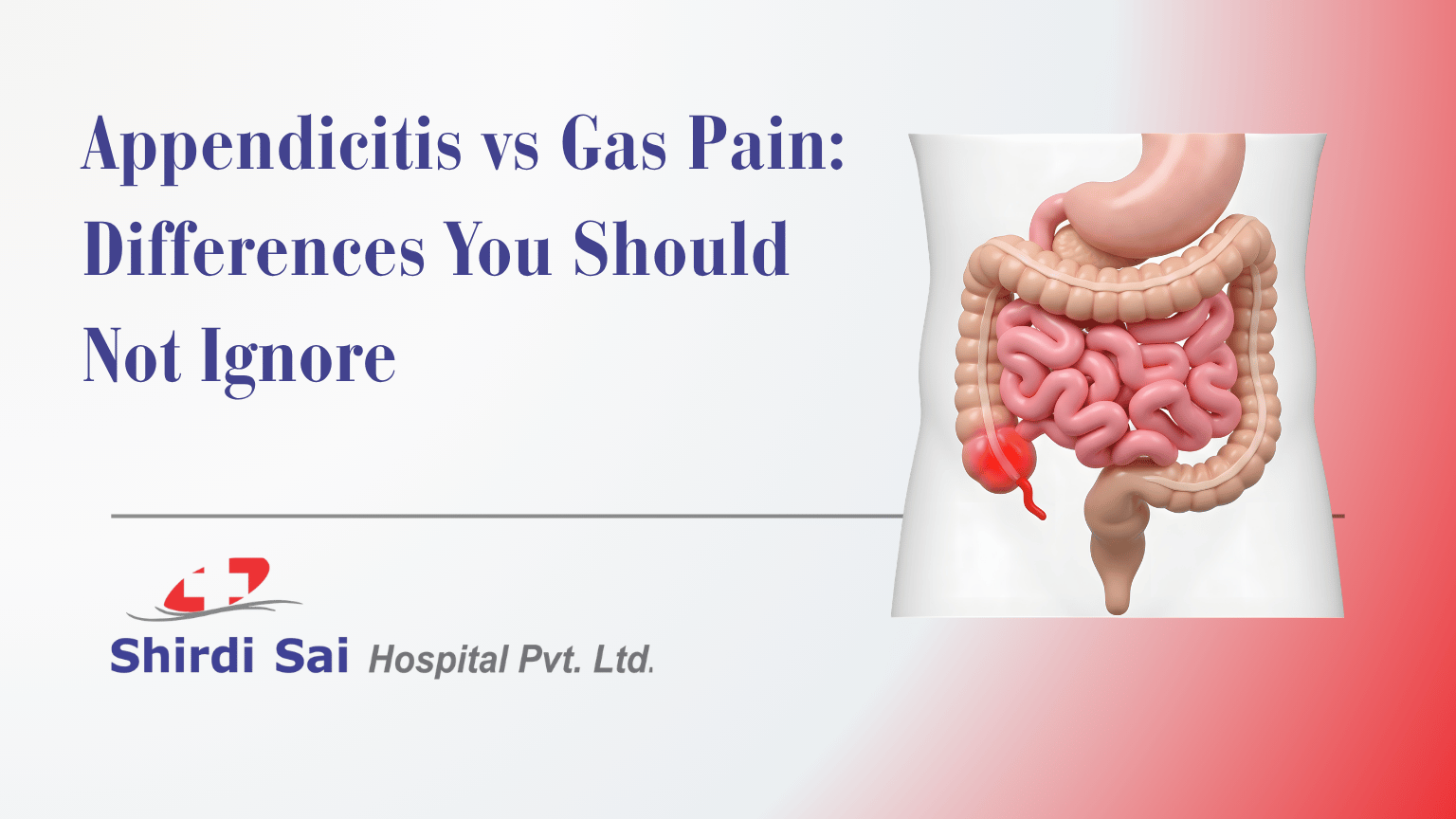
    Appendicitis vs Gas Pain: Differences You Should Not Ignore

    Gas and appendicitis can both cause abdominal pain, bloating and discomfort, which is why early appendicitis is sometimes mistaken for indigestion or trapped gas. Gas pain is more likely to feel crampy, shift around the abdomen and sometimes improve after passing gas or having a bowel movement. Appendicitis pain more often becomes steadily worse, may begin near the belly button and later move towards the lower right abdomen, and can occur with nausea, loss of appetite or fever. These patterns are helpful clues, not a home diagnosis. Persistent or worsening right-sided abdominal pain should be medically assessed.

    Appendicitis vs Gas Pain at a Glance

    FeatureGas pain mayAppendicitis may
    Pain locationOccur in different areas of the abdomenOften begin near the belly button and move towards the lower right abdomen
    Pain patternFeel crampy, sharp, shifting or intermittentBecome increasingly steady or severe
    ReliefSometimes improve after passing gas or stoolUsually does not reliably improve after passing gas
    BloatingCommonCan occur
    AppetiteUsually unaffected unless bloating is significantLoss of appetite can occur
    Nausea or vomitingPossible with digestive upsetCan occur, often alongside worsening pain
    FeverNot expected from ordinary gasMay develop
    MovementMay change as gas movesPain may worsen with walking, coughing or sudden movement
    Medical assessmentNeeded if severe, persistent or associated with other symptomsPrompt assessment is important when appendicitis is suspected

    This comparison can help you describe your symptoms. It cannot confirm or rule out appendicitis at home.

    What Does Gas Pain Usually Feel Like?

    Gas is a normal part of digestion.

    It forms when air is swallowed or when bacteria in the bowel break down food that has not been fully digested earlier in the digestive tract.

    When gas becomes trapped, it may cause:

    • abdominal cramping
    • bloating
    • a feeling of fullness or pressure
    • brief sharp pains
    • rumbling in the abdomen
    • belching
    • passing more gas than usual
    • discomfort that changes location

    The pain may be felt on either side of the abdomen and can sometimes be surprisingly sharp.

    Gas trapped on the right side can also resemble pain from conditions affecting organs in that area, including the appendix.

    Does gas pain move around?

    It can.

    Because gas travels through the bowel, discomfort may shift from one part of the abdomen to another.

    Some people notice temporary relief after:

    • passing gas
    • belching
    • having a bowel movement
    • changing position

    However, improvement after passing gas does not prove that the entire episode was caused by gas.

    A person can have digestive gas and another abdominal condition at the same time.

    What Does Appendicitis Pain Usually Feel Like?

    Appendicitis is inflammation of the appendix, a small pouch connected to the large bowel.

    A commonly described pattern is pain that begins around the belly button or central abdomen and then moves towards the lower right side.

    The pain may become more noticeable over several hours.

    Possible features include:

    • pain that steadily gets worse
    • increasing tenderness in the lower right abdomen
    • pain that worsens with walking or movement
    • discomfort when coughing
    • nausea
    • vomiting
    • reduced appetite
    • fever
    • abdominal bloating
    • constipation or diarrhoea in some people

    Not everyone develops all of these symptoms.

    More importantly, not everyone with appendicitis develops the textbook pattern.

    Children, older adults and pregnant women, for example, may sometimes experience less typical symptoms or pain in a different location.

    Where Is Appendix Pain Usually Located?

    The appendix is generally located in the lower right part of the abdomen.

    However, appendicitis pain may not begin there.

    For many people, discomfort initially develops around the centre of the abdomen, particularly near the belly button. As inflammation progresses, the pain may become more localised towards the lower right side.

    This change in location is an important clue, but it is not present in every case.

    Some people experience:

    • right-sided pain from the beginning
    • more generalised abdominal discomfort
    • pain in a slightly different location because of the position of the appendix
    • less typical symptoms during pregnancy

    This is why an abdominal pain diagram cannot reliably diagnose appendicitis.

    Can Appendicitis Feel Like Gas?

    Yes.

    Early appendicitis can sometimes feel like indigestion, bloating or trapped gas.

    A person may initially experience:

    • vague central abdominal discomfort
    • bloating
    • cramping
    • nausea
    • difficulty passing gas
    • a feeling that something they ate caused the problem

    The difference may become clearer as symptoms evolve.

    With ordinary gas, pain often shifts or settles.

    With appendicitis, pain may become increasingly persistent, localised and uncomfortable.

    If pain continues to worsen instead of settling, particularly when it becomes concentrated in the lower right abdomen, it should not continue to be treated as gas without medical evaluation.

    How Can You Tell Gas Pain From Appendicitis?

    There is no single symptom that allows a safe home diagnosis.

    Doctors consider several features together.

    Gas pain often changes location

    Gas can move through the bowel, so discomfort may appear in different parts of the abdomen over time.

    Appendicitis pain is more likely to become increasingly focused, often in the lower right abdomen.

    Gas may improve after passing wind

    Gas discomfort can sometimes become noticeably better after belching, passing wind or having a bowel movement.

    Appendicitis pain usually continues despite these changes.

    However, this difference is not absolute.

    Do not use passing gas as a test to rule out appendicitis.

    Appendicitis often becomes progressively worse

    Gas pains may come and go.

    Appendicitis more commonly causes pain that increases over several hours rather than repeatedly disappearing completely.

    Worsening pain is particularly important when it is accompanied by nausea, fever or appetite loss.

    Movement may make appendicitis pain worse

    Walking, coughing or sudden movements may increase discomfort when the lining of the abdomen becomes irritated.

    People with appendicitis may therefore prefer to remain still.

    Gas discomfort can also change with movement, so this sign is not diagnostic on its own.

    Fever is not a feature of simple gas

    Ordinary intestinal gas does not cause fever.

    Abdominal pain together with fever deserves medical attention because infection or inflammation may be present.

    Does Appendicitis Always Cause Fever?

    No.

    Fever may occur with appendicitis, but it may be absent early in the illness.

    Waiting for a fever before seeking care can therefore be misleading.

    Other symptoms may be more important, including:

    • steadily worsening abdominal pain
    • pain moving to the lower right abdomen
    • increasing abdominal tenderness
    • nausea or vomiting
    • loss of appetite

    The absence of one symptom cannot reliably exclude appendicitis.

    Does Appendicitis Pain Come and Go?

    Appendicitis pain is often described as progressive rather than repeatedly appearing and disappearing.

    Early discomfort may initially feel vague or intermittent, but as inflammation develops, the pain often becomes more persistent.

    Gas pain is more likely to fluctuate as gas moves through the bowel.

    Still, pain pattern alone cannot safely rule out appendicitis.

    If abdominal pain keeps returning, becomes localised or steadily worsens over several hours, medical assessment is appropriate.

    Can You Still Pass Gas If You Have Appendicitis?

    Sometimes.

    Being able to pass gas does not rule out appendicitis.

    Difficulty passing gas can occur in appendicitis, but it is not present in every patient.

    Similarly, constipation or diarrhoea may occasionally accompany appendicitis.

    Avoid using bowel movements or gas passage as a home test for the condition.

    What Other Conditions Can Feel Like Appendicitis?

    Right lower abdominal pain does not automatically mean the appendix is inflamed.

    Several conditions can produce similar symptoms, including:

    • stomach or intestinal infections
    • constipation
    • urinary tract infections
    • kidney stones
    • inflammatory bowel conditions
    • ovarian cysts
    • pelvic inflammatory disease
    • ovulation-related pain
    • ectopic pregnancy
    • other abdominal or pelvic conditions

    This is particularly important for women because reproductive, urinary and digestive conditions can overlap considerably in how they feel.

    A doctor may need to consider several possibilities before reaching a diagnosis.

    When Should You Stop Assuming It Is Gas?

    Consider medical evaluation rather than continuing to self-treat for gas if abdominal pain:

    • persists instead of settling
    • becomes steadily worse
    • becomes focused in the lower right abdomen
    • repeatedly wakes you from sleep
    • makes walking or movement increasingly painful
    • occurs with fever
    • occurs with repeated nausea or vomiting
    • is accompanied by marked loss of appetite
    • causes significant abdominal tenderness
    • feels noticeably different from previous episodes of gas or indigestion

    You do not need to wait until every classic appendicitis symptom appears.

    When Does Abdominal Pain Need Urgent Medical Care?

    Seek urgent medical assessment if abdominal pain is severe, rapidly worsening or accompanied by concerning symptoms such as:

    • severe lower right abdominal pain
    • significant tenderness when the abdomen is touched
    • repeated vomiting
    • inability to keep fluids down
    • fever with worsening abdominal pain
    • a swollen or unusually rigid abdomen
    • fainting or feeling close to fainting
    • marked weakness or confusion
    • blood in vomit or stool
    • significant pain during a possible pregnancy
    • difficulty breathing or chest pain

    Severe abdominal pain should not be managed only with gas tablets, laxatives or repeated home remedies while waiting to see whether it passes.

    What Should You Avoid Doing If Appendicitis Is Possible?

    When abdominal pain is worsening or appendicitis is a possibility, avoid trying to prove the diagnosis yourself.

    In particular:

    • do not repeatedly press hard on the painful area
    • do not rely on internet “appendix tests”
    • do not use laxatives simply because you think constipation is causing the pain
    • do not keep eating heavy meals to see whether the pain improves
    • do not delay assessment because you can still pass gas
    • do not assume that temporary relief means the condition has resolved

    Pain medicines may also change how symptoms feel without addressing the underlying cause.

    If pain is significant or progressing, the safer step is clinical evaluation.

    How Is Appendicitis Diagnosed?

    There is no single symptom that confirms appendicitis.

    A doctor will usually begin by asking:

    • when the pain started
    • where it started
    • whether the location has changed
    • whether the pain is worsening
    • whether movement or coughing affects it
    • whether nausea or vomiting is present
    • whether you have an appetite
    • whether there has been fever
    • whether your bowel or urinary habits have changed

    A physical examination can help identify areas of tenderness.

    Depending on the findings, further evaluation may include:

    • blood tests
    • urine testing
    • pregnancy testing when relevant
    • ultrasound
    • CT imaging in selected cases

    The choice of investigation depends on age, symptoms, pregnancy status, examination findings and clinical judgement.

    What Happens If Appendicitis Is Confirmed?

    Management depends on the individual clinical situation.

    Appendicitis often requires urgent hospital treatment.

    Surgical removal of the appendix, called an appendectomy, is a common treatment. Antibiotics are also part of treatment in appropriate situations, and selected cases may be managed differently depending on clinical findings and specialist assessment.

    The important step for someone with possible appendicitis is not deciding which treatment they need at home.

    It is getting the diagnosis assessed promptly.

    Shirdi Sai Hospital’s General Surgery services include assessment and surgical care for abdominal conditions such as appendicitis.

    Why Waiting for “Classic” Appendix Pain Can Be Misleading

    Online descriptions often make appendicitis sound very predictable:

    pain near the belly button, then right-sided pain, then fever and vomiting.

    That pattern can happen, but real symptoms are not always so orderly.

    Some people:

    • do not develop fever initially
    • have mild nausea rather than vomiting
    • experience diarrhoea rather than constipation
    • feel pain in a less typical location
    • never notice a clear movement of pain from the centre to the right side

    A changing or worsening abdominal pain pattern therefore matters more than matching every item on a checklist.

    Gas Pain Usually Settles. Worsening Pain Deserves Attention.

    Gas is common and often temporary. It may cause bloating, cramping and sharp abdominal discomfort that moves around and improves as gas passes.

    Appendicitis is different because the pain commonly becomes more persistent and may increasingly localise to the lower right abdomen. Nausea, appetite loss, fever and pain with movement can add to the concern, although none of these symptoms occurs in every case.

    The safest rule is simple: do not continue treating persistent or worsening abdominal pain as gas just because the symptoms began after a meal or initially felt like indigestion.

    If abdominal pain is persistent or changing and you need an assessment, you cancontact Shirdi Sai Hospital on New BEL Road, Bengaluru. Severe or rapidly worsening symptoms should be assessed urgently.

    Frequently Asked Questions About Appendicitis vs Gas Pain

    1. How do I know if my stomach pain is gas or appendicitis?

    Gas pain is more likely to feel crampy, shift around the abdomen and sometimes improve after passing gas or having a bowel movement. Appendicitis pain more often becomes progressively worse and may move towards the lower right abdomen. Because the symptoms can overlap, worsening or persistent right-sided pain needs medical assessment.

    2. Can appendicitis feel like trapped gas?

    Yes. Early appendicitis may initially cause vague abdominal discomfort, bloating or cramping that resembles gas or indigestion. If the pain becomes increasingly persistent, moves towards the lower right abdomen or occurs with nausea, appetite loss or fever, seek medical advice promptly.

    3. Does appendix pain go away after passing gas?

    Appendicitis pain generally does not reliably disappear after passing gas. However, being able to pass gas does not rule out appendicitis. Avoid using this as a home diagnostic test.

    4. Where does appendicitis pain usually start?

    A common pattern begins with discomfort around the belly button or middle of the abdomen, followed by pain that becomes more localised towards the lower right side. Not everyone experiences this typical progression.

    5. Can gas cause pain on the lower right side?

    Yes. Gas can become trapped in different parts of the bowel and may cause right-sided abdominal pain. Persistent, localised or worsening lower right pain should nevertheless be medically assessed because appendicitis and several other conditions can produce similar symptoms.

    6. Does appendicitis always cause vomiting and fever?

    No. Some people with appendicitis do not initially have vomiting or fever. Increasing abdominal pain, tenderness, appetite loss and changes in pain location may still be important. No single absent symptom can safely exclude appendicitis.

    7. When should I go to the hospital for suspected appendicitis?

    Seek prompt medical care for steadily worsening or severe abdominal pain, particularly when it becomes focused in the lower right abdomen or occurs with fever, repeated vomiting, significant tenderness or marked weakness. Severe or rapidly worsening abdominal pain requires urgent assessment.

  • Lower Abdominal Pain in Women: When It May Need Medical Evaluation

    Lower Abdominal Pain in Women: When It May Need Medical Evaluation

    Lower abdominal pain in women can come from several areas, including the uterus and ovaries, bladder, urinary tract, bowel or abdominal muscles. Mild cramping around a period or temporary digestive discomfort may settle on its own, but pain that is new, persistent, repeatedly returns or becomes more severe deserves attention. The timing and location of the pain matter, but associated symptoms such as unusual vaginal bleeding, fever, vomiting, urinary problems or a possible pregnancy can be even more important. Sudden severe pain, fainting or significant pain during a possible pregnancy should be assessed urgently rather than monitored at home.

    What Is Lower Abdominal Pain?

    Lower abdominal pain generally refers to discomfort below the belly button and above the groin.

    Some people describe it as pelvic pain, although the terms are not always exactly interchangeable.

    The discomfort may feel:

    • crampy
    • dull or aching
    • sharp or stabbing
    • heavy or pressure-like
    • burning
    • intermittent
    • constant

    It may be felt in the centre, on one side or across the entire lower abdomen.

    Pain location can provide clues, but it cannot reliably identify the cause by itself because the reproductive organs, bowel and urinary system are close together.

    What Are Common Causes of Lower Abdominal Pain in Women?

    Not every episode of lower abdominal pain is caused by a gynaecological problem.

    The cause may involve the menstrual cycle, reproductive organs, urinary tract, digestive system or another part of the abdomen.

    Understanding what else is happening alongside the pain is often more useful than focusing on location alone.

    1. Period Pain

    Menstrual cramps are one of the most familiar causes of lower abdominal discomfort.

    Pain may begin shortly before or around the start of a period and can feel like cramping or aching across the lower abdomen. Some women also experience lower back or thigh discomfort.

    Mild menstrual cramps that follow a familiar pattern may not require medical evaluation.

    Consider speaking with a gynaecologist when period pain:

    • is becoming progressively more severe
    • regularly interferes with work, sleep or daily activities
    • begins after years of relatively comfortable periods
    • occurs with very heavy bleeding
    • continues well beyond the period
    • does not follow your usual menstrual pattern

    Severe or changing period pain may sometimes be associated with conditions such as endometriosis, adenomyosis or fibroids.

    2. Ovulation Pain

    Some women experience brief discomfort around the middle of the menstrual cycle when ovulation occurs.

    This may feel like a mild ache or short-lived pain on one side of the lower abdomen.

    A familiar, mild pattern around the middle of the cycle may not be concerning. However, sudden severe one-sided pain should not automatically be assumed to be ovulation, particularly if it is accompanied by vomiting, faintness, fever or unusual bleeding.

    3. Ovarian Cysts

    Ovarian cysts are fluid-filled sacs that develop in or on an ovary. Many cause no symptoms and may be found incidentally.

    When symptoms do occur, an ovarian cyst may cause:

    • a dull or sharp lower abdominal ache
    • pain mainly on one side
    • pressure or fullness
    • discomfort during certain activities
    • changes in menstrual patterns in some cases

    Occasionally, a cyst can bleed, rupture or contribute to twisting of an ovary.

    Sudden severe one-sided pelvic pain, particularly when accompanied by nausea or vomiting, warrants urgent medical evaluation.

    4. Endometriosis

    Endometriosis occurs when tissue similar to the lining of the uterus grows outside the uterus.

    Symptoms vary considerably between individuals.

    Possible features include:

    • significant menstrual pain
    • persistent or recurring pelvic pain
    • pain during or after sex
    • pain with bowel movements during periods
    • discomfort that follows a cyclical pattern
    • fertility concerns in some women

    The severity of pain does not necessarily indicate the extent of endometriosis.

    Recurring pelvic pain that is affecting everyday life deserves assessment rather than being repeatedly dismissed as a difficult period.

    5. Pelvic Inflammatory Disease

    Pelvic inflammatory disease, or PID, is an infection involving the female reproductive organs.

    Symptoms may include lower abdominal or pelvic pain together with:

    • unusual vaginal discharge
    • bleeding between periods
    • bleeding after sex
    • pain during sex
    • fever or chills
    • pain when urinating
    • nausea or vomiting

    Symptoms can sometimes be mild, so PID cannot be identified based only on how severe the pain feels.

    Medical evaluation is important when this combination of symptoms occurs.

    6. Fibroids

    Fibroids are non-cancerous growths arising from the muscle of the uterus.

    Many women with fibroids have no symptoms.

    When symptoms are present, they can include:

    • heavy or prolonged periods
    • pelvic pressure
    • lower abdominal discomfort
    • menstrual clots
    • frequent urination
    • constipation
    • a sense of abdominal fullness

    Lower abdominal pain alone cannot confirm fibroids. Evaluation may be needed when pain occurs alongside changes in menstrual bleeding or persistent pelvic pressure.

    7. Urinary Tract Infection

    Lower abdominal discomfort may come from the bladder or urinary tract rather than the reproductive organs.

    A urinary tract infection may cause:

    • pain or burning when passing urine
    • frequent need to urinate
    • urgency
    • lower abdominal pressure
    • cloudy or blood-stained urine
    • fever or feeling unwell in some cases

    Pain with urinary symptoms should be assessed rather than assumed to be menstrual discomfort.

    Fever, pain extending towards the side or back, vomiting or marked illness may indicate a more significant urinary infection and warrants prompt medical attention.

    8. Constipation, Gas and Other Bowel Causes

    The bowel occupies a substantial part of the lower abdomen, so digestive problems can also cause pain.

    Common possibilities include:

    • constipation
    • trapped gas
    • diarrhoeal illness
    • irritable bowel syndrome
    • other inflammatory or digestive conditions

    Bowel-related discomfort may occur with bloating or changes in stool frequency.

    However, persistent lower abdominal pain should not repeatedly be labelled as “gas” without evaluation, particularly if it is becoming more severe or occurs with fever, vomiting, blood in the stool or significant abdominal tenderness.

    9. Appendicitis

    Appendicitis is an important non-gynaecological cause of abdominal pain.

    The pain often begins around the centre of the abdomen and later becomes more noticeable in the lower right side. It may worsen with movement or coughing.

    Other possible symptoms include:

    • nausea
    • vomiting
    • loss of appetite
    • fever
    • constipation or diarrhoea

    Not everyone develops the textbook pattern.

    Pain that is progressively worsening, particularly on the lower right side, should be medically assessed rather than assumed to be period pain, an ovarian problem or indigestion.

    Could Lower Abdominal Pain Be Related to Pregnancy?

    Pregnancy should be considered whenever it is possible, even when the pain initially feels similar to menstrual cramps.

    Mild abdominal sensations can occur during pregnancy for several reasons, but abdominal or pelvic pain combined with unusual vaginal bleeding needs medical attention.

    One important condition doctors consider is ectopic pregnancy, where a pregnancy develops outside the uterus, most commonly in a fallopian tube.

    Possible symptoms can include:

    • a missed period
    • abnormal vaginal bleeding
    • pain on one side of the pelvis
    • abdominal or pelvic pain
    • shoulder-tip pain
    • dizziness
    • weakness or fainting

    Sudden severe abdominal or pelvic pain, shoulder pain, dizziness or fainting during a possible pregnancy requires emergency assessment.

    If pregnancy could be possible and your period is late or unusual, a pregnancy test can provide useful information. A negative home test does not replace medical assessment when significant symptoms are present.

    Does the Side of the Pain Tell You the Cause?

    Not reliably.

    Lower right abdominal pain

    Possible causes include appendicitis, an ovarian cyst, ovarian conditions, bowel problems, urinary conditions and other causes.

    Lower left abdominal pain

    Possible explanations include constipation, other bowel conditions, an ovarian problem or urinary causes.

    Central lower abdominal pain

    This can occur with period pain, bladder problems, uterine conditions, pregnancy-related causes and several other conditions.

    The side of the pain is one piece of information. Doctors also consider its timing, intensity, whether it moves and what other symptoms are present.

    Avoid diagnosing yourself based only on an online diagram of abdominal pain locations.

    When Should You Book a Gynaecology Consultation?

    Consider arranging a routine gynaecology consultation when lower abdominal or pelvic pain:

    • keeps returning
    • continues without a clear explanation
    • repeatedly occurs around periods and is becoming more severe
    • interferes with work, exercise, sleep or normal activities
    • occurs during or after sex
    • is associated with heavy or irregular periods
    • occurs with bleeding between periods
    • occurs with unusual vaginal discharge
    • is associated with ongoing pelvic pressure or fullness
    • appears alongside fertility concerns
    • has changed noticeably from your usual menstrual symptoms

    You do not need to determine whether the problem is an ovarian cyst, endometriosis, fibroid or another condition before seeking care.

    An appropriate evaluation helps narrow down which body system is most likely to be involved.

    Women experiencing recurring pelvic or menstrual symptoms can learn more about the hospital’s obstetrics and gynaecology services.

    When Does Lower Abdominal Pain Need Urgent Medical Attention?

    Seek urgent medical care when lower abdominal pain:

    • is sudden and severe
    • is rapidly getting worse
    • causes marked abdominal tenderness
    • occurs with repeated vomiting
    • occurs with high fever or severe chills
    • is accompanied by fainting or feeling close to fainting
    • occurs with significant dizziness or weakness
    • is accompanied by heavy vaginal bleeding
    • occurs with difficulty breathing
    • occurs during a possible pregnancy and is significant or worsening
    • occurs with shoulder-tip pain when pregnancy may be possible
    • is associated with blood in urine or stool
    • occurs with a swollen, rigid or very tender abdomen

    Sudden severe one-sided pelvic pain with nausea or vomiting also warrants urgent assessment because ovarian complications may need to be excluded.

    Do not delay emergency care while trying multiple home remedies when symptoms are severe or rapidly worsening.

    How Do Doctors Evaluate Lower Abdominal Pain?

    There is no single test that explains every case.

    A medical assessment usually begins with the history of the pain.

    A clinician may ask:

    • where the pain started
    • whether it moved
    • how long it has been present
    • whether it is constant or comes and goes
    • whether it relates to your menstrual cycle
    • when your last period started
    • whether pregnancy is possible
    • whether there is vaginal bleeding or discharge
    • whether you have urinary symptoms
    • whether bowel habits have changed
    • whether you have nausea, vomiting or fever
    • whether sex makes the pain worse
    • what medicines or contraception you use

    Depending on the findings, evaluation may include a physical examination, pregnancy testing, urine tests, blood tests, pelvic examination or imaging such as an ultrasound.

    Not every patient needs every test.

    The investigation should be guided by the symptom pattern and clinical findings.

    What Can You Track Before a Consultation?

    If the pain is mild and there are no urgent warning signs, a short symptom record can make the consultation more useful.

    Note:

    • where the pain occurs
    • when it started
    • how long each episode lasts
    • whether it occurs before, during or after your period
    • your last menstrual period
    • whether your cycles are regular
    • vaginal bleeding or discharge
    • urinary symptoms
    • bowel changes
    • nausea or vomiting
    • fever
    • what makes the pain better or worse
    • whether pregnancy is possible

    You can also note whether the pain affects sleep, walking, exercise, work or sexual activity.

    You do not need to wait for several cycles to seek medical advice if the pain is persistent or concerning.

    What Is Safe to Do at Home for Mild Lower Abdominal Pain?

    For familiar, mild discomfort without warning signs, simple measures such as rest, adequate fluids and gentle heat may help.

    Avoid assuming that repeated pain is harmless simply because it improves temporarily.

    It is also sensible to avoid:

    • taking someone else’s prescription medicine
    • repeatedly treating unexplained pain as acidity or gas
    • starting hormonal medicines without medical advice
    • delaying a pregnancy test when pregnancy is possible
    • continuing to self-treat pain that is steadily worsening

    Pain relief can reduce a symptom without explaining why it occurred.

    Lower Abdominal Pain Is a Symptom, Not a Diagnosis

    Lower abdominal pain in women can be related to menstruation, ovulation, ovarian cysts, endometriosis, fibroids or pelvic infection, but it can also arise from the bladder, bowel, appendix or other structures.

    A familiar mild cramp is very different from pain that is new, persistent, progressively worsening or accompanied by bleeding, fever, vomiting or urinary symptoms.

    Pregnancy possibility is especially important because abdominal or pelvic pain with bleeding, faintness or severe one-sided pain needs prompt assessment.

    If lower abdominal pain keeps returning or is changing from your usual pattern, you can book a consultation at Shirdi Sai Hospital on New BEL Road, Bengaluru, for an individual medical evaluation.

    Frequently Asked Questions About Lower Abdominal Pain in Women

    1. What is the most common cause of lower abdominal pain in women?

    There is no single cause that applies to everyone. Menstrual cramps, bowel problems, urinary infections and ovulation can all cause lower abdominal discomfort. Ovarian cysts, endometriosis, fibroids, PID and appendicitis are other possibilities. Associated symptoms and the pain pattern help narrow down the cause.

    2. When should a woman worry about lower abdominal pain?

    Medical evaluation is appropriate when pain is persistent, keeps returning, becomes more severe or occurs with unusual bleeding, discharge, urinary symptoms, fever or vomiting. Sudden severe pain, fainting, heavy bleeding or significant pain during a possible pregnancy warrants urgent assessment.

    3. Can ovarian cysts cause lower abdominal pain?

    Yes. Some ovarian cysts can cause a dull or sharp ache, pelvic pressure or one-sided pain, although many cysts cause no symptoms. Sudden severe one-sided pain, particularly with nausea or vomiting, should be assessed urgently.

    4. Can lower abdominal pain be caused by periods?

    Yes. Menstrual cramps commonly cause lower abdominal pain before or during a period. A gynaecology consultation may be appropriate when period pain is becoming progressively worse, significantly disrupts daily life or occurs with heavy bleeding or other new symptoms.

    5. How can I tell if lower abdominal pain is from the uterus or bowel?

    It is not always possible to tell at home. Menstrual timing, vaginal bleeding, bowel changes, urinary symptoms, pain location and examination findings can provide clues. Because several organs are located close together, persistent pain may require medical evaluation.

    6. Does lower abdominal pain mean pregnancy?

    Not necessarily. Lower abdominal pain has many possible causes. If pregnancy is possible, however, a pregnancy test can be useful. Significant pain with vaginal bleeding, dizziness, fainting or shoulder-tip pain requires urgent medical evaluation because an ectopic pregnancy needs to be excluded.

    7. What tests may be needed for lower abdominal pain in women?

    Tests depend on the symptoms and examination. They may include a pregnancy test, urine test, selected blood tests or imaging such as an ultrasound. A pelvic examination may be appropriate in some cases. Not everyone with lower abdominal pain needs the same investigations.

    #image_title
  • Heavy Periods with Clots: What Is Normal and When to Seek Care

    Heavy Periods with Clots: What Is Normal and When to Seek Care

    Seeing a blood clot during your period can be unsettling, but an occasional small clot during a heavier-flow day may occur as part of menstruation. What deserves more attention is a change in the overall pattern. Repeated large clots, periods lasting longer than seven days, bleeding that soaks through protection very quickly, worsening pelvic pain, or symptoms such as unusual tiredness, dizziness or breathlessness may point to heavy menstrual bleeding that needs evaluation. Causes range from hormonal changes to fibroids, adenomyosis, thyroid problems, bleeding disorders and certain medicines. The amount of bleeding, associated symptoms and change from your normal pattern matter more than clot appearance alone.

    Why Do Blood Clots Form During a Period?

    During a period, the lining of the uterus breaks down and leaves the body as blood, tissue and fluid.

    The body normally produces substances that help menstrual blood remain fluid as it passes out of the uterus. When the flow is heavier or blood collects for a short period before leaving the body, some of it may clot.

    This is why small clots are often more noticeable:

    • during the first or heaviest days of menstruation
    • after sitting or lying down for a while
    • when getting out of bed in the morning
    • during a cycle with heavier-than-usual flow

    Period clots may appear dark red, maroon or jelly-like. Colour and texture alone do not tell you whether there is an underlying medical problem.

    Are Blood Clots During Periods Normal?

    Small, occasional clots can occur during an otherwise usual period.

    They are generally less concerning when:

    • they appear only occasionally
    • they occur mainly on heavier-flow days
    • your period follows its usual pattern
    • bleeding is manageable with your normal menstrual products
    • there is no severe or increasing pelvic pain
    • you are not becoming dizzy, weak or breathless

    The more useful question is not simply, “Did I pass a clot?” It is, “Has my menstrual pattern changed?”

    A person who has always had a relatively heavy first day may have a different baseline from someone whose periods have suddenly become much heavier.

    How Big Is Too Big for a Period Blood Clot?

    Clots about 2.5 cm or larger, particularly when they occur repeatedly, can be associated with heavy menstrual bleeding.

    Size should not be considered alone.

    A larger clot deserves more attention when it occurs together with:

    • very heavy menstrual flow
    • repeated leakage through clothing or bedding
    • needing to change pads or tampons every one to two hours
    • bleeding lasting more than seven days
    • increasing menstrual pain
    • dizziness or weakness
    • shortness of breath
    • marked tiredness

    One isolated clot does not diagnose fibroids, PCOS or another condition.

    Repeated large clots combined with a changing bleeding pattern are more useful reasons to arrange an assessment.

    How Can You Tell If a Period Is Too Heavy?

    Measuring menstrual blood accurately at home is difficult, so clinicians often look at practical signs instead.

    Your period may be unusually heavy if you regularly:

    • need to change a fully soaked pad or tampon every one to two hours
    • need to use more than one form of menstrual protection at the same time
    • wake repeatedly during the night to change protection
    • bleed through clothing or bedding
    • pass repeated large clots
    • bleed for more than seven days
    • avoid work, school, exercise or travel because of the flow
    • feel unusually tired, dizzy or breathless during or after your period

    Heavy menstrual bleeding is important not only because it is inconvenient. Repeated blood loss can contribute to iron deficiency and anaemia.

    What Causes Heavy Periods with Clots?

    Heavy menstrual bleeding has several possible causes. Sometimes no single cause is found immediately.

    The pattern of bleeding, age, pregnancy possibility, medicines, associated symptoms and medical history all help guide the assessment.

    1. Hormonal Changes and Irregular Ovulation

    Ovulation affects how the lining of the uterus develops and sheds.

    When ovulation does not happen regularly, the uterine lining may build up differently and later shed as heavier or prolonged bleeding.

    Hormonal changes can occur:

    • during adolescence
    • with PCOS
    • after major changes in weight
    • during perimenopause
    • with some thyroid conditions
    • after changes in hormonal contraception

    Heavy bleeding alone cannot confirm that hormones are the cause.

    2. Uterine Fibroids

    Fibroids are non-cancerous growths that develop in or around the uterus.

    Some fibroids cause no symptoms. Others may contribute to:

    • heavy periods
    • prolonged bleeding
    • frequent or larger menstrual clots
    • pelvic pressure or fullness
    • increased menstrual pain
    • pressure on the bladder in some people

    The number or size of fibroids does not automatically determine treatment. Their location, symptoms and effect on daily life also matter.

    3. Adenomyosis

    Adenomyosis occurs when tissue similar to the uterine lining grows into the muscular wall of the uterus.

    Possible symptoms include:

    • heavy menstrual bleeding
    • painful periods
    • menstrual clots
    • pelvic tenderness
    • a feeling of heaviness in the lower abdomen

    Symptoms can overlap with fibroids and other gynaecological conditions, which is why self-diagnosis based on bleeding alone is unreliable.

    4. PCOS and Irregular Periods

    PCOS often causes irregular or infrequent ovulation.

    Some people with PCOS go several weeks or months without a period and then experience heavier bleeding when menstruation occurs.

    Other possible features include:

    • irregular cycles
    • acne
    • increased facial or body hair
    • scalp hair thinning
    • weight changes
    • difficulty predicting ovulation

    Heavy periods with clots do not automatically mean you have PCOS. An evaluation considers the overall menstrual and hormonal pattern.

    5. Thyroid Problems

    Both an underactive and an overactive thyroid can affect menstruation.

    Depending on the thyroid condition, periods may become heavier, lighter or less predictable.

    Other symptoms may include changes in energy, weight, bowel habits, heart rate or tolerance to heat and cold.

    Blood tests may be appropriate when the medical history suggests a thyroid problem.

    6. Bleeding Disorders

    Some inherited or acquired conditions affect how effectively the blood clots.

    A bleeding disorder may be considered when heavy periods occur together with a history of:

    • very heavy periods since adolescence
    • frequent nosebleeds
    • easy bruising
    • prolonged bleeding after dental treatment
    • unusually heavy bleeding after surgery
    • relatives with known bleeding problems

    Having heavy periods does not by itself mean you have a bleeding disorder.

    7. Medicines and Contraception

    Some medicines can make menstrual bleeding heavier.

    Blood-thinning medicines are an important example. A copper intrauterine device can also increase menstrual bleeding in some people, particularly after insertion.

    Do not stop prescribed blood thinners or change contraception on your own because your periods have become heavier. Speak with the clinician managing the medicine or contraceptive method.

    8. Pregnancy-Related Bleeding

    Not all vaginal bleeding is menstruation.

    If pregnancy is possible, bleeding with clots should be considered separately from an ordinary period.

    Prompt medical assessment is especially important if possible pregnancy is accompanied by:

    • significant abdominal or pelvic pain
    • pain mainly on one side
    • dizziness or fainting
    • rapidly increasing bleeding

    A pregnancy test can be an appropriate early step when a period is unusual and pregnancy could have occurred.

    Can Heavy Periods with Clots Cause Anaemia?

    The clots themselves do not cause anaemia. The concern is repeated or prolonged blood loss.

    Heavy menstrual bleeding can reduce the body’s iron stores and eventually contribute to iron-deficiency anaemia.

    Possible symptoms include:

    • persistent tiredness
    • weakness
    • dizziness
    • headaches
    • breathlessness during ordinary activity
    • reduced exercise tolerance
    • a fast heartbeat
    • difficulty concentrating

    Because these symptoms can develop gradually, some people assume they are simply tired or stressed.

    A doctor may recommend a complete blood count and, when appropriate, tests that assess iron stores.

    When Should You See a Gynaecologist for Heavy Periods?

    Consider arranging a gynaecology consultation if:

    • your periods have suddenly become much heavier
    • large clots occur repeatedly
    • bleeding regularly lasts longer than seven days
    • you frequently need to change menstrual protection every one to two hours
    • periods repeatedly interfere with sleep, work, school or normal activities
    • period pain is becoming more severe
    • you bleed between periods
    • bleeding occurs after sex
    • you feel unusually tired, weak, dizzy or breathless
    • you have symptoms that may suggest fibroids, PCOS or another hormonal condition
    • heavy bleeding has appeared during perimenopause
    • your bleeding pattern is affecting pregnancy planning

    You do not need to know the underlying diagnosis before seeing a doctor.

    The purpose of the consultation is to understand why the bleeding has changed and whether investigation or treatment is required.

    Shirdi Sai Hospital’s obstetrics and gynaecology services include evaluation and management of menstrual disorders, including heavy menstrual bleeding.

    When Does Heavy Period Bleeding Need Urgent Care?

    Some bleeding patterns should not wait for a routine appointment.

    Seek urgent medical assessment if you are soaking through one or more pads or tampons every hour for several hours, particularly when the bleeding is accompanied by:

    • fainting or feeling close to fainting
    • significant dizziness
    • marked weakness
    • difficulty breathing
    • severe or worsening abdominal or pelvic pain
    • a rapid heartbeat or feeling very unwell

    Heavy bleeding or clots during a possible pregnancy also require prompt assessment.

    If symptoms are severe or rapidly worsening, seek urgent medical care rather than trying to control the bleeding at home.

    How Are Heavy Periods with Clots Evaluated?

    Not everyone needs the same tests.

    The evaluation usually begins with questions about the menstrual pattern.

    Your clinician may ask:

    • when the heavy bleeding started
    • how long each period lasts
    • how often menstrual products need changing
    • how frequently clots occur
    • whether bleeding happens between periods
    • whether periods are regular
    • whether pain has changed
    • whether pregnancy is possible
    • whether you use contraception
    • which medicines you take
    • whether you bruise or bleed easily
    • whether the bleeding is affecting daily activities

    Depending on your situation, the next steps may include:

    • a pregnancy test
    • blood tests
    • testing for anaemia or iron deficiency
    • selected hormone or thyroid tests
    • pelvic examination when appropriate
    • ultrasound or other imaging

    Additional testing may be advised depending on age, symptoms and examination findings.

    The goal is to investigate according to your individual pattern rather than perform every possible test.

    Does Heavy Menstrual Bleeding Always Need Treatment?

    Not always.

    An occasional heavier period may not require treatment if the pattern returns to normal and there are no concerning symptoms.

    When heavy bleeding is persistent, treatment depends on the cause, how much the bleeding affects your health and daily life, and your future pregnancy plans.

    A clinician may discuss options such as:

    • medicines that reduce menstrual bleeding
    • hormonal treatment for selected patients
    • contraception that can alter menstrual flow
    • iron treatment if deficiency is confirmed
    • treatment directed at thyroid or hormonal problems
    • management of fibroids or adenomyosis
    • further assessment for a suspected bleeding disorder
    • a procedure or surgery when clinically appropriate

    Finding a fibroid, for example, does not automatically mean surgery is required.

    Treatment should match the problem rather than the symptom alone.

    What Can You Track Before Your Appointment?

    A simple menstrual diary can provide useful information.

    For one or two cycles, if it is safe to wait for routine evaluation, record:

    • the first and last day of the period
    • which days are heaviest
    • how frequently pads, tampons or other products are changed
    • whether leakage occurs
    • approximate clot size and frequency
    • pain severity
    • bleeding between periods
    • dizziness, breathlessness or tiredness
    • medicines and contraception
    • pregnancy-test results when relevant

    Photos of blood clots are usually not essential. A description of approximate size, frequency and the amount of bleeding around them may be more useful.

    Bring previous blood-test or ultrasound reports if you already have them.

    What Should You Avoid Doing on Your Own?

    Heavy menstrual bleeding can have different causes, so a treatment that helped another person may not be appropriate for you.

    Avoid:

    • starting hormonal tablets from someone else’s prescription
    • stopping prescribed blood-thinning medicines without medical advice
    • taking repeated medicines simply to stop bleeding without understanding the cause
    • assuming all heavy bleeding is due to PCOS
    • ignoring increasing bleeding because previous periods were also heavy

    Iron-rich foods can support a balanced diet, but food alone may not correct significant iron deficiency or anaemia. Testing and medical advice may still be needed.

    Heavy Periods with Clots: Focus on the Pattern

    An occasional small blood clot during a heavier menstrual day can occur without indicating a health problem.

    Repeated large clots are different, particularly when periods have become much heavier, last longer than seven days, require very frequent protection changes, cause increasing pain or are accompanied by tiredness, dizziness or breathlessness.

    The clot itself rarely tells the whole story. The amount of bleeding, duration, associated symptoms and change from your usual menstrual pattern provide more useful clues.

    If heavy periods with clots are recurring or affecting your daily life, you can book a gynaecology consultation at Shirdi Sai Hospital on New BEL Road, Bengaluru, for an individual assessment.

    Frequently Asked Questions

    1. Are blood clots during periods normal?

    Occasional small blood clots can occur during the heavier days of menstruation. They become more important to assess when they are repeatedly large or occur with very heavy flow, prolonged bleeding, worsening pain, dizziness, tiredness or breathlessness.

    2. How big is too big for a period blood clot?

    Clots around 2.5 cm or larger can be associated with heavy menstrual bleeding, especially when they occur repeatedly. Size alone is not enough to determine the cause. The amount of bleeding, duration of the period and other symptoms also matter.

    3. Why is my period suddenly very heavy with clots?

    Possible causes include hormonal or ovulation changes, fibroids, adenomyosis, thyroid problems, some contraceptive methods, medicines that affect bleeding and other gynaecological conditions. Pregnancy-related bleeding also needs separate consideration when pregnancy is possible.

    4. Do large period clots mean I have fibroids?

    No. Fibroids can cause heavy periods and clots in some people, but several other conditions can produce a similar bleeding pattern. Diagnosis may require a menstrual history, examination and imaging such as an ultrasound when appropriate.

    5. Can PCOS cause heavy bleeding with clots?

    PCOS can lead to irregular ovulation and delayed periods. When the uterine lining eventually sheds, bleeding may sometimes be heavier. However, heavy bleeding with clots does not by itself confirm PCOS.

    6. Can heavy periods cause low haemoglobin?

    Yes. Repeated heavy menstrual blood loss can reduce iron stores and contribute to iron-deficiency anaemia. Symptoms may include tiredness, weakness, dizziness, headaches, breathlessness and reduced exercise tolerance.

    7. When should I go to hospital for very heavy period bleeding?

    Seek urgent medical care when bleeding is extremely heavy, particularly if you are soaking through menstrual protection every hour for several hours or also have fainting, significant dizziness, breathlessness, severe weakness, severe pelvic pain or possible pregnancy.

  • Essential guide to irregular periods and when to consult

    Essential guide to irregular periods and when to consult

    An occasional early or late period can happen without indicating a health problem. What matters more is the pattern. For Irregular Periods: Causes & When to See a Gynaecologist, consider seeking guidance if patterns persist. If your periods repeatedly come too early, or arrive much later than expected, stop for months, or become unusually heavy. If they change after previously being predictable, discuss the change with a gynaecologist. A consultation does not automatically mean something is wrong. It helps determine whether the change needs investigation, treatment or simply monitoring.

    What Does an Irregular Period Actually Mean?

    A menstrual cycle is counted from the first day of one period to the first day of the next.

    For many adults, menstrual cycles commonly fall between about 21 and 35 days. Some month-to-month variation is normal, and teenagers can have greater variation during the first few years after periods begin.

    The pattern may be considered irregular when you repeatedly notice changes such as ongoing shifts in your cycle.

    • periods coming much earlier or later than expected
    • large differences in cycle length from one month to another
    • skipping periods
    • no period for several months
    • bleeding lasting longer than usual
    • unusually heavy or very light bleeding
    • bleeding or spotting between expected periods

    A single unusual cycle is not the same as a persistent change. Looking at what has been happening over several months usually gives a more useful picture.

    Common Causes of Irregular Periods

    Irregular periods are a symptom rather than a diagnosis. The menstrual cycle depends on communication between the brain, hormones, ovaries and uterus, so changes can happen for several reasons.

    1. Stress and Changes in Routine

    Periods sometimes change during periods of significant physical or emotional stress.

    Stress can affect hormonal signals involved in ovulation. Travel, disrupted sleep, examinations, work pressure, illness or another major change in routine may also coincide with a cycle arriving earlier or later than expected.

    An occasional change may settle as circumstances return to normal. Repeated irregularity, particularly when accompanied by other symptoms, should not automatically be attributed to stress.

    2. Pregnancy

    Pregnancy is an important possibility whenever a period is late or missed and pregnancy could have occurred.

    If there is a possibility of pregnancy, taking a pregnancy test is a reasonable early step. Bleeding can sometimes occur during pregnancy as well, so unusual bleeding should not always be assumed to be a normal period.

    Pregnancy accompanied by unusual bleeding and significant pelvic or abdominal pain needs prompt medical assessment.

    3. Polycystic Ovary Syndrome

    Polycystic ovary syndrome, or PCOS, is one condition that can interfere with regular ovulation.

    When ovulation does not happen regularly, periods may become infrequent, delayed or unpredictable. Some people with PCOS may also notice:

    • acne
    • increased facial or body hair
    • scalp hair thinning
    • weight changes
    • difficulty predicting ovulation
    • difficulty becoming pregnant

    PCOS is sometimes referred to as PCOD in everyday conversation, although PCOS is the commonly used medical term.

    Irregular periods alone do not confirm PCOS. Diagnosis depends on the overall clinical picture and appropriate evaluation.

    4. Thyroid Problems

    The thyroid gland influences many processes in the body, including menstrual and reproductive function.

    Both an underactive and an overactive thyroid may contribute to menstrual changes. Depending on the condition, other symptoms can include tiredness, changes in weight, changes in bowel habits, temperature sensitivity or changes in heart rate.

    Because these symptoms can have many causes, testing may be needed rather than trying to identify a thyroid problem from symptoms alone.

    5. Significant Weight Changes or Very Intense Exercise

    Rapid weight loss, substantial weight gain, restrictive eating or very high levels of physical training can affect the hormonal signals required for regular ovulation.

    This does not mean exercise itself is harmful. Regular physical activity supports general health. The concern is usually significant changes in energy balance, nutrition or training intensity that affect normal body function.

    If periods repeatedly disappear or become unpredictable alongside major weight or exercise changes, medical advice can help assess the cause.

    6. Hormonal Contraception

    Starting, stopping or changing hormonal contraception can alter bleeding patterns.

    Depending on the contraceptive method, periods may become lighter, less frequent, irregular or sometimes stop. Breakthrough bleeding can also occur.

    Because expected bleeding patterns differ between contraceptive methods, it is useful to tell your doctor exactly what you are using, when you started it and whether doses have been missed.

    Do not stop prescribed contraception solely because your bleeding pattern has changed without first understanding the likely reason and your pregnancy-prevention needs.

    7. Puberty and Perimenopause

    Irregularity can occur naturally at certain stages of reproductive life.

    During the first few years after menstruation begins, the hormonal cycle may take time to establish a predictable pattern.

    Later in life, periods may again become less predictable during perimenopause, the transition leading towards menopause. Cycle length and bleeding patterns can change during this time.

    Age and life stage help a clinician interpret whether an irregular cycle is expected or deserves further investigation.

    8. Conditions Affecting the Uterus or Reproductive Tract

    Some gynaecological conditions can change the amount, timing or duration of bleeding.

    Examples include uterine fibroids and polyps. Depending on the underlying condition, a person may experience heavy periods, bleeding between periods, pelvic pressure or other symptoms.

    Irregular bleeding may also have causes involving the cervix or reproductive tract. This is one reason persistent spotting or bleeding after sex should be assessed rather than assumed to be part of an irregular period.

    Is One Late Period a Reason to Worry?

    Usually, the pattern matters more than one isolated change.

    A period arriving several days earlier or later than expected can occur occasionally. Menstrual cycles do not need to arrive on exactly the same calendar date every month.

    Consider arranging an evaluation when the change keeps happening, when your previously predictable cycles become noticeably different, or when irregular periods occur with other symptoms.

    Keeping a simple record for two or three cycles can make the pattern clearer.

    Track:

    • the first day of each period
    • how many days bleeding lasts
    • whether bleeding seems light, moderate or heavy
    • spotting between periods
    • pelvic pain or cramps
    • new acne or unwanted hair growth
    • major weight changes
    • contraception or medication changes
    • pregnancy-test results, when relevant

    You do not need a perfect period-tracking app. Notes on your phone or calendar can be enough.

    When Should You Book a Gynaecology Consultation for Irregular Periods?

    Consider booking a routine gynaecology consultation if:

    • your periods have become irregular after previously being predictable
    • cycles repeatedly fall outside your usual pattern
    • you have gone around three months without a period and pregnancy is not the explanation
    • your periods frequently last longer than seven days
    • you have repeated spotting or bleeding between periods
    • bleeding occurs after sex
    • periods have become significantly heavier
    • irregular periods occur with acne, increased facial hair or other possible hormonal symptoms
    • you have unexplained weight changes or persistent tiredness
    • menstrual changes are accompanied by worsening pelvic pain
    • you are trying to conceive and your periods are very unpredictable
    • the changes are affecting your daily routine or causing ongoing concern

    You do not need to decide for yourself whether the cause is PCOS, thyroid disease or another condition before booking an appointment. The purpose of the consultation is to work that out systematically.

    For evaluation of menstrual and hormonal concerns, you can learn more about the hospital’s obstetrics and gynaecology services.

    When Irregular Bleeding Needs More Urgent Medical Attention

    Some symptoms should be assessed more promptly.

    Seek urgent medical care if unusual bleeding is accompanied by:

    • fainting or feeling close to fainting
    • marked dizziness or weakness
    • shortness of breath with very heavy bleeding
    • severe or rapidly worsening pelvic or abdominal pain
    • possible pregnancy together with bleeding and significant abdominal or pelvic pain

    Heavy bleeding that is difficult to control also warrants prompt medical assessment.

    These symptoms do not identify a particular diagnosis on their own. They simply mean it is safer to be assessed without waiting for a routine appointment.

    What Happens During a Gynaecology Consultation?

    The first step is usually a detailed conversation about your menstrual pattern and overall health.

    A clinician may ask:

    • when the irregularity started
    • how often your periods occur
    • how long bleeding lasts
    • whether the amount of bleeding has changed
    • whether you have pain or bleeding between periods
    • whether pregnancy is possible
    • what contraception or medicines you use
    • whether your weight, exercise or diet has changed
    • whether you have acne, excess hair growth or other hormonal symptoms
    • whether you are trying to become pregnant

    Depending on your symptoms, age and medical history, further evaluation may include a pregnancy test, blood tests or an ultrasound. A physical or pelvic examination may also be appropriate in some situations.

    Not every person with irregular periods requires every test.

    The aim is to investigate according to the pattern and symptoms rather than ordering the same set of tests for everyone.

    Will Irregular Periods Always Need Treatment?

    No.

    Treatment is not required simply because one cycle was unusual. If a temporary factor is responsible and there are no concerning symptoms, monitoring may sometimes be enough.

    When treatment is needed, it depends on the cause.

    For example, care may involve addressing an underlying thyroid condition, managing PCOS, reviewing contraception, treating a problem contributing to abnormal uterine bleeding, or discussing nutrition, exercise and other factors affecting ovulation.

    The right approach can also depend on your age, symptoms, pregnancy plans and medical history.

    This is why taking hormone tablets or other medicines based only on an online suggestion is not advisable. The same symptom can have different causes in different people.

    What Can You Do Before Your Appointment?

    A few simple details can make your consultation more useful.

    Bring or note:

    • dates of your last few periods
    • how long each period lasted
    • any unusually heavy bleeding
    • episodes of spotting
    • pain and when it occurs
    • current medicines and contraception
    • recent pregnancy-test results, if applicable
    • major weight, exercise or lifestyle changes
    • other symptoms that started around the same time

    Also mention your main concern. For example, you may be worried about repeated missed periods, heavy bleeding, possible PCOS or how unpredictable cycles could affect pregnancy planning.

    Being specific helps your clinician focus the assessment.

    Irregular Periods Are About Patterns, Not Perfect Calendars

    Periods do not have to arrive on the same date every month to be healthy.

    Occasional variation is common. What deserves attention is a persistent change from your usual pattern, repeated missed periods, unusually frequent cycles, prolonged or heavy bleeding, bleeding between periods, or irregularity accompanied by other symptoms.

    Tracking your cycles for a few months can provide useful information, but you do not need to wait indefinitely if something has clearly changed.

    If irregular periods are continuing or you are unsure what the pattern means, you can book a gynaecology consultation at Shirdi Sai Hospital in New BEL Road, Bengaluru, for an individual clinical assessment.

    Frequently Asked Questions About Irregular Periods

    1. How many days late is considered an irregular period?

    There is no single number of late days that applies to everyone because cycle length naturally varies. For many adults, cycles commonly occur about every 21 to 35 days. More important than one late period is repeated variation or a noticeable change from your usual pattern.

    2. Can stress cause irregular periods?

    Yes. Significant stress can affect hormonal signals involved in ovulation and may make a period come later than expected. However, persistent irregular periods should not automatically be blamed on stress, especially when other symptoms are present.

    3. Can PCOS cause irregular or missed periods?

    Yes. PCOS can interfere with regular ovulation, which may lead to delayed, missed or unpredictable periods. Acne, increased facial or body hair and other symptoms may occur as well. Irregular periods alone are not enough to diagnose PCOS.

    4. Should I see a gynaecologist if my periods are irregular every month?

    If your cycles remain unpredictable over several months, have changed after previously being regular, or occur with heavy bleeding, significant pain or other symptoms, a gynaecology consultation is sensible. Evaluation can help determine whether the pattern needs treatment or monitoring.

    5. Why are my periods irregular if I am not pregnant?

    Pregnancy is only one possible cause. Stress, PCOS, thyroid disorders, significant weight changes, hormonal contraception, intense exercise, perimenopause and some gynaecological conditions can also affect menstrual patterns. The likely cause depends on your symptoms and medical history.

    6. Can irregular periods affect the chances of pregnancy?

    They can in some situations. If irregular periods are caused by infrequent or unpredictable ovulation, identifying the fertile window may be more difficult. However, irregular periods do not automatically mean infertility. If you are trying to conceive and cycles are consistently unpredictable, discuss this with a gynaecologist.

    7. What tests are done for irregular periods?

    There is no universal test package for irregular periods. Depending on your history and symptoms, evaluation may include a pregnancy test, selected blood tests, thyroid or hormone testing and an ultrasound. Your clinician will decide what is appropriate after assessing your individual situation.

  • Joint Pain After Chikungunya: How Long Can It Last?

    Joint Pain After Chikungunya: How Long Can It Last?

    Joint pain after chikungunya may improve within days or weeks, but some people continue to experience stiffness, swelling or pain for several months. The fever and rash may settle first while inflammation around the joints takes longer to improve. Wrists, fingers, ankles, feet, knees and shoulders are commonly affected, and morning stiffness may make routine movement difficult. Recovery is not identical for everyone, so persistent pain should not be managed with repeated painkillers alone. Patients near New BEL Road can consult the Internal Medicine team at Shirdi Sai Hospital when joint symptoms continue, worsen or interfere with walking, work, sleep or daily activities.

    Chikungunya Joint Pain at a Glance

    • Joint pain can continue after the fever has settled.
    • Recovery may take days or weeks, while some patients have symptoms for months.
    • Pain often affects several joints on both sides of the body.
    • Stiffness may be worse after rest or on waking.
    • Complete bed rest for too long can increase weakness and stiffness.
    • Exercise should begin gradually and should not significantly worsen pain or swelling.
    • New fever, a hot swollen joint or inability to walk needs prompt medical assessment.
    • Persistent symptoms may require evaluation for another joint condition.

    Why Does Chikungunya Cause Joint Pain?

    Chikungunya is a viral illness transmitted through the bite of an infected Aedes mosquito. It commonly begins with sudden fever and marked joint pain. Headache, muscle pain, tiredness, rash and joint swelling may also occur.

    The immune response triggered by the infection can cause inflammation in and around the joints. Although the fever may settle relatively quickly, inflammation and sensitivity within the joints, tendons and nearby tissues may take longer to improve.

    This can lead to:

    • Aching in several joints
    • Swelling
    • Morning stiffness
    • Pain during movement
    • Reduced grip strength
    • Difficulty standing or walking
    • Tiredness after routine activity

    Persistent pain does not necessarily mean the virus remains active. However, ongoing symptoms should be reviewed when recovery is slow or the pattern is changing.

    How Long Does Joint Pain Last After Chikungunya?

    There is no single recovery period that applies to everyone.

    Many people notice a gradual improvement over the first few weeks. For others, pain and stiffness may continue for several months or return after a temporary improvement.

    A broad recovery pattern may look like this:

    StageWhat a patient may experience
    During the feverSudden pain in several joints, body aches, swelling, weakness and difficulty moving
    Early recoveryFever settles, but stiffness, pain and tiredness continue
    Following weeksSymptoms may gradually improve, although activity can temporarily increase discomfort
    Persistent phaseJoint pain, morning stiffness or swelling continues for several weeks or months and needs medical review

    The timeline may be longer in older adults, people with severe initial joint symptoms and those who already had arthritis or another musculoskeletal condition.

    A slow recovery does not automatically mean permanent joint damage. Still, persistent inflammation should not be ignored.

    Which Joints Are Commonly Affected?

    Chikungunya frequently affects several joints rather than one isolated area.

    Commonly affected sites include:

    • Wrists
    • Fingers and hands
    • Ankles
    • Feet and toes
    • Knees
    • Elbows
    • Shoulders

    Pain may occur on both sides of the body. For example, both wrists or both ankles may feel stiff and painful.

    Some people also notice swelling around tendons, particularly near the wrists, hands, ankles or feet. This can make gripping objects, opening containers, walking or wearing regular footwear uncomfortable.

    What Does Post-Chikungunya Joint Pain Feel Like?

    Patients may describe:

    • Deep aching
    • Burning discomfort
    • Sharp pain during movement
    • Tenderness around the joint
    • Morning stiffness
    • Swelling
    • Heaviness in the limbs
    • Reduced grip strength
    • Difficulty taking the first few steps after rest
    • Pain after walking or standing for longer than usual

    Symptoms may fluctuate. A person may feel better for several days and then notice more pain after a busy day, poor sleep or a sudden increase in activity.

    This does not always mean the illness has returned. It may indicate that the recovering joints have been loaded beyond their current tolerance.

    Why Is Joint Stiffness Worse in the Morning?

    Inflamed or sensitive joints can become stiff during periods of inactivity. As a result, symptoms may be worse:

    • On waking
    • After sitting for a long time
    • After travelling
    • After prolonged bed rest
    • When beginning to walk after resting

    Gentle movement may help some people loosen the joints. However, prolonged or severe morning stiffness can also occur with other inflammatory joint conditions.

    Medical evaluation is advisable when morning stiffness:

    • Lasts for a long period each day
    • Continues for several weeks
    • Occurs with visible swelling
    • Is progressively worsening
    • Prevents normal use of the hands or legs

    Can Joint Pain Return After It Improves?

    Yes. Some people notice a temporary recurrence of pain or stiffness during recovery.

    Possible triggers include:

    • Returning to strenuous activity too quickly
    • Prolonged standing or walking
    • Heavy household work
    • Poor sleep
    • Long periods of inactivity
    • An unrelated illness
    • An underlying joint condition

    Recurring pain should gradually become less frequent and less limiting. If each episode is becoming more severe, swelling is increasing or new joints are becoming affected, arrange a medical review.

    Does Persistent Pain Mean Chikungunya Has Become Arthritis?

    Not necessarily.

    The term arthralgia means joint pain. Arthritis generally refers to joint inflammation that may cause swelling, warmth, stiffness and reduced movement.

    Chikungunya can cause both pain and inflammatory joint symptoms. In some patients, these symptoms continue beyond the initial infection.

    However, persistent pain may also be related to:

    • Osteoarthritis that was already present
    • Rheumatoid or another inflammatory arthritis
    • Gout
    • Tendon inflammation
    • Muscle weakness after illness
    • Vitamin or metabolic concerns
    • A separate injury
    • Another infection

    A diagnosis should not be made from the duration of pain alone. Examination and selected tests may be needed when symptoms continue.

    When Is Joint Pain Not Simply Part of Recovery?

    Arrange medical evaluation when:

    • Pain is not gradually improving
    • Swelling continues or increases
    • Morning stiffness is prolonged
    • One joint is much more painful than the others
    • The joint becomes red or hot
    • Walking remains difficult
    • Hand pain affects grip and daily tasks
    • Pain repeatedly wakes you from sleep
    • Fever returns
    • There is unexplained weight loss
    • Numbness or weakness develops
    • Symptoms continue despite following medical advice

    A joint that is red, hot, very swollen and painful may require prompt assessment for infection, gout or another acute inflammatory condition.

    Chikungunya Joint Pain or Dengue Body Pain?

    Chikungunya and dengue can both cause fever, muscle aches, headache and weakness. Joint pain is often particularly prominent in chikungunya, but symptoms alone cannot reliably distinguish the two infections.

    This matters because some pain-relieving medicines that may be considered later in chikungunya recovery can increase bleeding risk when dengue has not been excluded.

    During an active fever, do not begin aspirin, ibuprofen or another anti-inflammatory medicine without clinical advice.

    Patients with current fever and body aches can read the hospital’s guidance on when fever with body pain needs medical evaluation.

    Should You Rest or Exercise?

    Both rest and movement have a role, but the balance changes during recovery.

    During fever and severe acute pain

    The body needs rest during the active illness. Strenuous exercise can worsen fatigue and may not be safe when there is fever, dehydration or significant weakness.

    Priorities may include:

    • Medical evaluation
    • Suitable fluid intake
    • Rest
    • Prescribed fever and pain management
    • Monitoring for warning signs

    After the fever has settled

    Remaining completely inactive for too long can contribute to:

    • Joint stiffness
    • Muscle weakness
    • Reduced balance
    • Lower walking tolerance
    • Greater difficulty returning to routine activity

    Once the fever has settled and a doctor has not advised continued rest, light activity may be introduced gradually.

    The goal is not to push through severe pain. It is to maintain movement without triggering a prolonged flare.

    Safe Movement During Recovery

    The most suitable activity depends on the joints affected and the severity of symptoms.

    A gradual approach may include:

    • Short walks on a level surface
    • Gentle bending and straightening of comfortable joints
    • Moving the wrists, fingers and ankles through a tolerable range
    • Taking regular movement breaks during prolonged sitting
    • Light daily activities
    • Gradual strengthening after pain and swelling improve

    Stop or reduce the activity when it causes:

    • Sharp pain
    • Increasing swelling
    • Joint instability
    • Severe tiredness
    • Symptoms that remain much worse later in the day
    • A significant increase in pain the next morning

    Avoid copying a demanding online exercise routine. Exercises should be adapted when the hands, knees, ankles or shoulders are significantly painful.

    Can Physiotherapy Help?

    Physiotherapy may help selected patients restore:

    • Joint movement
    • Muscle strength
    • Walking tolerance
    • Balance
    • Grip function
    • Confidence during routine activity

    It may be particularly useful when:

    • Stiffness continues after the fever
    • Walking has become slower or difficult
    • Muscle weakness developed during prolonged rest
    • Ankle or knee pain affects balance
    • Hand and wrist symptoms interfere with work
    • The patient is unsure how quickly activity should increase

    Physiotherapy should follow an appropriate medical assessment when joints are visibly swollen, symptoms are severe or the diagnosis is uncertain.

    Heat or Cold: Which Is Better?

    Both may be useful in different situations.

    Cold application

    A cold pack wrapped in cloth may help when a joint is:

    • Newly swollen
    • Warm
    • Painful after activity
    • Acutely irritated

    Apply it for a short period and avoid placing ice directly on the skin.

    Warm application

    Gentle warmth may be more comfortable when the main problem is:

    • Stiffness
    • Tight muscles
    • Difficulty beginning movement
    • Aching without marked heat or swelling

    Avoid very hot packs, particularly in people with reduced skin sensation, diabetes or circulation concerns.

    Use the option that feels comfortable and stop if pain or skin irritation increases.

    What Medicines May Be Used for Joint Pain?

    Medicine choice depends on the stage of illness, whether dengue has been excluded and the patient’s medical history.

    A doctor may consider:

    • Paracetamol during the acute febrile phase
    • An anti-inflammatory medicine later when it is clinically appropriate
    • Stomach protection in selected patients
    • Other prescription treatment for persistent inflammatory symptoms

    Anti-inflammatory medicines may not be suitable for people with:

    • Kidney disease
    • Stomach ulcers
    • Bleeding risk
    • Blood-thinning medication
    • Uncontrolled blood pressure
    • Certain heart conditions
    • Pregnancy
    • Allergy to these medicines

    Do not combine several painkillers or continue them for weeks without medical review.

    Steroids should not be started from an old prescription. They can affect blood sugar, immunity, infection risk and other health conditions. Persistent inflammatory joint symptoms require a clinician-led plan.

    Can Antibiotics Treat Chikungunya Joint Pain?

    No. Chikungunya is caused by a virus, so antibiotics do not treat the infection or the joint pain it causes.

    Antibiotics may only be considered when a separate bacterial infection is suspected or confirmed.

    Starting antibiotics without evaluation can cause side effects and may delay identification of the actual cause of persistent pain or fever.

    Do Foods or Supplements Cure Chikungunya Joint Pain?

    No food, juice or supplement has been shown to provide an immediate cure for post-chikungunya joint pain.

    A balanced recovery diet may include:

    • Regular meals
    • Adequate protein
    • Vegetables and fruit
    • Whole grains
    • Suitable fluid intake
    • Foods containing iron or other nutrients when deficiency is present

    Supplements should not be taken in high doses without identifying whether a deficiency exists.

    Herbal products may interact with prescribed medicines or be unsuitable for people with kidney, liver, diabetes or bleeding concerns.

    How Can You Make Daily Activities Easier?

    During recovery:

    • Break larger tasks into shorter sessions.
    • Alternate activity with planned rest.
    • Avoid prolonged squatting or floor sitting when knees and ankles are painful.
    • Use supportive footwear.
    • Avoid carrying heavy bags when wrists or shoulders hurt.
    • Change position regularly during desk work.
    • Use handrails when stairs feel difficult.
    • Keep frequently used objects within easy reach.
    • Increase walking time gradually rather than suddenly.

    Pacing does not mean avoiding all activity. It means using an amount of movement the body can recover from.

    When May Blood Tests or Imaging Be Needed?

    Tests are not required for every person with improving joint pain.

    A doctor may consider further investigation when:

    • Pain remains severe
    • Visible swelling continues
    • Fever returns
    • The original chikungunya diagnosis was uncertain
    • Morning stiffness is prolonged
    • Symptoms suggest another inflammatory condition
    • One joint is affected very differently
    • The patient has an existing joint disorder
    • Weakness or fatigue continues
    • Treatment decisions require more information

    Depending on the findings, evaluation may involve:

    • Blood count
    • Inflammation-related tests
    • Kidney or liver tests
    • Tests for another infection
    • Tests for selected inflammatory conditions
    • X-ray or ultrasound
    • Other imaging when clinically appropriate

    A positive chikungunya test does not prove that every later joint symptom is caused by the infection.

    Which Doctor Should You Consult?

    Internal Medicine is an appropriate starting point when joint pain follows a recent fever or confirmed chikungunya infection.

    The doctor can assess:

    • Whether recovery is progressing as expected
    • Whether fever or another systemic symptom remains
    • Current medicines and possible side effects
    • Hydration and general weakness
    • Whether further blood tests are needed
    • Whether another diagnosis should be considered

    An orthopaedic assessment may also be helpful when:

    • One joint is particularly affected
    • Movement remains limited
    • Walking is difficult
    • There was a recent injury
    • Pain appears mechanical rather than generalised
    • An existing arthritis condition has worsened
    • Rehabilitation guidance is required

    Patients can learn more about the hospital’s Internal Medicine and Family Medicine services and orthopaedic care for persistent joint symptoms.

    When Does Joint Pain Need Urgent Care?

    Seek urgent medical assessment if joint pain is accompanied by:

    • New or returning high fever
    • A red, hot and rapidly swelling joint
    • Inability to stand or walk
    • Severe weakness or fainting
    • Confusion or unusual drowsiness
    • Breathing difficulty
    • Chest pain
    • Repeated vomiting
    • Very low urine output
    • Heavy bleeding or black stools
    • Sudden numbness or weakness
    • A serious fall or injury

    A single hot and swollen joint with fever should not be assumed to be ordinary post-viral pain.

    Patients with severe or rapidly worsening symptoms can seek care through the hospital’s emergency medicine service.

    What to Track Before the Consultation

    Keep a short record of:

    • The date the fever began and settled
    • Whether chikungunya was confirmed by testing
    • Joints that remain painful
    • Presence of visible swelling
    • Duration of morning stiffness
    • Pain severity
    • Walking or grip difficulty
    • Medicines taken
    • Fever recurrence
    • Activities that worsen symptoms
    • Earlier arthritis, gout or joint injuries

    Bring previous blood reports, fever prescriptions and current medicine details when available.

    Joint Pain Evaluation on New BEL Road

    Shirdi Sai Hospital provides Internal Medicine and Orthopaedics care at its New BEL Road location. Patients with ongoing joint pain after chikungunya can be evaluated according to the fever history, pain pattern, swelling, mobility, existing health conditions and current medicines.

    The evaluation may help determine:

    • Whether symptoms fit a post-viral recovery pattern
    • Whether another joint condition needs consideration
    • Whether pain medicine remains appropriate
    • Whether physiotherapy may help
    • Whether tests or imaging are required
    • How activity may be increased safely

    The hospital is located at No. 519, 2nd Main, Nethravathi Street, Devasandra, New BEL Road, Bengaluru, Karnataka 560054. The location may be relevant for patients from New BEL Road, Mathikere, RMV Extension, Sanjaynagar and nearby areas.

    When to See a Doctor

    Arrange a medical consultation when:

    • Joint pain continues after the fever has settled
    • Symptoms are not gradually improving
    • Swelling keeps returning
    • Morning stiffness interferes with routine activity
    • Walking, gripping or climbing stairs is difficult
    • Pain affects work or sleep
    • Painkillers are needed repeatedly
    • An earlier arthritis condition has worsened
    • The chikungunya diagnosis was not confirmed
    • Fever or another symptom returns

    Early review can help prevent prolonged self-medication and identify patients who may benefit from rehabilitation or further investigation.

    Frequently Asked Questions

    How long does joint pain last after chikungunya?

    Joint pain may improve over days or weeks, but some people experience stiffness, swelling or discomfort for several months. Recovery depends on the severity of the initial illness, age, existing joint health and how symptoms change over time.

    Why do my joints still hurt after the chikungunya fever has gone?

    Inflammation and sensitivity in the joints and nearby tissues may continue after the fever settles. Muscle weakness and reduced activity during illness can also contribute to stiffness and pain.

    Which joints are most affected after chikungunya?

    Wrists, fingers, hands, ankles, feet and knees are commonly affected. Shoulders and elbows may also become painful. Symptoms can occur in several joints on both sides of the body.

    Can chikungunya joint pain return after improving?

    Yes. Symptoms can fluctuate during recovery and may increase after excessive activity or prolonged inactivity. Recurring or progressively worsening pain should be medically evaluated.

    Should I exercise with chikungunya joint pain?

    Gentle movement may help reduce stiffness once the fever has settled and a doctor has not advised continued rest. Activity should begin gradually and should be reduced if it causes marked swelling, sharp pain or prolonged worsening.

    Can I take ibuprofen for chikungunya joint pain?

    Anti-inflammatory medicines may be unsuitable during an acute fever until dengue has been excluded. They can also be unsafe for people with kidney, stomach, bleeding, heart or pregnancy-related concerns. Take them only after medical advice.

    When should I see a doctor for persistent joint pain?

    Consult a doctor if pain is not improving, swelling continues, morning stiffness is prolonged, movement is restricted or symptoms interfere with walking, work or sleep. Seek urgent care for fever with a red, hot and rapidly swelling joint.

    Take the Next Step

    Joint pain can outlast the fever in chikungunya, but recovery should show a gradual overall improvement. Persistent swelling, prolonged stiffness or continuing difficulty with routine movement deserves medical assessment rather than repeated self-medication.

    Patients with non-emergency symptoms can arrange a medical consultation at Shirdi Sai Hospital on New BEL Road.

    Seek urgent care for returning fever, a red and hot swollen joint, inability to walk, confusion, breathing difficulty or rapidly worsening symptoms.

  • Why Is My Knee Locking or Catching? Causes and Warning Signs

    Why Is My Knee Locking or Catching? Causes and Warning Signs

    A knee may lock or catch when something inside the joint interrupts smooth movement or when pain and swelling make movement difficult. A meniscus tear is one possible cause, particularly after a twisting injury, but arthritis, loose cartilage, kneecap problems and joint inflammation may produce similar symptoms. True locking means the knee becomes physically stuck and cannot fully bend or straighten. Catching is usually brief, while clicking alone may not indicate significant damage. Recurring locking, swelling, instability or inability to straighten the knee should be assessed. Patients near New BEL Road can consult the Orthopaedics team at Shirdi Sai Hospital for an evaluation based on their symptoms, examination and imaging when required.

    Knee Locking and Catching at a Glance

    • True locking means the knee becomes physically stuck and cannot move through its usual range.
    • Catching is a brief sensation that something interrupts movement before the knee moves again.
    • Clicking may occur without pain or movement restriction and is not always a sign of injury.
    • Buckling means the knee gives way or feels unable to support body weight.
    • A meniscus injury can cause pain, swelling, catching and locking.
    • Arthritis, loose fragments and kneecap problems may cause similar symptoms.
    • A knee that remains locked after an injury needs prompt orthopaedic assessment.

    What Does It Mean When a Knee Locks?

    People use the term “locking” to describe several different sensations. Identifying exactly what happens can help the doctor narrow down the possible cause.

    True knee locking

    A truly locked knee becomes stuck in one position. The person may be unable to straighten it fully or, less commonly, unable to bend it.

    This can occur when tissue inside the joint creates a physical block. A displaced part of a torn meniscus or a loose piece of cartilage or bone is one possible explanation.

    True locking may:

    • Begin after a twist or deep bend
    • Occur suddenly
    • Cause pain along the joint line
    • Prevent the leg from straightening
    • Make walking difficult
    • Persist despite gentle attempts to move

    Do not force a locked knee into a straight position.

    Temporary catching

    Catching feels as though something briefly interrupts the movement of the knee. The sensation may occur while:

    • Walking
    • Turning
    • Rising from a chair
    • Squatting
    • Climbing stairs
    • Straightening the leg

    The knee may move normally again after a moment. Even so, repeated catching may indicate irritation or structural change within the joint.

    Pseudo-locking

    Sometimes the knee feels locked because pain, swelling or muscle spasm makes movement difficult rather than because something is physically blocking the joint.

    This may occur with:

    • Arthritis inflammation
    • Significant swelling
    • A painful kneecap condition
    • Tendon or muscle injury
    • A recent sprain
    • Joint infection

    An examination is often needed to distinguish mechanical locking from movement limited by pain.

    Is Knee Clicking the Same as Knee Locking?

    No. Clicking is a sound or sensation, while locking involves restricted movement.

    A knee may click because of:

    • Tendons moving over nearby structures
    • Gas bubbles within joint fluid
    • Kneecap movement
    • Cartilage changes
    • A meniscus problem

    Clicking without pain, swelling or movement difficulty may not require treatment. However, clicking deserves evaluation when it occurs with:

    • Pain
    • Swelling
    • Catching
    • Locking
    • Giving way
    • Reduced movement
    • A recent injury

    The presence of a sound alone does not identify which structure is involved.

    Is Knee Buckling the Same as Locking?

    No. Buckling or giving way means the knee suddenly feels unstable or unable to support the person’s weight.

    Locking means movement becomes blocked.

    Knee buckling may be associated with:

    • ACL or another ligament injury
    • Muscle weakness
    • Pain-related inhibition
    • Kneecap instability
    • Arthritis
    • A meniscus injury occurring with ligament damage

    A person may experience both locking and buckling, particularly when more than one knee structure has been injured.

    The hospital’s ACL and meniscus injury case study explains how persistent buckling after a twisting injury may require assessment for ligament instability and associated cartilage injury.

    Common Causes of Knee Locking or Catching

    A locking sensation is a symptom rather than a diagnosis. The likely cause depends on age, injury history, swelling, pain location and whether the knee is physically stuck.

    Meniscus tear

    The menisci are two crescent-shaped cartilage structures inside the knee. They help absorb load and support stable movement between the thigh bone and shin bone.

    A meniscus tear may occur after:

    • Twisting on a planted foot
    • Turning suddenly during sport
    • Squatting deeply
    • Lifting while rotating
    • A fall or accident
    • Gradual age-related cartilage change

    Possible symptoms include:

    • Pain along the inner or outer joint line
    • Swelling or stiffness
    • Catching
    • Locking
    • Difficulty fully straightening the knee
    • Pain while twisting or squatting
    • A feeling that the knee may give way

    Some people can continue walking immediately after a meniscus injury. Swelling and stiffness may develop later, so the ability to walk does not rule out a tear.

    Displaced meniscus tear

    Certain tear patterns may allow a portion of the meniscus to move into the centre of the joint. This can physically block extension and produce a truly locked knee.

    Prompt evaluation is advisable when the knee remains stuck after a twisting injury, particularly if the person cannot fully straighten it.

    Not every meniscus tear requires surgery. Treatment depends on the tear pattern, symptoms, age, activity needs and whether mechanical locking continues.

    Loose cartilage or bone fragment

    A small piece of cartilage or bone can sometimes move freely within the knee joint. It may become trapped between the moving joint surfaces and cause sudden catching or locking.

    Loose fragments may arise from:

    • A previous injury
    • Cartilage damage
    • Osteoarthritis
    • An osteochondral injury
    • Another condition affecting the joint surface

    Symptoms may appear unpredictably. The knee can move normally at one moment and catch during the next step or bend.

    Knee osteoarthritis

    Osteoarthritis develops when cartilage and other joint structures change over time.

    It may cause:

    • Pain during walking or stair use
    • Stiffness after sitting
    • Swelling
    • Grinding or crackling
    • Reduced movement
    • A catching sensation
    • Difficulty fully bending or straightening the knee

    People with arthritis sometimes describe stiffness or pain-limited movement as locking. In other cases, cartilage fragments or more advanced structural changes may contribute to mechanical symptoms.

    A knee that is painful mainly during stair use has a different primary intent from locking. The hospital’s guide to knee pain while climbing stairs explains that symptom pattern separately.

    Kneecap tracking problems

    The kneecap normally moves through a groove at the front of the knee as the leg bends and straightens.

    When movement is not smooth, a person may notice:

    • Catching near the front of the knee
    • Clicking
    • Pain while climbing stairs
    • Discomfort after prolonged sitting
    • A feeling that the kneecap shifts
    • Pain during squatting

    Kneecap-related catching can overlap with meniscus and cartilage symptoms. The pain location and examination findings help distinguish them.

    Kneecap instability or dislocation

    The kneecap can move partly or completely out of its normal position, often after a twist, fall or direct impact.

    Symptoms may include:

    • Sudden pain
    • Visible change in kneecap position
    • Rapid swelling
    • Difficulty moving the knee
    • A feeling that the kneecap slipped
    • Ongoing instability after the initial event

    Do not attempt to force a visibly displaced kneecap back into place. Seek urgent medical assessment.

    Ligament injury

    ACL and other ligament injuries more commonly cause instability or giving way than true locking. However, a ligament injury may occur together with a meniscus tear.

    Possible clues include:

    • A twisting or pivoting injury
    • A popping sensation
    • Rapid swelling
    • Difficulty trusting the knee
    • Repeated buckling
    • Catching or locking
    • Difficulty changing direction

    The combined symptom pattern is more useful than any one sensation.

    Joint swelling

    Significant swelling may restrict movement and make the knee feel stuck.

    Swelling can develop because of:

    • Injury
    • Arthritis flare
    • Gout
    • Infection
    • Bleeding into the joint
    • Meniscus or ligament damage

    A swollen knee that is red, hot or accompanied by fever requires prompt medical assessment.

    Plica irritation

    A plica is a fold of tissue inside the knee. In some people, irritation or thickening can cause pain and a snapping or catching sensation, often near the inner front part of the knee.

    Symptoms can resemble kneecap or meniscus problems, so diagnosis depends on examination and, when required, imaging.

    Previous knee surgery or scar tissue

    Scar tissue after surgery or a significant injury can restrict movement in some patients.

    This may cause:

    • Stiffness
    • Difficulty straightening
    • Reduced bending
    • Pain during movement
    • A sensation that the knee is stuck

    Postoperative stiffness should be assessed rather than treated by forcing the joint through pain.

    What Can the Symptom Pattern Suggest?

    Symptom patternPossible clinical consideration
    Locking after a twisting injuryMeniscus injury or another internal knee injury
    Knee physically stuck and unable to straightenMechanical obstruction such as a displaced meniscus tear or loose fragment
    Catching with joint-line painMeniscus or cartilage irritation
    Locking with stiffness and gradual painArthritis or degenerative cartilage change
    Clicking around the kneecap during stairsKneecap tracking or cartilage-related symptoms
    Giving way while turningLigament instability, muscle weakness or pain-related inhibition
    Hot, swollen knee with feverJoint infection or significant inflammation requiring urgent assessment
    Locking after surgerySwelling, scar tissue or another postoperative problem

    The same symptom can arise from different conditions. This table is not a tool for diagnosing the knee at home.

    When Does a Locked Knee Need Urgent Care?

    Seek prompt medical assessment when:

    • The knee remains stuck and cannot straighten
    • Locking began after a twist, fall or sports injury
    • The person cannot bear weight
    • Rapid or severe swelling develops
    • The knee looks deformed
    • The kneecap appears out of position
    • There is an open wound
    • The foot becomes cold, pale, blue or numb
    • Severe pain continues despite rest
    • The knee is red and hot with fever
    • A child refuses to move or stand on the leg
    • Locking follows a recent knee operation

    These findings may indicate a significant internal injury, dislocation, fracture, infection or circulation problem.

    For severe injury, visible deformity or rapidly worsening symptoms, patients can seek assessment through the hospital’s emergency medicine service.

    What Should You Do When the Knee Locks?

    If the knee temporarily catches or becomes stuck:

    1. Stop the activity.
    2. Sit or lie down safely.
    3. Keep the knee in a comfortable position.
    4. Avoid twisting or repeatedly testing the movement.
    5. Do not force the knee straight.
    6. Use support when walking if the knee feels unstable.
    7. Arrange an assessment if it remains locked or repeatedly catches.

    After a recent injury, a cold pack wrapped in cloth may be used for a short period to help with swelling. Avoid applying ice directly to the skin.

    Do not begin aggressive stretching, deep squats or online knee exercises before the cause is known. An exercise that helps one knee problem may aggravate another.

    Can You Walk With a Meniscus Tear?

    Some people can walk with a meniscus tear, particularly immediately after the injury or when the tear is small.

    However, walking ability does not confirm that the knee is structurally normal. A person may later develop:

    • Swelling
    • Stiffness
    • Joint-line pain
    • Catching
    • Difficulty squatting
    • Locking
    • Giving way

    Continuing sport or twisting activity through these symptoms may worsen discomfort or cause repeated instability.

    An assessment is advisable when symptoms continue, even if ordinary walking remains possible.

    Does Every Locking Knee Need Surgery?

    No. Treatment depends on the cause.

    Non-surgical care may be appropriate when symptoms are related to inflammation, arthritis, muscle weakness or selected meniscus injuries that are not causing persistent mechanical blockage.

    Possible treatment pathways may include:

    • Temporary activity modification
    • Pain management
    • Physiotherapy
    • Strength and movement rehabilitation
    • A brace in selected cases
    • Management of arthritis or inflammation
    • Follow-up assessment

    Surgery may be discussed when:

    • The knee is truly and persistently locked
    • A displaced meniscus tear blocks movement
    • A loose fragment causes repeated mechanical symptoms
    • Symptoms continue despite appropriate non-surgical treatment
    • An associated ligament injury causes significant instability
    • The condition is substantially affecting daily function

    The decision should be based on examination and imaging rather than the presence of a clicking sound alone.

    How Is Knee Locking Evaluated?

    Symptom history

    The orthopaedic doctor may ask:

    • Did the problem begin after an injury?
    • Was there a twist or popping sensation?
    • Can the knee fully straighten now?
    • Is the locking brief or continuous?
    • Where is the pain?
    • Did swelling appear immediately or later?
    • Does the knee give way?
    • Do stairs, squatting or turning trigger symptoms?
    • Has there been a previous knee injury or operation?
    • Are fever or other joint symptoms present?

    Describe what “locking” means in your case. Saying whether the knee physically stops or merely feels painful and stiff can make the history more useful.

    Physical examination

    The examination may assess:

    • Knee alignment
    • Swelling
    • Tenderness
    • Range of movement
    • Joint-line pain
    • Kneecap movement
    • Ligament stability
    • Muscle strength
    • Ability to walk
    • Circulation and sensation after an injury

    The doctor should not force a severely painful or mechanically locked knee through movement.

    X-ray

    An X-ray may be used to look for:

    • Fracture
    • Joint alignment
    • Arthritis changes
    • Certain loose fragments
    • Other bone-related findings

    A normal X-ray does not rule out a meniscus or ligament injury because these soft tissues are not shown in the same detail.

    MRI

    MRI may be considered when the doctor suspects a meniscus, ligament, cartilage or other soft-tissue injury and the result is likely to affect treatment.

    It may be particularly useful when:

    • True locking continues
    • Mechanical symptoms follow an injury
    • The diagnosis remains unclear
    • Symptoms do not improve with initial care
    • Surgery is being considered

    Not every clicking or mildly painful knee needs an immediate MRI.

    What Can You Do Before the Appointment?

    Record:

    • When the locking began
    • Whether there was an injury
    • Whether the knee becomes physically stuck
    • How long each episode lasts
    • Which movements trigger it
    • Whether swelling occurs
    • Whether the knee gives way
    • Whether you can bear weight
    • Any previous knee treatment or surgery

    Bring earlier X-rays, MRI reports and prescriptions when available.

    Avoid repeatedly demonstrating the locking movement if twisting or deep bending triggers pain.

    When to See an Orthopaedic Doctor

    Arrange a consultation when:

    • Knee locking occurs more than once
    • Catching is becoming more frequent
    • The knee cannot fully straighten
    • Pain follows a twisting injury
    • Swelling keeps returning
    • The knee gives way
    • Walking or stair use is affected
    • Squatting or rising from a chair becomes difficult
    • Symptoms do not improve with rest
    • Pain affects work, exercise or sleep

    Earlier evaluation may help distinguish a temporary pain-related restriction from a mechanical problem inside the joint.

    Knee Evaluation on New BEL Road

    Shirdi Sai Hospital provides orthopaedic care at its New BEL Road location. The department’s published scope includes knee pain, meniscus tears, ligament injuries, arthritis, sports injuries and arthroscopy for selected joint problems.

    Patients with recurring locking, catching, swelling or instability can learn more about the hospital’s Orthopaedics services.

    The evaluation may begin with the injury history, movement assessment and physical examination. X-ray, MRI or another investigation may then be considered according to the findings.

    Shirdi Sai Hospital is located at No. 519, 2nd Main, Nethravathi Street, Devasandra, New BEL Road, Bengaluru, Karnataka 560054.

    Frequently Asked Questions

    Why does my knee keep locking?

    Recurring locking may occur because of a meniscus tear, loose cartilage, arthritis, kneecap problems or swelling that restricts movement. An examination is needed to determine whether there is a physical blockage or movement is limited by pain.

    Is knee locking always caused by a meniscus tear?

    No. A meniscus tear is an important possible cause, particularly after a twisting injury, but arthritis, loose fragments, kneecap conditions and significant inflammation can produce similar symptoms.

    Is it serious if I cannot straighten my knee?

    A knee that remains physically stuck and cannot straighten needs prompt orthopaedic assessment, especially after an injury. A displaced meniscus tear or another mechanical obstruction may be present.

    Can arthritis make the knee lock?

    Arthritis can cause stiffness, swelling, cartilage changes and catching sensations. Some patients describe pain-limited movement as locking. A doctor can assess whether the restriction is mechanical or caused mainly by inflammation and stiffness.

    Why does my knee catch when walking?

    Catching while walking may be linked to meniscus or cartilage irritation, kneecap movement, loose tissue or joint inflammation. Repeated catching with pain, swelling or instability should be evaluated.

    Does knee locking require an MRI?

    Not every case needs MRI. The doctor may first assess the injury, movement, swelling and stability. MRI may be advised when a meniscus, ligament or cartilage injury is suspected and the result will influence treatment.

    Does a locked knee always need surgery?

    No. Treatment depends on the cause. Pain-related or inflammatory restriction may improve with non-surgical care. Surgery may be considered when displaced tissue or a loose fragment physically blocks movement or when recurring mechanical symptoms substantially affect function.

    Take the Next Step

    A knee that clicks occasionally is different from one that repeatedly catches or becomes physically stuck. Recurring locking, swelling, instability or difficulty straightening the leg may indicate a problem within the joint and deserves proper evaluation.

    Patients with non-emergency symptoms can arrange an orthopaedic consultation at Shirdi Sai Hospital on New BEL Road.

    Seek urgent care when the knee remains locked after an injury, looks deformed, cannot bear weight, becomes hot with fever, or is associated with numbness or colour changes in the foot.

  • Can Kidney Stones Cause Fever? Emergency Warning Signs

    Can Kidney Stones Cause Fever? Emergency Warning Signs

    Kidney stone pain by itself does not usually cause a true fever. Fever or chills with suspected kidney stone pain may indicate a urinary infection, particularly when a stone is blocking urine flow. This combination can become serious because infected urine may not drain properly from the kidney. Seek prompt medical assessment if stone pain occurs with fever, chills, vomiting, weakness, burning urination or reduced urine output. Patients near New BEL Road can approach Shirdi Sai Hospital for urology or emergency evaluation based on the severity of their symptoms.

    Kidney Stones and Fever at a Glance

    • An uncomplicated kidney stone commonly causes pain, nausea or blood in the urine, but usually not fever.
    • Fever with stone pain may suggest a urinary or kidney infection.
    • A stone can block the ureter and prevent infected urine from draining.
    • Antibiotics alone may not be enough when infection occurs behind a blockage.
    • Urgent drainage may be required before the stone itself is removed.
    • Fever, chills, confusion, reduced urine output or persistent vomiting need prompt assessment.
    • Do not wait for the pain to become unbearable before seeking care.

    Can a Kidney Stone Directly Cause Fever?

    A kidney stone can irritate the urinary tract and cause intense pain, nausea, vomiting or blood in the urine. However, a measured fever is more concerning for infection than for irritation from the stone alone.

    This does not mean every patient with a stone and fever has a severe infection. A person may have a separate viral illness or another cause of fever. Still, the combination should be assessed promptly because a urinary infection behind an obstructing stone can worsen quickly.

    A clinician may need to determine whether:

    • The stone is blocking urine flow
    • Infection is present in the bladder or kidney
    • The kidney has become swollen
    • Kidney function is affected
    • The patient is developing signs of a body-wide infection

    The cause cannot be confirmed from pain severity or temperature alone.

    Why Is Fever With a Kidney Stone Concerning?

    Urine normally travels from each kidney through a ureter into the bladder. A stone lodged in the ureter can partially or completely interrupt this flow.

    If bacteria are also present, infected urine may collect above the obstruction. Pressure can build inside the urinary system, and the infection may spread beyond the kidney.

    This situation is more urgent than either an uncomplicated stone or a simple bladder infection.

    A stone without infection

    An uncomplicated urinary stone may cause:

    • Sudden pain in the side or back
    • Pain moving towards the lower abdomen or groin
    • Nausea or vomiting
    • Blood in the urine
    • Frequent urination
    • Burning while urinating
    • Restlessness because of pain

    Fever and chills are not typical features of uncomplicated renal colic.

    Infection without obstruction

    A urinary infection may cause:

    • Burning urination
    • Frequent urination
    • Urgency
    • Cloudy or strong-smelling urine
    • Lower abdominal discomfort

    When infection reaches the kidney, fever, chills, side or back pain, nausea and vomiting may develop.

    Infection with an obstructing stone

    A blocked and infected urinary system may cause:

    • Fever or shaking chills
    • Severe or continuing side pain
    • Repeated vomiting
    • Reduced urine output
    • Painful urination
    • Marked weakness
    • A fast heartbeat
    • Dizziness or faintness
    • Confusion or unusual drowsiness

    This combination requires urgent medical assessment.

    Kidney Stone Pain Versus Kidney Infection

    Kidney stones and kidney infections can cause pain in a similar part of the body. They can also occur together.

    FeatureKidney stone may causeKidney infection may cause
    PainSevere pain that may come in waves and move towards the groinAching or persistent pain in the side or back
    FeverNot usually present in an uncomplicated stoneCommonly associated with fever or chills
    UrinationBurning, urgency or blood in the urine may occurBurning, frequency, cloudy urine or strong-smelling urine may occur
    NauseaCommon during severe stone painMay occur with fever and systemic illness
    RestlessnessPatients may struggle to remain still during renal colicPatients may feel weak, tired or generally unwell
    Urine flowMay reduce if the stone causes significant blockageMay be affected when infection occurs with obstruction

    These patterns are not diagnostic. A patient can have both a stone and infection, and the symptoms may not follow a textbook pattern.

    When Is a Kidney Stone an Emergency?

    Seek urgent medical care when suspected kidney stone pain occurs with:

    • Fever
    • Shaking chills
    • Inability to pass urine
    • Very low urine output
    • Repeated vomiting
    • Inability to keep fluids down
    • Severe pain that does not improve
    • Confusion or unusual drowsiness
    • Dizziness or fainting
    • Rapid breathing
    • Marked weakness
    • Blood clots affecting urine flow
    • Symptoms in a person with one functioning kidney
    • Stone symptoms during pregnancy
    • Rapid worsening despite medicine

    Do not wait for the next morning, another scan or the pain to become more severe when these warning signs are present.

    Shirdi Sai Hospital provides 24-hour emergency care at its New BEL Road location. During a serious emergency, go to the nearest appropriate emergency department rather than delaying care to travel to a particular facility.

    What Is an Infected Obstructing Kidney Stone?

    An infected obstructing stone occurs when a urinary stone blocks drainage while bacteria are present in the urinary tract.

    The blocked kidney may become swollen, a condition called hydronephrosis. Since urine cannot drain normally, antibiotics may have difficulty controlling the infection without relieving the obstruction.

    Doctors may describe the condition using terms such as:

    • Infected hydronephrosis
    • Obstructive pyelonephritis
    • Urinary infection with obstruction
    • Infected ureteric stone
    • Sepsis related to urinary obstruction

    These terms do not all describe exactly the same severity, but they indicate that infection and impaired urine drainage need urgent attention.

    Can a Small Kidney Stone Cause a Serious Infection?

    Yes. Stone size alone does not determine urgency.

    A small stone can become lodged in a narrow part of the ureter and block urine flow. If infection is present, even a relatively small stone can create a serious situation.

    In contrast, a larger stone sitting inside the kidney may not require emergency treatment when it is not causing obstruction, infection or uncontrolled pain.

    Urgency depends on:

    • Stone location
    • Degree of blockage
    • Infection signs
    • Urine output
    • Kidney function
    • Blood pressure and circulation
    • The patient’s overall condition

    This is why treatment should not be decided from the millimetre measurement alone.

    Can Antibiotics Treat an Infected Kidney Stone?

    Antibiotics are important when a bacterial urinary infection is suspected or confirmed. However, antibiotics may not be enough when infected urine is trapped behind a blocked ureter.

    In this situation, treatment may involve two urgent steps:

    1. Starting suitable antibiotics
    2. Draining the affected kidney

    Drainage allows infected urine to leave the kidney and helps relieve pressure.

    The antibiotic choice may later be adjusted according to urine or blood culture results. Patients should not begin leftover antibiotics because the medicine may be unsuitable, the bacteria may be resistant, or urgent drainage may still be required.

    How Is an Infected Blocked Kidney Drained?

    The urology team may use one of two common drainage methods.

    DJ stent placement

    A DJ stent is a thin tube placed between the kidney and bladder. It can allow urine to pass around the obstructing stone.

    The stent is usually temporary. Once the infection has settled, the patient needs a clear plan for stone treatment and later stent removal.

    Percutaneous nephrostomy

    A nephrostomy tube is placed through the skin into the kidney to drain urine into an external collection bag.

    The choice between a stent and nephrostomy depends on:

    • The patient’s condition
    • Stone location
    • Urinary anatomy
    • Available clinical information
    • The safest way to achieve drainage promptly

    The immediate goal is controlling infection and restoring drainage, not necessarily removing the stone during the same procedure.

    Why Might Stone Removal Be Delayed?

    When a patient has a significant infection, the first priority may be stabilising the patient and draining the kidney.

    Immediate stone fragmentation or removal may increase pressure in the infected urinary system or make the procedure more demanding while the patient is unwell.

    Definitive treatment may therefore be planned after:

    • Fever has settled
    • Infection is controlled
    • Culture results have been reviewed
    • Kidney function is stable
    • The patient is clinically fit for the procedure

    Later treatment may involve ureteroscopy, RIRS, ESWL, PCNL or another suitable approach according to the stone findings.

    Needing drainage first does not mean the stone has been fully treated. Follow-up with Urology remains important.

    How Will the Doctor Evaluate Fever With Stone Pain?

    Assessment begins with the symptoms, examination and vital signs.

    Medical history

    The clinician may ask:

    • When did the pain and fever begin?
    • Is the pain in the side, back, abdomen or groin?
    • Are chills present?
    • Is urination painful or reduced?
    • Is the urine cloudy, bloody or unusually strong-smelling?
    • Has vomiting occurred?
    • Has a scan already identified a stone?
    • Have kidney stones or urinary infections occurred before?
    • Are antibiotics or painkillers already being taken?
    • Is pregnancy possible?
    • Does the patient have one kidney or known kidney disease?

    Urine tests

    Urine testing may look for:

    • White blood cells
    • Bacteria
    • Blood
    • Nitrites
    • Other abnormalities

    A urine culture can help identify the bacteria and guide antibiotic selection. A negative initial urine result does not always exclude infection when the infected urine is trapped above a complete blockage.

    Blood tests

    Blood tests may be used to assess:

    • White blood cell count
    • Kidney function
    • Inflammation
    • Electrolytes
    • Blood count
    • Other signs of systemic infection

    Blood cultures may be considered when a more serious infection is suspected.

    Imaging

    Imaging helps identify the stone and whether urine flow is obstructed.

    Depending on the patient, assessment may include:

    • Ultrasound
    • Non-contrast CT
    • X-ray in selected situations
    • Other imaging when clinically required

    Emergency treatment should not be unnecessarily delayed when the patient is unstable.

    Can You Have an Infected Stone Without Burning Urination?

    Yes. Burning and frequent urination may occur, but they are not present in every patient.

    A stone or infection higher in the urinary tract may cause:

    • Fever
    • Chills
    • Side or back pain
    • Nausea
    • Vomiting
    • Weakness

    The absence of burning does not rule out kidney infection or infected obstruction.

    Similarly, cloudy urine or a strong smell may occur with infection, but normal-looking urine does not guarantee that infection is absent.

    Can You Have a Kidney Stone With Fever but No Pain?

    It is possible. Pain may be mild, intermittent or less noticeable in some patients.

    This may occur in:

    • Older adults
    • People with diabetes
    • Patients taking strong pain medicine
    • People with altered sensation
    • Patients with a partially obstructing stone
    • People whose initial severe pain has temporarily settled

    Fever, urinary symptoms, reduced urine output or unexplained weakness still need assessment, even when pain is not severe.

    Fever After Kidney Stone Surgery or Stent Placement

    A mild feeling of tiredness after anaesthesia is different from a measured fever.

    Fever or chills after ureteroscopy, RIRS, PCNL, stent placement or another urinary procedure should be reported promptly. Infection can occasionally develop even when preventive antibiotics were given.

    Seek medical advice if fever after treatment occurs with:

    • Increasing pain
    • Repeated vomiting
    • Difficulty urinating
    • Cloudy or foul-smelling urine
    • Heavy bleeding
    • Reduced urine output
    • Confusion or marked weakness
    • Redness, discharge or swelling at a nephrostomy or PCNL site

    Do not assume fever is an expected part of recovery.

    What Should You Do Before Reaching the Hospital?

    When kidney stone pain occurs with fever or chills:

    • Arrange prompt medical assessment.
    • Carry previous scan and urine reports when they are readily available.
    • Bring a list of regular medicines and allergies.
    • Note the last time urine was passed.
    • Record any antibiotics or painkillers already taken.
    • Ask someone else to assist with transport if you feel weak or dizzy.

    Do not delay care to collect paperwork.

    Avoid these common mistakes

    Do not:

    • Keep taking painkillers while waiting for the fever to settle
    • Begin leftover antibiotics
    • Force several litres of water at once
    • Take another person’s stone medicine
    • Ignore reduced urine output
    • Assume the fever is unrelated because the pain has improved
    • Wait for a routine appointment when symptoms are rapidly worsening

    Forcing fluid intake may be unsuitable when a patient is vomiting, unable to urinate or has a known fluid restriction.

    Who Needs Earlier Medical Assessment?

    Prompt assessment is especially important for:

    • Pregnant women
    • Children
    • Older adults
    • People with diabetes
    • Patients with one functioning kidney
    • People with known kidney disease
    • Patients taking medicines that reduce immune function
    • People with urinary tract abnormalities
    • Patients with a recent stone procedure or stent
    • Anyone unable to drink or monitor symptoms safely at home

    These factors can affect how quickly infection progresses or which tests and treatments are appropriate.

    When to See a Urologist

    Arrange a urology consultation if:

    • A scan has found a kidney or ureteric stone
    • Stone pain keeps returning
    • Fever occurred during a recent stone episode
    • A urinary infection has occurred alongside a stone
    • The scan mentions obstruction or hydronephrosis
    • A DJ stent or nephrostomy has been placed
    • You need a plan for definitive stone treatment
    • Previous treatment has not cleared the stone
    • You are unsure which warning signs need emergency care

    Patients can learn more about kidney stone treatment at Shirdi Sai Hospital, including how stone size, location, infection and obstruction may influence treatment planning.

    Kidney Stone and Fever Evaluation on New BEL Road

    Shirdi Sai Hospital provides Urology and emergency evaluation at its New BEL Road location. Patients with known stones, side pain, urinary symptoms or fever can be assessed according to their symptoms, urine flow, infection signs, kidney function and scan findings.

    The hospital is located at No. 519, 2nd Main, Nethravathi Street, Devasandra, New BEL Road, Bengaluru, Karnataka 560054.

    For non-emergency symptoms, patients may arrange a urology consultation at Shirdi Sai Hospital. For fever with chills, reduced urine output, persistent vomiting, confusion or severe worsening pain, seek emergency assessment without waiting for an online response.

    Frequently Asked Questions

    Can kidney stones cause a high fever?

    An uncomplicated kidney stone does not usually cause fever. A high temperature or chills with stone pain may indicate a urinary or kidney infection, particularly when the stone blocks urine flow. Prompt assessment is advisable.

    Is a low-grade fever with a kidney stone serious?

    Even a mild measured fever should not automatically be dismissed in someone with suspected kidney stone pain. The doctor may need to check for urinary infection, obstruction and changes in kidney function.

    How do I know whether a kidney stone is infected?

    Possible signs include fever, chills, cloudy urine, burning urination, side or back pain, vomiting, weakness and reduced urine output. Tests and imaging are needed because symptoms alone cannot confirm an infected stone.

    Can an infected kidney stone be treated only with antibiotics?

    Not always. If the stone is blocking infected urine, urgent drainage through a DJ stent or nephrostomy may be required along with antibiotics. Stone removal is often planned after the infection is controlled.

    Can a small kidney stone cause fever?

    A small stone can block the ureter and occur with infection. Therefore, the stone’s location and effect on urine flow may be more important than its size when fever is present.

    Is vomiting normal with a kidney stone?

    Nausea and vomiting can occur during severe renal colic. However, repeated vomiting with fever, reduced urine output or worsening weakness requires urgent medical assessment.

    When should I go to the emergency department for kidney stone pain?

    Seek emergency care for stone pain with fever, chills, inability to urinate, very low urine output, uncontrolled pain, repeated vomiting, confusion, fainting or rapidly worsening symptoms.

    Take the Next Step

    Kidney stone pain can be severe without infection, but fever or chills change the level of concern. An infected urinary system that cannot drain normally may require urgent antibiotics and drainage before the stone itself is treated.

    For stable symptoms or follow-up after a diagnosed stone, contact Shirdi Sai Hospital on +91 8088511289 for a urology consultation on New BEL Road.

    Seek emergency care promptly for fever with severe stone pain, repeated vomiting, difficulty passing urine, reduced urine output, confusion or marked weakness.

  • Gallbladder Pain or Gas? Differences and Warning Signs

    Gallbladder Pain or Gas? Differences and Warning Signs

    Gallbladder pain is often felt in the upper right or upper middle abdomen and may spread to the back or right shoulder. It can begin after a meal, remain steady and occur with nausea or vomiting. Gas pain is more likely to feel crampy, move around the abdomen and improve after passing gas or having a bowel movement. However, these patterns can overlap. Gallstones may also cause bloating, belching or indigestion-like discomfort. Recurring upper abdominal pain should therefore be evaluated rather than repeatedly treated as gas. Patients near New BEL Road can consult the General Surgery team at Shirdi Sai Hospital for appropriate assessment.

    Gallbladder Pain or Gas at a Glance

    FeatureGallbladder pain mayGas or digestive discomfort may
    LocationAffect the upper right or upper middle abdomenOccur in different parts of the abdomen
    Pain patternFeel steady, gripping, intense or deeply achingFeel crampy, shifting or intermittent
    Spread of painMove towards the upper back or right shoulderMove around the abdomen as gas shifts
    Relation to foodBegin after a meal, particularly a rich or fatty mealFollow overeating, fizzy drinks or foods that increase gas
    ReliefOften does not settle after passing gas or stoolMay improve after belching, passing gas or a bowel movement
    Other symptomsMay include nausea, vomiting, fever or jaundiceMay include bloating, belching and abdominal fullness
    Medical assessmentRecurring episodes or warning signs need evaluationPersistent, severe or changing symptoms also need evaluation

    This comparison can help you describe the symptoms to a doctor. It cannot confirm the cause at home.

    Where Is the Gallbladder Located?

    The gallbladder is a small organ beneath the liver on the upper right side of the abdomen. It stores bile, a fluid made by the liver that helps the body digest fats.

    When food enters the digestive system, the gallbladder contracts and releases bile into the small intestine. If a gallstone temporarily blocks the outlet of the gallbladder, pressure can build and cause pain.

    A gallstone can also move into a bile duct. Depending on where it becomes lodged, it may contribute to inflammation, jaundice, infection or pancreatic inflammation.

    What Does Gallbladder Pain Feel Like?

    Gallbladder pain can vary, but it is often described as:

    • A steady ache
    • Tightness or pressure
    • Gripping pain
    • Strong discomfort under the right ribs
    • Pain in the upper middle abdomen
    • Pain that travels to the back
    • Discomfort below the right shoulder blade
    • Pain accompanied by nausea

    The pain may begin suddenly and become more intense before gradually settling. Unlike brief gas cramps, it may remain in one area and continue despite changing position, belching or passing stool.

    However, not everyone experiences the same pattern. Gallbladder pain can sometimes feel like acidity, indigestion or discomfort in the lower chest.

    What Does Gas Pain Feel Like?

    Gas forms naturally during digestion. It can also build up after swallowing air or eating foods that are poorly tolerated.

    Gas discomfort may feel like:

    • Cramping
    • Pressure
    • Fullness
    • Bloating
    • A twisting sensation
    • Brief sharp pains
    • Discomfort that moves to different areas
    • A feeling that improves after passing gas

    It may occur with:

    • Frequent belching
    • Abdominal rumbling
    • A visibly bloated abdomen
    • Temporary relief after a bowel movement
    • Changes in stool frequency
    • Symptoms linked to particular foods

    Gas is common and is not usually a medical emergency. Still, severe or persistent abdominal pain should not automatically be labelled as gas, especially when it repeatedly occurs in one location.

    How Can You Tell Gallbladder Pain From Gas?

    No single symptom provides a certain answer. Nevertheless, the location, duration and associated symptoms can offer useful clues.

    Gallbladder pain tends to stay in one area

    Gallstone-related pain is often felt under the ribs on the right side or in the upper middle abdomen. It may spread to the upper back or right shoulder but usually does not move randomly around the abdomen.

    Gas pain may shift as gas travels through the bowel.

    Gallbladder pain may remain steady

    Gas discomfort often comes in waves and changes with movement, belching or passing gas.

    Gallbladder pain may remain steady and intense for a longer period. It may not improve after using the toilet or changing position.

    Gallbladder pain may follow meals

    A gallbladder episode can occur after eating because the gallbladder contracts to release bile.

    Heavy, oily or high-fat meals may bring on symptoms in some patients. However, not every episode follows a particular food, and food-related pain can also occur with acidity, gastritis and other digestive conditions.

    Nausea may accompany gallbladder pain

    Gallstone-related pain can occur with nausea or vomiting. Gas may cause queasiness, but repeated vomiting or an inability to keep fluids down needs medical attention.

    Fever or jaundice is not ordinary gas

    Gas does not usually cause fever, chills or yellowing of the eyes.

    Upper abdominal pain with any of these symptoms requires prompt medical assessment because it may indicate gallbladder inflammation, infection or bile duct blockage.

    Can Gallstones Feel Like Acidity or Indigestion?

    Yes. Gallbladder problems can cause symptoms that resemble common digestive complaints.

    Some people experience:

    • Upper abdominal discomfort
    • Nausea after meals
    • Bloating
    • Belching
    • A feeling of fullness
    • Indigestion-like burning
    • Poor tolerance of rich meals

    At the same time, acidity and reflux commonly cause burning behind the breastbone, a sour taste, regurgitation or discomfort that becomes worse when lying down.

    The symptoms can overlap, and a temporary response to an antacid does not always identify the cause. In addition, someone can have both reflux and gallstones.

    Medical evaluation is advisable when indigestion-like discomfort repeatedly affects the upper right abdomen, spreads to the back or shoulder, or occurs with vomiting, fever or jaundice.

    Does Gallbladder Pain Always Occur on the Right Side?

    The upper right abdomen is the most typical location, but gallbladder pain can also be felt:

    • In the upper middle abdomen
    • Under the breastbone
    • Between the shoulder blades
    • Below the right shoulder
    • Across the upper abdomen

    This is known as referred pain. It happens when pain originating from one area is felt elsewhere because of shared nerve pathways.

    Pain location alone cannot distinguish gallbladder disease from stomach, liver, pancreatic, heart or lung conditions. New chest or upper abdominal pain should be assessed according to the complete symptom pattern.

    Why Does Gallbladder Pain Occur After Eating?

    When food enters the intestine, the gallbladder contracts and releases bile. If a stone blocks the gallbladder outlet, this contraction may increase pressure inside the organ and trigger pain.

    Symptoms may be more noticeable after:

    • Fried food
    • Rich gravies
    • Large meals
    • High-fat meat
    • Cream-heavy dishes
    • Other meals the individual finds difficult to tolerate

    However, diet does not explain every episode. Gallbladder symptoms can occur after an ordinary meal or during the night.

    Avoid repeatedly testing suspected trigger foods if they have caused severe pain. A food diary can help identify patterns, but it does not replace an ultrasound or medical evaluation.

    Can Gallbladder Pain Come and Go?

    Yes. A stone may temporarily block the gallbladder outlet and then move, allowing the pain to settle. This pattern is sometimes called biliary colic.

    A person may feel normal between episodes. Because the pain disappears, they may assume it was gas or acidity.

    Recurring attacks still deserve evaluation. The next episode may be more prolonged, or a stone may cause inflammation or blockage.

    Keep a record of:

    • Where the pain begins
    • What was eaten before the episode
    • How long the pain lasts
    • Whether it spreads
    • Whether vomiting occurs
    • Whether fever or yellowing develops
    • What provides relief

    This information can help the doctor understand the pattern.

    What Problems Can Gallstones Cause?

    Many gallstones do not produce symptoms. When a stone interferes with bile drainage, several clinical problems may occur.

    Biliary colic

    Biliary colic refers to pain caused when a gallstone temporarily blocks bile flow from the gallbladder.

    The pain may:

    • Begin suddenly
    • Remain steady
    • Affect the upper right or central abdomen
    • Spread to the back or shoulder
    • Occur with nausea
    • Settle after the blockage eases

    Even when the episode resolves, repeated pain should be discussed with a surgeon.

    Acute cholecystitis

    Acute cholecystitis is inflammation of the gallbladder, commonly related to persistent blockage.

    Possible symptoms include:

    • Continuing upper right abdominal pain
    • Tenderness under the right ribs
    • Fever
    • Nausea or vomiting
    • Pain that does not settle like an earlier episode
    • Feeling generally unwell

    This requires prompt medical evaluation.

    Common bile duct stones

    A gallstone may move into the common bile duct and interfere with bile flow.

    Symptoms can include:

    • Upper abdominal pain
    • Yellow eyes or skin
    • Dark urine
    • Pale stools
    • Itching
    • Fever or chills
    • Nausea and vomiting

    Bile duct stones may require additional investigation or a separate procedure from gallbladder removal.

    Gallstone-related pancreatitis

    A stone may block the shared drainage area near the pancreas and trigger pancreatic inflammation.

    Possible symptoms include:

    • Severe upper abdominal pain
    • Pain spreading through to the back
    • Persistent vomiting
    • Abdominal tenderness
    • Fever
    • Marked illness or weakness

    Severe pain with repeated vomiting needs urgent assessment.

    When Is Gallbladder Pain an Emergency?

    Seek urgent medical care when upper abdominal pain occurs with:

    • Fever or chills
    • Yellowing of the eyes or skin
    • Dark urine or pale stools
    • Severe or continuing pain
    • Repeated vomiting
    • Inability to keep fluids down
    • Increasing abdominal tenderness
    • A swollen or rigid abdomen
    • Fainting or confusion
    • Marked weakness
    • Breathing difficulty
    • Chest pressure or pain
    • Vomit containing blood
    • Black or blood-stained stool

    These signs should not be managed only with antacids, gas tablets or home remedies.

    Patients with severe or rapidly worsening symptoms can seek assessment through the hospital’s emergency medicine service.

    Could Upper Abdominal Pain Have Another Cause?

    Yes. Several organs are located close together in the upper abdomen.

    Possible causes include:

    • Acid reflux
    • Gastritis
    • Peptic ulcer disease
    • Liver conditions
    • Pancreatic inflammation
    • Muscle strain
    • Rib or chest-wall pain
    • Lung conditions
    • Heart-related pain
    • Bowel problems
    • Medication-related irritation

    Pain after food does not automatically mean gallstones. Similarly, the presence of gallstones on an ultrasound does not prove that every episode of discomfort comes from the gallbladder.

    The doctor considers whether the symptom pattern matches the scan findings.

    How Are Gallstones Diagnosed?

    Evaluation generally begins with a detailed medical history and abdominal examination.

    The doctor may ask:

    • Where exactly is the pain?
    • When did it begin?
    • How long does it last?
    • Does it occur after meals?
    • Does it spread to the back or shoulder?
    • Has vomiting occurred?
    • Is there fever or jaundice?
    • Have similar episodes happened before?
    • Has an ultrasound already identified gallstones?
    • Are any regular medicines being taken?
    • Is there a history of abdominal surgery?

    Abdominal ultrasound

    An ultrasound is commonly used to examine the gallbladder.

    It may show:

    • Gallstones
    • Gallbladder-wall changes
    • Fluid around the gallbladder
    • Bile duct widening
    • Other abdominal findings

    An ultrasound report should be interpreted with the symptoms. Gallstones may be found in people who have no gallbladder-related pain.

    Blood tests

    Blood tests may help assess:

    • Infection or inflammation
    • Liver and bile duct involvement
    • Pancreatic inflammation
    • Kidney function
    • Anaemia or other medical concerns

    Not every patient needs the same tests.

    Additional imaging

    Further imaging may be considered when symptoms suggest a bile duct stone, complication or another cause that is not fully explained by ultrasound.

    Do All Gallstones Need Treatment?

    No. Gallstones found incidentally may not always require immediate treatment when they have never caused symptoms or complications.

    The decision may depend on:

    • Whether pain episodes are typical of gallbladder disease
    • How often they occur
    • Whether the gallbladder is inflamed
    • Whether the bile duct is affected
    • Whether pancreatitis has occurred
    • Other scan findings
    • Age and general health
    • The patient’s surgical suitability

    Recurring or complicated gallstones are evaluated differently from stones discovered during an unrelated scan.

    What Happens When Gallstones Cause Recurring Pain?

    When gallstones are considered the likely cause of repeated symptoms, the doctor may discuss gallbladder removal, called cholecystectomy.

    In most routine gallstone operations, the gallbladder is removed together with the stones. Removing individual stones while leaving the gallbladder in place is not the usual approach for symptomatic gallbladder stones.

    The operation may be performed laparoscopically in suitable patients. However, the approach depends on:

    • Inflammation
    • Previous abdominal surgery
    • Anatomy
    • Bile duct findings
    • Other medical conditions
    • The surgeon’s clinical assessment

    Surgery should not be described as painless or risk-free. The expected benefits, limits and possible complications should be discussed during consultation.

    Can Gallbladder Stones Be Treated With Medicines?

    Medicines are not a routine solution for most symptomatic gallstones.

    Selected stones may respond to specialised medical treatment in limited circumstances, but treatment can take time and stones may recur. Medicines are not suitable for acute inflammation, bile duct obstruction, infection or pancreatitis.

    Pain medicine may temporarily reduce an episode but does not remove the gallstones.

    Avoid repeatedly taking painkillers or antacids without confirming the cause of recurring upper abdominal pain.

    Can Diet Prevent Another Gallbladder Attack?

    Dietary changes may help some people reduce symptom triggers while they await medical assessment. They do not remove existing gallstones.

    Practical measures may include:

    • Eating smaller meals
    • Avoiding meals known to trigger pain
    • Limiting very oily or fried food
    • Avoiding sudden overeating
    • Maintaining regular meal timing
    • Choosing a balanced diet rather than extreme restriction

    Do not stop eating all fats without medical or nutritional advice. The body still needs appropriate dietary fat, and highly restrictive diets may be difficult to maintain.

    Diet should not be used to delay care when pain keeps returning or warning signs appear.

    What Should You Do During a Mild Episode?

    When the discomfort is mild and no emergency signs are present:

    • Stop eating until the immediate nausea or pain settles.
    • Rest in a comfortable position.
    • Note the location and duration of pain.
    • Avoid repeating foods that clearly trigger symptoms.
    • Use only medicines that a clinician has confirmed are suitable.
    • Arrange a consultation if episodes are recurring.

    Do not:

    • Take another person’s prescription
    • Start antibiotics without assessment
    • Combine several painkillers
    • Depend on repeated antacids for severe pain
    • Apply extreme heat to unexplained abdominal pain
    • Delay care when symptoms are worsening

    What to Bring to a Consultation

    When available, bring:

    • Abdominal ultrasound images and report
    • Previous blood-test results
    • Earlier emergency or hospital records
    • A list of regular medicines
    • Details of medicine allergies
    • Information about previous abdominal surgery
    • A record of meal-related symptoms
    • Notes about fever, vomiting or jaundice

    Do not delay emergency care to collect reports when the pain is severe.

    When to See a Doctor

    Arrange a medical consultation when:

    • Upper right abdominal pain keeps returning
    • Discomfort regularly begins after meals
    • Pain spreads to the back or right shoulder
    • Gas or acidity medicines are no longer helping
    • Nausea repeatedly accompanies the pain
    • Gallstones have been found on an ultrasound
    • The cause of recurring indigestion remains unclear
    • Symptoms affect eating, sleep or daily activities
    • An earlier episode was severe
    • You need to understand whether surgery may be appropriate

    Medical assessment is also advisable when a person has known gallstones but develops a new pain pattern.

    General Surgery Care on New BEL Road

    Shirdi Sai Hospital provides General Surgery evaluation at its New BEL Road location. Gallbladder disease is included within the hospital’s published General Surgery scope.

    Patients with recurring upper abdominal pain or gallstones found on an ultrasound can learn more about the hospital’s General Surgery services.

    An evaluation may help determine:

    • Whether the symptoms fit gallbladder pain
    • Whether another digestive or abdominal cause should be considered
    • Whether blood tests or imaging are needed
    • Whether observation remains appropriate
    • Whether a surgical consultation is required
    • Which warning signs should prompt emergency care

    Shirdi Sai Hospital is located at No. 519, 2nd Main, Nethravathi Street, Devasandra, New BEL Road, Bengaluru, Karnataka 560054.

    Frequently Asked Questions

    How can I tell if my pain is from the gallbladder or gas?

    Gallbladder pain is often steady and felt in the upper right or upper middle abdomen. It may spread to the back or right shoulder and may not improve after passing gas. Gas pain is more likely to move, feel crampy and improve after belching or a bowel movement. Symptoms can overlap, so recurring pain needs evaluation.

    Can gallstones feel like acidity?

    Yes. Gallstones may cause upper abdominal discomfort, nausea, bloating and indigestion-like symptoms. Heartburn or a sour taste may be more suggestive of reflux, but symptoms alone cannot confirm the cause.

    How long can gallbladder pain last?

    Gallbladder pain may continue from several minutes to a few hours, depending on the cause. Pain that is severe, persistent or associated with fever, jaundice or repeated vomiting requires prompt medical assessment.

    Can gallbladder pain spread to the back?

    Yes. Gallbladder pain may spread towards the upper back, between the shoulder blades or below the right shoulder. This pattern may occur alongside upper abdominal pain and nausea.

    Does gas pain occur on the upper right side?

    Gas can cause discomfort in different parts of the abdomen, including the upper right side. However, repeated pain in one location, particularly after meals, should not always be assumed to be gas.

    Do gallstones always need surgery?

    No. Gallstones that have never caused symptoms may not always require immediate surgery. Surgery is more commonly discussed when stones cause recurring pain, inflammation, bile duct blockage, jaundice or pancreatitis.

    When should I go to the hospital for gallbladder pain?

    Seek urgent care when upper abdominal pain occurs with fever, jaundice, repeated vomiting, severe tenderness, dark urine, fainting, breathing difficulty or rapidly worsening symptoms.

    Take the Next Step

    Gas and gallbladder pain can both occur after eating, but repeated upper right abdominal pain, pain spreading to the back or shoulder, or symptoms accompanied by vomiting deserve medical evaluation. Treating every episode as acidity may delay identification of gallstones or another abdominal condition.

    Patients with recurring non-emergency symptoms can arrange a General Surgery consultation at Shirdi Sai Hospital on New BEL Road.

    Seek urgent medical care for severe continuing pain, fever, jaundice, repeated vomiting, fainting or rapidly worsening symptoms.