Hormonal imbalance is one of the most commonly overlooked health concerns in women. It rarely begins as a serious problem. In most cases, it starts with small, manageable symptoms – slightly irregular periods, mild weight gain, acne, or occasional fatigue.
Because these symptoms are common, many women adjust to them instead of investigating further.
Over time, however, untreated hormonal imbalance does not remain limited to minor discomfort. Depending on the underlying cause, it can begin to affect multiple systems in the body, including reproductive health, metabolism, bone strength, and long-term overall health.
Understanding what happens when hormonal imbalance is ignored for years is important, not to create fear, but to encourage timely evaluation and proper care.
What Is Hormonal Imbalance and Why It Matters
Hormones are chemical messengers that regulate many essential functions in the body.
They control:
- menstrual cycles
- ovulation
- metabolism
- mood and energy levels
- sleep patterns
- skin and hair health
When hormone levels go out of balance, these systems do not function as they should.
The key concern is not a temporary imbalance, which can happen due to stress or lifestyle changes. The concern is persistent imbalance, where symptoms continue for months or years without proper evaluation.
Why Hormonal Imbalance Often Goes Undiagnosed
Hormonal imbalance does not usually present with one clear symptom. Instead, it appears as a combination of subtle changes that develop gradually.
Common early signs include:
- irregular or delayed periods
- acne that persists beyond teenage years
- gradual weight gain
- hair thinning or increased facial hair
- fatigue or low energy
- mood fluctuations
Because these symptoms overlap with lifestyle-related issues, many women do not seek medical advice early.
Instead, they:
- adjust diet or routine
- try home remedies
- wait for symptoms to improve on their own
This delay allows the underlying condition to continue progressing.
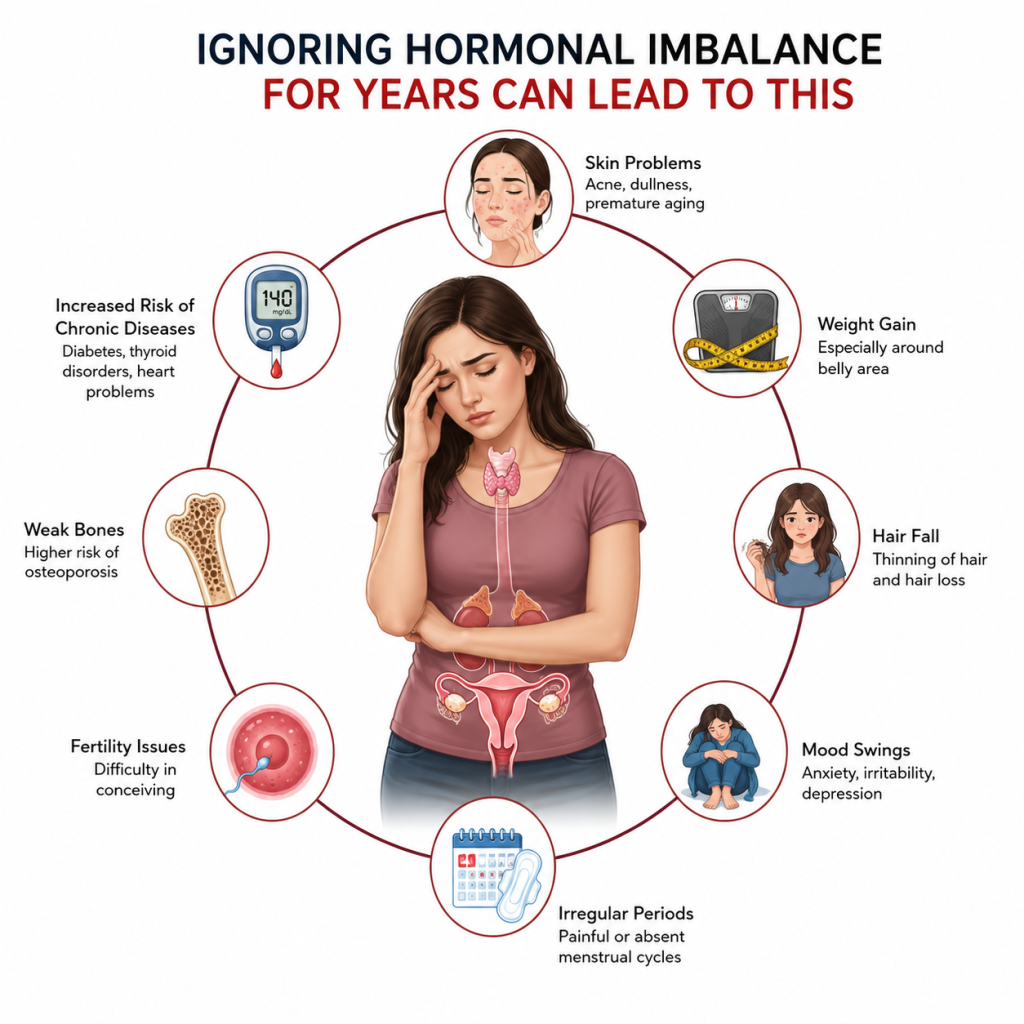
Long-Term Effects of Ignoring Hormonal Imbalance
When hormonal imbalance is left untreated for years, its effects are not limited to one system. It can gradually affect multiple aspects of health.
1. Irregular Ovulation and Fertility Challenges
One of the most important consequences is its impact on ovulation.
Hormones regulate the release of eggs from the ovaries. When this process is disrupted:
- ovulation may become irregular
- ovulation may stop completely in some cycles
Over time, this can lead to difficulty in conceiving.
Many women discover long-standing hormonal imbalance only when they begin planning pregnancy and face unexpected delays.
2. Polycystic Ovary Syndrome (PCOS) Progression
PCOS is one of the most common causes of hormonal imbalance.
In early stages, symptoms may appear mild:
- delayed periods
- acne
- slight weight gain
If ignored, PCOS may progress and lead to:
- persistent irregular cycles
- difficulty losing weight
- insulin resistance
- fertility-related concerns
Early management helps control symptoms more effectively and reduces long-term complications.
3. Increased Risk of Insulin Resistance and Metabolic Issues
Hormonal imbalance, especially in conditions like PCOS, can affect how the body uses insulin.
This may lead to:
- increased blood sugar levels
- difficulty managing weight
- higher risk of developing diabetes over time
This is why hormonal health and metabolic health are closely connected.
4. Thyroid-Related Complications
Thyroid hormones play a major role in regulating metabolism.
When thyroid imbalance is ignored, it can result in:
- persistent fatigue
- unexplained weight gain or weight loss
- hair fall
- mood changes
- menstrual irregularities
If left untreated, thyroid disorders can continue to affect daily functioning and overall wellbeing.
5. Bone Health Impact
Certain hormonal conditions can affect bone strength over time.
When hormone levels remain imbalanced for long durations:
- bone density may reduce
- risk of weakness or fractures may increase
This is often overlooked because bone-related symptoms appear later.
6. Cardiovascular and Long-Term Health Risks
Hormonal imbalance can also influence:
- cholesterol levels
- blood pressure
- fat distribution in the body
Over time, these changes may contribute to increased cardiovascular risk, especially when combined with other factors like diabetes or obesity.
7. Emotional and Psychological Effects
Hormones are closely linked to mental wellbeing.
Persistent imbalance can lead to:
- mood swings
- irritability
- anxiety
- reduced motivation
- disturbed sleep
These changes are often not immediately linked to hormonal causes, which delays proper treatment.
Common Causes Behind Long-Term Hormonal Imbalance
Hormonal imbalance is not a single condition. It can result from different underlying issues.
Major causes include:
| Condition | How it affects hormones |
|---|---|
| PCOS | Disrupts ovulation and insulin balance |
| Thyroid disorders | Affects metabolism and energy levels |
| Prolactin imbalance | Interferes with menstrual cycle |
| Stress and lifestyle | Impacts hormone regulation |
| Perimenopause | Natural hormonal fluctuations with age |
Identifying the exact cause is essential for proper treatment.
Why Early Diagnosis Makes a Difference
One of the most important aspects of hormonal health is timing.
When imbalance is identified early:
- treatment is more straightforward
- symptoms are easier to control
- long-term risks can be reduced
When ignored for years:
- multiple systems may get affected
- symptoms become more complex
- treatment may take longer
This is why early evaluation is always recommended when symptoms persist.
How Lifestyle Influences Hormonal Health
Lifestyle plays a significant role in hormone regulation.
In urban environments, common factors include:
- irregular eating patterns
- poor sleep quality
- high stress levels
- lack of physical activity
These factors may not directly cause hormonal disorders, but they can worsen existing imbalance.
Simple changes can support treatment:
- maintaining a regular sleep cycle
- balanced diet
- consistent physical activity
- stress management
When Should You Consult a Doctor
You should consider medical evaluation if:
- periods are irregular for several months
- symptoms keep repeating
- weight changes are unexplained
- acne and hair changes persist
- you are planning pregnancy
- fatigue and mood changes are ongoing
Early consultation helps identify the cause and prevents complications.
For women in Bangalore, Shirdi Sai Hospital, New BEL Road, provides evaluation and care for hormonal and gynecological concerns.
What to Expect During Evaluation
A proper assessment usually includes:
- detailed medical history
- menstrual cycle tracking
- blood tests for hormone levels
- thyroid evaluation
- ultrasound if required
This helps in identifying the exact cause rather than treating symptoms alone.
Frequently Asked Questions
Can hormonal imbalance correct itself over time?
Temporary changes may resolve, but persistent symptoms usually need evaluation.
Is irregular period always a sign of hormonal imbalance?
Not always, but repeated irregularity should be checked.
Can hormonal imbalance affect weight and skin together?
Yes, it commonly affects both metabolism and skin health.
Is PCOS the only cause of hormonal imbalance?
No, thyroid issues and other conditions can also cause imbalance.
Can treatment help even after years of imbalance?
Yes, but early treatment is more effective and easier to manage.
Conclusion
Hormonal imbalance is often gradual and easy to ignore in the early stages. However, when symptoms continue for months or years, the impact can extend beyond minor discomfort.
It can influence fertility, metabolism, bone health, emotional wellbeing, and overall long-term health.
The key is not to react with concern, but to respond with awareness.
Recognizing persistent symptoms and seeking timely medical evaluation can prevent complications and make management significantly easier.

Leave a Reply