Shirdi Sai Hospital

Category: Health

  • Period Pain Medicines: What’s Safe and What Needs Medical Advice

    Period Pain Medicines: What’s Safe and What Needs Medical Advice

    Period pain is common, but it is also one of the most misunderstood problems. Many women push through cramps with painkillers every month, assuming this is normal and something they must tolerate. For some, tablets work well and life continues as usual. For others, pain keeps increasing, tablets stop helping, or new symptoms appear.

    The difference lies in why the pain is happening.

    This blog explains which medicines are commonly used for period pain, when they are considered safe, and when pain during periods needs medical attention rather than repeated tablets.
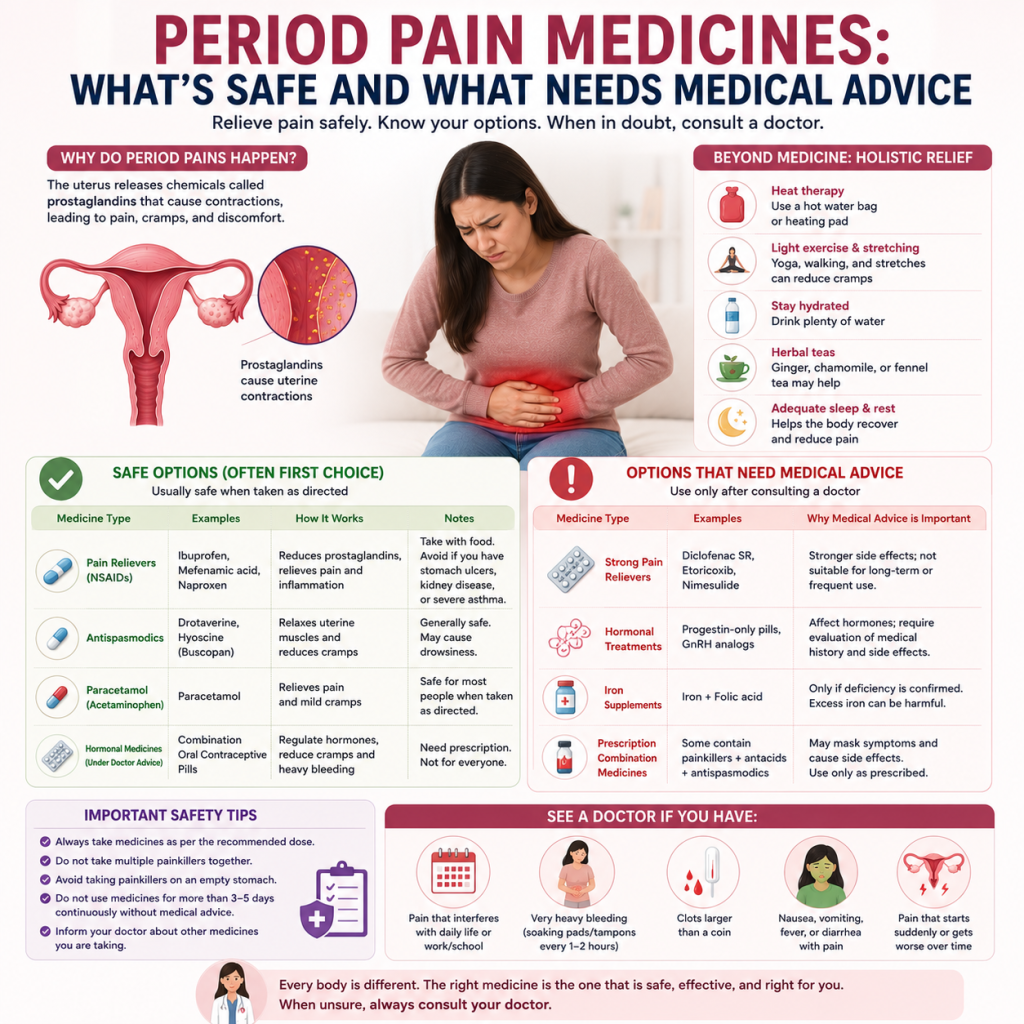
    Medical infographic explaining period pain medicines, comparing safe treatment options with medications that require medical supervision, along with self-care measures, safety tips, and warning signs that need a doctor's evaluation.

    Why period pain happens

    Pain during periods, also called dysmenorrhea, happens due to strong uterine contractions. These contractions help shed the uterine lining, but in some women they become intense and painful.

    Common reasons include:

    • Hormonal changes during the menstrual cycle
    • Increased prostaglandins causing strong contractions
    • Stress and poor sleep
    • Underlying conditions like fibroids or endometriosis
    • Irregular cycles or hormonal imbalance

    Mild pain on the first day can be normal. Severe or worsening pain is not something to ignore.


    Common medicines used for period pain

    Doctors usually recommend medicines based on pain severity, cycle regularity, and overall health.

    Painkillers and anti-inflammatory medicines

    Medicines such as paracetamol, mefenamic acid, and other anti-inflammatory tablets are commonly used. They reduce pain and inflammation during periods and work well for mild to moderate cramps.

    Antispasmodic medicines

    These medicines help relax uterine muscles and reduce cramping. They are often used when pain feels tight or spasmodic.

    Hormonal medicines

    In some cases, doctors prescribe hormonal tablets to regulate cycles and reduce pain. These are used only after proper evaluation and are not meant for casual or short-term use.

    All period pain medicines should be taken under medical guidance, especially if needed every month.


    When period pain medicines usually work

    Medicines are often effective when:

    • Pain is mild to moderate
    • Cycles are regular
    • Pain improves within a day or two
    • No other symptoms are present

    In such cases, tablets help control discomfort without affecting daily routine.


    When tablets are not enough

    This is where many women delay care.

    Period pain needs medical attention if:

    • Pain is severe and affects work or daily activities
    • Tablets are needed every month without relief
    • Pain worsens over time
    • Periods are very heavy or prolonged
    • Pain occurs outside the menstrual period

    Repeated painkillers may reduce pain temporarily, but they do not treat underlying problems.


    Warning signs you should not ignore

    Consult a doctor if you notice:

    • Period pain that suddenly becomes severe
    • Pain not responding to usual medicines
    • Heavy bleeding or large clots
    • Irregular or missed periods
    • Pain during intercourse
    • Fatigue or dizziness during periods

    These signs often point to conditions that need evaluation.


    How doctors evaluate period pain at Shirdi Sai Hospital

    Consultants at Shirdi Sai Hospital focus on understanding the cause of pain. Evaluation may include:

    • Detailed menstrual history
    • Hormonal assessment if required
    • Ultrasound to check uterus and ovaries
    • Guidance on safe medication use
    • Long-term management planning

    The aim is to reduce pain safely while protecting reproductive health.


    Frequently asked questions

    Is it safe to take painkillers every month for periods?
    Occasional use may be safe, but regular monthly use should be discussed with a doctor.

    Do hormonal tablets permanently stop period pain?
    They can reduce pain in some women, but they are prescribed only after evaluation.

    Is period pain normal after marriage or childbirth?
    Pain patterns can change, but severe pain is not normal at any stage.

    Can home remedies replace medicines?
    They may provide comfort, but they cannot treat medical causes of pain.

    When should I see a doctor for period pain?
    If pain affects daily life or keeps worsening over time.


    When to consult a doctor

    If period pain is disrupting your routine or tablets no longer help, it is better to seek medical advice early.

    📞 Call Shirdi Sai Hospital, Bangalore
    OPD consultation starts from ₹500
    Consultants will guide you with safe and appropriate care.
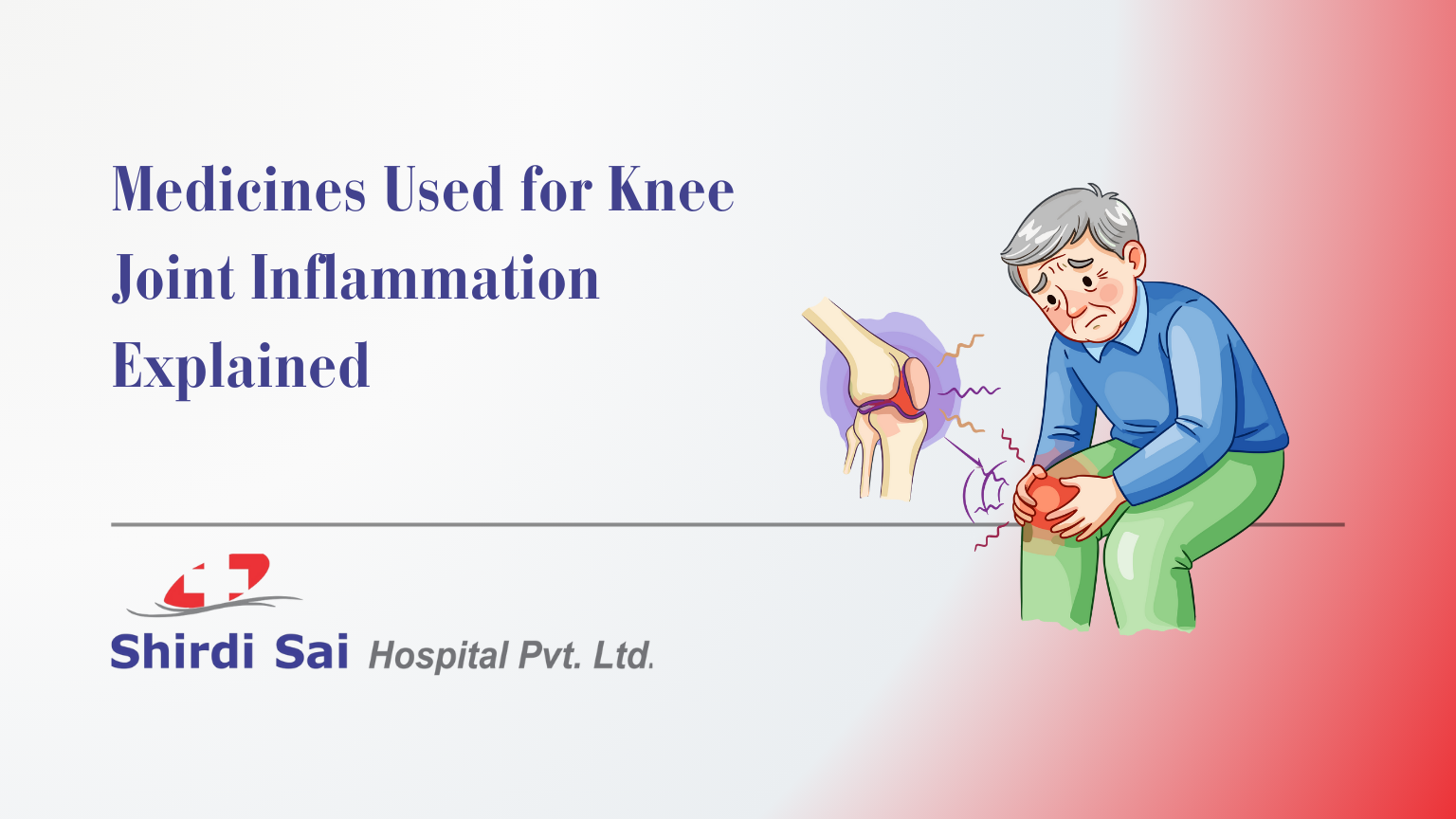
  • Medicines Used for Knee Joint Inflammation Explained

    Medicines Used for Knee Joint Inflammation Explained

    Knee joint inflammation is one of the most common reasons people experience pain, stiffness, and swelling around the knee. Many patients start medicines hoping the inflammation will settle permanently. Some do feel better for a while. Others notice the pain and swelling keep returning once the tablets stop.

    This confusion is common. Medicines can control knee joint inflammation, but they do not work the same way for everyone. The result depends on why the joint is inflamed in the first place.

    This blog explains which medicines are commonly used for knee joint inflammation, how they help, and when tablets alone are not enough.

    Medical infographic explaining medicines used for knee joint inflammation, showing an inflamed knee joint, common symptoms, different medication categories, their uses, possible side effects, and supportive lifestyle measures.

    What is knee joint inflammation?

    Knee joint inflammation occurs when the tissues inside or around the joint become irritated. This may involve:

    • The joint lining (synovium)
    • Cartilage
    • Surrounding ligaments or tendons

    Inflammation leads to pain, swelling, warmth, and stiffness, especially after rest or activity. It can develop suddenly or progress slowly over time.


    Common causes of knee joint inflammation

    Understanding the cause is important because treatment depends on it.

    Common reasons include:

    • Early osteoarthritis
    • Overuse or repetitive strain
    • Old ligament or meniscus injuries
    • Muscle imbalance around the knee
    • Inflammatory conditions
    • Excess body weight increasing joint load

    Inflammation is often blamed on age, but in many patients, movement habits and joint stress play a major role.


    Medicines commonly used for knee joint inflammation

    Doctors prescribe medicines based on symptoms, severity, and medical history. Common categories include:

    Anti-inflammatory painkillers (NSAIDs)

    Medicines such as diclofenac and aceclofenac reduce both pain and inflammation. They are commonly prescribed for short-term relief during flare-ups.

    They help control symptoms but do not repair cartilage or correct joint mechanics.

    Paracetamol

    Paracetamol helps reduce pain but has very little effect on inflammation. It is often used when inflammation is mild or when stronger medicines are not suitable.

    Topical anti-inflammatory gels

    Gels applied over the knee can reduce surface inflammation and discomfort. Their effect is usually temporary and works best as a supportive measure.

    Short-term supportive medicines

    In selected cases, doctors may prescribe additional medicines to protect the stomach or reduce swelling based on individual needs.

    These medicines are prescribed after evaluation and are not meant for long-term self-use.


    When medicines for inflammation work well

    Medicines usually help when:

    • Inflammation is mild to moderate
    • The cause is temporary or activity-related
    • Treatment is started early
    • Medicines are combined with rest and physiotherapy

    In such cases, swelling and pain gradually reduce, allowing the knee to recover.


    Why inflammation returns after stopping medicines

    This is a common concern.

    Inflammation may come back if:

    • The underlying joint problem is still present
    • Muscle weakness around the knee is not corrected
    • Body weight continues to stress the joint
    • Alignment issues are ignored
    • Medicines are used repeatedly without assessment

    Tablets calm inflammation, but they do not remove the cause.


    Risks of prolonged anti-inflammatory medicine use

    Using anti-inflammatory medicines for long periods without supervision can lead to:

    • Stomach irritation or ulcers
    • Kidney strain
    • Increase in blood pressure
    • Reduced benefit over time

    This is why knee joint inflammation should not be managed with tablets alone for months.


    Warning signs you should not ignore

    Consult an orthopaedic doctor if you notice:

    • Persistent swelling around the knee
    • Pain lasting more than two to three weeks
    • Stiffness that does not improve with movement
    • Difficulty bending or straightening the knee
    • Pain affecting daily activities

    These signs usually indicate the need for further evaluation.


    How doctors treat knee joint inflammation at Shirdi Sai Hospital

    Consultants at Shirdi Sai Hospital take a step-by-step approach:

    • Detailed knee examination
    • X-ray or MRI if required
    • Assessment of joint alignment and muscle strength
    • Physiotherapy guidance
    • Medicine planning based on cause, not symptoms alone

    The goal is to reduce inflammation safely and protect the joint in the long term.


    Frequently asked questions

    Do anti-inflammatory medicines cure knee inflammation?
    They control inflammation but do not cure the underlying joint problem.

    Is it safe to take anti-inflammatory tablets daily?
    Daily use without medical supervision is not advised.

    Can physiotherapy reduce knee inflammation?
    Yes. Strengthening and movement correction often reduce repeated inflammation.

    Are injections better than tablets?
    Injections are used in selected cases after proper evaluation.

    When should I see an orthopaedic doctor?
    If swelling or pain keeps returning despite medicines.


    When to consult a doctor

    If knee swelling or pain keeps returning after medicines, early evaluation can prevent joint damage and long-term discomfort.

    📞 Call Shirdi Sai Hospital, Bangalore
    OPD consultation starts from ₹500
    Consultants will guide you with the right treatment plan.

  • Painkillers for Knee Pain: When Relief Is Temporary

    Painkillers for Knee Pain: When Relief Is Temporary

    Knee pain is one of the most common reasons people reach for painkillers. After a long day at work, climbing stairs, or starting a new walking routine, the knee starts hurting. One tablet reduces the pain, and life goes on. A few days later, the pain returns. Another tablet follows.

    This cycle is extremely common in Bangalore. Painkillers do help, but they are not designed to fix what is causing knee pain. Understanding this early can prevent long-term joint problems.

    This blog explains which painkillers are commonly used for knee pain, when they are useful, and when relief from tablets is only temporary.

    Illustration of a painful knee joint with an anatomical overlay, painkiller tablets, and a visual timeline explaining that painkillers provide temporary relief for knee pain but do not treat the underlying cause.

    Why knee pain has become so common today

    Knee pain is no longer limited to older adults. Doctors now see it in people as young as their thirties.

    Common reasons include:

    • Long hours of sitting at desks
    • Sudden increase in walking, jogging, or gym workouts
    • Weight gain putting extra load on the knee
    • Previous sports or accident-related injuries
    • Early wear and tear of joint cartilage

    Knee pain is often blamed on age, but in many cases, lifestyle and movement patterns play a bigger role.


    Common painkillers used for knee pain

    Painkillers are usually the first line of relief. Some commonly used medicines include:

    Paracetamol

    Paracetamol is often used for mild knee pain. It helps reduce pain but has very little effect on inflammation.

    NSAIDs for knee pain

    Medicines such as diclofenac and aceclofenac belong to a group called non-steroidal anti-inflammatory drugs. They reduce both pain and inflammation and are commonly prescribed for knee problems.

    Combination painkillers

    Some tablets combine pain-relief and anti-inflammatory components. These may provide stronger short-term relief but do not address the underlying joint issue.

    Pain relief gels and sprays

    Topical gels can temporarily reduce discomfort, especially after activity. However, their effect is usually short-lived.

    These medicines reduce pain signals and inflammation, not joint damage or structural problems.


    When painkillers genuinely help

    Painkillers can be useful when:

    • Knee pain is due to a recent strain or overuse
    • There is mild inflammation
    • Pain occurs during an acute flare-up
    • They are used along with rest and physiotherapy

    In these situations, tablets provide comfort while the knee heals. Relief is expected to be temporary, not permanent.


    When painkillers stop working

    This is where many people get stuck.

    Painkillers may stop giving lasting relief when:

    • There is cartilage wear or early arthritis
    • Ligaments or meniscus are injured
    • Knee alignment is altered
    • Muscle weakness is not corrected
    • Pain is repeatedly masked without evaluation

    A common warning sign is when pain returns faster each time, even after taking tablets.


    Risks of long-term painkiller use

    Using painkillers occasionally is generally safe. Long-term or frequent use without medical supervision can lead to problems such as:

    • Stomach irritation or ulcers
    • Kidney strain
    • Increase in blood pressure
    • Reduced effectiveness of medicines over time

    This is why knee pain should not be managed with tablets alone for months.


    Warning signs you should not ignore

    Consult an orthopaedic doctor if you notice:

    • Knee pain lasting more than two to three weeks
    • Swelling or stiffness around the joint
    • Difficulty climbing stairs or getting up from a chair
    • Knee giving way while walking
    • Pain present even at rest or during the night

    These signs usually indicate that the knee needs evaluation beyond pain relief.


    How orthopaedic doctors evaluate knee pain

    At Shirdi Sai Hospital, knee pain is assessed step by step. Evaluation may include:

    • Detailed clinical examination
    • X-ray or MRI when required
    • Assessment of joint alignment
    • Muscle strength and movement analysis
    • Treatment planning beyond painkillers

    The focus is on protecting the joint and improving function, not just reducing pain for a few hours.


    Frequently asked questions

    Is it safe to take painkillers daily for knee pain?
    Daily use without medical advice is not recommended, especially for long periods.

    Why does knee pain return after taking tablets?
    Because painkillers do not correct cartilage damage, alignment issues, or muscle weakness.

    Can physiotherapy reduce the need for painkillers?
    Yes. Strengthening and movement correction often reduce pain significantly.

    Are injections better than tablets for knee pain?
    Injections are used in selected cases after proper evaluation. They are not the first step for everyone.

    When should I see an orthopaedic doctor?
    If pain keeps returning, worsens, or affects daily activities.


    When to consult a doctor

    If knee pain is limiting your movement or returning repeatedly despite painkillers, it is better to get the joint checked early.

    📞 Call Shirdi Sai Hospital, Bangalore
    OPD consultation starts from ₹500
    Consultants will guide you with the right evaluation and treatment plan.

  • Tablets for Frequent Urination at Night: Do They Really Work?

    Tablets for Frequent Urination at Night: Do They Really Work?

    Waking up two or three times every night to pass urine can slowly drain your energy. Sleep breaks, mornings feel heavy, and the day starts tired. Many people in Bangalore assume this is just age or stress and look for a tablet that will “settle the bladder.” Tablets can help in some situations, but night-time urination often has more than one cause. That is why medicines work for some people and not for others.

    This guide explains which tablets are commonly prescribed, when they help, and when it is better to get checked instead of continuing medicines on your own.

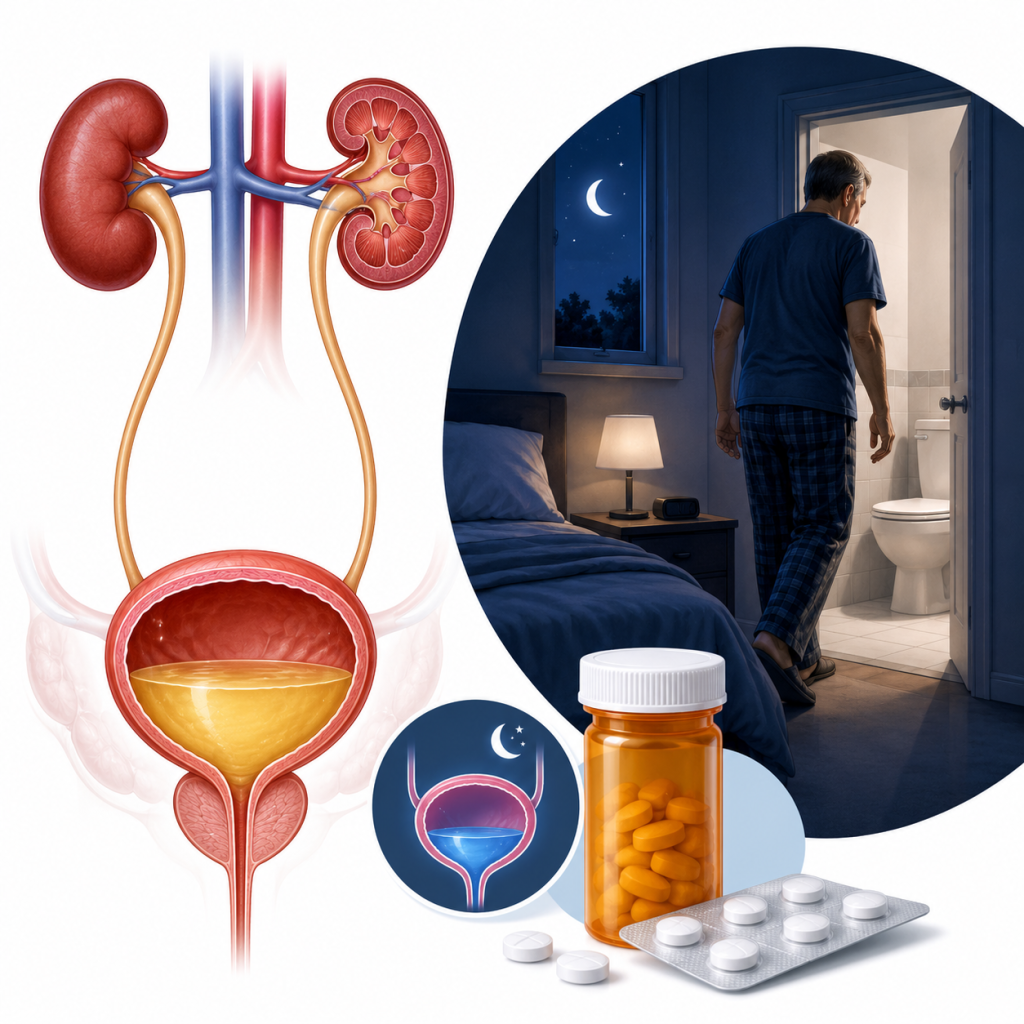
    Medical illustration showing the urinary system, a man waking at night to use the bathroom, and tablets representing treatment for frequent nighttime urination.

    What is frequent urination at night?

    Passing urine more than once at night is called nocturia. One visit occasionally can be normal, especially if you drink a lot of fluids late in the evening. Waking up repeatedly, night after night, is not normal and usually points to an underlying issue.


    Common reasons people pass urine frequently at night

    Night-time urination is a symptom, not a disease. Common causes include:

    • Enlarged prostate in men above 40
    • Overactive bladder, where the bladder contracts too often
    • Diabetes or poorly controlled blood sugar
    • Urinary tract infection, especially if burning is present
    • Excess evening fluids, tea, coffee, or alcohol
    • Certain blood pressure medicines that increase urine output

    Many patients have more than one reason at the same time, which is why a single tablet may not fully solve the problem.


    Common tablets prescribed for frequent urination at night

    Doctors choose medicines only after understanding the cause. Some commonly used tablets include:

    Medicines for overactive bladder

    Antimuscarinic medicines such as oxybutynin and tolterodine help relax the bladder muscle. They reduce urgency and frequent urges, including at night. These medicines work best when overactive bladder is the main issue.

    Medicines for prostate-related symptoms

    In men with prostate enlargement, alpha blockers like tamsulosin improve urine flow and reduce night-time frequency. These medicines address blockage, not bladder weakness.

    When antibiotics are used

    If frequent urination is due to a urinary infection, antibiotics are prescribed based on urine test results. Taking antibiotics without confirmation may temporarily reduce symptoms but not clear the infection.

    What medicines cannot fix

    Sleeping pills and painkillers do not treat the cause of night urination. They may improve sleep for a short time while the underlying problem continues.

    These medicines are prescribed only after evaluation and are not meant for self-use.


    When tablets actually help

    Medicines usually work well when:

    • The cause is correctly identified
    • Only one main issue is present
    • Tablets are taken regularly as advised
    • Lifestyle adjustments are followed alongside treatment

    Improvement is usually gradual over a few weeks, not overnight.


    Why tablets may not solve the problem

    This is where many people get stuck.

    Tablets may not give lasting relief if:

    • The diagnosis is incomplete
    • Diabetes or blood pressure is uncontrolled
    • Prostate enlargement is significant
    • Kidney or heart-related fluid issues are present
    • Medicines are taken irregularly or stopped early

    In such cases, medicines may reduce night trips for a while, but the problem returns.


    Warning signs you should not ignore

    Seek medical advice if you notice:

    • Sudden increase in night-time urination
    • Burning or pain while passing urine
    • Blood in urine
    • Weak or interrupted urine flow
    • Swelling of legs or breathlessness during the day

    These signs need evaluation rather than repeated tablet changes.


    How doctors evaluate frequent urination at night

    At Shirdi Sai Hospital, consultants look beyond symptoms and focus on the cause. Evaluation may include:

    • Urine routine and culture tests
    • Blood sugar assessment
    • Ultrasound of the abdomen or prostate
    • Review of current medications
    • Lifestyle and fluid-intake assessment

    This approach helps avoid long-term medicine dependence and repeated symptoms.


    Frequently asked questions

    Is frequent urination at night normal with age?
    Age increases risk, but repeated night-time urination should still be evaluated.

    Do prostate tablets need to be taken lifelong?
    Not always. Duration depends on symptoms, prostate size, and response.

    Can diabetes cause night-time urination?
    Yes. High blood sugar leads to excess urine production, especially at night.

    Are these tablets habit-forming?
    Most are not habit-forming, but they should be taken only under guidance.

    When should I see a doctor?
    If night urination affects sleep, recurs often, or is associated with pain or burning.


    When to consult a doctor

    If night-time urination is disturbing your sleep or tablets are not giving consistent relief, it is better to get clarity on the cause.

    📞 Call Shirdi Sai Hospital, Bangalore
    OPD consultation starts from ₹500
    Consultants will help identify the reason and guide safe treatment.

  • Medicines for Urinary Tract Infection (UTI): What Helps and When to See a Doctor

    Medicines for Urinary Tract Infection (UTI): What Helps and When to See a Doctor

    Burning while passing urine, going to the bathroom again and again, or a constant urge even when little urine passes. Most people in Bangalore recognise these as UTI symptoms and the first reaction is simple: “Which tablet should I take?”

    Medicines do play an important role in treating urinary tract infections. But what many patients do not realise is this: the right medicine depends on where the infection is, how severe it is, and why it started in the first place. This is exactly why UTIs often keep coming back even after taking tablets.

    This blog explains which medicines are commonly used for UTI, when they actually help, and when it is safer to see a doctor instead of continuing tablets on your own.

    Illustration of the urinary tract showing the kidneys, ureters, and bladder with medicines used for urinary tract infections (UTIs), supportive care options, and warning signs that indicate when to see a doctor.

    Why urinary tract infections happen

    A urinary tract infection occurs when bacteria enter the urinary system and start multiplying. In most cases, the infection starts in the bladder. In some people, it can move upward and affect the kidneys, which is more serious.

    Common reasons UTIs develop include:

    • Inadequate water intake
    • Delaying urination
    • Poor bladder emptying
    • Diabetes
    • Hormonal changes
    • Prostate enlargement in men
    • Recurrent infections without proper testing

    Because the cause differs from person to person, the same tablet does not work for everyone.


    Common medicines used for UTI and how they work

    Doctors prescribe UTI medicines after considering symptoms, urine test results, age, and medical history. Some commonly used antibiotic salts include:

    Nitrofurantoin

    This medicine is frequently prescribed for simple bladder infections. It works well when bacteria are sensitive to it. However, it is not suitable for everyone, especially people with certain kidney conditions.

    Fosfomycin

    Often given as a single dose in selected cases, mainly for uncomplicated UTIs in women. It is convenient, but not meant for repeated infections or severe symptoms.

    Trimethoprim–Sulfamethoxazole

    Used in some patients when bacterial resistance levels are low. It must be taken for the full duration to prevent recurrence.

    Cephalosporins and Fluoroquinolones

    These are reserved for more severe infections, recurrent UTIs, or infections involving the kidneys. They are prescribed carefully because of side effects and resistance concerns.

    Pain-relief tablets may reduce burning or discomfort, but they do not treat the infection itself.


    When UTI medicines usually work well

    Tablets are likely to help when:

    • Symptoms are mild and started recently
    • Infection is limited to the bladder
    • The correct antibiotic is chosen
    • The full course is completed as advised

    In such cases, improvement is usually seen within two to three days.


    Why symptoms come back even after taking tablets

    This is one of the most common problems doctors see.

    UTI medicines may not solve the issue if:

    • Antibiotics were taken without urine testing
    • Treatment was stopped once symptoms reduced
    • There is an underlying cause like stones, diabetes, or prostate problems
    • The infection has reached the kidneys
    • The bacteria are resistant to the medicine used

    In these situations, tablets may temporarily reduce symptoms, but the infection continues silently.


    Warning signs that need medical attention

    Do not ignore UTI symptoms if you notice:

    • Fever or chills
    • Pain in the lower back or sides
    • Blood in urine
    • Burning that does not improve after two to three days of tablets
    • Repeated UTIs in a short time

    These signs suggest a more complicated infection that needs proper evaluation.


    How doctors manage UTI at Shirdi Sai Hospital

    Consultants at Shirdi Sai Hospital focus on treating the cause, not just the burning sensation. Evaluation may include:

    • Urine routine and culture tests
    • Ultrasound when infections keep recurring
    • Assessment for kidney involvement
    • Identifying factors like stones, prostate enlargement, or hormonal issues

    This approach helps prevent repeated infections and long-term damage.


    Frequently asked questions

    Is Nitrofurantoin safe for repeated UTIs?
    It may be used in selected cases, but repeated use without testing is not advised.

    Can I stop UTI tablets once I feel better?
    Stopping early is a common reason infections return.

    Are UTI medicines different for men and women?
    Yes. UTIs in men often need longer treatment and further evaluation.

    Do home remedies cure UTI?
    They may ease symptoms but cannot replace antibiotics when infection is present.

    When should I see a doctor for UTI?
    If symptoms persist, recur frequently, or are associated with fever or back pain.


    When to consult a doctor

    If UTI symptoms keep coming back or tablets are not giving lasting relief, it is safer to get evaluated early.

    📞 Call Shirdi Sai Hospital, Bangalore
    OPD consultation starts from ₹500
    Consultants will guide you with the right tests and treatment.

  • When Should Pain Not Be Ignored?

    When Should Pain Not Be Ignored?

    Pain is the body’s warning system. Most aches settle with rest or simple care. However, some pain patterns signal that something needs medical attention. At Shirdi Sai Hospital, we focus on helping people understand which pain can wait and which pain should not be ignored-without causing unnecessary fear.


    Why Ignoring Certain Pain Can Be Risky

    Pain becomes concerning when it breaks its usual pattern-for example, it’s new, severe, progressive, or linked to other symptoms. Early evaluation often prevents complications and shortens recovery.

    Pain That Should Not Be Ignored

    1) Sudden, Severe Pain

    Pain that starts abruptly and is intense-especially if you can’t find a comfortable position-needs prompt assessment.

    Why it matters:
    Sudden pain can indicate acute issues that benefit from early care.

    2) Pain That Worsens Over Time

    Pain that steadily increases despite rest or basic treatment should be evaluated.

    Why it matters:
    Progressive pain suggests ongoing inflammation, injury, or pressure on sensitive structures.

    3) Pain With Fever, Chills, or Unwell Feeling

    Pain accompanied by fever or general illness may indicate infection or systemic inflammation.

    Why it matters:
    Infections need timely treatment to prevent spread.

    4) Pain With Numbness, Weakness, or Tingling

    Pain associated with nerve symptoms-such as weakness, pins-and-needles, or loss of sensation-should not be ignored.

    Why it matters:
    Nerve involvement benefits from early diagnosis.

    5) Chest Pain, Severe Abdominal Pain, or Testicular Pain

    Pain in these areas-especially if sudden or severe-requires urgent medical attention.

    Why it matters:
    These regions house vital organs where delays can be harmful.

    6) Pain After a Fall or Injury

    Persistent pain after trauma, even if initially mild, needs evaluation.

    Why it matters:
    Some injuries are not obvious immediately.

    7) Pain That Disrupts Sleep

    Pain that regularly wakes you at night or prevents restful sleep is a red flag.

    Why it matters:
    Night pain often signals inflammation or pressure that needs assessment.

    8) Pain With Unexplained Weight Loss or Fatigue

    When pain is paired with unexplained weight loss or persistent fatigue, it warrants evaluation.

    Why it matters:
    These combinations can indicate underlying health conditions.

    Pain That Is Usually Less Concerning

    Pain is often manageable when it:

    • Is mild to moderate
    • Improves with rest or simple measures
    • Is clearly linked to overuse or strain
    • Resolves within a few days

    Even then, recurring episodes should be discussed with a doctor.

    How Doctors Assess Concerning Pain

    At Shirdi Sai Hospital, evaluation is careful and stepwise:

    • Detailed history (onset, triggers, progression)
    • Focused physical examination
    • Tests or imaging only when indicated

    The goal is clarity—not overtesting.

    What to Do If You’re Unsure

    If you’re asking yourself, Should I get this checked?—that question alone is a reason to consult. Early guidance often prevents worry and avoids complications.

    A Note From the Shirdi Sai Hospital Team

    Listening to your body is important. While many aches are harmless, certain pain patterns deserve attention. Seeking care early doesn’t mean something is wrong-it means you’re being proactive about your health.

    Frequently Asked Questions (FAQs)

    How long should pain last before seeing a doctor?
    If pain lasts more than a few days, worsens, or limits daily activity, get it checked.

    Is night pain always serious?
    Not always, but persistent night pain should be evaluated.

    Can stress cause pain?
    Yes, stress can worsen pain, but new or severe pain still needs assessment.

    Should I wait if pain comes and goes?
    Intermittent pain that keeps returning should be discussed with a doctor.

    Does pain always mean damage?
    No, but certain patterns indicate the need for evaluation.

    Is it okay to take painkillers and ignore pain?
    Painkillers may mask symptoms. Persistent pain should be assessed.

    Doctor Review

    This article was reviewed for medical accuracy by a Senior Consultant at Shirdi Sai Hospital.

  • Is Spotting Between Periods Normal or a Warning Sign?

    Is Spotting Between Periods Normal or a Warning Sign?

    Noticing light bleeding or brownish discharge between periods can be worrying—especially if it has never happened before. Many women immediately fear infection or a serious condition. At Shirdi Sai Hospital, we commonly evaluate this concern, and in many cases, the cause is benign and temporary. Still, certain patterns do need medical attention.

    This article explains why spotting happens, when it’s considered normal, and when it may signal a problem, using clear, people-first language.

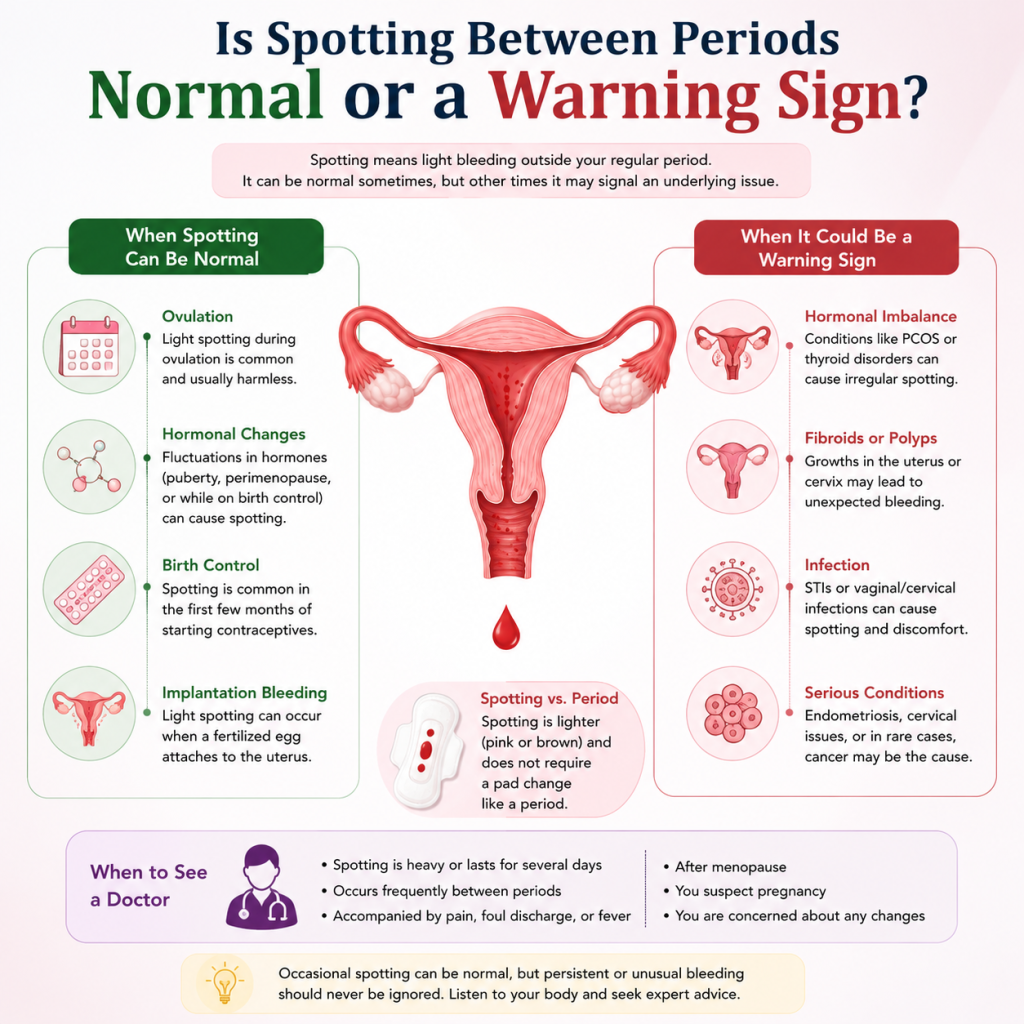
    Medical infographic showing the female reproductive system and explaining common causes of spotting between periods, warning signs, and situations when medical evaluation is recommended.

    What Is Spotting?

    Spotting refers to light bleeding outside your regular menstrual period. It is usually lighter than a normal period and may appear pink, red, or brown.


    Common Reasons for Spotting Between Periods

    1) Ovulation-Related Spotting

    Some women experience mild spotting around mid-cycle when ovulation occurs due to a brief hormonal dip.

    Typical clues:

    • Happens around day 12–16 of the cycle
    • Very light and short-lived
    • No pain or other symptoms

    2) Hormonal Imbalance

    Fluctuations in estrogen and progesterone can make the uterine lining unstable, leading to spotting.

    Typical clues:

    • Irregular cycles
    • Recent stress, illness, or weight changes
    • Spotting that comes and goes

    3) Contraceptive Changes

    Starting, stopping, or missing hormonal contraception can cause breakthrough bleeding.

    Typical clues:

    • Spotting within the first 2–3 months of change
    • Gradual settling as hormones stabilize

    4) Polycystic Ovary Syndrome (PCOS)

    PCOS can disrupt ovulation and hormone balance, causing unpredictable spotting.

    Typical clues:

    • Irregular or missed periods
    • Acne or increased facial hair
    • Weight fluctuations

    5) Cervical or Vaginal Irritation

    Minor irritation after intercourse, infection, or medical procedures can cause light bleeding.

    Typical clues:

    • Spotting after sex
    • Mild discomfort or discharge changes

    6) Early Pregnancy or Implantation

    Very early pregnancy can sometimes cause light spotting when the embryo implants.

    Typical clues:

    • Spotting around expected period date
    • Mild cramps or breast tenderness

    When Is Spotting Considered Normal?

    Spotting may be normal when it:

    • Happens once or twice and resolves
    • Is very light and painless
    • Occurs around ovulation or after a known hormonal change

    Observation is often enough in these cases.


    When Should Spotting Be Evaluated?

    You should consult a doctor if:

    • Spotting happens repeatedly
    • Bleeding is heavy or prolonged
    • It’s associated with pain or foul-smelling discharge
    • Spotting occurs after menopause
    • There is uncertainty about pregnancy

    Early evaluation helps rule out infections, hormonal disorders, or uterine conditions.


    How Doctors Evaluate Spotting

    At Shirdi Sai Hospital, evaluation is thoughtful and minimal:

    • Menstrual and medical history review
    • Pregnancy test when relevant
    • Blood tests or ultrasound only if indicated

    Most women need simple reassurance or targeted treatment.


    Treatment Depends on the Cause

    • Lifestyle and stress management
    • Hormonal regulation when needed
    • Treatment of infections or cervical issues
    • Observation if spotting is harmless and self-limited

    Treatment focuses on restoring cycle stability and comfort.


    A Note From the Shirdi Sai Hospital Team

    Spotting between periods is common and often not serious—but patterns matter. Paying attention to timing, frequency, and associated symptoms helps determine whether it’s normal or needs care.

    If spotting feels unusual or keeps recurring, a gynecology consultation can provide clarity and peace of mind.


    Frequently Asked Questions (FAQs)

    Is spotting always a sign of pregnancy?
    No. Pregnancy is just one of many possible causes.

    Can stress alone cause spotting?
    Yes. Stress can disrupt hormonal balance and trigger light bleeding.

    Is spotting before periods normal?
    Occasional premenstrual spotting can be normal, but frequent episodes should be checked.

    Does spotting mean cancer?
    Rarely. Most cases are due to benign causes, especially in younger women.

    Should I ignore spotting if there’s no pain?
    If it’s recurrent, it’s best to get evaluated—even without pain.

    Is spotting after menopause normal?
    No. Postmenopausal bleeding should always be evaluated.


    Doctor Review

    This article was reviewed for medical accuracy by a Gynecology Consultant at Shirdi Sai Hospital.

  • Is It Normal to Wake Up at Night to Urinate?

    Is It Normal to Wake Up at Night to Urinate?

    Waking up once in the night to urinate can be common. Waking up multiple times, or feeling that your sleep is regularly interrupted because of the urge to pass urine, often raises concern. At Shirdi Sai Hospital, this is one of the most frequent questions we hear-especially from adults over 40 and from people managing lifestyle or metabolic conditions.

    This article explains what’s normal, what isn’t, why night-time urination happens, and when it needs medical attention—in clear, people-first language.

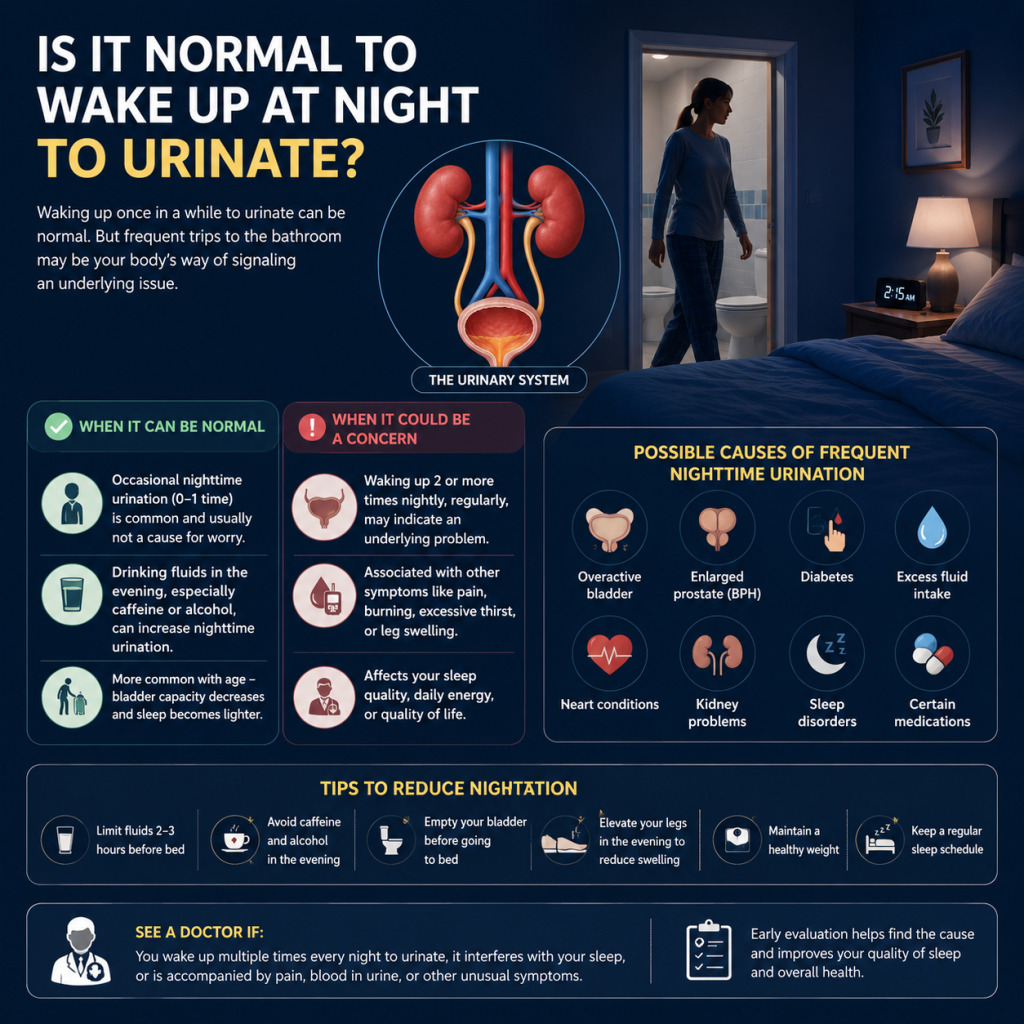
    Medical infographic illustrating the urinary system and explaining whether waking up at night to urinate is normal, common causes of nighttime urination, warning signs, and tips for better bladder health.

    What Is Night-Time Urination?

    Night-time urination is medically called nocturia. It simply means waking from sleep to pass urine. The key factor is how often it happens and whether it disrupts your rest.

    • Once per night: often normal
    • Two or more times every night: may indicate an underlying issue

    Common Reasons People Wake Up at Night to Urinate

    1) Drinking Fluids Late in the Evening

    Water, tea, coffee, or alcohol close to bedtime increases urine production during sleep.

    Typical clues:

    • Normal daytime urination
    • Symptoms improve when evening fluids are reduced

    2) Poor Sleep or Light Sleep Patterns

    Sometimes, poor sleep causes you to wake up first—and urination happens after waking, not the other way around.

    Typical clues:

    • Difficulty falling asleep
    • Frequent awakenings for no clear reason
    • Urine volumes are small

    3) Overactive Bladder

    An overactive bladder can trigger urgency even when urine volume is low, including at night.

    Typical clues:

    • Sudden urge to urinate
    • Frequent daytime urination
    • No burning or infection signs

    4) Prostate Enlargement (in Men)

    As men age, prostate enlargement can obstruct urine flow, making the bladder work harder—especially at night.

    Typical clues:

    • Weak urine stream
    • Feeling of incomplete emptying
    • Night-time urination increases gradually

    5) Diabetes or Blood Sugar Imbalance

    High blood sugar increases urine production, particularly overnight.

    Typical clues:

    • Excessive thirst
    • Increased daytime and night-time urination
    • Fatigue or unexplained weight changes

    6) Heart or Circulation-Related Fluid Shifts

    Fluid that pools in the legs during the day can return to circulation when lying down, increasing night-time urine output.

    Typical clues:

    • Leg swelling by evening
    • Night-time urination without bladder pain
    • Improves with leg elevation

    7) Age-Related Hormonal Changes

    With age, the body produces less of the hormone that concentrates urine at night, leading to higher urine output during sleep.

    Typical clues:

    • Gradual onset over years
    • No pain or burning
    • Common after 50

    Is Night-Time Urination Always a Problem?

    Not always. It becomes a concern when:

    • It happens every night
    • It interrupts sleep quality
    • It’s associated with urgency, leakage, or fatigue
    • It appears suddenly without lifestyle changes

    When Should You See a Doctor?

    Seek evaluation if:

    • You wake up two or more times nightly consistently
    • You feel tired during the day due to sleep disruption
    • There is burning, pain, or blood in urine
    • Symptoms worsen over weeks or months

    Early evaluation helps identify reversible causes.


    How Doctors Assess Night-Time Urination

    At Shirdi Sai Hospital, evaluation focuses on understanding patterns:

    • Day vs night urine frequency
    • Fluid intake habits
    • Medical history and medications
    • Urine tests and blood sugar checks (if needed)

    Imaging or advanced tests are only done when required.


    Treatment Depends on the Cause

    • Lifestyle adjustments: timing of fluids, caffeine reduction
    • Bladder training: improving bladder capacity and control
    • Medication: only when clearly indicated
    • Managing underlying conditions: prostate health, diabetes, circulation

    Most people see improvement with simple, targeted steps.


    A Note From the Shirdi Sai Hospital Team

    Waking up at night to urinate is common—but it should not be dismissed if it’s frequent or affecting your sleep. Identifying the cause early often restores restful sleep and prevents complications.

    If night-time urination is becoming routine rather than occasional, a urology consultation can offer clarity and reassurance.


    Frequently Asked Questions (FAQs)

    How many times is normal to urinate at night?
    Once is usually normal. More than that may need evaluation.

    Does night-time urination always mean prostate problems?
    No. Prostate issues are one of several possible causes.

    Can dehydration during the day cause this?
    Yes. Drinking too little earlier can shift fluid intake to evenings.

    Is this common in older adults?
    Yes, due to hormonal and bladder changes with age.

    Will reducing fluids fix it?
    It helps in many cases, but not if an underlying condition exists.

    Can night-time urination be prevented?
    Often, yes—once the cause is identified and addressed.


    Doctor Review

    This article was reviewed for medical accuracy by a Urology Consultant at Shirdi Sai Hospital.

  • Why Does My Knee Pain Increase While Climbing Stairs but Not While Walking?

    Why Does My Knee Pain Increase While Climbing Stairs but Not While Walking?

    Many people notice an odd pattern: walking on flat ground feels fine, but knee pain flares up the moment they climb stairs. This difference can be confusing and worrying. At Shirdi Sai Hospital, we hear this question often. The reason is usually mechanical-and understanding it helps you know when to rest, when to strengthen, and when to get checked.

    This guide explains the most common causes, what the pain pattern means, and when it needs medical attention, in clear, people-first language.

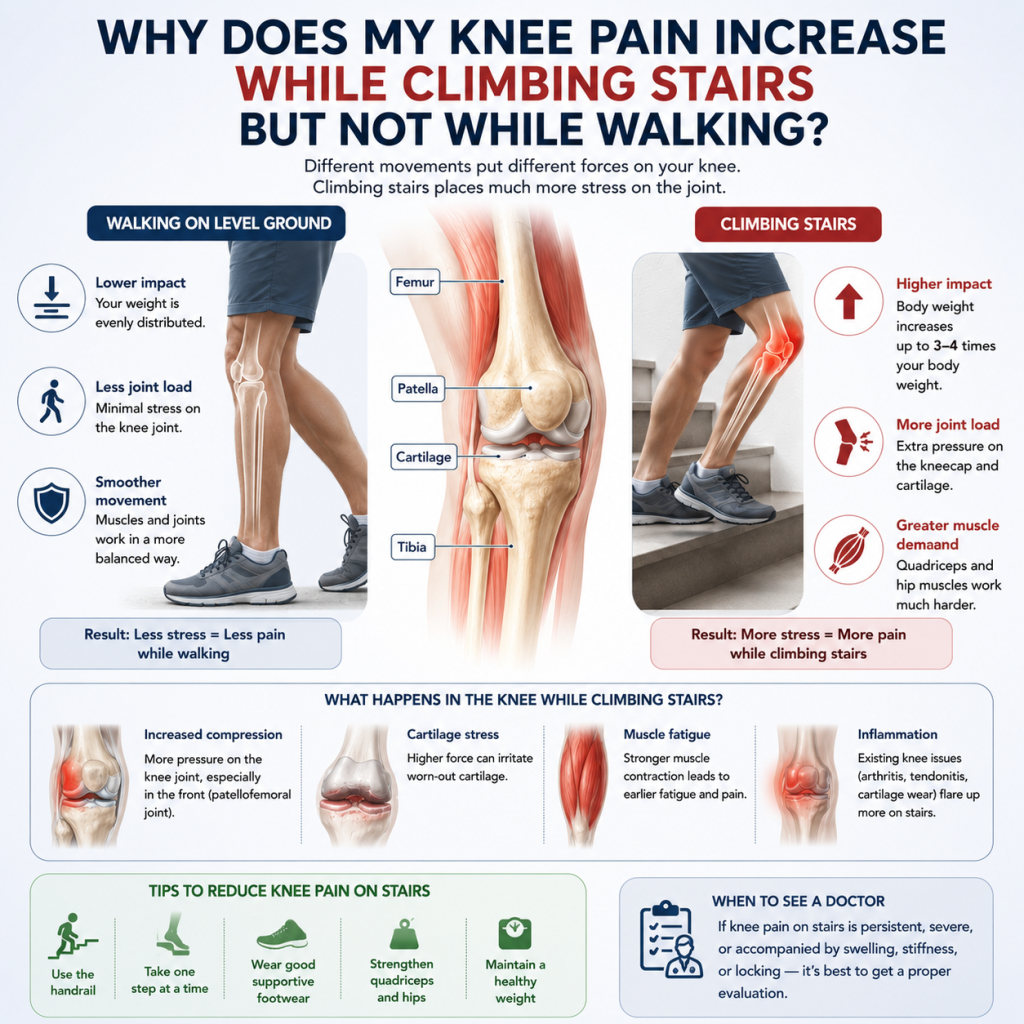
    Medical infographic comparing walking and climbing stairs, showing an anatomical knee joint with increased pressure on the kneecap during stair climbing, common causes of knee pain, and tips for reducing discomfort.

    Why Stairs Stress the Knee More Than Walking

    Climbing stairs increases the load on the knee joint by 2–3 times your body weight. It also demands precise coordination between the kneecap (patella), thigh muscles, cartilage, and ligaments. If any part of this system is slightly off, pain shows up on stairs first.


    Common Reasons Knee Pain Appears on Stairs

    1) Patellofemoral Pain (Kneecap Tracking Issue)

    When the kneecap doesn’t glide smoothly in its groove, pressure builds during stair climbing.

    Typical clues:

    • Pain around or behind the kneecap
    • Worse while going up or down stairs
    • Improves with rest

    2) Early Cartilage Wear (Early Osteoarthritis)

    Cartilage cushions the joint. Early thinning may not hurt during walking but becomes noticeable under higher load.

    Typical clues:

    • Mild stiffness after sitting
    • Pain with stairs or squatting
    • Minimal swelling

    3) Weak Thigh and Hip Muscles

    The quadriceps and hip muscles absorb shock. Weakness shifts extra load to the knee during stair climbing.

    Typical clues:

    • Knee pain without injury
    • Difficulty rising from a chair
    • Improves with strengthening

    4) Meniscus Strain or Degeneration

    The meniscus helps distribute weight. Small degenerative changes can cause pain during bending activities.

    Typical clues:

    • Pain on twisting or stair descent
    • Occasional catching or discomfort
    • Often no major swelling

    5) Tight Muscles and Tendons

    Tight hamstrings or calf muscles alter knee mechanics, increasing stress on stairs.

    Typical clues:

    • Limited flexibility
    • Pain improves after gentle stretching
    • Worse after long sitting

    6) Weight-Related Joint Load

    Even modest weight gain increases knee stress during stairs.

    Typical clues:

    • Pain worsens with stairs, hills, or squats
    • Improves with weight management and conditioning

    Is This Always Arthritis?

    No. Stair-only pain does not automatically mean arthritis. Many younger adults experience this due to muscle imbalance or kneecap tracking issues—conditions that are often reversible with the right approach.


    When Should You Be Concerned?

    Get an evaluation if you notice:

    • Persistent pain beyond 2–3 weeks
    • Swelling, locking, or instability
    • Pain after a fall or injury
    • Increasing pain that limits daily activity

    Early assessment can prevent progression.


    How Doctors Evaluate Stair-Related Knee Pain

    At Shirdi Sai Hospital, care is stepwise:

    • Detailed activity and pain-pattern history
    • Physical examination focusing on alignment and strength
    • X-ray or MRI only if needed

    Most patients start with conservative care.


    Treatment Options

    • Activity modification: temporary reduction of stair strain
    • Targeted physiotherapy: muscle balance and kneecap control
    • Pain relief measures: as appropriate
    • Lifestyle adjustments: weight and footwear review

    Surgery is rarely the first step for this pattern of pain.


    A Note From the Shirdi Sai Hospital Team

    Stair-related knee pain is often an early signal, not a severe problem. With timely guidance, most people return to comfortable movement without long-term medication or procedures.

    If stairs are becoming uncomfortable or limiting your routine, an orthopaedic review can provide clarity and a clear plan.


    Frequently Asked Questions (FAQs)

    Why does going downstairs hurt more than going up?
    Downstairs movement increases pressure behind the kneecap, making pain more noticeable.

    Can exercises help?
    Yes. Strengthening and flexibility exercises are often the most effective treatment.

    Should I stop using stairs completely?
    Temporary modification helps, but complete avoidance isn’t usually necessary.

    Is imaging always required?
    No. Many cases improve with clinical assessment and therapy alone.

    Can this happen in younger adults?
    Yes. Muscle imbalance and overuse are common causes in the 20s–40s.

    Will this worsen over time?
    Not if addressed early with proper care.


    Doctor Review

    This article was reviewed for medical accuracy by an Orthopaedics Consultant at Shirdi Sai Hospital.

  • My Periods Were Regular Before Why Are They Irregular Now?

    My Periods Were Regular Before Why Are They Irregular Now?

    When periods that were once predictable suddenly become irregular, it can feel unsettling. Many women assume it must be something serious or worry they did something wrong. At Shirdi Sai Hospital, we see this question often. In most cases, there is a clear, explainable reason, and the situation is manageable once identified.

    This article explains why cycles change, what’s considered normal, and when it’s time to seek medical advice—in simple, people-first language.

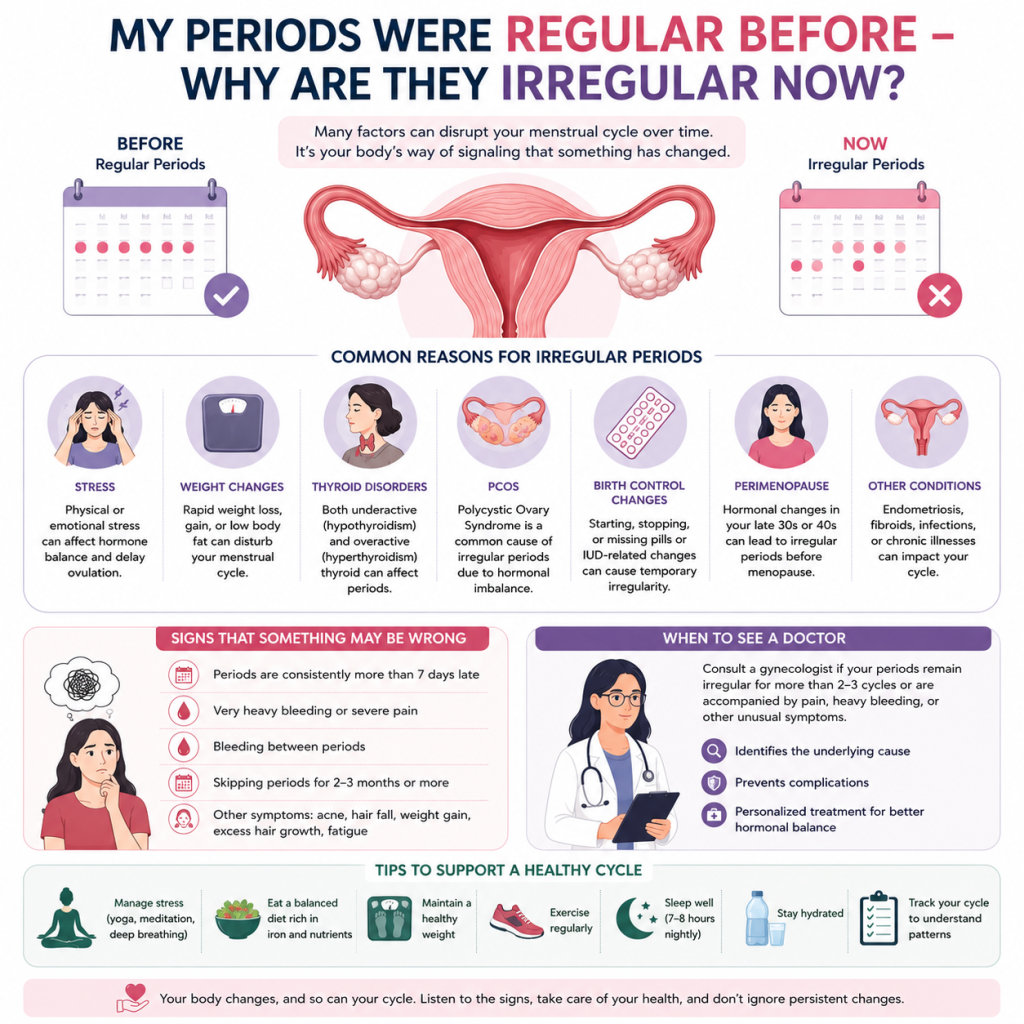
    Medical infographic showing the female reproductive system and explaining why previously regular periods can become irregular, including common causes, warning signs, and when to seek medical advice.

    What Does “Irregular” Actually Mean?

    A typical menstrual cycle ranges from 21 to 35 days. Irregularity can include:

    • Cycles that suddenly shorten or lengthen
    • Missed periods for 2–3 months
    • Bleeding that comes earlier or later than usual
    • Spotting between periods

    A one-off change can happen. Repeated changes deserve attention.


    Common Reasons Periods Become Irregular After Being Regular

    1) Stress and Lifestyle Shifts

    Physical or emotional stress affects the hormones that control ovulation. Sudden work pressure, sleep disruption, weight change, or illness can delay or skip ovulation—leading to irregular cycles.

    Typical clues:

    • Changes follow a stressful phase
    • Cycles normalize once routines stabilize

    2) Hormonal Fluctuations With Age

    Hormone balance isn’t static. Shifts can occur in the late 20s, 30s, and during the years leading to menopause.

    Typical clues:

    • Cycles that were regular for years start changing
    • Associated symptoms like mood changes or fatigue

    3) Polycystic Ovary Syndrome (PCOS)

    PCOS can appear even after years of normal periods. It affects ovulation timing and can cause cycle variability.

    Typical clues:

    • Period gaps of 45–90 days
    • Acne or increased hair growth
    • Weight changes

    4) Thyroid Imbalance

    Both underactive and overactive thyroid conditions can disrupt menstrual timing.

    Typical clues:

    • Unexplained weight change
    • Hair fall, heat or cold intolerance
    • Fatigue with cycle changes

    5) Recent Pregnancy, Breastfeeding, or Contraception Changes

    Hormones take time to reset after childbirth, breastfeeding, or stopping hormonal contraception.

    Typical clues:

    • Irregular cycles for a few months after changes
    • Gradual return toward a pattern

    6) Sudden Weight Loss or Gain

    Fat tissue influences estrogen levels. Rapid changes can affect ovulation and cycle regularity.

    Typical clues:

    • Period changes alongside diet or exercise changes

    Is It Ever “Normal” for Periods to Change?

    Yes-temporary changes can be normal during:

    • High stress
    • Recovery from illness
    • Travel or sleep disruption

    However, if cycles remain irregular for more than 2–3 months, it’s best to check.


    When Should You See a Doctor?

    Consider evaluation if you have:

    • Missed periods for 3 months or more
    • Very heavy bleeding or clots
    • Severe pain with periods
    • Bleeding between periods repeatedly
    • Irregular cycles with acne, hair growth, or weight changes

    Early evaluation often prevents long-term issues.


    How Doctors Evaluate Sudden Irregular Periods

    At Shirdi Sai Hospital, assessment is careful and individualized:

    • Detailed menstrual and lifestyle history
    • Blood tests for hormones (as needed)
    • Ultrasound only if indicated

    Most women do not require extensive testing.


    Treatment Depends on the Cause

    • Lifestyle adjustments: stress, sleep, nutrition
    • Hormonal balancing: if required
    • Targeted treatment: for PCOS or thyroid issues

    The goal is cycle regulation and overall health, not just short-term fixes.


    A Note From the Shirdi Sai Hospital Team

    We reassure many women that irregular periods after years of regular cycles are common and often reversible. With timely evaluation and the right guidance, cycles usually settle back into a healthier pattern.

    If your periods feel “off” or unpredictable, a consultation can provide clarity and peace of mind.


    Frequently Asked Questions (FAQs)

    Can stress alone make periods irregular?
    Yes. Stress can delay ovulation, which shifts the cycle.

    Is pregnancy possible with irregular periods?
    Yes. Irregular cycles don’t automatically mean infertility.

    Can irregular periods correct themselves?
    They often do, especially if stress or lifestyle factors are involved.

    Are irregular periods always PCOS?
    No. PCOS is one cause among many.

    Do I need an ultrasound immediately?
    Not always. Tests are based on symptoms and history.

    Is it dangerous to ignore irregular periods?
    Persistent irregularity should be checked to rule out hormonal issues.


    Doctor Review

    This article was reviewed for medical accuracy by a Gynecology Consultant at Shirdi Sai Hospital.