Shirdi Sai Hospital

Category: Health

  • Period Pain vs Endometriosis: How Doctors Identify the Difference

    Period Pain vs Endometriosis: How Doctors Identify the Difference

    Most women experience some level of period pain. However, when cramps become severe, persistent, or life-disrupting, the question arises – is this normal menstrual pain or could it be endometriosis?

    Understanding the difference is important because ordinary period cramps improve with simple medication and lifestyle changes, while endometriosis requires structured medical evaluation and sometimes advanced treatment. This article explains how doctors clinically distinguish between common menstrual pain and endometriosis, what symptoms matter most, and when to seek evaluation.
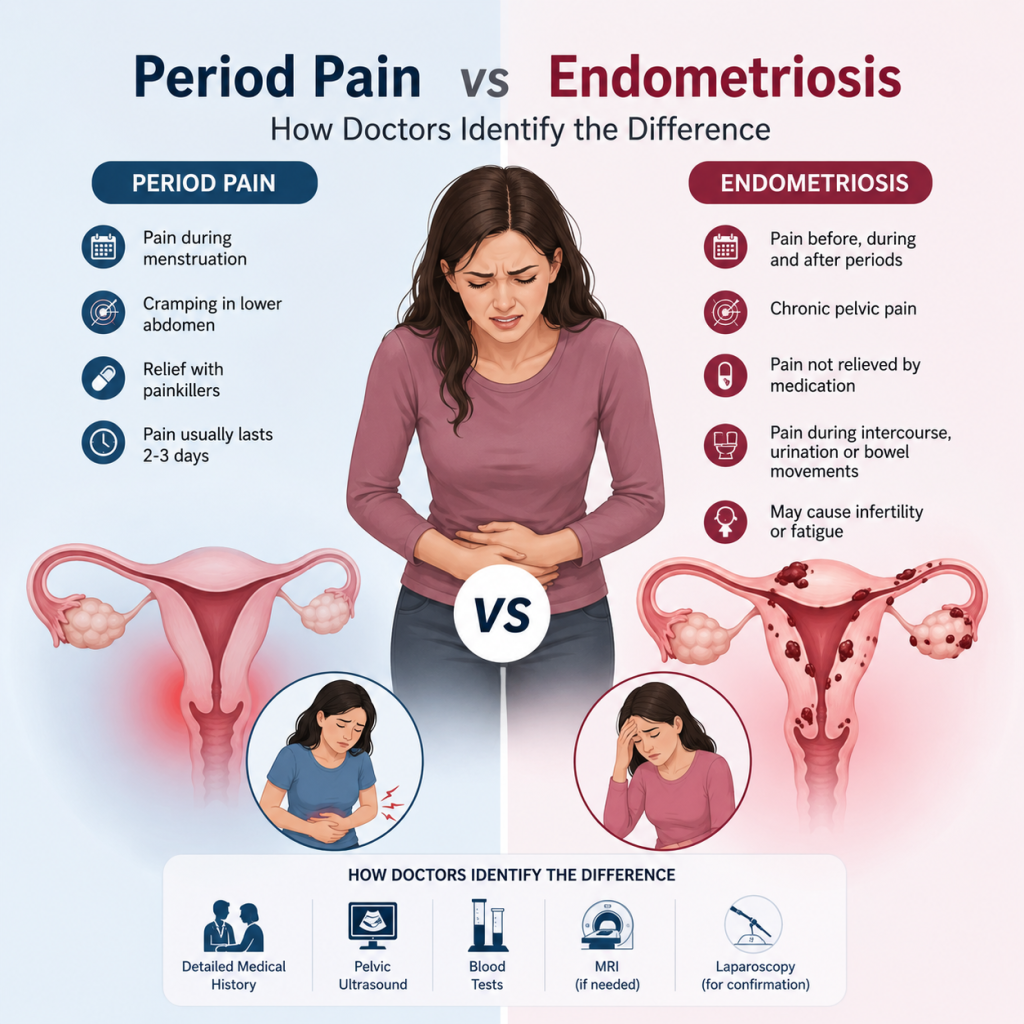
    Medical infographic comparing period pain and endometriosis, showing the female reproductive system, common symptoms, and the diagnostic methods doctors use to distinguish between the two conditions.

    What Is Normal Period Pain?

    Normal menstrual pain is medically called primary dysmenorrhea. It usually begins during teenage years and improves with age or after childbirth.

    Typical features:

    • Pain starts just before or during periods
    • Cramping lasts 1–3 days
    • Pain improves with rest or pain medication
    • No pain between cycles
    • No progressive worsening over time

    The pain is caused by prostaglandins, chemicals that trigger uterine contractions.

    For many women, this discomfort is manageable and does not interfere with daily activities.


    What Is Endometriosis?

    Endometriosis occurs when tissue similar to the uterine lining grows outside the uterus — on ovaries, fallopian tubes, or pelvic lining.

    Unlike normal period pain, endometriosis pain is:

    • Often severe and progressive
    • May begin several days before periods
    • Can continue after bleeding stops
    • May cause pain during intercourse
    • Associated with fertility concerns

    Endometriosis is a chronic inflammatory condition, not just “strong cramps.”


    Key Differences Doctors Look For

    Gynecologists assess multiple factors to differentiate the two conditions.

    1. Pattern of Pain

    Period Pain:

    • Limited to menstrual days
    • Predictable pattern
    • Stable intensity

    Endometriosis:

    • Pain increases over time
    • Starts before period begins
    • May continue after bleeding
    • Pain during ovulation possible

    2. Severity and Impact

    Doctors ask:

    • Does the pain stop you from working?
    • Do you require repeated strong painkillers?
    • Does pain interfere with sleep?

    Severe, life-disrupting pain raises suspicion of endometriosis.


    3. Pain During Intercourse

    Pain during deep penetration is uncommon in simple period cramps but common in endometriosis due to pelvic inflammation.


    4. Heavy Bleeding or Clots

    While heavy bleeding can occur in both, it is more frequently linked with structural causes such as:

    • Endometriosis
    • Adenomyosis
    • Fibroids

    5. Fertility Concerns

    Women struggling to conceive alongside painful periods are often evaluated for endometriosis.


    Diagnostic Tools Doctors Use

    Diagnosis is stepwise.

    Clinical History

    The first and most important step is detailed symptom analysis.

    Pelvic Examination

    Doctors check for:

    • Tender nodules
    • Restricted uterine movement
    • Enlarged ovaries

    Ultrasound

    Useful for detecting:

    • Endometriotic cysts
    • Fibroids
    • Adenomyosis

    However, mild endometriosis may not appear on ultrasound.

    MRI

    Provides detailed imaging if suspicion remains high.

    Diagnostic Laparoscopy

    The gold standard for confirming endometriosis.


    Not all severe period pain is endometriosis. But persistent, worsening pain deserves structured evaluation.


    Why Endometriosis Is Often Missed

    Many women normalize pain.

    Common reasons for delayed diagnosis:

    • Believing pain is “normal for women”
    • Fear of gynecological examination
    • Busy lifestyle
    • Self-medication with painkillers

    On average, diagnosis can be delayed by several years.


    Hormonal Influence

    Endometriosis is estrogen-dependent.

    Higher estrogen levels may:

    • Stimulate endometrial tissue growth
    • Increase inflammation
    • Intensify cramps

    Hormonal imbalance after pregnancy or lifestyle stress can unmask symptoms.


    Treatment Differences

    Treatment for Normal Period Pain

    • NSAIDs
    • Heat therapy
    • Regular exercise
    • Stress reduction
    • Short-term hormonal regulation

    Most cases improve with conservative measures.


    Treatment for Endometriosis

    Depends on severity.

    1. Hormonal therapy
      • Oral contraceptives
      • Progesterone therapy
      • GnRH analogues
    2. Pain management
    3. Laparoscopic surgery (if severe)

    Approximate surgical costs in Bangalore:

    • Diagnostic laparoscopy: ₹60,000 – ₹1,20,000
    • Endometriosis excision surgery: ₹1,20,000 – ₹3,00,000

    Exact cost depends on hospital and disease extent.


    Psychological Impact

    Chronic pelvic pain can cause:

    • Anxiety
    • Relationship stress
    • Fear of intimacy
    • Depression
    • Reduced productivity

    Early diagnosis significantly improves quality of life.


    When to Consult a Gynecologist

    Seek evaluation if:

    • Pain worsens every cycle
    • Pain lasts beyond 3 days
    • You experience pain during intercourse
    • You have difficulty conceiving
    • Pain disrupts daily routine

    If you are in Bangalore, especially around New BEL Road or North Bangalore, early consultation helps prevent disease progression.

    You may consult the gynaecology department for proper assessment and individualized care.


    FAQs

    How do I know if my period pain is normal or endometriosis?

    If pain is mild, limited to period days, and improves with medication, it is likely normal. Progressive, severe pain or pain between cycles should be evaluated.

    Can endometriosis show on ultrasound?

    Severe cases may show cysts, but mild endometriosis may not be visible. Laparoscopy is the most accurate diagnostic method.

    Does endometriosis always cause infertility?

    Not always. Many women conceive naturally, but severe cases can affect fertility.

    Can pregnancy cure endometriosis?

    Pregnancy may temporarily reduce symptoms, but it does not permanently cure the condition.

    Should I ignore painful periods if tests are normal?

    Persistent severe pain should not be ignored. Further evaluation may be required even if initial imaging appears normal.


    Conclusion

    Not all period pain is the same. While normal cramps are common and manageable, progressive and severe pain may indicate endometriosis. The difference lies in pattern, severity, associated symptoms, and clinical evaluation.

    Listening to your body and seeking medical advice when symptoms change ensures timely diagnosis and better long-term reproductive health.
  • Why Do Periods Become Painful After Marriage or Pregnancy?

    Why Do Periods Become Painful After Marriage or Pregnancy?

    Painful periods after marriage or pregnancy are more common than many women realize. While menstrual cramps are normal for some, increased pain after childbirth or lifestyle changes may indicate hormonal shifts, uterine changes, or underlying conditions such as endometriosis or fibroids.

    Many women in Bangalore quietly assume this pain is “just part of adulthood” or related to stress. However, menstrual pain that worsens over time deserves attention. This article explains the hormonal, physical, and psychological reasons periods may become painful after marriage or pregnancy, when to worry, and what treatment options are available.

    Are Period Changes After Marriage Real?

    Marriage itself does not directly cause painful periods. However, life changes after marriage can indirectly influence menstrual patterns.

    Possible reasons include:

    • Stress and Routine Changes: New lifestyle adjustments may disrupt hormonal balance.
    • Changes in Sexual Activity: Increased pelvic awareness may make discomfort more noticeable.
    • Dietary and Sleep Shifts: Poor sleep and dietary changes affect estrogen and progesterone levels.
    • Psychological Stress: Emotional adjustment can influence hormonal regulation.

    Hormones respond to lifestyle. When hormones fluctuate, menstrual cramps may intensify.

    Why Do Periods Become More Painful After Pregnancy?

    After pregnancy, the uterus undergoes structural and hormonal changes. For some women, cramps may feel stronger than before.

    Common reasons include:

    • Uterine Stretching: Pregnancy stretches uterine muscles. Post-delivery contractions during periods may feel sharper.
    • Scar Tissue (After C-Section): Internal adhesions can increase discomfort.
    • Hormonal Rebalancing: Estrogen and progesterone levels shift significantly after childbirth.
    • Endometriosis Activation: In some women, symptoms become more noticeable after delivery.
    • Fibroid Growth: Hormonal fluctuations may influence fibroid size.

    Every woman’s body responds differently after pregnancy. Increased pain does not automatically mean something serious, but it should not be ignored if it disrupts daily life.

    The Role of Hormones in Painful Periods

    Menstrual pain is mainly caused by prostaglandins, hormone-like chemicals that trigger uterine contractions.

    When prostaglandin levels are high:

    • Uterine contractions become stronger.
    • Blood flow to uterine muscles reduces.
    • Pain intensifies.
    • Nausea and fatigue may occur.

    Hormonal imbalance after childbirth, breastfeeding changes, or stress can increase prostaglandin activity.

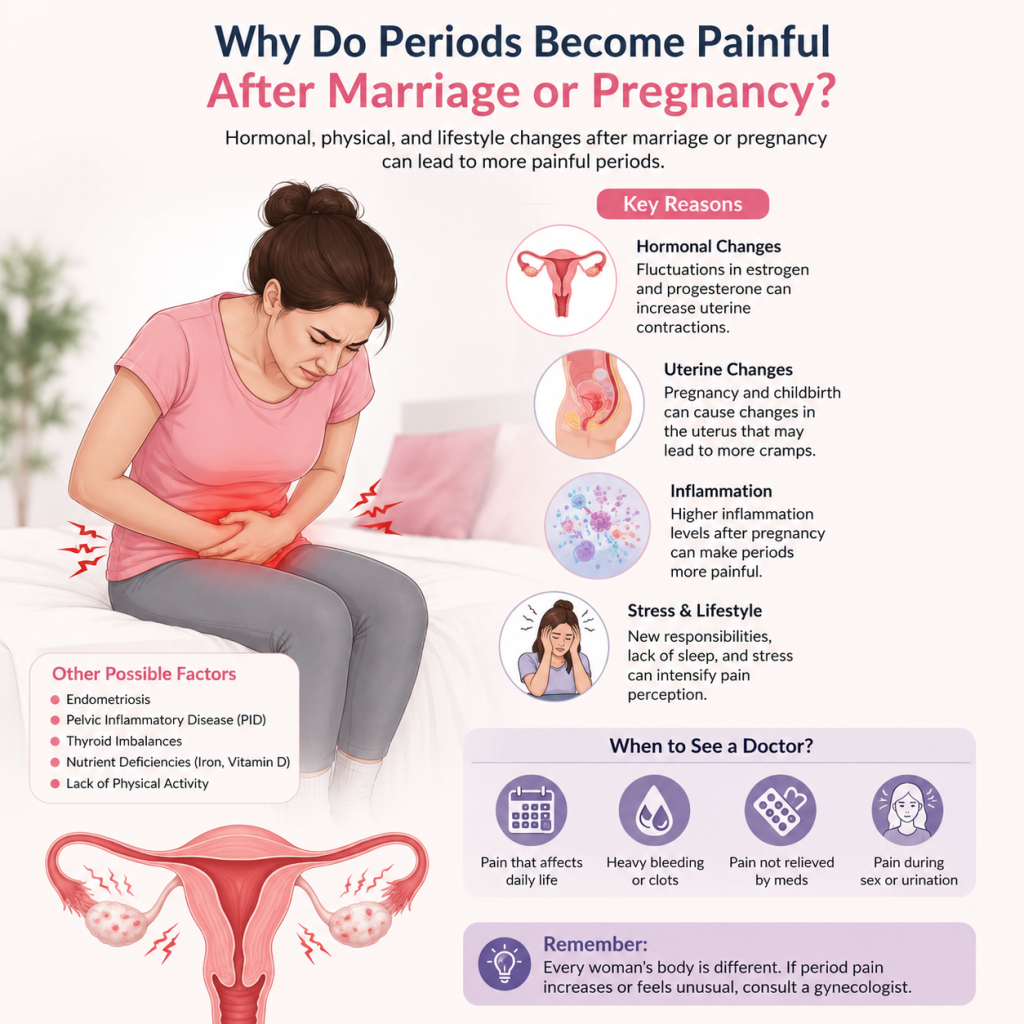
    Illustrated medical infographic showing a woman experiencing painful menstrual cramps with anatomical diagrams explaining why periods may become more painful after marriage or pregnancy, including hormonal changes, uterine changes, inflammation, stress, and signs that require medical attention.

    Could It Be Secondary Dysmenorrhea?

    Painful periods that develop later in life are often classified as secondary dysmenorrhea.

    Common medical causes include:

    • Endometriosis: Uterine lining grows outside the uterus.
    • Adenomyosis: Uterine lining grows into muscle wall.
    • Fibroids: Non-cancerous growths inside uterus.
    • Pelvic Inflammatory Disease (PID): Infection-related inflammation.
    • Ovarian Cysts: Hormone-sensitive cyst formation.

    If pain becomes progressively worse after pregnancy or marriage, evaluation is important.

    Psychological Factors and Period Pain

    Emotional health and menstrual pain are closely connected.

    After marriage or childbirth, women may experience:

    • Sleep deprivation
    • Anxiety about family responsibilities
    • Body image changes
    • Emotional stress
    • Postpartum mood shifts

    Stress increases cortisol levels. High cortisol can disrupt estrogen-progesterone balance, worsening cramps.

    Pain perception also increases when emotional stress is high.

    When Is Pain Considered Abnormal?

    Seek evaluation if:

    • Pain stops you from going to work
    • Pain increases compared to earlier years
    • Period flow becomes unusually heavy
    • You notice clots larger than usual
    • Pain continues beyond 2–3 days
    • There is pain during intercourse
    • Fever or foul discharge is present

    In Bangalore, many women delay consultation due to busy schedules. Early diagnosis prevents complications.

    Diagnostic Evaluation

    A gynecologist may recommend:

    • Pelvic ultrasound
    • Hormonal blood tests
    • Thyroid function tests
    • Pelvic examination
    • MRI (if needed)
    • Diagnostic laparoscopy (in suspected endometriosis)

    Proper diagnosis ensures targeted treatment rather than repeated painkillers.


    Treatment Options in Bangalore

    Treatment depends on cause.

    1. Lifestyle & Hormonal Regulation

    • Regular exercise
    • Stress management
    • Balanced diet
    • Iron supplementation (if anemia present)
    • Hormonal tablets (if prescribed)

    2. Medical Management

    • Anti-inflammatory medications
    • Hormonal therapy
    • Oral contraceptive pills (when appropriate)
    • Progesterone-based treatment

    3. Surgical Options (If Structural Cause Found)

    If fibroids, severe endometriosis, or adenomyosis are diagnosed:

    • Laparoscopic surgery
    • Myomectomy
    • Endometriosis excision
    • Advanced minimally invasive procedures

    Approximate treatment costs in Bangalore vary:

    • Laparoscopic surgery: ₹80,000 – ₹1,80,000
    • Myomectomy: ₹1,20,000 – ₹2,50,000
    • Advanced endometriosis surgery: ₹1,50,000 – ₹3,00,000

    Exact costs depend on hospital infrastructure and patient condition.


    Does Breastfeeding Affect Period Pain?

    Yes. While breastfeeding, estrogen levels remain low. Once breastfeeding reduces, hormone levels rebound, sometimes leading to heavier or more painful periods.

    This transition phase may temporarily intensify cramps.


    Can Period Pain Affect Fertility?

    Mild pain does not usually affect fertility. However, conditions like:

    • Endometriosis
    • Fibroids
    • Adenomyosis

    can influence reproductive health.

    Early diagnosis improves fertility outcomes.


    When to Consult Your Gynecologist

    You should consult if:

    • Pain is worsening each cycle
    • You feel pressure in lower abdomen
    • You experience heavy bleeding
    • Pain affects your mental well-being
    • There is sudden change after childbirth

    If you are in Bangalore, especially around New BEL Road or North Bangalore, early gynecological evaluation can help identify the cause and prevent progression.


    FAQs

    Is it normal for periods to become painful after pregnancy?

    Mild changes are common due to hormonal shifts and uterine changes. However, severe or worsening pain should be evaluated.

    Can marriage cause painful periods?

    Marriage itself does not cause pain, but stress, routine changes, and hormonal fluctuations may influence menstrual patterns.

    Why are my cramps worse after childbirth?

    The uterus contracts differently after stretching during pregnancy. Hormonal rebalancing also contributes.

    Do fibroids cause painful periods after pregnancy?

    Yes. Fibroids can grow due to hormonal changes and may increase menstrual pain and bleeding.

    Should I ignore painful periods if ultrasound is normal?

    If pain persists despite normal imaging, further evaluation for hormonal imbalance or endometriosis may be necessary.


    Conclusion

    Painful periods after marriage or pregnancy are not uncommon, but they should not be dismissed as “normal adulthood.” Hormonal shifts, uterine changes, stress, and underlying gynecological conditions can all contribute.

    Early medical evaluation, lifestyle adjustments, and appropriate treatment can significantly improve quality of life. Listening to your body and addressing changes early prevents long-term complications.

  • Why Do Kidney Stones Keep Coming Back? Understanding Recurrence and Prevention

    Why Do Kidney Stones Keep Coming Back? Understanding Recurrence and Prevention

    Kidney stones can return even after successful treatment. Recurrence is common because the underlying causes – such as dehydration, dietary habits, metabolic factors, or genetic tendencies — often remain uncorrected. If you have had a kidney stone once, your risk of developing another within 5 years can be significantly higher.

    Many patients in Bangalore assume that once a stone is removed, the problem is solved permanently. However, kidney stone disease is often a recurring metabolic condition, not just a one-time event. This article explains why kidney stones keep coming back, what increases recurrence risk, and how proper prevention can reduce future episodes.

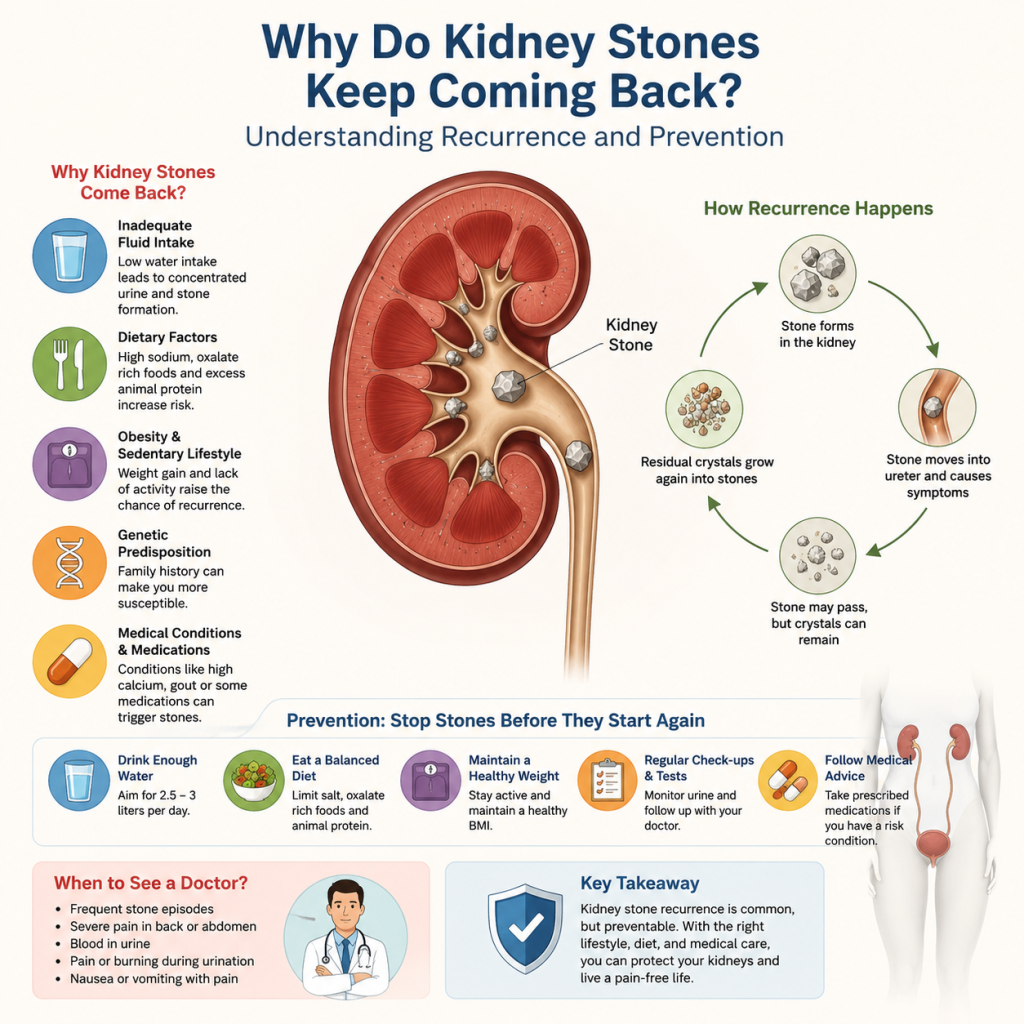
    Medical infographic illustrating why kidney stones keep coming back, showing a detailed anatomical kidney with stones, the recurrence cycle, common causes, prevention tips, and warning signs that require medical attention.

    What Makes Kidney Stones Recur?

    Kidney stones form when minerals and salts in urine become highly concentrated and crystallize. If the root imbalance continues, stones can form again.

    Common recurrence triggers include:

    • Low Fluid Intake: Concentrated urine increases crystal formation.
    • High Salt Diet: Excess sodium increases calcium in urine.
    • High Oxalate Foods: Spinach, nuts, chocolate, and tea can raise oxalate levels.
    • High Animal Protein Intake: Increases uric acid production.
    • Family History: Genetics plays a significant role.
    • Metabolic Disorders: Conditions like hyperparathyroidism or gout.
    • Incomplete Stone Clearance: Tiny fragments left behind may grow again.

    Kidney stone recurrence is not always about “bad luck.” It is usually linked to persistent biochemical imbalance in the body.

    How Common Is Kidney Stone Recurrence?

    Medical studies show:

    • Around 30–50% of patients may develop another stone within 5 years.
    • The risk increases further without preventive changes.
    • Younger patients often have higher long-term recurrence risk.

    This is why urologists focus not just on stone removal but also on metabolic evaluation and prevention strategies.

    Types of Kidney Stones and Their Recurrence Patterns

    Understanding stone type helps prevent recurrence.

    • Calcium Oxalate Stones: Most common. Often linked to diet and dehydration.
    • Calcium Phosphate Stones: May be related to metabolic or hormonal imbalance.
    • Uric Acid Stones: Common in people with high protein diets or gout.
    • Struvite Stones: Associated with recurrent urinary infections.
    • Cystine Stones: Rare but strongly genetic.

    Identifying stone composition through lab analysis helps customize prevention plans.

    Why Does Treatment Alone Not Prevent Recurrence?

    Procedures such as:

    • Laser lithotripsy
    • PCNL (Percutaneous Nephrolithotomy)
    • URS (Ureteroscopy)
    • ESWL (Shock wave therapy)

    remove existing stones effectively. However, these treatments do not change the metabolic tendency of your body.

    Without lifestyle changes and medical monitoring, new stones may form.

    In Bangalore, approximate treatment costs may vary depending on hospital setup and procedure type:

    • Laser Lithotripsy: ₹70,000 – ₹1,50,000
    • PCNL: ₹1,20,000 – ₹2,50,000
    • ESWL: ₹50,000 – ₹1,00,000

    Exact costs should always be confirmed with the hospital after evaluation.

    Signs That a Stone May Be Forming Again

    Many patients ignore early warning signs.

    Common symptoms include:

    • Flank pain (side or lower back)
    • Burning sensation during urination
    • Frequent urination
    • Blood in urine
    • Nausea or vomiting
    • Recurrent urinary infections

    Sometimes, small stones may remain silent until they grow larger.

    Who Is at Higher Risk of Recurrence?

    Certain groups have increased recurrence risk:

    • Individuals living in hot climates (including Bangalore summers)
    • People who sweat excessively without adequate hydration
    • Those with diabetes or obesity
    • Patients with previous multiple stones
    • People with sedentary lifestyles
    • Individuals with chronic dehydration habits

    Modern urban lifestyle patterns significantly contribute to recurrence.

    How to Prevent Kidney Stones from Coming Back

    Prevention is personalized but often includes:

    1. Increase Fluid Intake

    • Aim for 2.5–3 liters of water daily.
    • Urine should appear pale yellow.
    • Add lemon water for natural citrate support.

    2. Reduce Salt Intake

    • Limit processed foods.
    • Avoid excessive pickles and packaged snacks.
    • Target less than 5 grams of salt per day.

    3. Moderate Oxalate-Rich Foods

    • Reduce excess spinach, beetroot, nuts.
    • Combine oxalate foods with calcium-rich foods to reduce absorption.

    4. Balanced Protein Consumption

    • Avoid excessive red meat.
    • Maintain moderate protein intake.

    5. Maintain Healthy Weight

    Obesity increases stone risk through metabolic changes.

    6. Medical Evaluation

    Your doctor may recommend:

    • 24-hour urine analysis
    • Blood metabolic testing
    • Preventive medications
    • Regular ultrasound follow-up

    The Role of Metabolic Testing

    Many patients never undergo detailed metabolic evaluation after their first stone episode. This is one of the biggest reasons stones return.

    Metabolic testing helps identify:

    • High calcium levels
    • Elevated uric acid
    • Low citrate levels
    • Hormonal imbalances

    Once identified, targeted medication can significantly reduce recurrence.

    Psychological Impact of Recurrent Stones

    Repeated episodes of kidney stone pain can cause:

    • Anxiety about sudden attacks
    • Fear of travel
    • Avoidance of physical activity
    • Stress related to hospital visits

    Understanding that prevention is possible helps restore confidence.

    When to Consult a Doctor

    You should seek medical consultation if:

    • Pain persists more than a few hours
    • There is fever with urinary symptoms
    • You notice blood in urine
    • You have had multiple stones before
    • Symptoms interfere with daily activities

    If you are in Bangalore, especially around New BEL Road or North Bangalore, early consultation and timely imaging can help prevent complications.

    Can Kidney Stones Be Permanently Prevented?

    In many cases, yes – recurrence can be drastically reduced with proper monitoring and lifestyle changes.

    However, prevention requires:

    • Long-term commitment
    • Regular follow-up
    • Personalized diet guidance
    • Medical supervision

    Kidney stone disease is manageable when treated as a chronic metabolic condition rather than an isolated event.

    FAQs

    Why do kidney stones keep coming back?

    Kidney stones often recur because the underlying causes such as dehydration, high salt intake, metabolic imbalance, or genetic tendency remain untreated. Removing the stone does not eliminate the root cause.

    How can I stop kidney stones from forming again?

    Prevention usually involves drinking enough water daily, reducing salt intake, moderating oxalate-rich foods, and undergoing metabolic evaluation. In some cases, medications are prescribed based on test results.

    Is it common to get kidney stones more than once?

    Yes. Around 30–50% of patients may experience another stone within five years if preventive measures are not followed.

    Does climate affect kidney stone recurrence?

    Yes. Living in warm climates like Bangalore can increase sweating and dehydration, which raises the risk of stone formation if fluid intake is inadequate.

    Should I get tests done after my first kidney stone?

    Yes. Blood tests and 24-hour urine analysis help identify the metabolic cause and reduce future recurrence risk.

    Conclusion

    Kidney stones often return because the underlying causes remain unaddressed. Removing a stone solves the immediate problem, but preventing recurrence requires understanding your body’s metabolic pattern.

    With proper hydration, dietary balance, medical evaluation, and regular monitoring, the chances of recurrence can be significantly reduced. Early awareness and timely consultation can prevent severe pain and repeated procedures.

  • Early Signs of Knee Arthritis Most People Ignore

    Early Signs of Knee Arthritis Most People Ignore

    Knee arthritis often begins quietly. The early symptoms are subtle and easily dismissed as “normal aging” or temporary strain. However, recognizing these signs early can slow progression and reduce long-term joint damage.

    If your knees feel stiff in the morning, ache after sitting long hours, or make cracking sounds with mild discomfort, these may be early indicators of arthritis rather than simple fatigue.

    In 2026, sedentary desk jobs, weight gain, reduced physical activity, and repetitive strain are increasing early-onset knee arthritis, especially among working adults in urban areas.

    Understanding the early signs allows timely intervention and better long-term joint health.

    What are the earliest symptoms of knee arthritis?

    Early knee arthritis symptoms are often mild and intermittent.

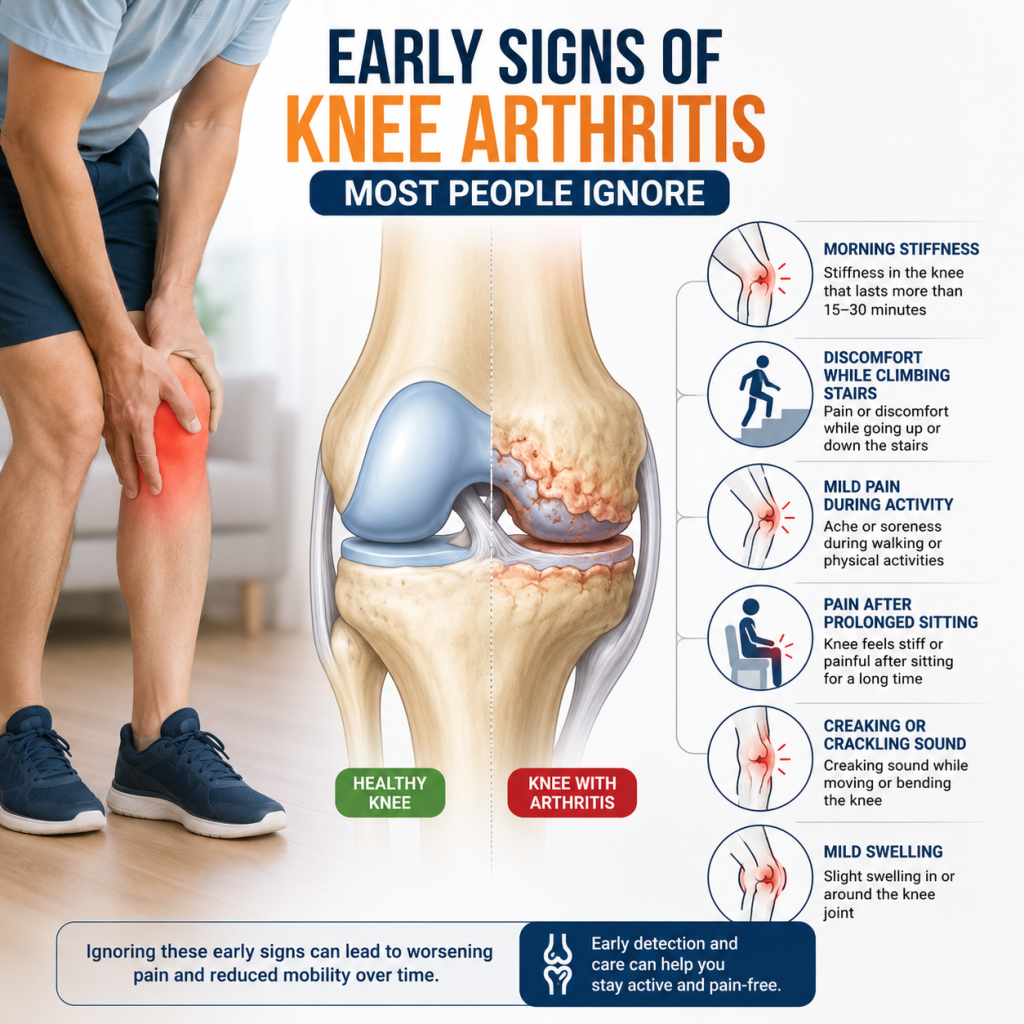
    Common early signs include:

    • Morning stiffness lasting less than 30 minutes
    • Mild pain after prolonged sitting
    • Discomfort while climbing stairs
    • Subtle swelling after activity
    • Occasional cracking sounds with discomfort

    Pain is usually not constant in early stages. It appears after strain and improves with rest.

    Ignoring these signs allows cartilage wear to progress gradually.

    Why does knee stiffness in the morning happen?

    Morning stiffness occurs due to reduced joint lubrication during sleep.

    In early arthritis:

    • Cartilage begins thinning
    • Synovial fluid changes
    • Inflammation increases slightly

    Stiffness usually improves within 15–30 minutes of movement.

    If stiffness lasts longer than 45 minutes daily, medical evaluation is recommended.

    Is knee pain after sitting a warning sign?

    Yes.

    Pain after prolonged sitting is called “start-up pain.”

    It happens because:

    • Joint fluid circulation decreases
    • Cartilage cushioning reduces
    • Muscles around the knee weaken

    This symptom is commonly ignored by office workers.

    In Bangalore’s desk-heavy work culture, prolonged sitting contributes significantly to early knee joint stress.

    Do cracking sounds in the knee mean arthritis?

    Not always.

    Painless cracking (crepitus) is common and harmless.

    However, if cracking is associated with:

    • Pain
    • Swelling
    • Grinding sensation
    • Reduced movement

    It may indicate cartilage degeneration.

    Persistent painful crepitus should be assessed.

    Can mild swelling indicate early knee arthritis?

    Yes.

    Early swelling is often subtle.

    You may notice:

    • Slight puffiness around knee
    • Tightness feeling
    • Difficulty bending fully

    Inflammation at early stage is mild but progressive.

    Repeated swelling after minimal activity is a red flag.

    Why does knee arthritis start earlier in 2026 lifestyle patterns?

    Several modern factors contribute:

    • Sedentary jobs
    • Reduced muscle strength
    • Weight gain
    • Poor posture
    • Vitamin D deficiency
    • Previous untreated injuries

    Lack of movement weakens quadriceps muscles, increasing joint load.

    Early strengthening prevents progression.

    Is knee arthritis only a problem after age 50?

    No.

    While risk increases with age, early osteoarthritis now affects people in their 30s and 40s.

    Risk factors include:

    • Obesity
    • Sports injuries
    • Repetitive strain
    • Genetic predisposition
    • Hormonal changes in women

    Early symptoms in younger adults are often dismissed as gym strain.

    Can climbing stairs pain be an early sign?

    Yes.

    Pain while climbing stairs suggests patellofemoral joint stress.

    Early arthritis affects:

    • Cartilage under kneecap
    • Joint alignment
    • Shock absorption

    If stairs consistently cause discomfort, evaluation is necessary.

    How does weight affect knee arthritis?

    Excess weight increases knee load significantly.

    Every 1 kg of extra body weight increases knee joint pressure by 3–4 times during walking.

    Weight management reduces progression risk.

    Even modest weight reduction improves symptoms.

    What happens if early knee arthritis is ignored?

    Progression may lead to:

    • Persistent pain
    • Reduced mobility
    • Joint deformity
    • Muscle weakness
    • Advanced cartilage loss

    Early stage management includes:

    • Physiotherapy
    • Strength training
    • Lifestyle correction
    • Medical management

    Delaying care increases likelihood of surgical intervention later.

    Can knee arthritis be reversed in early stage?

    Cartilage damage cannot be fully reversed.

    However, progression can be slowed significantly.

    Early interventions include:

    • Quadriceps strengthening
    • Weight control
    • Anti-inflammatory measures
    • Activity modification

    Timely orthopedic consultation improves outcomes.

    How is early knee arthritis diagnosed?

    Diagnosis may involve:

    • Clinical examination
    • X-ray
    • MRI in selected cases
    • Gait assessment

    Imaging confirms cartilage thinning and joint space narrowing.

    If you are consulting an orthopedic specialist in Bangalore, early imaging helps determine stage and guide management plan.

    Are women more likely to develop knee arthritis?

    Yes.

    Women have higher risk due to:

    • Hormonal changes
    • Wider pelvic structure
    • Post-menopausal estrogen decline
    • Higher osteoporosis risk

    Early attention to knee pain in women is especially important.

    What exercises help early knee arthritis?

    Evidence-based exercises:

    • Straight leg raises
    • Quadriceps strengthening
    • Hamstring stretches
    • Low-impact cycling
    • Swimming

    Avoid:

    • Deep squats
    • Jumping
    • High-impact sports

    Exercise should be supervised when pain is present.

    When should you see a doctor for knee pain?

    Consult an orthopedic specialist if you experience:

    • Persistent pain beyond 2 weeks
    • Swelling not reducing
    • Locking sensation
    • Difficulty walking
    • Night pain
    • Stiffness lasting longer than 30 minutes daily

    Early diagnosis prevents progression.

    For comprehensive evaluation, you may explore the Orthopaedics Department for structured assessment and treatment options.

    FAQs

    1. Is knee pain in the morning always arthritis?

    Not always. It may be muscle stiffness, but persistent stiffness daily should be evaluated.

    2. Can gym workouts cause early arthritis?

    Improper technique or untreated injuries may accelerate joint wear.

    3. Is walking good for knee arthritis?

    Moderate walking is beneficial. Overexertion should be avoided.

    4. Does weather affect knee arthritis pain?

    Some patients report increased stiffness in cold weather, though evidence varies.

    5. Can supplements cure knee arthritis?

    Supplements may support joint health but do not cure cartilage damage.

    Conclusion

    Early knee arthritis rarely begins with severe pain. It starts quietly – mild stiffness, slight swelling, occasional discomfort while climbing stairs.

    These symptoms are often ignored until joint damage becomes significant.

    Recognizing early warning signs allows timely lifestyle changes, muscle strengthening, and medical guidance.

    In 2026, preventive orthopedic care is more important than waiting for advanced joint degeneration.

    If symptoms persist, seeking orthopedic evaluation ensures better mobility and long-term joint preservation.

  • 10 Foods That May Help Improve Hormonal Balance in Women

    10 Foods That May Help Improve Hormonal Balance in Women

    Hormonal balance affects menstrual cycles, mood, skin health, metabolism, fertility, and overall wellbeing. While no single food can “fix” hormones instantly, certain nutrients support the body’s natural hormonal regulation.

    If you experience irregular periods, fatigue, acne, mood changes, or unexplained weight shifts, diet can play a supportive role alongside medical care. In 2026, rising stress levels, processed food intake, sedentary jobs, and sleep disruption are contributing to hormonal fluctuations in women across urban settings.

    This guide explains 10 evidence-backed foods that may help support hormonal balance safely.

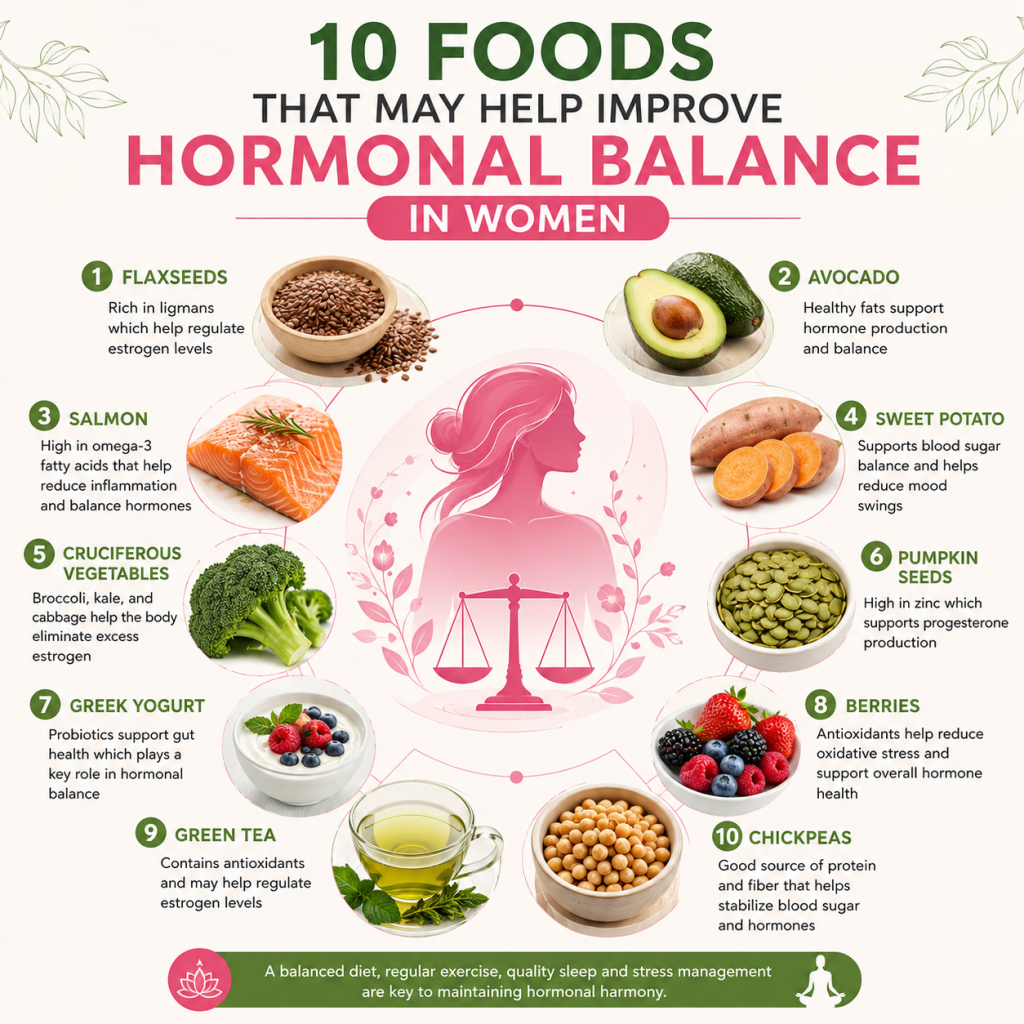
    Infographic showing 10 foods that may help improve hormonal balance in women, including flaxseeds, avocado, salmon, sweet potato, cruciferous vegetables, pumpkin seeds, Greek yogurt, berries, green tea, and chickpeas arranged around a female health illustration.

    Can food really affect hormonal balance in women?

    Yes. Hormones are made from nutrients your body gets through food.

    Balanced nutrition supports:

    • Insulin regulation
    • Thyroid function
    • Estrogen metabolism
    • Progesterone balance
    • Cortisol (stress hormone) control

    However, diet supports hormonal health — it does not replace medical treatment for conditions like PCOS, thyroid disorders, or menopause-related issues.


    Which foods help regulate estrogen levels naturally?

    1. Flaxseeds

    Flaxseeds contain lignans, plant compounds that may support healthy estrogen metabolism.

    Benefits:

    • Rich in fiber
    • Supports gut health
    • Helps estrogen detoxification through bowel movement

    How to use:
    1–2 tablespoons ground flaxseed daily in yogurt or smoothies.


    2. Cruciferous Vegetables (Broccoli, Cauliflower, Cabbage)

    These vegetables contain indole-3-carbinol, which supports estrogen processing in the liver.

    Benefits:

    • Supports hormonal detox pathways
    • Rich in antioxidants
    • Supports thyroid health

    Include 3–4 servings per week.


    What foods help balance insulin and reduce hormonal acne?

    Insulin spikes can worsen hormonal imbalance.

    3. Whole Grains (Oats, Brown Rice, Millets)

    Refined carbohydrates increase insulin rapidly. Whole grains provide stable energy.

    Benefits:

    • Improve insulin sensitivity
    • Reduce sugar cravings
    • Support PCOS management

    In 2026, high processed food consumption in urban areas makes whole grains especially important.


    4. Berries

    Berries are rich in antioxidants and fiber.

    Benefits:

    • Reduce inflammation
    • Stabilize blood sugar
    • Support ovarian health

    Blueberries, strawberries, and Indian jamun are good options.


    Can healthy fats improve hormonal balance?

    Yes. Hormones are built from cholesterol and fats.

    5. Avocados

    Avocados provide monounsaturated fats.

    Benefits:

    • Support estrogen and progesterone production
    • Reduce inflammation
    • Improve skin health

    Moderation is key due to calorie density.


    6. Nuts and Seeds (Almonds, Walnuts, Pumpkin Seeds)

    These provide zinc and healthy fats.

    Benefits:

    • Support progesterone production
    • Reduce PMS symptoms
    • Improve ovulation quality

    Handful per day is sufficient.


    Does protein intake affect hormone stability?

    Yes.

    Low protein diets may worsen fatigue and metabolic imbalance.

    7. Eggs

    Eggs provide high-quality protein and vitamin D.

    Benefits:

    • Support thyroid function
    • Stabilize blood sugar
    • Aid reproductive hormone balance

    1 egg daily is safe for most healthy individuals unless medically restricted.


    8. Fatty Fish (Salmon, Sardines)

    Rich in omega-3 fatty acids.

    Benefits:

    • Reduce inflammation
    • Support menstrual regularity
    • Improve mood swings

    For vegetarian women, plant omega-3 sources like chia seeds are alternatives.


    Can fermented foods improve hormonal balance?

    Yes, indirectly.

    9. Yogurt and Probiotic Foods

    Gut health plays a role in estrogen recycling.

    Benefits:

    • Support gut microbiome
    • Improve nutrient absorption
    • Reduce bloating

    Homemade curd is beneficial.


    Does magnesium-rich food help PMS symptoms?

    Yes.

    10. Dark Leafy Greens (Spinach, Methi, Amaranth)

    Rich in magnesium and iron.

    Benefits:

    • Reduce PMS cramps
    • Support energy levels
    • Improve sleep quality

    Include at least 4–5 servings per week.


    Can stress affect hormonal balance even with healthy diet?

    Yes.

    Cortisol (stress hormone) disrupts:

    • Insulin
    • Thyroid hormones
    • Reproductive hormones

    In Bangalore’s high-pressure work culture, stress management is as important as diet.

    Sleep, hydration, and physical activity are equally important.


    What are signs of hormonal imbalance in women?

    Common signs:

    • Irregular periods
    • Severe PMS
    • Acne along jawline
    • Unexplained weight gain
    • Hair thinning
    • Mood swings
    • Fatigue

    Persistent symptoms require medical evaluation.


    Can diet alone fix hormonal imbalance?

    No.

    Diet supports balance but does not cure:

    • PCOS
    • Thyroid disorders
    • Endometriosis
    • Premature ovarian insufficiency

    Medical diagnosis and individualized treatment are essential.

    If you are consulting a gynecologist in Bangalore, early evaluation helps prevent long-term complications.


    How long does it take for dietary changes to impact hormones?

    Hormonal cycles take weeks to months.

    Expect gradual improvement in:

    • Energy
    • Cycle regularity
    • Skin
    • Mood

    Consistency matters more than short-term dietary trends.


    Are there foods that worsen hormonal imbalance?

    Yes.

    Limit:

    • Excess sugar
    • Refined flour
    • Processed snacks
    • Sugary beverages
    • Excess caffeine
    • Alcohol

    High sugar increases insulin, which disrupts ovarian hormones.


    When Should You See a Doctor for Hormonal Concerns?

    Consult a doctor if you experience:

    • Periods absent for 3 months
    • Severe acne unresponsive to treatment
    • Heavy bleeding
    • Hair loss with fatigue
    • Sudden weight changes
    • Symptoms affecting daily life

    Early evaluation improves outcomes.


    FAQs

    1. Can certain foods cure hormonal imbalance?

    No single food cures imbalance. Balanced diet supports hormonal function but does not replace treatment.

    2. Is hormonal imbalance common in young women?

    Yes. Stress, sleep disruption, and poor diet contribute to irregular cycles in women under 35.

    3. Do dairy products worsen hormonal acne?

    Excess dairy may trigger acne in some individuals, but effects vary.

    4. Can intermittent fasting affect female hormones?

    Aggressive fasting may disrupt menstrual cycles in some women.

    5. Should I take supplements instead of food?

    Whole foods are preferable. Supplements should be taken only after medical advice.


    Conclusion

    Hormonal balance in women depends on multiple factors – nutrition, stress, sleep, physical activity, and medical health. No single food provides instant results, but consistent dietary habits support long-term stability.

    In 2026, preventive lifestyle awareness is more important than reactive treatment. Listening to your body and seeking medical evaluation when symptoms persist ensures sustainable hormonal health.

  • When Should You Worry About White Vaginal Discharge?

    When Should You Worry About White Vaginal Discharge?

    White vaginal discharge is normal in most women. It plays an important role in keeping the vagina clean, lubricated, and protected from infection. However, changes in color, smell, consistency, or associated symptoms can sometimes indicate a problem.

    If your discharge is white, odorless, and not causing discomfort, it is usually healthy. But if it becomes thick like cottage cheese, smells strong, or causes itching or pain, it may require medical attention.

    In 2026, increasing stress, hormonal changes, frequent antibiotic use, tight clothing, and hygiene product overuse are contributing to more discharge-related concerns among women in urban environments like Bangalore. Understanding what is normal and what is not helps reduce unnecessary panic.

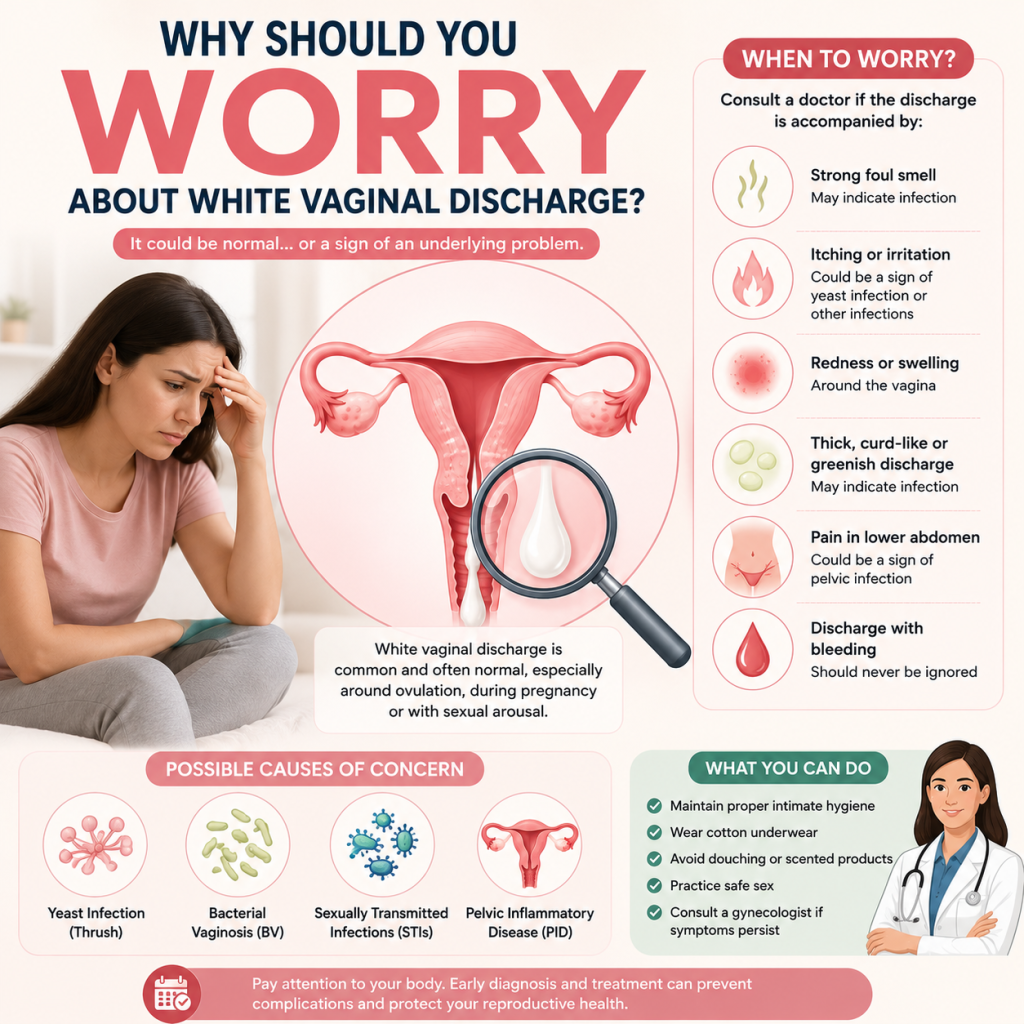
    Medical infographic explaining when white vaginal discharge may be a cause for concern, featuring the female reproductive system, common warning signs such as unusual odor, itching, abnormal color, pain, and possible underlying causes including infections.

    Is white vaginal discharge normal?

    Yes, white discharge is completely normal.

    Healthy discharge:

    • Is clear to milky white
    • Has no strong smell
    • Does not cause itching
    • Varies slightly during menstrual cycle

    It is part of the body’s self-cleaning mechanism.

    Discharge may increase:

    • Before periods
    • During ovulation
    • During pregnancy
    • Due to hormonal contraceptives

    This variation is physiological and not harmful.


    When does white discharge become abnormal?

    White discharge becomes concerning if it is accompanied by symptoms.

    Warning signs include:

    • Thick, curd-like texture
    • Strong or foul odor
    • Vaginal itching
    • Burning sensation
    • Pelvic pain
    • Pain during urination
    • Pain during intercourse

    These symptoms may suggest infection rather than normal discharge.


    What does thick white discharge mean?

    Thick white discharge that looks like cottage cheese often indicates a yeast infection (candidiasis).

    Common causes:

    • Antibiotic use
    • High sugar levels (diabetes)
    • Tight synthetic clothing
    • Poor ventilation
    • Hormonal fluctuations
    • Stress

    Yeast infections are common and treatable. However, repeated infections need evaluation.


    Can white discharge occur without itching?

    Yes.

    If discharge is white but:

    • Has no odor
    • Causes no itching
    • Is not associated with pain

    It is usually normal.

    Not all discharge requires medication.

    Over-treating normal discharge with antifungal creams can disturb natural vaginal flora.


    Why does white discharge increase before periods?

    Hormonal changes before menstruation increase progesterone levels.

    This leads to:

    • Slightly thicker white discharge
    • Increased vaginal moisture
    • Mild fullness sensation

    This is a normal cyclical change.

    If there is no itching or smell, it is not concerning.


    Can stress cause changes in vaginal discharge?

    Yes.

    Chronic stress affects hormonal balance.

    In Bangalore’s fast-paced working lifestyle in 2026, stress-related hormonal shifts are increasingly common.

    Stress may:

    • Alter menstrual cycle
    • Increase discharge temporarily
    • Lower immunity, making infections more likely

    Managing stress indirectly supports vaginal health.


    Does white discharge mean pregnancy?

    White discharge may increase in early pregnancy.

    This is called leukorrhea.

    Features:

    • Thin to milky white
    • Mild odor
    • No irritation

    However, discharge alone does not confirm pregnancy. A pregnancy test is required.


    When should you worry about white discharge?

    You should seek medical evaluation if:

    • Discharge smells fishy or foul
    • Itching is persistent
    • Pain occurs during urination
    • You experience pelvic pain
    • Discharge turns green, yellow, or gray
    • There is bleeding between periods

    Persistent abnormal discharge should not be ignored.

    If you are consulting a hospital in Bangalore, especially in South Bangalore areas, early gynecological evaluation helps identify simple infections before complications occur.


    Can white discharge indicate sexually transmitted infection?

    Most STIs do not present as simple white discharge.

    However:

    • Chlamydia may cause abnormal discharge
    • Gonorrhea may cause yellow discharge
    • Trichomoniasis causes frothy green discharge

    White thick discharge with itching is usually yeast, not STI.

    Accurate diagnosis requires examination and lab testing.


    Is odor the most important warning sign?

    Yes.

    Normal vaginal discharge may have a mild scent but should not smell strong or fishy.

    Strong odor suggests bacterial imbalance such as bacterial vaginosis.

    This requires medical treatment.


    Can diabetes cause recurrent white discharge?

    Yes.

    High blood sugar increases risk of recurrent yeast infections.

    Women with:

    • Frequent thick discharge
    • Persistent itching
    • Repeated infections

    Should consider blood sugar testing.

    Uncontrolled diabetes often presents with recurrent vaginal infections.


    How do doctors diagnose abnormal discharge?

    Evaluation may include:

    • Physical examination
    • Vaginal swab
    • Microscopic analysis
    • pH testing
    • Blood tests (if needed)

    Treatment depends on cause:

    • Antifungal medication for yeast
    • Antibiotics for bacterial infection
    • Hormonal correction if required

    Self-medication without diagnosis may delay correct treatment.


    Can using intimate washes cause discharge problems?

    Yes.

    Overuse of scented washes disrupts natural vaginal pH.

    This may:

    • Kill beneficial bacteria
    • Promote fungal growth
    • Increase discharge

    The vagina is self-cleaning. External washing with mild soap and water is sufficient.


    Is white discharge normal after exercise?

    Yes.

    Increased sweat and hormonal changes during physical activity may increase moisture.

    However:

    • If itching occurs after gym sessions
    • Or discharge becomes thick

    It may indicate fungal growth due to sweat retention.

    Proper ventilation and cotton undergarments reduce risk.


    Can menopause affect white discharge?

    Yes.

    During menopause:

    • Estrogen levels decline
    • Vaginal dryness increases

    White discharge usually reduces, not increases.

    If post-menopausal women experience discharge with bleeding, evaluation is necessary.


    How to maintain healthy vaginal balance?

    Preventive tips:

    • Wear breathable cotton underwear
    • Avoid tight synthetic clothing
    • Maintain hydration
    • Avoid excessive sugar
    • Do not douche
    • Change sanitary products regularly
    • Manage stress

    Good hygiene does not mean over-cleaning.


    When to Consult a Doctor

    Consult a doctor if you experience:

    • Persistent itching
    • Strong odor
    • Pelvic pain
    • Fever
    • Recurrent infections
    • Discharge lasting more than 7 days
    • Unusual bleeding

    Early evaluation prevents complications and reduces discomfort.


    FAQs

    1. Is white discharge every day normal?

    Yes. Mild daily discharge is normal as long as it has no odor or itching.

    2. Can white discharge happen without infection?

    Yes. Hormonal changes often cause normal discharge.

    3. How long should abnormal discharge last before seeing a doctor?

    If symptoms persist beyond 5–7 days, evaluation is recommended.

    4. Does white discharge affect fertility?

    Normal discharge does not affect fertility. Only untreated infections may impact reproductive health.

    5. Should I use over-the-counter creams for discharge?

    Self-treatment without diagnosis is not advised. Some creams may worsen imbalance.


    Conclusion

    White vaginal discharge is a natural and healthy function of the body. Most cases are normal and do not require treatment. The key is observing changes in smell, texture, and associated symptoms.

    In 2026, awareness and proper hygiene practices are more important than aggressive treatment. Understanding your body helps reduce unnecessary anxiety and ensures timely medical care when needed.

    If discharge feels unusual or symptoms persist, seeking medical evaluation is a safe and responsible step.

  • Kidney Stone Pain vs Back Pain: How to Tell the Difference in 2026

    Kidney Stone Pain vs Back Pain: How to Tell the Difference in 2026

    Lower back pain is common. However, not all back pain is muscular. Kidney stone pain often starts in the same region and is frequently mistaken for a spinal issue. The key difference lies in pain pattern, associated symptoms, and response to movement.

    If your pain is sharp, wave-like, and accompanied by urinary changes, it may not be your spine. It may be your kidneys.

    In 2026, with Bangalore’s long desk hours, dehydration, high-protein diets, and reduced physical activity, both kidney stones and mechanical back pain are increasing. Knowing the difference can prevent delayed treatment and serious complications.

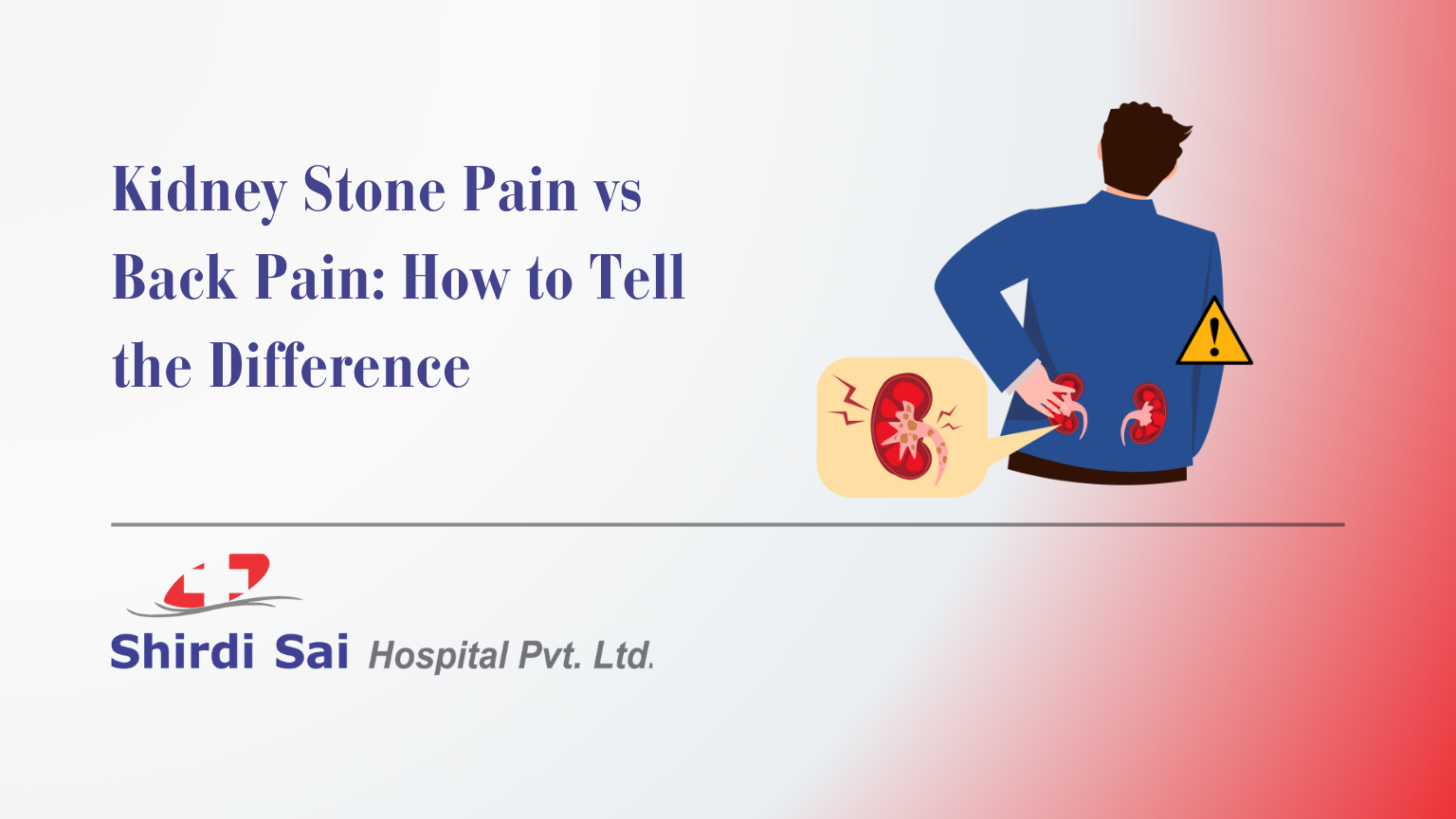
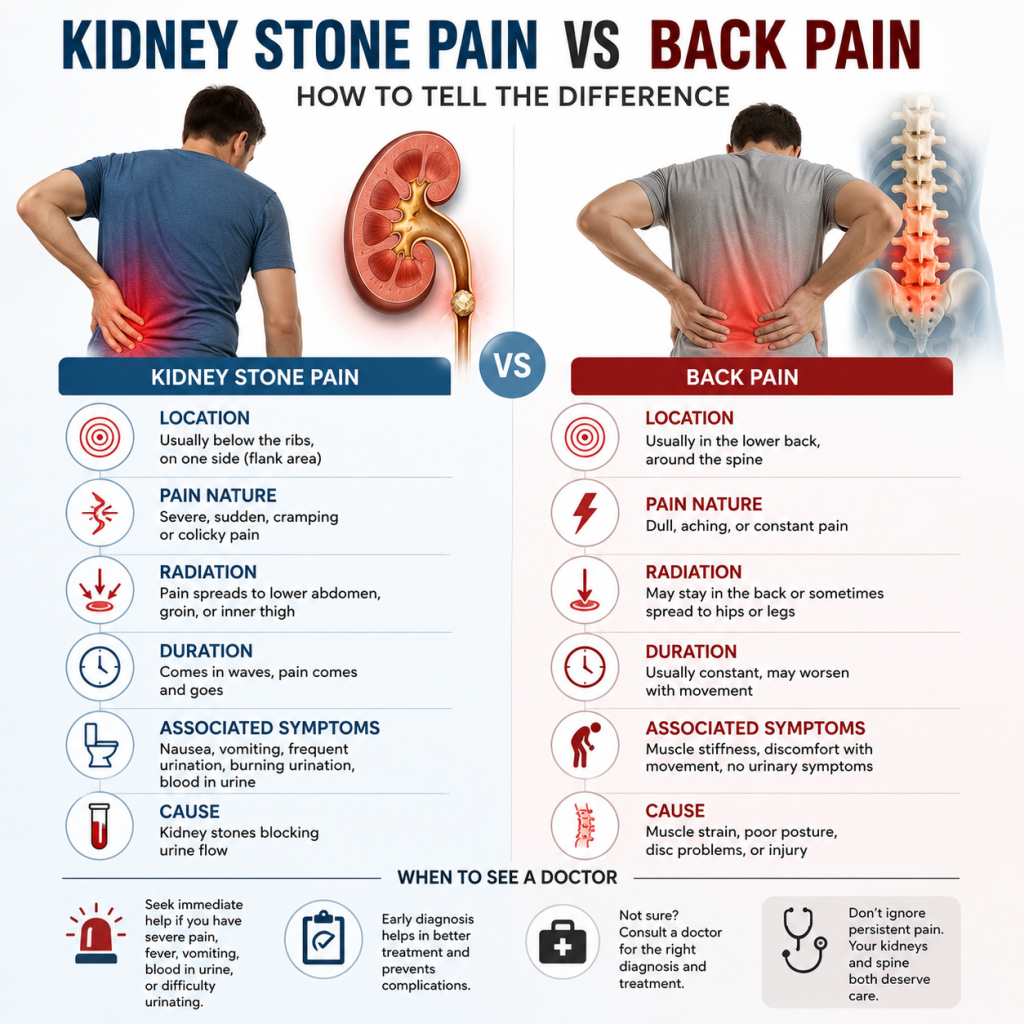
    Medical infographic comparing kidney stone pain and back pain, showing differences in pain location, intensity, radiation, duration, associated symptoms, common causes, and when to seek medical attention.

    How can you tell if back pain is from a kidney stone?

    Kidney stone pain usually begins suddenly and feels intense. It does not improve with posture changes.

    Key indicators of kidney stone pain:

    • Sharp, stabbing pain in the flank (side of lower back below ribs)
    • Pain that radiates toward the lower abdomen or groin
    • Comes in waves (colicky pattern)
    • Nausea or vomiting
    • Blood in urine
    • Frequent urge to urinate

    Back pain, on the other hand, often:

    • Worsens with bending or lifting
    • Improves with rest
    • Feels dull or stiff
    • Does not cause urinary symptoms

    If pain is severe enough that you cannot sit still, kidney stone is more likely.


    Where exactly is kidney stone pain located compared to back pain?

    Kidney stone pain starts deeper and higher than muscular back pain.

    FeatureKidney Stone PainBack Pain
    LocationSide of lower back, below ribsCentral lower back
    RadiationMoves to abdomen or groinMay spread to buttocks or thigh
    Movement effectNo relief with position changeImproves with rest
    Urinary symptomsOften presentAbsent
    Pain patternWaves of severe painSteady dull ache

    This movement of pain toward the groin is one of the strongest diagnostic clues.


    Can kidney stone pain feel like muscle strain?

    Yes, especially in early stages.

    However, muscle strain pain:

    • Increases with twisting
    • Is tender to touch
    • Improves with heat or rest

    Kidney pain:

    • Is deep and internal
    • Feels unaffected by massage
    • Often includes nausea

    If your “back pain” is not responding to muscle relaxants within 24–48 hours, evaluation is necessary.


    Does kidney stone pain cause urinary problems?

    Yes. This is the biggest difference.

    Watch for:

    • Pink, red, or brown urine
    • Burning sensation while urinating
    • Frequent urination in small amounts
    • Cloudy urine
    • Reduced urine flow

    Back pain never causes blood in urine.

    Even microscopic blood detected on a urine test strongly suggests kidney involvement.


    Is kidney stone pain worse than back pain?

    Kidney stone pain is often described as one of the most intense pains a person can experience.

    Patients often:

    • Cannot lie down comfortably
    • Keep changing positions
    • Feel restless due to pain waves

    Back pain patients usually find at least one comfortable posture.

    If someone is pacing or unable to sit still, kidney stones are strongly suspected.


    Why are kidney stones increasing in Bangalore in 2026?

    Urban lifestyle patterns are contributing:

    • Long IT working hours
    • Air-conditioned offices reducing thirst sensation
    • Low water intake
    • High salt consumption
    • Excess protein diets
    • Processed foods
    • Reduced outdoor activity

    Dehydration concentrates urine, increasing crystal formation inside kidneys.

    Hard water mineral exposure in certain Bangalore areas may also contribute.


    When should you worry that your back pain is actually kidney pain?

    Seek medical evaluation immediately if you have:

    • Sudden severe pain
    • Fever with back pain
    • Vomiting with pain
    • Blood in urine
    • Pain radiating to groin
    • Pain lasting more than 30 minutes in waves

    In South Bangalore areas like Jayanagar and nearby regions, early ultrasound screening is widely available and can confirm diagnosis quickly.

    Ignoring symptoms may lead to infection or kidney swelling.


    How do doctors confirm kidney stone vs back pain?

    Diagnosis includes:

    • Urine routine test
    • Ultrasound abdomen
    • CT scan (if needed)
    • Blood tests

    For back pain, doctors may recommend:

    • X-ray
    • MRI spine
    • Physical muscle assessment

    Imaging is crucial because symptoms sometimes overlap.

    At Shirdi Sai Hospital, imaging and urology consultation are coordinated quickly to reduce delay in diagnosis.


    Can kidney stones cause lower abdominal pain?

    Yes.

    As the stone moves down the ureter, pain shifts toward:

    • Lower abdomen
    • Groin
    • Testicular region (in men)
    • Labial region (in women)

    This migrating pain pattern does not occur in muscular back strain.


    What happens if kidney stone pain is ignored?

    Untreated stones can cause:

    • Urinary infection
    • Kidney swelling (hydronephrosis)
    • Persistent blood in urine
    • Kidney damage in rare cases

    Back pain rarely leads to internal organ damage.

    Early treatment prevents complications and reduces need for invasive procedures.


    How is treatment different for kidney stones and back pain?

    Kidney Stone Treatment:

    • Increased hydration
    • Pain management
    • Medical expulsive therapy
    • ESWL (shock wave lithotripsy)
    • Ureteroscopy with laser
    • PCNL for large stones

    Back Pain Treatment:

    • Physiotherapy
    • Ergonomic correction
    • Anti-inflammatory medication
    • Core strengthening exercises

    Mistaking kidney pain for muscle pain delays correct treatment.


    Can dehydration alone cause kidney stone pain?

    Dehydration does not directly cause pain, but it increases stone formation risk.

    Low urine volume allows minerals like calcium and oxalate to crystallize.

    Desk workers in Bangalore often underestimate water intake needs.

    Aim for 2.5–3 liters daily unless medically restricted.


    When to Consult a Doctor

    Consult a doctor if you experience:

    • Severe flank pain
    • Pain that comes in waves
    • Blood in urine
    • Fever and chills
    • Persistent back pain without injury
    • Pain not improving in 48 hours

    Early diagnosis reduces complications and improves outcomes.


    FAQs

    1. How do I know if my pain is kidney-related or muscular?

    Kidney pain usually comes in sharp waves and may cause nausea or urinary symptoms. Muscular pain is dull and improves with rest.

    2. Can kidney stone pain go away on its own?

    Small stones may pass naturally with hydration, but severe pain requires medical evaluation.

    3. Does kidney stone pain worsen at night?

    Pain may intensify at night because urine flow changes during sleep, but it is not time-specific.

    4. Can sitting long hours cause kidney stones?

    Indirectly, yes. Long sitting reduces hydration awareness and physical activity, increasing stone risk.

    5. Is CT scan always necessary for diagnosis?

    Not always. Ultrasound is usually done first. CT scan is recommended if diagnosis remains unclear.


    Conclusion

    Lower back pain is common in Bangalore’s working population. However, not every back pain is spinal. Kidney stone pain often starts in the flank and mimics muscular strain.

    The difference lies in pain intensity, radiation pattern, urinary symptoms, and response to movement.

    If your pain is severe, wave-like, and associated with urinary changes, do not ignore it. Early evaluation ensures proper treatment and prevents complications.

  • Burning Sensation While Urinating: When It’s Not Just a UTI

    Burning Sensation While Urinating: When It’s Not Just a UTI

    A burning sensation while passing urine is one of the most uncomfortable symptoms people experience. The first thought for most patients is a urinary tract infection (UTI), and many start antibiotics on their own. Sometimes the burning reduces. Sometimes it does not. In many cases, the symptom keeps returning.

    This leads to confusion.

    The truth is simple. Burning while urinating is not always caused by a UTI. Several other conditions can produce the same sensation, and treating everything as an infection may delay the right care.

    This blog explains the common causes of burning urination, when it is a UTI, and when it is something else that needs medical attention.

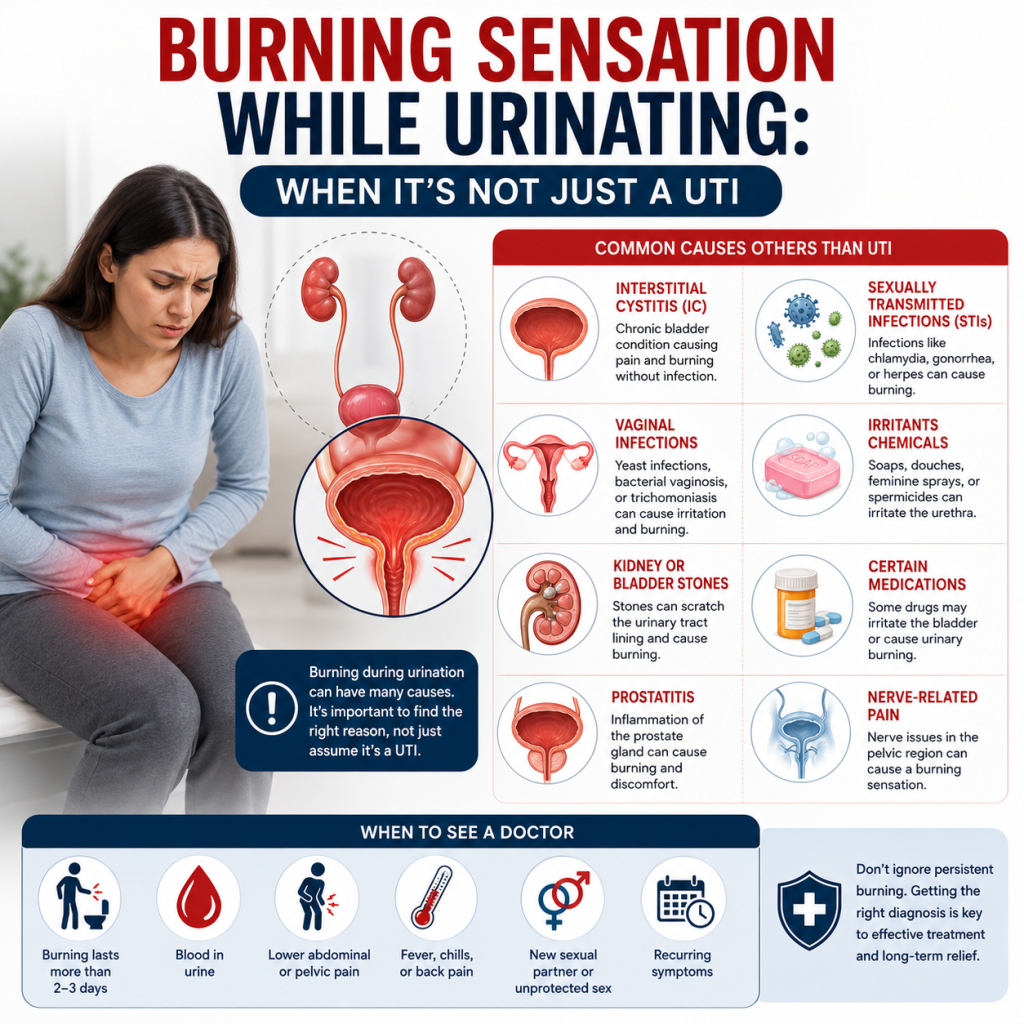
    Medical infographic explaining that a burning sensation while urinating is not always caused by a urinary tract infection (UTI), highlighting alternative causes such as sexually transmitted infections, vaginal infections, kidney stones, interstitial cystitis, medications, irritants, and warning signs that require medical evaluation.

    What causes a burning sensation while urinating?

    Burning during urination happens when the lining of the urinary tract becomes irritated or inflamed. This irritation may be due to infection, inflammation, stones, or even external factors.

    Because multiple conditions affect the same urinary passage, symptoms often overlap, making self-diagnosis unreliable.


    When burning urination is caused by a UTI

    UTI is one of the most common causes, especially in women.

    Typical signs include:

    • Burning while passing urine
    • Frequent urge to urinate
    • Passing small amounts of urine
    • Cloudy or foul-smelling urine
    • Lower abdominal discomfort

    In such cases, antibiotics prescribed after urine testing usually resolve symptoms within a few days.


    When burning urination is NOT just a UTI

    Many patients are surprised to learn that burning can occur even when urine tests are normal.

    Dehydration

    Low water intake can concentrate urine, making it more acidic. This concentrated urine can cause burning even without infection.

    Urinary stones

    Small stones or crystals can irritate the urinary tract, causing burning, pain, or blood in urine.

    Prostate-related issues (in men)

    Prostate inflammation or enlargement can lead to burning, weak urine flow, or difficulty emptying the bladder.

    Vaginal or genital infections

    In women, vaginal infections or local irritation can cause burning that feels like urinary pain, even when the bladder is normal.

    Sexually transmitted infections

    Some infections affect the urethra and cause burning without typical UTI findings. These need specific testing and treatment.

    Chemical or hygiene-related irritation

    Harsh soaps, intimate washes, or spermicides can irritate sensitive areas and cause burning sensations.


    Common medicines used for burning urination

    Treatment depends entirely on the cause.

    • Antibiotics are used only when infection is confirmed
    • Urinary alkalizers may be prescribed to reduce urine acidity
    • Pain-relief medicines may ease discomfort temporarily
    • Targeted treatment is required for stones, prostate issues, or genital infections

    Using antibiotics repeatedly without confirmation may reduce symptoms briefly but does not solve the underlying issue.


    Warning signs you should not ignore

    Consult a doctor if you notice:

    • Burning that persists for more than two to three days
    • Fever or chills
    • Blood in urine
    • Severe lower abdominal or back pain
    • Burning associated with discharge or itching
    • Recurrent episodes despite medicines

    These signs usually indicate a cause beyond simple irritation.


    How doctors evaluate burning urination at Shirdi Sai Hospital

    At Shirdi Sai Hospital, consultants focus on identifying the exact reason behind the symptom. Evaluation may include:

    • Urine routine and culture tests
    • Ultrasound if stones or obstruction are suspected
    • Blood tests when needed
    • Examination for prostate or genital causes
    • Review of hygiene and lifestyle factors

    This step-by-step approach avoids unnecessary medicines and ensures accurate treatment.


    Frequently asked questions

    Is burning urination always due to infection?
    No. Dehydration, stones, irritation, or prostate issues can also cause burning.

    Can drinking more water reduce burning?
    Yes, in mild cases caused by concentrated urine, hydration helps.

    Is it safe to take antibiotics without testing?
    Repeated antibiotic use without tests is not recommended.

    Why does burning return after treatment?
    Because the underlying cause may not have been addressed.

    When should I see a doctor?
    If burning is persistent, severe, or keeps recurring.


    When to consult a doctor

    If burning while urinating keeps coming back or does not improve with basic measures, early evaluation can prevent complications and repeated discomfort.

    📞 Call Shirdi Sai Hospital, Bangalore
    OPD consultation starts from ₹500
    Consultants will guide you with the right diagnosis and treatment.

  • Can Medicines Control Fibroid Symptoms Without Surgery?

    Can Medicines Control Fibroid Symptoms Without Surgery?

    Hearing the word fibroid often creates instant fear. Many women worry that surgery is the only option. This is why searches for medicines that can control fibroid symptoms are so common. Some women do feel better after tablets. Others notice that symptoms reduce for a while and then return.

    So the real question is not just whether medicines help, but who they help and for how long.

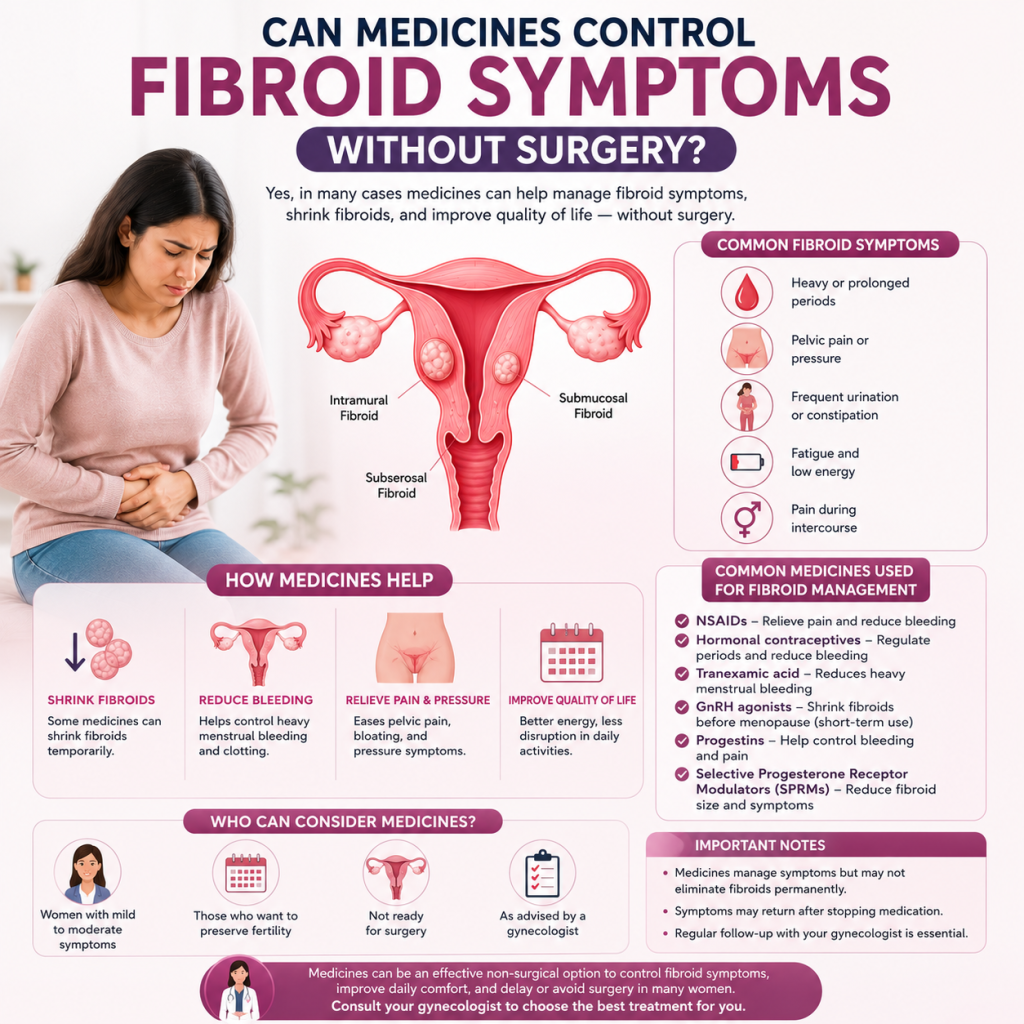
    This blog explains how fibroid medicines work, which symptoms they can control, and when surgery may still be necessary.


    What are fibroids?

    Fibroids are non-cancerous growths that develop in or around the uterus. They are common, especially in women between 30 and 50 years of age.

    Fibroids vary in:

    • Size (small to very large)
    • Number (single or multiple)
    • Location (inside the uterus, within the wall, or outside)

    Because fibroids differ so much, symptoms and treatment also vary widely.


    Common symptoms caused by fibroids

    Not all fibroids cause problems. When symptoms occur, they may include:

    • Heavy or prolonged periods
    • Pelvic pain or pressure
    • Abdominal bloating
    • Frequent urination
    • Pain during periods
    • Fatigue due to blood loss

    The severity of symptoms depends on fibroid size, location, and growth rate.


    Medicines used to control fibroid symptoms

    Medicines are usually aimed at controlling symptoms, not removing fibroids completely.

    Pain relief medicines

    Painkillers help reduce period pain and pelvic discomfort. They provide temporary relief but do not reduce fibroid size.

    Hormonal medicines

    Hormonal tablets may help:

    • Reduce heavy bleeding
    • Regulate cycles
    • Control pain in some women

    They can be useful for symptom control, especially in mild to moderate cases.

    Medicines to reduce bleeding

    In selected patients, doctors prescribe medicines specifically to reduce menstrual blood loss. These help improve quality of life and prevent anaemia.

    Medicines work best when fibroids are small and symptoms are mild.


    When medicines can help manage fibroids

    Medicines may be effective when:

    • Fibroids are small
    • Symptoms are mild to moderate
    • Bleeding needs short-term control
    • Pregnancy is not immediately planned
    • Close medical follow-up is possible

    In such cases, medicines can delay or avoid surgery for some time.


    Why medicines may not be enough

    Medicines may not give lasting relief if:

    • Fibroids are large
    • Multiple fibroids are present
    • Symptoms are severe
    • Fibroids continue to grow
    • Pressure symptoms affect bladder or bowel
    • Fertility is affected

    Medicines do not remove fibroids. They control symptoms, not the growth itself.


    Warning signs that need medical attention

    Consult a doctor if you notice:

    • Very heavy bleeding affecting daily life
    • Periods lasting longer than normal
    • Severe pelvic pain
    • Rapid increase in abdominal size
    • Difficulty emptying bladder
    • Fatigue or breathlessness due to blood loss

    These signs often require more than tablets.


    How fibroids are evaluated at Shirdi Sai Hospital

    Consultants at Shirdi Sai Hospital assess fibroids carefully before suggesting treatment. Evaluation may include:

    • Detailed menstrual history
    • Pelvic examination
    • Ultrasound to assess size and location
    • Blood tests if heavy bleeding is present
    • Discussion of future pregnancy plans

    Treatment is planned based on symptoms, fibroid characteristics, and patient preference.


    Frequently asked questions

    Can medicines shrink fibroids permanently?
    Medicines usually control symptoms but do not permanently shrink fibroids.

    Is surgery always required for fibroids?
    No. Many women manage symptoms with medicines and regular monitoring.

    Can fibroids come back after stopping medicines?
    Symptoms can return because fibroids may continue to grow.

    Do fibroids affect pregnancy?
    Some fibroids can affect fertility or pregnancy, depending on size and location.

    When should surgery be considered?
    When symptoms are severe, persistent, or affecting quality of life or fertility.


    When to consult a doctor

    If fibroid symptoms are affecting your comfort, work, or health, early evaluation helps you understand all treatment options before problems worsen.

    📞 Call Shirdi Sai Hospital, Bangalore
    OPD consultation starts from ₹500
    Consultants will guide you on safe and appropriate care.

  • Hormonal Tablets for Irregular Periods: What Patients Should Know

    Hormonal Tablets for Irregular Periods: What Patients Should Know

    Irregular periods are one of the most common reasons women look for hormonal tablets. A missed cycle, delayed periods, or frequent spotting can be stressful, especially when it starts affecting daily routine or future pregnancy plans. Many women are prescribed hormonal tablets and notice that periods become regular while the medicine is taken. Once the tablets stop, the cycle becomes irregular again.

    This leads to confusion and concern.

    Hormonal tablets can be useful, but they are not a one-size-fits-all solution. Understanding why periods are irregular is more important than simply restarting tablets each time.

    This blog explains what hormonal tablets do, when they are prescribed, and when irregular periods need proper medical evaluation.

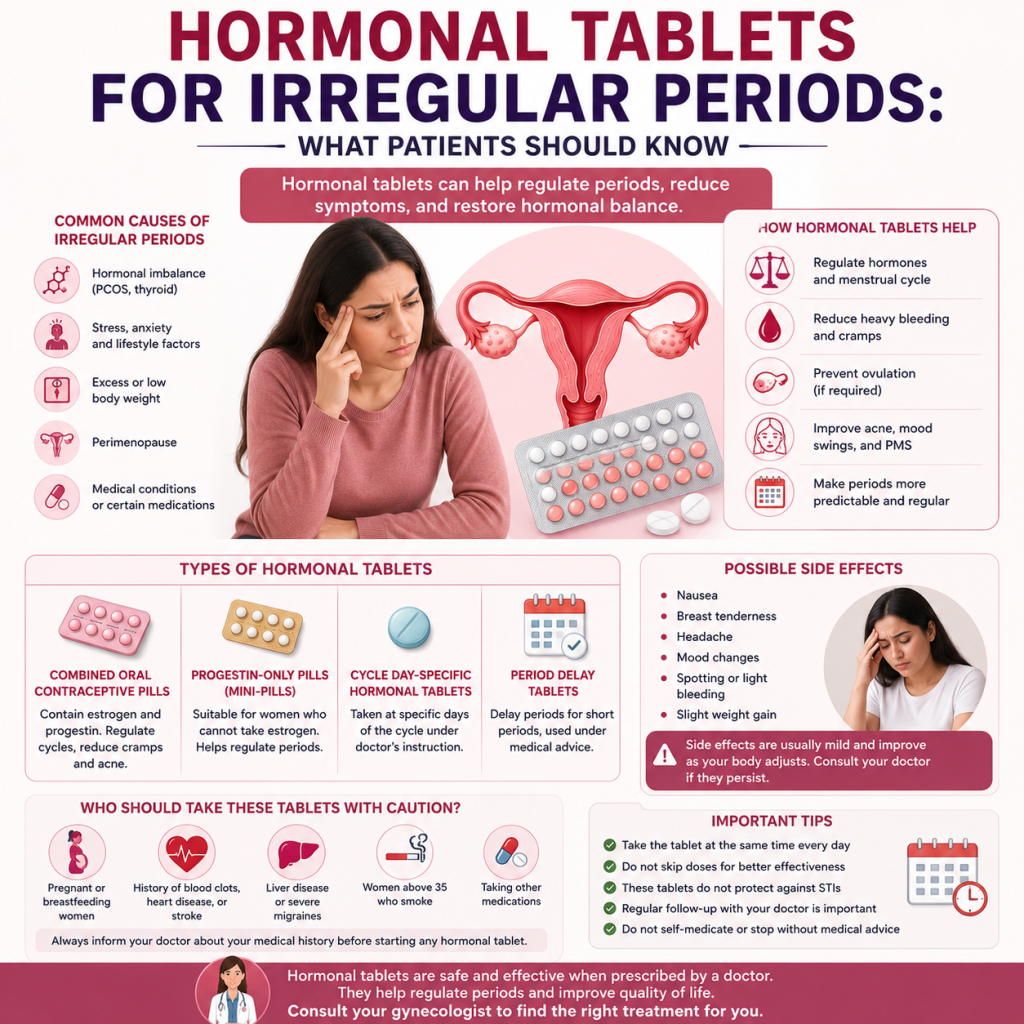
    Medical infographic explaining hormonal tablets for irregular periods, featuring the female reproductive system, common causes of irregular menstrual cycles, types of hormonal medications, potential side effects, precautions, and guidance for safe use.

    What are irregular periods?

    A menstrual cycle is considered irregular when:

    • Periods come too early or too late
    • Cycles vary widely each month
    • Bleeding lasts too long or is very light
    • Periods are missed frequently

    Occasional variation can be normal. Repeated irregularity usually points to an underlying imbalance.


    Common reasons for irregular periods

    Irregular cycles can occur for many reasons, including:

    Because the causes vary, treatment also differs from person to person.


    Hormonal tablets commonly prescribed for irregular periods

    Doctors prescribe hormonal tablets after understanding the cycle pattern and medical history.

    Progesterone-based tablets

    These are commonly used to trigger periods when cycles are delayed. They help shed the uterine lining and bring a withdrawal bleed.

    Combined hormonal tablets

    These tablets contain both estrogen and progesterone. They help regulate cycles and reduce heavy or irregular bleeding in selected patients.

    Hormonal regulation in specific conditions

    In conditions like PCOS, hormonal tablets may be part of a broader treatment plan that also includes lifestyle changes.

    Hormonal tablets are prescribed for regulation, not as a permanent fix without evaluation.


    When hormonal tablets help

    Hormonal tablets are useful when:

    • Irregular periods are due to temporary hormonal imbalance
    • Cycles need short-term regulation
    • Heavy or unpredictable bleeding needs control
    • Tablets are used under medical supervision

    In these cases, periods become predictable while treatment continues.


    Why periods become irregular again after stopping tablets

    This is a common concern.

    Periods may become irregular again if:

    • The underlying cause was not addressed
    • Lifestyle factors like stress or weight remain unchanged
    • Conditions like PCOS or thyroid disorders are present
    • Hormones were used only to induce bleeding

    Tablets regulate the cycle temporarily. They do not correct the root cause on their own.


    Warning signs you should not ignore

    Consult a doctor if you notice:

    • Periods stopping for several months
    • Very heavy or prolonged bleeding
    • Irregular periods with acne or excess hair growth
    • Sudden changes in cycle pattern
    • Irregular periods while planning pregnancy

    These signs usually need evaluation rather than repeated hormonal tablets.


    How doctors evaluate irregular periods at Shirdi Sai Hospital

    At Shirdi Sai Hospital, consultants focus on identifying the reason behind cycle irregularity. Evaluation may include:

    • Detailed menstrual and lifestyle history
    • Hormonal blood tests if required
    • Thyroid assessment
    • Ultrasound to check ovaries and uterus
    • Guidance on safe use of medicines

    The goal is to restore natural cycle balance whenever possible, not just induce periods.


    Frequently asked questions

    Are hormonal tablets safe for long-term use?
    They may be safe in selected cases under supervision, but long-term use should always be reviewed.

    Do hormonal tablets affect future fertility?
    When used appropriately, they do not harm fertility. Underlying conditions matter more.

    Is it okay to take hormonal tablets every time periods are delayed?
    Repeated use without evaluation is not recommended.

    Can lifestyle changes improve irregular periods?
    Yes. Weight management, stress reduction, and sleep can significantly help.

    When should I see a doctor for irregular periods?
    If irregularity persists, worsens, or affects pregnancy planning.


    When to consult a doctor

    If periods remain irregular or you depend on hormonal tablets repeatedly, early evaluation can prevent long-term hormonal and reproductive issues.

    📞 Call Shirdi Sai Hospital, Bangalore
    OPD consultation starts from ₹500
    Consultants will guide you with safe and personalised care.