Reviewed by Shirdi Sai Hospital Team
Fever with body pain is commonly seen in viral fever, flu-like infections, dengue, chikungunya, malaria, urinary infections, respiratory infections, and other inflammatory illnesses. Mild fever with body pain may improve with rest, fluids, and doctor-guided medicine, but hospital evaluation becomes important when fever is high, worsening, lasting more than a few days, or associated with severe weakness, vomiting, rash, bleeding, breathing difficulty, confusion, reduced urination, or persistent body pain.
At Shirdi Sai Hospital, New BEL Road, patients often visit with fever, body pain, headache, weakness, chills, cough, throat pain, vomiting, loose stools, urinary symptoms, or severe tiredness. This guide explains when fever with body pain can be monitored, when it needs testing, and when it is safer to go to a hospital.
What Does Fever with Body Pain Mean?
Fever is the body’s response to infection, inflammation, or another illness. Body pain happens because the immune system releases chemicals while fighting infection. This can cause muscle pain, joint pain, headache, tiredness, and weakness.
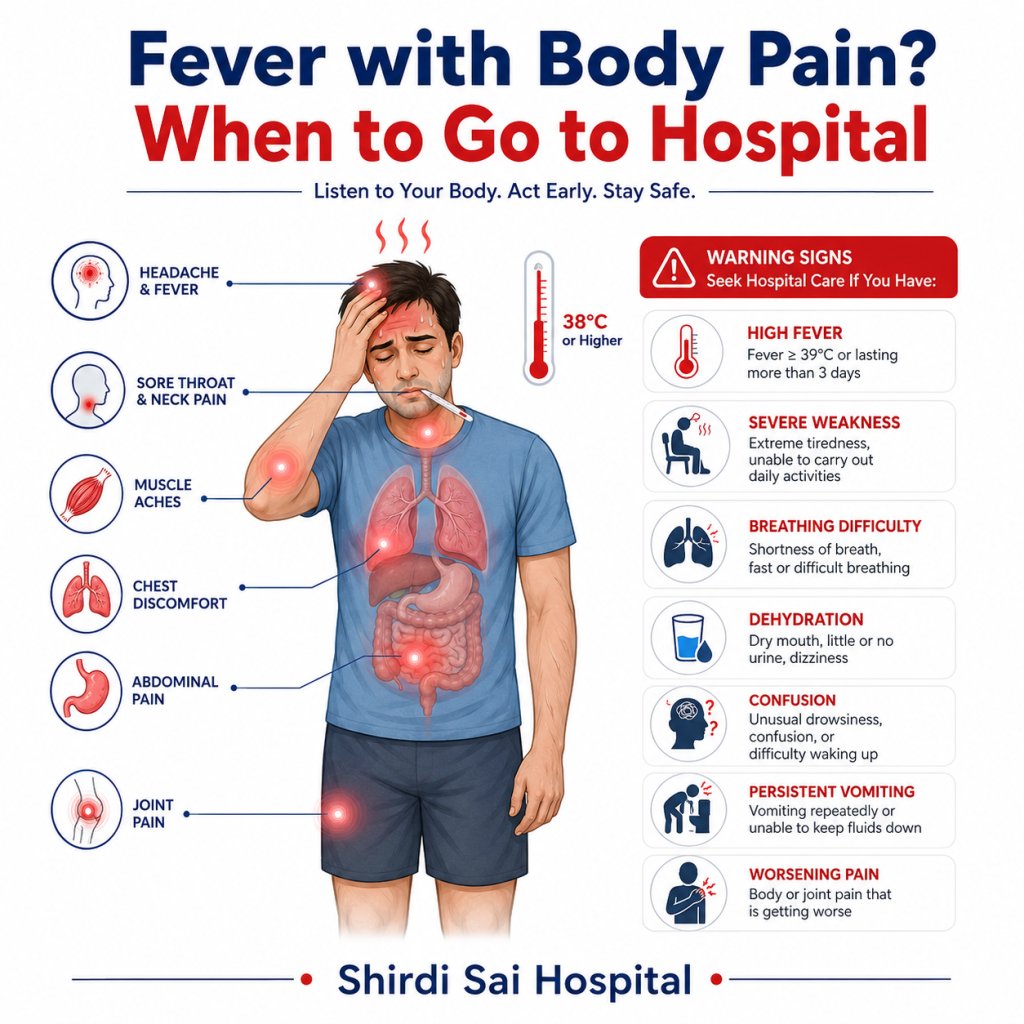
Fever with body pain may feel like:
- heaviness in the body
- muscle pain
- joint pain
- headache
- chills
- weakness
- tiredness
- back pain
- leg pain
- pain behind the eyes
- reduced appetite
Not every fever with body pain is dangerous. But the cause matters. A simple viral fever, dengue, malaria, flu-like illness, urinary infection, or pneumonia may all begin with fever and body pain. The right action depends on severity, duration, associated symptoms, age, and medical history.
What Are the Common Causes of Fever with Body Pain?
Fever with body pain can occur due to many infections and health conditions.
Common causes include:
- viral fever
- seasonal flu-like illness
- dengue
- chikungunya
- malaria
- COVID-like respiratory infections
- urinary tract infection
- throat infection
- pneumonia or chest infection
- stomach infection
- typhoid-like illness
- inflammatory conditions in selected cases
In India, fever with body pain should not be casually assumed to be “normal viral fever,” especially during dengue, malaria, flu, or seasonal infection periods. Proper evaluation is important when fever persists or comes with warning signs.
If symptoms are mild, the Internal Medicine & Family Medicine department can help evaluate fever, body pain, weakness, and infection symptoms.
When Is Fever with Body Pain Usually Not an Emergency?
Mild fever with body pain may not always require emergency care if the patient is alert, drinking fluids, passing urine normally, breathing comfortably, and symptoms are improving.
Home care may be reasonable when:
- fever is mild and recent
- body pain is manageable
- the patient is drinking fluids
- there is no breathing difficulty
- there is no rash or bleeding
- there is no repeated vomiting
- there is no severe abdominal pain
- urine output is normal
- symptoms are improving within a short period
Even in mild cases, monitor symptoms closely. Fever patterns can change, and some infections worsen after the first two to three days.
When Should You Go to Hospital for Fever with Body Pain?
You should go to a hospital if fever with body pain is severe, persistent, worsening, or associated with warning symptoms.
Visit a hospital if you have:
- fever lasting more than 2 to 3 days
- high fever that is not reducing
- severe body pain
- extreme weakness
- dizziness or fainting
- repeated vomiting
- poor fluid intake
- reduced urination
- rash
- bleeding from nose or gums
- blood in vomit or stool
- severe headache
- pain behind the eyes
- breathing difficulty
- chest pain
- confusion or drowsiness
- severe abdominal pain
- stiff neck
- fever in pregnancy
- fever in elderly patients
- fever in infants or young children
- fever in patients with diabetes, kidney disease, heart disease, cancer, or low immunity
These symptoms may indicate a more serious infection or dehydration and should not be managed only with home remedies.
What Is the Danger Zone for Fever?
A fever number alone does not decide danger. A patient with moderate fever but severe weakness, dehydration, confusion, breathing difficulty, rash, or bleeding may need urgent care. A high fever without warning symptoms still needs monitoring and medical advice if it persists or does not respond as expected.
A fever becomes more concerning when:
- temperature is very high
- fever is not reducing
- fever keeps returning
- fever lasts more than a few days
- patient becomes drowsy or confused
- patient is unable to drink fluids
- urine output reduces
- breathing becomes difficult
- rash, bleeding, or severe pain develops
- patient is a child, elderly person, pregnant woman, or has chronic disease
Do not judge fever only by 100°F, 102°F, or 103°F. Look at the whole patient.
Is 102 Fever an Emergency?
A temperature around 102°F is not always an emergency in a stable adult, but it should be taken seriously if it is persistent, worsening, or associated with body pain and warning symptoms.
It needs medical attention if there is:
- severe weakness
- repeated vomiting
- dehydration
- rash
- bleeding
- breathing difficulty
- chest pain
- severe headache
- confusion
- fever lasting more than 2 to 3 days
- pregnancy
- elderly age
- diabetes or chronic illness
For children, fever assessment depends on age, activity, hydration, breathing, feeding, and associated symptoms. Parents should seek medical advice earlier if the child is unusually sleepy, not feeding, dehydrated, breathing fast, or has rash or fits.
Which Fever Causes Severe Body Pain?
Several infections can cause severe body pain. The most common possibilities include viral fever, dengue, chikungunya, flu-like infections, malaria, and some bacterial infections.
Viral Fever
Viral fever often causes body pain, fatigue, headache, sore throat, cough, or cold symptoms. Many cases improve with rest, fluids, and supportive care, but persistent fever should be evaluated.
Dengue
Dengue can cause high fever, severe body pain, pain behind the eyes, headache, nausea, vomiting, rash, and severe weakness. Warning signs like severe abdominal pain, repeated vomiting, bleeding, or extreme tiredness need urgent care.
Chikungunya
Chikungunya commonly causes fever with significant joint pain. Joint pain can be severe and may last longer than the fever in some patients.
Malaria
Malaria can cause fever with chills, sweating, headache, body pain, and weakness. Testing is important when malaria is suspected.
Flu-like Illness
Influenza and similar respiratory infections can cause fever, body pain, cough, sore throat, tiredness, and headache.
Because symptoms overlap, testing may be needed to confirm the cause.
Fever with Body Pain: Viral Fever vs Dengue vs Malaria
| Feature | Viral Fever | Dengue | Malaria |
|---|---|---|---|
| Fever pattern | May be mild to high | Often high | May come with chills and sweating |
| Body pain | Common | Often severe | Common |
| Headache | Common | Common, may include eye pain | Common |
| Rash | Sometimes | Can occur | Less typical |
| Vomiting | Possible | Warning if repeated | Possible |
| Bleeding | Not typical | Warning sign | Not typical |
| Testing | Based on symptoms | Blood test may be advised | Malaria test may be advised |
| Hospital care | If persistent or severe | If warning signs or severe illness | If confirmed/severe or high-risk |
This table is only for understanding. It does not replace medical diagnosis.
What Are the 5 Main Causes of Fever?
The five common medical causes of fever include:
- Viral infections
- Bacterial infections
- Mosquito-borne infections such as dengue or malaria
- Urinary or respiratory infections
- Inflammatory or immune-related conditions in selected cases
In daily practice, infection is one of the most common reasons for fever. The exact cause is identified based on symptoms, examination, season, exposure history, and tests when required.
What Are the Stages of Fever?
Fever often progresses through phases, but not every patient follows the same pattern.
A simple way to understand fever stages:
| Stage | What Happens |
|---|---|
| Early stage | Body feels tired, cold, or shivery |
| Rising stage | Temperature increases, chills may occur |
| Peak stage | Fever is high; body pain, headache, weakness may worsen |
| Falling stage | Sweating may occur as temperature comes down |
| Recovery stage | Fever reduces but weakness may remain |
If fever reduces but the patient becomes weaker, drowsy, breathless, dehydrated, or develops rash/bleeding, this is not normal recovery. It needs medical evaluation.
How to Confirm Viral Fever?
There is no single symptom that confirms viral fever. Doctors diagnose viral fever based on symptoms, examination, duration, season, exposure, and tests when needed.
A doctor may consider:
- temperature pattern
- cough, cold, sore throat, or flu-like symptoms
- body pain and fatigue
- absence or presence of warning signs
- local disease patterns
- travel or mosquito exposure
- test results when required
Tests may be advised to rule out dengue, malaria, typhoid, urinary infection, pneumonia, COVID-like illness, or other causes.
What Tests Are Done for Fever with Body Pain?
Tests depend on symptoms and clinical findings. Not every patient needs every test.
Commonly considered tests may include:
- complete blood count
- platelet count
- dengue test
- malaria test
- urine routine test
- urine culture if urinary symptoms are present
- liver and kidney function tests
- CRP or infection markers when needed
- blood culture in selected cases
- chest X-ray if cough or breathing symptoms are present
- COVID or flu test when relevant
A CBC is commonly used to look at white blood cells, hemoglobin, and platelet count, but it does not confirm every type of fever by itself. Test results must be interpreted with symptoms and examination.
What Is CBC for Viral Fever?
CBC means Complete Blood Count. It is a blood test that gives information about white blood cells, hemoglobin, and platelets.
In fever with body pain, CBC may help doctors assess:
- infection pattern
- platelet count
- anemia
- inflammation clues
- whether follow-up testing is needed
CBC alone cannot always confirm whether fever is viral, dengue, malaria, bacterial, or another infection. It is one part of evaluation.
Fever with Body Pain and Dengue Warning Signs
Dengue is an important concern when fever comes with severe body pain, headache, pain behind the eyes, rash, nausea, or vomiting.
Seek urgent care if fever is associated with:
- severe abdominal pain
- repeated vomiting
- bleeding from nose or gums
- blood in stool or vomit
- extreme tiredness
- restlessness
- dizziness
- reduced urination
- cold hands or feet
- breathing difficulty
Dengue symptoms can change quickly, especially around the time fever starts reducing. Do not assume improvement only because temperature has come down.
Fever with Body Pain in Children: When to Worry
Children need closer observation because they may not explain symptoms clearly.
Seek medical care if a child has:
- high fever
- poor feeding
- repeated vomiting
- loose stools with dehydration
- fast breathing
- unusual sleepiness
- persistent crying
- rash
- fits
- reduced urination
- fever lasting several days
- severe body pain or refusal to walk
- fever in an infant
Parents should not give adult medicines to children or repeat old prescriptions without pediatric advice. If the child needs evaluation, Shirdi Sai Hospital’s Pediatrics department supports acute illness care for children: https://www.shirdisaihospitalpvtltd.com/pediatrics/
Fever with Body Pain in Elderly Patients
Elderly patients may not always show typical symptoms. Fever may come with confusion, weakness, low appetite, fall risk, dehydration, or worsening of existing illnesses.
Elderly patients should seek medical care early if they have:
- fever with weakness
- confusion
- drowsiness
- poor oral intake
- breathlessness
- urinary symptoms
- reduced urine output
- chest congestion
- uncontrolled diabetes or blood pressure
- repeated vomiting
- inability to walk normally
Delay can increase the risk of dehydration, infection complications, and hospitalization.
What to Do at Home Before Visiting the Hospital
If symptoms are mild and the patient is stable, supportive care can help while monitoring.
Helpful steps include:
- rest properly
- drink enough fluids
- monitor temperature
- eat light food
- avoid heavy exercise
- avoid alcohol
- avoid self-medication with antibiotics
- do not take multiple fever medicines without medical advice
- note symptoms and fever timing
- seek care if symptoms worsen
Do not ignore worsening symptoms while trying home remedies.
What Not to Do During Fever with Body Pain
Avoid:
- taking antibiotics without prescription
- using leftover medicines
- taking painkillers repeatedly without diagnosis
- ignoring dengue warning signs
- continuing work despite high fever
- skipping fluids
- delaying care in elderly people or children
- using adult fever medicine for children
- assuming every fever is viral
- waiting too long with severe weakness or vomiting
Medication safety is important. Wrong medicines can mask symptoms or cause harm, especially in dengue, kidney disease, liver disease, pregnancy, or children.
When Fever with Body Pain Needs Emergency Care
Emergency care is needed if fever with body pain is associated with severe or sudden symptoms.
Go to emergency care if there is:
- difficulty breathing
- chest pain
- confusion
- fainting
- seizures
- severe dehydration
- repeated vomiting
- bleeding
- severe abdominal pain
- stiff neck
- very high fever with drowsiness
- cold, pale, or bluish hands/feet
- severe weakness with inability to stand
- reduced urine output
- fever after major injury or surgery
Shirdi Sai Hospital’s Emergency Medicine department provides rapid assessment for acute symptoms, severe infections, trauma, respiratory emergencies, and critical situations. Details are available here: https://www.shirdisaihospitalpvtltd.com/emergency-medicine/
Why Patients Choose Shirdi Sai Hospital for Fever and Body Pain
At Shirdi Sai Hospital, New BEL Road, fever with body pain is evaluated based on duration, temperature pattern, hydration, associated symptoms, medical history, age, travel or mosquito exposure, and examination findings. The focus is to identify whether it is likely viral fever, dengue, malaria, flu-like illness, urinary infection, respiratory infection, or another cause.
Patients choose Shirdi Sai Hospital because:
- Internal Medicine & Family Medicine supports acute illness evaluation
- Emergency Medicine is available for severe or urgent symptoms
- Pediatrics care is available for children with fever
- diagnostic evaluation can be planned based on symptoms
- patients are guided on fluids, fever control, tests, and follow-up
- care is accessible for patients from New BEL Road, Devasandra, Mathikere, RMV 2nd Stage, Sanjaynagar, Hebbal, and nearby areas
If fever with body pain is persistent, worsening, or associated with warning signs, early consultation helps prevent treatment delay.
When to Go to Hospital: Simple Decision Guide
| Situation | What to Do |
|---|---|
| Mild fever, mild body pain, drinking fluids, improving | Monitor, rest, fluids, consult if not improving |
| Fever for more than 2 to 3 days | Consult a doctor |
| Fever with severe body pain | Medical evaluation advised |
| Fever with rash or bleeding | Urgent evaluation |
| Fever with repeated vomiting | Hospital visit advised |
| Fever with breathing difficulty | Emergency care |
| Fever with confusion or drowsiness | Emergency care |
| Fever in elderly, infants, pregnancy, or chronic disease | Early medical evaluation |
| Fever with reduced urination | Medical evaluation for dehydration or infection |
| Fever with severe abdominal pain | Urgent evaluation |
This guide helps families act faster instead of waiting until symptoms become severe.
Frequently Asked Questions
When should I go to hospital for fever with body pain?
Go to hospital if fever with body pain lasts more than 2 to 3 days, worsens, or comes with severe weakness, vomiting, dehydration, rash, bleeding, breathing difficulty, confusion, reduced urination, or severe headache.
What is the danger zone for a fever?
The danger zone is not only a temperature number. Fever becomes concerning when it is very high, persistent, worsening, or associated with confusion, breathing difficulty, dehydration, rash, bleeding, severe weakness, or symptoms in children, elderly people, pregnant women, or chronic disease patients.
Is 102 fever an emergency?
A 102°F fever is not always an emergency in a stable adult, but it needs medical attention if it persists, worsens, or comes with severe body pain, vomiting, dehydration, rash, breathing difficulty, confusion, or chronic illness.
Which fever causes severe body pain?
Viral fever, dengue, chikungunya, malaria, and flu-like infections can cause severe body pain. Testing may be needed because symptoms overlap.
How do I confirm viral fever?
Viral fever is diagnosed based on symptoms, examination, fever pattern, exposure history, and tests when needed. There is no single symptom that confirms viral fever.
What is a CBC test for fever?
CBC, or Complete Blood Count, checks blood cells including white blood cells, hemoglobin, and platelets. It helps doctors assess infection pattern and platelet count, but it does not confirm every fever cause alone.
How long does fever with body pain last?
Many viral fevers improve within a few days, but fever duration depends on the cause. Fever lasting more than 2 to 3 days, worsening symptoms, or severe weakness needs medical evaluation.
Conclusion
Fever with body pain is common, but it should not be ignored when symptoms are severe, persistent, or worsening. Viral fever may improve with rest, fluids, and supportive care, but dengue, malaria, urinary infection, respiratory infection, and other conditions can also begin with fever and body pain.
At Shirdi Sai Hospital, New BEL Road, patients with fever, body pain, weakness, dehydration, vomiting, rash, urinary symptoms, breathing difficulty, or warning signs can be evaluated through Internal Medicine, Pediatrics, or Emergency Medicine depending on severity. Timely consultation helps identify the cause and prevents delay in treatment.
OPD Consultation starts from ₹500.