Tag: Shirdi Sai Hospital orthopedics

  • Hip Replacement Case Study: Severe Hip Arthritis Managed with Surgical Care

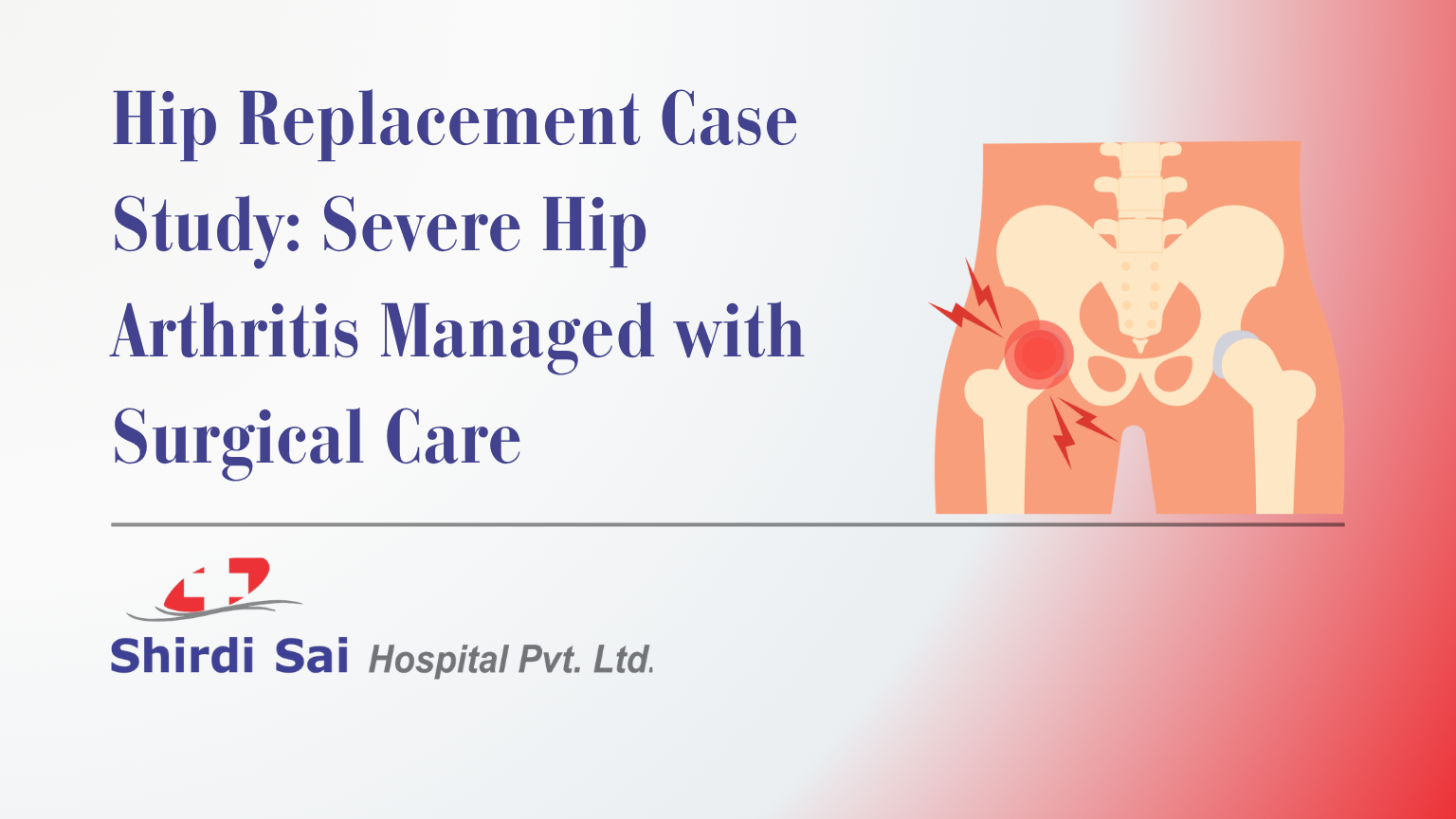
    Hip Replacement Case Study: Severe Hip Arthritis Managed with Surgical Care

    Reviewed by Shirdi Sai Hospital Team

    Severe hip arthritis can make walking, climbing stairs, sitting, standing, and routine daily activities difficult. When hip pain continues for years and does not improve with conservative care, total hip replacement may be considered after orthopedic evaluation. In some complex cases, additional surgical care may be required if a fracture occurs around the hip implant.

    This case study explains how an elderly patient with severe left hip osteoarthritis was evaluated and treated at Shirdi Sai Hospital, New BEL Road. The patient underwent left total hip replacement and later required fracture fixation for a periprosthetic femur fracture. The case is shared for awareness only. Patient identity and personal details have been fully removed for privacy.

    Case Summary

    An elderly female patient came to Shirdi Sai Hospital with severe left hip pain and difficulty walking. The pain had been present for several years and had worsened over time. The patient was unable to walk comfortably, climb stairs, or perform routine activities without significant difficulty.

    The patient had already been evaluated for bilateral hip osteoarthritis and had previously undergone right hip replacement. This admission was for management of severe left hip osteoarthritis.

    After evaluation by the Orthopedics team, the patient underwent left total hip replacement. A post-operative X-ray later showed a periprosthetic fracture of the left femur. The patient then underwent open reduction and internal fixation using a proximal femur plate and stainless steel wire. The post-operative course was stable, and the patient was discharged with medicines, physiotherapy advice, walking guidance, catheter removal advice, and follow-up instructions.

    What Was the Patient’s Main Problem?

    The patient’s main problem was long-standing severe pain in the left hip. The pain affected basic movement and daily activity.

    The patient had difficulty with:

    • walking
    • climbing stairs
    • doing routine activities
    • standing or moving comfortably
    • maintaining normal mobility

    Long-standing hip pain can reduce independence, confidence, and quality of life, especially in elderly patients. When hip arthritis becomes advanced, patients may avoid walking due to pain, which can further reduce muscle strength and mobility.

    Final Diagnosis

    The final diagnosis included:

    • left hip osteoarthritis
    • left femur periprosthetic fracture
    • previous right hip replacement in situ

    This means the patient had severe arthritis of the left hip and later developed a fracture around the femur near the hip replacement implant. The right hip replacement had already been done earlier and was present at the time of admission.

    What Is Hip Osteoarthritis?

    Hip osteoarthritis is a degenerative joint condition where the cartilage covering the hip joint gradually wears down. As cartilage reduces, the bones may rub against each other, causing pain, stiffness, reduced movement, and difficulty walking.

    Common symptoms of hip osteoarthritis include:

    • groin pain
    • hip pain
    • thigh pain
    • stiffness after rest
    • difficulty walking
    • difficulty climbing stairs
    • difficulty sitting cross-legged
    • pain while standing from a chair
    • reduced hip movement
    • limp while walking
    • sleep disturbance due to pain in some patients

    Hip osteoarthritis usually progresses gradually. In early stages, medicines, exercise, weight control, walking support, and physiotherapy may help. In advanced stages, when pain and disability become severe, surgical treatment may be considered.

    Patients with hip pain, knee pain, fractures, arthritis, sports injuries, or mobility problems can consult the Orthopedics department at Shirdi Sai Hospital for evaluation.

    When Is Hip Replacement Considered?

    Hip replacement is considered when arthritis has severely damaged the hip joint and symptoms are affecting daily life despite conservative care.

    It may be discussed when the patient has:

    • severe hip pain
    • difficulty walking
    • difficulty climbing stairs
    • reduced range of hip movement
    • pain not improving with medicines or physiotherapy
    • X-ray evidence of advanced hip arthritis
    • inability to perform routine activities
    • poor quality of life due to hip pain

    Hip replacement is not advised only because an X-ray shows arthritis. The decision is based on symptoms, functional limitation, imaging findings, age, medical condition, and patient-specific goals.

    Treatment Approach at Shirdi Sai Hospital

    The patient was admitted under orthopedic care. The treatment process included:

    • orthopedic evaluation
    • clinical examination
    • relevant investigations
    • review of reports
    • surgical consent
    • left total hip replacement
    • post-operative monitoring
    • post-operative X-ray assessment
    • blood transfusion support when required
    • second surgery for fracture fixation
    • antibiotics and supportive medicines
    • pain management
    • physiotherapy
    • walker-assisted mobilisation
    • discharge planning
    • follow-up advice

    The care plan was based on the patient’s condition, diagnosis, operative findings, and recovery status.

    What Is Total Hip Replacement?

    Total hip replacement, also called total hip arthroplasty, is a surgery where the damaged parts of the hip joint are replaced with artificial components. It is commonly done for advanced hip arthritis when pain and stiffness affect mobility.

    The goal of hip replacement is to:

    • reduce arthritis-related hip pain
    • improve hip function
    • help the patient walk better
    • improve daily activity ability
    • support better mobility when recovery is complete

    Recovery after hip replacement requires physiotherapy, walking support, wound care, fall prevention, and follow-up visits.

    What Is a Hybrid Hip Replacement?

    A hybrid hip replacement is a type of hip replacement where the surgeon uses a combination of fixation methods for the implant components. The exact implant choice depends on bone quality, patient age, surgeon assessment, and intraoperative decision-making.

    In this case, the patient underwent left total hip replacement using a hybrid approach. The choice of technique was made by the treating orthopedic team based on clinical judgment.

    What Is a Periprosthetic Femur Fracture?

    A periprosthetic femur fracture is a fracture that occurs around or near a hip replacement implant. It is a known orthopedic complication and needs careful evaluation because treatment depends on the fracture location, implant stability, bone quality, and patient condition.

    A periprosthetic fracture may require:

    • observation in selected stable cases
    • fixation using plate, screws, cables, or wires
    • revision hip surgery in selected cases
    • restricted or guided weight bearing
    • physiotherapy
    • close follow-up

    In this case, the post-operative X-ray showed a left femur periprosthetic fracture. The patient underwent open reduction and internal fixation with a proximal femur plate and stainless steel wire.

    What Is ORIF with Plate and Wire?

    ORIF means Open Reduction and Internal Fixation.

    • Open reduction means the fracture is surgically exposed and aligned.
    • Internal fixation means implants are used to hold the bone in position while it heals.

    In this case, the fracture was fixed using a proximal femur plate and stainless steel wire. This helped stabilize the fracture around the hip replacement area.

    ORIF is planned based on fracture pattern, bone quality, implant position, and patient safety.

    Why Was a Second Surgery Needed?

    A second surgery was needed because a periprosthetic fracture was identified after hip replacement. Such fractures need proper stabilization when the fracture pattern and clinical condition require it.

    The goal of the second surgery was to:

    • align the fractured femur
    • stabilize the bone
    • protect the hip replacement area
    • support recovery and mobility planning
    • reduce the risk of poor fracture healing

    The patient underwent ORIF with proximal femur plate and stainless steel wire. The operative and post-operative course was documented as stable.

    Hospital Course and Recovery

    After the hip replacement surgery, the patient was shifted for monitoring. Post-operative orders were followed, vitals were monitored, and imaging was reviewed.

    After the periprosthetic fracture was identified, the patient underwent fracture fixation surgery. The patient was later shifted for ward observation once stable.

    The recovery plan included:

    • post-operative monitoring
    • antibiotics and supportive medicines
    • pain control
    • blood transfusion support when required
    • wound dressing
    • physiotherapy
    • walker-assisted mobilisation
    • discharge medicines
    • follow-up review
    • catheter removal advice

    At discharge, the patient was documented as hemodynamically stable.

    Physiotherapy After Hip Replacement and Fracture Fixation

    Physiotherapy is a key part of recovery after hip replacement and fracture fixation. Surgery stabilizes the joint and bone, but movement, strength, balance, and walking confidence need guided rehabilitation.

    Physiotherapy may help with:

    • safe movement training
    • strengthening exercises
    • walking with support
    • fall prevention
    • reducing stiffness
    • improving confidence
    • protecting the operated limb
    • gradual return to daily activities

    Patients should follow the treating doctor and physiotherapist’s instructions about walking, weight-bearing, exercises, and movement restrictions. These instructions can differ from patient to patient.

    Warning Signs After Hip Replacement or Fracture Fixation

    The discharge advice included immediate reporting if persistent fever or pus at the operated site occurs.

    Patients should seek urgent review if they notice:

    • persistent fever
    • pus discharge from wound
    • wound redness
    • wound swelling
    • severe pain
    • increasing hip or thigh swelling
    • bleeding from wound
    • calf pain or swelling
    • breathing difficulty
    • sudden inability to move the operated limb
    • fall after surgery
    • sudden worsening of pain
    • catheter-related discomfort, blockage, or reduced urine output

    Post-operative symptoms should not be ignored, especially in elderly patients.

    What This Case Teaches Patients About Hip Arthritis

    This case highlights an important lesson: long-standing hip pain should not be ignored when it starts affecting walking, stairs, and daily routine.

    Key learnings include:

    • Severe hip arthritis can affect independence.
    • Difficulty walking and climbing stairs needs orthopedic evaluation.
    • Hip replacement may be considered in advanced arthritis when symptoms are severe.
    • Periprosthetic fracture is a serious complication that needs specialist management.
    • Recovery after hip surgery needs physiotherapy and follow-up.
    • Elderly patients need careful post-operative monitoring.
    • Treatment decisions vary from patient to patient.

    Hip Arthritis vs Normal Age-Related Hip Pain

    Symptom PatternMore Likely Age-Related StiffnessMore Concerning for Hip Arthritis
    Mild stiffness after restCommonCan occur
    Severe pain while walkingLess typicalCommon in advanced cases
    Difficulty climbing stairsMay occur mildlyCommon when arthritis progresses
    Pain for yearsNeeds evaluationStrong concern
    Reduced hip movementLess typicalCommon
    Limp while walkingNot normalNeeds evaluation
    Inability to do routine workNot normalNeeds orthopedic care
    X-ray showing joint damageNot assessed clinicallySupports diagnosis when symptoms match

    This table is for awareness only. Diagnosis requires clinical examination and imaging.

    Shirdi Sai Hospital and Sathya Sai Hospital Are Different

    Some patients searching online may confuse Shirdi Sai Hospital with Sathya Sai Hospital because the names sound similar. They are not the same hospital.

    This case study refers to Shirdi Sai Hospital Pvt. Ltd., located at No. 519, 2nd Main, Nethravathi Street, Devasandra, New BEL Road, Bangalore – 560054.

    Before visiting, patients should confirm the hospital name, location, phone number, and official website. For this case study and related orthopedic care, the correct hospital is Shirdi Sai Hospital on New BEL Road.

    Patients can visit the official Shirdi Sai Hospital website for hospital information and appointments.

    Why Patients Choose Shirdi Sai Hospital for Hip and Fracture Care

    At Shirdi Sai Hospital, New BEL Road, orthopedic symptoms such as hip pain, knee pain, fractures, arthritis, sports injuries, and mobility problems are evaluated through the Orthopedics department. In complex cases, a multispeciality hospital setting can also support medical evaluation, post-operative monitoring, transfusion support when required, physiotherapy, and follow-up care.

    Patients may choose Shirdi Sai Hospital because:

    • orthopedic care is available on New BEL Road
    • hip arthritis and fracture-related symptoms are evaluated clinically
    • imaging and surgical planning are guided by orthopedic assessment
    • hip replacement and fracture fixation may be considered where clinically suitable
    • post-operative monitoring and physiotherapy guidance support recovery
    • emergency and multispeciality support are available when needed
    • the hospital is accessible for patients from Devasandra, Mathikere, RMV 2nd Stage, Sanjaynagar, Hebbal, and nearby areas

    Patients with severe hip pain, difficulty walking, suspected fracture, arthritis symptoms, or previous joint replacement concerns can consult the Orthopedics department at Shirdi Sai Hospital for evaluation.

    Patient Privacy Note

    This case study has been written with patient identity removed. Personal identifiers such as name, registration number, address, exact admission date, discharge date, and identifying personal details have not been included.

    The purpose of this case study is patient education and awareness. Treatment decisions vary from patient to patient. A similar diagnosis does not mean every patient will need the same surgery, medicines, hospital stay, walking plan, catheter support, or rehabilitation protocol.

    Frequently Asked Questions

    What is hip osteoarthritis?

    Hip osteoarthritis is a degenerative condition where the cartilage in the hip joint wears down, leading to pain, stiffness, reduced movement, difficulty walking, and trouble climbing stairs.

    When is hip replacement needed?

    Hip replacement may be considered when hip arthritis causes severe pain, walking difficulty, reduced movement, and poor daily function despite non-surgical treatment.

    What is a periprosthetic femur fracture?

    A periprosthetic femur fracture is a fracture that occurs around or near a hip replacement implant. It needs orthopedic evaluation because treatment depends on fracture pattern and implant stability.

    What is ORIF in fracture treatment?

    ORIF means Open Reduction and Internal Fixation. It is a surgery where the fracture is aligned and stabilized using implants such as plates, screws, rods, wires, or other fixation devices.

    Is physiotherapy needed after hip replacement?

    Yes. Physiotherapy helps with safe walking, strengthening, movement recovery, stiffness reduction, and fall prevention after hip replacement.

    What warning signs need review after hip surgery?

    Persistent fever, pus discharge, wound redness, severe pain, sudden swelling, breathing difficulty, fall after surgery, or sudden worsening of movement should be reviewed urgently.

    Is every hip arthritis patient treated with surgery?

    No. Treatment depends on severity, pain level, X-ray findings, function, age, health condition, and response to non-surgical care. Surgery is considered when symptoms are advanced and disabling.

    Conclusion

    This case shows how severe left hip osteoarthritis affecting walking, stair climbing, and routine activity was treated surgically at Shirdi Sai Hospital, New BEL Road. The patient underwent left total hip replacement and later required ORIF with proximal femur plate and stainless steel wire for a periprosthetic femur fracture. The patient was monitored, supported with medicines, mobilized with guidance, and discharged in stable condition with follow-up advice.

    Long-standing hip pain should not be ignored when it starts affecting daily life. Early orthopedic evaluation helps patients understand whether medicines, physiotherapy, walking support, hip replacement, fracture fixation, or another treatment plan is suitable.

    OPD Consultation starts from ₹500.
  • ACL Tear Surgery Case Study: Knee Buckling Treated with Arthroscopic Reconstruction

    ACL Tear Surgery Case Study: Knee Buckling Treated with Arthroscopic Reconstruction

    Reviewed by Shirdi Sai Hospital Team

    An ACL tear can cause knee instability, pain, buckling, and difficulty walking confidently. In some patients, the injury may begin after a twisting movement and continue for months if the ligament does not heal properly or if another knee structure, such as the meniscus, is also injured. When knee buckling increases and daily movement becomes difficult, orthopedic evaluation becomes important.

    This case study explains how an adult patient with a right knee ACL tear and medial meniscus tear was evaluated and treated at Shirdi Sai Hospital, New BEL Road. The patient underwent arthroscopic ACL reconstruction with partial medial meniscectomy and was discharged in stable condition with physiotherapy and follow-up advice. The case is shared for awareness only, with patient identity fully removed.

    Case Summary

    An adult male patient came to Shirdi Sai Hospital with a history of twisting injury to the right knee several months earlier. The patient had already taken treatment, but symptoms did not settle completely. Over time, pain increased and the right knee started buckling while walking.

    The patient was evaluated by the Orthopedics team and admitted for further management. Based on clinical findings and diagnosis, the patient was treated for:

    • right knee ACL tear
    • medial meniscus tear

    The surgical procedure included:

    • arthroscopic right ACL reconstruction
    • partial meniscectomy of the medial meniscus

    After surgery, the patient was monitored in the hospital. The post-operative course was stable. Pain gradually reduced, oral intake was tolerated, and the patient was able to ambulate with support. The patient was discharged in a hemodynamically stable condition with medicines, brace support, physiotherapy advice, and follow-up instructions.

    What Was the Patient’s Main Problem?

    The main concern was right knee pain with buckling while walking. Knee buckling means the knee suddenly feels unstable, gives way, or feels unable to support body weight properly during movement.

    In this case, the problem began after a twisting injury. This type of injury can damage knee ligaments, meniscus, or other supporting structures. When the ACL is torn, the knee may lose stability, especially during walking, turning, climbing stairs, or sudden direction changes.

    The patient’s symptoms included:

    • previous twisting injury to the right knee
    • persistent pain despite earlier treatment
    • increased pain over recent weeks
    • buckling of the right knee while walking
    • difficulty trusting the knee during movement

    These symptoms suggested that the knee instability needed orthopedic evaluation and treatment planning.

    Final Diagnosis

    The final diagnosis was:

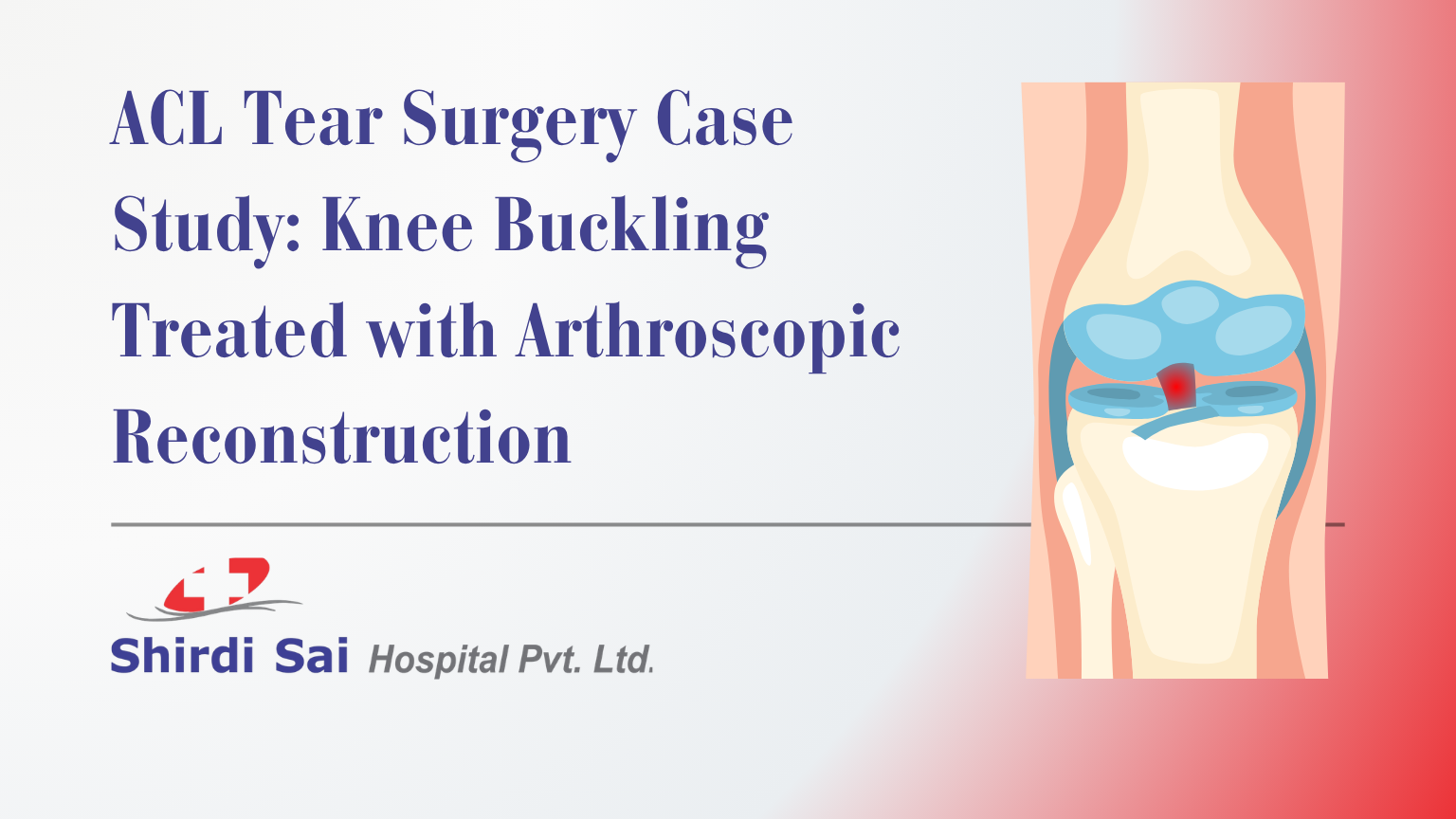
    Right ACL Tear with Medial Meniscus Tear

    The ACL, or anterior cruciate ligament, is one of the main stabilizing ligaments of the knee. It helps control forward movement and rotation of the shin bone in relation to the thigh bone.

    The medial meniscus is a C-shaped cartilage cushion on the inner side of the knee. It helps absorb shock, distribute load, and support smooth knee movement.

    When both the ACL and medial meniscus are injured, patients may experience pain, instability, swelling, catching, locking, or buckling depending on the tear pattern and severity.

    What Is an ACL Tear?

    An ACL tear is an injury to the anterior cruciate ligament inside the knee. It commonly occurs due to twisting, sudden stopping, pivoting, sports injury, fall, or accident.

    Common symptoms of an ACL tear may include:

    • knee pain after injury
    • swelling
    • instability
    • buckling or giving way
    • difficulty walking confidently
    • difficulty turning or changing direction
    • reduced confidence in the knee
    • pain during activity

    Some ACL injuries improve with rehabilitation in selected patients. However, when instability continues, when the knee buckles during daily activity, or when associated meniscus injury is present, surgical treatment may be considered after orthopedic evaluation.

    What Is a Medial Meniscus Tear?

    A medial meniscus tear affects the cartilage cushion on the inner side of the knee. It can occur along with ligament injuries, especially after twisting movements.

    Symptoms may include:

    • pain on the inner side of the knee
    • swelling
    • catching sensation
    • locking sensation
    • pain while bending the knee
    • discomfort while walking or squatting
    • instability when combined with ligament injury

    Treatment depends on the type, location, and severity of the tear. Some tears may be managed with physiotherapy and medicines. Some tears may require arthroscopic treatment, especially if they are causing mechanical symptoms or are associated with other knee injuries.

    Why Was Surgery Considered in This Case?

    Surgery was considered because the patient had a diagnosed ACL tear with medial meniscus tear and ongoing knee buckling while walking. The symptoms had continued despite earlier treatment and were affecting knee stability.

    The decision for surgery was based on:

    • history of twisting knee injury
    • persistent pain
    • increased buckling of the right knee
    • confirmed ACL tear
    • associated medial meniscus tear
    • orthopedic evaluation
    • need to improve knee stability and function

    The goal was not only pain relief. The main goal was to restore knee stability, treat the meniscus injury appropriately, and support safer movement with rehabilitation.

    Patients with similar symptoms can consult the Orthopedics department at Shirdi Sai Hospital for evaluation of knee pain, ACL injury, meniscus tear, sports injury, fracture care, arthroscopy, and rehabilitation guidance.

    What Is Arthroscopic ACL Reconstruction?

    Arthroscopic ACL reconstruction is a minimally invasive knee surgery performed using a small camera called an arthroscope and specialized instruments. The damaged ACL is reconstructed using a graft to help restore knee stability.

    Arthroscopy allows the surgeon to view the inside of the knee joint through small incisions. This approach is commonly used for ligament reconstruction and meniscus-related procedures when surgery is required.

    In this case, arthroscopic right ACL reconstruction was performed as part of the treatment plan.

    What Is Partial Medial Meniscectomy?

    Partial medial meniscectomy means removing only the damaged portion of the medial meniscus while preserving as much healthy meniscus tissue as possible.

    This may be done when the torn part of the meniscus is not suitable for repair or is causing symptoms. The decision depends on tear type, location, tissue quality, stability, and surgeon assessment.

    In this case, partial meniscectomy of the medial meniscus was performed along with ACL reconstruction.

    Treatment Approach at Shirdi Sai Hospital

    The patient was admitted under orthopedic care and evaluated before surgery. The treatment pathway included:

    • orthopedic evaluation
    • pre-operative assessment
    • physician fitness before surgery
    • surgical planning
    • arthroscopic ACL reconstruction
    • partial medial meniscectomy
    • post-operative monitoring
    • antibiotics and supportive medicines as required
    • pain control
    • gradual diet restart
    • mobilization support
    • discharge advice
    • physiotherapy guidance
    • OPD follow-up recommendation

    The post-operative course was documented as uneventful. Pain gradually reduced, and the patient tolerated oral soft diet. The patient was able to ambulate and was discharged in stable condition.

    Recovery Plan After ACL Reconstruction and Meniscus Surgery

    Recovery after ACL reconstruction and meniscus surgery depends on the injury, procedure, patient condition, physiotherapy compliance, muscle strength, and follow-up care.

    In this case, discharge advice included:

    • mobilization with support
    • long knee brace
    • continued physiotherapy
    • straight leg raise exercises
    • isometric quadriceps exercises
    • follow-up review in OPD

    Physiotherapy is a key part of recovery because surgery alone does not restore full strength, balance, and confidence. The knee needs structured rehabilitation to regain movement, muscle control, and stability.

    Why Physiotherapy Matters After ACL Surgery

    After ACL reconstruction, the thigh muscles, especially the quadriceps, can become weak. Swelling, pain, reduced movement, and fear of using the knee can slow recovery.

    Physiotherapy helps with:

    • reducing stiffness
    • restoring knee movement
    • improving quadriceps strength
    • improving walking pattern
    • reducing swelling
    • improving balance
    • supporting gradual return to activity
    • protecting the reconstructed ligament during healing

    Exercises such as straight leg raises and isometric quadriceps exercises are commonly used in early rehabilitation when advised by the treating team.

    Patients should not restart sports, running, heavy lifting, squatting, or twisting activities without orthopedic and physiotherapy clearance.

    ACL Tear with Meniscus Tear: Why Early Evaluation Matters

    An ACL tear with meniscus injury can affect knee function more than an isolated minor knee sprain. If instability continues, the knee may buckle repeatedly, which can increase the risk of further injury.

    Patients should not ignore:

    • knee buckling while walking
    • repeated giving way sensation
    • swelling after activity
    • pain after twisting injury
    • knee locking or catching
    • difficulty climbing stairs
    • difficulty turning quickly
    • inability to trust the knee
    • pain that continues for weeks after injury

    Early diagnosis helps decide whether physiotherapy, bracing, activity modification, arthroscopy, ACL reconstruction, meniscus repair, partial meniscectomy, or another treatment option is suitable.

    Warning Signs After Knee Surgery

    Patients should follow discharge instructions and return for review if warning signs appear.

    Important warning signs include:

    • fever
    • severe pain
    • pus discharge from wound
    • increasing swelling
    • redness around wound
    • wound soakage
    • calf pain or swelling
    • breathing difficulty
    • sudden worsening of knee pain
    • inability to move the limb as advised
    • fall or fresh injury after surgery

    The discharge instructions in this case specifically advised review if fever, severe pain, or wound discharge occurred.

    What This Case Teaches Patients

    This case highlights a common problem: knee ligament injuries are often underestimated when pain temporarily improves. A patient may continue walking after injury, but instability may become clear later as buckling, giving way, or reduced confidence in the knee.

    Key lessons:

    • Twisting knee injuries should not be ignored if pain persists.
    • Knee buckling is an important instability symptom.
    • ACL tears may need surgery when instability affects daily activity.
    • Meniscus tears can occur along with ACL injury.
    • Arthroscopy can be used to treat selected ACL and meniscus injuries.
    • Physiotherapy is essential after surgery.
    • Follow-up care is important for safe recovery.

    Shirdi Sai Hospital and Sathya Sai Hospital Are Different

    Some patients searching online may confuse Shirdi Sai Hospital with Sathya Sai Hospital because the names sound similar. They are not the same hospital.

    This case study refers to Shirdi Sai Hospital Pvt. Ltd., located at No. 519, 2nd Main, Nethravathi Street, Devasandra, New BEL Road, Bangalore – 560054.

    Before visiting, patients should confirm the hospital name, location, phone number, and official website. For this case study and related orthopedic care, the correct hospital is Shirdi Sai Hospital on New BEL Road.

    You can visit the official Shirdi Sai Hospital website for hospital information and appointments.

    Why Patients Choose Shirdi Sai Hospital for ACL and Meniscus Injury Care

    At Shirdi Sai Hospital, New BEL Road, knee injuries are evaluated through the Orthopedics department with attention to symptoms, injury history, instability, pain pattern, imaging, and functional difficulty. The hospital’s Orthopedics services include care for ACL tears, meniscus tears, sports injuries, arthroscopy, fracture care, rehabilitation support, and musculoskeletal conditions.

    Patients may choose Shirdi Sai Hospital because:

    • orthopedic care is available on New BEL Road
    • ACL and meniscus injuries are evaluated clinically
    • arthroscopy is available for selected joint problems
    • surgical and non-surgical options are considered based on the case
    • rehabilitation guidance supports recovery after surgery
    • emergency and multispeciality support are available when needed
    • the hospital is accessible for patients from Devasandra, Mathikere, RMV 2nd Stage, Sanjaynagar, Hebbal, and nearby areas

    For patients with knee buckling, ligament injury, meniscus tear symptoms, or sports-related knee pain, orthopedic consultation at Shirdi Sai Hospital can help identify the next step.

    Patient Privacy Note

    This case study has been written with patient identity removed. Personal identifiers such as name, registration number, address, exact admission date, discharge date, and identifying personal details have not been included.

    The purpose of this case study is patient education and awareness. Treatment decisions vary from patient to patient. A similar diagnosis does not mean every patient will need the same surgery, medicines, hospital stay, brace, or rehabilitation plan.

    Frequently Asked Questions

    What is an ACL tear?

    An ACL tear is an injury to the anterior cruciate ligament, one of the main stabilizing ligaments inside the knee. It can cause pain, swelling, instability, and knee buckling.

    What are the symptoms of ACL tear?

    Common symptoms include knee pain, swelling, instability, buckling, difficulty walking, and loss of confidence while turning, climbing stairs, or changing direction.

    When does an ACL tear need surgery?

    ACL surgery may be considered when the knee remains unstable, buckles during daily activity, or when there is an associated injury such as a meniscus tear. The decision depends on orthopedic evaluation.

    What is arthroscopic ACL reconstruction?

    Arthroscopic ACL reconstruction is a minimally invasive procedure where the damaged ACL is reconstructed using a graft through small incisions and camera-guided instruments.

    What is partial meniscectomy?

    Partial meniscectomy means removing only the damaged portion of the meniscus while preserving as much healthy tissue as possible. It may be done when the torn part is not suitable for repair.

    Is physiotherapy needed after ACL surgery?

    Yes. Physiotherapy is essential after ACL surgery to regain knee movement, muscle strength, balance, walking confidence, and safe return to daily activities.

    When should I consult a doctor after a twisting knee injury?

    Consult an orthopedic doctor if pain persists, swelling appears, the knee buckles, walking becomes difficult, or there is locking, catching, or repeated giving way sensation.

    Conclusion

    This case shows how a twisting knee injury with persistent pain and buckling was diagnosed as a right ACL tear with medial meniscus tear and treated with arthroscopic ACL reconstruction and partial medial meniscectomy at Shirdi Sai Hospital, New BEL Road. The patient recovered in stable condition after surgery and was advised brace support, physiotherapy, medicines, and follow-up care.

    Knee buckling after injury should not be ignored. It may indicate ligament instability or meniscus involvement. Early orthopedic evaluation helps patients understand whether rest, physiotherapy, bracing, arthroscopy, ligament reconstruction, or another treatment pathway is suitable.

    OPD Consultation starts from ₹500.