Health articles and guides from the doctors at Shirdi Sai Hospital, Bangalore — covering symptoms, conditions, treatments, and when to see a specialist.
When periods that were once predictable suddenly become irregular, it can feel unsettling. Many women assume it must be something serious or worry they did something wrong. At Shirdi Sai Hospital, we see this question often. In most cases, there is a clear, explainable reason, and the situation is manageable once identified.
This article explains why cycles change, what’s considered normal, and when it’s time to seek medical advice—in simple, people-first language.
What Does “Irregular” Actually Mean?
A typical menstrual cycle ranges from 21 to 35 days. Irregularity can include:
Cycles that suddenly shorten or lengthen
Missed periods for 2–3 months
Bleeding that comes earlier or later than usual
Spotting between periods
A one-off change can happen. Repeated changes deserve attention.
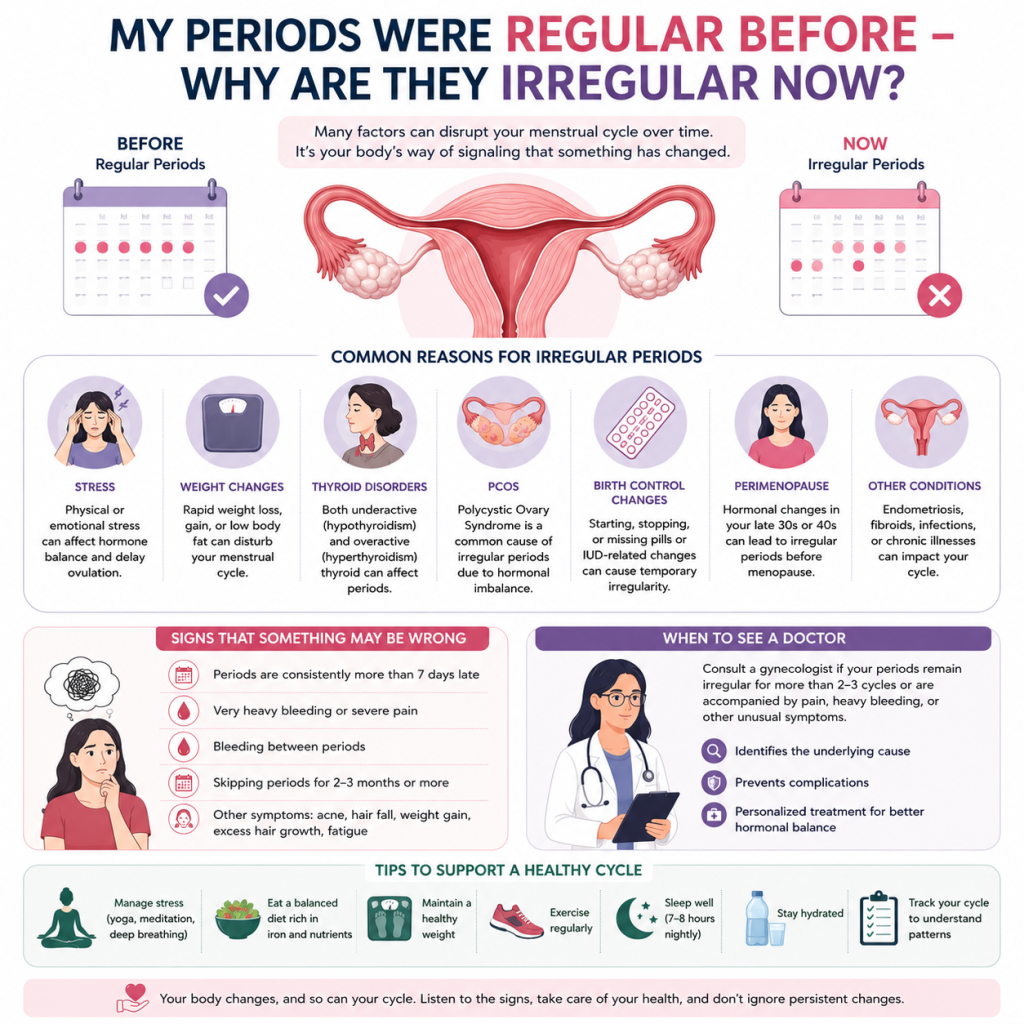
Common Reasons Periods Become Irregular After Being Regular
1) Stress and Lifestyle Shifts
Physical or emotional stress affects the hormones that control ovulation. Sudden work pressure, sleep disruption, weight change, or illness can delay or skip ovulation—leading to irregular cycles.
Typical clues:
Changes follow a stressful phase
Cycles normalize once routines stabilize
2) Hormonal Fluctuations With Age
Hormone balance isn’t static. Shifts can occur in the late 20s, 30s, and during the years leading to menopause.
PCOS can appear even after years of normal periods. It affects ovulation timing and can cause cycle variability.
Typical clues:
Period gaps of 45–90 days
Acne or increased hair growth
Weight changes
4) Thyroid Imbalance
Both underactive and overactive thyroid conditions can disrupt menstrual timing.
Typical clues:
Unexplained weight change
Hair fall, heat or cold intolerance
Fatigue with cycle changes
5) Recent Pregnancy, Breastfeeding, or Contraception Changes
Hormones take time to reset after childbirth, breastfeeding, or stopping hormonal contraception.
Typical clues:
Irregular cycles for a few months after changes
Gradual return toward a pattern
6) Sudden Weight Loss or Gain
Fat tissue influences estrogen levels. Rapid changes can affect ovulation and cycle regularity.
Typical clues:
Period changes alongside diet or exercise changes
Is It Ever “Normal” for Periods to Change?
Yes-temporary changes can be normal during:
High stress
Recovery from illness
Travel or sleep disruption
However, if cycles remain irregular for more than 2–3 months, it’s best to check.
When Should You See a Doctor?
Consider evaluation if you have:
Missed periods for 3 months or more
Very heavy bleeding or clots
Severe pain with periods
Bleeding between periods repeatedly
Irregular cycles with acne, hair growth, or weight changes
Early evaluation often prevents long-term issues.
How Doctors Evaluate Sudden Irregular Periods
At Shirdi Sai Hospital, assessment is careful and individualized:
Detailed menstrual and lifestyle history
Blood tests for hormones (as needed)
Ultrasound only if indicated
Most women do not require extensive testing.
Treatment Depends on the Cause
Lifestyle adjustments: stress, sleep, nutrition
Hormonal balancing: if required
Targeted treatment: for PCOS or thyroid issues
The goal is cycle regulation and overall health, not just short-term fixes.
A Note From the Shirdi Sai Hospital Team
We reassure many women that irregular periods after years of regular cycles are common and often reversible. With timely evaluation and the right guidance, cycles usually settle back into a healthier pattern.
If your periods feel “off” or unpredictable, a consultation can provide clarity and peace of mind.
Frequently Asked Questions (FAQs)
Can stress alone make periods irregular? Yes. Stress can delay ovulation, which shifts the cycle.
Is pregnancy possible with irregular periods? Yes. Irregular cycles don’t automatically mean infertility.
Can irregular periods correct themselves? They often do, especially if stress or lifestyle factors are involved.
Are irregular periods always PCOS? No. PCOS is one cause among many.
Do I need an ultrasound immediately? Not always. Tests are based on symptoms and history.
Is it dangerous to ignore irregular periods? Persistent irregularity should be checked to rule out hormonal issues.
Doctor Review
This article was reviewed for medical accuracy by a Gynecology Consultant at Shirdi Sai Hospital.
Feeling a persistent urge to urinate even after you’ve just emptied your bladder can be confusing and uncomfortable. Many people worry that something serious is wrong, especially when the sensation keeps returning despite normal urine flow. At Shirdi Sai Hospital, we see this concern frequently and in most cases, there is a clear, manageable explanation.
This guide explains why the urge can linger, what it usually means, and when you should seek medical advice-in simple, people-first language.
What Does “Incomplete Emptying” Really Mean?
The sensation of needing to urinate again doesn’t always mean urine is still left inside the bladder. Often, it’s a signal problem rather than a storage problem-the bladder or nearby structures are sending mixed messages to the brain.
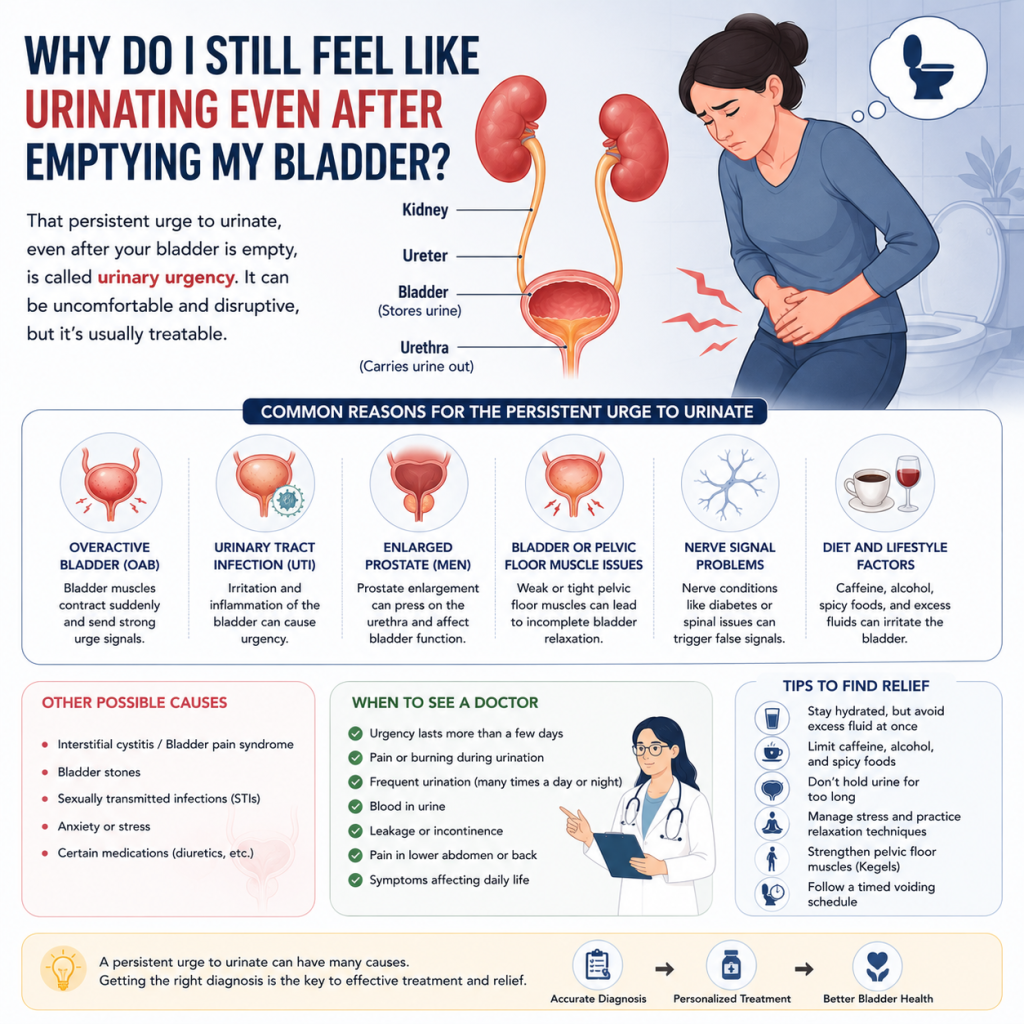
Common Reasons You May Feel the Urge After Urinating
The bladder lining can become sensitive due to dehydration, acidic foods, caffeine, or recent illness. When irritated, the bladder overreacts and triggers urgency even when it’s empty.
Typical clues:
Urge comes quickly after urinating
No fever or severe pain
Symptoms fluctuate day to day
2) Overactive Bladder (OAB)
With OAB, the bladder muscles contract earlier than they should, creating urgency with little or no urine present.
Typical clues:
Sudden urges
Frequent bathroom visits
Night-time urination (nocturia)
3) Pelvic Floor Muscle Tightness
Muscles that help control urination may be tight or uncoordinated, preventing a relaxed, complete voiding sensation.
Typical clues:
Urge persists after urinating
Worse with stress or prolonged sitting
Often improves with guided exercises
4) Prostate-Related Changes (in Men)
An enlarged prostate can irritate the bladder outlet, leading to the feeling of incomplete emptying even if the bladder is mostly empty.
Typical clues:
Weak stream or hesitancy
Dribbling after urination
Night-time frequency
5) Hormonal Changes (in Women)
Low estrogen—common after childbirth or around menopause—can make the urinary tract more sensitive.
Typical clues:
Urgency without infection
Vaginal dryness
Symptoms vary with hormonal shifts
6) Stress and Anxiety
The bladder is closely linked to the nervous system. Ongoing stress can heighten body awareness and amplify urgency signals.
Typical clues:
Normal test reports
Symptoms worsen during stressful periods
Improve with relaxation and routine changes
When Should You Be Concerned?
Seek medical evaluation if you notice any of the following:
Blood in urine
Fever or chills
Pain in the lower abdomen or back
Difficulty starting urination or a very weak stream
These signs don’t always indicate something serious, but they do warrant a closer look.
How Doctors Evaluate This Symptom
At Shirdi Sai Hospital, assessment is stepwise and patient-friendly:
Detailed symptom history (timing, triggers, night symptoms)
Urine tests to rule out infection
Ultrasound or bladder scan (if needed)
Prostate assessment for men; pelvic evaluation for women
Most patients do not need invasive tests.
Treatment Options (Based on Cause)
Hydration and diet tweaks: reducing caffeine and acidic foods
Bladder training: timed voiding to calm urgency signals
Pelvic floor therapy: guided exercises when muscle tension is involved
Medications: only when clearly indicated
Addressing underlying issues: prostate care, hormonal support, or stress management
Treatment is individualized and usually conservative to start.
A Note from the Shirdi Sai Hospital Team
We often reassure patients that this symptom is common and treatable. With the right evaluation, most people experience significant improvement-often without long-term medication.
If the sensation is persistent or affecting your daily life, it’s reasonable to get it checked by a urology specialist for clarity and peace of mind.
Frequently Asked Questions (FAQs)
Is it normal to feel the urge right after urinating? Yes, especially with bladder irritation or muscle tension. It’s common and often temporary.
Can this happen without a urinary infection? Absolutely. Many people have urgency with normal urine tests.
Does dehydration make it worse? Yes. Concentrated urine can irritate the bladder lining and increase urgency.
Is this linked to diabetes? In some cases, yes-especially if accompanied by excessive thirst or night-time urination.
Will it go away on its own? Mild cases often improve with hydration, diet changes, and stress reduction. Persistent symptoms should be evaluated.
Is this a sign of kidney disease? Usually not. Kidney issues typically cause other symptoms. Testing helps rule this out.
Doctor Review
This article was reviewed for medical accuracy by a Urology Consultant at Shirdi Sai Hospital.
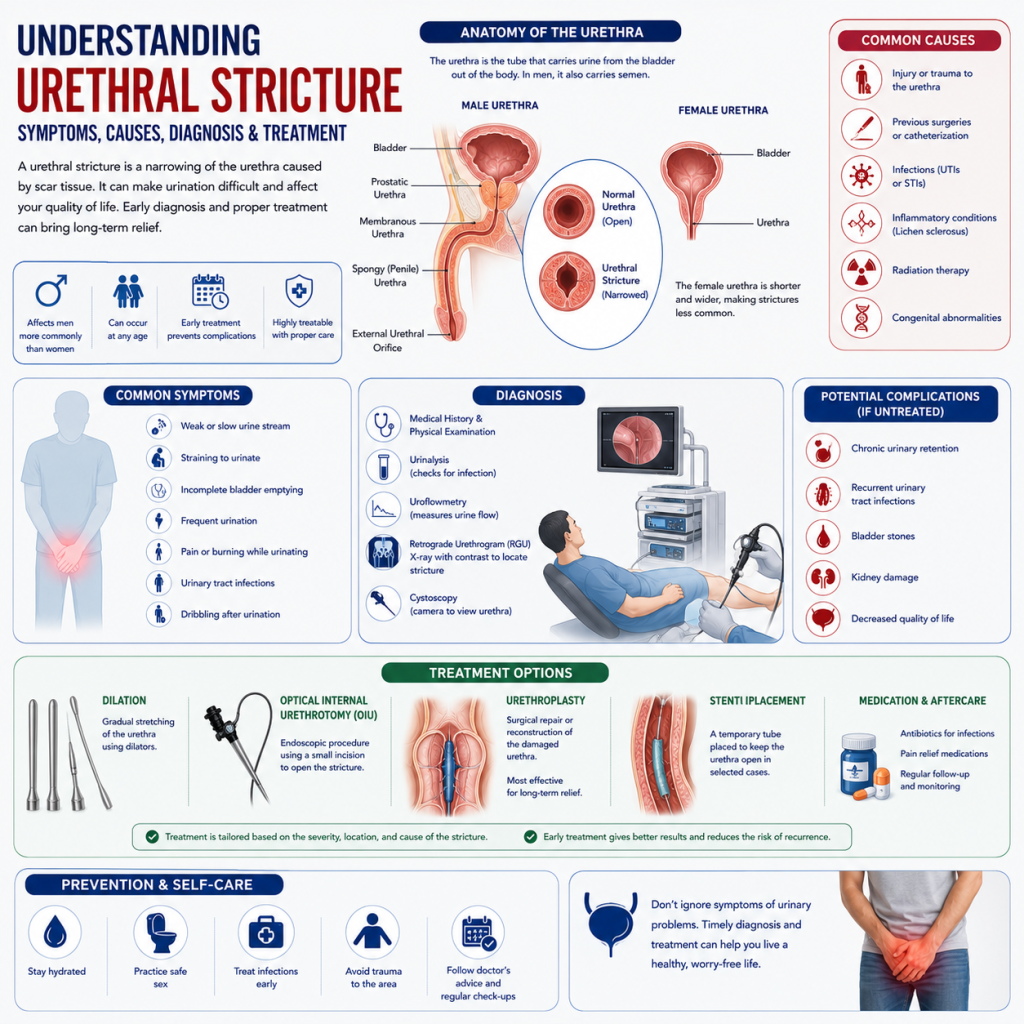
Urethral stricture is a condition where the urethra becomes narrow. The urethra is the tube that carries urine from the bladder out of the body. When this tube narrows, it can block the flow of urine. As a result, you may notice changes in how you urinate. Urethral stricture can affect anyone, but it is more common in men. Early detection is important for better outcomes.
Common Symptoms
Symptoms of urethral stricture can vary. However, many people notice problems with urination. If you have any of the following signs, you should pay attention:Weak or slow urine streamStraining to urinateFrequent urge to urinateFeeling that the bladder is not emptyPain or burning during urinationBlood in the urineUrinary tract infectionsDribbling after urination
Sometimes, symptoms may be mild at first. Over time, they can become worse. Therefore, it is important to notice any changes early.
Causes and Risk Factors
There are several causes of urethral stricture. Some people develop it after an injury. Others may get it from infections or medical procedures. Here are some common causes and risk factors:Injury to the pelvic area or urethraPrevious surgery on the urinary tractUrinary tract infectionsUse of cathetersSexually transmitted infectionsRadiation therapyBeing male (higher risk)
Not everyone with these risk factors will develop a stricture. Still, knowing your risks can help you stay alert.
Diagnosis Methods
Doctors use several methods to diagnose urethral stricture. First, they will ask about your symptoms. Next, they may perform a physical exam. After that, they might use tests to confirm the diagnosis. Common tests include:Urine flow test (measures how fast urine leaves the body)Ultrasound (shows the bladder and urethra)Cystoscopy (a small camera looks inside the urethra)Retrograde urethrogram (an X-ray with dye to see the urethra)
These tests help doctors find the location and length of the stricture. Accurate diagnosis is key for choosing the right treatment.
Treatment Options
Treatment for urethral stricture depends on how severe it is. Your doctor will suggest the best option for you. Common treatments include:Dilation (stretching the narrow area with special tools)Urethrotomy (cutting the stricture with a small scope)Surgery (removing or repairing the narrowed part)Catheter placement (to help urine flow if needed)
Sometimes, more than one treatment is needed. In many cases, early treatment can prevent further problems. For those seeking urethral stricture treatment in their local area, consult a trusted healthcare provider.
Prevention and Lifestyle Tips
While not all cases can be prevented, you can lower your risk. Here are some helpful tips:Practice safe sex to avoid infectionsAvoid injury to the pelvic areaFollow your doctor’s advice after surgery or catheter useDrink enough water to keep urine flowingSee a doctor if you notice urinary symptoms
By taking these steps, you may reduce your chance of developing a stricture.
When to See a Doctor
If you notice symptoms of urethral stricture, do not wait. Early treatment can help prevent complications. You should see a doctor if you have:Difficulty urinatingPain or burning during urinationBlood in your urineRepeated urinary tract infections
Remember, your doctor can help find the cause and suggest the best treatment. According to the CDC and other health experts, prompt care leads to better outcomes.
If you experience symptoms of urethral stricture, consult a healthcare professional for personalized advice.
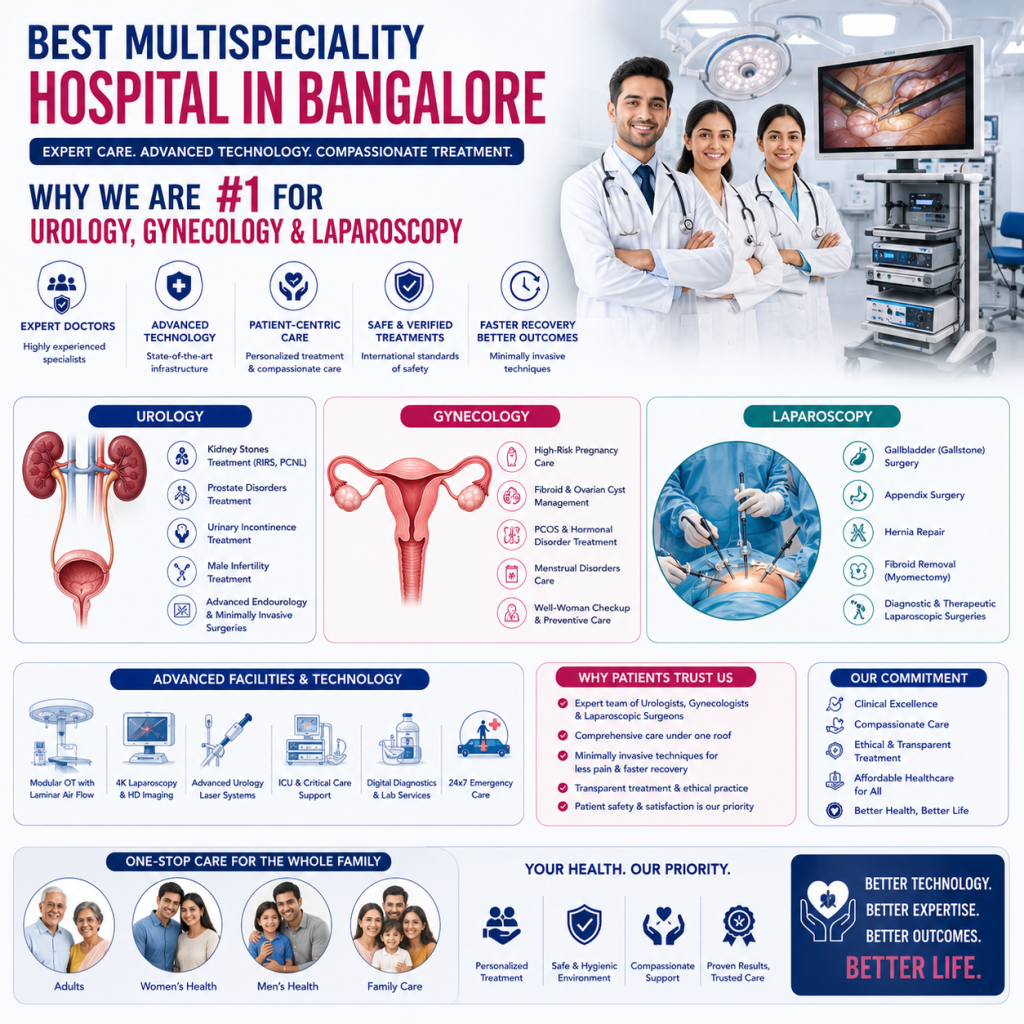
Why Bangalore Needs a Trusted Multispeciality Hospital
Patients today want all major specialties under one roof. From urology & gynecology to proctology & laparoscopic surgery, families in Bangalore search daily for:
👉 Located in New BEL Road, Shirdi Sai Hospital is trusted as one of the best multispeciality hospitals in Bangalore, offering advanced technology, experienced doctors, and compassionate care.
👉 Searches like “best hospital near Hebbal” or “top urology hospital New BEL Road” → lead directly to Shirdi Sai Hospital.
FAQs – Multispeciality Care in Bangalore
Q1. Which is the best multispeciality hospital in Bangalore? Shirdi Sai Hospital in New BEL Road is trusted for urology, gynecology, proctology & laparoscopic surgery.
Q2. Do you provide 24×7 emergency services? Yes. Shirdi Sai has round-the-clock emergency & ambulance support.
Q3. Is laser surgery available for piles & kidney stones? Yes. We specialize in laser & minimally invasive surgeries.
Q4. Do you offer women’s health services? Yes. From PCOS to advanced gyne surgery, we provide complete care.
Q5. Is Shirdi Sai affordable compared to larger hospitals? Yes. We offer transparent, insurance-backed packages with no hidden charges.
Book an Appointment at Shirdi Sai Hospital
🏥 Choose Shirdi Sai Hospital – the best multispeciality hospital in Bangalore for urology, gynecology, proctology & laparoscopic surgery.
Advanced Laparoscopic & General Surgery Care Near You
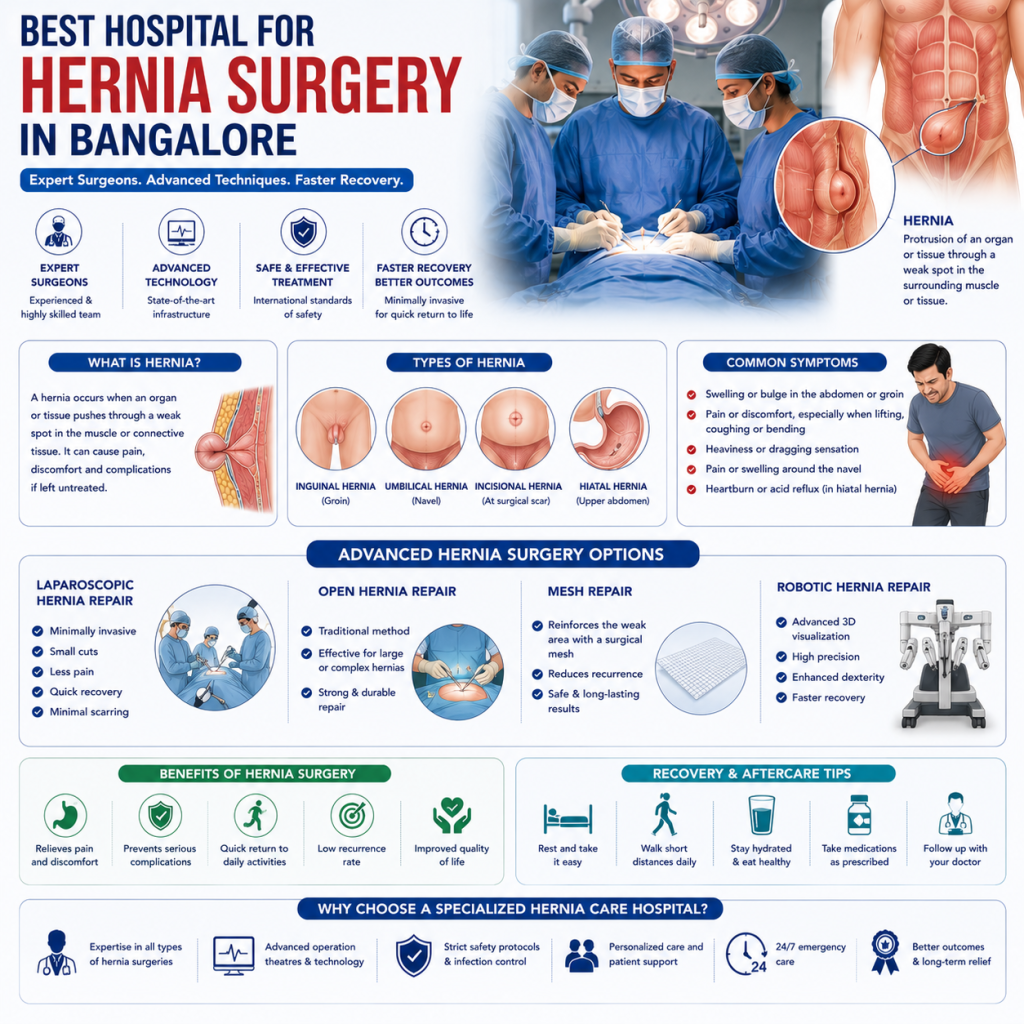
Hernia is a common but painful condition that requires timely treatment. If left untreated, it can lead to complications like obstruction or strangulation. At Shirdi Sai Multispeciality Hospital, located on New BEL Road, Bangalore, patients receive world-class hernia surgery care. With advanced laparoscopic and minimally invasive techniques, we are recognized among the best hospitals in Bangalore for hernia surgery.
🔎 What is a Hernia?
A hernia occurs when an organ or tissue pushes through a weak spot in the abdominal muscles. The most common types include:
Inguinal hernia (groin)
Umbilical hernia (near belly button)
Incisional hernia (after surgery scar)
Hiatal hernia (upper stomach/diaphragm)
✅ Symptoms of Hernia
Visible lump or bulge in abdomen/groin
Pain or discomfort while lifting, coughing, or bending
Burning or aching sensation at the bulge site
Heaviness or pressure in the abdomen
In severe cases: nausea, vomiting, or sudden sharp pain (emergency)
⚠️ When Should You See a Doctor?
Visit a hospital immediately if you experience:
Severe abdominal pain
Bulge that turns red, purple, or black
Vomiting or difficulty passing stool 👉 These signs may indicate strangulated hernia, a medical emergency requiring urgent surgery.
🩺 Hernia Surgery at Shirdi Sai Hospital
At Shirdi Sai Hospital, Bangalore, we offer:
Laparoscopic Hernia Surgery (Keyhole Surgery)
Tiny incisions, minimal scarring
Faster recovery (3–5 days)
Lower risk of recurrence
Open Hernia Surgery
Suitable for large or complex hernias
Performed by experienced general surgeons
Day-Care Surgery
Many patients can go home the same day
Our expert surgical team uses advanced mesh repair techniques to ensure long-term success.
💰 Hernia Surgery Cost in Bangalore
Patients often ask: “How much does hernia surgery cost in Bangalore?”
At Shirdi Sai Hospital, costs are kept affordable without compromising quality.
(Final cost depends on type of hernia, procedure, and patient condition. Insurance support available.)
👨⚕️ Why Choose Shirdi Sai Hospital for Hernia Surgery?
✅ Located on New BEL Road, Bangalore – easily accessible from Hebbal, Yeshwanthpur, and surrounding areas
✅ Experienced surgeons with expertise in laparoscopic and general surgery
✅ Advanced Operation Theatres & ICU facilities
✅ Faster recovery with minimally invasive care
✅ Affordable packages with insurance assistance
✅ Recognized as one of the top hospitals in Bangalore for hernia surgery
❓ FAQs – Hernia Surgery in Bangalore
Q1. Which hospital is best for hernia surgery in Bangalore? 👉 Shirdi Sai Hospital, New BEL Road, is among the best hospitals for hernia surgery, offering advanced laparoscopic care with experienced surgeons.
Q2. How long is recovery after hernia surgery? Most patients recover within 5–7 days for laparoscopic and 2–3 weeks for open surgery.
Q3. Is hernia surgery painful? With laparoscopic techniques, pain is significantly reduced and recovery is faster.
Q4. Can a hernia heal without surgery? No. Surgery is the only permanent treatment for hernia.
Q5. Does insurance cover hernia surgery in Bangalore? Yes. At Shirdi Sai Hospital, most insurance policies cover hernia surgery.
📞 Call to Action
Don’t delay hernia treatment. Consult the expert surgeons at Shirdi Sai Multispeciality Hospital, New BEL Road, Bangalore today.
If a doctor has told you it might be appendicitis, or has already suggested an operation, you probably have a few questions. Do you really need surgery? Keyhole or open? And how long before life gets back to normal? This page explains how appendix surgery in Bangalore usually works at Shirdi Sai Hospital on New BEL Road, from the first examination to the weeks after you go home.
In short, appendicitis needs a proper hospital assessment because an inflamed appendix can get worse and may burst. Doctors confirm it with an examination, blood and urine tests and, when needed, an ultrasound or CT scan. Most people then have an appendectomy, which removes the appendix through keyhole (laparoscopic) or open surgery. A few carefully selected patients with mild appendicitis may get antibiotics first.
Appendix Surgery at a Glance
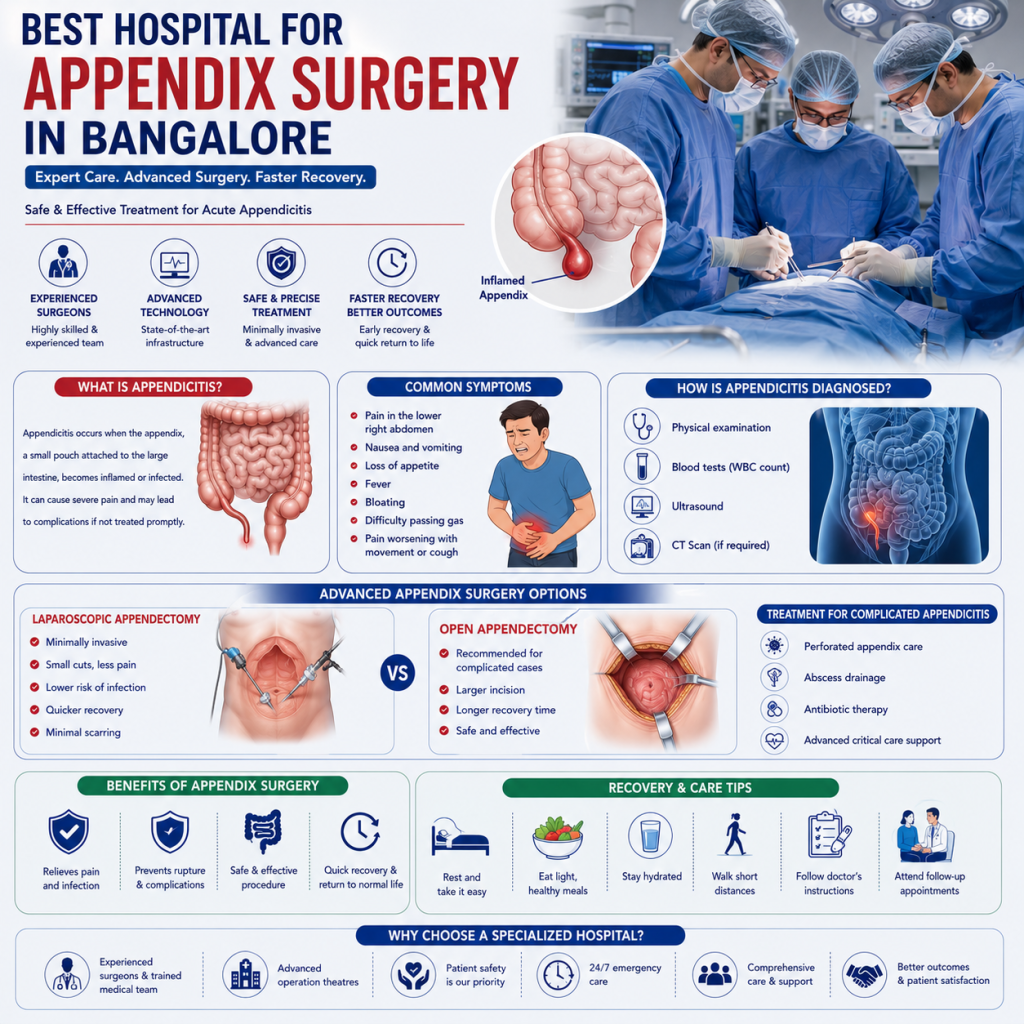
Appendicitis is inflammation and infection of the appendix, a small pouch attached to the large intestine.
Diagnosis depends on your symptoms, an abdominal examination and tests. No single test settles it every time.
Appendectomy, or removal of the appendix, is the standard treatment for most people.
Surgeons use either laparoscopic or open surgery, depending on how severe the infection is.
A burst appendix or an abscess changes the plan and usually means a longer recovery.
Recovery time differs from person to person, so treat any fixed number of days as a rough guide at best.
What Is Appendicitis?
The appendix is a narrow, finger-shaped pouch that sits where the small and large intestine meet, usually on the lower right side of the abdomen. When it gets blocked and infected, it swells up. That is appendicitis.
The classic story is pain that starts around the belly button and moves to the lower right side over a few hours. Along with it, people often lose their appetite, feel sick or vomit, and run a mild fever. Walking, coughing or going over a speed breaker usually makes the pain sharper.
Still, plenty of people do not follow the textbook. Children, older adults and pregnant women can have vague or unusual symptoms, so pain in a different spot does not rule appendicitis out. If you are unsure whether it is your appendix or just a bad stomach, our guide on how appendicitis pain differs from gas walks through the differences.
When Should You Go to Hospital With Appendix Pain?
Don’t wait at home if abdominal pain keeps getting worse instead of settling. Get to a hospital promptly if the pain:
is getting steadily worse or has moved to the lower right side
comes with fever, nausea or repeated vomiting
makes walking, coughing or turning in bed painful
comes with a complete loss of appetite
spreads across the whole abdomen, or you feel faint, confused or breathless
Painkillers, antacids and gas tablets can dull the pain for a while, but they do nothing for an inflamed appendix. Masking the pain can also delay the diagnosis. For sudden, severe pain, go to the nearest emergency department. At Shirdi Sai Hospital, the Emergency Medicine team sees patients with acute abdominal pain round the clock.
How Doctors Diagnose Appendicitis Before Surgery
Before anyone plans appendix surgery in Bangalore or anywhere else, the diagnosis has to be right. There is no home test for appendicitis, and even in hospital no single result confirms it in every case. Instead, the surgeon puts several pieces together.
Your history and a physical examination
Expect questions about when the pain began, where it started, whether it has moved, and whether you have had vomiting, fever, or any change in your bowels or urine. Women may also be asked about periods and the chance of pregnancy, because gynaecological problems and ectopic pregnancy can cause lower abdominal pain in women too. The doctor then gently presses on your abdomen to find where it is most tender.
Blood and urine tests
Blood tests show signs of infection and inflammation and help check whether you are dehydrated. A urine test helps rule out a urinary infection or kidney stone, since both can mimic appendix pain. When relevant, the team will also do a pregnancy test.
Ultrasound or CT scan
A scan helps when the picture is unclear or when the team suspects a complication. Ultrasound is often the first choice for children and pregnant women, while a CT scan gives a more detailed view in adults. Your age, symptoms and examination findings decide which scan, if any, you need.
Does Every Case of Appendicitis Need Surgery?
Not every case, but most do. Removing the appendix is still the standard treatment. According to the NIDDK, doctors usually treat appendicitis with surgery, although some people with mild cases may recover with antibiotics alone.
That antibiotics-first route only suits certain patients. Usually they have uncomplicated appendicitis on a scan, no abscess, no sign of a burst appendix, and a way to be monitored closely. Even then, the problem can return later and some patients end up needing surgery anyway. It is a decision to make with your surgeon after tests, never by taking leftover antibiotics at home.
Types of Appendix Surgery
If you are weighing up options for appendix surgery in Bangalore, it helps to know how the operation works. Removing the appendix is called an appendectomy. People live completely normal lives without an appendix, so taking it out causes no long-term problems. Surgeons can do it in two ways.
Laparoscopic appendix surgery (keyhole)
In a laparoscopic appendectomy, the surgeon makes two or three small cuts in the abdomen and passes in a thin camera, called a laparoscope, along with fine instruments. The camera shows the inside of your abdomen on a screen, so the surgeon can look around, find the appendix and remove it through one of the small openings.
Because the cuts are small, most people have less wound pain, smaller scars and a quicker return to normal activity. For that reason, laparoscopic appendix surgery is the usual first choice for many adults.
Open appendix surgery
Open appendectomy uses one larger cut, usually on the lower right side of the abdomen. It is still the right option in some situations, for example when infection has spread widely, when scar tissue from earlier operations gets in the way, or when the surgeon needs more direct access.
Sometimes an operation starts as keyhole surgery and switches to open surgery partway through. That is a safety call by the surgeon, not a sign that something went wrong.
Is laparoscopic better than open surgery?
For many patients, yes. Keyhole surgery tends to mean fewer wound infections and a shorter recovery. However, the more useful question is which approach suits your appendix and your overall health. Your surgeon should explain why they recommend one over the other.
What If the Appendix Bursts?
If appendicitis goes untreated, the appendix can burst (perforate) and spill infection into the abdomen. This can lead to peritonitis, a pocket of pus called an abscess, or in serious cases sepsis. The NHS describes a burst appendix as a medical emergency.
Treatment then goes beyond simply removing the appendix. Depending on the situation, you may need antibiotics through a drip, a thorough wash-out of the abdomen during surgery, or drainage of an abscess before the surgeon removes the appendix at a later stage. The hospital stay and recovery also tend to be longer, which is one more reason not to sit on worsening pain.
Preparing for Appendix Surgery
Appendix surgery often happens within hours of diagnosis, so preparation moves quickly. The team reviews your reports, starts a drip for fluids, gives antibiotics and has the anaesthetist check you. Your surgeon then explains the operation and its risks before asking for your consent.
Make sure the team knows if you:
take blood thinners, diabetes medicines or any other regular tablets
are allergic to any medicine
have heart, lung or kidney problems
have had surgery on your abdomen before
are pregnant or could be
have had trouble with anaesthesia in the past
The team will also tell you when to stop eating and drinking. Don’t stop any regular medicine unless your doctor asks you to.
What Happens During an Appendectomy?
You will be under general anaesthesia, so you sleep through the whole operation. The surgeon reaches the appendix using the keyhole or open method, seals off its base, removes it and checks the area around it. If there is pus or infected fluid, the surgeon cleans it out before closing the wounds. An uncomplicated laparoscopic appendectomy often takes about an hour, while a burst appendix can take longer.
Risks and Possible Complications
Appendectomy is one of the most common emergency operations, and most people recover well. Still, every surgery carries some risk. Possible complications include:
wound infection
bleeding
a collection of pus inside the abdomen (abscess)
a sluggish bowel (ileus) that causes bloating and nausea for a few days
bowel blockage from scar tissue (adhesions), sometimes years later
reactions to anaesthesia
The risk goes up when the appendix has already burst or when you have other health conditions. Your surgeon will talk you through what applies to you.
Recovery After Appendix Surgery
Recovery after appendix surgery in Bangalore is no different from anywhere else. How fast you recover depends mostly on the type of surgery and whether the appendix had burst. After uncomplicated keyhole surgery, many people go home within a day or two. Open surgery or a burst appendix usually means a longer stay, and full recovery can take a few weeks.
Eating after surgery
You start with sips of water and move on to light, simple food once your stomach settles. There is no special lifelong diet after appendix removal. In the first few days, smaller meals are often easier while your appetite comes back. If you have diabetes, kidney disease or another condition that affects what you eat, follow the advice for that condition.
Walking and getting back to activity
Getting up for a gentle walk, usually the same day or the next, helps your bowel start working again and lowers the risk of blood clots. Build up slowly from there. Avoid heavy lifting, intense workouts and sport until your surgeon clears you, because the abdominal wall needs time to heal, especially after open surgery.
Going back to work
Someone with a desk job usually returns sooner than someone whose work involves lifting, long hours of driving or standing all day. Your surgeon will give you a timeline based on your operation and how your wounds are healing. That is far more reliable than comparing notes with a friend who had the same surgery.
Wound care
Keep the wounds clean and dry, and follow your discharge instructions on dressings, bathing and stitches. A little redness right at the edge of a cut is normal in the first few days. Call the hospital if the redness spreads, the wound feels hot or swollen, or you notice pus, bleeding or the edges coming apart.
Warning Signs After Appendix Surgery
Some soreness and tiredness for a while is normal. However, contact the hospital or come back for a review if you notice:
pain that gets worse instead of better
fever or chills, especially if they start a few days after surgery
vomiting that does not stop, or not being able to keep food and fluids down
a swollen, tight or bloated abdomen
redness, swelling or discharge from a wound
no bowel movement or gas for several days
Severe sudden pain, fainting, confusion or difficulty breathing need emergency care straight away.
Appendix Surgery Cost in Bangalore: What Affects It
The cost of appendix surgery in Bangalore depends on several factors, so a single fixed price rarely tells the full story. The main ones are:
laparoscopic or open surgery
whether the appendix had burst or formed an abscess
the tests and scans needed before surgery
the number of days in hospital and the room type
medicines, antibiotics and any ICU care
your insurance policy and what it covers
For an estimate based on your reports, or to check what your insurance covers, get in touch with the hospital and the team will guide you.
Appendix Surgery at Shirdi Sai Hospital, New BEL Road
Shirdi Sai Multispeciality Hospital treats appendicitis through its General Surgery department, which handles a wide range of abdominal conditions and uses laparoscopic techniques where they suit the patient. The surgeon decides between keyhole and open surgery case by case, after a proper assessment.
When you come in with suspected appendicitis, the team will work out:
whether your symptoms really point to appendicitis or to something else
which tests and scans you need
whether you need surgery now or another treatment first
whether the case looks simple or complicated
what care you will need after the operation
The hospital sits on New BEL Road, so it is easy to reach from Sanjay Nagar, RMV 2nd Stage, Mathikere, Hebbal and nearby areas. You can read more about our general surgery care on New BEL Road, including other laparoscopic procedures.
Questions to Ask Your Surgeon
Whether you choose us or another hospital for appendix surgery in Bangalore, it helps to walk in with a few questions ready. You might ask:
How sure are you that this is appendicitis?
Is it uncomplicated, or has it burst or formed an abscess?
Do I need surgery now, or could antibiotics work for me?
Will you do keyhole or open surgery, and what could change that?
How long will I stay in hospital?
What should I watch for once I am home?
When should I come back for a follow-up?
Frequently Asked Questions
Which hospital is best for appendix surgery in Bangalore?
Look for a hospital that can see you quickly in an emergency, run the tests needed to confirm appendicitis, and has general surgeons who do both laparoscopic and open surgery. Shirdi Sai Hospital on New BEL Road brings emergency assessment and general surgery care under one roof for patients across North Bangalore.
Is appendix surgery painful?
You are asleep during the operation, so you won’t feel it. Afterwards, expect some soreness around the cuts for a few days, and the team will give you pain relief for it. Keyhole surgery usually causes less wound pain than open surgery.
How long does recovery take after appendix surgery?
It varies. After uncomplicated keyhole surgery, many people feel much better within a week or two and recover fully over a few weeks. Open surgery or a burst appendix usually takes longer. Your surgeon will tell you when it is safe to return to work, lifting and exercise.
Can appendicitis be treated without surgery?
Sometimes. A small group of patients with mild, uncomplicated appendicitis may do well on antibiotics, but the infection can come back later. For most people, surgery is still the standard treatment.
What happens if the appendix bursts?
Infection spreads into the abdomen and can cause peritonitis, an abscess or sepsis. It needs urgent treatment with antibiotics and surgery, sometimes with drainage, and recovery takes longer.
Can appendicitis come back after the appendix is removed?
It is very rare. Occasionally a small stump of appendix left behind becomes inflamed, which doctors call stump appendicitis. Having had your appendix out does not rule out other causes of belly pain, so severe new pain still needs a check-up.
Does insurance cover appendix surgery?
Most health insurance policies cover appendectomy because it is a medically necessary operation, but the terms differ between policies. Share your policy details with the hospital billing team to confirm your coverage.
Book a Consultation for Appendix Surgery in Bangalore
If you have worsening pain on the lower right side, or a scan has already shown appendicitis, don’t wait for it to settle on its own. Call Shirdi Sai Hospital on +91 80885 11289 or book a General Surgery consultation at our New BEL Road hospital. For severe or fast-worsening pain, come straight to the emergency department.
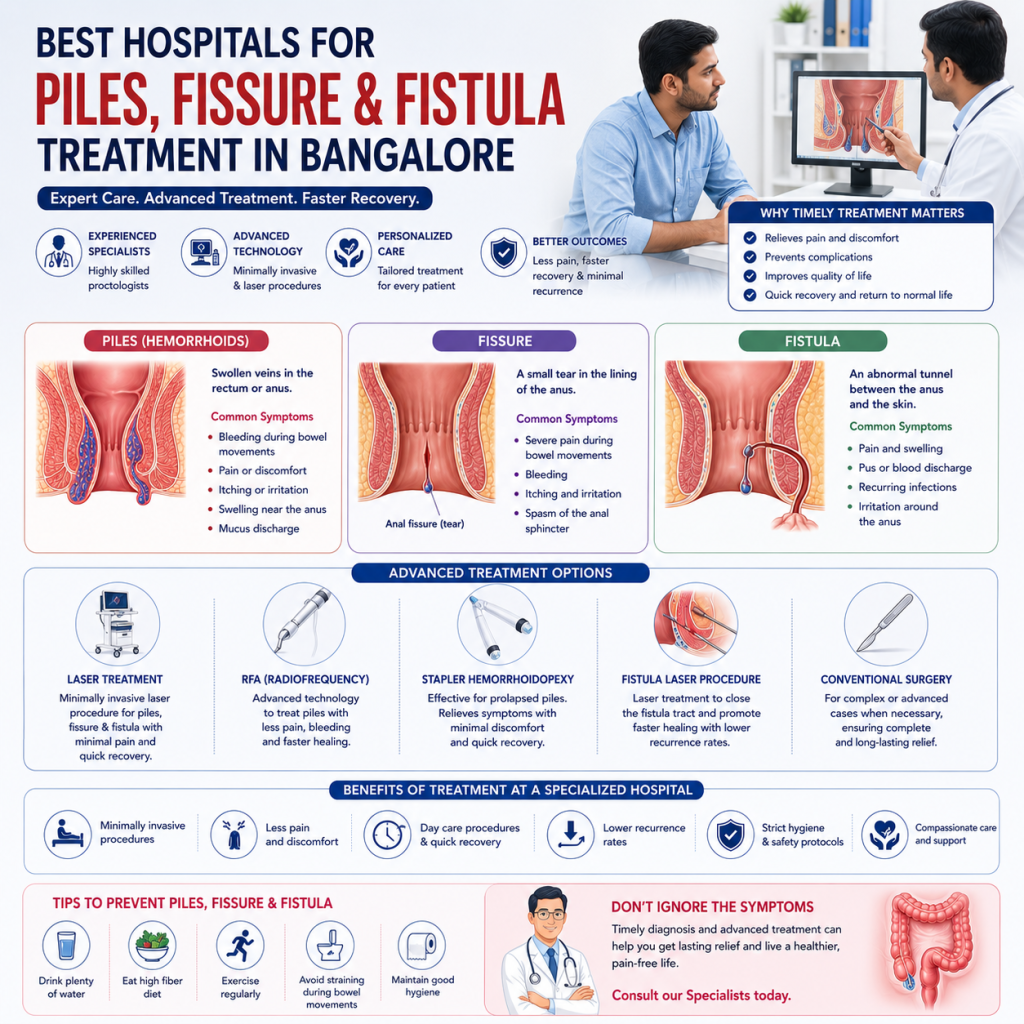
✅ Recognized among the top hospitals for piles, fissure, and fistula treatment in Bangalore
❓ FAQs – Piles, Fissure & Fistula
Q1. Which hospital is best for piles treatment in Bangalore? 👉 Shirdi Sai Hospital, New BEL Road, is among the best, offering advanced laser piles treatment with quick recovery.
Q2. Is fissure surgery painful? Laser fissure treatment is almost painless with faster healing compared to conventional methods.
Q3. Can fistula heal without surgery? No. Fistula requires surgical intervention, and laser surgery offers the best results.
Q4. How long is recovery after laser surgery? Most patients resume normal activities within 3–5 days.
Q5. Does insurance cover piles, fissure, and fistula surgery in Bangalore? Yes. Most insurance plans cover laser proctology surgeries at Shirdi Sai Hospital.
📞 Call to Action
Don’t suffer in silence. Get advanced laser treatment for piles, fissure, and fistula at Shirdi Sai Multispeciality Hospital, New BEL Road, Bangalore.
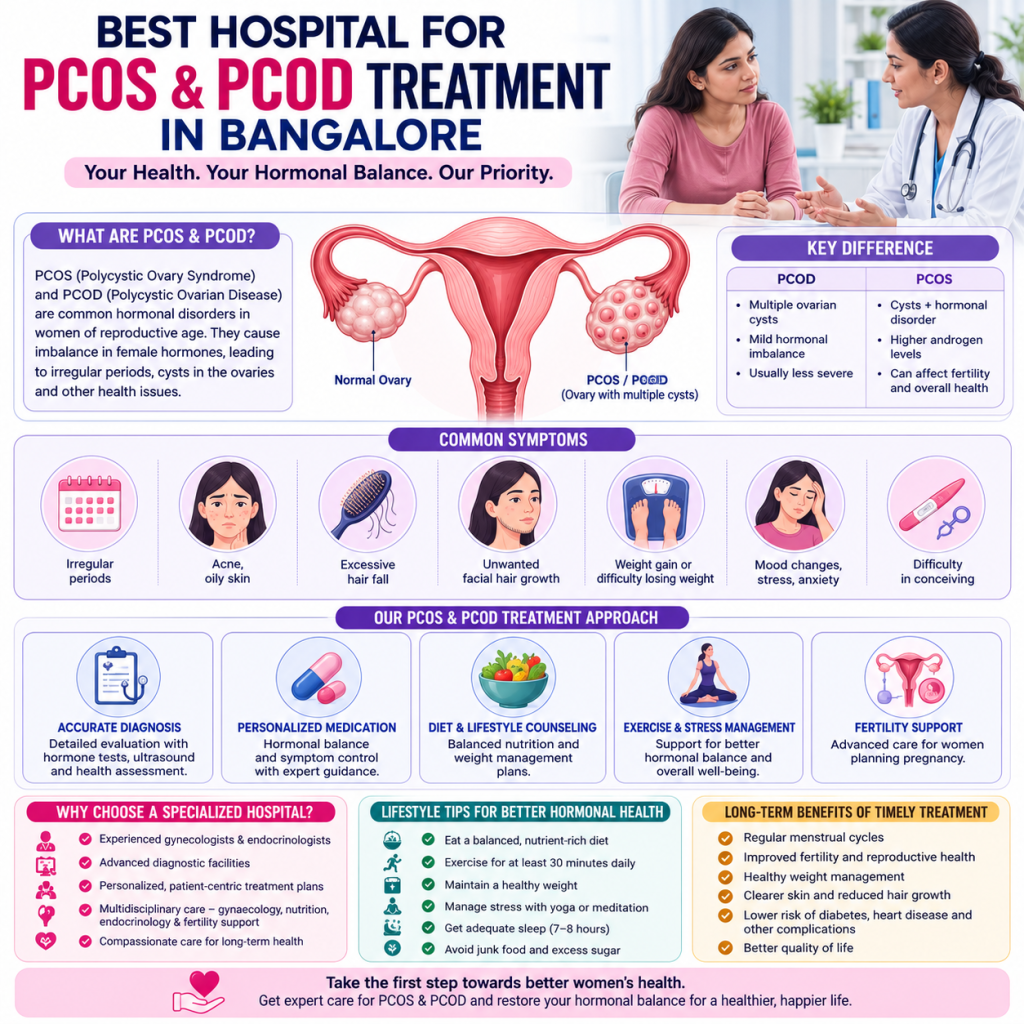
Polycystic Ovary Syndrome (PCOS) and Polycystic Ovary Disorder (PCOD) are among the most common hormonal conditions affecting women of reproductive age. They can cause irregular periods, weight gain, acne, and even infertility if left untreated. At Shirdi Sai Multispeciality Hospital, New BEL Road, Bangalore, our expert gynecology team provides personalized care for PCOS & PCOD, making us one of the best hospitals in Bangalore for women’s health treatment.
🔎 Understanding PCOS & PCOD
PCOD (Polycystic Ovary Disorder): Ovaries produce immature eggs, leading to irregular periods and hormonal imbalance.
PCOS (Polycystic Ovary Syndrome): A more severe metabolic disorder with higher androgen levels, insulin resistance, and fertility issues.
(Costs vary per patient needs. Insurance may cover fertility treatments.)
👩⚕️ Why Choose Shirdi Sai Hospital?
✅ Expert gynecologists specializing in PCOS & PCOD
✅ Comprehensive women’s health services under one roof
✅ Personalized care plans for fertility, hormones, and lifestyle management
✅ Located on New BEL Road – easily accessible from Hebbal, Malleshwaram, Yeshwanthpur, RT Nagar
✅ Recognized as one of the top hospitals in Bangalore for PCOS treatment
❓ FAQs – PCOS & PCOD
Q1. Which hospital is best for PCOS treatment in Bangalore? 👉 Shirdi Sai Hospital, New BEL Road, is among the best hospitals for PCOS & PCOD care with expert gynecologists.
Q2. Can PCOS be cured permanently? PCOS cannot be fully cured, but symptoms can be managed effectively with lifestyle changes and treatment.
Q3. Does PCOS affect fertility? Yes. PCOS is a leading cause of infertility, but with proper treatment, many women conceive successfully.
Q4. What is the difference between PCOS and PCOD? PCOD is milder (ovulation issue), while PCOS is more severe with hormonal imbalance and metabolic complications.
Q5. How long does PCOS treatment take? Treatment is long-term and depends on individual response, but symptom control is possible within months.
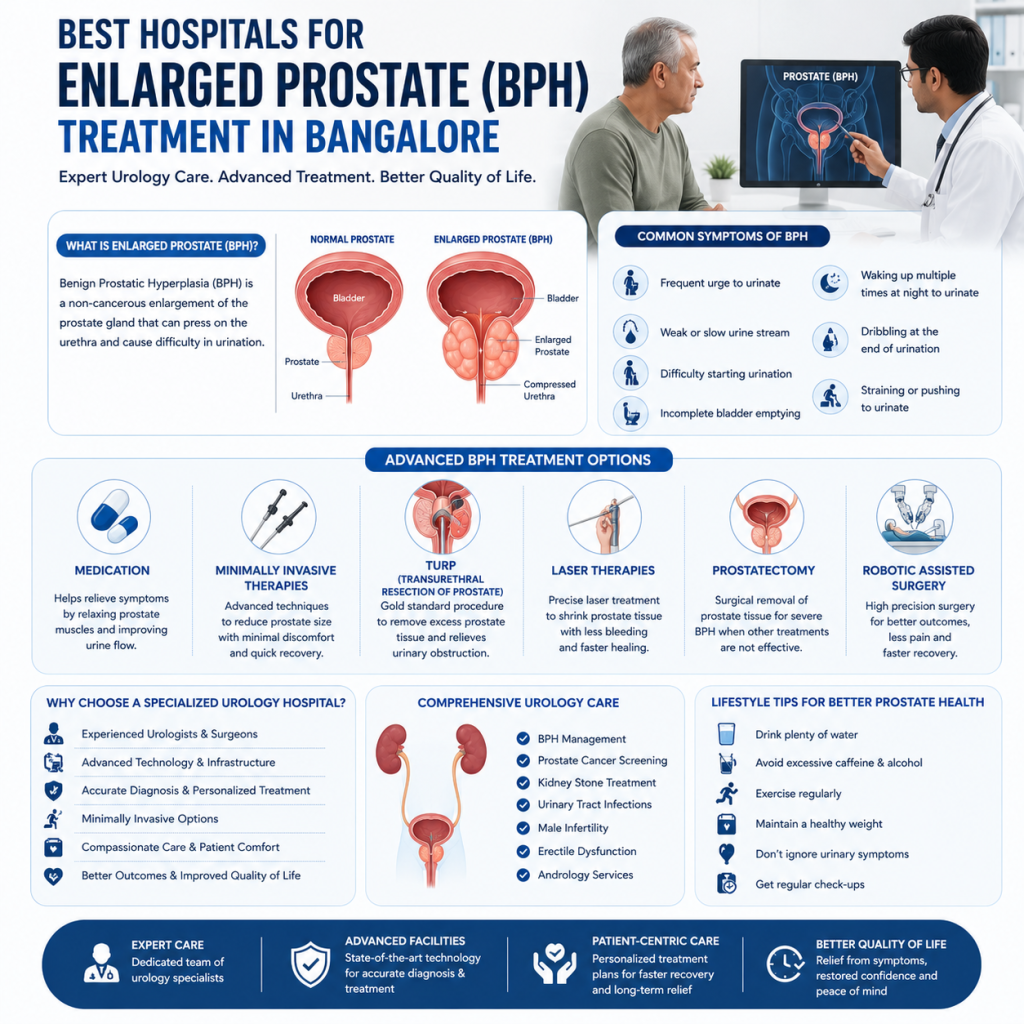
Benign Prostatic Hyperplasia (BPH), commonly known as enlarged prostate, is a condition affecting men over 50. It causes frequent urination, weak urine flow, and discomfort, significantly affecting quality of life. At Shirdi Sai Multispeciality Hospital, New BEL Road, Bangalore, our expert urologists specialize in advanced laser and minimally invasive prostate treatments, making us one of the best hospitals in Bangalore for enlarged prostate care.
🔎 What is Enlarged Prostate (BPH)?
BPH occurs when the prostate gland enlarges and presses against the urethra, blocking urine flow. While non-cancerous, untreated BPH can cause urinary retention, bladder damage, and kidney complications.
✅ Symptoms of Enlarged Prostate
Frequent urge to urinate, especially at night (nocturia)
Weak or interrupted urine flow
Difficulty starting urination
Incomplete emptying of bladder
Dribbling after urination
Urinary tract infections (UTIs)
⚠️ When Should You See a Doctor?
Seek medical attention if you experience:
Complete inability to urinate
Blood in urine
Severe urinary frequency disrupting daily life
Recurrent infections
🩺 Enlarged Prostate Treatments at Shirdi Sai Hospital
Our urology team provides personalized treatment depending on severity:
Medications: To relax bladder muscles or shrink prostate
Minimally Invasive Procedures:
TURP (Transurethral Resection of Prostate) – Gold standard for BPH
(Final cost depends on patient condition & procedure. Insurance accepted.)
👨⚕️ Why Choose Shirdi Sai Hospital?
✅ Experienced urologists with 15+ years of expertise
✅ Advanced laser & endoscopic equipment
✅ Quick recovery & minimal complications
✅ Affordable, insurance-covered treatments
✅ Located on New BEL Road – accessible from Hebbal, Malleshwaram, Yeshwanthpur, RT Nagar
✅ Recognized among the top hospitals in Bangalore for prostate surgery
❓ FAQs – Enlarged Prostate (BPH)
Q1. Which hospital is best for enlarged prostate treatment in Bangalore? 👉 Shirdi Sai Hospital, New BEL Road, is among the best hospitals offering advanced BPH treatments.
Q2. Is prostate enlargement cancer? No. BPH is non-cancerous, though symptoms may mimic prostate cancer, so evaluation is important.
Q3. What is the recovery time after prostate surgery? Most patients recover in 1–2 weeks (laser) or 2–4 weeks (TURP).
Q4. Is laser surgery better for BPH? Yes. Laser prostate surgery offers minimal bleeding, shorter hospital stay, and quick recovery.
Q5. Does insurance cover prostate surgery in Bangalore? Yes. Most insurance providers cover TURP and laser prostate surgeries at Shirdi Sai Hospital.
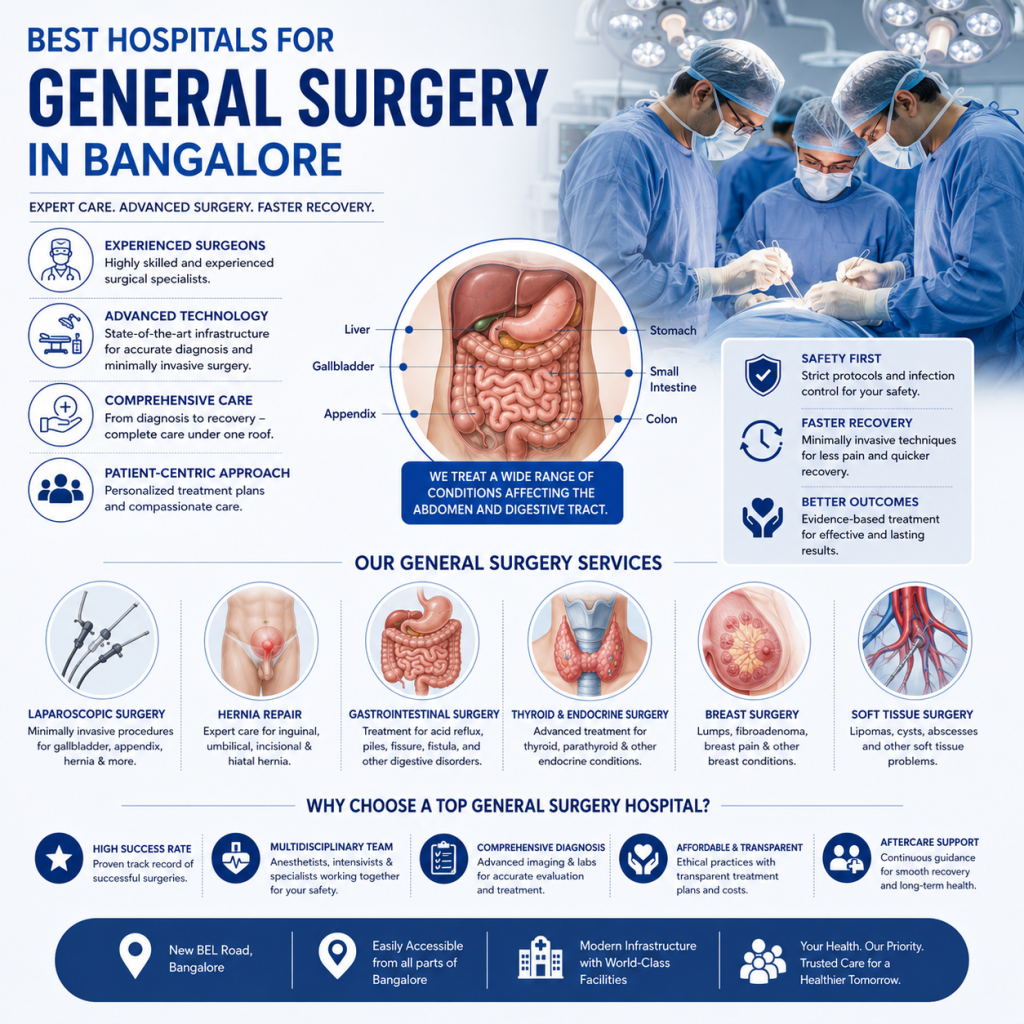
When it comes to surgical treatments, patients want trust, safety, and advanced care. At Shirdi Sai Multispeciality Hospital, New BEL Road, Bangalore, we provide a wide range of general and laparoscopic surgeries performed by highly skilled surgeons. Recognized as one of the best hospitals in Bangalore for general surgery, we ensure patient safety, quick recovery, and affordable costs.
🔎 What is General Surgery?
General Surgery deals with a variety of common and complex conditions involving the abdomen, digestive system, and soft tissues. At Shirdi Sai Hospital, we specialize in both conventional and laparoscopic (minimally invasive) surgeries.
✅ Surgeries Offered at Shirdi Sai Hospital
Hernia Surgery – Laparoscopic & open mesh repair
Appendix Surgery (Appendectomy) – Day-care and emergency appendix removal
Gallbladder Surgery – Laparoscopic cholecystectomy for gallstones
Piles, Fissure & Fistula Surgery – Advanced laser treatments
Hydrocele Surgery – Minimally invasive approach
MTP (Medical Termination of Pregnancy) – Safe, legal & confidential
PCOS & PCOD Management – Comprehensive women’s health care
⚠️ Why Patients Choose General Surgery at Shirdi Sai Hospital
Expert Surgeons: Decades of combined experience
Advanced Laparoscopy: Keyhole surgeries with faster recovery
Emergency Care: 24×7 surgical support for acute conditions
Affordable Costs: Transparent pricing, insurance support
Modern Facilities: OT, ICU, diagnostic labs under one roof
Location Advantage: Easily accessible on New BEL Road from Hebbal, Yeshwanthpur, Malleshwaram, RT Nagar
💰 General Surgery Cost in Bangalore
While surgery costs vary by condition, at Shirdi Sai Hospital we ensure:
Affordable pricing (hernia/appendix/gallbladder from ₹40,000 onwards)
Laser surgeries starting ₹35,000–₹90,000 depending on condition
Insurance tie-ups for cashless treatments
(Exact cost shared after doctor consultation & diagnosis.)
❓ FAQs – General Surgery in Bangalore
Q1. Which hospital is best for general surgery in Bangalore? 👉 Shirdi Sai Multispeciality Hospital, New BEL Road, is among the best, offering comprehensive surgical care across multiple specialties.
Q2. Do you provide laparoscopic surgeries? Yes. Most general surgeries at Shirdi Sai Hospital are performed laparoscopically for faster recovery.
Q3. What is the recovery time after general surgery? Depends on the surgery: laparoscopic (3–7 days), open surgery (2–3 weeks).
Q4. Is surgery at Shirdi Sai Hospital covered by insurance? Yes. Most procedures are insurance-covered with cashless options.
Q5. Do you handle emergency surgeries? Yes. We have 24×7 emergency surgical care including appendicitis, trauma, and acute abdomen.