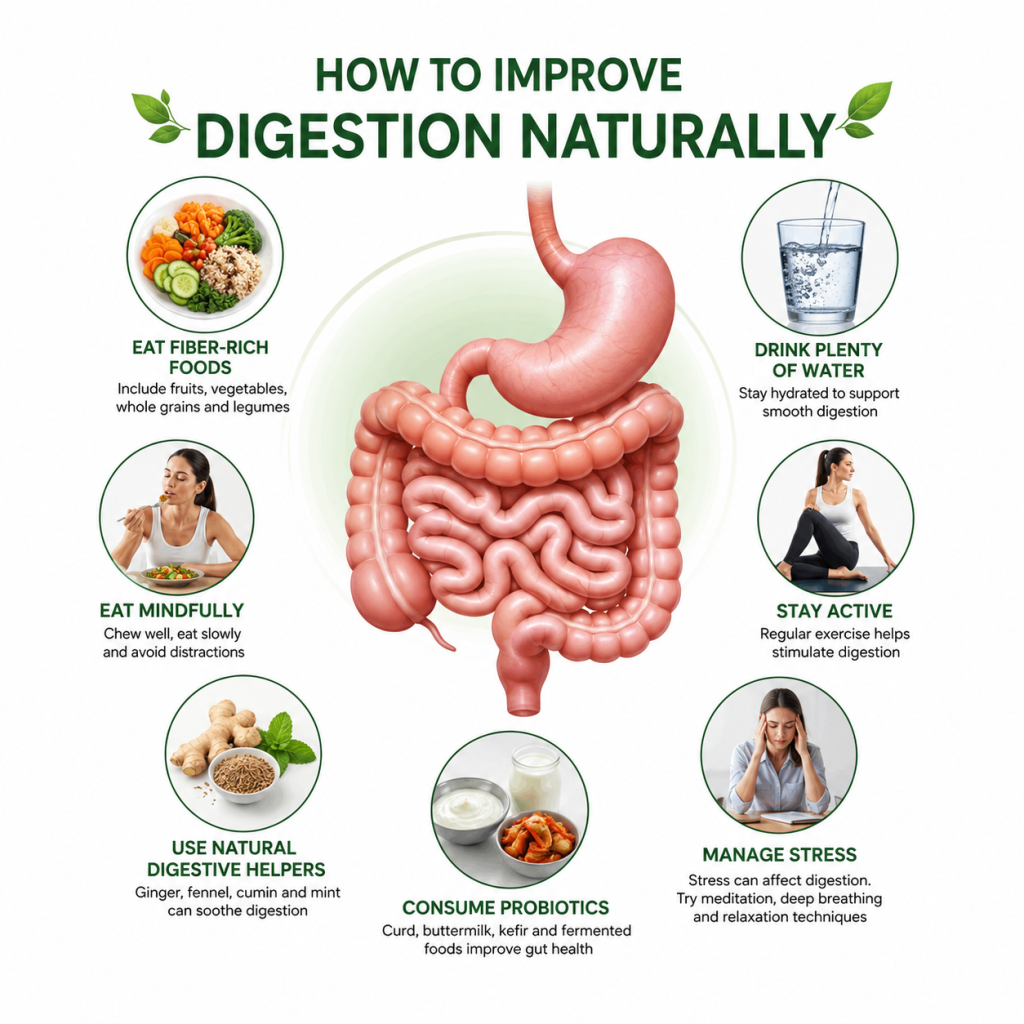
Improving digestion naturally starts with simple daily habits: eating slowly, choosing fibre-rich foods, drinking enough water, staying physically active, sleeping well, and avoiding overeating or very late meals. Poor digestion is not always caused by one food. It often happens because of irregular eating, low fibre intake, dehydration, stress, long sitting hours, and disturbed sleep. Persistent indigestion, bloating, constipation, acidity, or abdominal discomfort should not be ignored if it keeps coming back.
At Shirdi Sai Hospital, New BEL Road, we often see patients with repeated digestive discomfort who try home remedies for weeks without identifying the actual cause. This guide explains practical ways to improve digestion naturally, what mistakes to avoid, and when medical evaluation becomes necessary.
What Does Good Digestion Actually Mean?
Good digestion means your body is able to break down food, absorb nutrients, and pass waste comfortably. It does not mean you should never feel gas, fullness, or bloating. Mild digestive changes can happen after heavy meals, poor sleep, stress, or eating too fast.
Healthy digestion usually includes:
- comfortable appetite
- regular bowel movement
- less bloating after meals
- no repeated acidity or burning
- no frequent stomach pain
- stable energy after eating
When digestive discomfort becomes frequent, it should be evaluated instead of being dismissed as “gas problem.”
Why Digestion Problems Are Common Today
Digestive issues are common because many people eat quickly, sit for long hours, drink less water, skip meals, eat late at night, and depend heavily on tea, coffee, packaged foods, or spicy meals.
Common daily triggers include:
- irregular meal timing
- low fibre intake
- less water intake
- eating too fast
- overeating
- stress
- low physical activity
- late dinners
- lying down soon after food
- frequent fried or processed foods
Diet changes can help many people with indigestion symptoms, especially when certain foods worsen symptoms. Lifestyle habits also matter because constipation is commonly linked with low fibre intake, low fluid intake, and lack of exercise.
Eat Slowly and Chew Food Properly
Eating too fast is one of the most common reasons for bloating, heaviness, and discomfort after meals. Digestion begins in the mouth. When food is chewed properly, it mixes with saliva and reaches the stomach in a form that is easier to process.
Simple habits that help:
- sit down while eating
- avoid rushing meals
- chew each bite properly
- avoid talking continuously while eating
- avoid eating while scrolling or watching videos
Fast eating often leads to overeating because the body does not get enough time to recognise fullness.
Increase Fibre Gradually
Fibre supports bowel movement and helps prevent constipation. It is found in fruits, vegetables, whole grains, pulses, legumes, nuts, and seeds.
Good fibre sources include:
- vegetables
- fruits with skin where suitable
- oats
- millets
- brown rice
- dal
- chana
- rajma
- sprouts
- flaxseeds
- nuts in moderation
Do not suddenly increase fibre in large amounts. A sudden jump can worsen gas and bloating in some people. Increase fibre gradually and drink enough water along with it.
Drink Enough Water Through the Day
Water supports digestion and helps prevent hard stools. Low fluid intake can make constipation worse and can also contribute to fatigue and poor bowel comfort.
Better hydration habits:
- drink water regularly through the day
- increase fluids during hot weather
- drink more when sweating or exercising
- avoid replacing water with too much tea or coffee
- include soups or coconut water when suitable
Hydration is especially important when increasing fibre intake, because fibre works better when the body has enough fluids.
Add Daily Physical Activity
Movement helps the digestive system function better. A sedentary routine can slow bowel movement and increase bloating or constipation.
Helpful activity options:
- walking after meals
- light stretching
- regular morning or evening walk
- avoiding long sitting without breaks
- taking short movement breaks during work
Exercise does not need to be intense. Even light daily movement can support bowel regularity and reduce sluggishness.
Avoid Very Late and Heavy Meals
Late dinners and heavy meals can worsen acidity, bloating, and reflux. Lying down soon after eating can allow stomach acid to move upward and cause burning or sour taste.
Better habits:
- eat dinner earlier when possible
- keep dinner lighter than lunch
- avoid lying down immediately after meals
- reduce heavy fried food at night
- avoid overeating before sleep
People with acidity or reflux symptoms often feel better when they avoid late-night heavy meals and stay upright after eating.
Improve Gut Health Naturally
Gut health depends on diet quality, fibre intake, hydration, sleep, stress levels, and physical activity. A balanced diet supports the gut better than one “digestion drink” or one home remedy.
Gut-friendly habits include:
- eating regular meals
- including vegetables daily
- adding fruits in moderate portions
- including curd if tolerated
- avoiding excessive processed foods
- reducing frequent fried food
- drinking enough water
- sleeping properly
Curd can be useful for some people because it is a fermented food. However, it may not suit everyone, especially during throat irritation, lactose intolerance, or active digestive upset.
Foods That May Help Improve Digestion
Some foods are easier to digest and can support better digestive comfort when included appropriately.
| Food Group | Examples | How It Helps |
|---|---|---|
| Fibre-rich foods | vegetables, fruits, oats, dal | support bowel movement |
| Fermented foods | curd, buttermilk if tolerated | support gut balance |
| Fluids | water, soups, coconut water | support stool softness and hydration |
| Light meals | khichdi, rice, idli, dal | easier during digestive discomfort |
| Protein foods | dal, eggs, paneer, fish, chicken | support overall body repair |
Food should be chosen based on tolerance. A food that helps one person may cause bloating in another.
Foods and Habits That Can Worsen Digestion
Certain foods and habits can trigger indigestion, acidity, bloating, or constipation.
Common triggers include:
- very spicy food
- deep-fried snacks
- excess tea or coffee
- carbonated drinks
- packaged foods
- eating too fast
- overeating
- skipping meals
- eating late at night
- lying down soon after food
- very low water intake
If a specific food repeatedly causes symptoms, track it and discuss it with a doctor instead of removing too many foods unnecessarily.
Digestion Improvement: Helpful Habits vs Common Mistakes
| Helpful Habit | Common Mistake |
|---|---|
| Eat slowly | Eating in a hurry |
| Drink water regularly | Drinking very little water |
| Increase fibre gradually | Suddenly eating too much fibre |
| Walk daily | Sitting for long hours |
| Eat lighter dinners | Heavy late-night meals |
| Track trigger foods | Guessing and over-restricting food |
| Consult if symptoms persist | Taking repeated antacids without evaluation |
This comparison helps separate practical digestion support from habits that quietly worsen symptoms.
Can Stress Affect Digestion?
Yes. Stress can affect digestion through the gut-brain connection. It can worsen acidity, bloating, abdominal discomfort, constipation, loose stools, and appetite changes in some people.
Stress-related digestion symptoms may include:
- stomach tightness
- frequent bloating
- acidity during stressful days
- irregular bowel movement
- low appetite or overeating
- nausea before important events
Stress does not mean symptoms are “imaginary.” It means the nervous system and digestive system are connected. If stress-linked symptoms are frequent, both lifestyle and medical evaluation may be needed.
How to Improve Digestion in Indian Food Habits
Indian food can support digestion when meals are balanced and portions are controlled. The problem is usually not Indian food itself. The problem is excess oil, frequent fried snacks, late meals, low vegetables, and irregular eating.
Practical Indian meal habits:
- include dal or protein with meals
- add one vegetable serving daily
- include curd or buttermilk if tolerated
- keep dinner lighter
- avoid daily fried snacks
- reduce excess chilli if it triggers acidity
- avoid tea or coffee on an empty stomach if it causes discomfort
- choose home-cooked meals more often
Simple foods like khichdi, idli, dal rice, curd rice if tolerated, vegetable soups, and lightly cooked meals can be useful during digestive discomfort.
When Home Remedies Are Not Enough
Home remedies may reduce mild symptoms, but they should not replace diagnosis when digestive problems keep returning.
Do not depend only on home remedies if you have:
- repeated acidity
- frequent bloating
- constipation for many days
- abdominal pain
- vomiting
- poor appetite
- unexplained weight loss
- blood in stool
- black stools
- fever with stomach symptoms
- difficulty swallowing
- persistent loose stools
These symptoms need medical evaluation to identify the cause.
Why Patients Choose Shirdi Sai Hospital for Digestive Concerns
At Shirdi Sai Hospital, New BEL Road, digestive symptoms are evaluated based on duration, severity, food habits, bowel pattern, medical history, and associated symptoms. The goal is to identify whether symptoms are due to diet, lifestyle, acidity, constipation, infection, medication effects, or another health issue.
Patients choose Shirdi Sai Hospital because:
- symptoms are assessed through clinical history and examination
- care focuses on identifying the cause, not only temporary relief
- guidance includes diet, hydration, lifestyle, and treatment when required
- evaluation is suitable for adults, elderly patients, and people with repeated digestive discomfort
- the hospital is accessible for patients from Devasandra, RMV 2nd Stage, Sanjaynagar, Mathikere, Hebbal, and nearby New BEL Road areas
When to Consult a Doctor for Digestion Problems at Shirdi Sai Hospital
You should consult a doctor if digestive symptoms are frequent, worsening, or affecting daily life.
Seek medical advice if you have:
- indigestion that keeps returning
- constipation that does not improve
- repeated acidity or reflux
- stomach pain after meals
- bloating with pain
- vomiting
- unexplained weight loss
- blood in stool
- black stools
- fever with abdominal symptoms
- difficulty swallowing
- poor appetite for several days
If you are consulting a best hospital in Bangalore, especially around New BEL Road and nearby areas, early evaluation helps identify the cause and prevents delay in treatment.
Frequently Asked Questions
What is the best way to improve digestion naturally?
The best approach is to eat slowly, drink enough water, increase fibre gradually, stay active, sleep well, and avoid overeating or very late meals. If symptoms keep coming back, medical evaluation is important.
Which foods help digestion?
Vegetables, fruits, oats, dal, whole grains, curd if tolerated, soups, and light home-cooked meals can support digestion. Food choices should be based on individual tolerance.
Can drinking water improve digestion?
Yes. Adequate water intake supports digestion and helps prevent hard stools. It is especially important when eating more fibre.
Does walking help digestion?
Yes. Light walking and regular movement can support bowel movement and reduce sluggishness. Avoid intense activity immediately after a heavy meal.
Why do I get bloating after eating?
Bloating can happen due to fast eating, overeating, gas-producing foods, constipation, food intolerance, stress, or digestive disorders. Frequent bloating should be checked.
Are home remedies enough for digestion problems?
Home remedies may help mild symptoms, but they are not enough when symptoms are frequent, severe, or associated with pain, vomiting, weight loss, blood in stool, or appetite loss.
When should I see a doctor for poor digestion?
You should consult a doctor if indigestion, bloating, constipation, acidity, or abdominal pain keeps returning, worsens, or affects daily routine.
Conclusion
Improving digestion naturally is not about one special food or a quick remedy. It depends on consistent habits: eating slowly, drinking enough water, increasing fibre gradually, staying active, avoiding very late heavy meals, sleeping well, and managing stress.
At Shirdi Sai Hospital, New BEL Road, repeated digestive symptoms are evaluated with a structured approach to identify the real cause. If poor digestion continues despite lifestyle changes, timely consultation can help prevent complications and guide proper treatment.
OPD Consultation: ₹500

Leave a Reply