Cold and cough are among the most common health problems affecting people of all age groups. They are usually caused by viral infections and often improve within a few days. Many people prefer home remedies for relief, especially in early stages. While certain remedies can help ease symptoms like throat irritation, congestion, and cough, they do not cure the infection itself. Understanding what works, what does not, and when to seek medical care is important.
At Shirdi Sai Hospital, New BEL Road, patients often try multiple home remedies before consulting a doctor. In many cases, symptoms persist longer due to improper care or delayed treatment. This guide explains effective home remedies for cold and cough, their benefits, limitations, and when medical attention is required.
What Causes Cold and Cough?
Cold and cough are commonly caused by viral infections affecting the respiratory tract.
Common causes include:
- viral infections (common cold)
- seasonal changes
- exposure to cold weather
- low immunity
- allergies
Symptoms may include:
- runny or blocked nose
- sore throat
- dry or productive cough
- mild fever
- fatigue
Do Home Remedies Really Work?
Home remedies can help reduce symptoms but do not eliminate the virus.
They work by:
- soothing the throat
- reducing irritation
- loosening mucus
- supporting hydration
They should be used as supportive care, not as a replacement for medical treatment when symptoms persist.
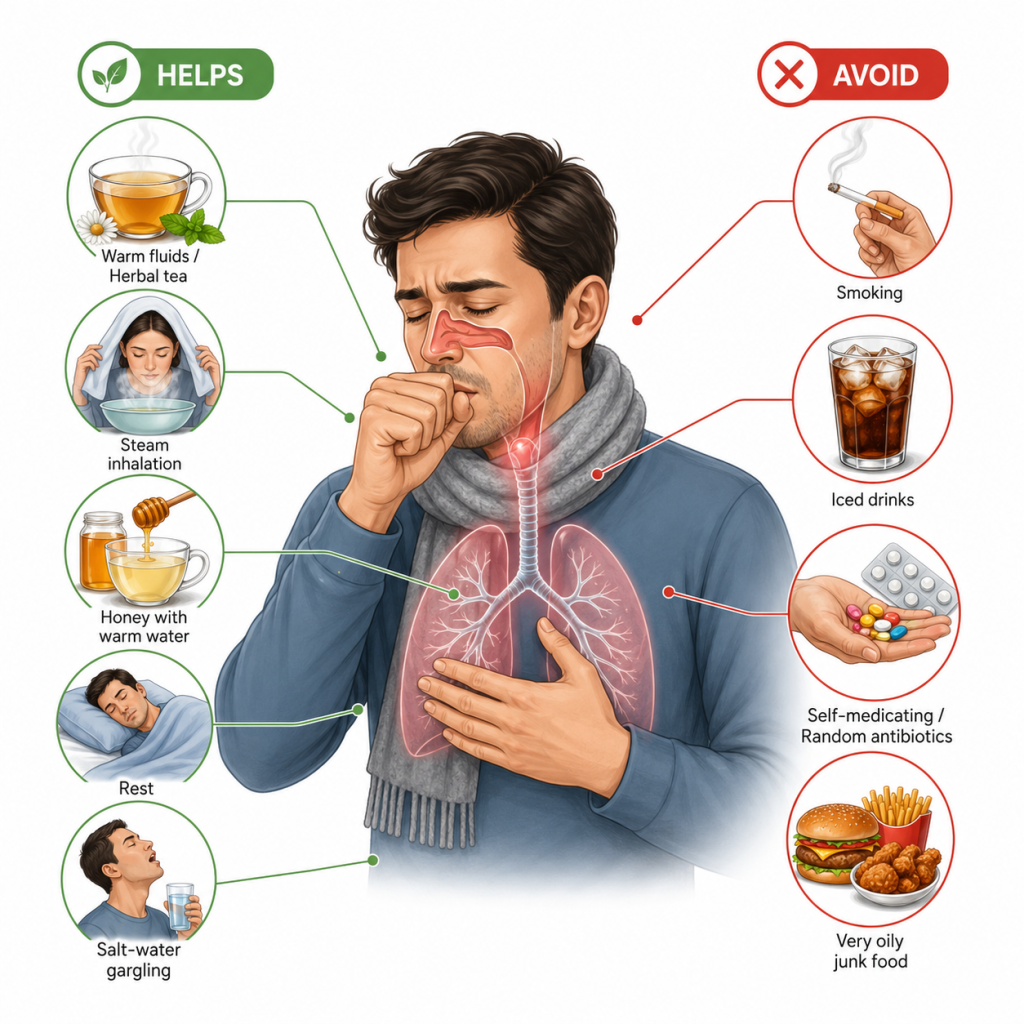
Effective Home Remedies for Cold and Cough
1. Warm Fluids
- warm water
- herbal drinks
- soups
Benefit: Keeps the throat moist and helps loosen mucus.
2. Steam Inhalation
Inhaling steam can help reduce nasal congestion.
Benefit: Opens nasal passages and improves breathing.
3. Honey
Honey is commonly used for cough relief.
Benefit: Helps soothe throat irritation and reduce coughing frequency.
Note: Not recommended for children under 1 year.
4. Ginger-Based Preparations
Ginger is widely used in traditional remedies.
Benefit: May help reduce throat irritation and improve comfort.
5. Salt Water Gargling
Warm salt water gargling helps reduce throat discomfort.
Benefit: Provides temporary relief from sore throat.
6. Adequate Rest
Rest allows the body to recover.
Benefit: Supports immune function.
7. Hydration
Drinking enough fluids is essential.
Benefit: Prevents dehydration and supports recovery.
Best Home Remedies for Dry Cough
Dry cough is usually due to throat irritation.
Helpful remedies:
- warm fluids
- honey
- steam inhalation
Best Home Remedies for Wet Cough
Wet cough involves mucus production.
Helpful remedies:
- steam inhalation
- warm fluids
- light diet
What to Avoid During Cold and Cough
Avoid practices that worsen symptoms:
Common Mistakes While Using Home Remedies
- relying only on home remedies for many days
- using multiple remedies without consistency
- ignoring worsening symptoms
- delaying medical consultation
When Home Remedies Are Not Enough
Cold and cough may require medical evaluation if:
- symptoms last more than 3–5 days
- high fever develops
- cough becomes severe
- breathing difficulty occurs
- chest pain is present
- symptoms worsen instead of improving
Cold vs Allergy vs Infection
| Condition | Cause | Key Symptom |
|---|---|---|
| Cold | Viral infection | Runny nose, mild fever |
| Allergy | Environmental trigger | Sneezing, itching |
| Infection | Bacterial or viral | Persistent cough, fever |
Can Cold and Cough Lead to Complications?
In some cases, untreated symptoms can lead to:
- sinus infection
- bronchitis
- worsening respiratory issues
Early care helps prevent complications.
Why Patients Choose Shirdi Sai Hospital
At Shirdi Sai Hospital, New BEL Road, cold and cough symptoms are evaluated based on severity, duration, and underlying cause.
Patients prefer this approach because:
- focus on identifying cause rather than temporary relief
- guidance on proper treatment and recovery
- evaluation of persistent symptoms
- patient-centered care
The hospital is accessible for patients from Devasandra, RMV 2nd Stage, Sanjaynagar, Mathikere, Hebbal, and nearby areas.
When to Consult a Doctor
Seek medical advice if:
- cough persists for more than a few days
- symptoms worsen
- fever increases
- breathing difficulty occurs
- fatigue becomes severe
Frequently Asked Questions
What is the best home remedy for cold and cough?
Warm fluids, steam inhalation, and rest are commonly recommended to relieve symptoms.
Does honey help in cough?
Yes, honey can help soothe throat irritation and reduce coughing.
Can cold go away without medicine?
Yes, mild viral cold can resolve on its own with proper care.
Is steam inhalation safe?
Steam inhalation is generally safe when done carefully.
When should I worry about cough?
If cough persists, worsens, or is associated with fever or breathing issues.
Conclusion
Home remedies for cold and cough can provide symptom relief and improve comfort during early stages. However, they should not replace medical evaluation when symptoms persist or worsen. Proper care, hydration, and timely consultation are essential for recovery.
At Shirdi Sai Hospital, New BEL Road, early evaluation ensures that cold and cough are managed effectively and complications are avoided.

Leave a Reply