Kidney stone pain is not like regular body pain. It can start suddenly, become severe within minutes, and make even simple movements difficult. If your pain is not stopping, keeps returning, or is increasing in intensity, it usually means the stone is not passing on its own and needs proper medical treatment.
Today, kidney stone treatment has changed completely. Earlier, patients had to undergo open surgery, long hospital stays, and painful recovery. Now, with advanced technologies like ESWL (Lithotripsy Machine) and Holmium Laser (RIRS), stones can be treated with minimal pain, no major cuts, and faster recovery.
At Shirdi Sai Hospital, these modern urology systems are used to provide safe, precise, and effective kidney stone treatment, helping patients return to normal life quickly.
What Exactly Is a Kidney Stone?
A kidney stone is a solid mass formed from minerals and salts that stick together inside the kidneys. These stones can be as small as a grain of sand or as large as a marble.
When the stone moves into the urinary tract, it can block urine flow and cause intense pain.
Why Kidney Stones Are Increasing in India
Kidney stones are becoming more common, especially among working professionals and young adults.
Key reasons:
- Low water intake: Many people do not drink enough water daily
- Hot climate: Leads to dehydration and concentration of minerals
- High salt diet: Common in Indian food
- Increased junk food consumption: Alters mineral balance
- Protein-heavy diets: Especially gym-related diets
- Sedentary lifestyle: Reduced physical activity
- Ignoring early symptoms: Leads to worsening condition
Early Warning Signs Most People Ignore
Kidney stones do not always start with severe pain. There are early symptoms that many people overlook.
- Mild discomfort in lower back
- Occasional burning sensation while urinating
- Slight change in urine color
- Increased frequency of urination
- Feeling of incomplete urine flow
Ignoring these signs often leads to severe pain later.
Symptoms of Kidney Stones (Advanced Stage)
When the stone starts moving or blocks urine flow, symptoms become intense.
- Severe pain in back or side
- Pain spreading to lower abdomen or groin
- Sudden waves of pain (comes and goes)
- Blood in urine
- Nausea or vomiting
- Fever (if infection develops)
- Difficulty passing urine
Kidney stone pain is often described as one of the most severe pains a person can experience.
When Kidney Stone Becomes Dangerous
Immediate medical attention is needed if:
- Pain is unbearable and not reducing
- Fever is present along with pain
- Urine is blocked or very low
- Continuous vomiting
- Pain lasts for hours or keeps returning
Delaying treatment can lead to infection, kidney damage, or complications.
Can Kidney Stones Pass Naturally?
Yes, but only in certain cases.
- Stones smaller than 5 mm often pass naturally
- Requires high water intake and medication
- May take several days to weeks
However, if the stone is large or stuck, medical intervention is required.
Modern Treatment Options Available Today
Treatment depends on the size, location, and type of stone.
1. Medication & Observation
Used for small stones.
- Pain management
- Increased fluid intake
- Medications to help stone pass
2. ESWL (Lithotripsy) – Non-Surgical Solution
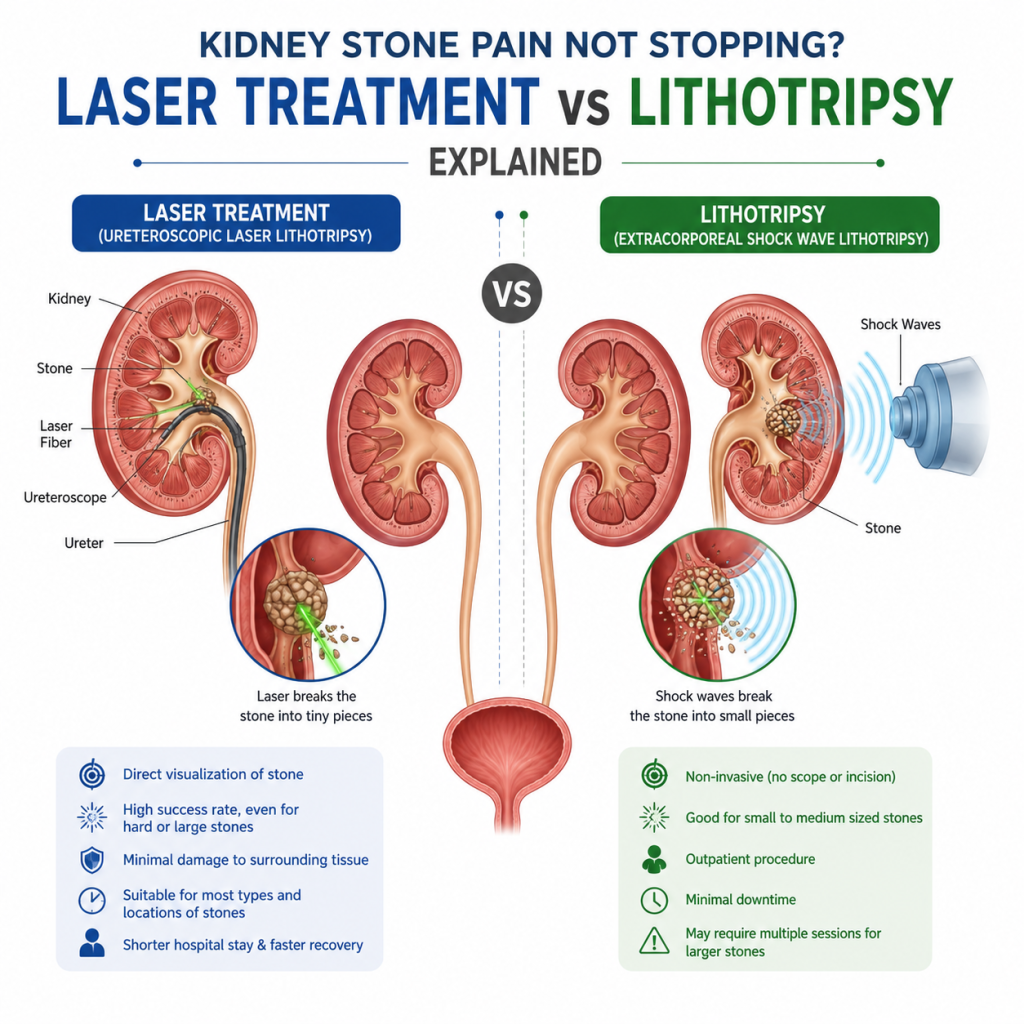
ESWL (Extracorporeal Shock Wave Lithotripsy) is one of the most common non-invasive treatments.
How it works:
- Shock waves are focused on the stone
- Stone breaks into small fragments
- Fragments pass naturally through urine
Advantages:
- No cuts or surgery
- Outpatient procedure
- Minimal recovery time
- Suitable for small to medium stones
At Shirdi Sai Hospital, advanced ESWL machines ensure precise targeting of stones, improving success rates.
3. Laser Treatment (RIRS – Holmium Laser)
For larger or stubborn stones, laser treatment is the most effective option.
How it works:
- A thin flexible scope is inserted through the urinary tract
- The stone is located using a camera
- Holmium laser breaks the stone into very fine dust
- Dust passes naturally through urine
Advantages:
- No external cuts
- Highly precise treatment
- Works for larger stones
- Faster recovery
- Lower chance of recurrence
This is one of the most advanced kidney stone treatments available today.
Laser vs Lithotripsy – Clear Comparison
| Factor | Laser (RIRS) | ESWL (Lithotripsy) |
|---|---|---|
| Procedure | Minimally invasive | Non-invasive |
| Best for | Medium to large stones | Small stones |
| Precision | Very high | Moderate |
| Recovery | Fast | Very fast |
| Repeat sessions | Rare | Sometimes needed |
| Success rate | Higher for complex stones | Good for small stones |
Which Treatment Should You Choose?
The right treatment depends on:
- Size of the stone
- Location of the stone
- Patient condition
- Previous history
Doctors at Shirdi Sai Hospital evaluate all factors before recommending treatment.
Why Modern Equipment Makes a Huge Difference
Treatment success is not just about the doctor—it also depends on the technology used.
At Shirdi Sai Hospital, advanced urology infrastructure includes:
ESWL Machine
- Breaks stones without surgery
- Precise targeting reduces damage to surrounding tissues
Holmium Laser System
- High precision laser for stone removal
- Converts stones into fine particles
Advanced Endoscopic Systems
- Enables minimally invasive procedures
- Improves visibility and accuracy
Benefits for Patients:
- Less pain
- Faster recovery
- Reduced hospital stay
- Higher success rates
- Lower risk of complications
What Happens During the Procedure?
ESWL Procedure
- Patient lies on treatment table
- Machine targets stone using imaging
- Shock waves break stone
- Procedure lasts 30–45 minutes
Laser (RIRS) Procedure
- Thin scope inserted through urinary tract
- Camera helps locate stone
- Laser breaks stone
- No cuts or stitches
Recovery After Treatment
Recovery is usually quick with modern techniques.
- Most patients resume normal activity within 2–5 days
- Mild discomfort may occur temporarily
- Drinking water is important
- Follow-up may be required
Can Kidney Stones Come Back?
Yes, recurrence is common if lifestyle changes are not followed.
Prevention Tips:
- Drink 3–4 litres of water daily
- Reduce salt intake
- Avoid excessive protein
- Maintain healthy weight
- Follow doctor’s advice
When to Consult Your Doctor
Consult immediately if:
- Pain is severe or persistent
- Blood in urine
- Fever with pain
- Urine flow is blocked
- Symptoms keep returning
If you are consulting a hospital in Bangalore, especially in South Bangalore, choosing Shirdi Sai Hospital ensures access to advanced laser and lithotripsy treatment options for faster and safer recovery.
Frequently Asked Questions
Is kidney stone treatment painful?
Modern treatments like ESWL and laser are designed to minimize pain. Most patients experience only mild discomfort.
Which is better – laser or lithotripsy?
Both are effective. Lithotripsy works for smaller stones, while laser is better for larger or complex stones.
How long does the treatment take?
Most procedures take 30–90 minutes depending on the stone size and complexity.
Do I need hospital admission?
Some procedures are done as day care, while others may require short hospital stay.
Can stones come back after treatment?
Yes, if preventive measures are not followed. Lifestyle changes are important.
How soon can I return to work?
Most patients can resume normal activities within a few days.
Conclusion
Kidney stone pain can be severe, but treatment today is much more advanced, safe, and patient-friendly than before. Options like ESWL and laser treatment allow effective removal of stones without major surgery.
At Shirdi Sai Hospital, modern equipment such as ESWL machines and Holmium laser systems ensure precise diagnosis and treatment, helping patients recover faster with minimal discomfort. Early treatment not only relieves pain but also prevents complications and recurrence.

Leave a Reply