The knee is a weight-bearing joint. Over decades, it absorbs stress from walking, sitting, running, and climbing.
After 40, the following changes occur:
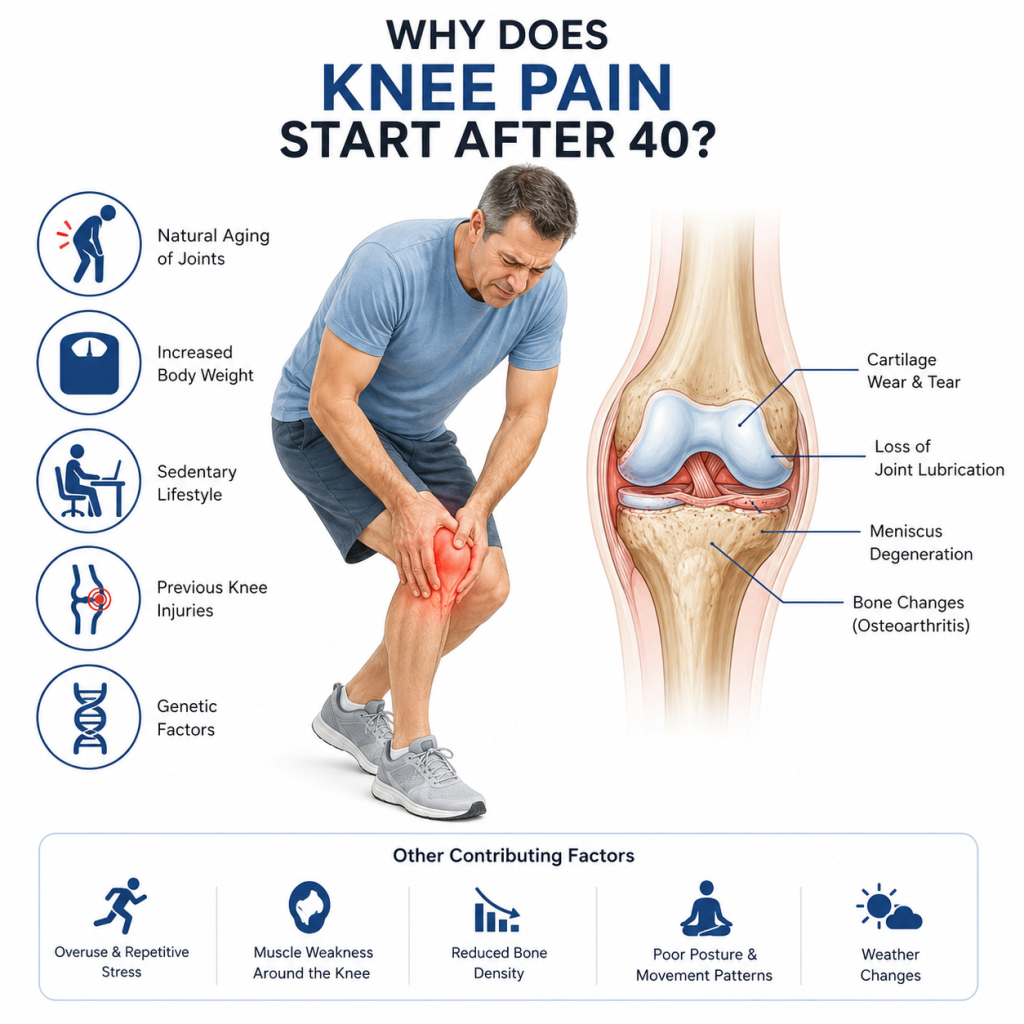
- Cartilage Thinning: The protective cushion between bones gradually wears down.
- Reduced Synovial Fluid: Lubrication decreases, increasing friction.
- Muscle Weakness: Quadriceps and hamstrings lose strength if not actively maintained.
- Ligament Elasticity Reduces: Stability decreases.
- Bone Density Changes: Especially in women after menopause.
- Slower Tissue Repair: Minor injuries heal more slowly.
These natural changes increase joint stress.
Most Common Causes of Knee Pain After 40
1. Early Osteoarthritis
Osteoarthritis is the leading cause of knee pain in adults over 40.
It occurs when:
- Cartilage breaks down
- Joint space narrows
- Bone surfaces rub together
Symptoms include:
- Morning stiffness
- Pain after activity
- Grinding sensation
- Swelling around knee
Osteoarthritis develops gradually and worsens without care.
2. Weight Gain and Lifestyle
Even 5–7 kg extra weight significantly increases knee pressure.
Every step places:
- 3–4 times body weight on the knee joint
Sedentary desk jobs, especially common in urban settings, weaken thigh muscles and strain joints.
3. Old Injuries Catching Up
Many adults had:
- Sports injuries in their 20s
- Minor ligament tears
- Meniscus strain
These may not cause immediate long-term problems but accelerate degeneration later.
4. Hormonal Changes
In women, estrogen protects joint cartilage.
After 40:
- Estrogen levels decline
- Cartilage support weakens
- Bone density reduces
This increases osteoarthritis risk.
5. Vitamin D and Calcium Deficiency
Deficiency can cause:
- Bone weakness
- Muscle fatigue
- Joint discomfort
Urban indoor lifestyles increase deficiency risk.
6. Meniscus Degeneration
The meniscus acts as a shock absorber.
With age:
- It becomes thinner
- Small tears may develop
- Pain occurs during twisting movements
Early Warning Signs You Should Not Ignore
- Knee stiffness lasting more than 15–20 minutes
- Difficulty climbing stairs
- Pain while sitting cross-legged
- Clicking or grinding sound
- Mild swelling
- Pain after prolonged sitting
Ignoring early signs increases risk of severe arthritis.
Knee pain after 40 is manageable if addressed early. Delayed treatment may lead to joint deformity or need for surgery.
How Doctors Diagnose Knee Pain
Evaluation includes:
Clinical Examination
Doctors assess:
- Range of motion
- Tenderness
- Swelling
- Alignment
- Muscle strength
Imaging Tests
- X-ray: Detects arthritis and joint space narrowing
- MRI: Detects ligament or meniscus tears
- Blood tests: Rule out inflammatory arthritis
Non-Surgical Treatment Options
Most knee pain after 40 does not require surgery.
1. Physiotherapy
Strengthening exercises improve:
- Joint stability
- Muscle support
- Pain control
2. Weight Management
Reducing weight decreases joint load.
3. Pain Relief Medicines
Short-term use of:
- NSAIDs
- Topical gels
Must be medically supervised.
4. Injections (If Needed)
- Corticosteroid injections
- Hyaluronic acid injections
- PRP therapy
These provide temporary relief in selected cases.
Approximate injection cost in Bangalore:
- PRP therapy: ₹8,000 – ₹20,000 per session
- Hyaluronic injection: ₹6,000 – ₹15,000
Exact cost depends on hospital and condition.
When Is Surgery Needed?
Surgery may be considered if:
- Severe cartilage loss
- Advanced osteoarthritis
- Persistent pain despite therapy
- Severe meniscus tear
Common procedures:
- Arthroscopy
- Partial knee replacement
- Total knee replacement
Approximate knee replacement cost in Bangalore:
- ₹1,80,000 – ₹3,50,000
Cost varies by implant type and hospital infrastructure.
Psychological Impact of Chronic Knee Pain
Chronic pain after 40 can cause:
- Fear of movement
- Reduced activity
- Mood changes
- Social withdrawal
- Sleep disturbance
Addressing pain early improves quality of life.
Preventing Knee Pain After 40
You can reduce risk by:
- Maintaining healthy weight
- Doing strengthening exercises
- Avoiding sudden high-impact activity
- Correcting posture
- Ensuring adequate vitamin D
- Wearing proper footwear
Consistency is key.
When to Consult an Orthopedic Specialist
Seek consultation if:
- Pain persists more than 2–3 weeks
- Swelling increases
- Knee locks or gives way
- Pain interferes with daily activities
If you are in Bangalore, especially around New BEL Road or North Bangalore, early orthopedic evaluation helps prevent progression.
You may consult the orthopedics department for proper assessment and treatment planning.
FAQs
Is knee pain after 40 always arthritis?
Not always. It may be due to muscle weakness, meniscus strain, or early cartilage changes.
Can exercise worsen knee pain?
Wrong exercise may worsen pain, but guided physiotherapy improves joint strength and stability.
Does climbing stairs damage knees after 40?
Excessive stair climbing without muscle strength may strain knees, especially in overweight individuals.
Is knee replacement the only solution for severe pain?
No. Most patients improve with conservative treatment. Surgery is reserved for advanced cases.
Can knee pain be reversed naturally?
Early-stage knee pain can improve significantly with weight loss, strengthening exercises, and lifestyle correction.
Conclusion
Knee pain after 40 is common but not inevitable. Age-related changes, weight gain, hormonal shifts, and old injuries contribute to joint discomfort. Early intervention, lifestyle modification, and appropriate medical care prevent progression to severe arthritis.
Listening to early warning signs and seeking timely evaluation ensures long-term joint health and mobility.

Leave a Reply