Most women experience some level of period pain. However, when cramps become severe, persistent, or life-disrupting, the question arises – is this normal menstrual pain or could it be endometriosis?
Understanding the difference is important because ordinary period cramps improve with simple medication and lifestyle changes, while endometriosis requires structured medical evaluation and sometimes advanced treatment. This article explains how doctors clinically distinguish between common menstrual pain and endometriosis, what symptoms matter most, and when to seek evaluation.
What Is Normal Period Pain?
Normal menstrual pain is medically called primary dysmenorrhea. It usually begins during teenage years and improves with age or after childbirth.
Typical features:
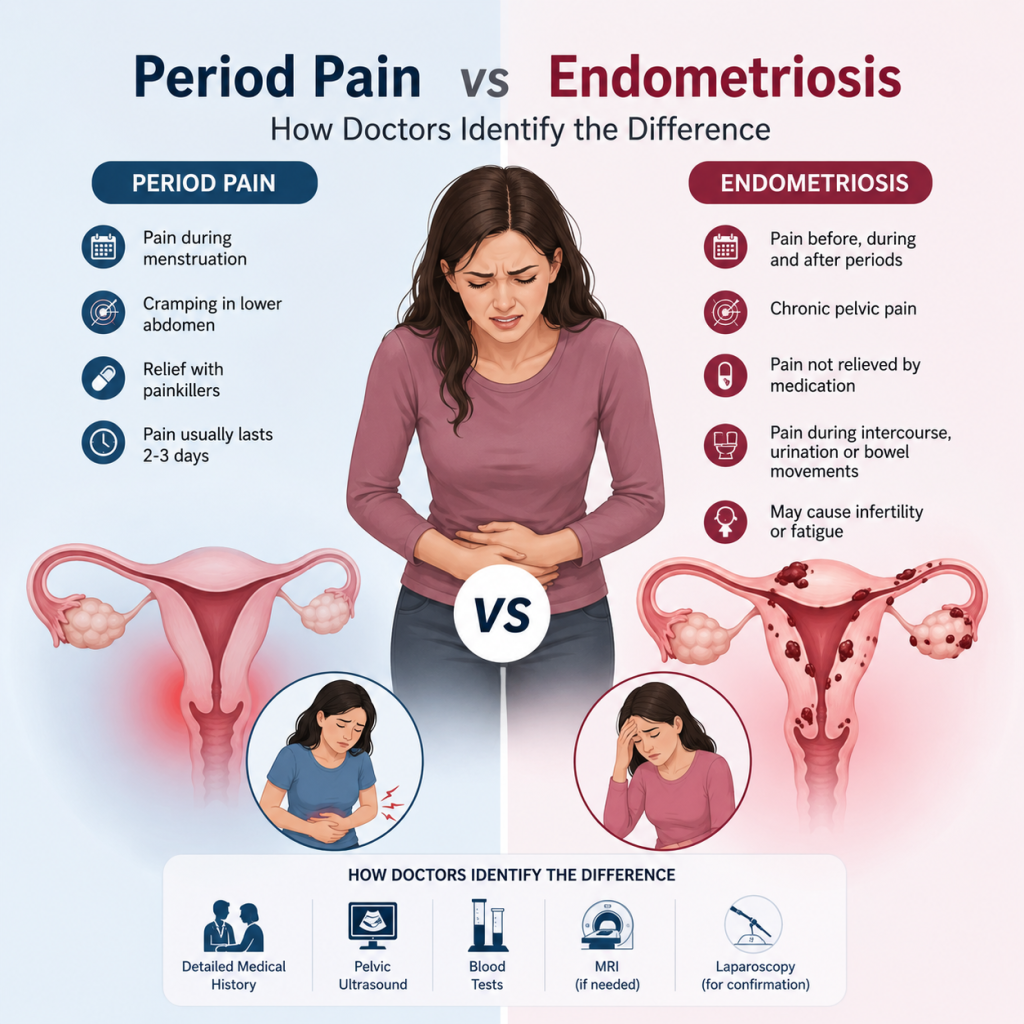
- Pain starts just before or during periods
- Cramping lasts 1–3 days
- Pain improves with rest or pain medication
- No pain between cycles
- No progressive worsening over time
The pain is caused by prostaglandins, chemicals that trigger uterine contractions.
For many women, this discomfort is manageable and does not interfere with daily activities.
What Is Endometriosis?
Endometriosis occurs when tissue similar to the uterine lining grows outside the uterus — on ovaries, fallopian tubes, or pelvic lining.
Unlike normal period pain, endometriosis pain is:
- Often severe and progressive
- May begin several days before periods
- Can continue after bleeding stops
- May cause pain during intercourse
- Associated with fertility concerns
Endometriosis is a chronic inflammatory condition, not just “strong cramps.”
Key Differences Doctors Look For
Gynecologists assess multiple factors to differentiate the two conditions.
1. Pattern of Pain
Period Pain:
- Limited to menstrual days
- Predictable pattern
- Stable intensity
Endometriosis:
- Pain increases over time
- Starts before period begins
- May continue after bleeding
- Pain during ovulation possible
2. Severity and Impact
Doctors ask:
- Does the pain stop you from working?
- Do you require repeated strong painkillers?
- Does pain interfere with sleep?
Severe, life-disrupting pain raises suspicion of endometriosis.
3. Pain During Intercourse
Pain during deep penetration is uncommon in simple period cramps but common in endometriosis due to pelvic inflammation.
4. Heavy Bleeding or Clots
While heavy bleeding can occur in both, it is more frequently linked with structural causes such as:
- Endometriosis
- Adenomyosis
- Fibroids
5. Fertility Concerns
Women struggling to conceive alongside painful periods are often evaluated for endometriosis.
Diagnostic Tools Doctors Use
Diagnosis is stepwise.
Clinical History
The first and most important step is detailed symptom analysis.
Pelvic Examination
Doctors check for:
- Tender nodules
- Restricted uterine movement
- Enlarged ovaries
Ultrasound
Useful for detecting:
- Endometriotic cysts
- Fibroids
- Adenomyosis
However, mild endometriosis may not appear on ultrasound.
MRI
Provides detailed imaging if suspicion remains high.
Diagnostic Laparoscopy
The gold standard for confirming endometriosis.
Not all severe period pain is endometriosis. But persistent, worsening pain deserves structured evaluation.
Why Endometriosis Is Often Missed
Many women normalize pain.
Common reasons for delayed diagnosis:
- Believing pain is “normal for women”
- Fear of gynecological examination
- Busy lifestyle
- Self-medication with painkillers
On average, diagnosis can be delayed by several years.
Hormonal Influence
Endometriosis is estrogen-dependent.
Higher estrogen levels may:
- Stimulate endometrial tissue growth
- Increase inflammation
- Intensify cramps
Hormonal imbalance after pregnancy or lifestyle stress can unmask symptoms.
Treatment Differences
Treatment for Normal Period Pain
- NSAIDs
- Heat therapy
- Regular exercise
- Stress reduction
- Short-term hormonal regulation
Most cases improve with conservative measures.
Treatment for Endometriosis
Depends on severity.
- Hormonal therapy
- Oral contraceptives
- Progesterone therapy
- GnRH analogues
- Pain management
- Laparoscopic surgery (if severe)
Approximate surgical costs in Bangalore:
- Diagnostic laparoscopy: ₹60,000 – ₹1,20,000
- Endometriosis excision surgery: ₹1,20,000 – ₹3,00,000
Exact cost depends on hospital and disease extent.
Psychological Impact
Chronic pelvic pain can cause:
- Anxiety
- Relationship stress
- Fear of intimacy
- Depression
- Reduced productivity
Early diagnosis significantly improves quality of life.
When to Consult a Gynecologist
Seek evaluation if:
- Pain worsens every cycle
- Pain lasts beyond 3 days
- You experience pain during intercourse
- You have difficulty conceiving
- Pain disrupts daily routine
If you are in Bangalore, especially around New BEL Road or North Bangalore, early consultation helps prevent disease progression.
You may consult the gynaecology department for proper assessment and individualized care.
FAQs
How do I know if my period pain is normal or endometriosis?
If pain is mild, limited to period days, and improves with medication, it is likely normal. Progressive, severe pain or pain between cycles should be evaluated.
Can endometriosis show on ultrasound?
Severe cases may show cysts, but mild endometriosis may not be visible. Laparoscopy is the most accurate diagnostic method.
Does endometriosis always cause infertility?
Not always. Many women conceive naturally, but severe cases can affect fertility.
Can pregnancy cure endometriosis?
Pregnancy may temporarily reduce symptoms, but it does not permanently cure the condition.
Should I ignore painful periods if tests are normal?
Persistent severe pain should not be ignored. Further evaluation may be required even if initial imaging appears normal.
Conclusion
Not all period pain is the same. While normal cramps are common and manageable, progressive and severe pain may indicate endometriosis. The difference lies in pattern, severity, associated symptoms, and clinical evaluation.
Listening to your body and seeking medical advice when symptoms change ensures timely diagnosis and better long-term reproductive health.

Leave a Reply