White vaginal discharge is normal in most women. It plays an important role in keeping the vagina clean, lubricated, and protected from infection. However, changes in color, smell, consistency, or associated symptoms can sometimes indicate a problem.
If your discharge is white, odorless, and not causing discomfort, it is usually healthy. But if it becomes thick like cottage cheese, smells strong, or causes itching or pain, it may require medical attention.
In 2026, increasing stress, hormonal changes, frequent antibiotic use, tight clothing, and hygiene product overuse are contributing to more discharge-related concerns among women in urban environments like Bangalore. Understanding what is normal and what is not helps reduce unnecessary panic.
Is white vaginal discharge normal?
Yes, white discharge is completely normal.
Healthy discharge:
- Is clear to milky white
- Has no strong smell
- Does not cause itching
- Varies slightly during menstrual cycle
It is part of the body’s self-cleaning mechanism.
Discharge may increase:
- Before periods
- During ovulation
- During pregnancy
- Due to hormonal contraceptives
This variation is physiological and not harmful.
When does white discharge become abnormal?
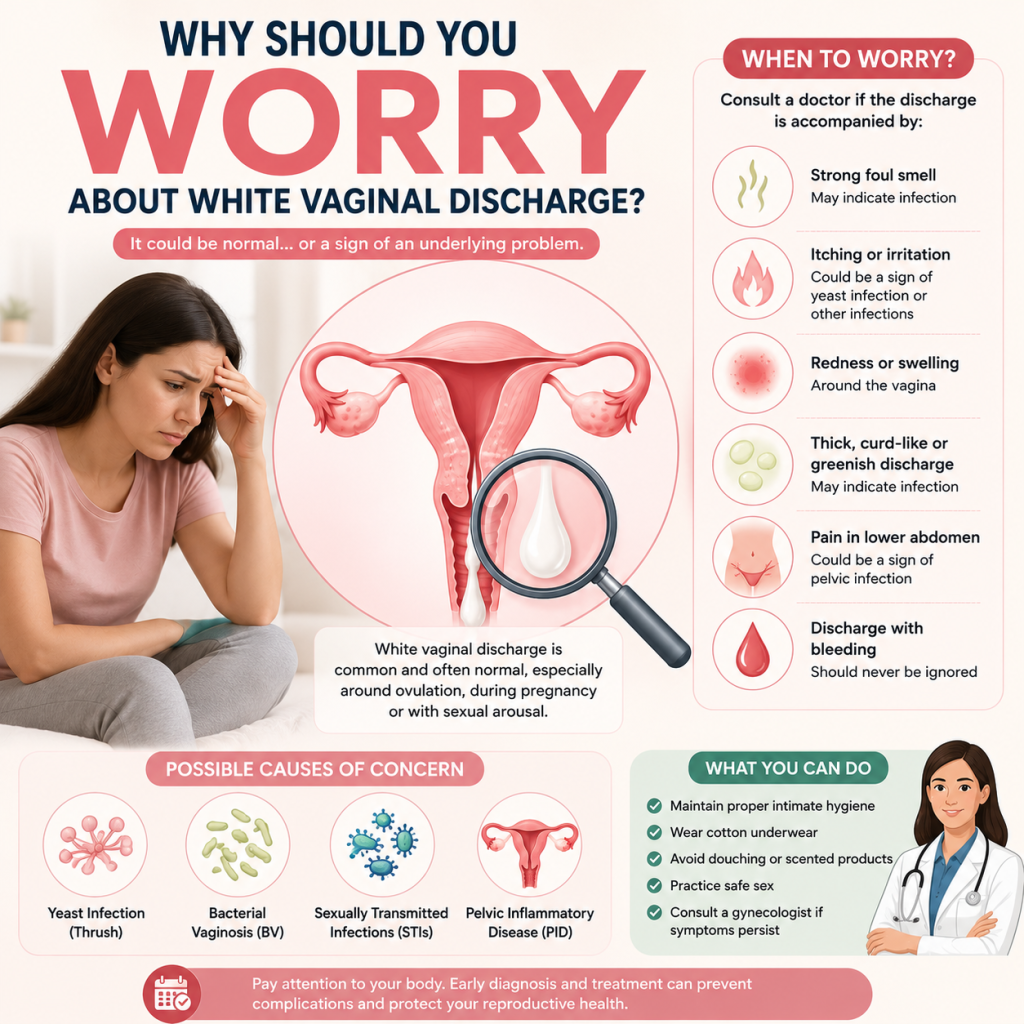
White discharge becomes concerning if it is accompanied by symptoms.
Warning signs include:
- Thick, curd-like texture
- Strong or foul odor
- Vaginal itching
- Burning sensation
- Pelvic pain
- Pain during urination
- Pain during intercourse
These symptoms may suggest infection rather than normal discharge.
What does thick white discharge mean?
Thick white discharge that looks like cottage cheese often indicates a yeast infection (candidiasis).
Common causes:
- Antibiotic use
- High sugar levels (diabetes)
- Tight synthetic clothing
- Poor ventilation
- Hormonal fluctuations
- Stress
Yeast infections are common and treatable. However, repeated infections need evaluation.
Can white discharge occur without itching?
Yes.
If discharge is white but:
- Has no odor
- Causes no itching
- Is not associated with pain
It is usually normal.
Not all discharge requires medication.
Over-treating normal discharge with antifungal creams can disturb natural vaginal flora.
Why does white discharge increase before periods?
Hormonal changes before menstruation increase progesterone levels.
This leads to:
- Slightly thicker white discharge
- Increased vaginal moisture
- Mild fullness sensation
This is a normal cyclical change.
If there is no itching or smell, it is not concerning.
Can stress cause changes in vaginal discharge?
Yes.
Chronic stress affects hormonal balance.
In Bangalore’s fast-paced working lifestyle in 2026, stress-related hormonal shifts are increasingly common.
Stress may:
- Alter menstrual cycle
- Increase discharge temporarily
- Lower immunity, making infections more likely
Managing stress indirectly supports vaginal health.
Does white discharge mean pregnancy?
White discharge may increase in early pregnancy.
This is called leukorrhea.
Features:
- Thin to milky white
- Mild odor
- No irritation
However, discharge alone does not confirm pregnancy. A pregnancy test is required.
When should you worry about white discharge?
You should seek medical evaluation if:
- Discharge smells fishy or foul
- Itching is persistent
- Pain occurs during urination
- You experience pelvic pain
- Discharge turns green, yellow, or gray
- There is bleeding between periods
Persistent abnormal discharge should not be ignored.
If you are consulting a hospital in Bangalore, especially in South Bangalore areas, early gynecological evaluation helps identify simple infections before complications occur.
Can white discharge indicate sexually transmitted infection?
Most STIs do not present as simple white discharge.
However:
- Chlamydia may cause abnormal discharge
- Gonorrhea may cause yellow discharge
- Trichomoniasis causes frothy green discharge
White thick discharge with itching is usually yeast, not STI.
Accurate diagnosis requires examination and lab testing.
Is odor the most important warning sign?
Yes.
Normal vaginal discharge may have a mild scent but should not smell strong or fishy.
Strong odor suggests bacterial imbalance such as bacterial vaginosis.
This requires medical treatment.
Can diabetes cause recurrent white discharge?
Yes.
High blood sugar increases risk of recurrent yeast infections.
Women with:
- Frequent thick discharge
- Persistent itching
- Repeated infections
Should consider blood sugar testing.
Uncontrolled diabetes often presents with recurrent vaginal infections.
How do doctors diagnose abnormal discharge?
Evaluation may include:
- Physical examination
- Vaginal swab
- Microscopic analysis
- pH testing
- Blood tests (if needed)
Treatment depends on cause:
- Antifungal medication for yeast
- Antibiotics for bacterial infection
- Hormonal correction if required
Self-medication without diagnosis may delay correct treatment.
Can using intimate washes cause discharge problems?
Yes.
Overuse of scented washes disrupts natural vaginal pH.
This may:
- Kill beneficial bacteria
- Promote fungal growth
- Increase discharge
The vagina is self-cleaning. External washing with mild soap and water is sufficient.
Is white discharge normal after exercise?
Yes.
Increased sweat and hormonal changes during physical activity may increase moisture.
However:
- If itching occurs after gym sessions
- Or discharge becomes thick
It may indicate fungal growth due to sweat retention.
Proper ventilation and cotton undergarments reduce risk.
Can menopause affect white discharge?
Yes.
During menopause:
- Estrogen levels decline
- Vaginal dryness increases
White discharge usually reduces, not increases.
If post-menopausal women experience discharge with bleeding, evaluation is necessary.
How to maintain healthy vaginal balance?
Preventive tips:
- Wear breathable cotton underwear
- Avoid tight synthetic clothing
- Maintain hydration
- Avoid excessive sugar
- Do not douche
- Change sanitary products regularly
- Manage stress
Good hygiene does not mean over-cleaning.
When to Consult a Doctor
Consult a doctor if you experience:
- Persistent itching
- Strong odor
- Pelvic pain
- Fever
- Recurrent infections
- Discharge lasting more than 7 days
- Unusual bleeding
Early evaluation prevents complications and reduces discomfort.
FAQs
1. Is white discharge every day normal?
Yes. Mild daily discharge is normal as long as it has no odor or itching.
2. Can white discharge happen without infection?
Yes. Hormonal changes often cause normal discharge.
3. How long should abnormal discharge last before seeing a doctor?
If symptoms persist beyond 5–7 days, evaluation is recommended.
4. Does white discharge affect fertility?
Normal discharge does not affect fertility. Only untreated infections may impact reproductive health.
5. Should I use over-the-counter creams for discharge?
Self-treatment without diagnosis is not advised. Some creams may worsen imbalance.
Conclusion
White vaginal discharge is a natural and healthy function of the body. Most cases are normal and do not require treatment. The key is observing changes in smell, texture, and associated symptoms.
In 2026, awareness and proper hygiene practices are more important than aggressive treatment. Understanding your body helps reduce unnecessary anxiety and ensures timely medical care when needed.
If discharge feels unusual or symptoms persist, seeking medical evaluation is a safe and responsible step.

Leave a Reply