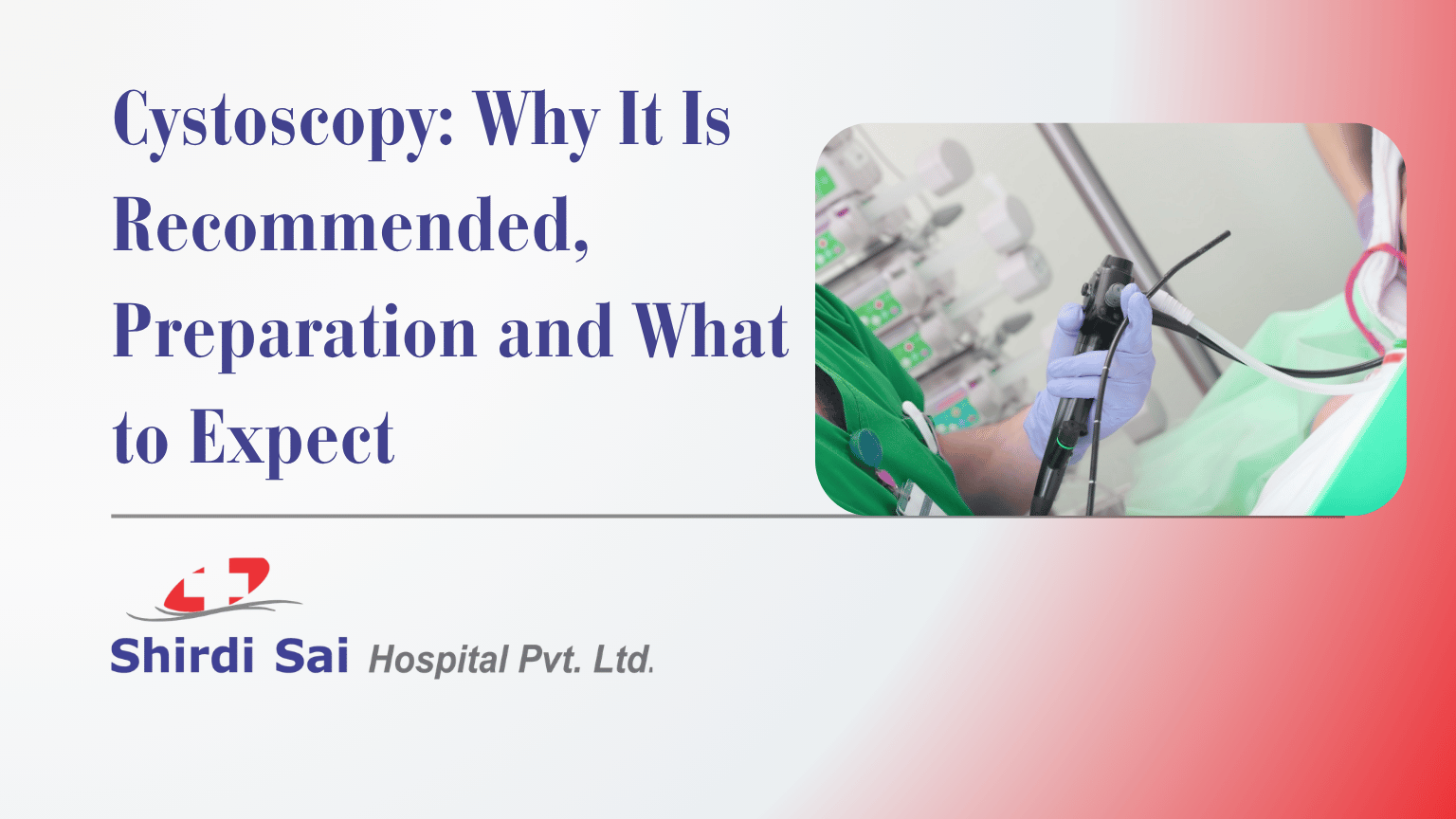
Cystoscopy allows a urologist to look inside the urethra and bladder using a thin instrument with a camera. A urologist may recommend it to investigate urinary symptoms, review a known condition or carry out selected treatment. However, a recommendation for this test does not mean that you have cancer.
Preparation and recovery depend on the type of cystoscopy, anaesthesia and any additional procedure. At Shirdi Sai Hospital on New BEL Road, our urology team explains why you need the test and how to prepare.
If your clinician has suggested cystoscopy, contact our urology team so you can clarify the reason, preparation and appointment arrangements.
What does cystoscopy examine?
The urethra is the passage that carries urine out of the body. It leads to the bladder, which stores urine.
A cystoscope is passed through the urethra into the bladder so the clinician can inspect the lining. The procedure does not normally involve an external abdominal incision.
Cystoscopy is different from a routine urine test and from an ultrasound scan. Each provides different information.
It also differs from ureteroscopy, which lets a urologist examine the tube between a kidney and the bladder. Before your appointment, ask which procedure the urologist plans because urinary camera tests examine different areas.
Why might a urologist recommend it?
The test may help assess blood in the urine, selected persistent urinary symptoms, suspected urethral narrowing or particular bladder problems. The urologist can also use it to review a known condition.
The indication depends on the clinical findings and previous investigations. Not every episode of burning urine or urinary frequency needs cystoscopy.
If blood is the concern, the team may also recommend other investigations because cystoscopy does not provide a complete assessment of the kidneys and every cause of bleeding.
Our guide to blood in the urine explains the symptom pathway. This page focuses on what the camera test involves.
Does a referral mean cancer is suspected?
A referral can have several reasons. For example, the urologist may look for inflammation, narrowing, stones, a bleeding source or an area that needs further tests.
If the clinician sees something unusual, they may recommend a biopsy or another procedure. A visual finding and a final tissue diagnosis are not always the same.
Ask what question the test is intended to answer. This helps avoid unnecessary assumptions while still taking the investigation seriously.
The clinician also interprets a normal examination alongside your symptoms and other results. It may not explain every urinary symptom or replace other appropriate tests.
Flexible and rigid cystoscopy: what is different?
A flexible cystoscope bends. The clinician often uses local anaesthetic gel to numb the area. For some examinations or treatments, the clinician uses a rigid instrument with spinal or general anaesthesia.
The exact choice depends on the purpose of the test and the planned intervention. It is not simply a matter of one type being better for every patient.
Anaesthesia affects fasting, transport, recovery and how soon normal activities can resume. Additional treatment can change those instructions too.
Before the appointment, confirm the type of cystoscopy and whether it is examination only or may include a biopsy or treatment.
Do not apply a flexible outpatient leaflet to a different procedure without checking.
What information should you give the team?
Provide an up-to-date medicine list and details of allergies. Tell the team about anticoagulants, diabetes medicines and any history of problems with anaesthesia.
Also mention:
- Fever, chills or symptoms of a current urine infection.
- Previous difficult catheterisation or urinary procedures.
- A known urethral stricture or previous bladder treatment.
- Pregnancy or the possibility of pregnancy.
- Significant heart, lung or kidney disease.
- Previous results and the reason your clinician recommended the test.
The team may also request a urine sample before the procedure. If infection is suspected, the team decides whether it needs treatment or changes the timing.
Do not hide symptoms because you are worried the appointment might be postponed. The information helps the team plan safely.
Do you need to fast?
Fasting instructions depend on the anaesthetic and procedure. Some flexible cystoscopies using local anaesthetic do not require fasting. A procedure with sedation or general anaesthesia may have different requirements.
Follow the instructions from the treating service rather than a general internet timetable.
If the instructions are missing or contradictory, ask before the appointment. Do not arrive dehydrated after unnecessarily avoiding all food and drink.
However, eating when the anaesthetic plan requires fasting can prevent safe treatment. Clarifying the plan in advance helps avoid a wasted visit.
The same principle applies to your usual medicines: ask for specific advice rather than stopping them independently.
What happens during the examination?
The team explains the procedure and consent. You may be asked to empty your bladder or provide a sample according to the pathway.
The clinician cleans the area and uses the planned anaesthetic. The cystoscope is then introduced through the urethra.
The clinician may fill the bladder with fluid so they can see its lining. This can create an urge to pass urine or a feeling of fullness.
Tell the team if you are uncomfortable.
The test takes longer if the clinician also takes a sample or carries out treatment. Avoid relying on a fixed online time estimate.
Can treatment be done at the same time?
Sometimes. The urologist can also pass small instruments through the cystoscope to collect tissue or treat a finding.
Before giving consent, ask what the urologist plans and what might need a separate appointment.
A diagnostic flexible cystoscopy does not automatically include treatment of every abnormality found. The equipment, anaesthesia and clinical situation may make another procedure more appropriate.
If the clinician takes a tissue sample, ask when to expect the results and who will explain them.
What can cystoscopy not tell you?
Cystoscopy looks directly at the lower urinary-tract lining, but it is not a complete test of kidney function, bladder muscle strength or every reason for urinary symptoms.
Other tests may include urine studies, ultrasound, blood tests or functional assessment, depending on the problem.
A normal cystoscopy does not mean that symptoms are imaginary. It means that the examination did not identify a visible explanation within its scope.
Conversely, an abnormal-looking area may need further investigation before its meaning is clear.
The clinician then uses the result to answer the original question and decide the next step.
What are the possible risks?
Possible problems include urinary infection, bleeding, temporary discomfort and difficulty passing urine. Injury to the urinary passage or bladder is an additional risk that the clinician should explain.
Risks change if the clinician also takes a tissue sample or carries out treatment. Anaesthesia has its own considerations.
Tell the team about medicines or conditions that affect bleeding or infection risk. Before the procedure, ask how the team will manage these risks.
No procedure is completely free of discomfort or risk. The consent discussion should balance the expected information or treatment benefit against the relevant risks.
What may happen afterwards?
Some patients notice mild burning, urinary frequency or a small amount of blood after cystoscopy. The symptoms you may notice depend on the procedure you had.
The team should explain which symptoms may occur, how they should change and whom to contact if they persist or worsen.
Follow advice about drinking fluids in a way that fits any existing fluid restriction. People with heart or kidney conditions may need individual instructions.
If you have difficulty emptying the bladder or need certain additional procedures, the team may place a catheter. If the team places one, ask how to care for it and when they plan to remove it.
Do not remove or alter it yourself.
When can you work, drive or exercise?
Return to activity depends on the type of procedure, anaesthetic and how you feel. Advice after local-anaesthetic flexible examination can differ from advice after general anaesthesia or a bladder intervention.
If you have sedation or general anaesthesia, arrange an escort and follow the team’s restrictions on driving and important decisions.
Ask about work, lifting and exercise if your duties are physically demanding. A friend returning to work quickly after a different procedure is not a reliable guide.
If symptoms increase with activity, contact the treating team for advice rather than repeatedly pushing through bleeding or significant discomfort.
Which symptoms need prompt assessment?
Seek medical advice for fever, chills, increasing pain, worsening bleeding, blood clots or symptoms of infection.
Inability to pass urine, particularly with painful lower abdominal swelling, needs urgent assessment.
Severe illness, fainting, breathing difficulty or rapid deterioration needs emergency care. Do not assume these are ordinary after-effects of a camera test.
Follow the procedure-specific discharge instructions. Also ask whether additional treatment or your medical history changes when you should contact the team.
What should you ask before leaving?
Make sure you understand:
- What the examination found.
- Whether the clinician took a tissue sample or carried out treatment.
- Whether any medicines should change.
- Which symptoms need review and the contact route.
- Whether other investigations are still needed.
- When results or follow-up will be arranged.
If the clinician did not find a cause for the original symptom, ask what happens next.
Keep the report so another clinician can see the findings and any outstanding questions.
Cystoscopy discussions at Shirdi Sai Hospital
Our Urology department provides a consultation route for urinary symptoms and investigation planning.
If you have a known narrowing, our urethral stricture guide explains why the urologist may recommend a camera examination.
To review a referral or confirm the current procedure arrangements, contact Shirdi Sai Hospital. Bring the referring note, reports and medicine list.
If you are unsure when to seek assessment, our guide to urinary symptoms that need a doctor can help you recognise the next step.
Shirdi Sai Hospital is a 100-bed hospital on New BEL Road, established in 2004. When you contact us, our team can guide you to the relevant department and explain appointment arrangements.
Frequently asked questions
Does cystoscopy mean I have bladder cancer?
No. The test has several indications. Ask the urologist what it is intended to investigate.
Is cystoscopy the same as ultrasound?
No. It directly examines the urethra and bladder lining, while ultrasound provides different information.
Will I be asleep?
That depends on the procedure and anaesthetic. Before the appointment, confirm which anaesthetic or sedation the team plans.
Should I stop blood thinners?
Do not stop them independently. The team should provide instructions for your specific procedure.
Will the results be available immediately?
The clinician can often explain visual findings promptly. However, tissue results or further tests may take longer.
Is some burning afterwards possible?
Yes, but increasing or persistent symptoms, fever or worsening bleeding need advice rather than an assumption that all symptoms are normal.
What if I cannot pass urine afterwards?
Seek urgent medical assessment, especially with painful bladder swelling.