If a doctor has told you it might be appendicitis, or has already suggested an operation, you probably have a few questions. Do you really need surgery? Keyhole or open? And how long before life gets back to normal? This page explains how appendix surgery in Bangalore usually works at Shirdi Sai Hospital on New BEL Road, from the first examination to the weeks after you go home.
In short, appendicitis needs a proper hospital assessment because an inflamed appendix can get worse and may burst. Doctors confirm it with an examination, blood and urine tests and, when needed, an ultrasound or CT scan. Most people then have an appendectomy, which removes the appendix through keyhole (laparoscopic) or open surgery. A few carefully selected patients with mild appendicitis may get antibiotics first.
Appendix Surgery at a Glance
- Appendicitis is inflammation and infection of the appendix, a small pouch attached to the large intestine.
- Diagnosis depends on your symptoms, an abdominal examination and tests. No single test settles it every time.
- Appendectomy, or removal of the appendix, is the standard treatment for most people.
- Surgeons use either laparoscopic or open surgery, depending on how severe the infection is.
- A burst appendix or an abscess changes the plan and usually means a longer recovery.
- Recovery time differs from person to person, so treat any fixed number of days as a rough guide at best.
What Is Appendicitis?
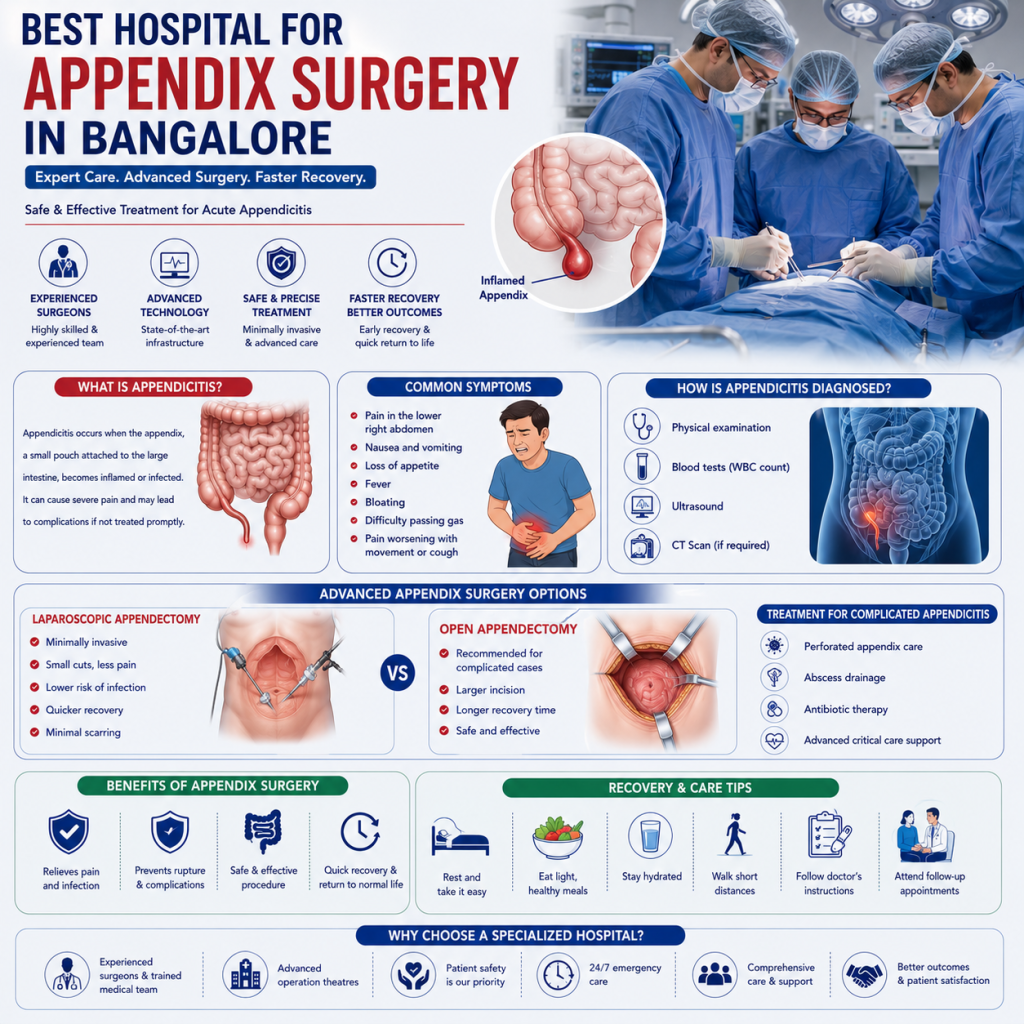
The appendix is a narrow, finger-shaped pouch that sits where the small and large intestine meet, usually on the lower right side of the abdomen. When it gets blocked and infected, it swells up. That is appendicitis.
The classic story is pain that starts around the belly button and moves to the lower right side over a few hours. Along with it, people often lose their appetite, feel sick or vomit, and run a mild fever. Walking, coughing or going over a speed breaker usually makes the pain sharper.
Still, plenty of people do not follow the textbook. Children, older adults and pregnant women can have vague or unusual symptoms, so pain in a different spot does not rule appendicitis out. If you are unsure whether it is your appendix or just a bad stomach, our guide on how appendicitis pain differs from gas walks through the differences.
When Should You Go to Hospital With Appendix Pain?
Don’t wait at home if abdominal pain keeps getting worse instead of settling. Get to a hospital promptly if the pain:
- is getting steadily worse or has moved to the lower right side
- comes with fever, nausea or repeated vomiting
- makes walking, coughing or turning in bed painful
- comes with a complete loss of appetite
- spreads across the whole abdomen, or you feel faint, confused or breathless
Painkillers, antacids and gas tablets can dull the pain for a while, but they do nothing for an inflamed appendix. Masking the pain can also delay the diagnosis. For sudden, severe pain, go to the nearest emergency department. At Shirdi Sai Hospital, the Emergency Medicine team sees patients with acute abdominal pain round the clock.
How Doctors Diagnose Appendicitis Before Surgery
Before anyone plans appendix surgery in Bangalore or anywhere else, the diagnosis has to be right. There is no home test for appendicitis, and even in hospital no single result confirms it in every case. Instead, the surgeon puts several pieces together.
Your history and a physical examination
Expect questions about when the pain began, where it started, whether it has moved, and whether you have had vomiting, fever, or any change in your bowels or urine. Women may also be asked about periods and the chance of pregnancy, because gynaecological problems and ectopic pregnancy can cause lower abdominal pain in women too. The doctor then gently presses on your abdomen to find where it is most tender.
Blood and urine tests
Blood tests show signs of infection and inflammation and help check whether you are dehydrated. A urine test helps rule out a urinary infection or kidney stone, since both can mimic appendix pain. When relevant, the team will also do a pregnancy test.
Ultrasound or CT scan
A scan helps when the picture is unclear or when the team suspects a complication. Ultrasound is often the first choice for children and pregnant women, while a CT scan gives a more detailed view in adults. Your age, symptoms and examination findings decide which scan, if any, you need.
Does Every Case of Appendicitis Need Surgery?
Not every case, but most do. Removing the appendix is still the standard treatment. According to the NIDDK, doctors usually treat appendicitis with surgery, although some people with mild cases may recover with antibiotics alone.
That antibiotics-first route only suits certain patients. Usually they have uncomplicated appendicitis on a scan, no abscess, no sign of a burst appendix, and a way to be monitored closely. Even then, the problem can return later and some patients end up needing surgery anyway. It is a decision to make with your surgeon after tests, never by taking leftover antibiotics at home.
Types of Appendix Surgery
If you are weighing up options for appendix surgery in Bangalore, it helps to know how the operation works. Removing the appendix is called an appendectomy. People live completely normal lives without an appendix, so taking it out causes no long-term problems. Surgeons can do it in two ways.
Laparoscopic appendix surgery (keyhole)
In a laparoscopic appendectomy, the surgeon makes two or three small cuts in the abdomen and passes in a thin camera, called a laparoscope, along with fine instruments. The camera shows the inside of your abdomen on a screen, so the surgeon can look around, find the appendix and remove it through one of the small openings.
Because the cuts are small, most people have less wound pain, smaller scars and a quicker return to normal activity. For that reason, laparoscopic appendix surgery is the usual first choice for many adults.
Open appendix surgery
Open appendectomy uses one larger cut, usually on the lower right side of the abdomen. It is still the right option in some situations, for example when infection has spread widely, when scar tissue from earlier operations gets in the way, or when the surgeon needs more direct access.
Sometimes an operation starts as keyhole surgery and switches to open surgery partway through. That is a safety call by the surgeon, not a sign that something went wrong.
Is laparoscopic better than open surgery?
For many patients, yes. Keyhole surgery tends to mean fewer wound infections and a shorter recovery. However, the more useful question is which approach suits your appendix and your overall health. Your surgeon should explain why they recommend one over the other.
What If the Appendix Bursts?
If appendicitis goes untreated, the appendix can burst (perforate) and spill infection into the abdomen. This can lead to peritonitis, a pocket of pus called an abscess, or in serious cases sepsis. The NHS describes a burst appendix as a medical emergency.
Treatment then goes beyond simply removing the appendix. Depending on the situation, you may need antibiotics through a drip, a thorough wash-out of the abdomen during surgery, or drainage of an abscess before the surgeon removes the appendix at a later stage. The hospital stay and recovery also tend to be longer, which is one more reason not to sit on worsening pain.
Preparing for Appendix Surgery
Appendix surgery often happens within hours of diagnosis, so preparation moves quickly. The team reviews your reports, starts a drip for fluids, gives antibiotics and has the anaesthetist check you. Your surgeon then explains the operation and its risks before asking for your consent.
Make sure the team knows if you:
- take blood thinners, diabetes medicines or any other regular tablets
- are allergic to any medicine
- have heart, lung or kidney problems
- have had surgery on your abdomen before
- are pregnant or could be
- have had trouble with anaesthesia in the past
The team will also tell you when to stop eating and drinking. Don’t stop any regular medicine unless your doctor asks you to.
What Happens During an Appendectomy?
You will be under general anaesthesia, so you sleep through the whole operation. The surgeon reaches the appendix using the keyhole or open method, seals off its base, removes it and checks the area around it. If there is pus or infected fluid, the surgeon cleans it out before closing the wounds. An uncomplicated laparoscopic appendectomy often takes about an hour, while a burst appendix can take longer.
Risks and Possible Complications
Appendectomy is one of the most common emergency operations, and most people recover well. Still, every surgery carries some risk. Possible complications include:
- wound infection
- bleeding
- a collection of pus inside the abdomen (abscess)
- a sluggish bowel (ileus) that causes bloating and nausea for a few days
- bowel blockage from scar tissue (adhesions), sometimes years later
- reactions to anaesthesia
The risk goes up when the appendix has already burst or when you have other health conditions. Your surgeon will talk you through what applies to you.
Recovery After Appendix Surgery
Recovery after appendix surgery in Bangalore is no different from anywhere else. How fast you recover depends mostly on the type of surgery and whether the appendix had burst. After uncomplicated keyhole surgery, many people go home within a day or two. Open surgery or a burst appendix usually means a longer stay, and full recovery can take a few weeks.
Eating after surgery
You start with sips of water and move on to light, simple food once your stomach settles. There is no special lifelong diet after appendix removal. In the first few days, smaller meals are often easier while your appetite comes back. If you have diabetes, kidney disease or another condition that affects what you eat, follow the advice for that condition.
Walking and getting back to activity
Getting up for a gentle walk, usually the same day or the next, helps your bowel start working again and lowers the risk of blood clots. Build up slowly from there. Avoid heavy lifting, intense workouts and sport until your surgeon clears you, because the abdominal wall needs time to heal, especially after open surgery.
Going back to work
Someone with a desk job usually returns sooner than someone whose work involves lifting, long hours of driving or standing all day. Your surgeon will give you a timeline based on your operation and how your wounds are healing. That is far more reliable than comparing notes with a friend who had the same surgery.
Wound care
Keep the wounds clean and dry, and follow your discharge instructions on dressings, bathing and stitches. A little redness right at the edge of a cut is normal in the first few days. Call the hospital if the redness spreads, the wound feels hot or swollen, or you notice pus, bleeding or the edges coming apart.
Warning Signs After Appendix Surgery
Some soreness and tiredness for a while is normal. However, contact the hospital or come back for a review if you notice:
- pain that gets worse instead of better
- fever or chills, especially if they start a few days after surgery
- vomiting that does not stop, or not being able to keep food and fluids down
- a swollen, tight or bloated abdomen
- redness, swelling or discharge from a wound
- no bowel movement or gas for several days
Severe sudden pain, fainting, confusion or difficulty breathing need emergency care straight away.
Appendix Surgery Cost in Bangalore: What Affects It
The cost of appendix surgery in Bangalore depends on several factors, so a single fixed price rarely tells the full story. The main ones are:
- laparoscopic or open surgery
- whether the appendix had burst or formed an abscess
- the tests and scans needed before surgery
- the number of days in hospital and the room type
- medicines, antibiotics and any ICU care
- your insurance policy and what it covers
For an estimate based on your reports, or to check what your insurance covers, get in touch with the hospital and the team will guide you.
Appendix Surgery at Shirdi Sai Hospital, New BEL Road
Shirdi Sai Multispeciality Hospital treats appendicitis through its General Surgery department, which handles a wide range of abdominal conditions and uses laparoscopic techniques where they suit the patient. The surgeon decides between keyhole and open surgery case by case, after a proper assessment.
When you come in with suspected appendicitis, the team will work out:
- whether your symptoms really point to appendicitis or to something else
- which tests and scans you need
- whether you need surgery now or another treatment first
- whether the case looks simple or complicated
- what care you will need after the operation
The hospital sits on New BEL Road, so it is easy to reach from Sanjay Nagar, RMV 2nd Stage, Mathikere, Hebbal and nearby areas. You can read more about our general surgery care on New BEL Road, including other laparoscopic procedures.
Questions to Ask Your Surgeon
Whether you choose us or another hospital for appendix surgery in Bangalore, it helps to walk in with a few questions ready. You might ask:
- How sure are you that this is appendicitis?
- Is it uncomplicated, or has it burst or formed an abscess?
- Do I need surgery now, or could antibiotics work for me?
- Will you do keyhole or open surgery, and what could change that?
- How long will I stay in hospital?
- What should I watch for once I am home?
- When should I come back for a follow-up?
Frequently Asked Questions
Which hospital is best for appendix surgery in Bangalore?
Look for a hospital that can see you quickly in an emergency, run the tests needed to confirm appendicitis, and has general surgeons who do both laparoscopic and open surgery. Shirdi Sai Hospital on New BEL Road brings emergency assessment and general surgery care under one roof for patients across North Bangalore.
Is appendix surgery painful?
You are asleep during the operation, so you won’t feel it. Afterwards, expect some soreness around the cuts for a few days, and the team will give you pain relief for it. Keyhole surgery usually causes less wound pain than open surgery.
How long does recovery take after appendix surgery?
It varies. After uncomplicated keyhole surgery, many people feel much better within a week or two and recover fully over a few weeks. Open surgery or a burst appendix usually takes longer. Your surgeon will tell you when it is safe to return to work, lifting and exercise.
Can appendicitis be treated without surgery?
Sometimes. A small group of patients with mild, uncomplicated appendicitis may do well on antibiotics, but the infection can come back later. For most people, surgery is still the standard treatment.
What happens if the appendix bursts?
Infection spreads into the abdomen and can cause peritonitis, an abscess or sepsis. It needs urgent treatment with antibiotics and surgery, sometimes with drainage, and recovery takes longer.
Can appendicitis come back after the appendix is removed?
It is very rare. Occasionally a small stump of appendix left behind becomes inflamed, which doctors call stump appendicitis. Having had your appendix out does not rule out other causes of belly pain, so severe new pain still needs a check-up.
Does insurance cover appendix surgery?
Most health insurance policies cover appendectomy because it is a medically necessary operation, but the terms differ between policies. Share your policy details with the hospital billing team to confirm your coverage.
Book a Consultation for Appendix Surgery in Bangalore
If you have worsening pain on the lower right side, or a scan has already shown appendicitis, don’t wait for it to settle on its own. Call Shirdi Sai Hospital on +91 80885 11289 or book a General Surgery consultation at our New BEL Road hospital. For severe or fast-worsening pain, come straight to the emergency department.
References: NIDDK, Treatment for Appendicitis; NHS, Appendicitis. This page is for general information and does not replace advice from your own doctor.