Waking up once in the night to urinate can be common. Waking up multiple times, or feeling that your sleep is regularly interrupted because of the urge to pass urine, often raises concern. At Shirdi Sai Hospital, this is one of the most frequent questions we hear-especially from adults over 40 and from people managing lifestyle or metabolic conditions.
This article explains what’s normal, what isn’t, why night-time urination happens, and when it needs medical attention—in clear, people-first language.
What Is Night-Time Urination?
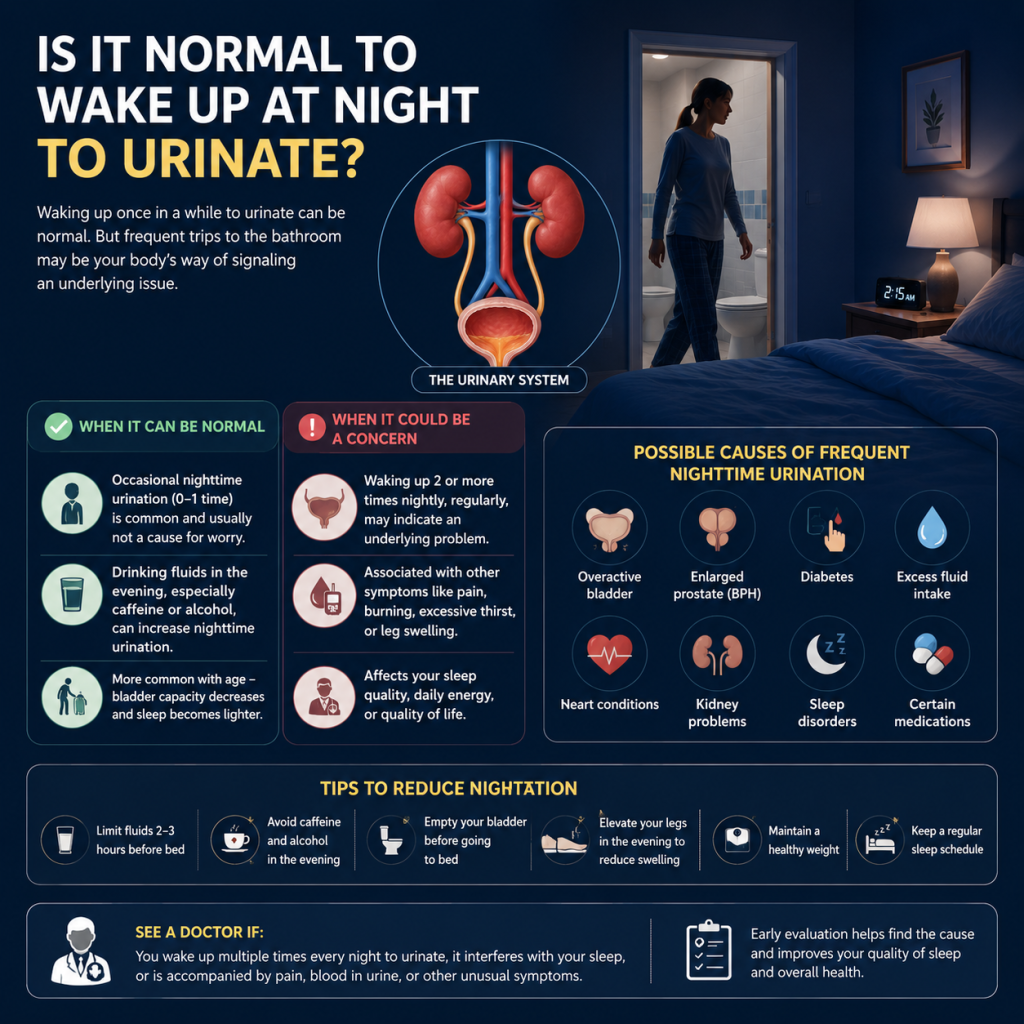
Night-time urination is medically called nocturia. It simply means waking from sleep to pass urine. The key factor is how often it happens and whether it disrupts your rest.
Once per night: often normal
Two or more times every night: may indicate an underlying issue
Common Reasons People Wake Up at Night to Urinate
1) Drinking Fluids Late in the Evening
Water, tea, coffee, or alcohol close to bedtime increases urine production during sleep.
Typical clues:
Normal daytime urination
Symptoms improve when evening fluids are reduced
2) Poor Sleep or Light Sleep Patterns
Sometimes, poor sleep causes you to wake up first—and urination happens after waking, not the other way around.
Typical clues:
Difficulty falling asleep
Frequent awakenings for no clear reason
Urine volumes are small
3) Overactive Bladder
An overactive bladder can trigger urgency even when urine volume is low, including at night.
Typical clues:
Sudden urge to urinate
Frequent daytime urination
No burning or infection signs
4) Prostate Enlargement (in Men)
As men age, prostate enlargement can obstruct urine flow, making the bladder work harder—especially at night.
Typical clues:
Weak urine stream
Feeling of incomplete emptying
Night-time urination increases gradually
5) Diabetes or Blood Sugar Imbalance
High blood sugar increases urine production, particularly overnight.
Typical clues:
Excessive thirst
Increased daytime and night-time urination
Fatigue or unexplained weight changes
6) Heart or Circulation-Related Fluid Shifts
Fluid that pools in the legs during the day can return to circulation when lying down, increasing night-time urine output.
Typical clues:
Leg swelling by evening
Night-time urination without bladder pain
Improves with leg elevation
7) Age-Related Hormonal Changes
With age, the body produces less of the hormone that concentrates urine at night, leading to higher urine output during sleep.
Typical clues:
Gradual onset over years
No pain or burning
Common after 50
Is Night-Time Urination Always a Problem?
Not always. It becomes a concern when:
It happens every night
It interrupts sleep quality
It’s associated with urgency, leakage, or fatigue
It appears suddenly without lifestyle changes
When Should You See a Doctor?
Seek evaluation if:
You wake up two or more times nightly consistently
You feel tired during the day due to sleep disruption
There is burning, pain, or blood in urine
Symptoms worsen over weeks or months
Early evaluation helps identify reversible causes.
How Doctors Assess Night-Time Urination
At Shirdi Sai Hospital, evaluation focuses on understanding patterns:
Day vs night urine frequency
Fluid intake habits
Medical history and medications
Urine tests and blood sugar checks (if needed)
Imaging or advanced tests are only done when required.
Treatment Depends on the Cause
Lifestyle adjustments: timing of fluids, caffeine reduction
Bladder training: improving bladder capacity and control
Most people see improvement with simple, targeted steps.
A Note From the Shirdi Sai Hospital Team
Waking up at night to urinate is common—but it should not be dismissed if it’s frequent or affecting your sleep. Identifying the cause early often restores restful sleep and prevents complications.
If night-time urination is becoming routine rather than occasional, a urology consultation can offer clarity and reassurance.
Frequently Asked Questions (FAQs)
How many times is normal to urinate at night? Once is usually normal. More than that may need evaluation.
Does night-time urination always mean prostate problems? No. Prostate issues are one of several possible causes.
Can dehydration during the day cause this? Yes. Drinking too little earlier can shift fluid intake to evenings.
Is this common in older adults? Yes, due to hormonal and bladder changes with age.
Will reducing fluids fix it? It helps in many cases, but not if an underlying condition exists.
Can night-time urination be prevented? Often, yes—once the cause is identified and addressed.
Doctor Review
This article was reviewed for medical accuracy by a Urology Consultant at Shirdi Sai Hospital.
If a doctor has told you it might be appendicitis, or has already suggested an operation, you probably have a few questions. Do you really need surgery? Keyhole or open? And how long before life gets back to normal? This page explains how appendix surgery in Bangalore usually works at Shirdi Sai Hospital on New BEL Road, from the first examination to the weeks after you go home.
In short, appendicitis needs a proper hospital assessment because an inflamed appendix can get worse and may burst. Doctors confirm it with an examination, blood and urine tests and, when needed, an ultrasound or CT scan. Most people then have an appendectomy, which removes the appendix through keyhole (laparoscopic) or open surgery. A few carefully selected patients with mild appendicitis may get antibiotics first.
Appendix Surgery at a Glance
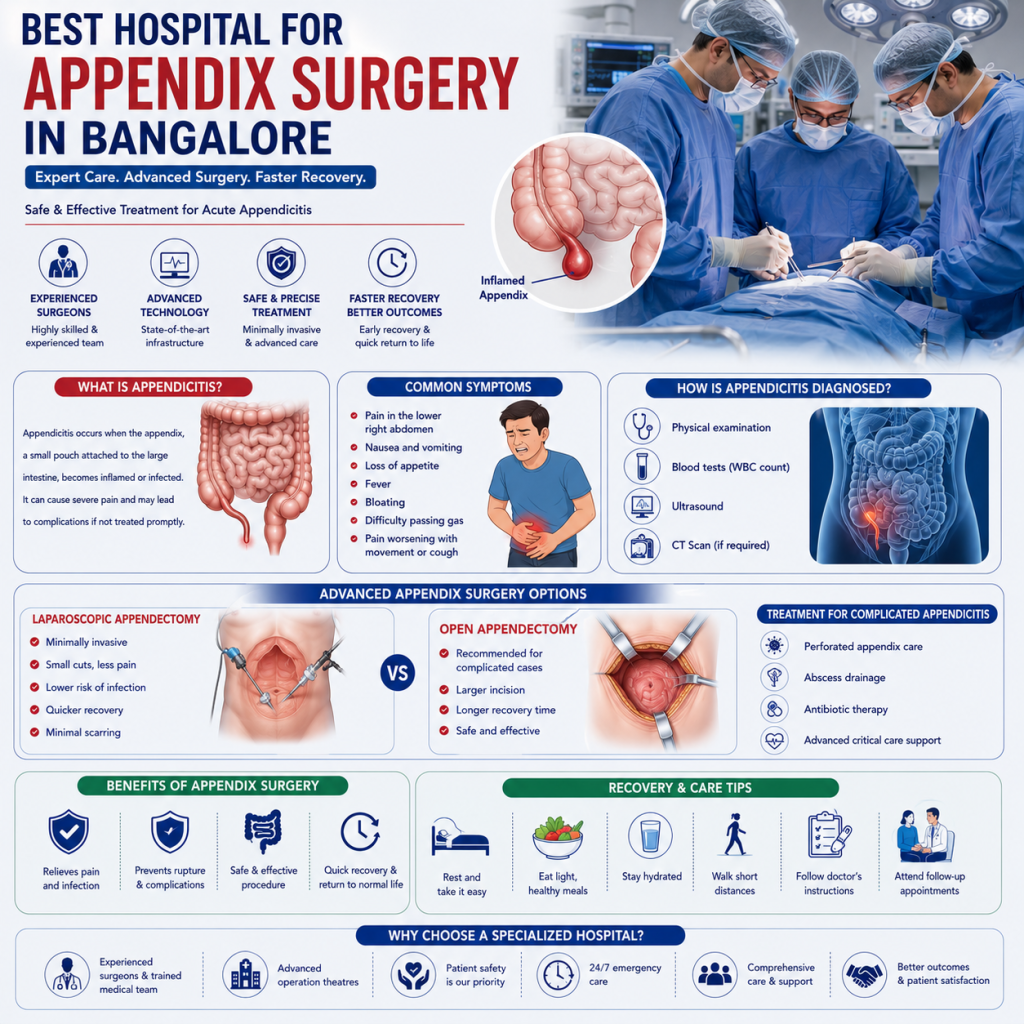
Appendicitis is inflammation and infection of the appendix, a small pouch attached to the large intestine.
Diagnosis depends on your symptoms, an abdominal examination and tests. No single test settles it every time.
Appendectomy, or removal of the appendix, is the standard treatment for most people.
Surgeons use either laparoscopic or open surgery, depending on how severe the infection is.
A burst appendix or an abscess changes the plan and usually means a longer recovery.
Recovery time differs from person to person, so treat any fixed number of days as a rough guide at best.
What Is Appendicitis?
The appendix is a narrow, finger-shaped pouch that sits where the small and large intestine meet, usually on the lower right side of the abdomen. When it gets blocked and infected, it swells up. That is appendicitis.
The classic story is pain that starts around the belly button and moves to the lower right side over a few hours. Along with it, people often lose their appetite, feel sick or vomit, and run a mild fever. Walking, coughing or going over a speed breaker usually makes the pain sharper.
Still, plenty of people do not follow the textbook. Children, older adults and pregnant women can have vague or unusual symptoms, so pain in a different spot does not rule appendicitis out. If you are unsure whether it is your appendix or just a bad stomach, our guide on how appendicitis pain differs from gas walks through the differences.
When Should You Go to Hospital With Appendix Pain?
Don’t wait at home if abdominal pain keeps getting worse instead of settling. Get to a hospital promptly if the pain:
is getting steadily worse or has moved to the lower right side
comes with fever, nausea or repeated vomiting
makes walking, coughing or turning in bed painful
comes with a complete loss of appetite
spreads across the whole abdomen, or you feel faint, confused or breathless
Painkillers, antacids and gas tablets can dull the pain for a while, but they do nothing for an inflamed appendix. Masking the pain can also delay the diagnosis. For sudden, severe pain, go to the nearest emergency department. At Shirdi Sai Hospital, the Emergency Medicine team sees patients with acute abdominal pain round the clock.
How Doctors Diagnose Appendicitis Before Surgery
Before anyone plans appendix surgery in Bangalore or anywhere else, the diagnosis has to be right. There is no home test for appendicitis, and even in hospital no single result confirms it in every case. Instead, the surgeon puts several pieces together.
Your history and a physical examination
Expect questions about when the pain began, where it started, whether it has moved, and whether you have had vomiting, fever, or any change in your bowels or urine. Women may also be asked about periods and the chance of pregnancy, because gynaecological problems and ectopic pregnancy can cause lower abdominal pain in women too. The doctor then gently presses on your abdomen to find where it is most tender.
Blood and urine tests
Blood tests show signs of infection and inflammation and help check whether you are dehydrated. A urine test helps rule out a urinary infection or kidney stone, since both can mimic appendix pain. When relevant, the team will also do a pregnancy test.
Ultrasound or CT scan
A scan helps when the picture is unclear or when the team suspects a complication. Ultrasound is often the first choice for children and pregnant women, while a CT scan gives a more detailed view in adults. Your age, symptoms and examination findings decide which scan, if any, you need.
Does Every Case of Appendicitis Need Surgery?
Not every case, but most do. Removing the appendix is still the standard treatment. According to the NIDDK, doctors usually treat appendicitis with surgery, although some people with mild cases may recover with antibiotics alone.
That antibiotics-first route only suits certain patients. Usually they have uncomplicated appendicitis on a scan, no abscess, no sign of a burst appendix, and a way to be monitored closely. Even then, the problem can return later and some patients end up needing surgery anyway. It is a decision to make with your surgeon after tests, never by taking leftover antibiotics at home.
Types of Appendix Surgery
If you are weighing up options for appendix surgery in Bangalore, it helps to know how the operation works. Removing the appendix is called an appendectomy. People live completely normal lives without an appendix, so taking it out causes no long-term problems. Surgeons can do it in two ways.
Laparoscopic appendix surgery (keyhole)
In a laparoscopic appendectomy, the surgeon makes two or three small cuts in the abdomen and passes in a thin camera, called a laparoscope, along with fine instruments. The camera shows the inside of your abdomen on a screen, so the surgeon can look around, find the appendix and remove it through one of the small openings.
Because the cuts are small, most people have less wound pain, smaller scars and a quicker return to normal activity. For that reason, laparoscopic appendix surgery is the usual first choice for many adults.
Open appendix surgery
Open appendectomy uses one larger cut, usually on the lower right side of the abdomen. It is still the right option in some situations, for example when infection has spread widely, when scar tissue from earlier operations gets in the way, or when the surgeon needs more direct access.
Sometimes an operation starts as keyhole surgery and switches to open surgery partway through. That is a safety call by the surgeon, not a sign that something went wrong.
Is laparoscopic better than open surgery?
For many patients, yes. Keyhole surgery tends to mean fewer wound infections and a shorter recovery. However, the more useful question is which approach suits your appendix and your overall health. Your surgeon should explain why they recommend one over the other.
What If the Appendix Bursts?
If appendicitis goes untreated, the appendix can burst (perforate) and spill infection into the abdomen. This can lead to peritonitis, a pocket of pus called an abscess, or in serious cases sepsis. The NHS describes a burst appendix as a medical emergency.
Treatment then goes beyond simply removing the appendix. Depending on the situation, you may need antibiotics through a drip, a thorough wash-out of the abdomen during surgery, or drainage of an abscess before the surgeon removes the appendix at a later stage. The hospital stay and recovery also tend to be longer, which is one more reason not to sit on worsening pain.
Preparing for Appendix Surgery
Appendix surgery often happens within hours of diagnosis, so preparation moves quickly. The team reviews your reports, starts a drip for fluids, gives antibiotics and has the anaesthetist check you. Your surgeon then explains the operation and its risks before asking for your consent.
Make sure the team knows if you:
take blood thinners, diabetes medicines or any other regular tablets
are allergic to any medicine
have heart, lung or kidney problems
have had surgery on your abdomen before
are pregnant or could be
have had trouble with anaesthesia in the past
The team will also tell you when to stop eating and drinking. Don’t stop any regular medicine unless your doctor asks you to.
What Happens During an Appendectomy?
You will be under general anaesthesia, so you sleep through the whole operation. The surgeon reaches the appendix using the keyhole or open method, seals off its base, removes it and checks the area around it. If there is pus or infected fluid, the surgeon cleans it out before closing the wounds. An uncomplicated laparoscopic appendectomy often takes about an hour, while a burst appendix can take longer.
Risks and Possible Complications
Appendectomy is one of the most common emergency operations, and most people recover well. Still, every surgery carries some risk. Possible complications include:
wound infection
bleeding
a collection of pus inside the abdomen (abscess)
a sluggish bowel (ileus) that causes bloating and nausea for a few days
bowel blockage from scar tissue (adhesions), sometimes years later
reactions to anaesthesia
The risk goes up when the appendix has already burst or when you have other health conditions. Your surgeon will talk you through what applies to you.
Recovery After Appendix Surgery
Recovery after appendix surgery in Bangalore is no different from anywhere else. How fast you recover depends mostly on the type of surgery and whether the appendix had burst. After uncomplicated keyhole surgery, many people go home within a day or two. Open surgery or a burst appendix usually means a longer stay, and full recovery can take a few weeks.
Eating after surgery
You start with sips of water and move on to light, simple food once your stomach settles. There is no special lifelong diet after appendix removal. In the first few days, smaller meals are often easier while your appetite comes back. If you have diabetes, kidney disease or another condition that affects what you eat, follow the advice for that condition.
Walking and getting back to activity
Getting up for a gentle walk, usually the same day or the next, helps your bowel start working again and lowers the risk of blood clots. Build up slowly from there. Avoid heavy lifting, intense workouts and sport until your surgeon clears you, because the abdominal wall needs time to heal, especially after open surgery.
Going back to work
Someone with a desk job usually returns sooner than someone whose work involves lifting, long hours of driving or standing all day. Your surgeon will give you a timeline based on your operation and how your wounds are healing. That is far more reliable than comparing notes with a friend who had the same surgery.
Wound care
Keep the wounds clean and dry, and follow your discharge instructions on dressings, bathing and stitches. A little redness right at the edge of a cut is normal in the first few days. Call the hospital if the redness spreads, the wound feels hot or swollen, or you notice pus, bleeding or the edges coming apart.
Warning Signs After Appendix Surgery
Some soreness and tiredness for a while is normal. However, contact the hospital or come back for a review if you notice:
pain that gets worse instead of better
fever or chills, especially if they start a few days after surgery
vomiting that does not stop, or not being able to keep food and fluids down
a swollen, tight or bloated abdomen
redness, swelling or discharge from a wound
no bowel movement or gas for several days
Severe sudden pain, fainting, confusion or difficulty breathing need emergency care straight away.
Appendix Surgery Cost in Bangalore: What Affects It
The cost of appendix surgery in Bangalore depends on several factors, so a single fixed price rarely tells the full story. The main ones are:
laparoscopic or open surgery
whether the appendix had burst or formed an abscess
the tests and scans needed before surgery
the number of days in hospital and the room type
medicines, antibiotics and any ICU care
your insurance policy and what it covers
For an estimate based on your reports, or to check what your insurance covers, get in touch with the hospital and the team will guide you.
Appendix Surgery at Shirdi Sai Hospital, New BEL Road
Shirdi Sai Multispeciality Hospital treats appendicitis through its General Surgery department, which handles a wide range of abdominal conditions and uses laparoscopic techniques where they suit the patient. The surgeon decides between keyhole and open surgery case by case, after a proper assessment.
When you come in with suspected appendicitis, the team will work out:
whether your symptoms really point to appendicitis or to something else
which tests and scans you need
whether you need surgery now or another treatment first
whether the case looks simple or complicated
what care you will need after the operation
The hospital sits on New BEL Road, so it is easy to reach from Sanjay Nagar, RMV 2nd Stage, Mathikere, Hebbal and nearby areas. You can read more about our general surgery care on New BEL Road, including other laparoscopic procedures.
Questions to Ask Your Surgeon
Whether you choose us or another hospital for appendix surgery in Bangalore, it helps to walk in with a few questions ready. You might ask:
How sure are you that this is appendicitis?
Is it uncomplicated, or has it burst or formed an abscess?
Do I need surgery now, or could antibiotics work for me?
Will you do keyhole or open surgery, and what could change that?
How long will I stay in hospital?
What should I watch for once I am home?
When should I come back for a follow-up?
Frequently Asked Questions
Which hospital is best for appendix surgery in Bangalore?
Look for a hospital that can see you quickly in an emergency, run the tests needed to confirm appendicitis, and has general surgeons who do both laparoscopic and open surgery. Shirdi Sai Hospital on New BEL Road brings emergency assessment and general surgery care under one roof for patients across North Bangalore.
Is appendix surgery painful?
You are asleep during the operation, so you won’t feel it. Afterwards, expect some soreness around the cuts for a few days, and the team will give you pain relief for it. Keyhole surgery usually causes less wound pain than open surgery.
How long does recovery take after appendix surgery?
It varies. After uncomplicated keyhole surgery, many people feel much better within a week or two and recover fully over a few weeks. Open surgery or a burst appendix usually takes longer. Your surgeon will tell you when it is safe to return to work, lifting and exercise.
Can appendicitis be treated without surgery?
Sometimes. A small group of patients with mild, uncomplicated appendicitis may do well on antibiotics, but the infection can come back later. For most people, surgery is still the standard treatment.
What happens if the appendix bursts?
Infection spreads into the abdomen and can cause peritonitis, an abscess or sepsis. It needs urgent treatment with antibiotics and surgery, sometimes with drainage, and recovery takes longer.
Can appendicitis come back after the appendix is removed?
It is very rare. Occasionally a small stump of appendix left behind becomes inflamed, which doctors call stump appendicitis. Having had your appendix out does not rule out other causes of belly pain, so severe new pain still needs a check-up.
Does insurance cover appendix surgery?
Most health insurance policies cover appendectomy because it is a medically necessary operation, but the terms differ between policies. Share your policy details with the hospital billing team to confirm your coverage.
Book a Consultation for Appendix Surgery in Bangalore
If you have worsening pain on the lower right side, or a scan has already shown appendicitis, don’t wait for it to settle on its own. Call Shirdi Sai Hospital on +91 80885 11289 or book a General Surgery consultation at our New BEL Road hospital. For severe or fast-worsening pain, come straight to the emergency department.
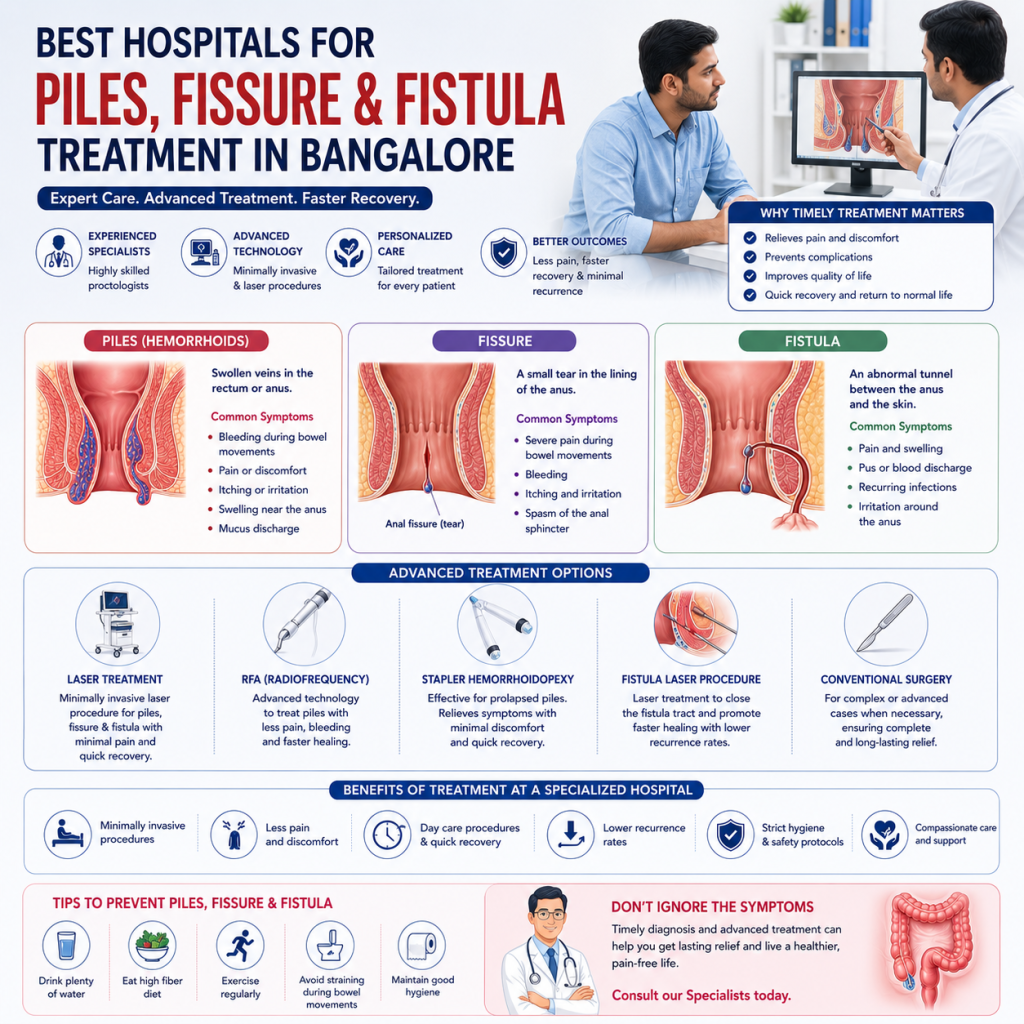
✅ Recognized among the top hospitals for piles, fissure, and fistula treatment in Bangalore
❓ FAQs – Piles, Fissure & Fistula
Q1. Which hospital is best for piles treatment in Bangalore? 👉 Shirdi Sai Hospital, New BEL Road, is among the best, offering advanced laser piles treatment with quick recovery.
Q2. Is fissure surgery painful? Laser fissure treatment is almost painless with faster healing compared to conventional methods.
Q3. Can fistula heal without surgery? No. Fistula requires surgical intervention, and laser surgery offers the best results.
Q4. How long is recovery after laser surgery? Most patients resume normal activities within 3–5 days.
Q5. Does insurance cover piles, fissure, and fistula surgery in Bangalore? Yes. Most insurance plans cover laser proctology surgeries at Shirdi Sai Hospital.
📞 Call to Action
Don’t suffer in silence. Get advanced laser treatment for piles, fissure, and fistula at Shirdi Sai Multispeciality Hospital, New BEL Road, Bangalore.
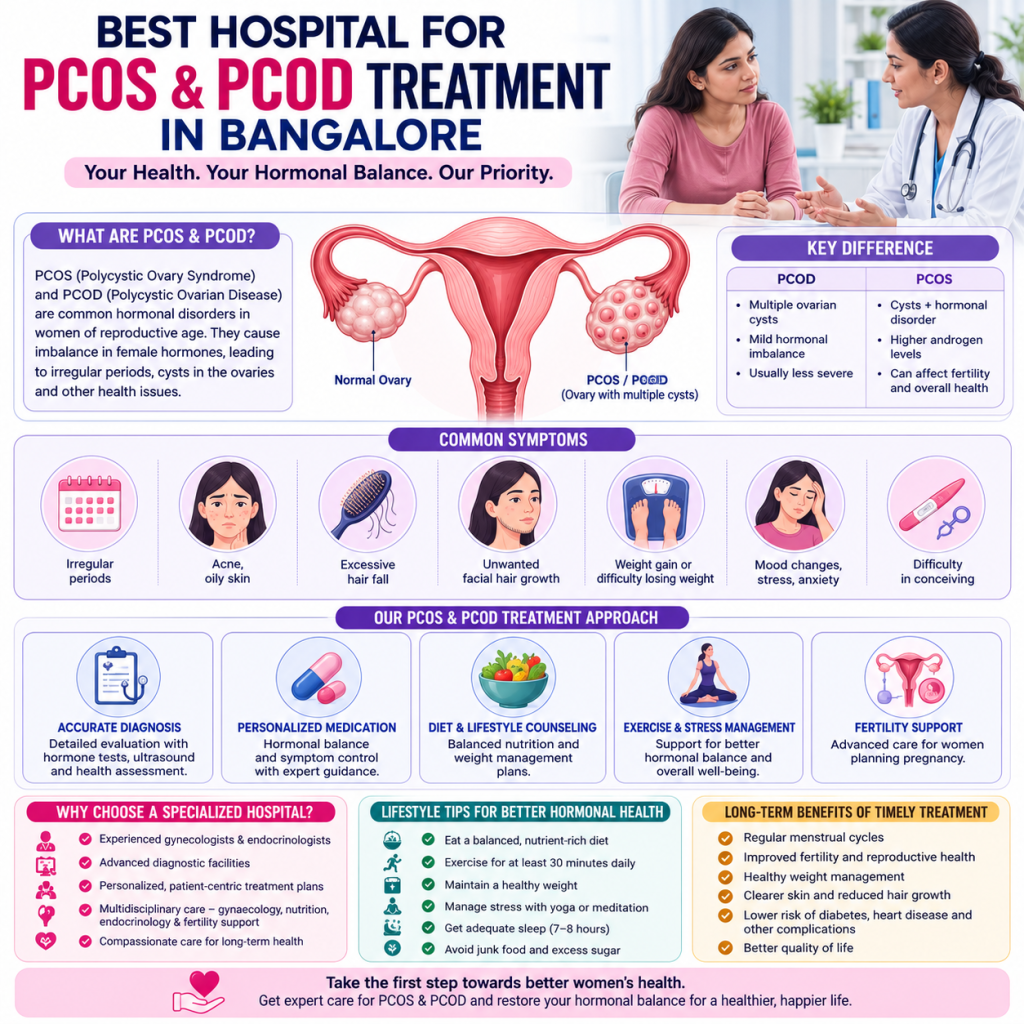
Polycystic Ovary Syndrome (PCOS) and Polycystic Ovary Disorder (PCOD) are among the most common hormonal conditions affecting women of reproductive age. They can cause irregular periods, weight gain, acne, and even infertility if left untreated. At Shirdi Sai Multispeciality Hospital, New BEL Road, Bangalore, our expert gynecology team provides personalized care for PCOS & PCOD, making us one of the best hospitals in Bangalore for women’s health treatment.
🔎 Understanding PCOS & PCOD
PCOD (Polycystic Ovary Disorder): Ovaries produce immature eggs, leading to irregular periods and hormonal imbalance.
PCOS (Polycystic Ovary Syndrome): A more severe metabolic disorder with higher androgen levels, insulin resistance, and fertility issues.
(Costs vary per patient needs. Insurance may cover fertility treatments.)
👩⚕️ Why Choose Shirdi Sai Hospital?
✅ Expert gynecologists specializing in PCOS & PCOD
✅ Comprehensive women’s health services under one roof
✅ Personalized care plans for fertility, hormones, and lifestyle management
✅ Located on New BEL Road – easily accessible from Hebbal, Malleshwaram, Yeshwanthpur, RT Nagar
✅ Recognized as one of the top hospitals in Bangalore for PCOS treatment
❓ FAQs – PCOS & PCOD
Q1. Which hospital is best for PCOS treatment in Bangalore? 👉 Shirdi Sai Hospital, New BEL Road, is among the best hospitals for PCOS & PCOD care with expert gynecologists.
Q2. Can PCOS be cured permanently? PCOS cannot be fully cured, but symptoms can be managed effectively with lifestyle changes and treatment.
Q3. Does PCOS affect fertility? Yes. PCOS is a leading cause of infertility, but with proper treatment, many women conceive successfully.
Q4. What is the difference between PCOS and PCOD? PCOD is milder (ovulation issue), while PCOS is more severe with hormonal imbalance and metabolic complications.
Q5. How long does PCOS treatment take? Treatment is long-term and depends on individual response, but symptom control is possible within months.
The rains in Bangalore bring relief from the summer heat-but they also bring a spike in viral fevers, dengue, flu, and water-borne infections. For families across New BEL Road and nearby Devasandra Layout, dealing with fever during the monsoon is common. But when should you manage it at home, and when should you seek medical help? At Shirdi Sai Hospital, our team of specialists ensures you receive safe, effective, and timely fever care right here in Bangalore. Let’s walk through symptoms, causes, home treatments, and when to book a consultation.
Symptoms
How do you know if your monsoon fever needs attention?
Sudden rise in body temperature (above 100.4°F / 38°C)
Chills, sweating, or body aches
Cough, sore throat, or runny nose (common in viral fever)
Headache and fatigue
In some cases, rashes, nausea, or joint pain may suggest dengue or chikungunya-both common in Bangalore’s rainy season
If fever lasts more than 2–3 days, consult a doctor at Shirdi Sai Hospital, New BEL Rd, without delay.
Causes
Why is fever so common in Bangalore’s monsoon?
Viral infections like flu and viral fever spread quickly in damp conditions
Mosquito-borne diseases such as dengue, malaria, and chikungunya rise due to stagnant water
Contaminated food or water can cause typhoid or stomach infections
Sudden weather changes weaken immunity, making you prone to seasonal infections
Treatments (At Home & Medical)
🏠 Home Care Tips (for mild fever under doctor’s advice):
Stay hydrated with water, coconut water, soups
Take paracetamol (only as prescribed) for fever relief
Use a cold compress on the forehead to reduce temperature
How to protect your family during Bangalore’s rainy season?
Drink boiled or filtered water only
Use mosquito nets and repellents to prevent dengue/malaria
Wash hands frequently to avoid viral spread
Avoid street food during heavy rains
Keep surroundings clean and dry to prevent mosquito breeding
When to Consult Shirdi Sai Hospital
Seek urgent medical care if you notice:
Fever lasting beyond 3 days
Severe headache, body pain, or rash (possible dengue/chikungunya)
Breathing difficulty or chest pain
Vomiting, diarrhea, or dehydration
High fever in children or elderly patients
Our hospital is conveniently located at New BEL Rd, opp. SLK Software, Devasandra Layout, Bengaluru-making it easy for nearby families to access trusted care. Click here to book your consultation.
❓ FAQs
1. Can fever be treated at home during the monsoon? Yes, mild viral fever can often be managed with rest, fluids, and prescribed medicines. If fever persists beyond 2–3 days, consult a doctor.
2. How do I know if my fever is dengue or viral? Only a blood test can confirm dengue. If fever is accompanied by rash, joint pain, or bleeding gums, visit a hospital immediately.
3. Is it safe to give antibiotics for fever? No. Antibiotics don’t work for viral fever. Always take medicines only under a doctor’s advice.
4. What foods help in recovery from fever? Easily digestible meals like soups, khichdi, dal, fruits, and fluids help maintain strength and hydration.
5. Where can I find reliable fever treatment in Bangalore? You can consult Shirdi Sai Hospital, located at New BEL Rd, Devasandra Layout, Bengaluru, for 24/7 expert fever care.