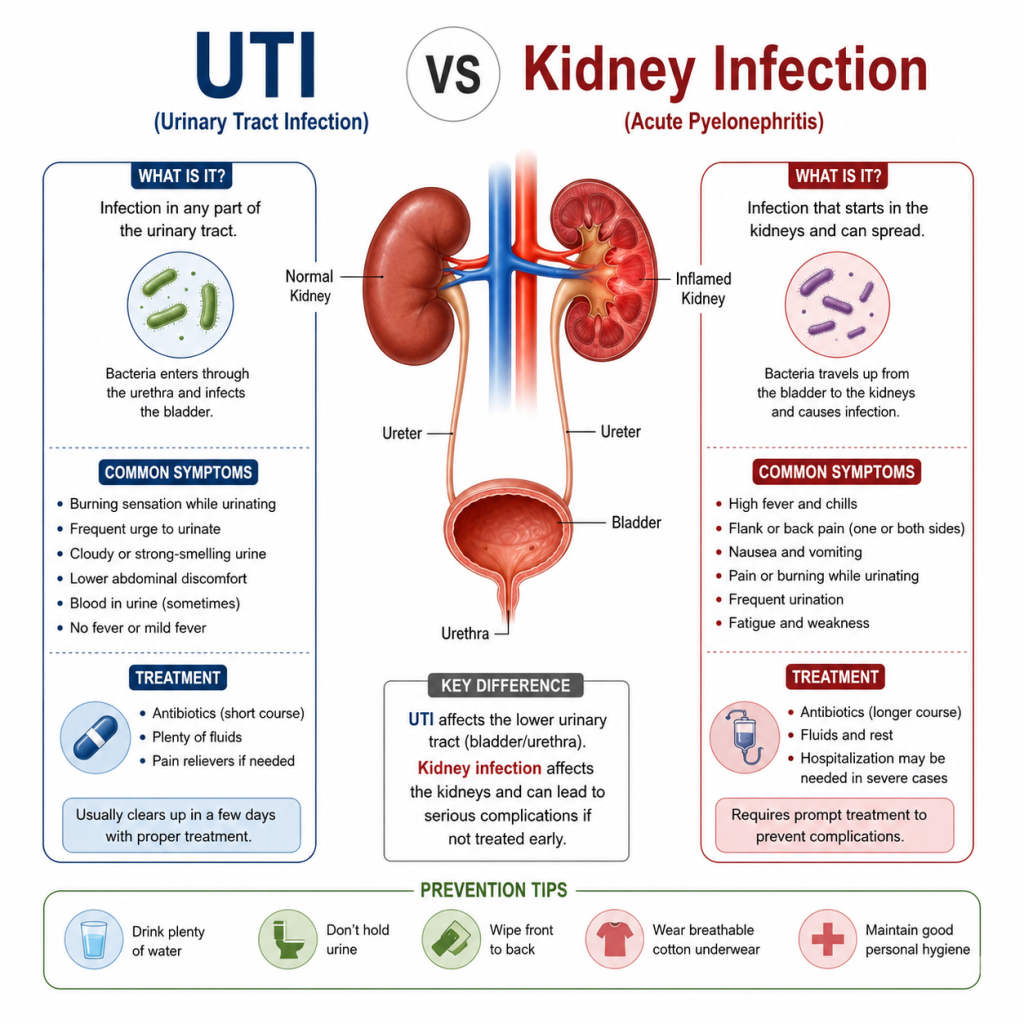
A UTI usually affects the lower urinary tract, especially the bladder, and commonly causes burning urination, frequent urination, urgency, lower abdominal discomfort, or cloudy urine. A kidney infection is more serious because the infection has reached one or both kidneys and can cause fever, chills, back or side pain, nausea, vomiting, and severe weakness. A UTI should be treated early because an untreated or worsening infection can sometimes spread upward and involve the kidneys.
At Shirdi Sai Hospital, New BEL Road, patients often come with urinary burning, frequent urination, lower abdominal pain, fever, back pain, or weakness and are unsure whether it is a simple UTI or a kidney infection. This guide explains the difference, warning signs, tests, treatment options, and when to consult a urologist.
What Is a UTI?
A urinary tract infection, or UTI, is an infection that affects any part of the urinary system. This includes the urethra, bladder, ureters, and kidneys. In common usage, “UTI” often refers to a lower urinary tract infection affecting the bladder or urethra.
A lower UTI may cause:
- burning or pain while passing urine
- frequent urination
- urgent need to urinate
- lower abdominal discomfort
- cloudy urine
- strong-smelling urine
- blood in urine in some cases
- feeling that the bladder is not empty
A lower UTI can be uncomfortable, but timely treatment usually prevents it from worsening.
If symptoms keep returning, it is better to consult the urology team instead of repeatedly taking medicines without evaluation. You can learn more about urinary care services on the Shirdi Sai
What Is a Kidney Infection?
A kidney infection is a more serious urinary infection where bacteria affect one or both kidneys. The medical term is pyelonephritis. It can occur when bacteria from the bladder travel upward to the kidneys.
A kidney infection may cause:
- fever
- chills
- back pain or side pain
- pain below the ribs
- nausea
- vomiting
- weakness
- painful urination
- frequent urination
- blood in urine
- feeling very unwell
A kidney infection needs prompt medical care. Delayed treatment can increase the risk of complications, especially in elderly people, pregnant women, people with diabetes, and patients with kidney stones or urinary blockage.
UTI vs Kidney Infection: Main Difference
The main difference is the level and severity of infection. A lower UTI mainly affects the bladder or urethra. A kidney infection affects the kidneys and usually causes more severe body symptoms such as fever, chills, back pain, nausea, or vomiting.
| Feature | Lower UTI | Kidney Infection |
|---|---|---|
| Main area affected | Bladder or urethra | One or both kidneys |
| Burning urination | Common | Can occur |
| Frequent urination | Common | Can occur |
| Lower abdominal pain | Common | May occur |
| Fever | Less common in simple lower UTI | Common |
| Chills | Uncommon | Common |
| Back or side pain | Usually absent | Common |
| Nausea or vomiting | Uncommon | Can occur |
| Severity | Usually less severe | More serious |
| Medical urgency | Needs treatment | Needs prompt evaluation |
This comparison helps patients understand why fever and back pain with urinary symptoms should not be ignored.
How Do I Know If It Is a Kidney Infection or a UTI?
A UTI is more likely when symptoms are mainly limited to urination, such as burning, urgency, frequent urination, cloudy urine, or lower abdominal pressure.
A kidney infection is more likely when urinary symptoms are combined with body symptoms such as fever, chills, back pain, side pain, nausea, vomiting, or severe weakness.
A simple way to understand it:
- Burning urine alone may suggest a lower UTI.
- Burning urine with fever and back pain needs urgent evaluation.
- Frequent urination with lower abdominal pressure may suggest bladder infection.
- Urinary symptoms with vomiting, chills, or side pain may suggest kidney involvement.
Do not self-diagnose based only on symptoms. A doctor may need urine tests, blood tests, and imaging depending on severity.
UTI Symptoms: Early Signs to Watch
A UTI can start mildly and become more uncomfortable over time.
Common UTI symptoms include:
- burning while passing urine
- passing urine more often than usual
- sudden urgency to urinate
- pain or pressure in the lower abdomen
- cloudy urine
- urine with strong smell
- blood in urine
- pain during urination
- discomfort after urination
In older adults, symptoms may be less typical. They may develop weakness, confusion, reduced appetite, or worsening general condition. These symptoms need careful medical evaluation.
Kidney Infection Symptoms: Warning Signs
Kidney infection symptoms are usually more intense than lower UTI symptoms.
Warning signs include:
- fever
- chills or shivering
- pain in the back, side, or below the ribs
- nausea
- vomiting
- severe weakness
- painful urination
- blood in urine
- reduced urination
- feeling very unwell
- confusion in elderly patients
A kidney infection can progress if ignored. Fever with urinary symptoms should be taken seriously, especially if there is back pain or vomiting.
Can a UTI Turn Into a Kidney Infection?
Yes. A lower UTI can sometimes spread upward from the bladder to the kidneys if it is not treated properly or if risk factors are present.
This risk may be higher in:
- people who delay treatment
- people with recurrent UTIs
- pregnant women
- people with diabetes
- elderly patients
- people with kidney stones
- people with urinary blockage
- people with enlarged prostate
- people with weak immunity
- people who do not complete prescribed treatment
Not every UTI becomes a kidney infection. However, worsening symptoms should not be ignored.
How Long Before a UTI Becomes a Kidney Infection?
There is no fixed timeline for every patient. Some infections remain limited to the bladder. Others can worsen faster, especially when there is obstruction, kidney stone, pregnancy, diabetes, poor immunity, or delayed treatment.
Instead of waiting for a number of days, watch for warning signs:
- fever
- chills
- side or back pain
- vomiting
- severe weakness
- blood in urine
- reduced urine output
- worsening symptoms despite treatment
If these symptoms appear, consult a doctor promptly.
Do I Have a Kidney Infection If My Urine Is Clear?
Clear urine does not rule out kidney infection. Urine colour alone is not enough to diagnose or exclude infection.
A kidney infection may still be possible if there is:
- fever
- chills
- back or side pain
- nausea
- vomiting
- urinary burning
- weakness
- pain below the ribs
Some patients drink more water when symptoms begin, which can make urine look clearer. Testing is needed when symptoms suggest infection.
UTI vs Kidney Infection vs Kidney Stone
Some symptoms overlap between UTI, kidney infection, and kidney stone. This is why medical evaluation matters.
| Condition | Common Symptoms | Key Clue |
| Lower UTI | Burning urination, urgency, frequent urination, lower abdominal discomfort | Urinary symptoms without major fever or back pain |
| Kidney infection | Fever, chills, back or side pain, nausea, vomiting, urinary symptoms | Body illness with urinary symptoms |
| Kidney stone | Severe side pain, pain moving to groin, blood in urine, vomiting | Severe colicky pain, often one-sided |
| Stone with infection | Fever with stone pain, vomiting, weakness | Needs urgent medical care |
Kidney stones can increase the risk of blockage and infection. If stone pain comes with fever, it should be treated as urgent.
For patients with stone symptoms, the urology service at Shirdi Sai Hospital can help evaluate whether symptoms are due to infection, stone, or another urinary problem: https://www.shirdisaihospitalpvtltd.com/urology/
UTI vs Kidney Infection in Men
UTIs in men need careful evaluation because they may be associated with underlying factors such as prostate enlargement, urinary retention, stones, or structural issues.
Men should consult a doctor if they have:
- burning urination
- frequent urination
- fever
- back or side pain
- blood in urine
- difficulty starting urine
- weak urine flow
- incomplete bladder emptying
- recurrent urinary infection
A kidney infection in men may present with fever, chills, back pain, vomiting, and severe weakness. Delayed treatment can increase risk.
UTI vs Kidney Infection in Pregnancy
Pregnancy increases the importance of early evaluation for urinary symptoms. A UTI during pregnancy should not be ignored because infection can affect the mother’s health and may increase pregnancy-related risks if not treated properly.
Pregnant women should seek medical care if they notice:
- burning urination
- frequent urination with discomfort
- fever
- back pain
- lower abdominal pain
- vomiting
- blood in urine
- reduced urination
Do not self-medicate during pregnancy. Medicine choice must be safe for pregnancy and prescribed by a doctor.
How Doctors Test for UTI and Kidney Infection
Diagnosis is based on symptoms, examination, and tests.
Common tests may include:
- urine routine test
- urine culture and sensitivity
- complete blood count
- kidney function tests
- ultrasound if kidney involvement or obstruction is suspected
- imaging if stones, blockage, or complicated infection is suspected
- blood culture in selected severe cases
A urine culture is important in recurrent, severe, complicated, or non-responding infections because it helps identify the bacteria and the antibiotic that may work best.
Treatment for UTI
Treatment depends on whether it is a simple lower UTI or a complicated infection.
Treatment may include:
- antibiotics prescribed by a doctor
- fluids as advised
- pain or fever medicine if needed
- urine culture in selected cases
- review if symptoms do not improve
- further evaluation if infection recurs
Patients should complete the prescribed medicine course. Stopping antibiotics early can allow infection to return or worsen.
Avoid self-prescribing antibiotics because wrong antibiotic use can lead to incomplete treatment and antibiotic resistance.
Treatment for Kidney Infection
Kidney infection needs prompt medical treatment. Antibiotics are usually required. The route and setting depend on severity.
Treatment may include:
- oral antibiotics for stable patients
- injectable antibiotics in more serious cases
- admission if vomiting, dehydration, severe weakness, pregnancy, elderly age, or sepsis risk is present
- fluids if dehydrated
- fever and pain control
- tests to check kidney function
- imaging if blockage, stone, or abscess is suspected
If there is a kidney stone with infection and blockage, urgent urology care may be needed to relieve obstruction before definitive stone treatment.
Home Care: What Helps and What Does Not
Home care can support recovery, but it should not replace medical treatment when infection is present.
Helpful steps:
- drink fluids as advised
- do not hold urine for long
- maintain hygiene
- complete prescribed medicines
- avoid self-medication
- follow up if symptoms persist
- seek care early for fever or back pain
Do not rely only on:
- cranberry juice
- herbal remedies
- over-the-counter pain medicines
- leftover antibiotics
- excessive water intake without diagnosis
- waiting for fever to settle on its own
Home remedies may reduce discomfort for some people, but they do not reliably treat kidney infection.
Prevention: How to Reduce UTI Risk
UTI risk can be reduced with better habits, especially in people who get recurrent infections.
Practical prevention steps:
- drink enough water unless restricted by doctor
- do not hold urine for long periods
- pass urine after sexual activity
- maintain intimate hygiene
- avoid unnecessary antibiotic use
- manage diabetes properly
- treat constipation if present
- evaluate recurrent infections
- investigate stones or urinary blockage if infections repeat
Women with frequent UTIs, men with urinary symptoms, elderly patients, and people with diabetes should not ignore recurrent infections.
Why Patients Choose Shirdi Sai Hospital for UTI and Kidney Infection Care
At Shirdi Sai Hospital, New BEL Road, urinary symptoms are evaluated based on severity, infection signs, medical history, age, pregnancy status, kidney stone risk, and recurrence pattern. The goal is to identify whether the patient has a lower UTI, kidney infection, stone-related infection, prostate-related urinary issue, or another cause.
Patients choose Shirdi Sai Hospital because urinary symptoms are assessed clinically instead of being treated casually. Doctors may recommend urine tests, culture, blood tests, kidney function assessment, or ultrasound when needed. Patients from New BEL Road, Devasandra, RMV 2nd Stage, Sanjaynagar, Mathikere, Hebbal, and nearby areas can access urology care for burning urination, fever with urinary symptoms, kidney pain, recurrent UTI, and suspected kidney infection.
When to Consult a Doctor
Consult a doctor if you have:
- burning urination lasting more than a day
- frequent urination with pain
- fever with urinary symptoms
- chills or shivering
- back or side pain
- nausea or vomiting
- blood in urine
- reduced urine output
- pregnancy with urinary symptoms
- diabetes with UTI symptoms
- recurrent UTIs
- symptoms not improving after treatment
- elderly patient with confusion or weakness
If you are consulting a hospital in Bangalore, especially around New BEL Road and nearby areas, early evaluation can prevent a lower UTI from worsening and help identify kidney infection before complications develop.
Frequently Asked Questions
How do I know if it is a kidney infection or a UTI?
A lower UTI usually causes burning urination, urgency, frequent urination, and lower abdominal discomfort. A kidney infection is more likely when fever, chills, back or side pain, nausea, vomiting, or severe weakness occur with urinary symptoms.
What are the 5 warning signs of a kidney infection?
Five important warning signs are fever, chills, back or side pain, nausea or vomiting, and painful urination. Severe weakness, blood in urine, or reduced urination also need medical attention.
How long before a UTI becomes a kidney infection?
There is no fixed timeline. A UTI can worsen faster in people with pregnancy, diabetes, kidney stones, urinary blockage, weak immunity, or delayed treatment. Fever, chills, back pain, or vomiting need prompt care.
Do I have a kidney infection if my urine is clear?
Clear urine does not rule out kidney infection. Symptoms such as fever, chills, back or side pain, nausea, vomiting, and urinary burning matter more than urine colour alone.
Is a kidney infection more serious than a UTI?
Yes. A kidney infection is generally more serious because it involves the kidneys and can lead to complications if untreated. It needs prompt medical evaluation and antibiotic treatment.
Can kidney stones cause UTI or kidney infection?
Yes. Kidney stones can block urine flow or irritate the urinary tract, increasing infection risk. Fever with stone pain can be serious and needs urgent medical evaluation.
Can UTI be treated without antibiotics?
Some mild urinary discomfort may settle, but a confirmed UTI often needs antibiotics based on doctor assessment. Kidney infection should not be treated only with home remedies.
Conclusion
A lower UTI and a kidney infection are not the same. A UTI often causes burning urination, urgency, and lower abdominal discomfort, while a kidney infection usually causes more serious symptoms such as fever, chills, back or side pain, nausea, vomiting, and severe weakness.
At Shirdi Sai Hospital, New BEL Road, urinary symptoms are evaluated carefully to identify whether the infection is limited to the bladder or has affected the kidneys. If you have fever with urinary symptoms, recurrent UTI, blood in urine, back pain, vomiting, or symptoms during pregnancy, do not delay medical care.
OPD Consultation starts from ₹500.