Tag: burning urination causes

  • Small Health Issues People Ignore Until It’s Too Late

    Small Health Issues People Ignore Until It’s Too Late

    Most serious health problems do not begin with severe symptoms. They start small. A mild headache, slight burning while urinating, occasional fatigue, or a small discomfort that feels easy to ignore. Many people delay action because the symptom does not seem serious at first.

    This is where the real risk begins. When small symptoms are ignored, the underlying condition continues to develop silently. By the time the symptoms become severe, treatment is often more complex, time-consuming, and expensive. Understanding these early warning signs can help you act before the problem becomes difficult to manage.

    Why People Ignore Small Health Issues

    There is a clear pattern behind delayed treatment.

    • Symptoms feel temporary
    • Pain is manageable with basic medication
    • Daily routine takes priority
    • There is no immediate disruption to life

    This creates a false sense of safety. The body gives early signals, but they are often dismissed.

    Small Symptoms You Should Never Ignore

    Certain symptoms may look minor but are early indicators of deeper problems.

    1. Recurring Headaches

    Occasional headaches are common. Repeated headaches are not.

    What it could indicate:

    • Migraine or tension headache
    • Eye strain or vision problems
    • Neurological conditions

    If headaches keep returning, the cause needs evaluation.

    2. Burning Sensation While Urinating

    This is often ignored in early stages.

    Possible causes:

    Delaying treatment can allow infection to spread beyond the bladder.

    3. Persistent Back or Neck Pain

    Many people depend on painkillers and continue daily activity.

    What it may indicate:

    • Muscle strain
    • Disc problems
    • Posture-related stress

    Without treatment, this can become chronic.

    4. Unexplained Fatigue

    Feeling tired occasionally is normal. Constant fatigue is not.

    Possible causes:

    • Nutritional deficiency
    • Hormonal imbalance
    • Chronic disease

    Fatigue is often one of the earliest signs people ignore.

    5. Mild Abdominal Discomfort

    This is commonly dismissed unless pain becomes severe.

    Possible causes:

    • Gastric issues
    • Kidney stones
    • Early appendicitis

    Ignoring abdominal discomfort can lead to emergency situations.

    6. Shortness of Breath

    Often linked to lack of fitness and ignored.

    Possible causes:

    • Lung-related conditions
    • Heart-related issues
    • Oxygen imbalance

    This symptom should always be evaluated.

    7. Changes in Urination Pattern

    Subtle changes are easy to miss.

    Possible causes:

    • Infection
    • Diabetes
    • Prostate conditions

    Early detection significantly reduces complications.

    Symptoms may appear mild, but repeated or persistent changes are often early warning signs of underlying health issues.

    What Happens When You Ignore These Symptoms

    The progression is gradual but predictable.

    Stage 1: Mild Phase

    Symptoms are manageable and often ignored.

    Stage 2: Recurring Phase

    Symptoms return frequently and start affecting routine.

    Stage 3: Complication Phase

    The condition worsens and may require advanced treatment.

    This progression is what turns small issues into serious conditions.

    Why Early Action Changes Outcomes

    Acting early provides clear advantages.

    • Faster recovery
    • Lower treatment cost
    • Reduced complications
    • Better long-term health

    Delaying action increases both risk and treatment complexity.

    Most Common Mistake: Treating Symptoms Instead of Cause

    Many people rely on:

    These may reduce discomfort but do not address the underlying issue.

    When symptoms return, the condition has usually progressed further.

    Signs You Should Stop Ignoring Symptoms

    You should seek medical evaluation if:

    • Symptoms last more than 2 to 3 days
    • Symptoms keep returning
    • Pain increases over time
    • There is fever, swelling, or weakness
    • Daily activities are affected

    These are clear indicators that the body needs attention.

    How Doctors Identify Problems Early

    Early diagnosis is usually simple and effective.

    Doctors may recommend:

    • Physical examination
    • Blood tests
    • Urine tests
    • Imaging such as ultrasound or X-ray

    Identifying the issue early makes treatment easier and more effective.

    Real Risk Timeline Most People Miss

    Understanding how risk builds helps change behavior.

    • First few days: symptoms are mild and ignored
    • One week: symptoms persist or return
    • Few weeks: condition worsens internally
    • Later stage: complications develop

    By this stage, treatment becomes more complex.

    What You Should Do Instead

    Step 1: Pay Attention to Patterns

    Track how often symptoms occur and their intensity.

    Step 2: Avoid Repeated Self-Medication

    Occasional use is acceptable. Regular dependence is not.

    Step 3: Seek Early Medical Advice

    Consultation and basic tests can identify the issue early.

    When to Consult Your Doctor

    You should consider medical evaluation if:

    • Symptoms do not improve within a few days
    • Symptoms return repeatedly
    • Pain becomes more intense
    • There is associated fever or discomfort
    • Normal daily activities are affected

    If you are consulting a hospital in Bangalore, especially around New BEL Road, early diagnosis can prevent complications and ensure timely treatment.

    Prevention: Stay Ahead of Health Risks

    • Do not ignore recurring symptoms
    • Maintain regular health check-ups
    • Follow a balanced lifestyle
    • Stay hydrated and active
    • Seek medical advice early

    Preventive action reduces long-term risk.

    FAQs

    1. Which small symptoms should never be ignored?
    Recurring headaches, burning urination, persistent fatigue, abdominal pain, and shortness of breath should always be evaluated if they do not improve.

    2. Can mild symptoms become serious if ignored?
    Yes. Many serious conditions begin with mild symptoms that worsen over time if left untreated.

    3. How long is it safe to ignore a symptom?
    If a symptom lasts more than 2 to 3 days or keeps returning, it should not be ignored.

    4. Why do symptoms worsen over time?
    Because the underlying condition continues to progress without treatment.

    5. Is it okay to rely on home remedies or medicines?
    They may provide temporary relief but do not treat the root cause in many cases.

    6. What is the safest approach to early symptoms?
    Early consultation, proper diagnosis, and timely treatment are the most effective ways to prevent complications.

    Conclusion

    Small health issues are easy to ignore, especially when they do not interfere with daily life. But these early symptoms are often the body’s first warning signs. Ignoring them allows conditions to progress silently, making treatment more difficult later.

    Recognizing these signals and taking timely action can prevent complications, reduce treatment time, and improve overall health outcomes. Acting early is always simpler than managing a serious condition later.
  • Ignoring Urinary Symptoms for 7 Days: What Can Happen?

    Ignoring Urinary Symptoms for 7 Days: What Can Happen?

    Urinary symptoms like burning, frequent urination, or discomfort are often early warning signs of an underlying issue. Ignoring them for even a few days can allow infections or inflammation to worsen, sometimes leading to serious complications. Many people delay seeking help, assuming symptoms will resolve on their own-but this delay can increase both severity and treatment complexity.

    If you’re experiencing persistent urinary discomfort, this guide explains what could happen over 7 days, what risks increase with time, and when it becomes critical to consult a doctor.

    Why Do Urinary Symptoms Start?

    Urinary symptoms usually indicate irritation, infection, or obstruction in the urinary tract.

    Common causes include:

    • Urinary Tract Infection (UTI): Bacterial infection affecting bladder or urethra
    • Kidney Stones: Hard deposits causing pain and urinary changes
    • Prostate Issues (in men): Enlargement or inflammation affecting urine flow
    • Bladder Irritation: Due to dehydration, diet, or infections
    • Sexually Transmitted Infections (STIs): Can cause burning or discharge

    Early symptoms are often mild—but they rarely stay that way without treatment.

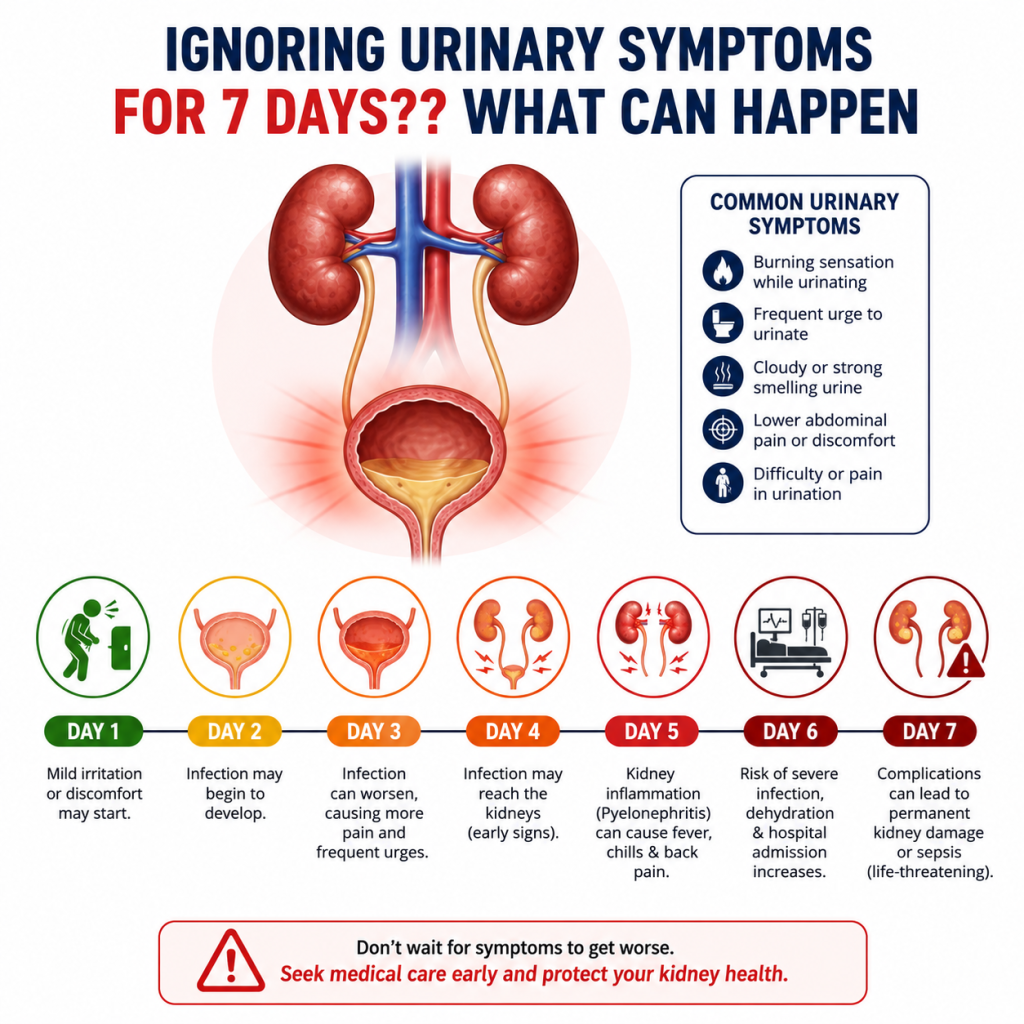
    What Happens If You Ignore Symptoms for 7 Days?

    The progression depends on the cause, but most urinary conditions follow a predictable worsening pattern.

    Day 1–2: Mild but Noticeable Changes

    • Slight burning while urinating
    • Increased frequency
    • Mild discomfort in lower abdomen

    At this stage, many people ignore symptoms or try home remedies.

    Day 3–4: Infection or Irritation Progresses

    • Stronger burning sensation
    • Cloudy or foul-smelling urine
    • Increased urgency

    The infection (if present) is actively growing. Delaying treatment now increases risk of spread.

    Day 5–7: Complication Risk Begins

    • Pain in lower abdomen or back
    • Blood in urine (hematuria)
    • Fever or chills (in some cases)
    • Severe urgency or inability to hold urine

    At this stage, the condition may extend beyond the bladder.

    Symptoms and severity can vary from person to person, but worsening over time is a key warning sign.

    What Are the Risks of Delaying Treatment?

    Ignoring urinary symptoms is not just uncomfortable-it can lead to serious complications.

    1. Kidney Infection (Pyelonephritis)

    A simple bladder infection can travel upward to the kidneys.

    • Severe flank pain
    • High fever
    • Nausea and vomiting

    This condition requires immediate medical attention.

    2. Chronic Urinary Problems

    Untreated issues may become recurring or long-term.

    • Repeated infections
    • Persistent bladder irritation
    • Reduced quality of life

    3. Kidney Damage (Rare but Serious)

    In severe or prolonged cases:

    • Kidney function may be affected
    • Long-term health complications can develop

    4. Sepsis (Severe Infection Spread)

    In rare cases, infection can enter the bloodstream.

    • High fever
    • Rapid heart rate
    • Confusion

    This is a medical emergency.

    Why Do People Ignore Urinary Symptoms?

    Understanding behavior helps improve early intervention.

    Common reasons:

    • Assuming it’s temporary
    • Embarrassment discussing symptoms
    • Busy schedule or delaying doctor visits
    • Trying home remedies first

    This delay is where risk multiplies.

    Early Signs You Should Never Ignore

    Certain symptoms require attention even within 24–48 hours:

    • Burning sensation while urinating
    • Blood in urine
    • Fever with urinary discomfort
    • Persistent urge to urinate
    • Pain in lower abdomen or back

    These are not “normal” and should not be ignored.

    How Are Urinary Problems Diagnosed?

    Doctors use simple and quick diagnostic steps:

    • Urine Test (Urinalysis): Detects infection or blood
    • Ultrasound: Identifies stones or structural issues
    • Blood Tests: In severe cases
    • Culture Test: Identifies exact bacteria

    Early diagnosis = faster and simpler treatment.

    Treatment Options (Based on Cause)

    Treatment depends on the underlying issue:

    For UTIs

    • Antibiotics
    • Increased fluid intake

    For Kidney Stones

    • Pain management
    • Medication or procedures

    For Prostate Issues

    • Medication
    • Lifestyle changes

    For Irritation or Mild Cases

    • Hydration
    • Dietary adjustments

    Delaying treatment often means more aggressive interventions later.

    Can Urinary Symptoms Go Away on Their Own?

    In some mild cases, symptoms may temporarily improve-but:

    • The underlying issue may still remain
    • Symptoms often return or worsen
    • Infection may spread silently

    Self-resolution is not reliable for most cases.

    When to Consult Your Doctor

    You should consider medical evaluation if:

    • Symptoms last more than 24–48 hours
    • Pain increases or spreads
    • Fever develops
    • Blood appears in urine
    • Urination becomes difficult or painful

    If you are consulting a hospital in Bangalore, especially around New BEL Road, early evaluation helps prevent complications and reduces treatment time.

    Prevention: How to Reduce Risk

    Preventive steps can significantly lower chances of urinary issues:

    • Stay well hydrated
    • Maintain proper hygiene
    • Avoid holding urine for long periods
    • Limit irritants like caffeine and alcohol
    • Seek early treatment for symptoms

    Consistency is key.

    FAQs

    1. Can ignoring urinary symptoms for 7 days become dangerous?
    Yes. Symptoms like burning, urgency, or pain can indicate infection. If untreated for several days, the infection may spread to the kidneys and become more serious.

    2. Is it normal for urinary symptoms to last a week without treatment?
    No. Most urinary symptoms should improve within 1–2 days with proper care. If they persist for a week, it usually means the condition is worsening.

    3. Can a urinary tract infection go away on its own?
    Mild cases may temporarily improve, but most infections require medical treatment. Without treatment, symptoms often return or progress.

    4. What are the warning signs that urinary symptoms are getting worse?
    Key signs include fever, back pain, blood in urine, severe burning, or difficulty urinating. These indicate the need for immediate medical attention.

    5. When should I see a doctor for urinary symptoms?
    If symptoms last more than 48 hours, worsen over time, or are accompanied by pain or fever, you should consult a doctor.

    6. Are urinary problems different in men and women?
    Yes. Women commonly experience infections, while men may have prostate-related issues. However, both require timely diagnosis and treatment.

    Conclusion

    Ignoring urinary symptoms for 7 days can turn a manageable condition into a serious health issue. What begins as mild discomfort may progress into infections, kidney complications, or long-term problems if left untreated.

    Early awareness and timely consultation can prevent complications, reduce treatment duration, and ensure better outcomes. Listening to your body and acting early is always the safer and smarter choice.

  • This One Habit Is Quietly Causing Repeated Urine Infections

    This One Habit Is Quietly Causing Repeated Urine Infections

    If you’ve been dealing with frequent burning while passing urine, repeated urges to go to the bathroom, or infections that keep coming back every few months, you are not alone.

    Many patients visit the hospital thinking it’s just a “common infection” that keeps happening. They take antibiotics, feel better for a while, and then the same symptoms return again.

    In many such cases, the issue is not just bacteria – it’s a daily habit that is quietly increasing the chances of infection.

    One of the most common reasons behind repeated urine infections is not drinking enough water and holding urine for long periods.

    This combination creates the perfect environment for bacteria to grow inside the urinary tract.

    Understanding Why Urine Infections Keep Coming Back

    A urinary infection usually happens when bacteria enter the urinary tract and start multiplying.

    In most cases, a short course of treatment clears it. But when infections keep repeating, it usually means something in your routine is allowing bacteria to grow again and again.

    The body has a natural cleaning system. Urine flow helps flush out bacteria.

    But when this flow is disturbed, bacteria get time to multiply.

    The Habit Most People Ignore

    Holding Urine for Long Hours

    This is extremely common.

    People delay going to the restroom because of:

    • Busy work schedules
    • Travel
    • Lack of clean restrooms
    • Ignoring the urge

    When urine stays in the bladder for too long:

    • Bacteria are not flushed out
    • The bladder becomes a breeding ground
    • Infection risk increases

    Over time, this turns into a repeated cycle.

    Not Drinking Enough Water

    Another major factor.

    Many people reduce water intake to avoid frequent urination, especially during work or travel.

    This creates two problems:

    • Less urine formation → less flushing of bacteria
    • Concentrated urine → irritation and discomfort

    This combination increases the risk of infection.

    Even a simple habit like delaying urination regularly can slowly increase the chances of repeated infections.

    Common Symptoms You Should Not Ignore

    Urine infections don’t always start with severe symptoms.

    Early signs include:

    • Burning sensation while passing urine
    • Frequent urge to urinate
    • Passing small amounts of urine repeatedly
    • Lower abdominal discomfort
    • Cloudy or strong-smelling urine

    If infections repeat, symptoms may worsen or appear more frequently.

    Who Is More Prone to Repeated Urine Infections

    Some people are more likely to experience this problem.

    High-risk groups include:

    • Women (due to shorter urinary tract)
    • People with diabetes
    • Pregnant women
    • Individuals with low water intake habits
    • People who frequently delay urination
    • Patients with kidney stones or urinary issues

    In many urban areas like Bangalore, long working hours and travel routines contribute significantly to this problem.

    Why Antibiotics Alone Are Not Enough

    Many patients rely only on medication.

    They take antibiotics, feel better, and assume the problem is solved.

    But if the underlying habit continues:

    • Infection returns
    • Antibiotic resistance may develop
    • Symptoms become harder to manage

    Treatment works best when habit correction is combined with medication.

    How to Break the Cycle of Repeated Infections

    1. Do Not Delay Urination

    Go to the restroom as soon as you feel the urge.

    Even small delays, when repeated daily, can increase risk.

    2. Maintain Proper Hydration

    Drink enough water throughout the day.

    Clear or light-colored urine is usually a sign of good hydration.

    3. Maintain Personal Hygiene

    • Clean properly after using the restroom
    • Avoid harsh products that may cause irritation
    • Wear comfortable clothing

    4. Manage Underlying Conditions

    Conditions like diabetes should be well-controlled to reduce infection risk.

    5. Do Not Self-Medicate Repeatedly

    Frequent antibiotic use without proper evaluation can cause long-term issues.

    When to Consult a Doctor

    You should seek medical advice if:

    • Infection keeps returning
    • Symptoms persist despite treatment
    • There is fever or severe pain
    • You notice blood in urine
    • You have diabetes or other risk factors

    If you are consulting a hospital in Bangalore, especially around areas like New BEL road, Yeshwanthpur, or North Bangalore, early evaluation can help identify the root cause and prevent recurrence.

    Can Repeated Urine Infections Lead to Bigger Problems

    Yes, if ignored.

    Repeated infections can sometimes lead to:

    • Kidney infections
    • Chronic urinary problems
    • Increased discomfort affecting daily life

    Early treatment and lifestyle correction can prevent these complications.

    Simple Daily Changes That Make a Big Difference

    Many patients see improvement just by changing small habits:

    • Drinking water regularly instead of in large gaps
    • Taking short breaks to use the restroom
    • Avoiding holding urine during travel or work
    • Staying aware of early symptoms

    These changes may seem simple, but they are highly effective.

    Frequently Asked Questions

    Why do urine infections keep coming back?
    Repeated infections are often linked to daily habits like low water intake or holding urine for long periods.

    How much water should I drink to prevent infections?
    It varies by person, but staying well hydrated and passing clear urine is a good indicator.

    Is holding urine occasionally harmful?
    Occasional delay is fine, but regular habit increases infection risk.

    Can urine infections go away on their own?
    Mild cases may improve, but repeated infections need proper medical evaluation.

    Are women more prone to urine infections?
    Yes, due to anatomical reasons, women are more likely to experience UTIs.

    Conclusion

    Repeated urine infections are often not just a medical issue – they are linked to everyday habits.

    Ignoring the urge to urinate or not drinking enough water may seem harmless, but over time, these habits can lead to recurring discomfort and infections.

    The good news is that simple changes can make a significant difference.

    Understanding your body, responding to early symptoms, and making small adjustments in daily routine can help you stay infection-free and avoid repeated treatment cycles.

  • Burning Sensation While Urinating: When It’s Not Just a UTI

    Burning Sensation While Urinating: When It’s Not Just a UTI

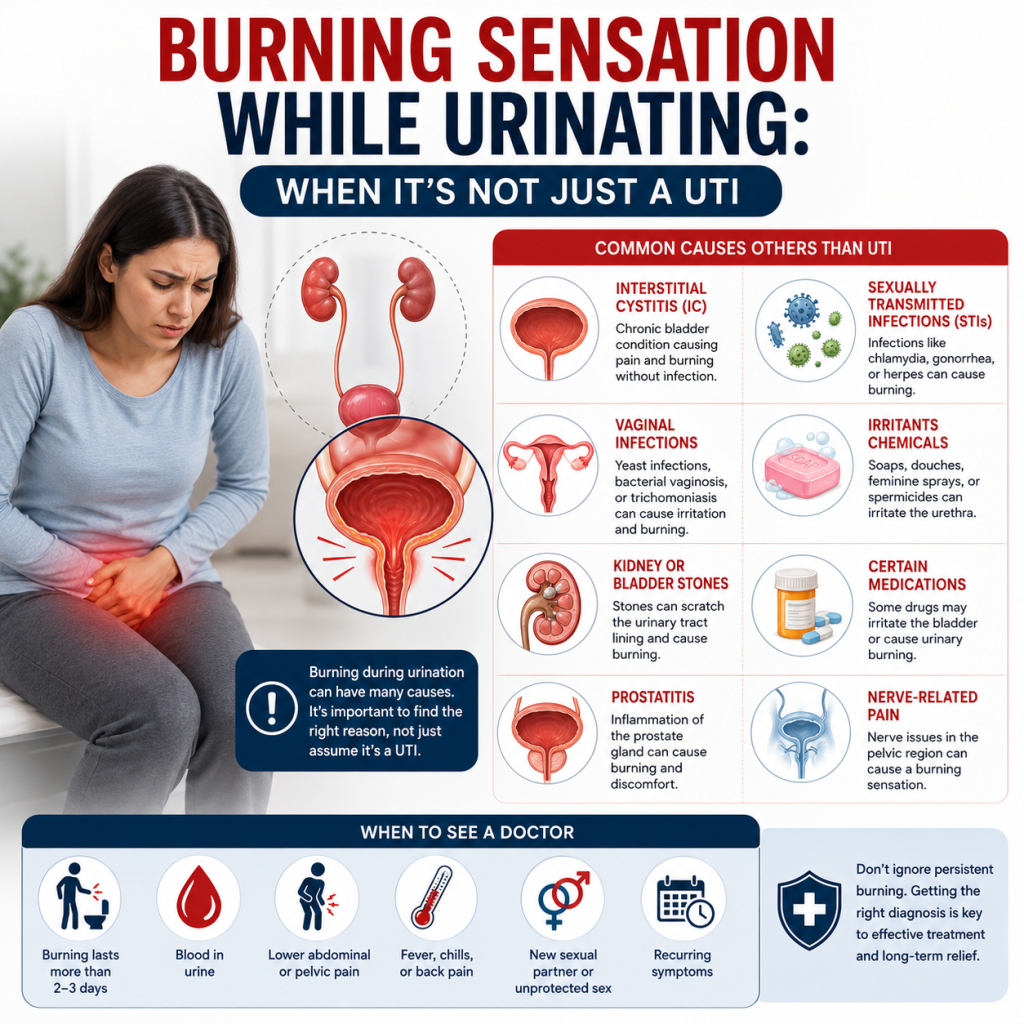
    A burning sensation while passing urine is one of the most uncomfortable symptoms people experience. The first thought for most patients is a urinary tract infection (UTI), and many start antibiotics on their own. Sometimes the burning reduces. Sometimes it does not. In many cases, the symptom keeps returning.

    This leads to confusion.

    The truth is simple. Burning while urinating is not always caused by a UTI. Several other conditions can produce the same sensation, and treating everything as an infection may delay the right care.

    This blog explains the common causes of burning urination, when it is a UTI, and when it is something else that needs medical attention.


    What causes a burning sensation while urinating?

    Burning during urination happens when the lining of the urinary tract becomes irritated or inflamed. This irritation may be due to infection, inflammation, stones, or even external factors.

    Because multiple conditions affect the same urinary passage, symptoms often overlap, making self-diagnosis unreliable.


    When burning urination is caused by a UTI

    UTI is one of the most common causes, especially in women.

    Typical signs include:

    • Burning while passing urine
    • Frequent urge to urinate
    • Passing small amounts of urine
    • Cloudy or foul-smelling urine
    • Lower abdominal discomfort

    In such cases, antibiotics prescribed after urine testing usually resolve symptoms within a few days.


    When burning urination is NOT just a UTI

    Many patients are surprised to learn that burning can occur even when urine tests are normal.

    Dehydration

    Low water intake can concentrate urine, making it more acidic. This concentrated urine can cause burning even without infection.

    Urinary stones

    Small stones or crystals can irritate the urinary tract, causing burning, pain, or blood in urine.

    Prostate-related issues (in men)

    Prostate inflammation or enlargement can lead to burning, weak urine flow, or difficulty emptying the bladder.

    Vaginal or genital infections

    In women, vaginal infections or local irritation can cause burning that feels like urinary pain, even when the bladder is normal.

    Sexually transmitted infections

    Some infections affect the urethra and cause burning without typical UTI findings. These need specific testing and treatment.

    Chemical or hygiene-related irritation

    Harsh soaps, intimate washes, or spermicides can irritate sensitive areas and cause burning sensations.


    Common medicines used for burning urination

    Treatment depends entirely on the cause.

    • Antibiotics are used only when infection is confirmed
    • Urinary alkalizers may be prescribed to reduce urine acidity
    • Pain-relief medicines may ease discomfort temporarily
    • Targeted treatment is required for stones, prostate issues, or genital infections

    Using antibiotics repeatedly without confirmation may reduce symptoms briefly but does not solve the underlying issue.


    Warning signs you should not ignore

    Consult a doctor if you notice:

    • Burning that persists for more than two to three days
    • Fever or chills
    • Blood in urine
    • Severe lower abdominal or back pain
    • Burning associated with discharge or itching
    • Recurrent episodes despite medicines

    These signs usually indicate a cause beyond simple irritation.


    How doctors evaluate burning urination at Shirdi Sai Hospital

    At Shirdi Sai Hospital, consultants focus on identifying the exact reason behind the symptom. Evaluation may include:

    • Urine routine and culture tests
    • Ultrasound if stones or obstruction are suspected
    • Blood tests when needed
    • Examination for prostate or genital causes
    • Review of hygiene and lifestyle factors

    This step-by-step approach avoids unnecessary medicines and ensures accurate treatment.


    Frequently asked questions

    Is burning urination always due to infection?
    No. Dehydration, stones, irritation, or prostate issues can also cause burning.

    Can drinking more water reduce burning?
    Yes, in mild cases caused by concentrated urine, hydration helps.

    Is it safe to take antibiotics without testing?
    Repeated antibiotic use without tests is not recommended.

    Why does burning return after treatment?
    Because the underlying cause may not have been addressed.

    When should I see a doctor?
    If burning is persistent, severe, or keeps recurring.


    When to consult a doctor

    If burning while urinating keeps coming back or does not improve with basic measures, early evaluation can prevent complications and repeated discomfort.

    📞 Call Shirdi Sai Hospital, Bangalore
    OPD consultation starts from ₹500
    Consultants will guide you with the right diagnosis and treatment.