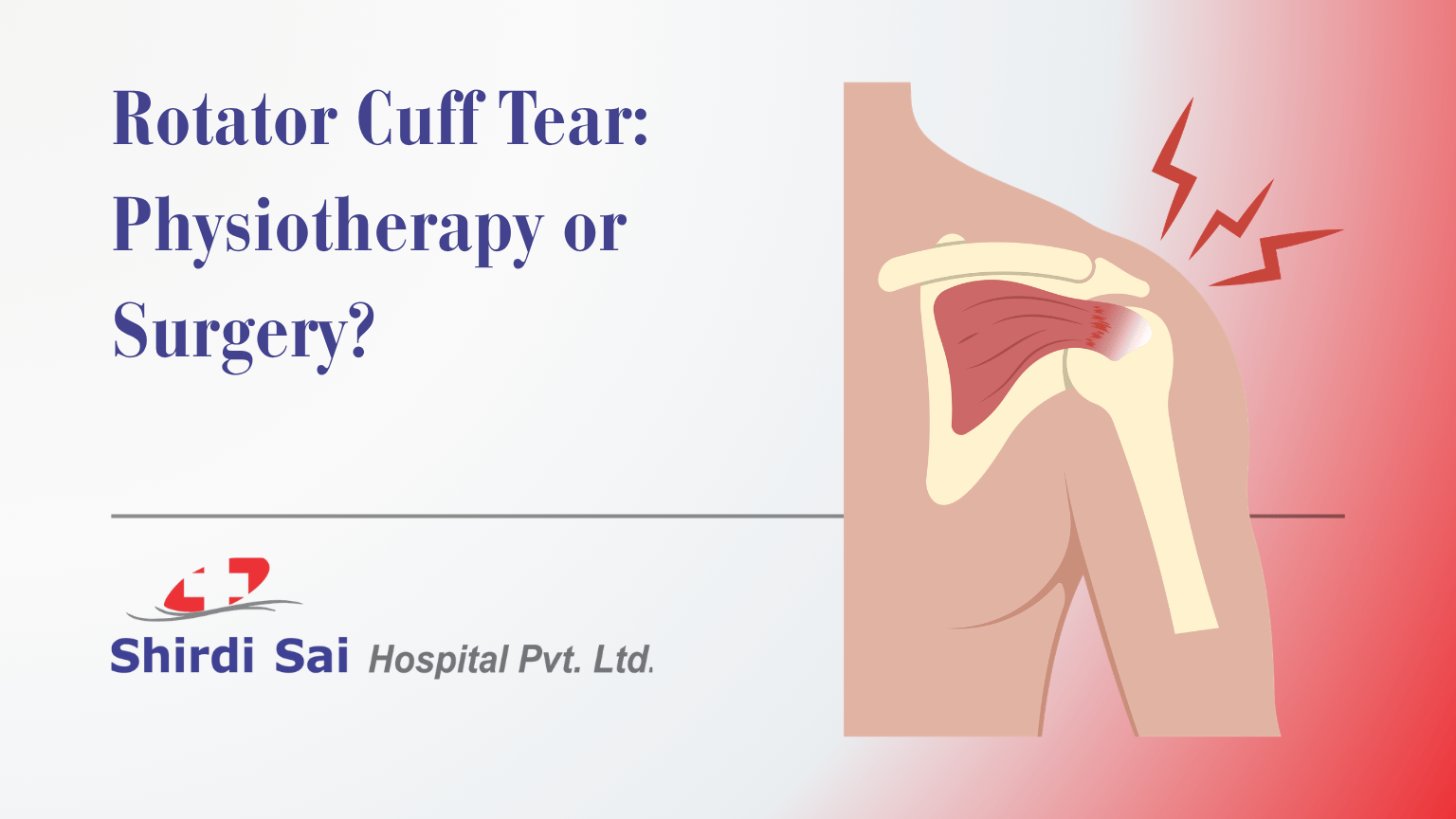
A rotator cuff tear does not always require surgery. Treatment depends on the injury, weakness, pain, tendon condition and the activities the patient needs to perform. Physiotherapy can improve comfort and function in selected patients, while some tears need a timely discussion about repair.
At Shirdi Sai Hospital on New BEL Road, an orthopaedic consultation can bring the injury history, examination and imaging together so that the treatment plan addresses the actual shoulder problem.
If shoulder pain or weakness limits daily tasks, request a shoulder assessment so the team can discuss suitable treatment.
What is a rotator cuff tear?
The rotator cuff is a group of muscles and tendons that helps stabilise the shoulder and move the arm. A tear affects one or more of those tendons.
Some tears develop after a fall, sudden load or other injury. In contrast, others develop gradually as the tendon changes over time.
A partial-thickness tear affects part of the tendon’s depth. A full-thickness tear extends through it. These descriptions help explain the anatomy, but they do not tell us everything about symptoms or the best treatment.
The size of a tear, tendon retraction, tissue quality and muscle changes may also influence the assessment.
Does a tear always cause severe pain?
No. Symptoms vary. Some people have significant pain with a smaller tear, while others have less pain despite a larger structural change.
Common difficulties can include reaching overhead, lifting objects away from the body, dressing and sleeping on the affected side. Also describe weakness, which can matter as much as pain.
A person may start using the arm differently without realising how much function has changed. Explain what you can no longer do comfortably rather than rating pain alone.
Pain can also come from other shoulder structures. The clinician needs to determine how well the tear matches the symptoms before recommending treatment.
Why does the injury history matter?
If you cannot lift the arm after a recent injury, arrange prompt assessment. The clinician may need to distinguish a tendon tear from a fracture, dislocation or another injury.
A gradually painful shoulder without a clear injury may have a different combination of tendon changes, stiffness and joint disease.
Tell the team whether weakness appeared suddenly, whether you heard or felt anything during the injury and whether you could use the arm beforehand.
Do not wait indefinitely for severe new weakness to improve just because you can still move the elbow or hand. Shoulder function needs its own examination.
What does an orthopaedic assessment involve?
The clinician reviews pain, weakness, movement and the effect on daily activity. Examination can help distinguish tendon weakness from movement restricted mainly by pain or stiffness.
An X-ray may show bone alignment or arthritis. If tendon detail would change treatment, the clinician may request an ultrasound or MRI.
MRI can describe the tear and associated muscle changes. However, the clinician must interpret the report alongside the examination, history and your goals.
Not everyone with shoulder pain needs an immediate MRI. Equally, significant new weakness after injury should not be dismissed without appropriate assessment.
Bring earlier imaging if it exists, because changes over time may matter.
When may physiotherapy be enough?
non-surgical treatment may be appropriate when the tear and symptoms allow a rehabilitation-based approach. This can include activity modification, pain management and exercises selected to improve shoulder movement and control.
Physiotherapy aims to help the shoulder function better. It does not necessarily reconnect a torn tendon to the bone.
That distinction is important. A patient may gain useful movement and reduced pain without the tear disappearing on a scan.
The programme should be adjusted to the person’s strength, movement and symptoms. It should also include a review point rather than continuing unchanged regardless of progress.
Before treatment, ask what improvement to expect and whether weakness may persist.
How should progress be assessed?
Progress is more useful when measured against specific activities. Can you dress, reach a shelf, perform work tasks or sleep more comfortably?
The clinician may reassess movement and strength as well as pain. If symptoms are not improving, the next step is to review the plan and diagnosis.
A short-term reduction in pain does not automatically mean the tendon has healed. Equally, some discomfort during recovery does not establish that the tear is worsening.
Tell the team about new weakness, a new injury or a substantial loss of function. Those changes may alter the treatment discussion.
What role do medicines and injections have?
Pain relief may help a patient participate in rehabilitation, but the choice of medicine depends on other illnesses and current treatment.
Do not repeatedly take anti-inflammatory tablets without advice if you have kidney disease, stomach problems, bleeding risk or other relevant conditions.
The clinician may also discuss an injection to help manage symptoms in selected cases. It does not repair the torn tendon, and it is not suitable for every patient.
If you are considering surgery, tell the surgeon about previous injections and their dates. The timing and number can matter to planning.
Ask what an injection is intended to achieve and how its benefit will be reviewed.
When is surgery considered?
A surgical discussion may be appropriate for a selected acute injury, substantial weakness, a repairable tear affecting function or symptoms that persist despite appropriate non-surgical care.
The decision also considers tendon quality, muscle changes, age in context, medical fitness and the patient’s goals. Therefore, age alone should not decide whether you need surgery.
An active occupation or sport can affect the practical goals, but it does not automatically make repair appropriate. The clinician needs to explain what the operation can reasonably achieve.
Some tears are not suitable for a straightforward repair. If a straightforward repair is unsuitable, a specialist can discuss other options.
There is no single MRI size or pain score that decides surgery for every person.
What happens during rotator cuff repair?
Repair generally aims to secure the torn tendon back to its attachment on the upper arm bone. The surgeon may use a keyhole, open or combined approach, depending on the tear.
The surgeon should explain which tendon is involved, whether the tear appears repairable and whether another shoulder problem also needs attention.
A treatment plan may change when the tissues are inspected directly. Before surgery, ask what the surgeon would recommend if the tendon cannot support the planned repair.
A keyhole approach still involves tissue repair and a substantial rehabilitation commitment. Small skin incisions do not mean the tendon is ready for unrestricted use immediately.
What are the limitations and risks?
Possible problems include infection, bleeding, stiffness, persistent pain, nerve injury, anaesthetic complications and failure of the tendon to heal as intended.
Even after repair, a tendon can tear again. Recovery of strength may be incomplete, particularly when tissue quality or muscle condition limits the result.
The surgeon should explain how these risks relate to the individual case and what would happen if symptoms persist.
No responsible plan promises normal strength by a fixed date or guarantees a return to every previous activity. Discuss the outcome that matters most to you and how realistic it is.
Is recovery the same as pain relief?
No. Pain may improve before the tendon is ready for full loading. Protection and staged movement are important after a repair.
After repair, the surgeon may prescribe a sling to protect the shoulder. Rehabilitation can progress through protected movement, increasing active control and later strengthening.
The schedule depends on the repair and associated procedures. Exercises appropriate for someone who has not had surgery may be unsafe immediately after a repair.
Do not copy a general online shoulder programme without checking whether it fits the postoperative stage.
Ask which movements are allowed, who will supervise rehabilitation and what symptoms should stop an activity.
Work, driving and home arrangements
Discuss work duties before treatment. Repeated overhead activity, carrying loads and manual work place different demands on the shoulder from desk-based tasks.
Driving requires safe control of the vehicle and must fit the surgeon’s advice, sling use and medicine effects. Do not use pain relief alone as evidence that driving is safe.
If you plan surgery, arrange help with dressing, cooking and other tasks while you protect the arm. Ask about follow-up visits and rehabilitation access.
These arrangements are part of making treatment workable. Make these arrangements before the operation rather than waiting until discharge.
How is this different from frozen shoulder?
Frozen shoulder mainly involves painful restriction of the shoulder capsule. A rotator cuff tear affects tendon tissue.
Both can make movement difficult, and they can sometimes coexist. The treatment plan depends on examination findings rather than calling every painful stiff shoulder a tendon tear.
A clinician may compare active movement with movement performed with assistance. The pattern helps identify whether weakness, stiffness or both are prominent.
Treating presumed frozen shoulder without assessing substantial injury-related weakness can delay the right diagnosis. Equally, a tear on MRI should not lead us to ignore important stiffness.
What should you ask before deciding?
Bring the scan report and images, medicine list and details of previous physiotherapy or injections.
Useful questions include:
- Does the tear explain my main symptoms?
- Is the weakness related to pain, the tendon or another problem?
- What can rehabilitation realistically improve?
- Is there a reason to consider repair promptly?
- Is the tendon likely to be repairable?
- What restrictions would recovery involve?
Describe the daily task you most want to regain. A clear functional goal helps frame the discussion about benefits, limits and rehabilitation.
When should shoulder symptoms be assessed urgently?
Seek urgent assessment after a significant injury if the shoulder looks deformed, pain is severe or you cannot use the arm. New numbness, marked weakness or circulation changes also need prompt care.
A hot, swollen shoulder with fever needs assessment for infection or another acute problem.
Shoulder or arm discomfort occurring with chest pain, breathlessness, sweating or collapse should not be assumed to come from a tendon. Seek emergency care.
After an operation, follow the discharge instructions for wound concerns, fever, sudden worsening pain or new breathing symptoms.
Shoulder care at Shirdi Sai Hospital
Our Orthopedics department provides a route for assessment of shoulder injuries and movement problems.
Patients from nearby areas can also use the information on orthopaedic care near Mathikere. The hospital is located on New BEL Road.
For a planned consultation, contact Shirdi Sai Hospital with your reports.
Shirdi Sai Hospital is a 100-bed hospital on New BEL Road, established in 2004. When you contact us, our team can guide you to the relevant department and explain appointment arrangements.
Frequently asked questions
Does a rotator cuff tear always need surgery?
No. The tear, symptoms, strength, functional needs and response to treatment guide the decision.
Can physiotherapy help without closing the tear?
Yes. Rehabilitation can improve function and comfort even when the structural tear remains.
Is a full-thickness tear an automatic operation?
No. It is an important finding, but the treatment decision needs the wider clinical picture.
Should sudden weakness after a fall be checked?
Yes. A significant new loss of shoulder function after injury needs timely assessment.
Does an injection repair the tendon?
No. An injection may help selected symptoms but does not reconnect the torn tendon.
Can I use the arm normally once postoperative pain settles?
Not automatically. A tendon repair needs protection and staged rehabilitation according to the treating team.
Can a repaired tendon tear again?
Yes. Healing and re-tear risks need an individual discussion before treatment.