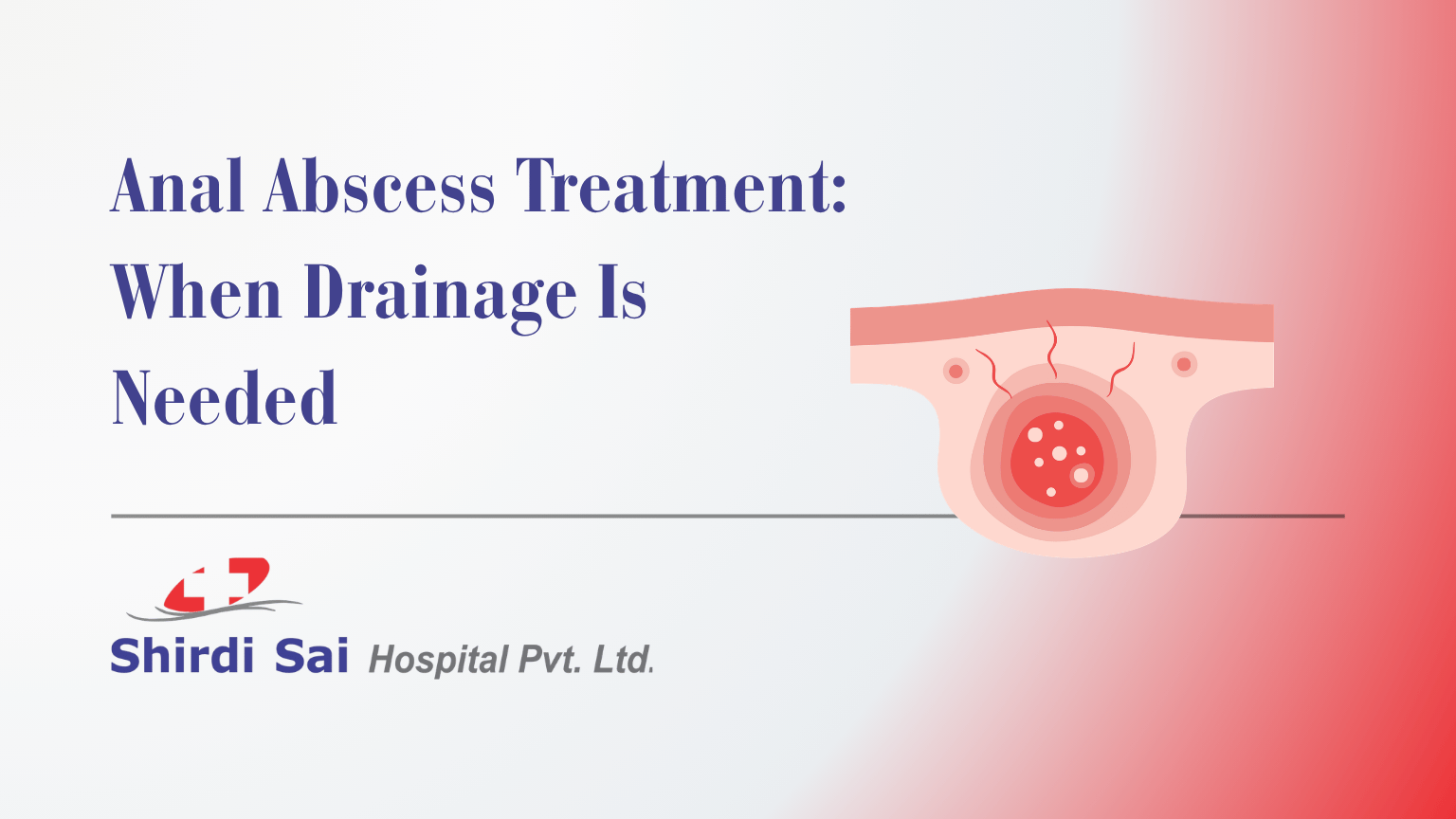
An anal abscess is a collection of pus near the anus or rectum. It usually needs prompt surgical assessment, and drainage is often the main treatment. Doctors also prescribe antibiotics in some situations. However, antibiotics usually cannot replace drainage of an established abscess.
However, do not assume that every painful swelling near the anus is piles. Increasing pain, fever, spreading redness or feeling unwell needs timely care. Shirdi Sai Hospital’s General Surgery pathway on New BEL Road can help patients seek assessment and the appropriate next step.
If pain or swelling around the anus persists, seek prompt assessment because an abscess may need drainage. For stable symptoms, contact our surgical team; do not wait for a routine booking if you feel feverish or seriously unwell.
What is an anal abscess?
An anal or perianal abscess develops when infection forms a pocket of pus around the anal region. It often begins in a small anal gland.
The collection may be close to the skin or deeper in the surrounding tissues. A superficial abscess may produce a visible tender lump. However, a deeper abscess can cause significant pain without an obvious swelling outside.
This difference matters. The absence of a clearly visible lump does not exclude an abscess when symptoms suggest a deeper infection.
The condition is different from an ordinary skin irritation, haemorrhoid or small tear. Examination helps establish what is causing the pain.
Which symptoms may suggest an abscess?
Symptoms can include constant or throbbing anal pain, a tender swelling, warmth, redness and difficulty sitting comfortably. Some patients develop fever, chills or a general feeling of illness.
For example, pain may increase during bowel movements and continue between them. An abscess may discharge pus if it opens.
Tell the clinician about:
- Pain that is increasing rather than settling.
- A new swelling or a lump that becomes more tender.
- Fever, chills, weakness or feeling unusually unwell.
- Pus or unpleasant-smelling discharge.
- Previous abscesses or an opening that repeatedly drains.
- Diabetes, Crohn’s disease or medicines that affect immunity.
Is it piles, a fissure or an abscess?
Piles involve haemorrhoidal tissue. An anal fissure is a tear in the lining of the anal canal. An abscess is a collection caused by infection.
The symptoms can overlap. For example, a thrombosed external pile can be very painful, while a fissure can cause sharp pain with bowel movements. An abscess may cause persistent pain, swelling or fever.
The useful response is assessment, not choosing a cream from a symptom chart. A treatment for haemorrhoids does not drain an abscess.
Our explanation of constipation, piles, fissure and fistula describes these differences. This page focuses on the acute abscess treatment decision.
Why does drainage matter?
Pus trapped in a cavity may not resolve with medicines alone. Drainage allows the collection to empty and addresses the infected pocket.
The surgeon makes an opening in the appropriate location and lets the pus drain. Therefore, the setting and type of anaesthetic depend on the depth, extent, pain and your health.
Some patients can go home after treatment without a prolonged stay. Others need operating-theatre care, observation or admission. A deeper infection or a patient who is systemically unwell may require a different pathway.
Because a collection can extend deeper than the visible lump, its surface size does not decide the treatment. The collection can extend beyond what is visible at the skin.
When are antibiotics used?
The clinician may prescribe antibiotics when there is spreading surrounding infection, systemic illness or particular medical risk factors. The examination and other findings also guide that choice.
Antibiotics are not routinely a substitute for drainage of an established abscess. Taking repeated courses without assessment can delay appropriate treatment.
Do not use leftover antibiotics or copy another person’s prescription. The choice depends on the clinical situation, allergies and other medicines.
If you have already started treatment, tell the surgeon which medicine you took and whether symptoms changed. A temporary reduction in discomfort does not establish that the collection has resolved.
What happens during assessment?
The clinician asks about the pain, bowel symptoms, fever, previous episodes and relevant medical conditions. The clinician also usually examines the area.
Explain if pain makes examination difficult. The team can decide how to assess you safely and comfortably. Some deeper or particularly painful problems need examination under anaesthesia.
Blood tests may be appropriate when infection severity or general health needs assessment. An obvious abscess close to the skin may not need a scan. However, scans can help locate a deeper, complex or recurring collection.
A scan should answer a specific clinical question. It should not delay necessary urgent care when the diagnosis and treatment need are clear.
Can an abscess burst and still need treatment?
Yes. Spontaneous drainage can relieve pressure and pain, but it does not prove that the cavity has emptied fully or that the underlying problem has ended.
A tract may remain between the anal canal and the skin. Doctors call this tract an anal fistula. Continued or recurring discharge, a repeatedly opening spot or cycles of swelling can need further evaluation.
If discharge has stopped after earlier treatment, read what it means when an anal fistula stops draining.
Arrange follow-up even if the swelling opens on its own. Tell the team if it has happened before.
Do not squeeze the lump, insert an object or try to widen an opening at home. Home drainage can injure tissue and delay proper assessment.
Does an abscess always mean a fistula?
No. Although an abscess and a fistula are related, they are not identical. The surgeon may identify a fistula during the first assessment, or it may become apparent later.
The surgeon may need to assess the tract’s relationship to the anal sphincter muscles. These muscles are important for bowel control.
Definitive fistula treatment is therefore not automatically added to every abscess procedure. Depending on the findings, a staged plan or another procedure may be safer.
Before leaving, ask whether the surgeon found a fistula, what happens next and which symptoms to report. Do not interpret a planned second stage as proof that the first drainage failed.
What should you tell the team before drainage?
Provide your medicine list, allergy history and details of previous operations in the area. Tell the team if you take anticoagulants, steroids or medicines affecting immunity.
Diabetes, pregnancy and significant heart or kidney conditions may affect the care plan. Previous problems with anaesthesia also matter.
Do not stop prescribed medicines or begin fasting on your own unless the team gives instructions. If you need urgent treatment, the clinicians will explain the plan.
Bring previous scan and operation reports when readily available, but do not delay urgent assessment while trying to retrieve them.
What happens after the procedure?
After drainage, your wound and operation determine the aftercare plan. Before discharge, the team should explain washing, dressings, pain relief and any medicines.
Some drainage and discomfort may occur during healing, but the expected pattern should be explained for your particular wound. Ask whether a dressing needs review or replacement and who will do it.
Also follow the discharge instructions when cleaning the area. Do not add strong antiseptics, creams, powders or home remedies to the wound without advice.
A wound can look different as it heals.
Bowel movements and daily activity
After drainage, bowel movements may feel uncomfortable during early healing. The treating team may discuss keeping stool soft, appropriate fluid intake and pain control.
Do not avoid all food or repeatedly delay bowel movements because of fear. Ask for help if pain or constipation is making bowel care difficult.
Activity advice depends on discomfort, wound position and the work you do. A desk job, driving and physical work may need different guidance.
Before resuming strenuous activity, ask about returning to work, dressing changes and follow-up. Use the discharge plan rather than a fixed online recovery promise.
Why follow-up is important
Follow-up can assess wound healing and look for persistent infection or a fistula. If an abscess returns, the surgeon may check for an underlying tract or another condition.
Also contact the team if pain increases again after improving, swelling returns or discharge concerns you. Tell them about any new difficulty controlling stool or gas.
Examination helps determine whether the wound needs further care, another drainage procedure or a separate fistula assessment.
Keep the procedure summary. The summary also tells a future clinician what the surgeon found and did.
Which symptoms need urgent care?
Seek urgent medical assessment for increasing pain with fever, spreading redness, rapidly enlarging swelling or feeling significantly unwell. Urinary difficulty can also occur and needs attention.
Confusion, fainting, severe weakness, breathing difficulty or rapid deterioration needs emergency care. People with diabetes or reduced immunity should be especially prompt about seeking advice when infection symptoms develop.
After a procedure, contact the team for worsening pain, fever, substantial bleeding or new severe swelling. Do not dismiss these changes as routine healing.
Do not wait for an online response if your condition is deteriorating.
Anal abscess assessment at Shirdi Sai Hospital
Our General Surgery services provide a route for assessment of anal pain, swellings and related surgical concerns at the New BEL Road facility.
Explain whether the problem is a new painful swelling, a previously drained abscess or recurring discharge.
For a planned review, contact Shirdi Sai Hospital with any previous records. If you have severe pain, fever or rapidly worsening illness, seek urgent care rather than waiting for a routine appointment.
Although piles can also cause discomfort or bleeding, they differ from an abscess. Our guide to piles symptoms and when to see a doctor explains that separate condition.
Shirdi Sai Hospital is a 100-bed hospital on New BEL Road, established in 2004. When you contact us, our team can guide you to the relevant department and explain appointment arrangements.
Frequently asked questions
Can antibiotics cure an anal abscess without drainage?
Antibiotics alone usually cannot treat an established collection. A clinician must assess whether you need drainage and whether antibiotics would also help.
Can an abscess be present without a visible lump?
Yes. A deeper collection can cause significant pain without an obvious external swelling.
Is an anal abscess the same as piles?
No. Piles and an abscess are different conditions and need different treatment.
Do I still need assessment if it bursts?
Yes. Pain relief after drainage does not confirm that the infection has fully resolved or that no fistula remains.
Will drainage prevent a fistula in every case?
No. A fistula may already be present or become evident later. Follow-up helps identify it.
Can I squeeze or drain the swelling myself?
No. Avoid attempts at home drainage. Seek clinical assessment.
When should I return after treatment?
Follow the discharge plan and return sooner for worsening pain, fever, recurrent swelling, significant bleeding or feeling unwell.