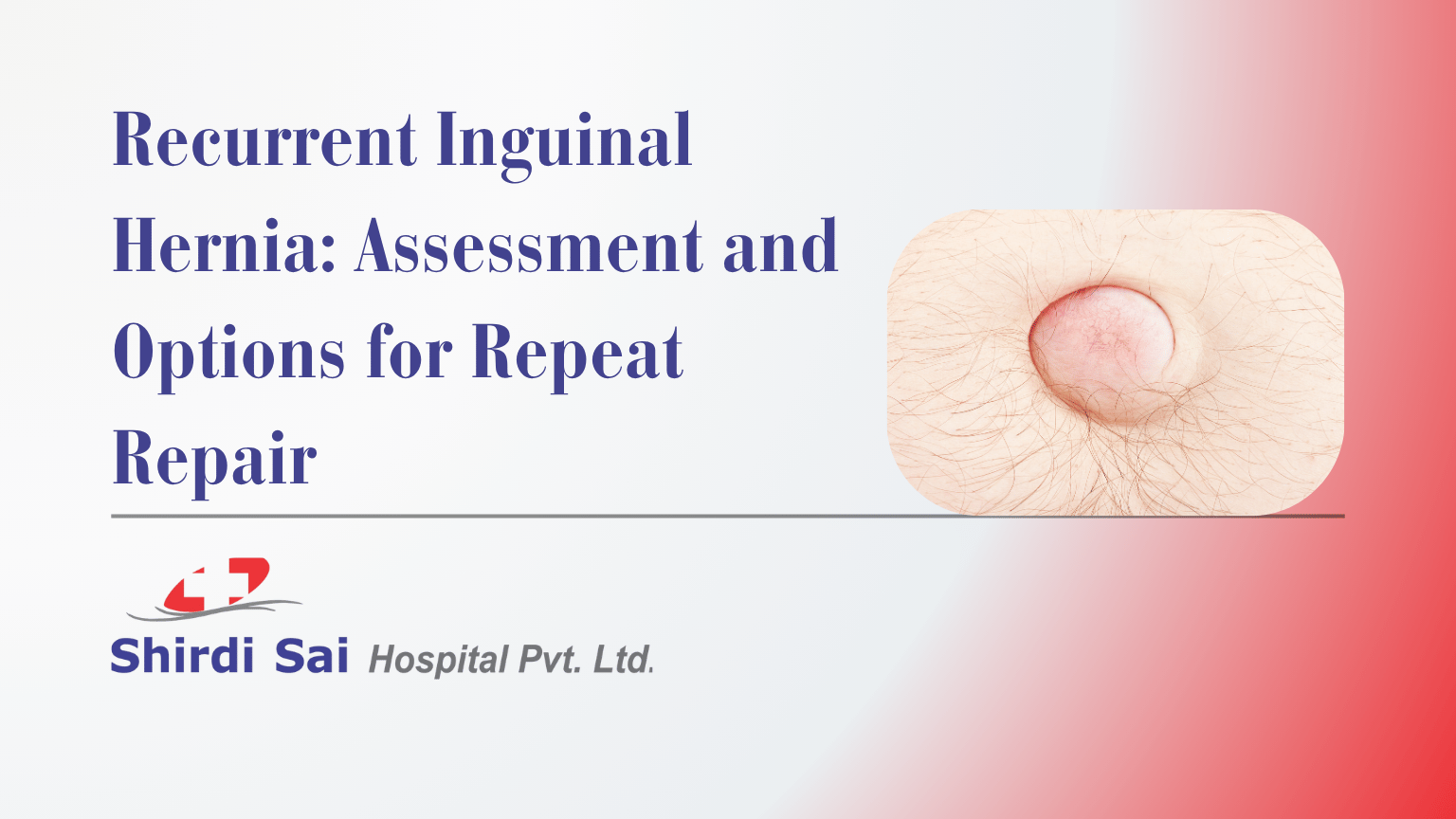
A hernia that returns after a previous groin repair needs a fresh surgical assessment. Treatment depends on whether the swelling is a true recurrence, the symptoms it causes, the type of earlier repair and the patient’s overall health. Another operation may be appropriate, but the safest approach is not necessarily the same as the first operation.
At Shirdi Sai Hospital on New BEL Road, patients can request a General Surgery consultation with their previous operation notes and current reports.
If a groin bulge has returned after surgery, request a surgical review and bring your earlier operation notes.
What is a recurrent inguinal hernia?
An inguinal hernia develops when tissue pushes through a weak area in the groin. A recurrent inguinal hernia means that a hernia has developed again after repair in that region.
Recurrence is different from a hernia appearing on the opposite side. It is also different from an incisional hernia at an abdominal operation scar. Identifying the correct problem matters because the surgical plan can differ.
A new bulge may become more noticeable when standing, coughing or straining. It can also cause dragging discomfort, pressure or difficulty with daily activities. However, symptoms and appearance alone cannot establish the diagnosis.
Does every swelling after repair mean the hernia has returned?
No. Swelling can have several explanations, particularly during early recovery. A fluid collection, bruising, scar-related changes or another groin condition can resemble a recurrent hernia.
Persistent pain without an obvious bulge also needs its own assessment. However, the surgeon must also consider nerve pain and other problems after surgery before diagnosing a recurrence.
Tell the surgeon when the swelling appeared, whether it changes with position and whether it is improving, stable or growing. A swelling that has remained since surgery may need a different assessment from a new bulge appearing after a symptom-free interval.
Do not repeatedly push on a painful lump to test it. A new or worsening problem deserves clinical review rather than repeated home checks.
Why can a hernia recur?
Several factors can contribute, including the original hernia’s characteristics, the repair technique, tissue quality, wound complications and patient-related factors. More than one factor may be involved.
A recurrence alone does not prove that the mesh broke or that the earlier surgeon made an error. The surgeon needs the earlier operation details and current findings before explaining the likely cause.
Health conditions that affect surgical risk also matter when planning further treatment. Smoking, poorly controlled diabetes, a persistent cough or difficulty with bowel movements may need attention. These are part of preparation, not a reason to blame the patient.
How is a suspected recurrence assessed?
The surgeon asks about the previous repair, current symptoms and the effect on work, exercise and ordinary movement. Examination may include assessing the groin while standing and lying down.
Useful details include:
- The side and approximate date of the previous operation.
- Whether the repair was open or performed through a keyhole approach.
- Whether the surgeon used mesh and where the operation note places it.
- Any wound infection, prolonged pain or other complication after the first repair.
- When the new swelling or discomfort began.
- Whether there have already been several repairs.
If the diagnosis is unclear, imaging may help. Ultrasound can be useful in selected cases. If the groin anatomy is complex or the examination leaves uncertainty, the surgeon may request another scan.
Not every patient needs every scan. The investigation should help clarify the diagnosis or plan treatment.
Why does the earlier operation change the next decision?
A previous repair alters the tissues around the groin. Scar tissue, mesh position and the route used in the earlier operation influence which areas can be approached safely.
Hernia guidelines generally favour using a different tissue plane for a recurrence after a previous anterior or posterior repair. For example, the surgeon may approach the repair from behind the abdominal wall after an earlier repair from the front. A recurrence after a posterior repair may favour an anterior approach.
These are principles for surgical planning, not a rule patients should use to select an operation online. The previous technique, current anatomy, medical fitness and surgeon’s expertise all affect the recommendation.
After both anterior and posterior repairs have failed, specialist experience becomes particularly important. Further assessment or referral may be appropriate for a complex repeat repair.
Does a recurrent hernia always need immediate surgery?
Not every confirmed recurrence requires emergency surgery. The urgency depends on symptoms, examination findings and the risk of complications.
A reducible swelling causing limited symptoms may allow time for a planned discussion. Increasing discomfort, enlargement or interference with daily life can change that balance.
Observation, when appropriate, needs clear instructions about follow-up and warning symptoms. It should not mean ignoring a changing bulge indefinitely.
A painful swelling that becomes stuck, especially with vomiting or abdominal swelling, is a different situation. It needs urgent assessment rather than a routine appointment.
For general information about the first-operation pathway, read about hernia surgery in New BEL Road.
If you are using a support belt while you wait for review, our guide on whether a hernia belt can cure a hernia explains what a belt can and cannot do.
What repeat-repair options may be discussed?
The surgeon may discuss an open or laparoendoscopic repair, depending on the earlier operation and the present findings. The choice also involves anaesthesia, the extent of scarring and the ability to achieve a safe repair.
Surgeons commonly use mesh in groin hernia surgery. However, your surgeon should explain why it suits the repeat repair. A previous mesh does not automatically need removal.
Mesh removal can be a complex decision and is not a routine requirement for every recurrence. Pain without recurrence also needs a different assessment from a new structural defect.
Before deciding, ask the surgeon what needs repair, which approach they recommend and how it fits the earlier operation.
What risks need to be discussed?
Repeat surgery can involve more difficult dissection because the anatomy has already been altered. The risks depend on the operation and the patient’s condition.
Discussion may include bleeding, infection, fluid collection, persistent groin pain, numbness, injury to nearby structures, anaesthetic complications and another recurrence. The surgeon should explain relevant risks involving the spermatic cord or testicle where applicable.
A repeat repair cannot guarantee permanent freedom from pain or recurrence. If pain is the main problem, ask how confident the team is that the hernia explains it.
How should you prepare for the consultation?
Bring the previous discharge summary and operation note if available. The operation note may be more informative than an old prescription because it describes the repair approach.
Also bring current scans, a medicine list, allergy details and records of important medical conditions. Tell the team about anticoagulants, diabetes medicines and previous anaesthetic difficulties.
If the old records are unavailable, still arrange assessment. The team can discuss what information may be recovered and whether imaging would help.
Write down the activities affected by symptoms. For example, explain whether the problem limits walking, standing at work, lifting or sleep. That gives the surgeon a clearer picture than saying only that the hernia has “come back.”
What happens before a planned repeat operation?
Preparation may include anaesthetic assessment and management of existing health conditions. The required tests depend on age, health, medicines and the proposed procedure.
Ask which medicines to continue and which need adjustment. Do not stop prescribed blood thinners or diabetes treatment without instructions.
The team should explain fasting, admission arrangements, pain management and who to contact after discharge. If the team plans a day procedure, ask about transport and support at home.
A written estimate should identify the expected procedure and possible additional costs. A price for a first hernia repair may not describe the requirements of a more complex repeat operation.
How does recovery after repeat repair vary?
Recovery depends on the operation, the amount of tissue dissection and any associated complications. Advice from a friend’s first repair may not apply to your repeat operation.
Early movement and a gradual return to activities are often part of recovery, but the treating team should set the individual plan. Work involving heavy lifting may need a different discussion from desk-based work.
Before discharge, clarify wound care, pain medicines, driving, work and exercise. Ask when follow-up is due and what changes should lead to earlier review.
Do not use disappearance of the bulge as the only recovery measure. Pain, wound healing, mobility and the ability to resume ordinary activities also matter.
When should you seek urgent care?
Seek urgent medical assessment if a groin swelling becomes suddenly painful, firm or no longer reduces as it previously did. Vomiting, abdominal distension, inability to pass stool or gas, fever or skin colour changes over the lump increase concern.
Severe pain or rapid deterioration needs emergency care. Do not try to force the swelling back or wait for an elective surgery discussion.
The hospital’s guide to hernia warning signs explains when symptoms need a more urgent response.
Discussing repeat hernia care at Shirdi Sai Hospital
Our General Surgery pathway helps patients seek assessment for groin swellings and other surgical concerns at the New BEL Road facility.
For a planned visit, bring the earlier operation records and explain that the concern is a possible recurrence. The surgeon will examine the swelling, review earlier records and explain whether another repair could help.
You can contact Shirdi Sai Hospital to confirm the appropriate appointment. Acute warning symptoms need urgent care rather than an online enquiry.
Before returning to strenuous activity, read our guide to hernia symptoms during exercise or heavy lifting. It explains why activity advice should follow your symptoms and assessment.
Shirdi Sai Hospital is a 100-bed hospital on New BEL Road, established in 2004. When you contact us, our team can guide you to the relevant department and explain appointment arrangements.
Frequently asked questions
Can an inguinal hernia come back after mesh repair?
Yes. Recurrence is possible after different repair techniques. However, recurrence does not automatically require mesh removal.
Is a lump after hernia surgery always recurrence?
No. Fluid, bruising, scar changes and other conditions may cause swelling. The timing, examination and selected imaging help identify the cause.
Will the second operation use the same technique?
Not necessarily. The previous surgical approach is an important part of selecting the next repair.
Does every recurrence need emergency surgery?
No. Some allow a planned assessment. A painful stuck swelling or symptoms of bowel obstruction need urgent evaluation.
Can pain continue even without another hernia?
Yes. Pain after repair can have causes other than recurrence. The treatment needs to address the actual cause.
Do I need to bring the old operation note?
Bring it if available because it can explain the earlier approach and mesh placement. Missing records should not delay urgent assessment.
Can a repeat repair guarantee that the hernia will never return?
No. The surgeon can explain the expected benefits and individual risks, including the possibility of another recurrence.