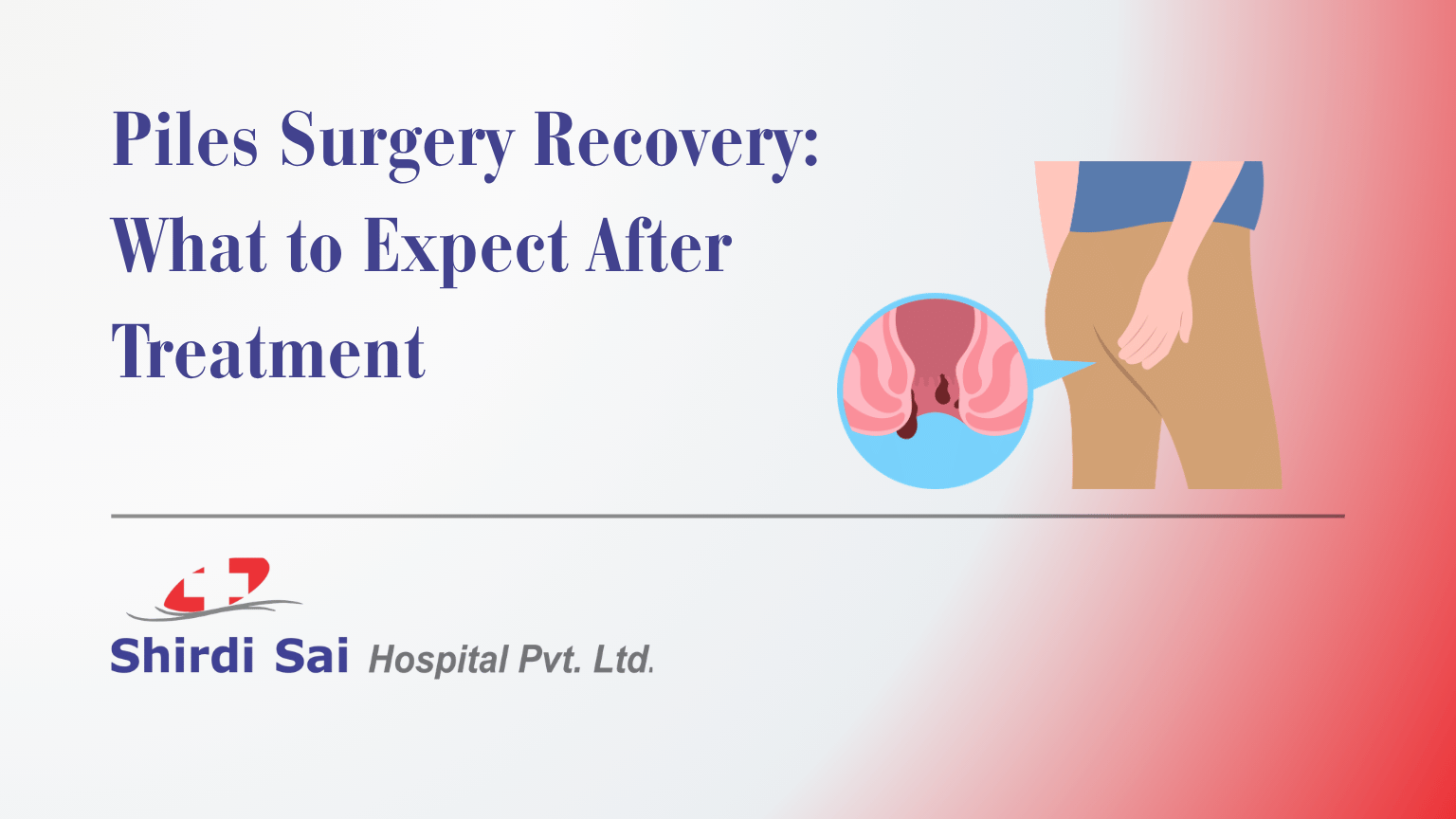
Recovery after piles surgery varies with the type of procedure, the extent of haemorrhoids, bowel habits and the patient’s overall health. Some discomfort during bowel movements, mild spotting, swelling and temporary changes in routine may occur during recovery, especially after haemorrhoidectomy. Good pain control, soft stools, appropriate fluids, fibre, hygiene and gradual activity can make recovery easier. However, heavy or increasing bleeding, fever, worsening swelling, pus discharge, inability to pass urine, uncontrolled pain or marked weakness need medical review rather than routine home care.
Piles Surgery Recovery at a Glance
- Follow the discharge instructions for the exact procedure you had.
- Take prescribed pain medicines as directed.
- Keep stools soft to reduce straining.
- Increase fibre gradually and drink an appropriate amount of fluid.
- Use stool-softening treatment if the surgeon prescribes it.
- Keep the anal area clean and follow wound-care instructions.
- A warm sitz bath may help some patients when the treating team recommends it.
- Begin light activity gradually.
- Avoid heavy straining and strenuous activity until the surgeon clears you.
- Mild spotting can occur after some procedures, but heavy bleeding needs medical attention.
- Contact the treating team if recovery worsens instead of progressing.
What Does “Piles Surgery” Mean?
Piles, also called haemorrhoids, are enlarged haemorrhoidal tissues inside or around the anus.
Not every patient with piles requires an operation.
Treatment can range from bowel-habit changes and medicines to office procedures and surgery. NHS guidance lists options such as rubber-band ligation, sclerotherapy, infrared treatment, haemorrhoidectomy, stapled haemorrhoidopexy and haemorrhoidal artery ligation depending on the type and severity of piles.
Recovery therefore depends heavily on which treatment the patient receives.
A person who undergoes an office-based procedure may have a very different recovery experience from someone who undergoes haemorrhoidectomy.
Patients should follow the instructions for their own procedure rather than comparing recovery with another person’s experience.
Why Does Recovery Differ Between Piles Procedures?
Different procedures treat haemorrhoids in different ways.
For example:
- an office procedure may reduce blood supply to selected internal haemorrhoids
- haemorrhoidectomy removes haemorrhoidal tissue
- stapled procedures reposition selected prolapsing internal tissue
- artery-ligation procedures reduce blood supply to haemorrhoidal tissue
The amount of treated tissue, wound size, anaesthesia, presence of external piles, prolapse and individual pain response all affect recovery.
In general, haemorrhoidectomy needs a longer recovery than office-based treatment, and some discomfort, spotting or swelling can occur after any of these procedures.
That is why pain levels and return-to-work timelines differ so much from one patient to another.
Is Pain Normal After Piles Surgery?
Some discomfort is common after piles procedures.
Pain can become more noticeable during bowel movements because stool passes through the treated area.
The degree of pain depends on:
- procedure type
- extent of treatment
- location of the treated haemorrhoids
- bowel consistency
- constipation
- swelling
- individual pain sensitivity
Haemorrhoidectomy can cause more postoperative discomfort than many office-based treatments.
MedlinePlus also notes that haemorrhoid surgery can lead to pain-related difficulty passing urine and constipation related to pain or pain medicines.
Take only the pain medicine your treating clinician recommends.
Do not increase doses, combine medicines or add over-the-counter painkillers without checking whether they are suitable for you.
When Does Pain After Piles Surgery Need Medical Review?
Pain should generally become more manageable during recovery.
Contact the treating team when:
- pain becomes steadily worse
- prescribed medicine does not control the pain
- severe swelling develops
- pain occurs with fever
- pus or foul-smelling discharge appears
- a new hard or very painful swelling develops
- pain becomes severe after initially improving
- you cannot pass stool or urine because of discomfort
Do not assume severe pain is “normal because piles surgery is painful.”
The treating clinician should assess symptoms that are unexpectedly severe or worsening.
What Is the First Bowel Movement Like After Piles Surgery?
The first bowel movement can worry many patients because they expect severe pain or fear damaging the surgical area.
Some discomfort can occur.
The main aim is to avoid hard stool and excessive straining.
The postoperative plan may therefore include:
- adequate fibre
- suitable fluid intake
- stool softeners where prescribed
- regular meals
- gradual activity
- prescribed pain relief
- avoiding prolonged toilet sitting
Do not deliberately avoid passing stool for several days because of fear.
Holding stool can make it harder and may increase discomfort when you eventually pass it.
At the same time, do not force a bowel movement.
Respond to the natural urge and avoid repeated straining.
How Can You Keep Stool Soft During Recovery?
Soft stool can reduce pressure and straining around the treated area.
Helpful measures may include:
Fibre
Fibre adds bulk and helps support regular bowel movements.
Sources can include:
- vegetables
- fruit
- oats
- whole grains
- dal and pulses
- other fibre-rich foods that suit the patient’s diet
Increase fibre gradually rather than making a sudden large change that causes excessive bloating.
Appropriate fluids
Fluid helps fibre work effectively and can support softer stools.
However, people with kidney disease, heart disease or a prescribed fluid restriction should follow their individual medical advice.
Stool-softening treatment
The surgeon may prescribe a stool softener or another bowel medication.
Take it according to instructions.
Do not start strong laxatives or repeatedly increase the dose without discussing constipation with the treating team.
Regular movement
Light physical activity can support bowel function.
Long periods of complete inactivity may contribute to constipation.
What Should You Eat After Piles Surgery?
The postoperative diet should support comfortable bowel movements and adequate nutrition.
Patients may focus on:
- vegetables
- fruit
- whole grains
- oats
- dal
- suitable pulses
- soups
- simple home-cooked meals
- adequate protein
- appropriate fluids
There is no single compulsory “piles surgery diet.”
The key goals are to prevent hard stool, maintain nutrition and avoid foods that clearly worsen constipation or diarrhoea.
Should You Avoid Spicy Food After Piles Surgery?
Not every patient needs to avoid spices completely.
However, some people notice more burning or bowel irritation after very spicy food during early recovery.
If a particular food consistently increases discomfort, reduce it temporarily and reintroduce it according to tolerance.
Avoid building an unnecessarily restrictive diet around online claims.
The effect of food varies considerably between patients.
Can You Drink Tea or Coffee After Piles Surgery?
Moderate intake may be acceptable for many patients, but caffeine can affect bowel habits differently from person to person.
Some people notice:
- increased bowel urgency
- loose stool
- dehydration when fluid intake remains inadequate
- worsening constipation depending on overall habits
Focus on total fluid intake and stool consistency rather than assuming tea or coffee is universally prohibited.
Ask the treating clinician if another medical condition requires dietary restrictions.
Is Bleeding Normal After Piles Surgery?
A small amount of spotting or bleeding may occur after some piles procedures.
Bleeding may become noticeable:
- after a bowel movement
- on toilet paper
- as light spotting
- during early wound healing
The amount and duration depend on the treatment performed.
However, patients should not assume all postoperative bleeding is harmless.
Heavy or increasing bleeding is a clear reason to contact your surgeon.
When Is Bleeding After Piles Treatment an Emergency?
Seek urgent medical care if:
- bleeding does not stop
- a large amount of fresh blood appears
- large blood clots pass
- bleeding causes dizziness
- you feel faint
- marked weakness develops
- your heartbeat feels unusually rapid
- bleeding rapidly increases
NHS guidance advises emergency assessment for non-stop bleeding, large amounts of blood or large blood clots.
Do not wait for a routine follow-up appointment if bleeding becomes heavy.
How Should You Clean the Area After Piles Surgery?
Good hygiene can improve comfort and support wound care.
The exact instructions depend on the procedure.
General principles may include:
- gently cleaning after bowel movements
- avoiding vigorous rubbing
- using clean water when advised
- patting the area dry carefully
- changing dressings according to instructions
- avoiding unapproved creams or powders
Do not apply antiseptics, herbal preparations, oils or other products directly to the surgical area unless the treating clinician approves them.
Can a Warm Sitz Bath Help?
A warm sitz bath involves sitting in shallow warm water so that the anal area soaks gently.
The postoperative plan may include sitz baths to:
- ease discomfort
- support local cleanliness
- relax the area after bowel movements
Use comfortably warm water rather than very hot water.
Do not add chemicals, disinfectants, salt, herbal preparations or other substances unless the treating team recommends them.
Is Swelling Normal After Piles Surgery?
Some local swelling can occur during recovery.
It may make the area feel:
- tender
- full
- uncomfortable
- different from before surgery
Patients sometimes worry that any postoperative swelling means the piles have immediately returned.
Swelling during healing does not automatically indicate recurrence.
However, increasing swelling, severe pain, fever, pus or a rapidly enlarging lump needs medical review.
Can You Have Difficulty Passing Urine After Piles Surgery?
Yes, some patients can experience temporary difficulty urinating after anorectal surgery.
Pain, swelling, anaesthesia and other factors may contribute.
MedlinePlus lists problems passing urine among recognised risks after haemorrhoid surgery.
Contact the treating team if:
- you cannot pass urine
- you develop increasing lower abdominal discomfort
- only very small amounts of urine pass despite a strong urge
- urinary symptoms become progressively worse
Do not repeatedly force urination while becoming increasingly uncomfortable.
Is Constipation Common After Piles Surgery?
Constipation can occur because:
- patients fear bowel movements
- pain reduces activity
- certain pain medicines slow the bowel
- diet changes
- fluid intake decreases
Constipation can increase straining, which may worsen postoperative discomfort.
The surgeon may therefore include stool-softening treatment as part of the recovery plan.
MedlinePlus specifically identifies constipation related to pain or pain medicines as a potential postoperative issue.
Can Diarrhoea Cause Problems During Recovery?
Frequent loose stool can irritate the treated area and make hygiene difficult.
Contact a clinician if diarrhoea:
- remains frequent
- causes dehydration
- causes increasing anal irritation
- contains blood beyond the expected postoperative pattern
- occurs with fever
- continues despite dietary adjustment
Both constipation and persistent diarrhoea can complicate recovery.
The goal is regular, soft, formed stool rather than forcing a particular number of bowel movements each day.
When Can You Start Walking?
Light movement usually forms part of postoperative recovery when the surgical team allows it.
Begin gradually.
Short periods of walking may help:
- reduce prolonged inactivity
- support bowel function
- restore routine
- improve general mobility
Stop or reduce activity if it significantly increases pain or bleeding.
The treating clinician should guide activity after more extensive procedures or when other medical conditions affect mobility.
When Can You Return to Work?
There is no universal return-to-work date after piles surgery.
Recovery depends on:
- the procedure
- pain
- bleeding
- bowel comfort
- wound healing
- the physical demands of work
- commuting
- how long the patient must sit
- other medical conditions
A desk-based worker and a person performing heavy manual labour may require different recovery plans.
Because recovery varies between procedures and patients, nobody can give you a reliable fixed number of days before you go back to work.
Ask the surgeon when you can safely resume your normal duties.
When Can You Exercise or Lift Weights?
Do not return directly to strenuous exercise after piles surgery.
Heavy lifting and intense straining increase abdominal pressure and may worsen discomfort during early recovery.
A gradual return may begin with:
- ordinary walking
- light daily activities
- increased movement according to comfort
More demanding activity such as:
- gym training
- heavy weights
- intense cycling
- running
- squats with heavy loads
- physically demanding labour
should follow the treating surgeon’s advice.
Do not use another patient’s timeline as your clearance.
How Long Does Piles Surgery Recovery Take?
Recovery varies too much for one exact number to suit every patient.
Factors include:
- treatment type
- extent of disease
- number of areas treated
- presence of external piles
- wound healing
- bowel consistency
- constipation
- pain control
- general health
- activity demands
Office-based procedures can have a different recovery pattern from haemorrhoidectomy.
Haemorrhoidectomy often causes more postoperative discomfort and may require a longer recovery period than less extensive procedures.
A better guide than any online number is whether your pain, bleeding, bowel movements, mobility and wound healing are improving as expected for the procedure you had.
Can Piles Come Back After Surgery?
Piles symptoms can recur after treatment.
No procedure can guarantee that piles will never come back.
Recurrence can relate to factors such as:
- constipation
- repeated straining
- diarrhoea
- prolonged toilet habits
- pregnancy
- the original type and severity of piles
Long-term bowel care can help reduce avoidable pressure on the anal region.
Helpful habits may include:
- maintaining appropriate fibre intake
- drinking adequate fluids where medically suitable
- staying physically active
- avoiding prolonged toilet sitting
- responding to the natural urge to pass stool
- managing recurring constipation or diarrhoea
- following postoperative advice
Constipation and straining are linked with piles, fissure and fistula. Our article on how constipation relates to piles, fissure and fistula explains how these conditions differ.
What Warning Signs Should You Watch for During Recovery?
Contact the treating team promptly for:
- heavy or increasing bleeding
- fever
- chills
- worsening anal swelling
- pus or foul-smelling discharge
- severe pain despite prescribed medicine
- inability to pass urine
- repeated vomiting
- inability to pass stool despite following the bowel plan
- faintness
- marked weakness
- recovery that suddenly worsens
These symptoms may require examination rather than telephone reassurance alone.
When Should You Seek Emergency Care?
Seek urgent medical attention for:
- continuous heavy bleeding
- large blood clots
- fainting
- severe weakness with bleeding
- severe rapidly worsening pain
- confusion
- collapse
- another rapidly deteriorating condition
Shirdi Sai Hospital provides an acute assessment pathway through the hospital’s Emergency Medicine service.
In a serious emergency, seek the nearest appropriate emergency facility rather than delaying care to reach a particular hospital.
What Happens at a Postoperative Review?
The surgeon may review:
- pain
- bleeding
- bowel movements
- constipation
- stool-softening medicine
- wound healing
- swelling
- urinary symptoms
- return to activity
- return to work
- ongoing anal symptoms
The doctor may also clarify whether a symptom represents expected healing or requires further examination.
Bring the discharge summary and procedure details if another hospital performed the surgery.
What Should You Bring to a Recovery Consultation?
When available, bring:
- discharge summary
- procedure or operation note
- prescription
- current medicines
- details of any blood thinner
- blood-test reports
- records of earlier piles treatment
- information about bowel movements
- notes about the amount of bleeding
- details of fever or urinary difficulty
Tell the clinician clearly when the symptom started and whether it is improving or worsening.
General Surgery Care for Piles at Shirdi Sai Hospital
The General Surgery team at Shirdi Sai Hospital evaluates and treats piles, fissure and fistula.
A General Surgery consultation can help patients with:
- bleeding during stool
- anal swelling
- prolapse
- pain
- recurring piles symptoms
- recovery concerns after treatment
- questions about whether further treatment is needed
The hospital is located on New BEL Road in Bengaluru.
Patients can learn more through the hospital’s General Surgery services and the main General Surgery department.
For details on diagnosis, grades and treatment options, see piles treatment in New BEL Road. If symptoms come back months after treatment, our guide to piles symptoms that need a doctor can help you decide when to get checked.
Current procedure and surgeon availability should be confirmed through the hospital before a planned visit.
When to Contact a General Surgeon During Recovery
Arrange a review when:
- pain is not improving as expected
- bowel movements remain very difficult
- bleeding keeps recurring
- constipation continues despite following instructions
- diarrhoea repeatedly irritates the area
- swelling remains troublesome
- you have questions about returning to work
- you are unsure when to resume exercise
- symptoms return after an earlier period of improvement
- you need review after a piles procedure performed elsewhere
Seek urgent care rather than a routine appointment for heavy bleeding, fainting or rapid deterioration.
Frequently Asked Questions
Is pain normal after piles surgery?
Some discomfort is common, particularly after haemorrhoidectomy and during bowel movements. Pain should generally become more manageable. Severe or increasing pain, especially with fever, swelling or discharge, needs medical review.
Is bleeding normal after piles surgery?
Light spotting may occur after some procedures, especially around bowel movements. Heavy, continuous or increasing bleeding, large clots, dizziness or faintness requires urgent assessment.
How can I pass stool comfortably after piles surgery?
Aim for soft stools by following the prescribed bowel plan, eating adequate fibre, drinking an appropriate amount of fluid and using stool-softening treatment when advised. Avoid holding stool because of fear and avoid forceful straining.
What should I eat after piles surgery?
Choose a balanced diet that supports soft, regular stools. Fibre-rich foods such as vegetables, fruit, oats, whole grains and pulses may help. Increase fibre gradually and follow individual advice if another medical condition limits fluid or certain foods.
Can piles come back after surgery?
Yes. Symptoms can recur after treatment. Constipation, repeated straining, diarrhoea and toilet habits may contribute. No treatment can promise that piles will never return.
When can I return to work after piles surgery?
There is no fixed timeline for every patient. Procedure type, discomfort, bowel movements, bleeding and work demands influence the decision. Ask the treating surgeon when you can safely resume your job.
When should I go to the hospital after piles surgery?
Seek urgent care for heavy or non-stop bleeding, large blood clots, fainting or rapid deterioration. Contact the treating team for fever, worsening pain, pus discharge, increasing swelling, inability to pass urine or persistent difficulty passing stool.
Summary
Piles surgery recovery depends on the treatment performed, bowel habits, wound healing and the patient’s overall health. Good recovery care focuses on controlling pain, keeping stools soft, avoiding straining, maintaining hygiene and increasing activity gradually.
Mild spotting and discomfort can occur after some procedures, but heavy bleeding, fever, worsening pain, pus discharge or inability to pass urine should not be ignored.
For non-emergency postoperative concerns, patients can contact Shirdi Sai Hospital for a General Surgery consultation on New BEL Road.
For severe bleeding, fainting or another rapidly worsening condition, seek urgent medical care.
External Medical References
Patient guidance on piles symptoms, treatment options and when bleeding needs urgent care: NHS: Piles (haemorrhoids).
Home-care guidance after haemorrhoid removal, including bowel care and warning signs: MedlinePlus: Hemorrhoid removal, discharge.
Possible issues after haemorrhoid surgery, such as difficulty passing urine: MedlinePlus: Hemorrhoid surgery.