Shirdi Sai Hospital

Author: admin

  • Why Does My Knee Pain Increase While Climbing Stairs but Not While Walking?

    Why Does My Knee Pain Increase While Climbing Stairs but Not While Walking?

    Many people notice an odd pattern: walking on flat ground feels fine, but knee pain flares up the moment they climb stairs. This difference can be confusing and worrying. At Shirdi Sai Hospital, we hear this question often. The reason is usually mechanical-and understanding it helps you know when to rest, when to strengthen, and when to get checked.

    This guide explains the most common causes, what the pain pattern means, and when it needs medical attention, in clear, people-first language.
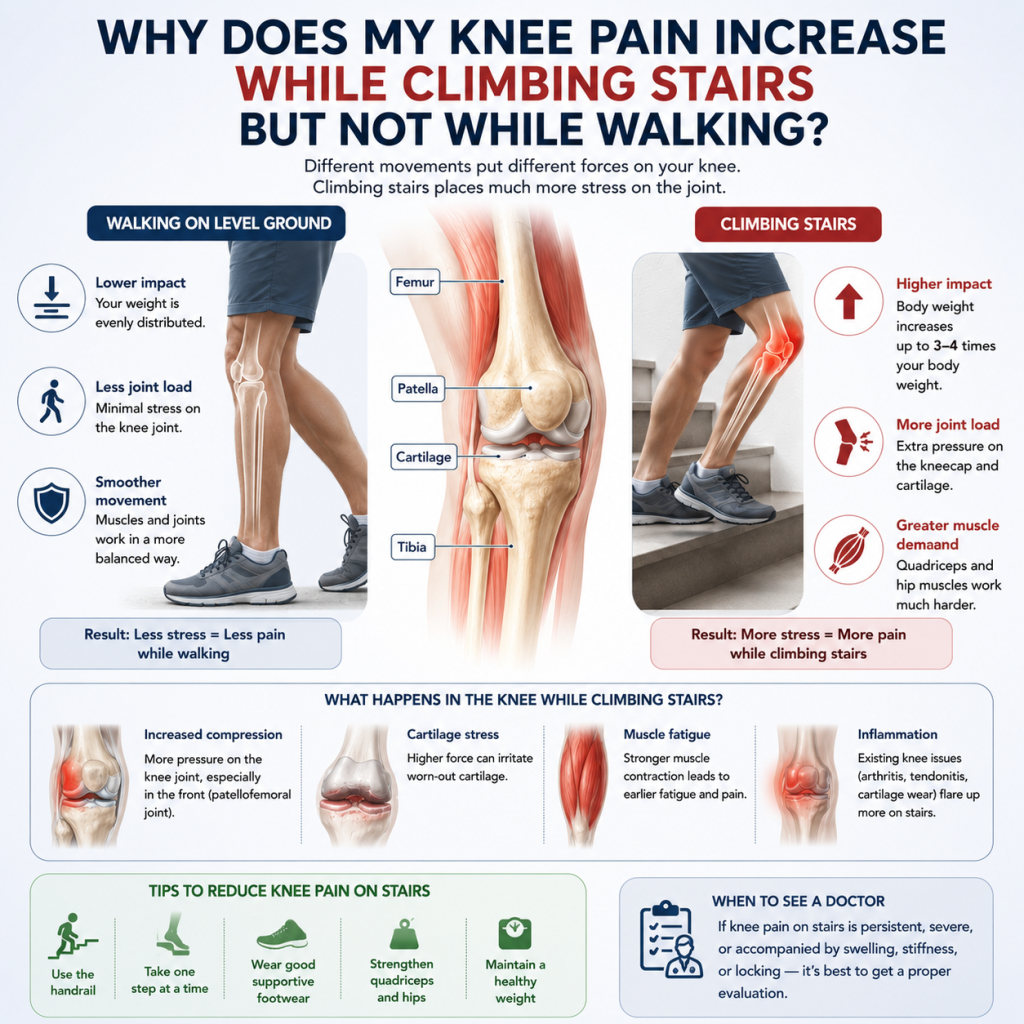
    Medical infographic comparing walking and climbing stairs, showing an anatomical knee joint with increased pressure on the kneecap during stair climbing, common causes of knee pain, and tips for reducing discomfort.

    Why Stairs Stress the Knee More Than Walking

    Climbing stairs increases the load on the knee joint by 2–3 times your body weight. It also demands precise coordination between the kneecap (patella), thigh muscles, cartilage, and ligaments. If any part of this system is slightly off, pain shows up on stairs first.


    Common Reasons Knee Pain Appears on Stairs

    1) Patellofemoral Pain (Kneecap Tracking Issue)

    When the kneecap doesn’t glide smoothly in its groove, pressure builds during stair climbing.

    Typical clues:

    • Pain around or behind the kneecap
    • Worse while going up or down stairs
    • Improves with rest

    2) Early Cartilage Wear (Early Osteoarthritis)

    Cartilage cushions the joint. Early thinning may not hurt during walking but becomes noticeable under higher load.

    Typical clues:

    • Mild stiffness after sitting
    • Pain with stairs or squatting
    • Minimal swelling

    3) Weak Thigh and Hip Muscles

    The quadriceps and hip muscles absorb shock. Weakness shifts extra load to the knee during stair climbing.

    Typical clues:

    • Knee pain without injury
    • Difficulty rising from a chair
    • Improves with strengthening

    4) Meniscus Strain or Degeneration

    The meniscus helps distribute weight. Small degenerative changes can cause pain during bending activities.

    Typical clues:

    • Pain on twisting or stair descent
    • Occasional catching or discomfort
    • Often no major swelling

    5) Tight Muscles and Tendons

    Tight hamstrings or calf muscles alter knee mechanics, increasing stress on stairs.

    Typical clues:

    • Limited flexibility
    • Pain improves after gentle stretching
    • Worse after long sitting

    6) Weight-Related Joint Load

    Even modest weight gain increases knee stress during stairs.

    Typical clues:

    • Pain worsens with stairs, hills, or squats
    • Improves with weight management and conditioning

    Is This Always Arthritis?

    No. Stair-only pain does not automatically mean arthritis. Many younger adults experience this due to muscle imbalance or kneecap tracking issues—conditions that are often reversible with the right approach.


    When Should You Be Concerned?

    Get an evaluation if you notice:

    • Persistent pain beyond 2–3 weeks
    • Swelling, locking, or instability
    • Pain after a fall or injury
    • Increasing pain that limits daily activity

    Early assessment can prevent progression.


    How Doctors Evaluate Stair-Related Knee Pain

    At Shirdi Sai Hospital, care is stepwise:

    • Detailed activity and pain-pattern history
    • Physical examination focusing on alignment and strength
    • X-ray or MRI only if needed

    Most patients start with conservative care.


    Treatment Options

    • Activity modification: temporary reduction of stair strain
    • Targeted physiotherapy: muscle balance and kneecap control
    • Pain relief measures: as appropriate
    • Lifestyle adjustments: weight and footwear review

    Surgery is rarely the first step for this pattern of pain.


    A Note From the Shirdi Sai Hospital Team

    Stair-related knee pain is often an early signal, not a severe problem. With timely guidance, most people return to comfortable movement without long-term medication or procedures.

    If stairs are becoming uncomfortable or limiting your routine, an orthopaedic review can provide clarity and a clear plan.


    Frequently Asked Questions (FAQs)

    Why does going downstairs hurt more than going up?
    Downstairs movement increases pressure behind the kneecap, making pain more noticeable.

    Can exercises help?
    Yes. Strengthening and flexibility exercises are often the most effective treatment.

    Should I stop using stairs completely?
    Temporary modification helps, but complete avoidance isn’t usually necessary.

    Is imaging always required?
    No. Many cases improve with clinical assessment and therapy alone.

    Can this happen in younger adults?
    Yes. Muscle imbalance and overuse are common causes in the 20s–40s.

    Will this worsen over time?
    Not if addressed early with proper care.


    Doctor Review

    This article was reviewed for medical accuracy by an Orthopaedics Consultant at Shirdi Sai Hospital.
  • My Periods Were Regular Before Why Are They Irregular Now?

    My Periods Were Regular Before Why Are They Irregular Now?

    When periods that were once predictable suddenly become irregular, it can feel unsettling. Many women assume it must be something serious or worry they did something wrong. At Shirdi Sai Hospital, we see this question often. In most cases, there is a clear, explainable reason, and the situation is manageable once identified.

    This article explains why cycles change, what’s considered normal, and when it’s time to seek medical advice—in simple, people-first language.

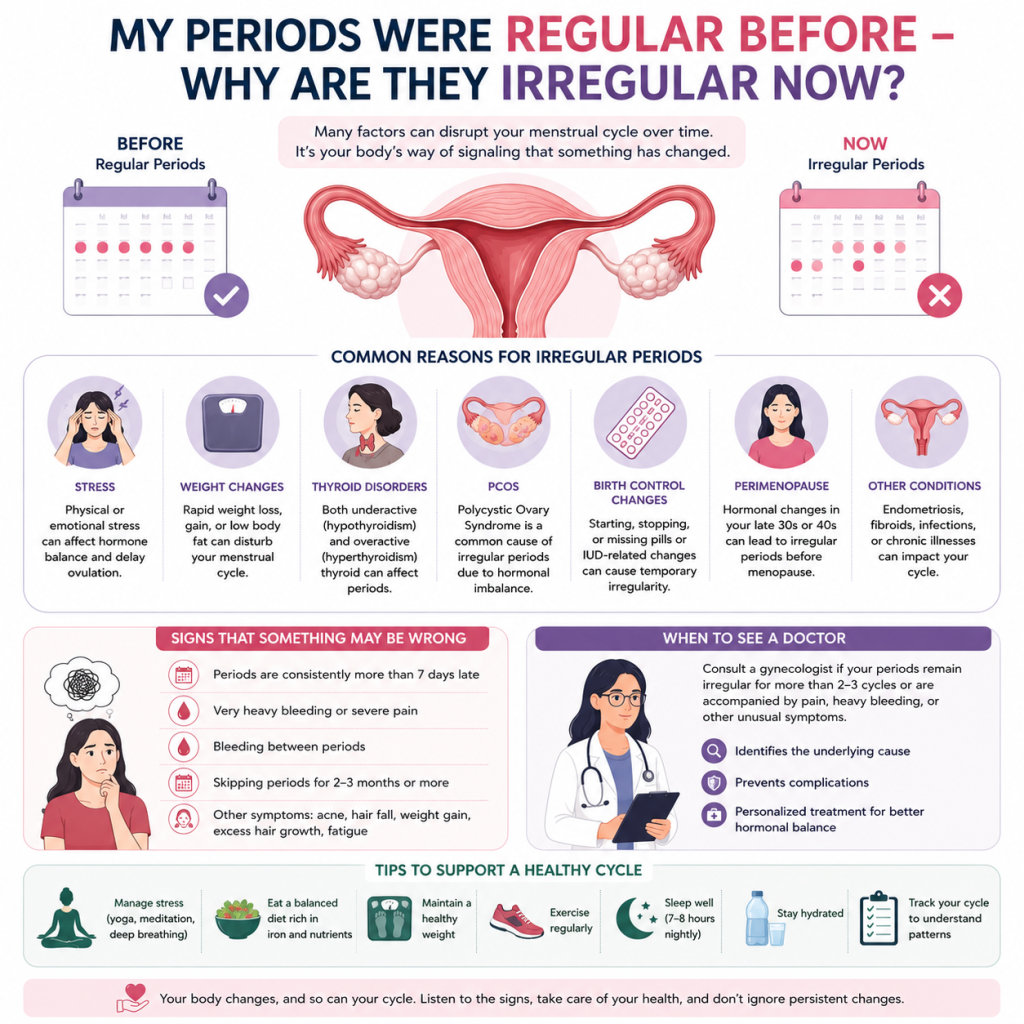
    Medical infographic showing the female reproductive system and explaining why previously regular periods can become irregular, including common causes, warning signs, and when to seek medical advice.

    What Does “Irregular” Actually Mean?

    A typical menstrual cycle ranges from 21 to 35 days. Irregularity can include:

    • Cycles that suddenly shorten or lengthen
    • Missed periods for 2–3 months
    • Bleeding that comes earlier or later than usual
    • Spotting between periods

    A one-off change can happen. Repeated changes deserve attention.


    Common Reasons Periods Become Irregular After Being Regular

    1) Stress and Lifestyle Shifts

    Physical or emotional stress affects the hormones that control ovulation. Sudden work pressure, sleep disruption, weight change, or illness can delay or skip ovulation—leading to irregular cycles.

    Typical clues:

    • Changes follow a stressful phase
    • Cycles normalize once routines stabilize

    2) Hormonal Fluctuations With Age

    Hormone balance isn’t static. Shifts can occur in the late 20s, 30s, and during the years leading to menopause.

    Typical clues:

    • Cycles that were regular for years start changing
    • Associated symptoms like mood changes or fatigue

    3) Polycystic Ovary Syndrome (PCOS)

    PCOS can appear even after years of normal periods. It affects ovulation timing and can cause cycle variability.

    Typical clues:

    • Period gaps of 45–90 days
    • Acne or increased hair growth
    • Weight changes

    4) Thyroid Imbalance

    Both underactive and overactive thyroid conditions can disrupt menstrual timing.

    Typical clues:

    • Unexplained weight change
    • Hair fall, heat or cold intolerance
    • Fatigue with cycle changes

    5) Recent Pregnancy, Breastfeeding, or Contraception Changes

    Hormones take time to reset after childbirth, breastfeeding, or stopping hormonal contraception.

    Typical clues:

    • Irregular cycles for a few months after changes
    • Gradual return toward a pattern

    6) Sudden Weight Loss or Gain

    Fat tissue influences estrogen levels. Rapid changes can affect ovulation and cycle regularity.

    Typical clues:

    • Period changes alongside diet or exercise changes

    Is It Ever “Normal” for Periods to Change?

    Yes-temporary changes can be normal during:

    • High stress
    • Recovery from illness
    • Travel or sleep disruption

    However, if cycles remain irregular for more than 2–3 months, it’s best to check.


    When Should You See a Doctor?

    Consider evaluation if you have:

    • Missed periods for 3 months or more
    • Very heavy bleeding or clots
    • Severe pain with periods
    • Bleeding between periods repeatedly
    • Irregular cycles with acne, hair growth, or weight changes

    Early evaluation often prevents long-term issues.


    How Doctors Evaluate Sudden Irregular Periods

    At Shirdi Sai Hospital, assessment is careful and individualized:

    • Detailed menstrual and lifestyle history
    • Blood tests for hormones (as needed)
    • Ultrasound only if indicated

    Most women do not require extensive testing.


    Treatment Depends on the Cause

    • Lifestyle adjustments: stress, sleep, nutrition
    • Hormonal balancing: if required
    • Targeted treatment: for PCOS or thyroid issues

    The goal is cycle regulation and overall health, not just short-term fixes.


    A Note From the Shirdi Sai Hospital Team

    We reassure many women that irregular periods after years of regular cycles are common and often reversible. With timely evaluation and the right guidance, cycles usually settle back into a healthier pattern.

    If your periods feel “off” or unpredictable, a consultation can provide clarity and peace of mind.


    Frequently Asked Questions (FAQs)

    Can stress alone make periods irregular?
    Yes. Stress can delay ovulation, which shifts the cycle.

    Is pregnancy possible with irregular periods?
    Yes. Irregular cycles don’t automatically mean infertility.

    Can irregular periods correct themselves?
    They often do, especially if stress or lifestyle factors are involved.

    Are irregular periods always PCOS?
    No. PCOS is one cause among many.

    Do I need an ultrasound immediately?
    Not always. Tests are based on symptoms and history.

    Is it dangerous to ignore irregular periods?
    Persistent irregularity should be checked to rule out hormonal issues.


    Doctor Review

    This article was reviewed for medical accuracy by a Gynecology Consultant at Shirdi Sai Hospital.
  • Why Do I Still Feel Like Urinating Even After Emptying My Bladder?

    Why Do I Still Feel Like Urinating Even After Emptying My Bladder?

    Feeling a persistent urge to urinate even after you’ve just emptied your bladder can be confusing and uncomfortable. Many people worry that something serious is wrong, especially when the sensation keeps returning despite normal urine flow. At Shirdi Sai Hospital, we see this concern frequently and in most cases, there is a clear, manageable explanation.

    This guide explains why the urge can linger, what it usually means, and when you should seek medical advice-in simple, people-first language.

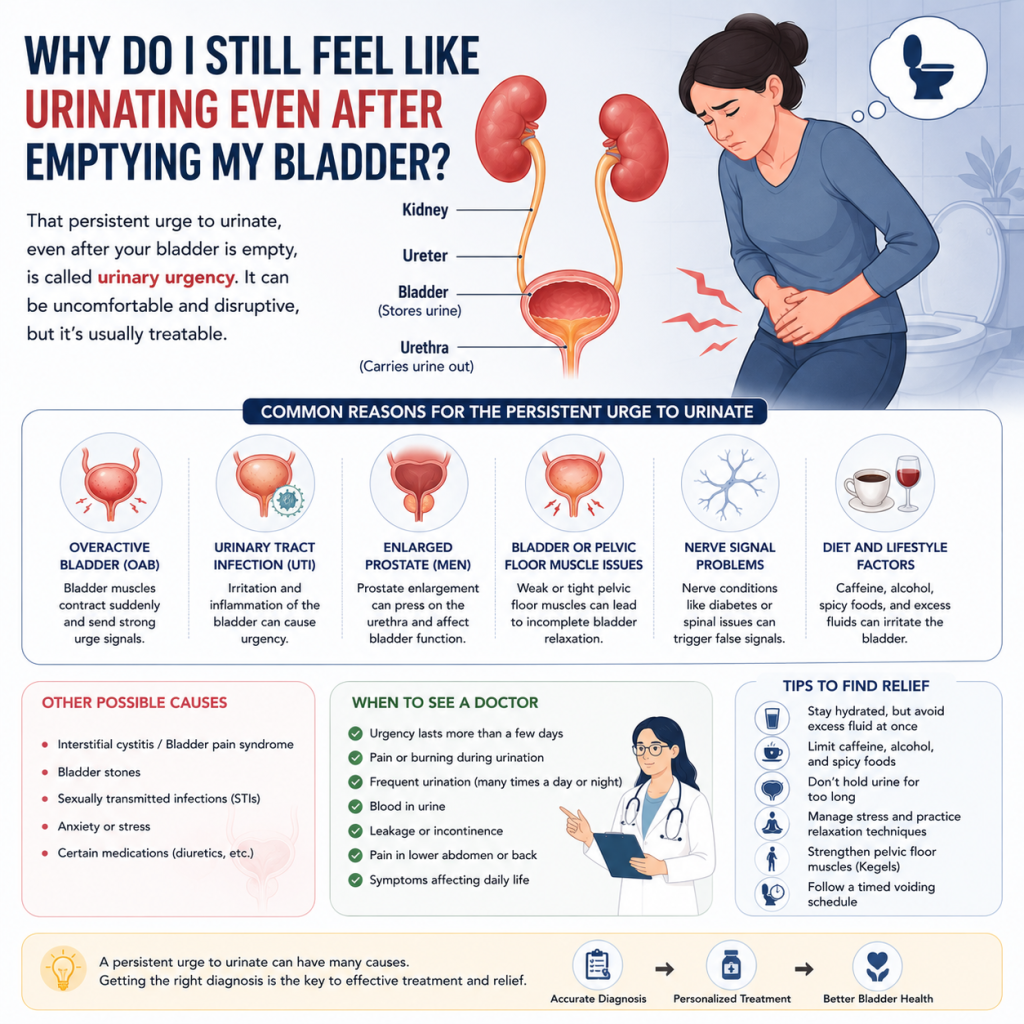
    Medical infographic illustrating the urinary system and explaining why a person may still feel the urge to urinate after emptying the bladder, including common causes, warning signs, and treatment tips.

    What Does “Incomplete Emptying” Really Mean?

    The sensation of needing to urinate again doesn’t always mean urine is still left inside the bladder. Often, it’s a signal problem rather than a storage problem-the bladder or nearby structures are sending mixed messages to the brain.


    Common Reasons You May Feel the Urge After Urinating

    1) Bladder Irritation (Even Without Infection)

    The bladder lining can become sensitive due to dehydration, acidic foods, caffeine, or recent illness. When irritated, the bladder overreacts and triggers urgency even when it’s empty.

    Typical clues:

    • Urge comes quickly after urinating
    • No fever or severe pain
    • Symptoms fluctuate day to day

    2) Overactive Bladder (OAB)

    With OAB, the bladder muscles contract earlier than they should, creating urgency with little or no urine present.

    Typical clues:

    • Sudden urges
    • Frequent bathroom visits
    • Night-time urination (nocturia)

    3) Pelvic Floor Muscle Tightness

    Muscles that help control urination may be tight or uncoordinated, preventing a relaxed, complete voiding sensation.

    Typical clues:

    • Urge persists after urinating
    • Worse with stress or prolonged sitting
    • Often improves with guided exercises

    4) Prostate-Related Changes (in Men)

    An enlarged prostate can irritate the bladder outlet, leading to the feeling of incomplete emptying even if the bladder is mostly empty.

    Typical clues:

    • Weak stream or hesitancy
    • Dribbling after urination
    • Night-time frequency

    5) Hormonal Changes (in Women)

    Low estrogen—common after childbirth or around menopause—can make the urinary tract more sensitive.

    Typical clues:

    • Urgency without infection
    • Vaginal dryness
    • Symptoms vary with hormonal shifts

    6) Stress and Anxiety

    The bladder is closely linked to the nervous system. Ongoing stress can heighten body awareness and amplify urgency signals.

    Typical clues:

    • Normal test reports
    • Symptoms worsen during stressful periods
    • Improve with relaxation and routine changes

    When Should You Be Concerned?

    Seek medical evaluation if you notice any of the following:

    • Blood in urine
    • Fever or chills
    • Pain in the lower abdomen or back
    • Difficulty starting urination or a very weak stream
    • Symptoms persisting beyond 2–3 weeks despite basic measures

    These signs don’t always indicate something serious, but they do warrant a closer look.


    How Doctors Evaluate This Symptom

    At Shirdi Sai Hospital, assessment is stepwise and patient-friendly:

    • Detailed symptom history (timing, triggers, night symptoms)
    • Urine tests to rule out infection
    • Ultrasound or bladder scan (if needed)
    • Prostate assessment for men; pelvic evaluation for women

    Most patients do not need invasive tests.


    Treatment Options (Based on Cause)

    • Hydration and diet tweaks: reducing caffeine and acidic foods
    • Bladder training: timed voiding to calm urgency signals
    • Pelvic floor therapy: guided exercises when muscle tension is involved
    • Medications: only when clearly indicated
    • Addressing underlying issues: prostate care, hormonal support, or stress management

    Treatment is individualized and usually conservative to start.


    A Note from the Shirdi Sai Hospital Team

    We often reassure patients that this symptom is common and treatable. With the right evaluation, most people experience significant improvement-often without long-term medication.

    If the sensation is persistent or affecting your daily life, it’s reasonable to get it checked by a urology specialist for clarity and peace of mind.


    Frequently Asked Questions (FAQs)

    Is it normal to feel the urge right after urinating?
    Yes, especially with bladder irritation or muscle tension. It’s common and often temporary.

    Can this happen without a urinary infection?
    Absolutely. Many people have urgency with normal urine tests.

    Does dehydration make it worse?
    Yes. Concentrated urine can irritate the bladder lining and increase urgency.

    Is this linked to diabetes?
    In some cases, yes-especially if accompanied by excessive thirst or night-time urination.

    Will it go away on its own?
    Mild cases often improve with hydration, diet changes, and stress reduction. Persistent symptoms should be evaluated.

    Is this a sign of kidney disease?
    Usually not. Kidney issues typically cause other symptoms. Testing helps rule this out.


    Doctor Review

    This article was reviewed for medical accuracy by a Urology Consultant at Shirdi Sai Hospital.
  • Best Hospital for General Surgery in Bangalore – Shirdi Sai Multispeciality Hospital, New BEL Road

    Best Hospital for General Surgery in Bangalore – Shirdi Sai Multispeciality Hospital, New BEL Road

    Comprehensive Surgical Care Under One Roof

    When it comes to surgical treatments, patients want trust, safety, and advanced care. At Shirdi Sai Multispeciality Hospital, New BEL Road, Bangalore, we provide a wide range of general and laparoscopic surgeries performed by highly skilled surgeons. Recognized as one of the best hospitals in Bangalore for general surgery, we ensure patient safety, quick recovery, and affordable costs.

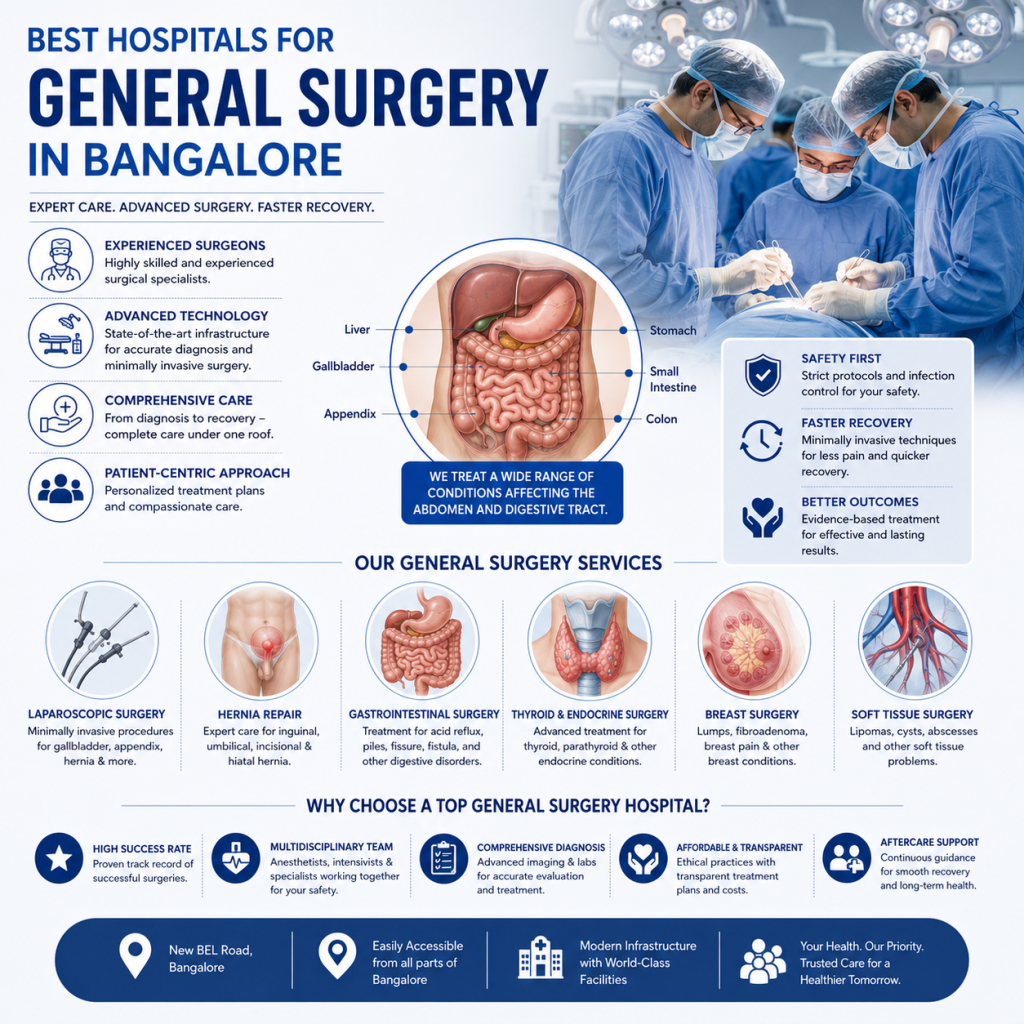
    Medical infographic highlighting advanced general surgery services in Bangalore with an anatomical illustration of the digestive system, common surgical procedures, and the benefits of choosing a specialized general surgery hospital.

    🔎 What is General Surgery?

    General Surgery deals with a variety of common and complex conditions involving the abdomen, digestive system, and soft tissues. At Shirdi Sai Hospital, we specialize in both conventional and laparoscopic (minimally invasive) surgeries.


    ✅ Surgeries Offered at Shirdi Sai Hospital

    • Hernia Surgery – Laparoscopic & open mesh repair
    • Appendix Surgery (Appendectomy) – Day-care and emergency appendix removal
    • Gallbladder Surgery – Laparoscopic cholecystectomy for gallstones
    • Piles, Fissure & Fistula Surgery – Advanced laser treatments
    • Hydrocele Surgery – Minimally invasive approach
    • MTP (Medical Termination of Pregnancy) – Safe, legal & confidential
    • PCOS & PCOD Management – Comprehensive women’s health care
    • Urology Surgeries – Prostate, kidney stones, urinary tract conditions

    ⚠️ Why Patients Choose General Surgery at Shirdi Sai Hospital

    • Expert Surgeons: Decades of combined experience
    • Advanced Laparoscopy: Keyhole surgeries with faster recovery
    • Emergency Care: 24×7 surgical support for acute conditions
    • Affordable Costs: Transparent pricing, insurance support
    • Modern Facilities: OT, ICU, diagnostic labs under one roof
    • Location Advantage: Easily accessible on New BEL Road from Hebbal, Yeshwanthpur, Malleshwaram, RT Nagar

    💰 General Surgery Cost in Bangalore

    While surgery costs vary by condition, at Shirdi Sai Hospital we ensure:

    • Affordable pricing (hernia/appendix/gallbladder from ₹40,000 onwards)
    • Laser surgeries starting ₹35,000–₹90,000 depending on condition
    • Insurance tie-ups for cashless treatments

    (Exact cost shared after doctor consultation & diagnosis.)


    ❓ FAQs – General Surgery in Bangalore

    Q1. Which hospital is best for general surgery in Bangalore?
    👉 Shirdi Sai Multispeciality Hospital, New BEL Road, is among the best, offering comprehensive surgical care across multiple specialties.

    Q2. Do you provide laparoscopic surgeries?
    Yes. Most general surgeries at Shirdi Sai Hospital are performed laparoscopically for faster recovery.

    Q3. What is the recovery time after general surgery?
    Depends on the surgery: laparoscopic (3–7 days), open surgery (2–3 weeks).

    Q4. Is surgery at Shirdi Sai Hospital covered by insurance?
    Yes. Most procedures are insurance-covered with cashless options.

    Q5. Do you handle emergency surgeries?
    Yes. We have 24×7 emergency surgical care including appendicitis, trauma, and acute abdomen.


    📞 Call to Action

    For expert general surgery in Bangalore, trust Shirdi Sai Multispeciality Hospital, New BEL Road.

    👉 [Book Appointment] | [Call Now]

  • Best Hospital for Enlarged Prostate (BPH) Treatment in Bangalore – Shirdi Sai Multispeciality Hospital, New BEL Road

    Best Hospital for Enlarged Prostate (BPH) Treatment in Bangalore – Shirdi Sai Multispeciality Hospital, New BEL Road

    Advanced Urology Care for Men’s Health

    Benign Prostatic Hyperplasia (BPH), commonly known as enlarged prostate, is a condition affecting men over 50. It causes frequent urination, weak urine flow, and discomfort, significantly affecting quality of life. At Shirdi Sai Multispeciality Hospital, New BEL Road, Bangalore, our expert urologists specialize in advanced laser and minimally invasive prostate treatments, making us one of the best hospitals in Bangalore for enlarged prostate care.

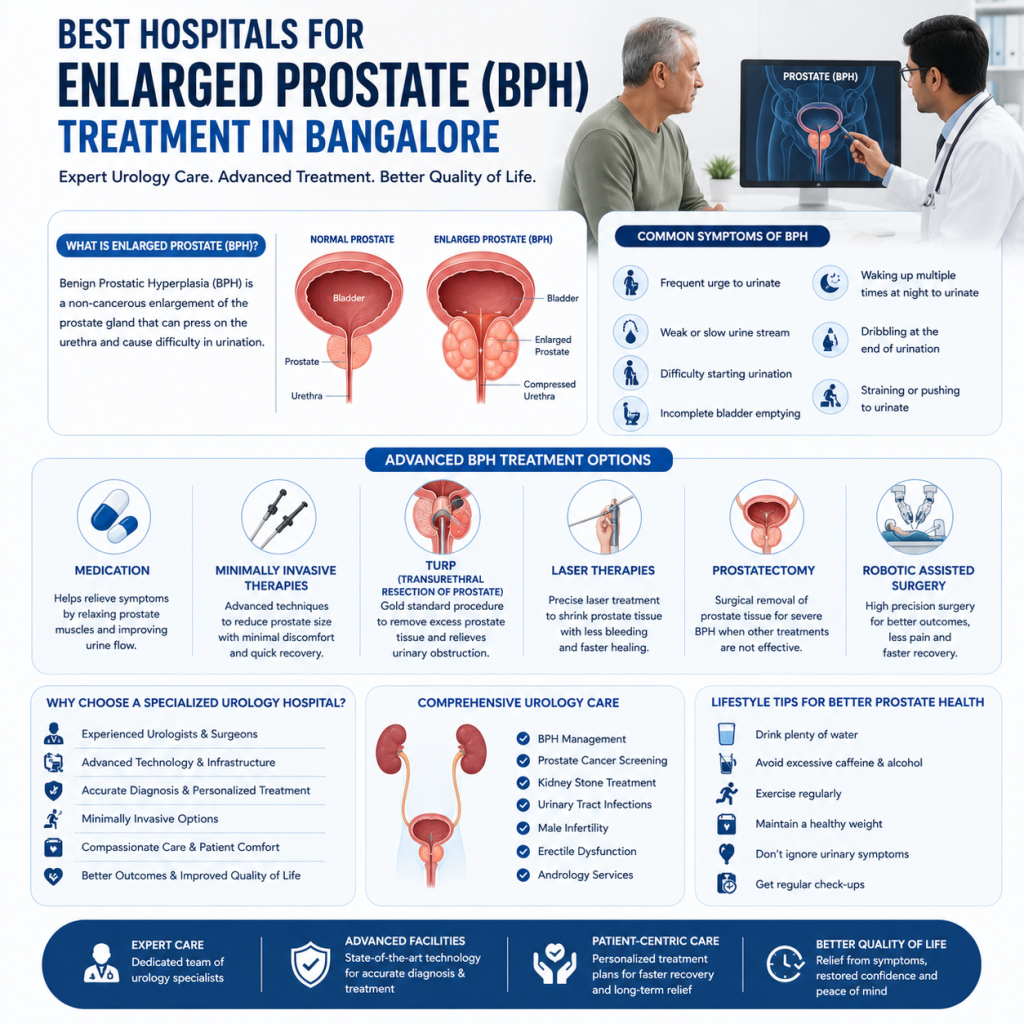
    Medical infographic illustrating benign prostatic hyperplasia (BPH), comparing a normal prostate with an enlarged prostate, highlighting common symptoms, treatment options, and prostate health tips.

    🔎 What is Enlarged Prostate (BPH)?

    BPH occurs when the prostate gland enlarges and presses against the urethra, blocking urine flow. While non-cancerous, untreated BPH can cause urinary retention, bladder damage, and kidney complications.


    ✅ Symptoms of Enlarged Prostate

    • Frequent urge to urinate, especially at night (nocturia)
    • Weak or interrupted urine flow
    • Difficulty starting urination
    • Incomplete emptying of bladder
    • Dribbling after urination
    • Urinary tract infections (UTIs)

    ⚠️ When Should You See a Doctor?

    Seek medical attention if you experience:

    • Complete inability to urinate
    • Blood in urine
    • Severe urinary frequency disrupting daily life
    • Recurrent infections

    🩺 Enlarged Prostate Treatments at Shirdi Sai Hospital

    Our urology team provides personalized treatment depending on severity:

    • Medications: To relax bladder muscles or shrink prostate
    • Minimally Invasive Procedures:
      • TURP (Transurethral Resection of Prostate) – Gold standard for BPH
      • Laser Prostate Surgery (HoLEP / GreenLight) – Minimal bleeding, faster recovery
      • UroLift System – Non-invasive option to relieve obstruction
    • Surgical Options: For severe or complicated BPH cases

    💰 Enlarged Prostate Treatment Cost in Bangalore

    Patients often ask: “What is the cost of prostate surgery in Bangalore?”

    At Shirdi Sai Hospital, we provide affordable packages:

    • Laser Prostate Surgery: ₹95,000 – ₹1,50,000 (approx.)
    • TURP Surgery: ₹70,000 – ₹1,10,000 (approx.)

    (Final cost depends on patient condition & procedure. Insurance accepted.)


    👨‍⚕️ Why Choose Shirdi Sai Hospital?

    • Experienced urologists with 15+ years of expertise
    • Advanced laser & endoscopic equipment
    • Quick recovery & minimal complications
    • Affordable, insurance-covered treatments
    • Located on New BEL Road – accessible from Hebbal, Malleshwaram, Yeshwanthpur, RT Nagar
    • ✅ Recognized among the top hospitals in Bangalore for prostate surgery

    ❓ FAQs – Enlarged Prostate (BPH)

    Q1. Which hospital is best for enlarged prostate treatment in Bangalore?
    👉 Shirdi Sai Hospital, New BEL Road, is among the best hospitals offering advanced BPH treatments.

    Q2. Is prostate enlargement cancer?
    No. BPH is non-cancerous, though symptoms may mimic prostate cancer, so evaluation is important.

    Q3. What is the recovery time after prostate surgery?
    Most patients recover in 1–2 weeks (laser) or 2–4 weeks (TURP).

    Q4. Is laser surgery better for BPH?
    Yes. Laser prostate surgery offers minimal bleeding, shorter hospital stay, and quick recovery.

    Q5. Does insurance cover prostate surgery in Bangalore?
    Yes. Most insurance providers cover TURP and laser prostate surgeries at Shirdi Sai Hospital.

    📞 Call to Action

    Take control of your urinary health with expert prostate treatments at Shirdi Sai Multispeciality Hospital, New BEL Road, Bangalore.

  • Best Hospital for PCOS & PCOD Treatment in Bangalore – Shirdi Sai Multispeciality Hospital, New BEL Road

    Best Hospital for PCOS & PCOD Treatment in Bangalore – Shirdi Sai Multispeciality Hospital, New BEL Road

    Comprehensive Women’s Health & Gynecology Care

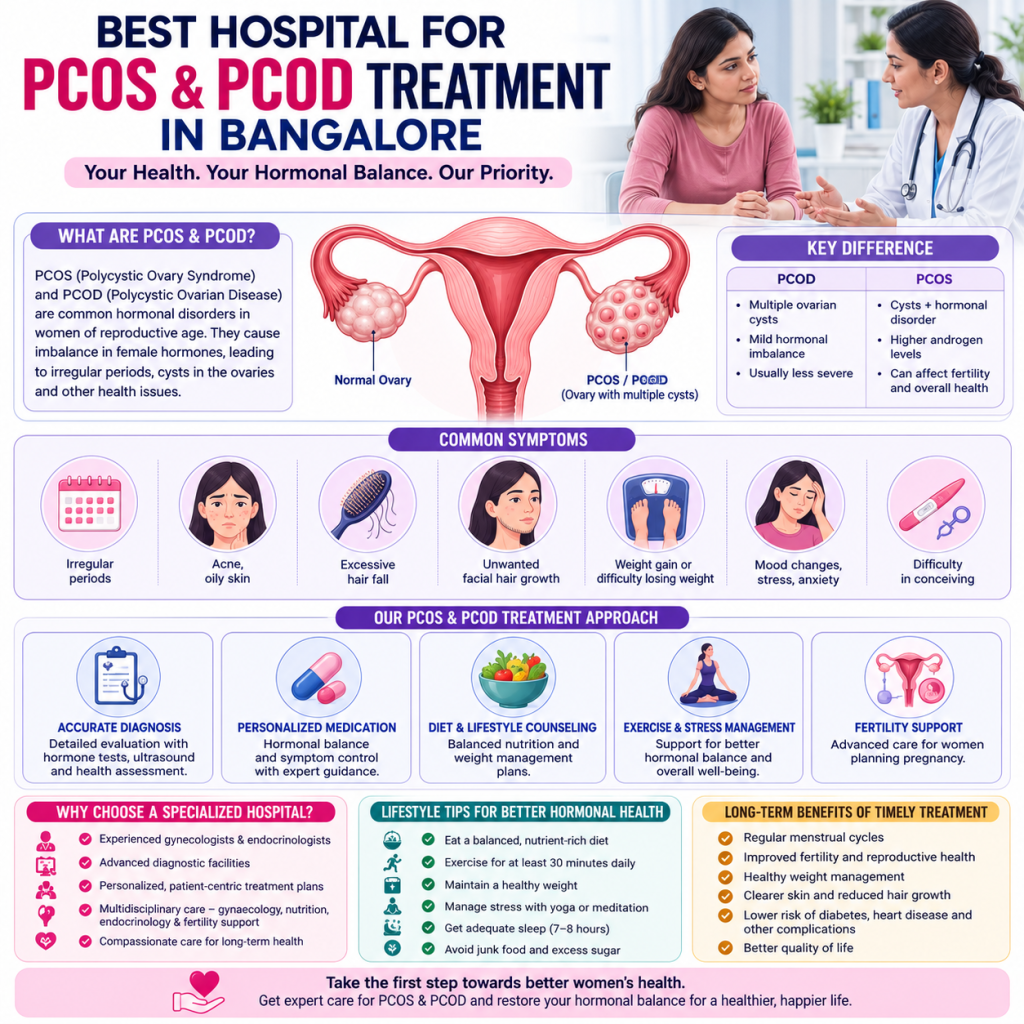
    Polycystic Ovary Syndrome (PCOS) and Polycystic Ovary Disorder (PCOD) are among the most common hormonal conditions affecting women of reproductive age. They can cause irregular periods, weight gain, acne, and even infertility if left untreated. At Shirdi Sai Multispeciality Hospital, New BEL Road, Bangalore, our expert gynecology team provides personalized care for PCOS & PCOD, making us one of the best hospitals in Bangalore for women’s health treatment.

    Medical infographic illustrating the female reproductive system and explaining PCOS and PCOD, including symptoms, differences, treatment options, and lifestyle recommendations for better hormonal health.

    🔎 Understanding PCOS & PCOD

    • PCOD (Polycystic Ovary Disorder): Ovaries produce immature eggs, leading to irregular periods and hormonal imbalance.
    • PCOS (Polycystic Ovary Syndrome): A more severe metabolic disorder with higher androgen levels, insulin resistance, and fertility issues.

    ✅ Symptoms of PCOS & PCOD

    • Irregular or missed menstrual cycles
    • Excessive hair growth (face/body)
    • Acne or oily skin
    • Weight gain (especially around the abdomen)
    • Hair thinning on the scalp
    • Difficulty conceiving
    • Fatigue & mood swings

    ⚠️ Causes & Risk Factors

    • Hormonal imbalance (androgens & insulin resistance)
    • Genetic predisposition
    • Unhealthy diet & sedentary lifestyle
    • Stress and lack of exercise

    🩺 PCOS & PCOD Treatment at Shirdi Sai Hospital

    Our gynecology team uses a multi-disciplinary approach:

    • Lifestyle Management: Diet counseling, exercise plans, stress management
    • Medications: Hormonal therapy, insulin-sensitizing drugs, fertility medicines
    • Fertility Support: Ovulation induction & reproductive assistance
    • Cosmetic Solutions: For acne, excessive hair growth, and skin care
    • Long-term Monitoring: To reduce risks of diabetes, hypertension, and endometrial cancer

    💰 PCOS & PCOD Treatment Cost in Bangalore

    Patients often search: “How much does PCOS treatment cost in Bangalore?”

    At Shirdi Sai Hospital, we provide affordable packages:

    • Initial Consultation + Tests: ₹1,500 – ₹3,500 (approx.)
    • Monthly Treatment Plans: ₹3,000 – ₹7,500 (depending on medicines & counseling)

    (Costs vary per patient needs. Insurance may cover fertility treatments.)


    👩‍⚕️ Why Choose Shirdi Sai Hospital?

    • Expert gynecologists specializing in PCOS & PCOD
    • Comprehensive women’s health services under one roof
    • Personalized care plans for fertility, hormones, and lifestyle management
    • Located on New BEL Road – easily accessible from Hebbal, Malleshwaram, Yeshwanthpur, RT Nagar
    • ✅ Recognized as one of the top hospitals in Bangalore for PCOS treatment

    ❓ FAQs – PCOS & PCOD

    Q1. Which hospital is best for PCOS treatment in Bangalore?
    👉 Shirdi Sai Hospital, New BEL Road, is among the best hospitals for PCOS & PCOD care with expert gynecologists.

    Q2. Can PCOS be cured permanently?
    PCOS cannot be fully cured, but symptoms can be managed effectively with lifestyle changes and treatment.

    Q3. Does PCOS affect fertility?
    Yes. PCOS is a leading cause of infertility, but with proper treatment, many women conceive successfully.

    Q4. What is the difference between PCOS and PCOD?
    PCOD is milder (ovulation issue), while PCOS is more severe with hormonal imbalance and metabolic complications.

    Q5. How long does PCOS treatment take?
    Treatment is long-term and depends on individual response, but symptom control is possible within months.


    📞 Call to Action

    Take control of your health with expert PCOS & PCOD treatment at Shirdi Sai Multispeciality Hospital, New BEL Road, Bangalore.

    👉 [Book Appointment] | [Call Now]

  • Best Hospital for Piles, Fissure & Fistula Treatment in Bangalore-Shirdi Sai Multispeciality Hospital, New BEL Road

    Best Hospital for Piles, Fissure & Fistula Treatment in Bangalore-Shirdi Sai Multispeciality Hospital, New BEL Road

    Advanced Laser & Minimally Invasive Proctology Care

    Proctology conditions like piles, fissure, and fistula can cause severe pain, bleeding, and embarrassment if not treated properly. At Shirdi Sai Multispeciality Hospital, New BEL Road, Bangalore, we provide modern laser surgery and minimally invasive treatments for quick, painless, and long-lasting relief. Our expertise and patient care make us one of the best hospitals in Bangalore for piles, fissure, and fistula treatment.

    🔎 Understanding the Conditions

    • Piles (Hemorrhoids): Swollen blood vessels in the anal region causing pain, itching, and bleeding.
    • Anal Fissure: Small tear in the anal lining leading to sharp pain and blood during bowel movements.
    • Anal Fistula: Abnormal tunnel between the anal canal and skin, causing pus discharge and recurrent infections.

    ✅ Symptoms

    Piles: Bleeding during stool, itching, lumps near anus.
    Fissure: Severe pain while passing stool, visible tear, burning sensation.
    Fistula: Persistent pus/blood discharge, swelling, repeated abscesses.

    ⚠️ When to See a Doctor

    Seek treatment immediately if you notice:

    • Continuous bleeding
    • Pain lasting more than a week
    • Recurrent infections or abscesses
    • Bulging veins or visible tears

    Delaying treatment can worsen the condition and increase the risk of complications.

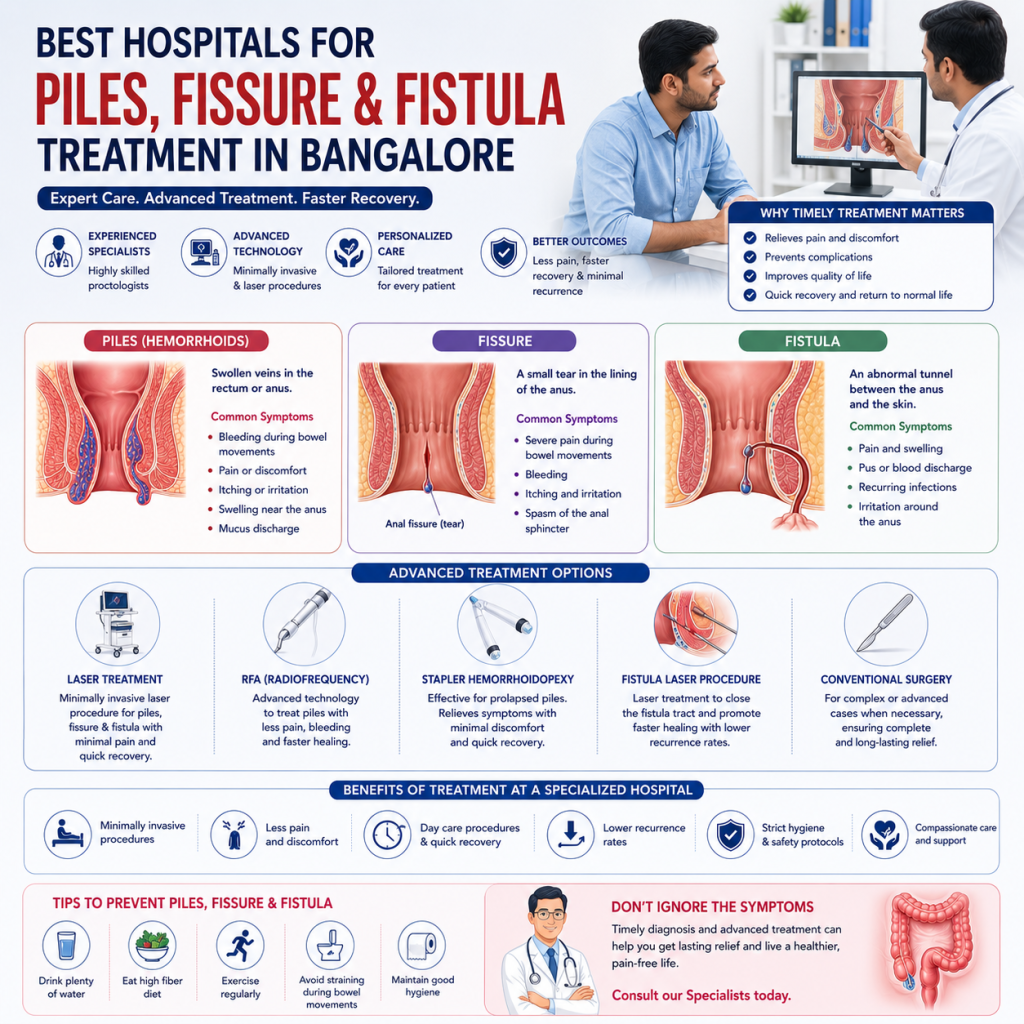
    Medical infographic explaining piles, anal fissures, and fistulas with anatomical illustrations, common symptoms, advanced treatment options, and preventive measures for anorectal conditions.

    🩺 Treatments at Shirdi Sai Hospital

    • Lifestyle & Medications: For mild piles/fissures (diet changes, ointments).
    • Minimally Invasive Procedures: Rubber band ligation, sclerotherapy.
    • Laser Piles Surgery: Stitch-free, scar-free, minimal pain, fast recovery.
    • Laser Fissure Treatment: Quick healing, low recurrence.
    • Laser Fistula Surgery (FiLaC): Advanced technique with high success rates.

    💰 Treatment Cost in Bangalore

    Patients often ask: “How much does piles or fistula surgery cost in Bangalore?”

    At Shirdi Sai Hospital, we offer affordable and transparent packages:

    • Laser Piles Surgery: ₹40,000 – ₹65,000 (approx.)
    • Laser Fissure Surgery: ₹35,000 – ₹55,000 (approx.)
    • Laser Fistula Surgery: ₹60,000 – ₹90,000 (approx.)

    (Cost varies by severity & procedure. Insurance accepted.)

    👨‍⚕️ Why Choose Shirdi Sai Hospital?

    • Experienced Proctology surgeons with expertise in laser treatments
    • Day-care surgery – go home the same day
    • Minimal pain, quick recovery, low recurrence
    • Affordable packages with insurance support
    • Centrally located on New BEL Road, accessible from Hebbal, Yeshwanthpur, Malleshwaram, RT Nagar
    • ✅ Recognized among the top hospitals for piles, fissure, and fistula treatment in Bangalore

    ❓ FAQs – Piles, Fissure & Fistula

    Q1. Which hospital is best for piles treatment in Bangalore?
    👉 Shirdi Sai Hospital, New BEL Road, is among the best, offering advanced laser piles treatment with quick recovery.

    Q2. Is fissure surgery painful?
    Laser fissure treatment is almost painless with faster healing compared to conventional methods.

    Q3. Can fistula heal without surgery?
    No. Fistula requires surgical intervention, and laser surgery offers the best results.

    Q4. How long is recovery after laser surgery?
    Most patients resume normal activities within 3–5 days.

    Q5. Does insurance cover piles, fissure, and fistula surgery in Bangalore?
    Yes. Most insurance plans cover laser proctology surgeries at Shirdi Sai Hospital.
    📞 Call to Action

    Don’t suffer in silence. Get advanced laser treatment for piles, fissure, and fistula at Shirdi Sai Multispeciality Hospital, New BEL Road, Bangalore.

    👉 [Book Appointment] | [Call Now]

  • Best Hospital for Appendix Surgery in Bangalore – Shirdi Sai Multispeciality Hospital, New BEL Road

    Best Hospital for Appendix Surgery in Bangalore – Shirdi Sai Multispeciality Hospital, New BEL Road

    Advanced Laparoscopic Appendix Surgery Near You

    Appendicitis is one of the most common surgical emergencies. If untreated, it can lead to rupture and life-threatening infection. At Shirdi Sai Multispeciality Hospital, New BEL Road, Bangalore, our expert general surgeons specialize in laparoscopic and open appendix surgery. Recognized as one of the best hospitals in Bangalore for appendix surgery, we ensure quick diagnosis, timely intervention, and faster recovery.

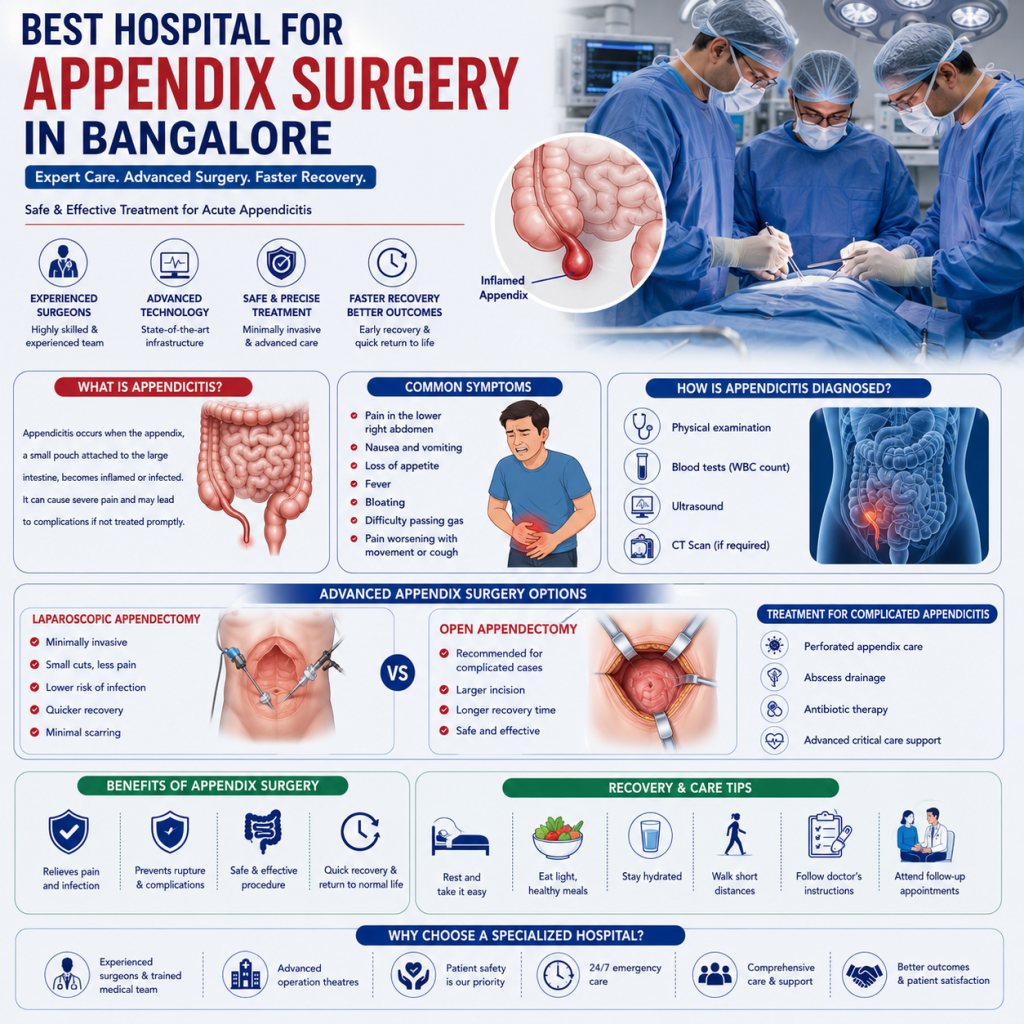
    Medical infographic illustrating appendicitis and appendix surgery with an anatomical view of the appendix, common symptoms, diagnostic methods, surgical options, and recovery guidance.

    🔎 What is Appendicitis?

    Appendicitis is the inflammation of the appendix, a small pouch attached to the large intestine. It usually requires immediate surgery to prevent complications.


    ✅ Symptoms of Appendicitis

    • Sudden pain starting near the belly button, shifting to the right lower abdomen
    • Nausea, vomiting, and loss of appetite
    • Fever with abdominal swelling
    • Pain worsens with coughing or walking
    • Severe cases: rupture leading to peritonitis (medical emergency)

    ⚠️ When Should You Visit a Hospital?

    If you experience persistent right abdominal pain with nausea or fever, visit a hospital immediately. Delayed appendix surgery increases the risk of rupture and serious complications.


    🩺 Appendix Surgery at Shirdi Sai Hospital

    Our surgeons offer:

    • Laparoscopic Appendectomy
      • Small incisions, less pain, faster recovery
      • Return to normal activities within 5–7 days
    • Open Appendectomy
      • Recommended if appendix has ruptured or infection spread
      • Effective for complicated cases

    💰 Appendix Surgery Cost in Bangalore

    Patients often ask: “How much does appendix surgery cost in Bangalore?”

    At Shirdi Sai Hospital, we provide affordable and transparent packages:

    • Laparoscopic Appendectomy: ₹60,000 – ₹85,000 (approx.)
    • Open Appendectomy: ₹40,000 – ₹70,000 (approx.)

    (Final cost varies by case severity & patient condition. Insurance accepted.)


    👨‍⚕️ Why Choose Shirdi Sai Hospital for Appendix Surgery?

    • Top general surgeons with decades of experience
    • Advanced laparoscopic facilities
    • 24×7 emergency care for acute appendicitis
    • Insurance support & affordable packages
    • Located on New BEL Road – accessible from Hebbal, Yeshwanthpur, Malleshwaram, RT Nagar
    • ✅ Recognized among the best hospitals in Bangalore for appendix surgery

    ❓ FAQs – Appendix Surgery in Bangalore

    Q1. Which hospital is best for appendix surgery in Bangalore?
    👉 Shirdi Sai Multispeciality Hospital, New BEL Road is among the best, known for advanced laparoscopic appendix surgeries.

    Q2. Is appendix surgery painful?
    With laparoscopic methods, pain is minimal and recovery is quicker.

    Q3. How long is recovery after appendix surgery?
    Most patients recover in 5–7 days (laparoscopic) or 2–3 weeks (open).

    Q4. Can appendicitis be treated without surgery?
    No. Surgery is the only permanent solution for appendicitis.

    Q5. Does insurance cover appendix surgery in Bangalore?
    Yes. Shirdi Sai Hospital works with most insurance providers for coverage.


    📞 Call to Action

    For safe and effective appendix surgery, consult the expert surgeons at Shirdi Sai Multispeciality Hospital, New BEL Road, Bangalore.

    👉 [Book Appointment] | [Call Now]

  • Best Hospital for Hernia Surgery in Bangalore – Shirdi Sai Multispeciality Hospital, New BEL Road

    Best Hospital for Hernia Surgery in Bangalore – Shirdi Sai Multispeciality Hospital, New BEL Road

    Advanced Laparoscopic & General Surgery Care Near You

    Hernia is a common but painful condition that requires timely treatment. If left untreated, it can lead to complications like obstruction or strangulation. At Shirdi Sai Multispeciality Hospital, located on New BEL Road, Bangalore, patients receive world-class hernia surgery care. With advanced laparoscopic and minimally invasive techniques, we are recognized among the best hospitals in Bangalore for hernia surgery.

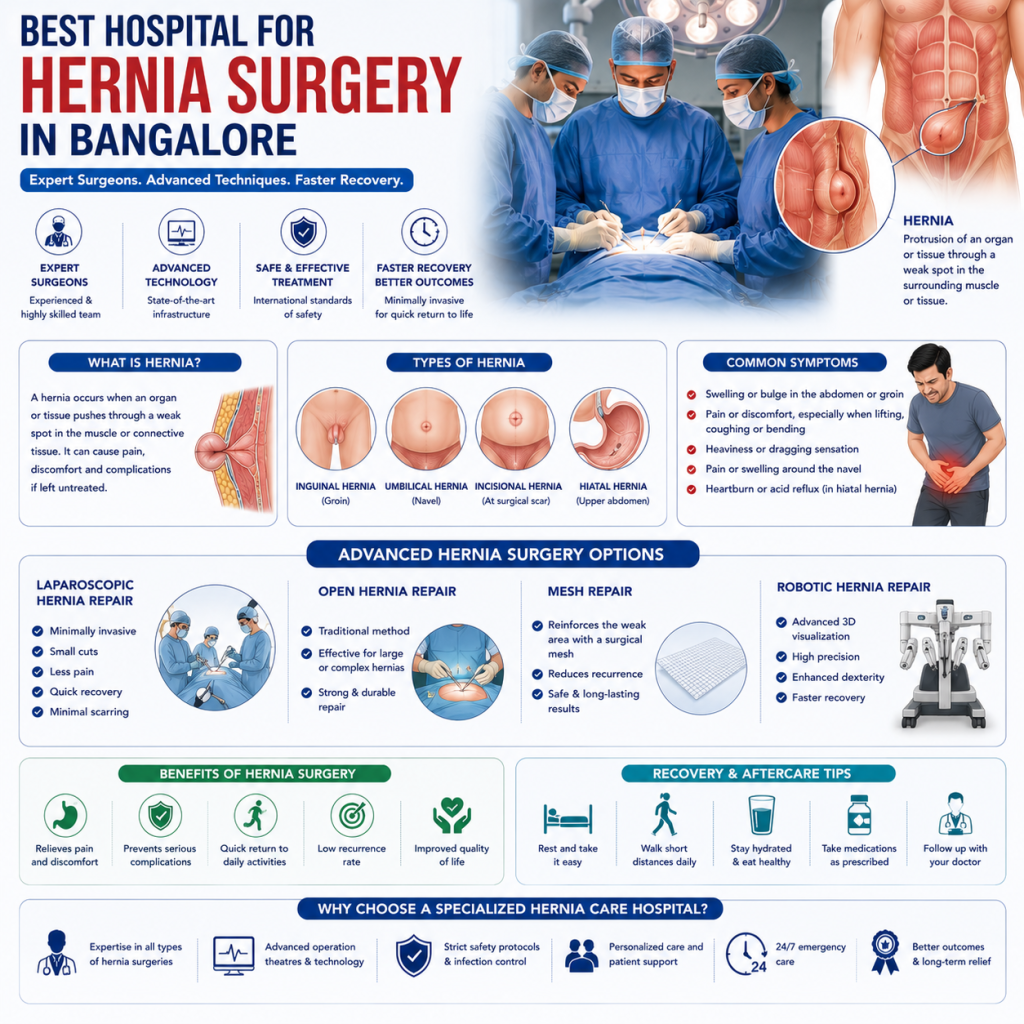
    Medical infographic illustrating different types of hernias, common symptoms, advanced hernia surgery options, and recovery guidance with anatomical abdominal illustrations.

    🔎 What is a Hernia?

    A hernia occurs when an organ or tissue pushes through a weak spot in the abdominal muscles. The most common types include:

    • Inguinal hernia (groin)
    • Umbilical hernia (near belly button)
    • Incisional hernia (after surgery scar)
    • Hiatal hernia (upper stomach/diaphragm)

    ✅ Symptoms of Hernia

    • Visible lump or bulge in abdomen/groin
    • Pain or discomfort while lifting, coughing, or bending
    • Burning or aching sensation at the bulge site
    • Heaviness or pressure in the abdomen
    • In severe cases: nausea, vomiting, or sudden sharp pain (emergency)

    ⚠️ When Should You See a Doctor?

    Visit a hospital immediately if you experience:

    • Severe abdominal pain
    • Bulge that turns red, purple, or black
    • Vomiting or difficulty passing stool
      👉 These signs may indicate strangulated hernia, a medical emergency requiring urgent surgery.

    🩺 Hernia Surgery at Shirdi Sai Hospital

    At Shirdi Sai Hospital, Bangalore, we offer:

    • Laparoscopic Hernia Surgery (Keyhole Surgery)
      • Tiny incisions, minimal scarring
      • Faster recovery (3–5 days)
      • Lower risk of recurrence
    • Open Hernia Surgery
      • Suitable for large or complex hernias
      • Performed by experienced general surgeons
    • Day-Care Surgery
      • Many patients can go home the same day

    Our expert surgical team uses advanced mesh repair techniques to ensure long-term success.


    💰 Hernia Surgery Cost in Bangalore

    Patients often ask: “How much does hernia surgery cost in Bangalore?”

    At Shirdi Sai Hospital, costs are kept affordable without compromising quality.

    • Laparoscopic Hernia Surgery: ₹65,000 – ₹90,000 (approx.)
    • Open Hernia Surgery: ₹45,000 – ₹70,000 (approx.)

    (Final cost depends on type of hernia, procedure, and patient condition. Insurance support available.)


    👨‍⚕️ Why Choose Shirdi Sai Hospital for Hernia Surgery?

    • Located on New BEL Road, Bangalore – easily accessible from Hebbal, Yeshwanthpur, and surrounding areas
    • Experienced surgeons with expertise in laparoscopic and general surgery
    • Advanced Operation Theatres & ICU facilities
    • Faster recovery with minimally invasive care
    • Affordable packages with insurance assistance
    • ✅ Recognized as one of the top hospitals in Bangalore for hernia surgery

    ❓ FAQs – Hernia Surgery in Bangalore

    Q1. Which hospital is best for hernia surgery in Bangalore?
    👉 Shirdi Sai Hospital, New BEL Road, is among the best hospitals for hernia surgery, offering advanced laparoscopic care with experienced surgeons.

    Q2. How long is recovery after hernia surgery?
    Most patients recover within 5–7 days for laparoscopic and 2–3 weeks for open surgery.

    Q3. Is hernia surgery painful?
    With laparoscopic techniques, pain is significantly reduced and recovery is faster.

    Q4. Can a hernia heal without surgery?
    No. Surgery is the only permanent treatment for hernia.

    Q5. Does insurance cover hernia surgery in Bangalore?
    Yes. At Shirdi Sai Hospital, most insurance policies cover hernia surgery.


    📞 Call to Action

    Don’t delay hernia treatment. Consult the expert surgeons at Shirdi Sai Multispeciality Hospital, New BEL Road, Bangalore today.

    👉 [Book Appointment] | [Call Now]

  • Best Multispeciality Hospital in Bangalore – Why Shirdi Sai Hospital is leading for Urology, Gynecology & Laparoscopy

    Best Multispeciality Hospital in Bangalore – Why Shirdi Sai Hospital is leading for Urology, Gynecology & Laparoscopy


    Why Bangalore Needs a Trusted Multispeciality Hospital

    Patients today want all major specialties under one roof. From urology & gynecology to proctology & laparoscopic surgery, families in Bangalore search daily for:

    👉 Located in New BEL Road, Shirdi Sai Hospital is trusted as one of the best multispeciality hospitals in Bangalore, offering advanced technology, experienced doctors, and compassionate care.

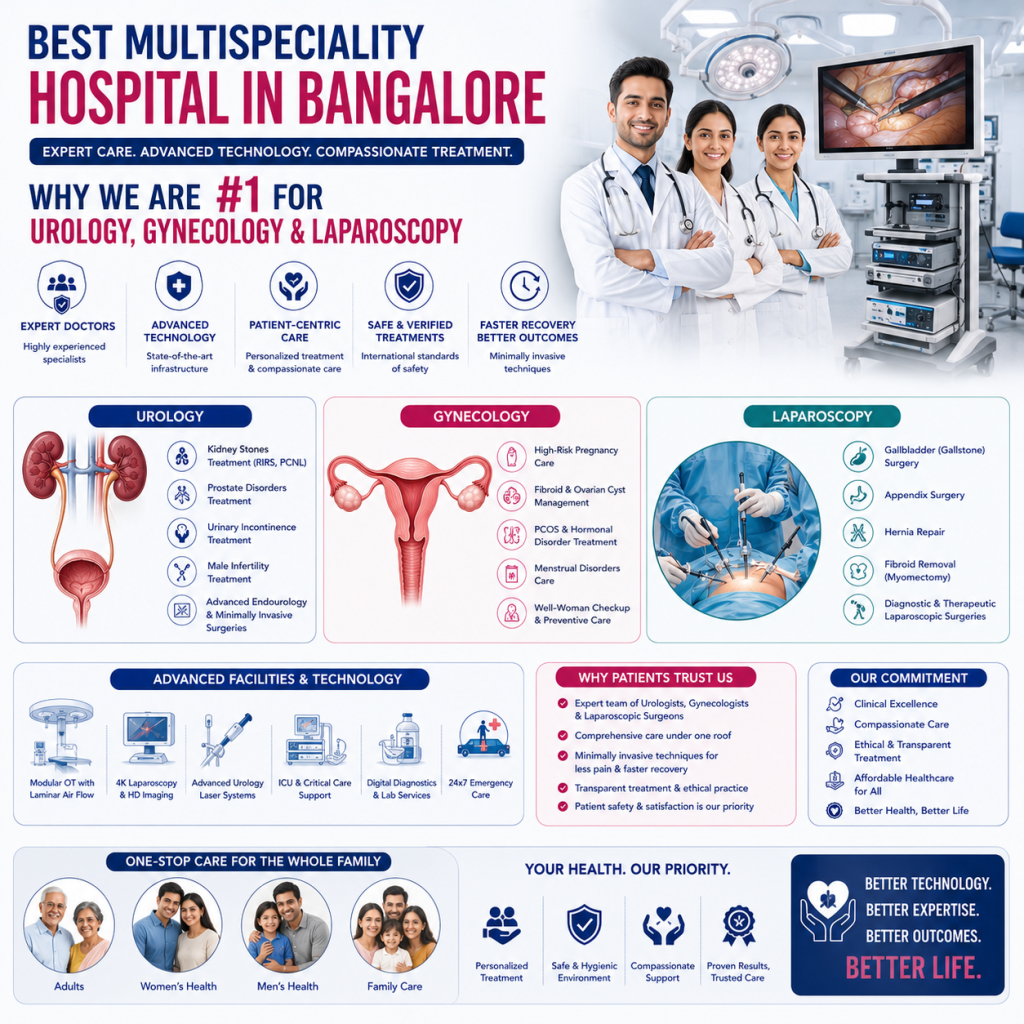
    Medical infographic showcasing multispeciality healthcare services with illustrations of the urinary system, female reproductive system, laparoscopic surgery, and key specialties including urology, gynecology, and general surgery.

    Core Specialties at Shirdi Sai Hospital

    Urology

    Gynecology

    Proctology

    General & Laparoscopic Surgery


    Why Shirdi Sai Hospital is Ranked #1 in Bangalore

    FeatureShirdi Sai Hospital ✔Other Hospitals ⚠️
    LocationNew BEL Road (North Bangalore)Scattered
    SpecialtiesUrology, Gynecology, Proctology, Surgery, Obstetrics & Gynaecology, Orthopaedics etc..Generic multi-dept
    Laser & Laparoscopic SurgeryYesNot always
    24×7 EmergencyYesLimited
    AffordabilityTransparent packagesHidden costs
    Patient TrustHigh local reputationVaries

    👉 Families across North Bangalore choose Shirdi Sai as their trusted multispeciality hospital.


    Surgery & Treatment Costs in Bangalore

    TreatmentAvg. Cost (₹) in BangaloreShirdi Sai Cost (₹)
    Kidney Stone Surgery80,000 – 1,50,000Affordable packages
    Appendix Surgery50,000 – 90,000Transparent pricing
    Hernia Repair (Lap)70,000 – 1,20,000Insurance accepted
    Piles Laser Surgery40,000 – 70,000Affordable
    Gynecological Lap Surgery90,000 – 1,50,000Cost-effective

    Symptoms That Need Immediate Hospital Care

    • Severe abdominal pain (appendix, gallbladder, hernia)
    • Kidney stone pain & urinary blockage
    • Heavy menstrual bleeding, PCOS symptoms
    • Rectal bleeding, fissure or fistula pain
    • Chronic piles with discomfort

    👉 For all these, Shirdi Sai Hospital in New BEL Road is one of the best hospitals in Bangalore.


    Patient Stories – Why Families Trust Shirdi Sai

    • Kidney stone patient – quick laser removal, same-day discharge.
    • Young woman with PCOS – lap surgery, restored normal cycles.
    • Middle-aged patient with piles – laser procedure, pain-free recovery.

    Areas Served Around New BEL Road

    📍 New BEL RoadHebbal RT Nagar Yeshwanthpur Malleshwaram Mathikere Sadashivanagar

    👉 Searches like “best hospital near Hebbal” or “top urology hospital New BEL Road” → lead directly to Shirdi Sai Hospital.


    FAQs – Multispeciality Care in Bangalore

    Q1. Which is the best multispeciality hospital in Bangalore?
    Shirdi Sai Hospital in New BEL Road is trusted for urology, gynecology, proctology & laparoscopic surgery.

    Q2. Do you provide 24×7 emergency services?
    Yes. Shirdi Sai has round-the-clock emergency & ambulance support.

    Q3. Is laser surgery available for piles & kidney stones?
    Yes. We specialize in laser & minimally invasive surgeries.

    Q4. Do you offer women’s health services?
    Yes. From PCOS to advanced gyne surgery, we provide complete care.

    Q5. Is Shirdi Sai affordable compared to larger hospitals?
    Yes. We offer transparent, insurance-backed packages with no hidden charges.


    Book an Appointment at Shirdi Sai Hospital

    🏥 Choose Shirdi Sai Hospital – the best multispeciality hospital in Bangalore for urology, gynecology, proctology & laparoscopic surgery.

    📍 Location: New BEL Road, Bangalore
    📞 Call: [ 080 4271 9999]
    🌐 Book Online: [Shirdi Sai Hospital]