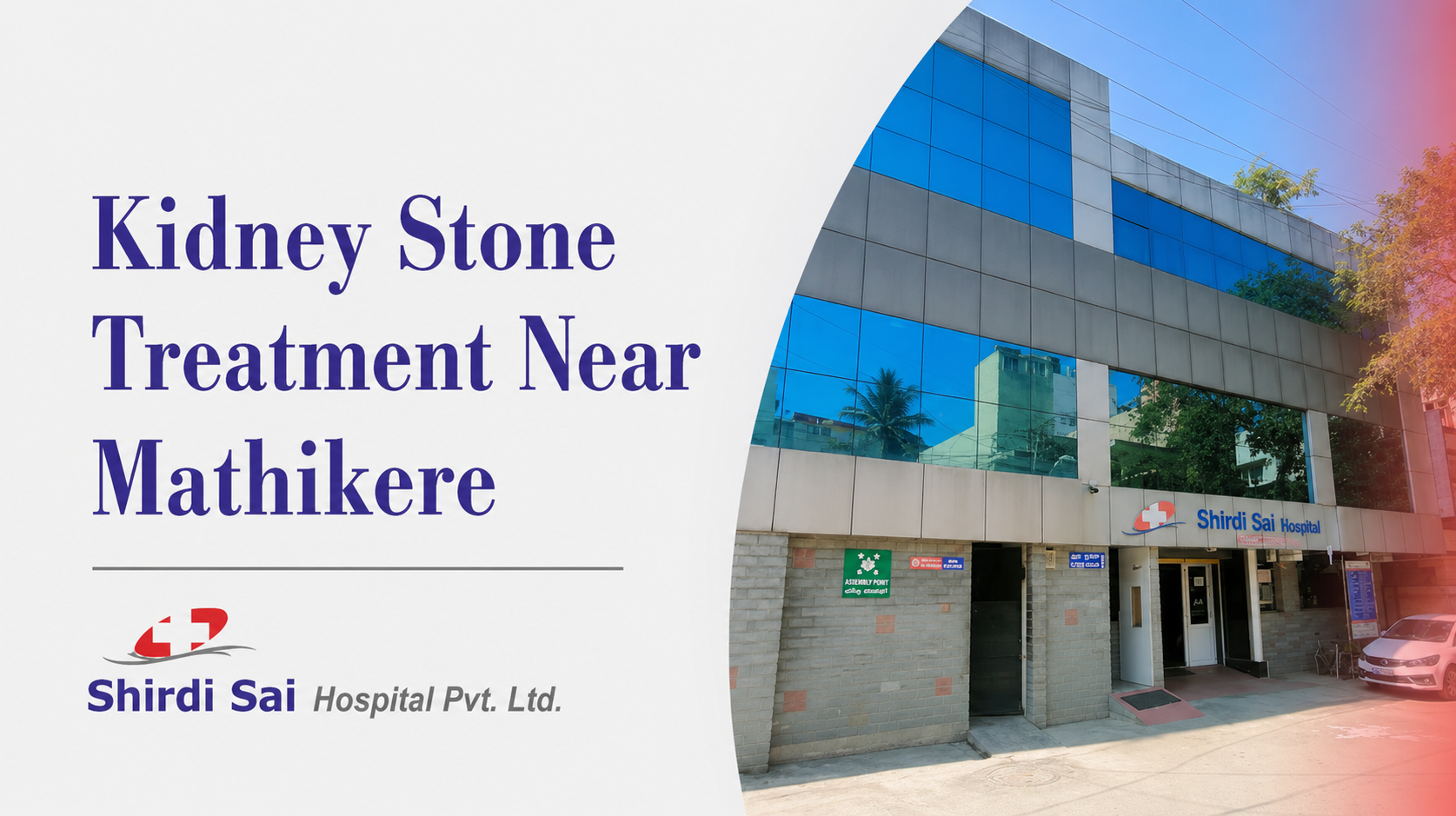
Patients looking for kidney stone treatment near Mathikere can contact Shirdi Sai Hospital for urology evaluation at its New BEL Road facility. Kidney-stone care begins by identifying the stone’s size, location, effect on urine flow, infection risk and impact on kidney function. Some small stones may pass with medical guidance, while stones causing severe pain, obstruction, infection or persistent symptoms may require a procedure. Depending on clinical suitability, treatment may involve medicines, ESWL, ureteroscopy, laser-based stone removal, RIRS, PCNL or temporary urinary drainage. A urologist should recommend the approach after reviewing symptoms, tests and scan findings.
When Should a Kidney Stone Be Evaluated?
Kidney stones are hard deposits that form from minerals and salts in the urine. A stone may remain inside the kidney without causing symptoms. Pain often begins when it moves, irritates the urinary tract or blocks the flow of urine.
Arrange a urology consultation if you have:
- Sharp pain in the side or back
- Pain moving towards the lower abdomen or groin
- Burning or pain while passing urine
- Blood in the urine
- Frequent or urgent urination
- Nausea or vomiting with side pain
- Repeated kidney-stone episodes
- A stone found during an ultrasound or CT scan
- Reduced urine output
- Symptoms that continue despite initial treatment
These symptoms do not confirm a kidney stone. Urinary infections, kidney infections, abdominal conditions and other urinary problems can produce overlapping symptoms. Medical evaluation helps establish the cause.
Kidney Stone Pain and Other Common Symptoms
Kidney-stone pain is often described as severe, wave-like pain affecting one side of the back or abdomen. It may move towards the groin as the stone travels through the ureter.
Other possible symptoms include:
- Restlessness because no position feels comfortable
- Pink, red or brown urine
- Cloudy or strong-smelling urine
- Pain while urinating
- Frequent attempts to pass urine
- Nausea
- Vomiting
- Fever or chills when infection is present
Small stones may sometimes pass without causing noticeable symptoms. Larger stones or stones blocking the urinary tract may cause severe pain, bleeding or reduced urine flow.
How Kidney Stones Are Diagnosed
Kidney-stone treatment should not be selected based only on pain severity or an older scan. The urologist may need to identify the current size, location and effect of the stone.
Medical history and examination
The doctor may ask about:
- When the pain started
- Where the pain is located
- Whether the pain moves towards the groin
- Fever, chills, nausea or vomiting
- Changes in urine colour
- Difficulty passing urine
- Previous kidney stones
- Previous stone procedures
- Urinary infections
- Current medicines
- Diabetes, blood pressure or kidney conditions
Urine tests
A urine test may identify blood, crystals, white blood cells or bacteria. A urine culture may be advised when an infection is suspected.
Blood tests
Blood tests may be used to assess kidney function and identify infection or other medical factors that may affect treatment.
Imaging
An ultrasound may show stones, kidney swelling or urinary obstruction. A CT scan may be recommended when the doctor needs more precise information about stone size, location or blockage.
The investigation plan depends on the patient’s symptoms, age, medical history and clinical condition.
Does Every Kidney Stone Need Surgery?
No. Some small stones may pass through the urinary tract without a procedure. Observation may be considered when pain is manageable, kidney function is stable, urine is draining and there are no signs of infection.
A procedure may be considered when:
- The stone is unlikely to pass
- Pain remains severe or repeatedly returns
- The stone blocks urine flow
- Kidney swelling is present
- Fever or urinary infection occurs with obstruction
- Vomiting prevents adequate fluid intake
- Kidney function is affected
- A stone remains in place during follow-up
- There are multiple, large or complex stones
The treatment decision depends on more than stone size alone. Location, hardness, anatomy, infection, kidney function and the patient’s general health also matter.
Kidney Stone Treatment Options
Shirdi Sai Hospital’s current urology content describes kidney-stone pathways that may include observation, medicines, ESWL, laser-based procedures, RIRS and PCNL. The appropriate option must be confirmed after clinical and imaging evaluation.
Observation and medical management
Some small stones may pass naturally. The doctor may recommend pain relief, medicines that support stone passage in selected patients and follow-up imaging.
Patients should not assume that drinking excessive water during severe obstruction will force a stone to pass. Fluid and medicine advice should be based on the patient’s condition, especially when vomiting, reduced urination or kidney disease is present.
ESWL
Extracorporeal Shock Wave Lithotripsy uses shock waves from outside the body to break selected stones into smaller fragments.
ESWL may be considered when:
- The stone is of a suitable size
- Its position can be targeted
- The stone is likely to respond to shock waves
- There is no uncontrolled infection
- The urinary tract can allow fragments to pass
ESWL is not suitable for every stone. Stone hardness, position, body structure, obstruction and other clinical factors can affect the decision.
Ureteroscopy and laser lithotripsy
Ureteroscopy involves passing a thin scope through the natural urinary passage. The stone can be viewed directly and may be broken using laser energy.
This approach may be considered for:
- Stones lodged in the ureter
- Stones causing persistent obstruction
- Selected kidney stones
- Stones unlikely to pass naturally
- Cases where another treatment is unsuitable or has not worked
A temporary stent may sometimes be placed to maintain urine drainage.
RIRS
Retrograde Intrarenal Surgery uses a flexible scope passed through the urinary tract to reach a stone inside the kidney. Laser energy may then be used to break the stone into smaller fragments.
RIRS may be discussed for selected kidney stones where flexible endoscopic access is appropriate. It may not be the preferred choice for every large or complex stone.
PCNL
Percutaneous Nephrolithotomy reaches the kidney through a small tract created through the back. It is commonly considered for larger, complex or high-volume stone burdens.
The need for PCNL depends on stone size, shape, location, anatomy and the likelihood that less invasive methods will clear the stone adequately.
Temporary drainage or stent placement
When a stone causes obstruction with infection or significant kidney pressure, the immediate priority may be to restore urine drainage rather than remove the stone during the same step.
A ureteric stent or another drainage method may be used before definitive stone treatment.
Comparing Common Kidney Stone Treatments
| Treatment | How it works | May be considered for | Important limitation |
| Medical management | Supports natural stone passage in selected patients | Smaller stones without infection or significant obstruction | Requires monitoring and may not work for every stone |
| ESWL | Shock waves break the stone from outside the body | Selected kidney or upper urinary stones | Results depend on size, location and hardness |
| Ureteroscopy or URSL | A scope reaches a ureteric stone through the urinary passage | Stones lodged in the ureter | A stent may be needed |
| RIRS | A flexible scope and laser reach selected kidney stones | Stones inside the kidney suitable for endoscopic access | Some cases may need staged treatment |
| PCNL | The stone is removed through a small tract in the back | Larger or complex kidney stones | More invasive than ESWL or endoscopic treatment |
| Temporary drainage | A stent or drainage tube relieves obstruction | Infection, blockage or kidney pressure | Does not always remove the stone immediately |
No single method is automatically the best treatment. A urologist chooses an option by balancing stone clearance, safety, kidney drainage and the patient’s medical condition.
Kidney Stone Treatment for Patients from Mathikere
Shirdi Sai Hospital is located at No. 519, 2nd Main, Nethravathi Street, Devasandra, New BEL Road, Bengaluru 560054.
Patients from Mathikere may consider the hospital when they need:
- Assessment of sudden kidney-stone pain
- Review of an ultrasound or CT scan
- Evaluation of a stone that has not passed
- Treatment planning after repeated stone episodes
- A urology opinion about ESWL or laser treatment
- Assessment of a ureteric stone
- Evaluation of blood in the urine
- Treatment of urinary blockage
- Follow-up after a previous stone procedure
- Guidance on reducing recurrence risk
The hospital’s current urology content specifically identifies Mathikere among the nearby areas from which patients may seek urological care at its New BEL Road facility. Patients should confirm urologist and procedure availability before a planned visit.
Kidney Stone or Ureteric Stone: What Is the Difference?
A kidney stone is located within the kidney. A ureteric stone is a stone that has moved into the ureter, the narrow tube carrying urine from the kidney to the bladder.
A stone inside the kidney may not cause symptoms. A ureteric stone is more likely to produce sudden pain if it blocks urine flow.
This distinction matters because the treatment approach may change according to where the stone is located. Patients with a confirmed ureteric stone can read more about ureteric-stone treatment at Shirdi Sai Hospital.
What Happens Before a Kidney Stone Procedure?
Before recommending a procedure, the treating team may review:
- The latest scan
- Stone size and position
- Number of stones
- Urine-test findings
- Kidney-function results
- Signs of kidney swelling
- Symptoms of infection
- Existing medical conditions
- Current medicines
- Blood-thinning medicines
- Previous stone treatments
- Anaesthesia suitability
An infection may need to be treated or the kidney may need to be drained before stone removal is attempted.
Patients should tell the doctor about all medicines and supplements they take. Medicines should not be stopped unless the treating clinician advises it.
Recovery and Follow-Up
Recovery varies according to the procedure, stone burden, infection status and the patient’s health.
After treatment, patients may be advised about:
- Pain or discomfort expected during recovery
- Temporary urinary symptoms
- Stent-related symptoms when a stent is used
- Medicines and their duration
- Fluid intake
- Activity restrictions
- Follow-up imaging
- Stent-removal timing
- Stone analysis
- Tests for recurrent stone formation
Patients should not rely on a standard recovery promise. A person treated with ESWL may have different follow-up needs from someone who undergoes RIRS or PCNL.
Preventing Another Kidney Stone
Kidney stones can recur. Prevention advice should ideally be based on stone type, urine findings, medical history and dietary factors.
General measures may include:
- Drinking an appropriate amount of fluid
- Avoiding excessive salt
- Following personalised dietary advice
- Taking prescribed preventive medicine when indicated
- Completing recommended follow-up tests
- Analysing a passed or removed stone when advised
- Managing relevant medical conditions
Patients should not remove all calcium-containing foods or follow highly restrictive diets without professional advice. Different stone types may require different prevention plans.
When Kidney-Stone Symptoms Need Urgent Care
Seek prompt hospital assessment if kidney-stone symptoms occur with:
- Fever or chills
- Inability to pass urine
- Very low urine output
- Severe or uncontrolled pain
- Repeated vomiting
- Marked weakness or confusion
- Blood clots in the urine
- A single functioning kidney with acute symptoms
- Pregnancy with severe urinary symptoms
- Known kidney disease with worsening symptoms
A blocked urinary tract combined with infection can require urgent drainage and treatment. Do not wait for a routine appointment when pain is accompanied by fever, reduced urination or rapid deterioration.
What to Bring for a Urology Consultation
Carry the following when available:
- Ultrasound or CT reports
- Scan images or CDs
- Urine-test results
- Urine-culture reports
- Kidney-function tests
- Previous prescriptions
- Records of earlier stone procedures
- Discharge summaries
- A list of current medicines
- Information about allergies
- Diabetes and blood-pressure records
Do not delay emergency care solely to collect previous documents.
Why Consider Shirdi Sai Hospital for Kidney Stone Care?
Shirdi Sai Hospital provides a urology pathway from its New BEL Road facility for patients with kidney stones, ureteric stones and related urinary concerns.
The current hospital website describes:
- Urology evaluation for kidney and urinary conditions
- Kidney-stone diagnosis and treatment planning
- Medical and procedural treatment pathways
- ESWL for selected cases
- Laser-based stone procedures
- RIRS and PCNL consideration according to suitability
- Assessment of urinary obstruction and infection
- Emergency and hospital-based care when required
Treatment availability and suitability should be confirmed for the individual patient. The procedure offered depends on scan findings and clinical evaluation rather than the patient selecting a treatment by name.
Book a Kidney Stone Consultation Near Mathikere
Patients seeking kidney stone treatment near Mathikere can contact Shirdi Sai Hospital on +91 8088511289 to ask about the current urology appointment pathway.
When calling, mention:
- The main symptom
- How long the pain has been present
- Whether fever or vomiting is present
- Whether a scan has confirmed a stone
- Whether urine output has reduced
- Any previous kidney-stone treatment
For a planned consultation, use the hospital’s contact and appointment page.
For fever with stone pain, inability to pass urine, severe vomiting or rapidly worsening symptoms, seek urgent hospital care rather than waiting for an online enquiry response.
Frequently Asked Questions
Which doctor should I consult for kidney stones?
A urologist commonly evaluates kidney and ureteric stones, urinary blockage and stone-removal options. A nephrologist may be involved when the main concern is kidney function, metabolic disease or recurrent stone prevention. Some patients may require coordinated care.
Can a kidney stone pass without surgery?
Some small stones may pass naturally with appropriate medical guidance and monitoring. Passage depends on the stone’s size, location, urinary anatomy and whether obstruction or infection is present. A scan and clinical evaluation help determine whether observation is appropriate.
What is the best treatment for kidney stones?
There is no single treatment that is best for every patient. Medicines, ESWL, ureteroscopy, RIRS and PCNL are used in different situations. The choice depends on stone size, position, hardness, blockage, infection, kidney function and general health.
Is laser treatment used for every kidney stone?
No. Laser treatment may be used during ureteroscopy or RIRS for selected ureteric or kidney stones. Other stones may be suitable for observation, ESWL, PCNL or another treatment pathway.
When is a kidney stone an emergency?
Urgent assessment is needed when stone symptoms occur with fever, chills, inability to urinate, reduced urine output, uncontrolled pain, repeated vomiting or significant deterioration. Infection behind a urinary blockage can require urgent drainage.
Which scan is used to diagnose kidney stones?
Ultrasound and CT scans are commonly used. Ultrasound can identify stones, obstruction and kidney swelling. CT may provide more detailed information about the stone’s size and exact location. The doctor chooses the scan according to the clinical situation.
How can I book kidney stone treatment near Mathikere?
Call Shirdi Sai Hospital on +91 8088511289 and ask for the urology consultation pathway. Confirm the appointment, specialist availability and reports to carry before visiting the New BEL Road facility.