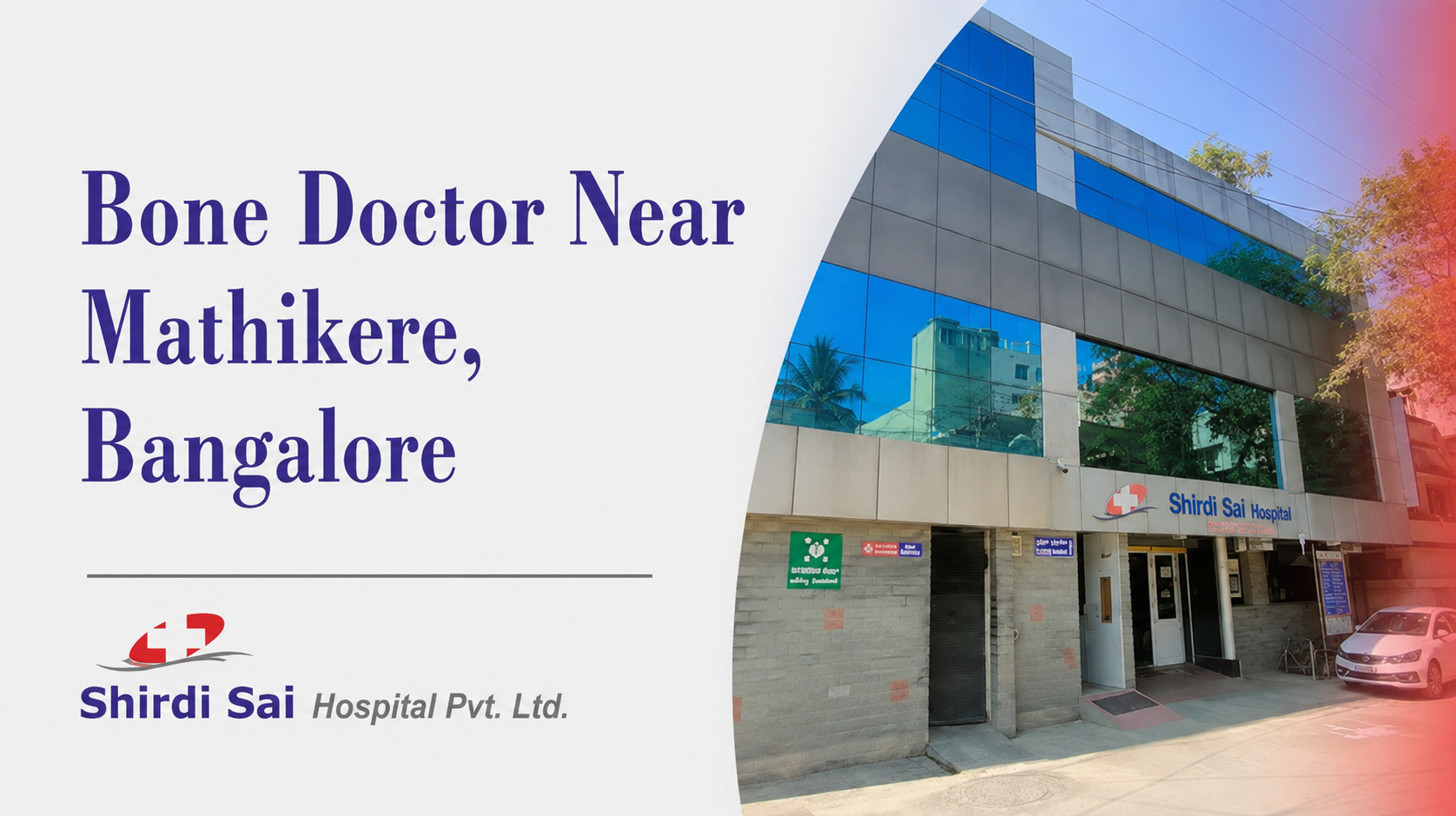
Patients looking for a bone doctor near Mathikere can contact Shirdi Sai Hospital for an orthopaedic consultation at its New BEL Road facility. An orthopaedic doctor evaluates problems involving bones, joints, muscles, ligaments, tendons and movement. Consultation may be appropriate for fractures, pain after a fall, persistent knee or shoulder pain, arthritis symptoms, back pain, sports injuries, joint swelling or difficulty walking. Treatment does not always involve surgery. The doctor may recommend medicines, support or immobilisation, physiotherapy, further imaging or a procedure depending on the examination and diagnosis. Call before a planned visit to confirm current appointment availability.
Is a Bone Doctor the Same as an Orthopaedic Doctor?
“Bone doctor” is a common patient term for an orthopaedic doctor or orthopaedic surgeon.
Orthopaedics covers more than bones. The specialty also evaluates conditions involving:
- Joints
- Muscles
- Ligaments
- Tendons
- Cartilage
- Spine-related movement problems
- Sports and activity-related injuries
An orthopaedic doctor may provide non-surgical care, perform procedures or recommend surgery when clinically necessary. Visiting an orthopaedic department does not automatically mean an operation will be advised.
When Should You Consult a Bone Doctor?
Consider arranging an orthopaedic consultation when pain, stiffness or an injury affects walking, sleep, work, exercise or routine activities.
Common reasons to consult include:
- Persistent knee, hip, shoulder or ankle pain
- Joint swelling or stiffness
- Pain after a fall or accident
- Difficulty bearing weight on a limb
- Reduced joint movement
- Back pain with leg symptoms
- Neck pain with arm symptoms
- A joint that locks, catches or gives way
- Repeated ankle sprains
- Pain following a sports injury
- A suspected fracture
- Persistent pain at a previous fracture site
- Arthritis symptoms affecting mobility
- Limping or difficulty climbing stairs
Orthopaedic evaluation is especially useful when symptoms keep returning, limit movement or do not improve with basic rest and activity modification. Limited movement, difficulty standing and symptoms affecting everyday function are recognised reasons to seek orthopaedic assessment.
Bone and Joint Conditions Evaluated at Shirdi Sai Hospital
The hospital’s published orthopaedic scope includes fracture care, arthritis, knee and hip concerns, shoulder problems, sports injuries, ligament and meniscus injuries, back pain, joint replacement evaluation and mobility-related conditions.
Fractures and Injuries
A fracture is a break in a bone. Symptoms may include pain, swelling, bruising, difficulty moving the injured area and, in some cases, visible deformity.
It may not always be possible to distinguish a fracture from a severe sprain based only on symptoms. An X-ray or another investigation may be required.
Fracture care can involve:
- Splinting
- Casting
- Bracing
- Repositioning the bone when required
- Follow-up imaging
- Surgical fixation in selected cases
- Rehabilitation after initial healing
The treatment depends on which bone is affected, whether the fracture has moved out of position, whether a joint is involved and whether nerves, blood vessels or surrounding tissue are affected. Not every fracture requires surgery.
Knee Pain and Arthritis
Knee pain may result from arthritis, overuse, muscle weakness, cartilage changes, a meniscus injury, ligament damage or another joint condition.
Arrange an assessment when knee pain is associated with:
- Swelling
- Stiffness
- Difficulty climbing stairs
- Pain while standing from a chair
- Locking or catching
- Knee instability
- Pain after twisting
- Reduced movement
- Difficulty bearing weight
- Symptoms that keep returning
Osteoarthritis commonly causes joint pain, stiffness and reduced movement. The knee and hip are frequently affected, but diagnosis depends on the symptoms, examination and imaging when required.
Back and Neck Pain
Back and neck pain may arise from muscle strain, posture-related stress, disc problems, arthritis, spinal narrowing, injury or nerve irritation.
An orthopaedic consultation may be appropriate when pain:
- Persists for several weeks
- Travels into an arm or leg
- Causes numbness or tingling
- Is associated with weakness
- Affects walking
- Begins after a fall or accident
- Worsens despite initial care
- Interferes with sleep or work
Severe back pain accompanied by loss of bladder or bowel control, numbness around the groin or rapidly increasing weakness needs urgent medical assessment.
Shoulder Pain and Stiffness
Shoulder pain can interfere with dressing, lifting, sleeping, driving and reaching overhead.
Possible causes include:
- Rotator cuff injury
- Frozen shoulder
- Tendon inflammation
- Arthritis
- Dislocation
- Fracture
- Sports or lifting injuries
A doctor may assess shoulder movement, strength, pain pattern and injury history before deciding whether an X-ray, ultrasound, MRI or another investigation is needed.
Sports Injuries
Sports injuries can affect muscles, tendons, ligaments, joints or bones.
Consultation may be useful for:
- Pain after twisting a knee or ankle
- Joint swelling after activity
- A popping sensation during injury
- Repeated joint instability
- Difficulty returning to sport
- A knee that gives way
- Locking or catching
- Pain that recurs during running or exercise
- Reduced strength or movement
Not every sports injury requires surgery. Treatment may involve temporary activity modification, support, medicines, rehabilitation or a procedure based on the diagnosis and the patient’s activity goals.
Hip Pain and Walking Difficulty
Hip pain can occur due to arthritis, injury, fracture or another joint condition.
Patients may need evaluation when they have:
- Pain in the hip or groin
- Difficulty walking
- Limping
- Hip stiffness
- Pain while climbing stairs
- Difficulty standing from a chair
- Pain after a fall
- Reduced hip movement
- Persistent symptoms despite initial treatment
Joint replacement may be considered only when the condition is advanced and symptoms significantly affect function. A consultation helps determine whether non-surgical care, rehabilitation or surgery may be appropriate.
What Happens During an Orthopaedic Consultation?
The consultation usually begins with questions about the symptoms and how they affect movement.
The doctor may ask:
- When the pain or injury began
- Whether symptoms followed a fall, twist or accident
- Where the pain is located
- Whether swelling is present
- Which movements worsen the pain
- Whether the joint locks or gives way
- Whether the patient can bear weight
- Whether there is numbness or weakness
- Which treatments have already been tried
- Whether there were earlier injuries or operations
- Which medicines the patient currently takes
The doctor may then assess:
- Joint movement
- Swelling and tenderness
- Limb alignment
- Muscle strength
- Joint stability
- Walking pattern
- Nerve function and circulation when relevant
The findings help determine whether investigations or immediate treatment are required.
Tests That May Be Recommended
Not every person with bone or joint pain needs an MRI or CT scan.
Possible investigations include:
X-ray
X-rays may help identify fractures, joint alignment changes, arthritis-related damage and some bone conditions.
MRI
MRI may be recommended when more detail is needed about ligaments, meniscus tissue, cartilage, tendons, discs or other soft tissues.
CT scan
A CT scan may be considered for selected complex fractures or where more detailed bone imaging would influence treatment planning.
Blood tests
Blood tests may be recommended when infection, inflammation, vitamin deficiency or another medical cause is suspected.
The investigation choice depends on the symptoms, examination and clinical question. Advanced scans are not automatically required at the first consultation.
How Are Orthopaedic Conditions Treated?
Treatment is based on the diagnosis rather than pain intensity alone.
Possible care options include:
- Medicines prescribed according to the patient’s health
- Temporary rest or activity modification
- Splints, casts or braces
- Physiotherapy
- Strengthening and mobility exercises
- Fracture reduction
- Joint injections in selected cases
- Arthroscopy for selected joint problems
- Ligament reconstruction when clinically appropriate
- Surgical fracture fixation
- Joint replacement evaluation
- Follow-up imaging and rehabilitation
Two patients with similar knee or shoulder pain may require different care because the underlying cause, age, activity level, examination and imaging findings may differ.
Patients should avoid repeatedly taking pain medicines without medical advice, particularly if they have kidney disease, stomach problems, bleeding risk, heart disease or other ongoing health conditions.
Consultation or Urgent Care?
| Situation | Suggested care pathway |
| Persistent joint pain without severe symptoms | Planned orthopaedic consultation |
| Repeated knee swelling or instability | Orthopaedic assessment |
| Pain after a minor injury but able to move safely | Timely consultation based on severity |
| Inability to bear weight after a fall | Urgent assessment |
| Visible deformity or suspected displaced fracture | Emergency evaluation |
| Open wound near a suspected fracture | Emergency evaluation |
| Numb, pale, cold or blue fingers or toes after injury | Emergency evaluation |
| Red, hot, rapidly swollen joint with fever | Urgent medical assessment |
| Severe back pain with bladder or bowel changes | Emergency assessment |
Very painful joints that cannot be moved or used, obvious deformity, numbness after injury and hot swollen joints with fever require prompt evaluation.
Bone Doctor for Patients from Mathikere
Shirdi Sai Hospital is located at:
No. 519, 2nd Main, Nethravathi Street, Devasandra, New BEL Road, Bengaluru, Karnataka 560054
The hospital’s current local and orthopaedic pages identify Mathikere among the nearby areas from which patients may approach its New BEL Road facility. Travel time should not be stated as fixed because the route and traffic conditions can vary.
Patients from Mathikere may consider the Orthopaedics department for:
- Joint pain evaluation
- Suspected fractures
- Pain after a fall
- Knee arthritis symptoms
- Shoulder stiffness
- Sports injuries
- Back or neck pain affecting movement
- Review of an X-ray or MRI
- A second clinical opinion
- Follow-up after fracture treatment
- Joint replacement evaluation
- Rehabilitation planning
Current orthopaedic doctor availability should be confirmed directly before travelling.
Confirm the Correct Shirdi Sai Hospital
Similar Sai-related hospital names can appear in search and map results. Shirdi Sai Hospital is a different organisation from hospitals using the name Sathya Sai Hospital.
Confirm these details before travelling:
Hospital name: Shirdi Sai Hospital Pvt. Ltd.
Address: No. 519, 2nd Main, Nethravathi Street, Devasandra, New BEL Road, Bengaluru 560054
Phone: +91 8088511289
Official website domain: shirdisaihospitalpvtltd.com
The official address and appointment pathway were live during the current verification.
What Should You Bring to the Appointment?
Bring the following when available:
- Previous prescriptions
- X-ray reports and images
- MRI or CT reports
- Hospital discharge summaries
- Details of earlier fractures or operations
- A list of current medicines
- Allergy information
- Recent blood-test reports
- Details of implants or previous joint surgery
- A brief note describing when symptoms began
Wear clothing that allows the affected joint or limb to be examined comfortably when practical.
Do not delay urgent care solely to collect older reports.
Book an Orthopaedic Consultation Near Mathikere
Patients searching for a bone doctor near Mathikere can contact Shirdi Sai Hospital on +91 8088511289 and ask about the current Orthopaedics appointment pathway.
When calling, mention the main concern, such as:
- Pain after a fall
- Suspected fracture
- Knee or hip pain
- Shoulder stiffness
- Back pain
- Sports injury
- Joint swelling
- Difficulty walking
Confirm the appointment time, doctor availability and reports to carry before visiting.
For visible deformity, an open injury, inability to walk after a fall, loss of sensation, severe swelling or rapidly worsening symptoms, seek urgent medical assessment rather than waiting for an online response. The hospital’s Emergency Medicine page and contact pathway were confirmed live in the current session.
Frequently Asked Questions
Which doctor should I consult for bone and joint pain?
An orthopaedic doctor evaluates conditions involving bones, joints, muscles, ligaments and tendons. Consultation may be appropriate when pain persists, movement is restricted or symptoms affect walking, work, sleep or daily activities.
Is a bone doctor different from an orthopaedic doctor?
No. “Bone doctor” is a common term used for an orthopaedic doctor. Orthopaedics also covers joints, muscles, ligaments, tendons, sports injuries and movement-related conditions.
Does every fracture require surgery?
No. Some fractures may be treated with a cast, splint or brace. Surgery may be considered when a fracture is displaced, unstable, involves a joint or cannot be maintained in a suitable position without fixation.
Should I see an orthopaedic doctor for knee pain?
Consultation may be appropriate when knee pain keeps returning, causes swelling, limits walking, affects stair use or occurs with locking, instability or an injury. Sudden severe pain with inability to bear weight needs prompt assessment.
Can an orthopaedic doctor treat back pain?
An orthopaedic doctor may evaluate back pain related to the spine, joints, discs, muscles or injury. Back pain with progressive weakness, loss of bladder or bowel control or numbness around the groin requires emergency medical assessment.
Do I need an MRI before seeing a bone doctor?
No. The doctor may first review the history and examine the affected area. An X-ray, MRI, CT scan or blood test is recommended only when the findings indicate that it may help diagnose the condition or guide treatment.
How can I book a bone doctor appointment near Mathikere?
Call Shirdi Sai Hospital on +91 8088511289 and ask about the Orthopaedics department. Confirm current doctor availability, appointment timing and the reports you should bring before visiting the New BEL Road facility.