Burning urination means pain, stinging, or burning while passing urine. It is commonly linked to urinary tract infection, dehydration, irritation, kidney stones, sexually transmitted infections, prostate problems in men, or vaginal infections in women. Mild burning may sometimes happen due to temporary irritation, but burning urination with fever, back pain, blood in urine, lower abdominal pain, vomiting, pregnancy, diabetes, or repeated symptoms should not be ignored.
At Shirdi Sai Hospital, New BEL Road, patients often visit with burning urination, frequent urination, lower abdominal discomfort, back pain, fever, or blood in urine. This guide explains what causes burning urination, how to understand warning signs, when it may be a UTI, and when medical evaluation becomes necessary.
What Does Burning Urination Mean?
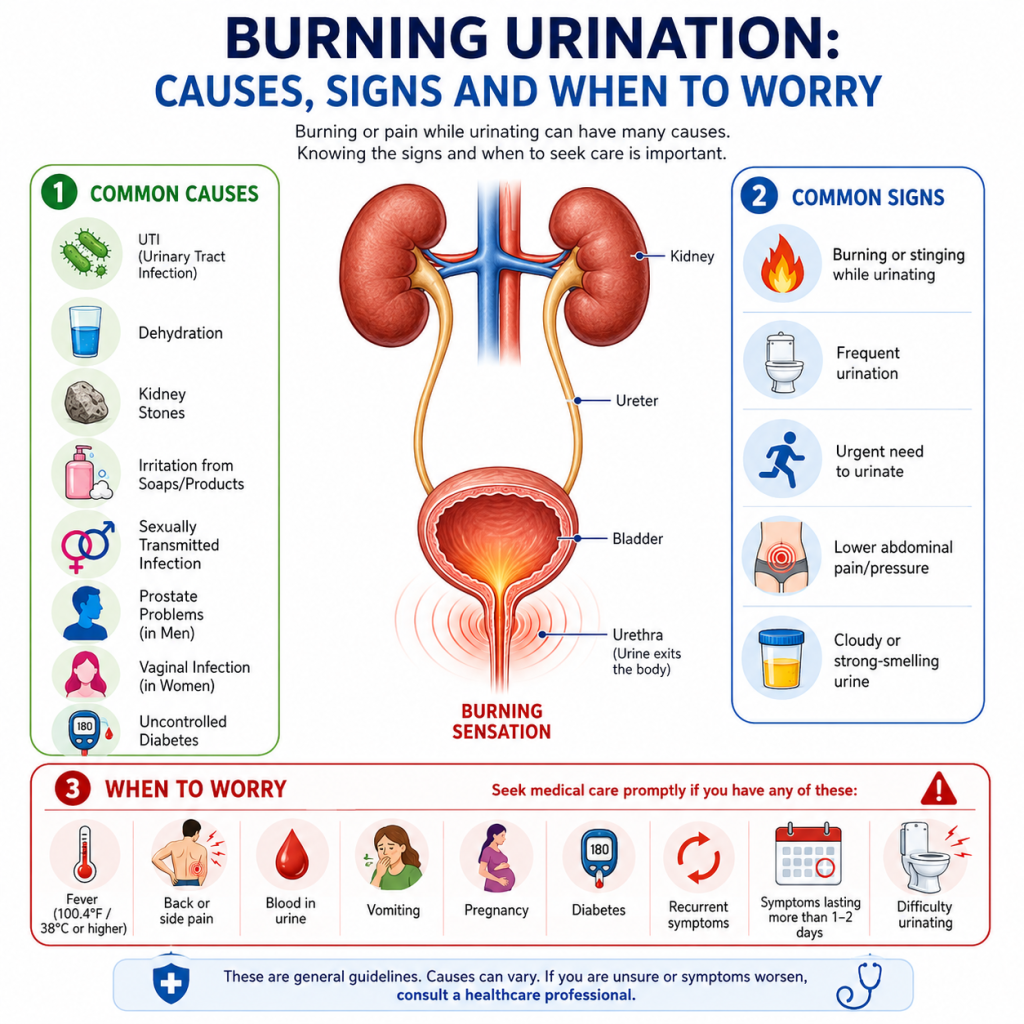
Burning urination is medically called dysuria. It refers to pain, burning, stinging, or discomfort while passing urine. Some people feel burning at the start of urination, while others feel it during or after urination.
Burning urination can affect:
- women
- men
- children
- elderly people
- pregnant women
- people with diabetes
- people with kidney stones
- people with recurrent urinary infections
It is not a disease by itself. It is a symptom that can come from infection, inflammation, irritation, stone-related problems, or other urinary conditions.
What Causes Burning Urination?
Burning urination has several possible causes. The most common cause is a urinary tract infection, but it is not the only cause.
Common causes include:
- urinary tract infection
- dehydration and concentrated urine
- kidney stones
- bladder irritation
- sexually transmitted infections
- vaginal infection in women
- prostate infection or enlargement in men
- poor hygiene
- use of irritating soaps or intimate products
- uncontrolled diabetes
- catheter-related irritation
- certain medicines in selected cases
A correct diagnosis matters because treatment for UTI, stone, STI, prostate infection, and irritation is not the same.
Burning Urination and UTI: How Are They Connected?
A UTI is one of the most common reasons for burning urination. It happens when bacteria enter and multiply in the urinary tract.
UTI-related symptoms may include:
- burning while passing urine
- frequent urination
- urgent need to urinate
- lower abdominal pain or pressure
- cloudy urine
- strong-smelling urine
- blood in urine
- fever in some cases
- weakness in elderly patients
A lower UTI usually affects the bladder or urethra. If infection spreads upward, it can involve the kidneys and cause fever, chills, back pain, nausea, vomiting, or severe weakness.
If burning urination is repeated or comes with fever or back pain, a urology consultation should not be delayed. Patients can read more about the hospital’s urinary care services here: https://www.shirdisaihospitalpvtltd.com/urology/
Burning Urination With Blood
Burning urination with blood should be evaluated medically. Blood in urine can occur due to UTI, kidney stones, bladder inflammation, prostate problems, trauma, or other urinary tract conditions.
Do not ignore blood in urine if it is:
- visible
- repeated
- associated with pain
- associated with fever
- associated with back or side pain
- seen in elderly patients
- seen in men with urinary difficulty
- present during pregnancy
Sometimes blood may appear as pink, red, brown, or tea-coloured urine. Even if the bleeding stops, evaluation is still important.
Burning Urination With Back Pain
Burning urination with back pain can indicate that the problem is not limited to simple irritation. It may be linked to kidney infection, kidney stone, or urinary tract infection spreading upward.
Seek medical care if back pain is associated with:
- fever
- chills
- vomiting
- side pain
- blood in urine
- severe weakness
- reduced urination
- known kidney stone
- pregnancy
- diabetes
Back pain with burning urination should not be treated only with painkillers at home. The cause needs to be identified.
Burning Urination With Lower Abdominal Pain
Lower abdominal pain with burning urination often suggests bladder irritation or lower urinary tract infection. Patients may also feel pressure, heaviness, or discomfort above the pubic area.
Possible causes include:
- bladder infection
- urethral irritation
- dehydration
- urinary retention
- bladder stones
- menstrual or pelvic infections in women
- prostate-related urinary difficulty in men
If lower abdominal pain is severe, persistent, or associated with fever, vomiting, blood in urine, or difficulty passing urine, medical care is needed.
Burning Urination in Women
Burning urination is common in women because the female urethra is shorter, making it easier for bacteria to reach the bladder.
Common causes in women include:
- UTI
- vaginal infection
- irritation from soaps or intimate washes
- sexual activity-related irritation
- pregnancy-related urinary infection
- menopause-related urinary or vaginal changes
- kidney stones
Women should seek medical care if burning urination is recurrent, associated with vaginal discharge, pregnancy, fever, back pain, blood in urine, or lower abdominal pain.
Do not self-medicate repeatedly, especially during pregnancy.
Burning Urination in Men
Burning urination in men needs careful evaluation because it may be linked to UTI, prostate infection, enlarged prostate, stones, urethral infection, or sexually transmitted infections.
Men should consult a doctor if they have:
- burning urination
- weak urine stream
- difficulty starting urine
- frequent urination at night
- lower abdominal pain
- fever
- back pain
- discharge from the penis
- blood in urine
- incomplete bladder emptying
Burning urination with prostate symptoms should not be ignored. Persistent urinary difficulty can affect bladder function and quality of life.
Can Diabetes Cause Burning Urination?
Diabetes can increase the risk of urinary infections, especially when blood sugar is not well controlled. High blood sugar can support bacterial growth and weaken the body’s ability to fight infection.
Burning urination in a person with diabetes needs medical attention if it is associated with:
- frequent urination
- fever
- weakness
- back pain
- recurrent UTI
- cloudy urine
- blood in urine
- poor sugar control
Managing diabetes properly is important for reducing recurrent urinary infections.
Can Dehydration Cause Burning Urination?
Yes. Dehydration can make urine more concentrated, which may cause burning or irritation while passing urine. This is more common during hot weather, fever, travel, heavy sweating, or low water intake.
Dehydration-related burning may come with:
- dark yellow urine
- strong urine smell
- reduced urination
- dry mouth
- headache
- tiredness
However, dehydration should not be assumed as the cause if burning is severe, persistent, or associated with fever, blood in urine, lower abdominal pain, back pain, or frequent urination.
Can Stress, Smoking, Coffee or Spicy Food Cause Burning Urination?
Stress itself does not directly cause a urinary infection, but it can affect hydration, immunity, sleep, and pain perception. Smoking, excess caffeine, alcohol, spicy foods, and carbonated drinks can irritate the bladder in some people and worsen urinary discomfort.
Possible irritants include:
- excess coffee or tea
- alcohol
- smoking
- carbonated drinks
- very spicy food
- artificial sweeteners in some people
- harsh intimate products
If symptoms repeat, do not keep blaming food or stress. Rule out infection, stones, diabetes, prostate problems, or other urinary conditions.
How Painful Is Burning Urination?
Burning urination can range from mild stinging to severe pain. The pain level depends on the cause.
| Pain Pattern | Possible Meaning |
|---|---|
| Mild burning once or twice | Temporary irritation or concentrated urine |
| Burning with frequent urination | Possible UTI |
| Burning with lower abdominal pain | Bladder irritation or infection |
| Burning with blood | UTI, stone, inflammation, or other urinary condition |
| Burning with fever and back pain | Possible kidney infection |
| Burning with discharge | Possible STI or urethral infection |
| Burning with weak urine flow in men | Possible prostate or obstruction issue |
Pain severity alone does not decide seriousness. Associated symptoms matter.
How Do Doctors Diagnose Burning Urination?
Diagnosis depends on symptoms, medical history, examination, and urine tests.
Doctors may recommend:
- urine routine test
- urine culture and sensitivity
- blood sugar test
- complete blood count
- kidney function test
- ultrasound if stone, blockage, or kidney involvement is suspected
- STI testing where relevant
- prostate evaluation in men when needed
- pregnancy-safe evaluation in pregnant women
Urine culture is especially useful when infection is recurrent, severe, not improving, or when the patient has diabetes, pregnancy, kidney stones, or complicated urinary symptoms.
How Do You Treat Burning Urination?
Treatment depends on the cause. There is no single medicine that is correct for all patients.
Treatment may include:
- antibiotics if bacterial UTI is diagnosed or strongly suspected
- fluids as advised
- pain or fever medicines when appropriate
- treatment for kidney stones if present
- treatment for vaginal infection or STI when relevant
- prostate treatment in men if symptoms suggest prostate involvement
- diabetes control if high sugar is contributing
- avoiding bladder irritants if irritation is suspected
Self-medication is risky because the wrong antibiotic or incomplete course can worsen infection and increase antibiotic resistance.
How Do I Stop My Pee From Burning?
The right way to stop burning urination is to treat the cause. Supportive steps can reduce discomfort, but they should not replace medical evaluation when warning signs are present.
Helpful steps include:
- drink enough water unless restricted by your doctor
- do not hold urine for long
- avoid excess tea, coffee, alcohol, and spicy irritants if they worsen symptoms
- maintain hygiene
- avoid harsh intimate washes
- complete prescribed medicines
- consult a doctor if symptoms persist or recur
Do not depend on leftover antibiotics, random urine alkalizers, or home remedies if symptoms are significant.
Can Painful Urination Go Away on Its Own?
Painful urination can sometimes improve if it is caused by mild irritation or dehydration. However, a true urinary infection usually needs medical evaluation and may need antibiotics.
Do not wait at home if burning urination is associated with:
- fever
- chills
- back pain
- lower abdominal pain
- blood in urine
- pregnancy
- diabetes
- vomiting
- recurrent symptoms
- symptoms lasting more than a day or two
- urinary difficulty in men
If symptoms improve temporarily but keep coming back, the underlying cause must be checked.
What Feels Like a UTI but Is Not?
Several conditions can feel like a UTI.
Possible UTI-like conditions include:
- kidney stones
- vaginal infection
- sexually transmitted infection
- bladder irritation
- interstitial cystitis or bladder pain syndrome
- prostate infection in men
- dehydration
- urinary obstruction
- pelvic infection in women
This is why repeated burning urination should not be treated blindly as UTI every time. Testing helps avoid wrong treatment.
What Is the 21-Second Rule for Peeing?
Some people search for the “21-second rule” to understand urination patterns. It is not a medical diagnostic rule for UTI, kidney infection, prostate disease, or bladder problems.
A person’s urination time can vary based on:
- fluid intake
- bladder fullness
- age
- prostate size in men
- bladder function
- medications
- anxiety
- urinary infection
- obstruction
Do not use urination time alone to judge health. Burning urination, pain, blood, fever, urgency, weak stream, or difficulty passing urine are more important symptoms.
Burning Urination: When to Worry
Burning urination needs medical attention when it is persistent, severe, recurrent, or associated with warning signs.
Consult a doctor if you have:
- burning urination lasting more than 24 to 48 hours
- fever
- chills
- back or side pain
- blood in urine
- lower abdominal pain
- vomiting
- reduced urine output
- pregnancy
- diabetes
- recurrent UTI
- discharge from urinary passage
- weak stream or difficulty passing urine in men
- symptoms in elderly patients
- symptoms in children
Early evaluation can prevent complications such as kidney infection, worsening pain, recurrent infection, or delayed diagnosis of stones or prostate-related problems.
Why Patients Choose Shirdi Sai Hospital for Burning Urination Care
At Shirdi Sai Hospital, New BEL Road, burning urination is evaluated based on symptoms, urine findings, infection risk, age, pregnancy status, diabetes, stone history, prostate symptoms, and recurrence pattern. The goal is to identify the cause instead of giving temporary relief without diagnosis.
Patients from New BEL Road, Devasandra, RMV 2nd Stage, Sanjaynagar, Mathikere, Hebbal, and nearby areas visit Shirdi Sai Hospital for urinary burning, frequent urination, blood in urine, fever with urinary symptoms, kidney stone symptoms, and recurrent urinary infections.
If urinary symptoms are frequent, painful, or associated with warning signs, consulting the urology department can help identify whether the problem is UTI, kidney infection, stone, prostate-related, or another urinary condition. Details are available here: https://www.shirdisaihospitalpvtltd.com/urology/
Frequently Asked Questions
What causes burning urination?
Burning urination can be caused by UTI, dehydration, kidney stones, bladder irritation, sexually transmitted infections, vaginal infections, prostate problems in men, diabetes, or irritating hygiene products.
How do I stop burning sensation while urinating?
Drink enough water, avoid holding urine, avoid irritants such as excess caffeine or alcohol, and seek medical evaluation if symptoms persist. If infection is present, doctor-prescribed treatment is needed.
What is the main reason for burning urine?
UTI is one of the most common reasons for burning urine, but it is not the only cause. Stones, dehydration, STIs, vaginal infection, diabetes, and prostate problems can also cause burning.
How long will burning pee last?
Temporary irritation may improve quickly, but burning due to UTI or another medical cause may continue or worsen without treatment. If symptoms last more than 24 to 48 hours, consult a doctor.
Can urinary pain go away by itself?
It can if the cause is mild irritation or dehydration. However, UTI, kidney infection, stones, and prostate-related problems usually need medical evaluation.
How can I tell if it is a UTI or just irritation?
UTI is more likely when burning is associated with frequent urination, urgency, lower abdominal pain, cloudy urine, strong-smelling urine, or blood in urine. Testing confirms the cause.
What feels like a UTI but is not?
Kidney stones, vaginal infection, STI, bladder irritation, prostate infection, dehydration, and bladder pain syndrome can feel like UTI. Recurrent symptoms should be checked properly.
Conclusion
Burning urination is a common symptom, but it should not be ignored when it is persistent, painful, recurrent, or associated with fever, back pain, blood in urine, pregnancy, diabetes, or urinary difficulty. While dehydration or irritation may cause temporary burning, UTI, kidney infection, stones, prostate conditions, and other urinary problems need proper evaluation.
At Shirdi Sai Hospital, New BEL Road, urinary symptoms are assessed carefully so the right cause can be identified and treated early. If burning urination is affecting your routine or returning again and again, timely consultation can prevent complications.