Painkillers can quickly reduce discomfort-but they do not fix the actual problem causing the pain. Many people rely on them for days, assuming relief means recovery. In reality, pain returning again and again is often a sign that something deeper is being ignored.
If you’re taking painkillers frequently, this is where it becomes risky. What feels like a simple solution can delay diagnosis, worsen underlying conditions, and increase long-term health complications.
What Painkillers Actually Do (And Why They Feel Effective)
Painkillers work by blocking pain signals or reducing inflammation.
- Paracetamol: Reduces fever and mild pain
- NSAIDs (Ibuprofen, Diclofenac): Reduce inflammation
- Strong analgesics: Target severe pain
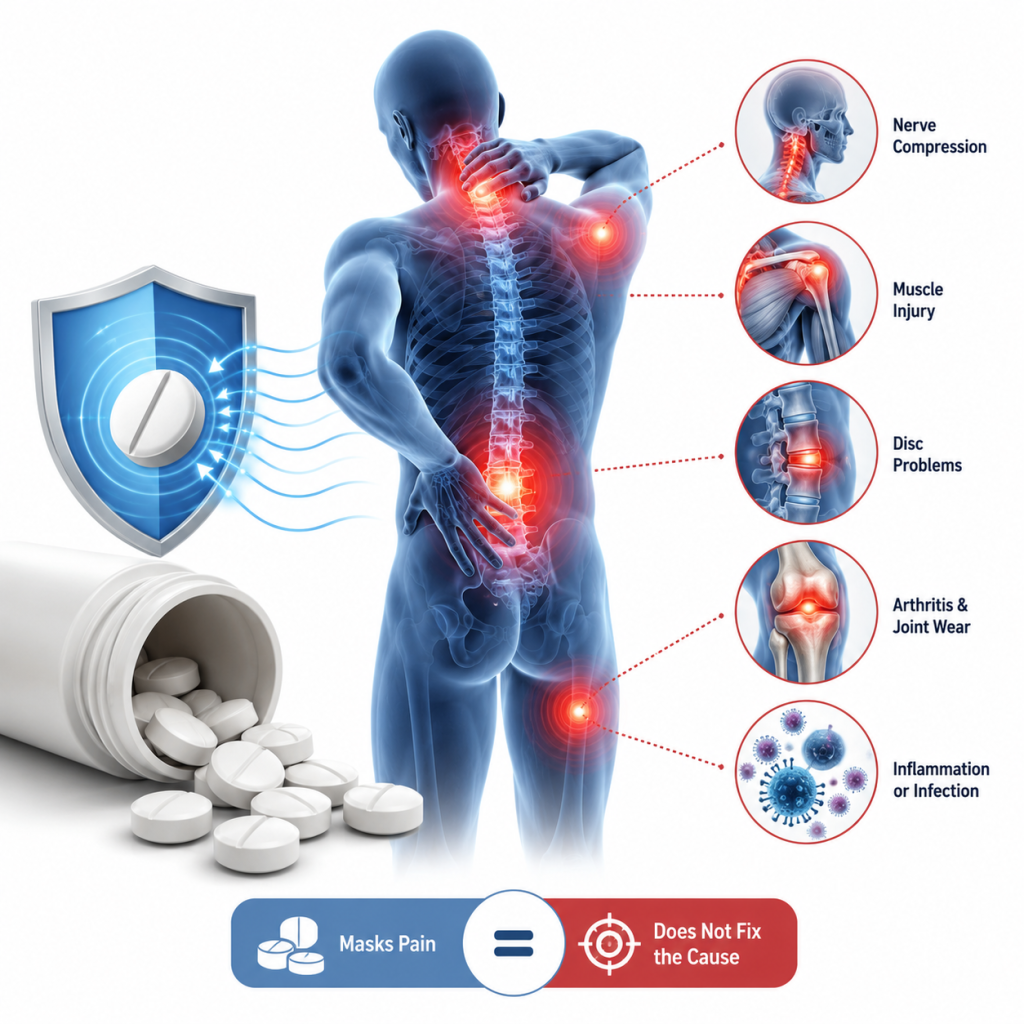
They act on symptoms, not the cause.
Painkillers Do NOT Fix These Problems
Pain relief can create a false sense of recovery.
Here’s what they don’t address:
- Infections: Bacteria continue to spread even if pain reduces
- Structural damage: Spine, joints, or muscle injuries remain untreated
- Organ-related pain: Kidney, liver, or abdominal issues persist
- Chronic conditions: Arthritis, nerve pain, or inflammation continue progressing
Key Insight:
Pain disappearing ≠ problem solved
What Happens If You Take Painkillers Daily?
This is where the real risk begins.
Day 1–3: Relief Phase
- Pain reduces
- Daily activities continue normally
Day 4–7: Masking Phase
- Pain returns once medicine wears off
- You increase frequency or dosage
Beyond 7 Days: Risk Phase
- Underlying condition worsens
- Stronger medication may be needed
- Complications begin developing
Many patients delay proper diagnosis because temporary relief creates a false sense of safety.
Hidden Side Effects Most People Ignore
Frequent painkiller use affects more than just pain.
1. Stomach Damage
- Irritation or ulcers
- Acid reflux
2. Kidney Stress
- Reduced kidney function over time
- Increased risk with long-term use
3. Liver Damage
- Especially with excessive paracetamol
- Silent progression until advanced stage
4. Dependency Pattern
- Habitual use for minor pain
- Reduced effectiveness over time
Why Pain Keeps Coming Back
Pain returning is not random-it’s a signal.
Common reasons:
- Incomplete treatment
- Ongoing inflammation
- Undiagnosed condition
- Lifestyle-related triggers
Ignoring recurring pain is where minor problems turn serious.
Pain vs Root Cause (Critical Difference)
| Pain Relief | Root Cause Treatment |
|---|---|
| Temporary | Long-term solution |
| Symptom control | Problem resolution |
| Quick relief | Accurate diagnosis |
| Repetitive use | One-time or structured treatment |
This difference determines whether you recover-or just manage discomfort.
Common Situations Where Painkillers Delay Diagnosis
These are high-risk patterns:
- Back pain lasting more than 3 days
- Recurrent headaches
- Joint pain with swelling
- Abdominal pain without clear reason
- Pain after minor injury not improving
These situations require evaluation-not repeated medication.
When Pain Becomes a Warning Signal
You should not ignore pain if:
- It lasts more than 2–3 days
- It keeps returning
- It increases in intensity
- It affects movement or sleep
- It is associated with fever or swelling
Pain is information. Ignoring it delays recovery.
What Should You Do Instead?
Step 1: Track the Pain
- Location
- Duration
- Frequency
Step 2: Avoid Repeated Self-Medication
Occasional use is fine. Daily dependence is not.
Step 3: Get Proper Diagnosis
Doctors may recommend:
- Physical examination
- Blood tests
- Imaging (X-ray, MRI, ultrasound)
Early diagnosis reduces treatment complexity.
Treatment Approach That Actually Works
Real recovery focuses on cause:
- Targeted medication
- Physiotherapy
- Lifestyle correction
- Medical procedures if needed
Pain relief becomes meaningful only when the root issue is treated.
When to Consult Your Doctor
You should consider medical evaluation if:
- Pain lasts more than 2–3 days
- Pain keeps returning after medication
- Pain worsens over time
- There is swelling, fever, or weakness
- Pain interferes with daily activities
If you are consulting a hospital in Bangalore, especially around New BEL Road, early evaluation helps prevent complications and reduces long-term dependence on painkillers.
Prevention: Reduce Dependence on Painkillers
- Maintain proper posture
- Stay physically active
- Manage stress levels
- Address symptoms early
- Follow medical advice
Preventive care reduces recurrence and long-term risk.
FAQs
1. Is it safe to take painkillers every day?
No. Daily use without medical supervision can lead to side effects and may hide serious underlying conditions.
2. Can painkillers cure the cause of pain?
No. They only reduce symptoms and do not treat infections, injuries, or chronic diseases.
3. Why does pain return after taking medication?
Because the underlying issue is still present. Once the medicine wears off, symptoms reappear.
4. Can painkillers damage kidneys or liver?
Yes. Long-term or excessive use can affect kidney and liver function, especially without proper guidance.
5. When should I stop taking painkillers and see a doctor?
If pain persists for more than a few days, worsens, or keeps recurring, medical evaluation is necessary.
6. What is the best way to treat long-term pain?
Identifying and treating the root cause through proper diagnosis and targeted treatment is the most effective approach.
Conclusion
Painkillers provide quick relief—but they are not a solution. Relying on them without understanding the cause can delay diagnosis, worsen health conditions, and increase long-term risks.
Addressing pain early, identifying the root cause, and following the right treatment approach leads to faster recovery and better outcomes. Ignoring repeated pain is not a solution-understanding it is.

Leave a Reply