
A delayed period is one of the most common concerns women experience, yet it is also one of the most misunderstood.
In many cases, the immediate assumption is stress. Work pressure, travel, lack of sleep, or emotional changes are often blamed. While stress can affect the menstrual cycle temporarily, it is not always the full explanation.
When periods are delayed occasionally, it may not indicate a serious issue. But when delays become frequent, unpredictable, or associated with other symptoms, it is often a signal that the body’s hormonal balance is being affected.
Ignoring this pattern can delay diagnosis of underlying conditions that are easier to manage when identified early.
Understanding what causes period delay beyond stress is essential for maintaining long-term reproductive and overall health.
What Is Considered a Normal Menstrual Cycle
Before understanding delay, it is important to understand what is considered normal.
A typical menstrual cycle ranges between 21 to 35 days. Some variation from month to month is normal, especially during changes in routine or lifestyle.
However, the pattern matters more than the number of days.
A cycle may need attention if:
- periods are delayed repeatedly
- cycle length keeps changing significantly
- you skip periods entirely for one or more months
- bleeding pattern becomes inconsistent
The body usually follows a rhythm. When that rhythm changes frequently, it is worth evaluating.
Why Stress Is Not Always the Real Cause
Stress affects the body through hormonal pathways, particularly by influencing the hypothalamus, which plays a role in regulating the menstrual cycle.
Short-term stress can delay ovulation, which in turn delays periods.
However, this effect is usually temporary.
When stress reduces, the cycle often returns to normal.
The problem arises when:
- delays continue even after routine stabilizes
- symptoms become consistent over months
- additional signs like weight gain, acne, or fatigue appear
In such cases, stress may be a contributing factor, but not the primary cause.
Understanding How Period Delay Happens
The menstrual cycle depends on a balance between different hormones.
Each cycle involves:
- Hormonal signals from the brain
- Ovarian response leading to ovulation
- Preparation of the uterus
- Shedding of the lining if pregnancy does not occur
If any step in this process is disrupted, the cycle may be delayed or irregular.
This disruption can be due to:
- hormonal imbalance
- metabolic changes
- endocrine disorders
- lifestyle factors
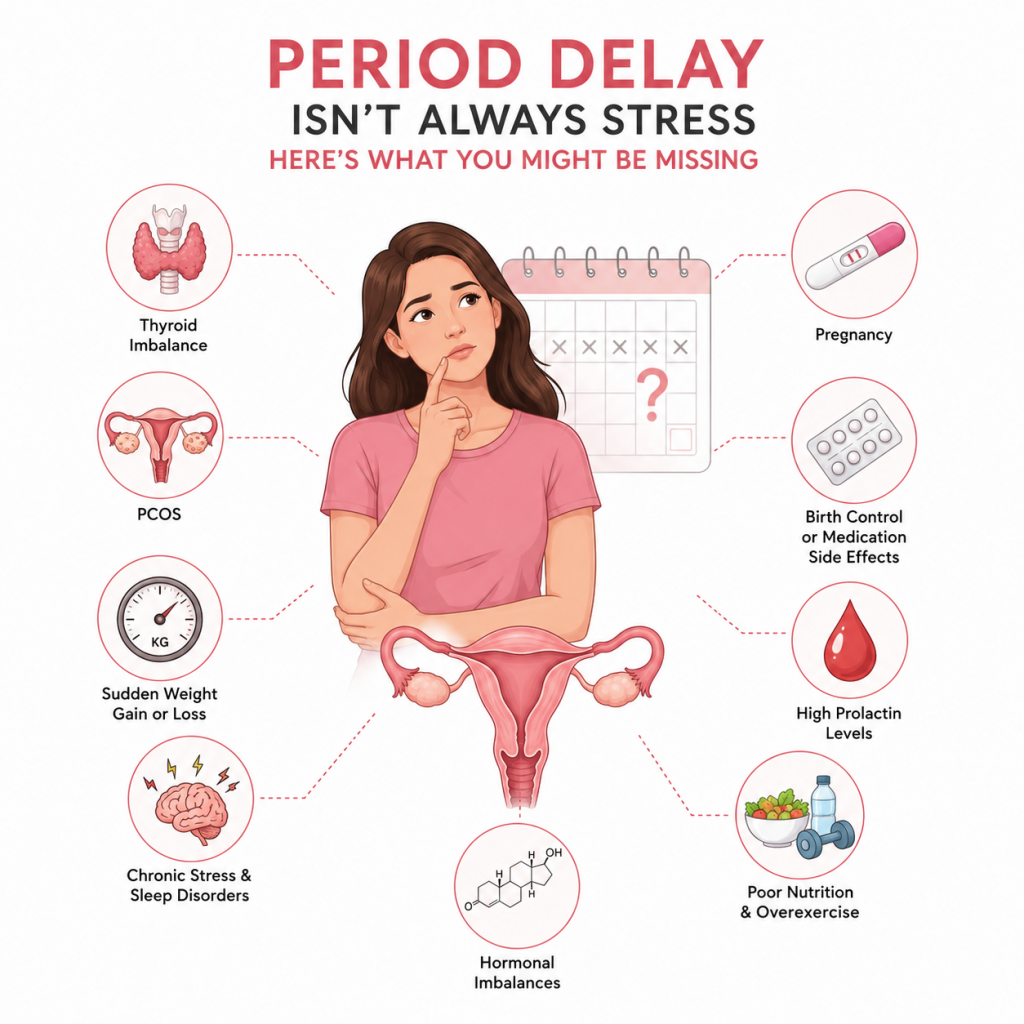
Common Causes of Delayed Periods (Beyond Stress)
1. Hormonal Imbalance
Hormonal imbalance is one of the most common causes of repeated delay.
It can occur due to:
- irregular ovulation
- imbalance in estrogen and progesterone
- metabolic disturbances
When ovulation does not happen regularly, periods become unpredictable.
2. Polycystic Ovary Syndrome (PCOS)
PCOS is a leading cause of delayed or missed periods.
In this condition:
- ovulation may not occur regularly
- hormone levels are altered
- insulin resistance may be present
Common symptoms include:
- irregular periods
- weight gain
- acne
- excess facial hair
PCOS often develops gradually and may go unnoticed for years.
3. Thyroid Disorders
The thyroid gland regulates metabolism and influences menstrual cycles.
Both hypothyroidism and hyperthyroidism can cause:
- delayed periods
- irregular cycles
- changes in flow
Because thyroid symptoms are often general, such as fatigue or weight changes, they are frequently overlooked.
4. Pregnancy
Pregnancy is an important cause of missed or delayed periods.
If there is any possibility of pregnancy, testing should be done early.
Even mild symptoms should not be ignored.
5. Sudden Weight Changes
The body requires a certain balance of fat and energy to maintain regular cycles.
Significant weight gain or loss can disrupt hormonal balance and delay ovulation.
This is commonly seen in:
- extreme dieting
- sudden lifestyle changes
- metabolic imbalance
6. Lifestyle Factors
Lifestyle does not always cause delay directly but can influence hormonal regulation.
Factors include:
- irregular sleep patterns
- poor diet
- lack of exercise
- long-term stress
When combined, these factors can disturb the cycle over time.
7. Underlying Medical Conditions
Certain conditions may affect menstrual cycles, including:
- prolactin imbalance
- ovarian disorders
- chronic illnesses
These require proper evaluation for diagnosis.
Symptoms That Suggest It’s More Than Just Stress
A delayed period becomes more significant when it is associated with other symptoms.
Common combinations include:
| Symptom combination | Possible concern |
|---|---|
| Acne + delayed periods | Hormonal imbalance / PCOS |
| Weight gain + fatigue | Thyroid or metabolic issue |
| Hair fall + irregular cycles | Hormonal disruption |
| Repeated missed periods | Ovulation problem |
| Mood changes + cycle delay | Hormonal or stress-related imbalance |
These patterns indicate that the body is not functioning in its normal rhythm.
Why Repeated Delay Should Not Be Ignored
Ignoring repeated delay can lead to:
- worsening hormonal imbalance
- difficulty in ovulation
- fertility challenges
- metabolic complications
The concern is not a single delayed cycle, but a pattern that continues over time.
Early identification allows better control and prevents complications.
How Doctors Evaluate Delayed Periods
Evaluation focuses on identifying the root cause rather than just treating symptoms.
Typical approach includes:
- detailed menstrual history
- physical examination
- blood tests for hormone levels
- thyroid function tests
- ultrasound when required
This helps in understanding whether the delay is temporary or linked to an underlying condition.
Can Lifestyle Changes Help Regulate Periods
Lifestyle changes can support hormonal balance, especially in early stages.
Helpful measures include:
- maintaining regular sleep
- balanced nutrition
- consistent physical activity
- stress management
However, if a medical condition is present, lifestyle changes alone may not be sufficient.
Common Misconceptions About Period Delay
“It’s just stress”
This is true only for occasional delays. Repeated delay needs evaluation.
“If periods come eventually, everything is fine”
Irregular cycles can still indicate underlying imbalance.
“This happens to everyone”
While variation is common, persistent irregularity is not normal.
When Should You Consult a Doctor
You should seek medical advice if:
- periods are delayed frequently
- cycles are irregular for several months
- you miss more than one cycle
- symptoms are recurring
- you are planning pregnancy
For women in Bangalore, Shirdi Sai Hospital, New BEL Road, provides evaluation and care for menstrual and hormonal health concerns.
Impact on Long-Term Health
Delayed periods linked to hormonal imbalance can affect:
- reproductive health
- metabolic function
- emotional wellbeing
Over time, untreated imbalance can increase the complexity of management.
Frequently Asked Questions
Is occasional delay normal?
Yes, occasional variation can happen.
When is delay a concern?
When it becomes frequent or associated with other symptoms.
Can PCOS cause delay?
Yes, it is one of the most common causes.
Should I test for pregnancy?
Yes, if there is any possibility.
Can delayed periods affect fertility?
Yes, if ovulation is irregular.
Conclusion
A delayed period is not always a serious concern, but it is also not something that should be repeatedly ignored.
While stress can cause temporary changes, persistent delay is often a sign of hormonal imbalance or other underlying conditions.
Recognizing patterns early and seeking proper evaluation can make treatment simpler and more effective.
Listening to your body at the right time helps prevent complications later.

Leave a Reply