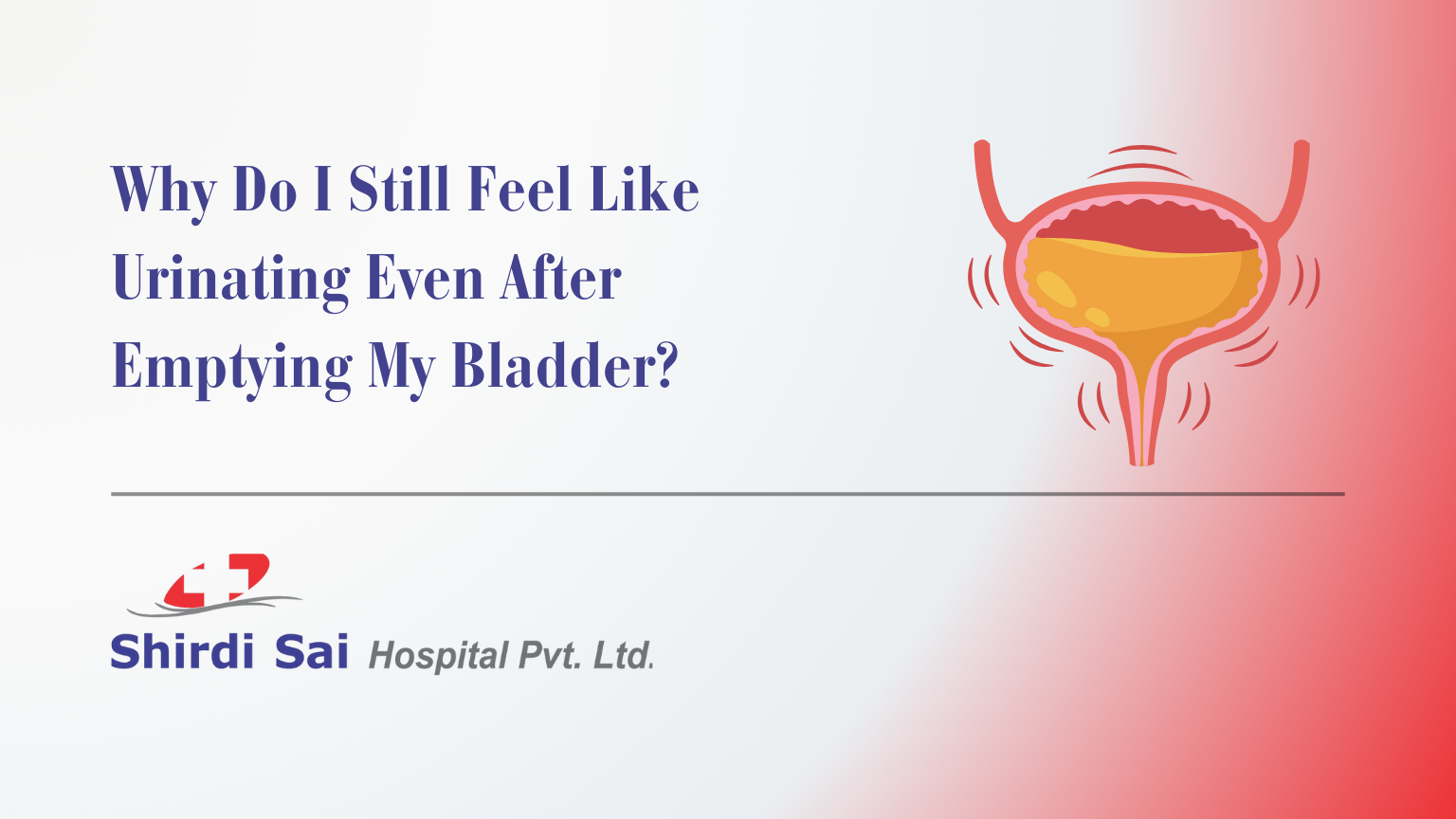
Feeling a persistent urge to urinate even after you’ve just emptied your bladder can be confusing and uncomfortable. Many people worry that something serious is wrong, especially when the sensation keeps returning despite normal urine flow. At Shirdi Sai Hospital, we see this concern frequently and in most cases, there is a clear, manageable explanation.
This guide explains why the urge can linger, what it usually means, and when you should seek medical advice-in simple, people-first language.
What Does “Incomplete Emptying” Really Mean?
The sensation of needing to urinate again doesn’t always mean urine is still left inside the bladder. Often, it’s a signal problem rather than a storage problem-the bladder or nearby structures are sending mixed messages to the brain.
Common Reasons You May Feel the Urge After Urinating
1) Bladder Irritation (Even Without Infection)
The bladder lining can become sensitive due to dehydration, acidic foods, caffeine, or recent illness. When irritated, the bladder overreacts and triggers urgency even when it’s empty.
Typical clues:
- Urge comes quickly after urinating
- No fever or severe pain
- Symptoms fluctuate day to day
2) Overactive Bladder (OAB)
With OAB, the bladder muscles contract earlier than they should, creating urgency with little or no urine present.
Typical clues:
- Sudden urges
- Frequent bathroom visits
- Night-time urination (nocturia)
3) Pelvic Floor Muscle Tightness
Muscles that help control urination may be tight or uncoordinated, preventing a relaxed, complete voiding sensation.
Typical clues:
- Urge persists after urinating
- Worse with stress or prolonged sitting
- Often improves with guided exercises
4) Prostate-Related Changes (in Men)
An enlarged prostate can irritate the bladder outlet, leading to the feeling of incomplete emptying even if the bladder is mostly empty.
Typical clues:
- Weak stream or hesitancy
- Dribbling after urination
- Night-time frequency
5) Hormonal Changes (in Women)
Low estrogen—common after childbirth or around menopause—can make the urinary tract more sensitive.
Typical clues:
- Urgency without infection
- Vaginal dryness
- Symptoms vary with hormonal shifts
6) Stress and Anxiety
The bladder is closely linked to the nervous system. Ongoing stress can heighten body awareness and amplify urgency signals.
Typical clues:
- Normal test reports
- Symptoms worsen during stressful periods
- Improve with relaxation and routine changes
When Should You Be Concerned?
Seek medical evaluation if you notice any of the following:
- Blood in urine
- Fever or chills
- Pain in the lower abdomen or back
- Difficulty starting urination or a very weak stream
- Symptoms persisting beyond 2–3 weeks despite basic measures
These signs don’t always indicate something serious, but they do warrant a closer look.
How Doctors Evaluate This Symptom
At Shirdi Sai Hospital, assessment is stepwise and patient-friendly:
- Detailed symptom history (timing, triggers, night symptoms)
- Urine tests to rule out infection
- Ultrasound or bladder scan (if needed)
- Prostate assessment for men; pelvic evaluation for women
Most patients do not need invasive tests.
Treatment Options (Based on Cause)
- Hydration and diet tweaks: reducing caffeine and acidic foods
- Bladder training: timed voiding to calm urgency signals
- Pelvic floor therapy: guided exercises when muscle tension is involved
- Medications: only when clearly indicated
- Addressing underlying issues: prostate care, hormonal support, or stress management
Treatment is individualized and usually conservative to start.
A Note from the Shirdi Sai Hospital Team
We often reassure patients that this symptom is common and treatable. With the right evaluation, most people experience significant improvement-often without long-term medication.
If the sensation is persistent or affecting your daily life, it’s reasonable to get it checked by a urology specialist for clarity and peace of mind.
Frequently Asked Questions (FAQs)
Is it normal to feel the urge right after urinating?
Yes, especially with bladder irritation or muscle tension. It’s common and often temporary.
Can this happen without a urinary infection?
Absolutely. Many people have urgency with normal urine tests.
Does dehydration make it worse?
Yes. Concentrated urine can irritate the bladder lining and increase urgency.
Is this linked to diabetes?
In some cases, yes-especially if accompanied by excessive thirst or night-time urination.
Will it go away on its own?
Mild cases often improve with hydration, diet changes, and stress reduction. Persistent symptoms should be evaluated.
Is this a sign of kidney disease?
Usually not. Kidney issues typically cause other symptoms. Testing helps rule this out.
Doctor Review
This article was reviewed for medical accuracy by a Urology Consultant at Shirdi Sai Hospital.