A hernia does not always cause pain. In many cases, people notice a small swelling or bulge in the abdomen or groin without any discomfort and assume it is harmless. This is one of the most common and dangerous mistakes. A painless hernia can still grow, weaken surrounding muscles, and lead to complications if left untreated.
At Shirdi Sai Hospital, we often see patients who delayed consultation because there was no pain initially. Over time, the hernia increased in size and required more complex treatment. This guide explains what a painless hernia means, why it should not be ignored, early warning signs, and when medical evaluation becomes necessary.
What Is a Hernia and Can It Be Painless?
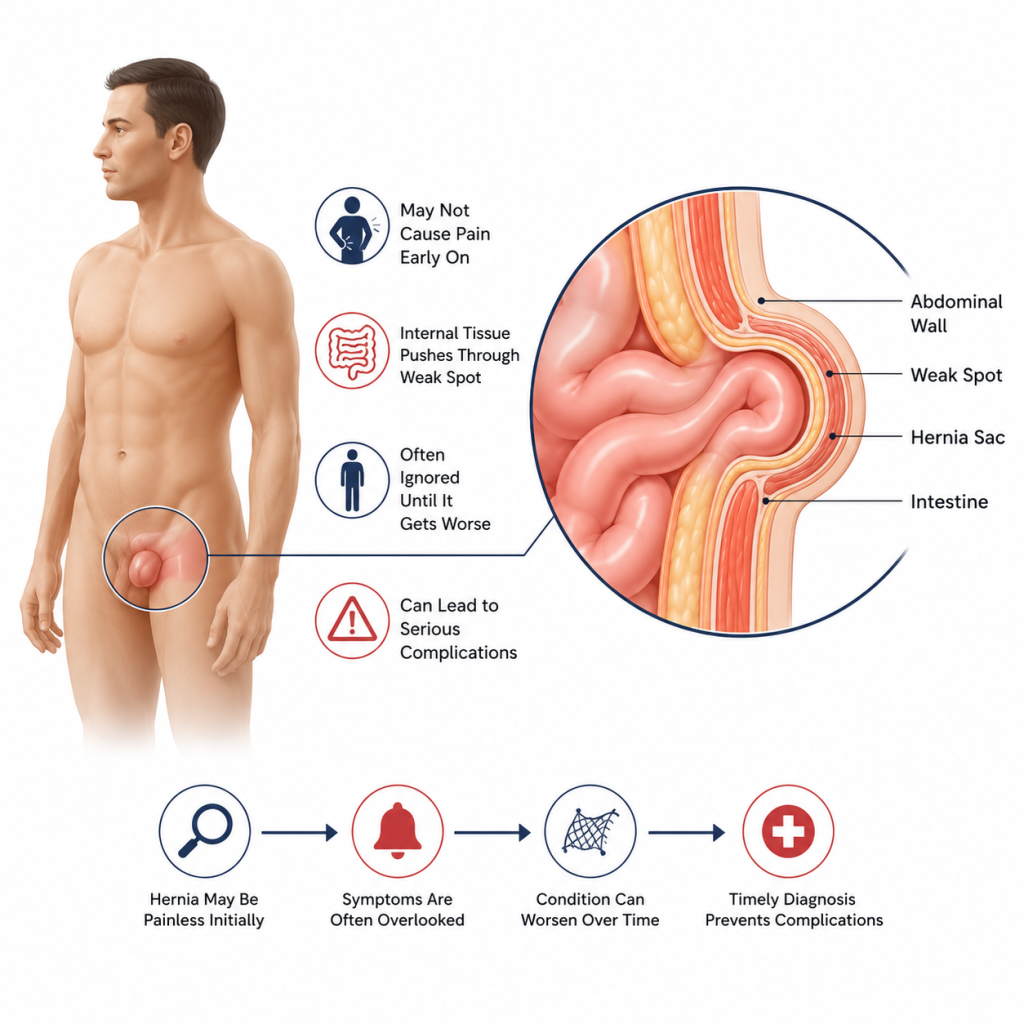
A hernia occurs when an internal organ or tissue pushes through a weak area in the surrounding muscle or tissue wall. This can happen in the abdomen, groin, or around previous surgical sites.
Yes, a hernia can be painless, especially in early stages. The absence of pain does not mean the condition is safe.
Common areas where hernia appears:
Groin (inguinal hernia)
Upper thigh (femoral hernia)
Abdomen (ventral or incisional hernia)
Around the belly button (umbilical hernia)
A painless hernia is often noticed as:
a soft swelling
a bulge that appears when standing or coughing
a lump that reduces when lying down
Why a Painless Hernia Is Often Ignore
Many people delay treatment because:
there is no pain
swelling is small
it comes and goes
daily activities are not affected
This leads to a false sense of safety. Over time, the hernia may enlarge, making treatment more complicated.
A hernia without pain is still a structural weakness and does not heal on its own.
What Causes a Hernia Without Pain?
A hernia develops due to pressure and muscle weakness. Pain depends on nerve involvement and tissue stress. In early stages, there may be minimal irritation, so pain is absent.
Common causes include:
lifting heavy weights
chronic coughing
constipation and straining
obesity
previous abdominal surgery
weak abdominal muscles
aging-related muscle weakness
Types of Painless Hernia You Should Know
Inguinal Hernia (Most Common)
Occurs in the groin area. Often painless initially and noticed as a bulge while standing or lifting.
Umbilical Hernia
Seen near the belly button. Common in both adults and children. May not cause pain in early stages.
Incisional Hernia
Develops at the site of previous surgery due to weakened tissue.
Femoral Hernia
Less common but more risky. Often painless initially but has a higher chance of complications.
Early Signs of a Silent Hernia
Even without pain, the body shows warning signs:
visible or noticeable swelling
heaviness in the abdomen or groin
bulge increasing with activity
swelling disappearing on lying down
mild discomfort after long standing
These signs indicate that the muscle wall is weakening further.
When a Painless Hernia Becomes Dangerous
A hernia can become serious when complications develop.
Hernia Enlargement
The opening in the muscle becomes bigger, allowing more tissue to push through.
Obstruction
Intestinal contents may get stuck inside the hernia sac, causing digestive problems.
When Should You See a Doctor for a Painless Hernia?
Do not wait for pain.
Consult a doctor if:
you notice any swelling in abdomen or groin
swelling increases in size
discomfort appears after activity
hernia does not reduce easily
symptoms persist for weeks
Early consultation helps prevent complications and simplifies treatment.
Frequently Asked Questions
Can a hernia be painless?
Yes, especially in early stages. Many hernias do not cause pain initially but still require medical attention.
Is a painless hernia dangerous?
It can become dangerous if ignored, as it may grow or lead to complications like obstruction or strangulation.
Can a hernia go away on its own?
No. Hernias do not heal naturally and usually require surgical treatment.
When should I worry about a hernia?
You should be concerned if the swelling increases, becomes painful, or is associated with symptoms like vomiting or inability to pass stool.
What happens if a hernia is not treated?
It may enlarge, become painful, or lead to complications requiring emergency surgery.
Is hernia surgery safe?
Yes, hernia surgery is commonly performed and generally safe when done at the right time.
Conclusion
A painless hernia is often overlooked because it does not cause immediate discomfort. However, ignoring early signs can lead to serious complications over time. Any swelling or bulge in the abdomen or groin should be evaluated, even if it does not hurt.
At Shirdi Sai Hospital, early diagnosis and timely treatment help reduce risks and ensure better recovery outcomes. If you notice symptoms of a hernia, do not wait for pain to start before seeking medical advice.