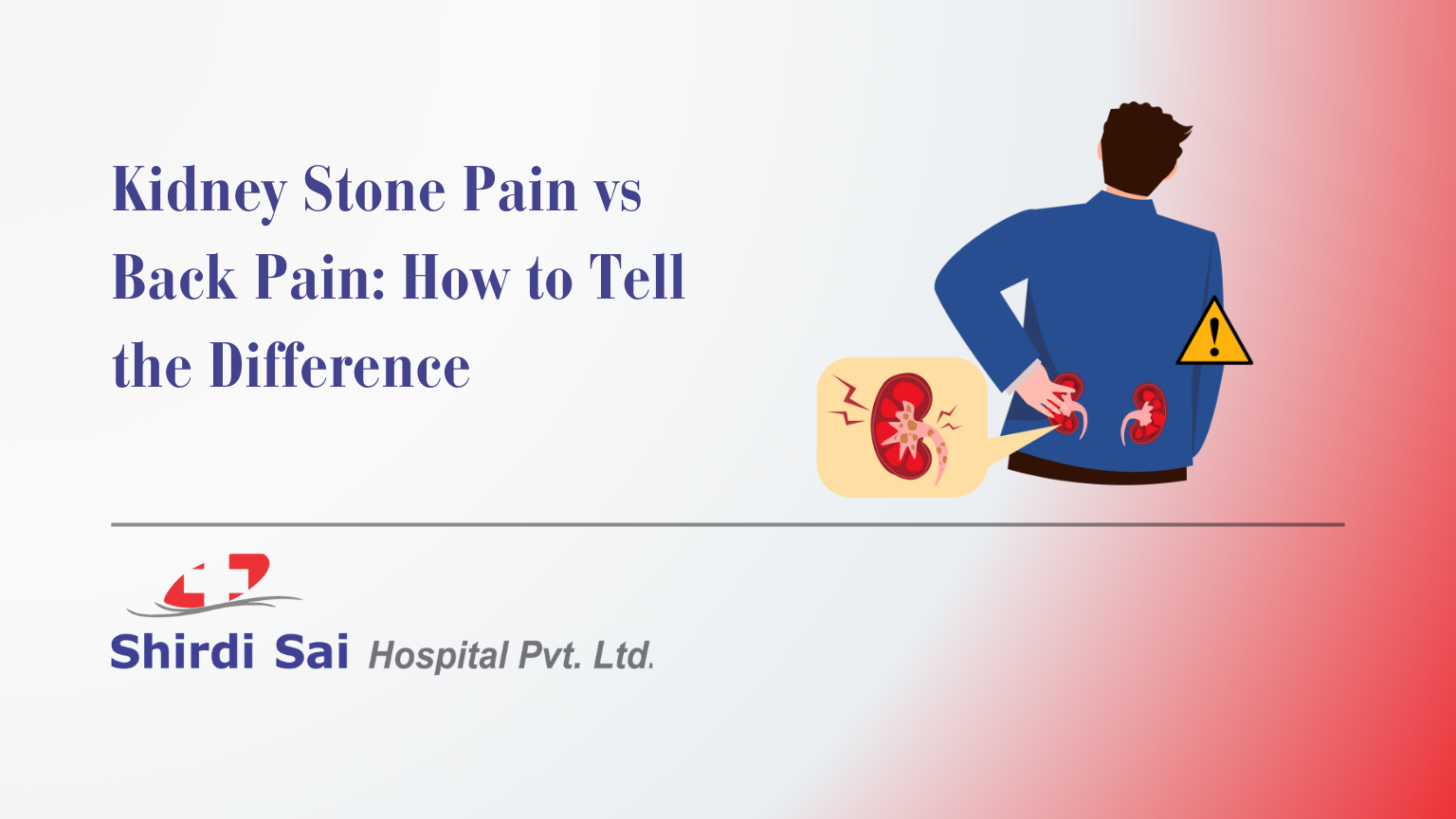
Lower back pain is common. However, not all back pain is muscular. Kidney stone pain often starts in the same region and is frequently mistaken for a spinal issue. The key difference lies in pain pattern, associated symptoms, and response to movement.
If your pain is sharp, wave-like, and accompanied by urinary changes, it may not be your spine. It may be your kidneys.
In 2026, with Bangalore’s long desk hours, dehydration, high-protein diets, and reduced physical activity, both kidney stones and mechanical back pain are increasing. Knowing the difference can prevent delayed treatment and serious complications.
How can you tell if back pain is from a kidney stone?
Kidney stone pain usually begins suddenly and feels intense. It does not improve with posture changes.
Key indicators of kidney stone pain:
- Sharp, stabbing pain in the flank (side of lower back below ribs)
- Pain that radiates toward the lower abdomen or groin
- Comes in waves (colicky pattern)
- Nausea or vomiting
- Blood in urine
- Frequent urge to urinate
Back pain, on the other hand, often:
- Worsens with bending or lifting
- Improves with rest
- Feels dull or stiff
- Does not cause urinary symptoms
If pain is severe enough that you cannot sit still, kidney stone is more likely.
Where exactly is kidney stone pain located compared to back pain?
Kidney stone pain starts deeper and higher than muscular back pain.
| Feature | Kidney Stone Pain | Back Pain |
| Location | Side of lower back, below ribs | Central lower back |
| Radiation | Moves to abdomen or groin | May spread to buttocks or thigh |
| Movement effect | No relief with position change | Improves with rest |
| Urinary symptoms | Often present | Absent |
| Pain pattern | Waves of severe pain | Steady dull ache |
This movement of pain toward the groin is one of the strongest diagnostic clues.
Can kidney stone pain feel like muscle strain?
Yes, especially in early stages.
However, muscle strain pain:
- Increases with twisting
- Is tender to touch
- Improves with heat or rest
Kidney pain:
- Is deep and internal
- Feels unaffected by massage
- Often includes nausea
If your “back pain” is not responding to muscle relaxants within 24–48 hours, evaluation is necessary.
Does kidney stone pain cause urinary problems?
Yes. This is the biggest difference.
Watch for:
- Pink, red, or brown urine
- Burning sensation while urinating
- Frequent urination in small amounts
- Cloudy urine
- Reduced urine flow
Back pain never causes blood in urine.
Even microscopic blood detected on a urine test strongly suggests kidney involvement.
Is kidney stone pain worse than back pain?
Kidney stone pain is often described as one of the most intense pains a person can experience.
Patients often:
- Cannot lie down comfortably
- Keep changing positions
- Feel restless due to pain waves
Back pain patients usually find at least one comfortable posture.
If someone is pacing or unable to sit still, kidney stones are strongly suspected.
Why are kidney stones increasing in Bangalore in 2026?
Urban lifestyle patterns are contributing:
- Long IT working hours
- Air-conditioned offices reducing thirst sensation
- Low water intake
- High salt consumption
- Excess protein diets
- Processed foods
- Reduced outdoor activity
Dehydration concentrates urine, increasing crystal formation inside kidneys.
Hard water mineral exposure in certain Bangalore areas may also contribute.
When should you worry that your back pain is actually kidney pain?
Seek medical evaluation immediately if you have:
- Sudden severe pain
- Fever with back pain
- Vomiting with pain
- Blood in urine
- Pain radiating to groin
- Pain lasting more than 30 minutes in waves
In South Bangalore areas like Jayanagar and nearby regions, early ultrasound screening is widely available and can confirm diagnosis quickly.
Ignoring symptoms may lead to infection or kidney swelling.
How do doctors confirm kidney stone vs back pain?
Diagnosis includes:
- Urine routine test
- Ultrasound abdomen
- CT scan (if needed)
- Blood tests
For back pain, doctors may recommend:
- X-ray
- MRI spine
- Physical muscle assessment
Imaging is crucial because symptoms sometimes overlap.
At Shirdi Sai Hospital, imaging and urology consultation are coordinated quickly to reduce delay in diagnosis.
Can kidney stones cause lower abdominal pain?
Yes.
As the stone moves down the ureter, pain shifts toward:
- Lower abdomen
- Groin
- Testicular region (in men)
- Labial region (in women)
This migrating pain pattern does not occur in muscular back strain.
What happens if kidney stone pain is ignored?
Untreated stones can cause:
- Urinary infection
- Kidney swelling (hydronephrosis)
- Persistent blood in urine
- Kidney damage in rare cases
Back pain rarely leads to internal organ damage.
Early treatment prevents complications and reduces need for invasive procedures.
How is treatment different for kidney stones and back pain?
Kidney Stone Treatment:
- Increased hydration
- Pain management
- Medical expulsive therapy
- ESWL (shock wave lithotripsy)
- Ureteroscopy with laser
- PCNL for large stones
Back Pain Treatment:
- Physiotherapy
- Ergonomic correction
- Anti-inflammatory medication
- Core strengthening exercises
Mistaking kidney pain for muscle pain delays correct treatment.
Can dehydration alone cause kidney stone pain?
Dehydration does not directly cause pain, but it increases stone formation risk.
Low urine volume allows minerals like calcium and oxalate to crystallize.
Desk workers in Bangalore often underestimate water intake needs.
Aim for 2.5–3 liters daily unless medically restricted.
When to Consult a Doctor
Consult a doctor if you experience:
- Severe flank pain
- Pain that comes in waves
- Blood in urine
- Fever and chills
- Persistent back pain without injury
- Pain not improving in 48 hours
Early diagnosis reduces complications and improves outcomes.
FAQs
1. How do I know if my pain is kidney-related or muscular?
Kidney pain usually comes in sharp waves and may cause nausea or urinary symptoms. Muscular pain is dull and improves with rest.
2. Can kidney stone pain go away on its own?
Small stones may pass naturally with hydration, but severe pain requires medical evaluation.
3. Does kidney stone pain worsen at night?
Pain may intensify at night because urine flow changes during sleep, but it is not time-specific.
4. Can sitting long hours cause kidney stones?
Indirectly, yes. Long sitting reduces hydration awareness and physical activity, increasing stone risk.
5. Is CT scan always necessary for diagnosis?
Not always. Ultrasound is usually done first. CT scan is recommended if diagnosis remains unclear.
Conclusion
Lower back pain is common in Bangalore’s working population. However, not every back pain is spinal. Kidney stone pain often starts in the flank and mimics muscular strain.
The difference lies in pain intensity, radiation pattern, urinary symptoms, and response to movement.
If your pain is severe, wave-like, and associated with urinary changes, do not ignore it. Early evaluation ensures proper treatment and prevents complications.
Leave a Reply